
Feb 19, 2026
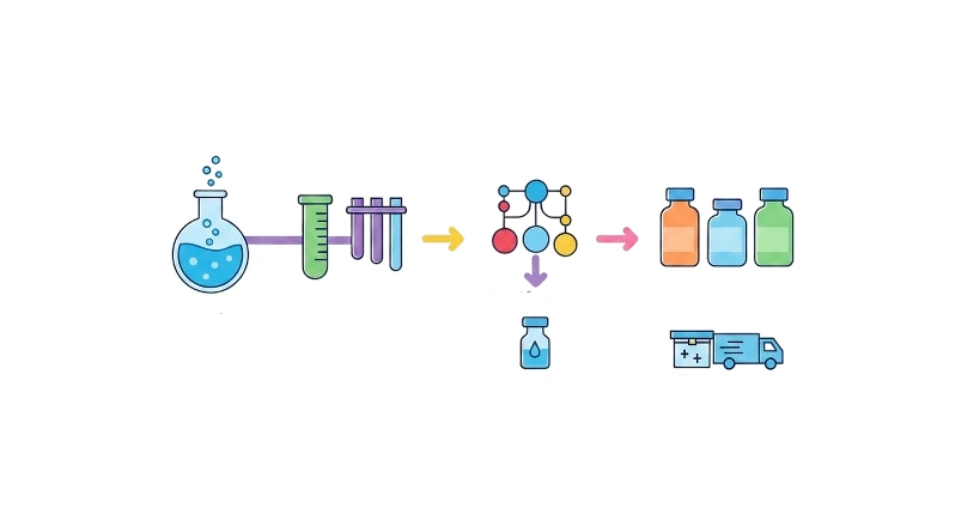
The report “Biologics Manufacturing Market By Product Type (Monoclonal Antibodies, Recombinant Proteins, Vaccines, Cell Therapy Products, Gene Therapy Products, Others), By Technology (Cell Culture, Microbial Fermentation, Chromatography, Filtration, Purification), Additive Manufacturing, Powder Forging, Others), By Application (Oncology, Infectious Diseases, Autoimmune Disorders, Cardiovascular Diseases, Rare Diseases, Others) and By End User (Contract Manufacturing Organizations (CMOs), Pharmaceutical & Biotechnology Companies, Research Institutes & Academic Centers)” is expected to reach USD 650.00 billion by 2033, registering a CAGR of 7.80% from 2026 to 2033, according to a new report by Transpire Insight.
The biologics manufacturing market is growing at a considerable pace due to the rising number of cases of chronic, rare, and infectious diseases. Biologics like monoclonal antibodies, recombinant proteins, vaccines, and innovative cell and gene therapies are becoming the backbone of modern medicine, providing targeted and effective treatments. The increasing demand for quality biologics is encouraging manufacturers to adopt cutting-edge technologies such as cell culture, microbial fermentation, chromatography, filtration, and purification, ensuring scalability and meeting strict regulatory requirements. Increased R&D and government support is fueling the production of new biologics. The rising number of approvals for biosimilars and personalized medicine has increased the need for large-scale production, and pharmaceutical and biotech companies are investing in expanding their capacity or outsourcing to contract manufacturing organizations (CMOs). This is especially true in the areas of oncology, autoimmune, and infectious diseases, where biologics are replacing traditional small molecule drugs due to their improved efficacy and safety profiles.
Technological development is enhancing the efficiency of the process and lowering the cost of production, thus favoring large-scale commercial production. The use of single-use bioreactors, continuous processing, and automation in purification steps has improved productivity and minimized the risk of contamination, thus enabling faster access to biologics in the global market. The outsourcing model to CMOs offers flexible manufacturing capacity, regulatory knowledge, and cost-effectiveness, thus becoming the model of choice for both mature and emerging pharmaceutical companies. Emerging markets in the Asia Pacific and South America regions are quickly developing their capabilities in biologics manufacturing. Meanwhile, mature markets like North America and Europe remain at the forefront in terms of innovation, regulatory affairs, and high-value biologics manufacturing. In summary, the market is poised for strong growth driven by innovation, demand, and global healthcare priorities.
The Monoclonal Antibodies segment is projected to witness the highest CAGR in the Biologics Manufacturing during the forecast period.
According to Transpire Insight, Monoclonal antibodies (mAbs) remain the leading segment in the biologics market, driven by their targeted therapeutic uses in cancer, autoimmune, and infectious diseases. The selective binding capability of mAbs to specific antigens ensures greater efficacy with fewer side effects than conventional small molecule therapies. The increasing number of mAb candidates in development, in addition to the increasing number of biosimilar approvals, has increased both clinical and commercial demand, prompting companies to develop greater production capacity worldwide. The segment is aided by technological advancements in cell line development, expression systems, and bioreactor technology, which improve productivity, consistency, and processing efficiency.
Market growth is also driven by the increasing healthcare expenditure in the developed and emerging markets. The adoption of high-throughput purification technology, such as chromatography and filtration, ensures regulatory compliance and product quality. Collaborations between pharmaceutical firms and contract manufacturing organizations facilitate rapid scaling-up of production to cater to market demand. In summary, the monoclonal antibody segment is a high-value segment that drives the market, aided by technological innovation, high clinical adoption, and commercial viability.
The Cell Culture segment is projected to witness the highest CAGR in the Biologics Manufacturing during the forecast period.
Cell culture technology continues to be the most prominent technology for the production of biologics, offering a scalable and controlled process for the production of monoclonal antibodies, recombinant proteins, and vaccines. Mammalian cell lines, especially the CHO (Chinese Hamster Ovary) cell line, have gained popularity for their ability to carry out complex post-translational modifications, which are critical for therapeutic efficacy. Advances in bioreactor technology, single-use bioreactors, and media development have improved cell growth, protein expression, and process consistency, making commercial-scale production feasible.
The growing use of cell culture technology is fueled by the need for efficient and cost-effective biologics manufacturing. Its versatility enables it to be easily adapted for use in different product modalities, such as novel products like cell and gene therapies. Its seamless integration with downstream processing, automation, and quality control ensures regulatory compliance and product quality. As the demand for cancer, infectious disease, and autoimmune therapies continues to grow, cell culture technology remains the foundation of scalable biologics manufacturing and a key driver of the market.
The Oncology segment is projected to witness the highest CAGR in the Biologics Manufacturing during the forecast period.
According to Transpire Insight, Oncology is the largest application area in biologics manufacturing, mainly driven by the widespread adoption of monoclonal antibodies, immune checkpoint inhibitors, and CAR-T cell therapies. The growing incidence of cancer worldwide and increased spending on targeted therapies have fueled a strong demand for high-quality biologics. The development of oncology biologics is a top priority for pharmaceutical companies, and contract manufacturers offer scalable production capabilities to ensure the rapid availability of essential therapies in the global market.
Breakthroughs in clinical research, early diagnosis, and precision medicine have improved the oncology biologics pipeline. The adoption of automated bioprocessing and continuous manufacturing technology has made it possible to produce biologics at a lower cost and with consistency, thus shortening the time-to-market. Fast-track approval of novel therapies by regulatory authorities further stimulates market growth. In summary, the oncology segment is the driving force behind demand and innovation in the biologics industry, thus solidifying its status as the most important application area for manufacturers globally.
The Contract Manufacturing Organizations (CMOs) segment is projected to witness the highest CAGR in the Biologics Manufacturing during the forecast period.
Contract Manufacturing Organizations are increasingly propelling the growth of biologics manufacturing because of their scalable manufacturing capabilities, regulatory knowledge, and cost-effective models. CMOs assist pharmaceutical and biotech firms by providing flexible capacity for clinical and commercial biologics manufacturing, thus lowering the capital expenditure and operational complexities of in-house manufacturing.
The increasing complexity of biologics and the need for rapid scale-up have fueled the adoption of CMOs. The state-of-the-art facilities with single-use bioreactors, automated purification, and sterile fill-finish operations enable CMOs to manage complex product portfolios such as monoclonal antibodies, recombinant proteins, and vaccines. Partnerships between CMOs and innovators also facilitate rapid commercialization of high-value biologics. Thus, CMOs have become a strategic enabler of global biologics manufacturing growth, facilitating regionalization and entry into emerging markets.
The North America region is projected to witness the highest CAGR in the Biologics Manufacturing during the forecast period.
North America continues to be the largest market for biologics manufacturing, driven by the US because of its robust research infrastructure, high healthcare spending, and favorable regulatory conditions. The region is also the leader in the production of monoclonal antibodies and cell and gene therapies, with pharmaceutical and biotech companies having strong in-house manufacturing capabilities, supplemented by CMOs for scalable manufacturing.
Innovation hubs, such as biotech clusters, help in the easy conduct of clinical trials, adoption of technology, and development of advanced processes. High incidence of cancer and autoimmune diseases creates a strong and stable demand for monoclonal antibodies and vaccines. Favorable regulations, such as FDA guidelines for biologics, ensure quality and safety, while ongoing investments in automation, single-use bioreactors, and high-throughput purification systems continue to improve manufacturing efficiency.
Key Players
The top 15 players in the Biologics Manufacturing market include Lonza Group Ltd., Samsung Biologics, WuXi Biologics Cayman Inc., Thermo Fisher Scientific Inc., Catalent, Inc., Boehringer Ingelheim BioXcellence, AGC Biologics, FUJIFILM Diosynth Biotechnologies, Rentschler Biopharma SE, Bioreliance (Merck KGaA), Eurofins Scientific, 3P Biopharmaceuticals, Binex Co. Ltd., Recipharm AB, and Celltrion.
Drop us an email at:
Call us on:
+91 7666513636

 inquiry@transpireinsight.com
 APAC:+91 7666513636
 Address





