
Feb 19, 2026
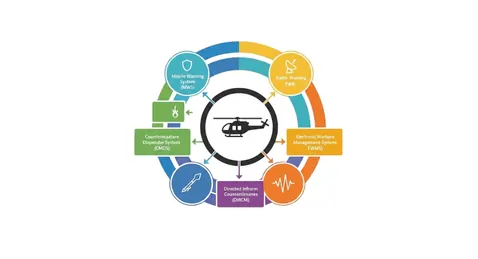
The report “Aircraft Survivability Equipment Market By Component (Sensors, Jammers, Decoys, Countermeasure Dispensers), By Type (Electronic Countermeasures (ECM), Infrared Countermeasures (IRCM), Radar Warning Receivers (RWR), Missile Approach Warning Systems (MAWS), Flares and Chaff Dispensers, Other Defensive Systems), By Platform (Fixed-Wing Aircraft, Rotary-Wing Aircraft, Unmanned Aerial Vehicles (UAVs)) and By Application (Military, Defense Contractors)” is expected to reach USD 6.50 billion by 2033, registering a CAGR of 8.80% from 2026 to 2033, according to a new report by Transpire Insight.
The Aircraft Survivability Equipment (ASE) market is primarily concentrated on the development of sophisticated defense solutions that can improve the survivability of aircraft against guided missiles, radar detection, and electronic warfare. Increasing geopolitical tensions, air force modernization, and changing battlefield threats are fueling the demand for electronic countermeasures (ECM), infrared countermeasures (IRCM), missile approach warning systems (MAWS), radar warning receivers (RWR), and flares and chaff dispensers. These survivability solutions are increasingly being integrated with manned and unmanned aircraft, such as fixed-wing aircraft, rotary-wing aircraft, and UAVs. The increasing need for multi-layered defense solutions is accelerating the demand for solutions that can automatically detect threats and respond with countermeasures in real time. The integration of modern avionics and compact countermeasures is making it efficient to operate on various platforms. Advances in sensor fusion, electronic jammers, and decoys are further improving the efficiency and effectiveness of these solutions, resulting in widespread adoption in strategic air operations around the world.
The defense contractors and the military are pouring resources into R&D to ensure that the latest ASE systems are able to perform within strict criteria of performance, reliability, and interoperability. With the growing use of rotary-wing aircraft and UAVs in asymmetric warfare and surveillance roles, there has been a significant demand for specialized survivability solutions. Automated flares, chaff dispensers, and comprehensive countermeasure packages are essential for aircraft survivability in hostile environments and for reducing pilot reaction time. In summary, the ASE market is driven by the intersection of growing defense spending, global security concerns, and technological advancements. The adoption of ASE solutions is most prevalent in regions with high defense spending and strategic air operations, reflecting the importance of protecting both tactical and strategic assets. Market development is expected to remain steady as new threats arise and military platforms are adapted to incorporate the latest defensive technologies.
The Sensors segment is projected to witness the highest CAGR in the Aircraft Survivability Equipment during the forecast period.
According to Transpire Insight, Sensors are the most important component type, offering real-time threat detection and situational awareness. Infrared, radar, and laser sensors combined with jammers and countermeasure dispensers allow for automatic threat recognition and optimal response.
The sensor market is driven by the need for modernization in rotary-wing and UAV aircraft, which require light and accurate detection capabilities. Advanced sensor fusion and AI-driven threat analysis improve accuracy and reaction time, making this component critical for survivability. Increased use in all types of aircraft fuels the leading market position of this component type in the ASE market.
The Electronic Countermeasures (ECM) segment is projected to witness the highest CAGR in the Aircraft Survivability Equipment during the forecast period.
The defense contractors and the military are pouring resources into R&D to ensure that the latest ASE systems are able to perform within strict criteria of performance, reliability, and interoperability. With the growing use of rotary-wing aircraft and UAVs in asymmetric warfare and surveillance roles, there has been a significant demand for specialized survivability solutions. Automated flares, chaff dispensers, and comprehensive countermeasure packages are essential for aircraft survivability in hostile environments and for reducing pilot reaction time.
In summary, the ASE market is driven by the intersection of growing defense spending, global security concerns, and technological advancements. The adoption of ASE solutions is most prevalent in regions with high defense spending and strategic air operations, reflecting the importance of protecting both tactical and strategic assets. Market development is expected to remain steady as new threats arise and military platforms are adapted to incorporate the latest defensive technologies.
The Fixed-Wing Aircraft segment is projected to witness the highest CAGR in the Aircraft Survivability Equipment during the forecast period.
According to Transpire Insight, Fixed-wing aircraft currently dominate the market because of their importance in long-range operations, air superiority, and intelligence missions. Fixed-wing aircraft are the main beneficiaries of ECM, MAWS, and RWR integration, which enables them to conduct operations in hostile airspace. Modern fixed-wing aircraft need sophisticated survivability systems to guarantee protection against high-speed missiles, radar, and electronic attacks, making survivability systems essential for their effectiveness.
The market is driven by modernization initiatives in the U.S., Europe, and Asia, where fighter aircraft and bombers are being modernized with modular survivability systems. Technological advancements, including AI-based threat analysis and autonomous countermeasure system activation, improve situational awareness and survivability. Fixed-wing aircraft also represent a trend where there is a need to integrate full defensive systems to maintain air superiority, emphasizing the critical role of the segment in maintaining strategic aerial operations.
The Military segment is projected to witness the highest CAGR in the Aircraft Survivability Equipment during the forecast period.
The military application continues to be the leading market due to the intense need to protect aircraft against advanced missile threats and electronic warfare attacks. The nature of modern combat and reconnaissance missions requires survivability solutions with high performance capabilities in ECM, IRCM, MAWS, and flares.
The military market is fueled by growing defense budgets, rising geopolitical tensions, and the need to achieve technological superiority. Upgrades of fighter aircraft, helicopters, and UAVs with integrated survivability solutions ensure constant operational effectiveness. This market demonstrates a deliberate approach to protecting valuable assets while achieving precision and agility in a dynamic battlefield environment.
The North America region is projected to witness the highest CAGR in the Aircraft Survivability Equipment during the forecast period.
North America leads the ASE market, with major countries like the US having large defense budgets and highly advanced air forces. The region’s military modernization plans focus on ECM, MAWS, and IRCM system integration for fixed-wing, rotary-wing, and UAV aircraft. The region’s robust procurement plans and R&D efforts ensure early adoption of next-generation survivability systems, sustaining the region’s lead in the ASE market.
The presence of major market players like Raytheon Technologies, Northrop Grumman, and L3Harris Technologies also sustains North America’s lead in the ASE market. Joint development projects with other allied countries, multi-platform system upgrades, and emphasis on electronic warfare readiness also sustain demand in the region.
Key Players
The top 15 players in the Aircraft Survivability Equipment market include Raytheon Technologies Corporation, Northrop Grumman Corporation, BAE Systems plc, Leonardo S.p.A, L3Harris Technologies, Inc., Thales Group, Saab AB, Elbit Systems Ltd., Israel Aerospace Industries Ltd., Safran, Chemring Group plc, ASELSAN A.S., RUAG Holding AG, Terma A/S, and Cobham Limited.
Drop us an email at:
Call us on:
+91 7666513636

 inquiry@transpireinsight.com
 APAC:+91 7666513636
 Address





