
Jan 31, 2026
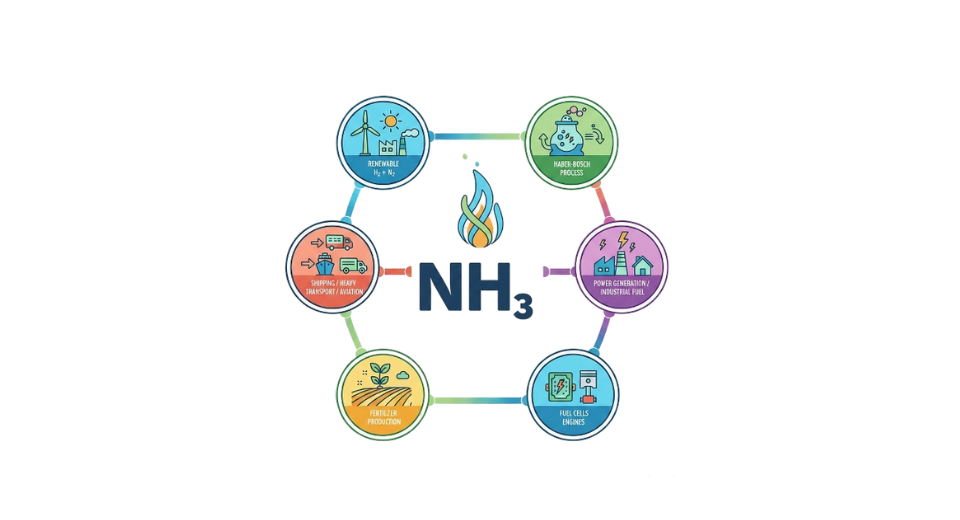
The report “Ammonia Fuel Market By Product Type (Green Ammonia, Blue Ammonia, Grey Ammonia), By Form (Liquid Ammonia, Gaseous Ammonia), By Application (Power Generation Fuel, Maritime Shipping Fuel, Industrial Process & Heat Fuel, Transportation, Others) and By End User (Utilities / Power Plants, Shipping & Marine Operators, Automotive & Transportation, Industrial Energy Users, Others)” is expected to reach USD 18.40 billion by 2033, registering a CAGR of 21.90% from 2026 to 2033, according to a new report by Transpire Insight.
As companies look for scalable decarbonization pathways that balance energy demand with climate commitments the worldwide market for ammonia fuel is undergoing a revolutionary change. Traditionally utilized as a feedstock for fertilizers ammonia is currently gaining popularity as a direct fuel substitute and low-carbon energy carrier in the transportation, industrial process heat, power generation and maritime industries. Its attraction stems from its capacity to manufacture ammonia using fossil feedstocks combined with carbon capture (blue ammonia) and renewable hydrogen (green ammonia) providing a range of decarbonization intensities while utilizing the infrastructure already in place for ammonia production and transportation. Demand dynamics for ammonia as a fuel are driven by regulatory pressure and corporate net-zero goals particularly in hard to abate sectors that lack mature electrification solutions. While maritime companies assess ammonia bunkering as a substitute for heavy fuel oil to comply with International Maritime Organization (IMO) emissions regulations, power utilities are investigating ammonia co-firing to lower the carbon intensity of current thermal assets. Ammonia is also being tested by industrial energy users for high-temperature heat applications where electric alternatives are still not cost-effective.
Strategic investments in large scale production projects and national hydrogen plans both contribute to market momentum. In anticipation of demand from areas with little renewable capacity, nations with an abundance of renewable resources such solar and wind, are positioning themselves as exporters of green ammonia. In order to bridge short term emissions reductions and aid in supply stabilization, legacy ammonia producers are concurrently retrofitting blue ammonia facilities with CCS.
The Blue Ammonia segment is projected to witness the highest CAGR in the Ammonia Fuel during the forecast period.
According to Transpire Insight, As the most widely used low-carbon ammonia route globally, blue ammonia now dominates the global ammonia fuel market. The use of carbon capture and storage technologies in conjunction with established ammonia production assets allows blue ammonia to reduce emissions immediately without requiring extensive infrastructure upgrades. Blue ammonia is the main source of current market revenues due to its practical deployment benefit. Blue ammonia is being embraced as a transitional clean fuel that strikes a compromise between supply reliability, economic effectiveness, and decarbonization standards in power production, industrial energy consumption, and maritime fuel testing. Commercial adoption has risen because to its interoperability with current transportation, storage, and combustion infrastructure, especially in areas with robust fossil feedstock availability and CCS incentives.
Utilities, shipping companies, and industrial energy consumers who want quick reductions in carbon intensity while preserving business continuity are the key drivers of market demand today. Blue ammonia's leadership position is strengthened by these end users' preference for fuels that can be implemented quickly. Its market position is further strengthened by regulatory frameworks that encourage carbon reduction without requiring zero-carbon fuels.
The Liquid Ammonia segment is projected to witness the highest CAGR in the Ammonia Fuel during the forecast period.
Because liquid ammonia has a higher storage density and is more efficient in transportation than gaseous alternatives, it is the most popular form for commercial ammonia fuel deployment. Large-scale bunkering for marine boats and bulk delivery to industrial and power production facilities are made possible by cooling and pressurizing ammonia into a liquid form, which significantly boosts volumetric energy density. By eliminating the need for completely new logistical networks, the vast worldwide infrastructure for liquid ammonia developed over decades for fertilizer supply chains also speeds up market acceptance. Scaling ammonia as a fuel across many regions is made possible by this current backbone.
Additionally, liquid ammonia is more appealing due to its compatibility with industrial combustion systems and power plant retrofit options. With relatively minor changes, operators can incorporate liquid ammonia into existing fuel handling systems, reducing capital costs and execution risk. These elements, along with continuous investments in safety procedures and storage technology, reinforce liquid ammonia's dominance in the changing ammonia fuel market, especially for large-scale, high-volume applications.
The Power Generation Fuel segment is projected to witness the highest CAGR in the Ammonia Fuel during the forecast period.
According to Transpire Insight, Due to the requirement to decarbonize current thermal plants while preserving grid dependability power generation is the markets leading application category for ammonia fuel. Ammonia co-firing directly addresses the strain on utilities running coal and gas assets to lower carbon emissions without sacrificing dispatchability. Ammonia can dramatically reduce lifecycle emissions when combined with conventional fuels or burned in specialized systems providing a practical route to short term decarbonization.
Pilot co-firing initiatives and government incentives that lower financial risk for early adopters highlight the strategic significance of ammonia in power generation. Since ammonia can function as both a fuel and a hydrogen vector including it into the energy mix also supports more general hydrogen economy objectives. Power generation is anticipated to continue to be a key application connecting historical systems with upcoming clean energy frameworks as supply chains and technology advance and producers increase lowcarbon ammonia output.
The Utilities / Power Plants segment is projected to witness the highest CAGR in the Ammonia Fuel during the forecast period.
Because of their size, regulatory vulnerability, crucial role in energy transitions, utilities and power plants make up the most significant end-user segment in the ammonia fuel industry. These organizations must ensure grid stability and dependability while dealing with faster decarbonization deadlines. Ammonia provides a solution to drastically cut emissions without the disruptive capital expenditures connected with complete asset replacements or unproven technologies, whether it is utilized in blended combustion or co-fired with current fuels. Utilities are early adopters and significant buyers of low-carbon ammonia because of this strategic match.
In addition to driving market development, their purchasing power, long-term energy planning horizons, and influence over infrastructure investment decisions draw capital into logistics and production capacity. Utilities' involvement encourages further adoption in industrial and transportation applications by demonstrating to other industries their faith in ammonia's commercial potential. Utilities essentially serve as market anchors, utilizing the technical characteristics of ammonia to strike a compromise between operating requirements and decarbonization goals.
The North America region is projected to witness the highest CAGR in the Ammonia Fuel during the forecast period.
The ammonia fuel industry is primarily driven by North America which is headed by the United States. This region combines a wealth of feedstock availability, technological R&D leadership and strong governmental incentives. Through carbon capture and integration with renewable hydrogen, the United States' substantial legacy ammonia production capacity can be redirected toward low-carbon outputs. The region is positioned as a hub for the local energy transition as well as a possible export base thanks to federal incentives including tax credits for clean hydrogen and carbon storage which significantly improve project economics for the production of blue and green ammonia.
Utility and industrial sector interest in ammonia co-firing, fueled by state and federal emission reduction regulations, further accelerates market momentum. Pilot projects blending ammonia with natural gas or coal demonstrate pathways for utilities to significantly cut carbon intensity with incremental capital expenditure. Additionally, U.S. shipping and industrial participants are exploring ammonia bunkering hubs and supply agreements that extend competitive advantage into broader North American and global corridors.
Key Players
The top 15 players in the Ammonia Fuel market include Yara International ASA, CF Industries Holdings, Inc., ExxonMobil Corporation, Royal Dutch Shell plc, Eni S.p.A., OCI N.V., QatarEnergy, SABIC, BASF SE, Air Liquide S.A., Siemens Energy AG, ThyssenKrupp AG, Nel ASA, ITM Power plc, and MAN Energy Solutions SE.
Drop us an email at:
Call us on:
+91 7666513636

 inquiry@transpireinsight.com
 APAC:+91 7666513636
 Address





