
Feb 09, 2026
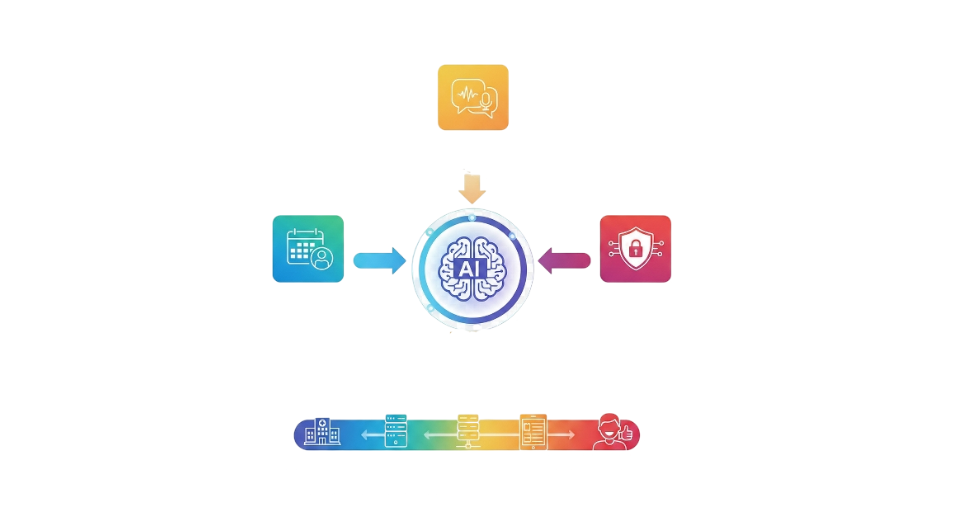
The report “AI In Patient Scheduling Software Market By Deployment Type(Cloud-based, On-premise), By Component (Software, Services), By Application (Appointment Management, Resource Optimization, Staff Scheduling, Patient Flow Management, Predictive Analytics, Telehealth Integration) and By End User Industry (Hospitals & Clinics, Ambulatory Surgical Centers (ASCs))” is expected to reach USD 6.10 billion by 2033, registering a CAGR of 26.10% from 2026 to 2033, according to a new report by Transpire Insight.
The AI In?Patient Scheduling Software Market is emerging with high growth potential, given its increasing demand in relation to inoperative efficiency in healthcare centers. The use of AI in in?patient scheduling software tools shows potential in relation to operational efficiency in healthcare centers. AI improves hospitals and ambulatory centers with in?patient scheduling software tools through inoperative efficiency, allowing them to be highly efficient in relation to patient care. The tools will help hospitals to avoid any disorder in operational efficiency. The tools will allow hospitals to make predictions regarding patient care. Cloud-based solutions are increasingly becoming the preferred option due to their scalability factor and timely access with better integration with telehealth solutions, while the on-premise model continues to flourish in organizations that require high-level security solutions. Software continues to be a leading segment in the segmental outlook due to the availability of such high-end solutions with AI-powered scheduling engines.
The demand for AI-based in-patient scheduling software is triggered by rising patient numbers, accelerated adoption of digital transformation in hospitals, and the need to lower operational costs without compromising the quality of care given to patients. Hospital and clinic segments are the largest end-users of these services, and they use it to improve patient flow and staff efficiency, while ambulatory surgical centers use AI-based systems to optimize room usage and patient appointment schedules.
Furthermore, technological developments, such as linking them to telehealth services or voice-based AI assistants, are enhancing the software's capabilities. In addition, favorable regulatory environments for software in digital healthcare in North America, Europe, and Asia Pacific are enhancing their adoption, thereby supporting AI in-patient scheduling software as a key trend affecting modern healthcare systems globally.
The Cloud-based segment is projected to witness the highest CAGR in the AI In Patient Scheduling Software during the forecast period.
According to Transpire Insight, Cloud-based deployment takes the lead as it enables the delivery of intelligent scheduling solutions in real-time. Hospitals and surgical centers are able to keep pace with the dynamic changes taking place without having to invest in IT or any other related technology. The solution allows for its integration with telehealth platforms, thereby providing users with the option for smooth coordination between virtual/present physical appointments. The deployment allows multi-location facilities to manage large numbers of patients in an efficient way while keeping staff schedules optimized.
Flexibility in cloud-based systems also helps to impose AI improvements that may include predictive analysis for non-shows and patient flow management techniques. Real-time reporting mechanisms help administrators monitor usage and make decisions based on data reporting. Due to reduced operational overhead costs and use of automatic updates, cloud service deployment creates a positive impact that helps reduce operational and maintenance costs for a hospital. Increase in popularity of cloud solutions among healthcare providers boosts growth in the market.
The Software segment is projected to witness the highest CAGR in the AI In Patient Scheduling Software during the forecast period.
Software has a dominant presence in the market, recognized as the primary enabler of AI-driven scheduling and operational optimization. This is facilitated by the use of the intelligent algorithm that analyzes historical patient and staff data with the help of the software. Similarly, the integration with EHRs, telehealth solutions, and patient portals is facilitated by the use of the software.
Thus, the growing need for data-driven decision-making for hospitals, coupled with improving patient experience and reducing patient wait times, is driving the adoption of hospital software solutions. Healthcare providers are looking for AI software solutions that integrate a variety of features like real-time analytics and alerts. It can be noted that the software segment is expected to continue growing with ongoing health transformation efforts for the healthcare sector as a whole.
The Appointment Management segment is projected to witness the highest CAGR in the AI In Patient Scheduling Software during the forecast period.
According to Transpire Insight, Appointment management is found to be the top application due to its direct impact on patient satisfaction and hospital efficiency. Patient appointments are streamlined and conflicts are managed, and staff availability is optimized, and no-shows and cancellations are predicted by AI technology, resulting in a better workflow.
Appointment management solutions help hospitals and surgical centers integrate telehealth appointments, pre- and post-operative surgeries, and multi-department coordination. Being able to utilize idle time for staff and patients brings greater operational efficiency, and AI helps administrators see peak usage trends and change accordingly. Other external and driving forces that contribute to the appointment management market include increasing patient expectations for a streamlined appointment type.
The Hospitals & Clinics segment is projected to witness the highest CAGR in the AI In Patient Scheduling Software during the forecast period.
Hospitals and clinics dominate the market due to the volume and complexity of their in-patient scheduling requirements. The AI technology of such a software can help hospitals and clinics optimize their resource utilization, which can greatly improve the efficiency of their operational capabilities.
Larger hospitals would benefit from a comprehensive solution that integrates patient scheduling with EHR and predictive analytics tools for patient flow management. These AI platforms help reduce wait times and scheduling conflicts to reduce administrative pressures on medical staff and optimize the use of resources and medical staff. The emphasis on digital transformation trends for medical centers and hospitals in developed and emerging economies would foster further growth for this market.
The North America region is projected to witness the highest CAGR in the AI In Patient Scheduling Software during the forecast period.
North America has the largest market share in terms of artificial intelligence-based in-patient scheduling software, driven by highly developed healthcare infrastructure and the pace of digitalization and favorable government policies. Hospitals in the US and Canada are adopting AI-based in-patient scheduling systems for efficient management of large patient volumes. Cloud-based systems with predictive analytics and telehealth have become popular in the region.
The United States, in particular, dominates this region in terms of size due to high EHR adoption rates, well-established IT infrastructure, and high investment in AI-based medical technologies. Hospital systems and ambulatory surgery centers across North America are increasingly using software and services to streamline operations, manage appointments, and schedule staff in these centers. The focus in North America on operational efficiency and cost reduction in healthcare services is fueling this growing market, thus maintaining its position as a leader.
Key Players
The top 15 players in the AI In Patient Scheduling Software market include Epic Systems Corporation, Cerner Corporation, Allscripts Healthcare Solutions, Inc., Qure4u, UKG (Kronos Incorporated), SimplyBook.me, AdvancedMD, InHealth Scheduler, Zocdoc, Inc., Netsmart Technologies, Phreesia, Inc., Doctoranytime, Carepatron, Steer Health, and CareSlot AI.
Drop us an email at:
Call us on:
+91 7666513636

 inquiry@transpireinsight.com
 APAC:+91 7666513636
 Address





