
Jan 29, 2026
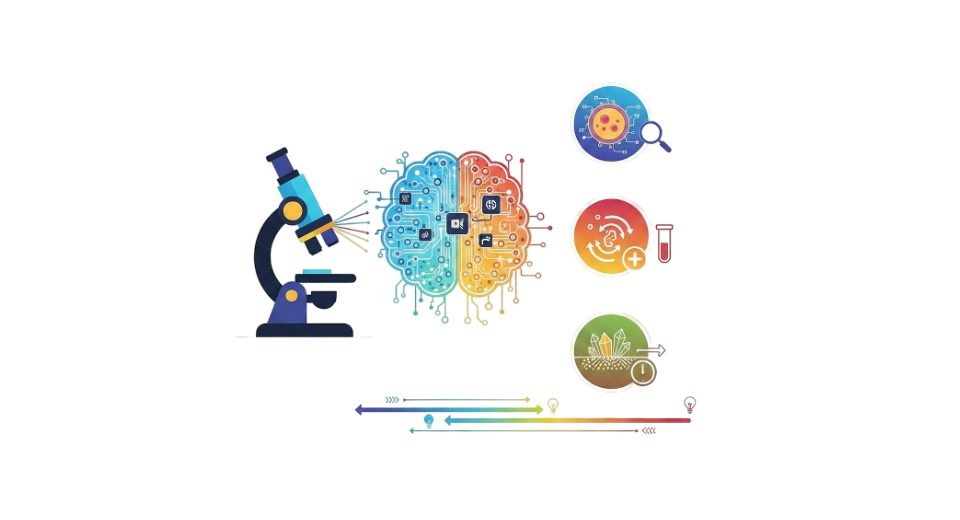
The report “AI in Microscopy Market By Technology (Machine Learning, Deep Learning, Computer Vision, Natural Language Processing, Other), By Microscopy Type(Optical Microscopy, Electron Microscopy, Scanning Probe Microscopy, Super-Resolution Microscopy), By Component (Software, Hardware, Services), By End-Users (Academic & Research Institutes, Pharmaceutical & Biotechnology Companies, Hospitals & Diagnostic Laboratories, Semiconductor & Electronics Manufacturers)” is expected to reach USD 9.80 billion by 2033, registering a CAGR of 22.30% from 2026 to 2033, according to a new report by Transpire Insight.
Now picture tiny details seen more clearly because smart systems help microscopes work better. Instead of just people staring at slides, machines spot patterns without tiring. Imagine how much quicker results come when sorting through complex visuals is simplified by learning algorithms. Tasks once slow now move smoothly due to real-time decisions made by software. Precision climbs when guesswork fades behind consistent digital eyes. Research gains speed, medical checks grow more reliable, factories detect flaws early each area benefits quietly but deeply.
Picture splitting, cleaning up blurry spots, plus pulling out key details now lean heavily on smart software that learns patterns. Notably, light and tiny particle scopes gain sharper results when guided by artificial thinking tools, especially within biology labs, materials research, and metal flaw checks. Most folks grab these upgrades not as hardware but as programs slotted into current microscope setups through clever apps handling visuals and raw numbers alike.
Most colleges and labs use it first, thanks to more experiments and mixed-field projects. Drug makers, biotech firms, and hospitals now rely on smart microscopes to find medicines and spot illnesses faster. Rich countries move ahead because they have better tools and try new tech sooner. Asia Pacific gains speed as money flows into science, production, and image analysis powered by machines.
The Deep Learning segment is projected to witness the highest CAGR in the AI in Microscopy market during the forecast period.
According to Transpire Insight, Growth in the AI for Microscopy field will likely be strongest within deep learning, thanks to its strong performance pulling details out of intricate microscope images. Instead of relying on traditional methods, these systems sort through massive sets of sharp visuals faster and more precisely. Life science work benefits, just like studies in materials or checks on computer chips. Fewer hand-driven review means fewer variations, plus outcomes stay steady across repeated tests.
What keeps showing up is how deep learning powers tasks like spotting oddities in cells, counting them automatically, while also sharpening blurry images beyond normal limits. This pushes labs and clinics to adopt it faster. More pictures piling up every day, stronger computers becoming common, alongside steady upgrades in brain-inspired algorithms quietly weave deep learning deeper into microscope routines, making sure this trend holds firm through the years ahead.
The Optical Microscopy segment is projected to witness the highest CAGR in the AI in Microscopy market during the forecast period.
Strong growth is expected in the Optical Microscopy area of the AI in Microscopy market, driven by common usage in life science studies, medical testing, and everyday lab work. Because AI boosts image quality, it helps sort cells and tissues automatically while sharpening live imaging results. This makes optical tools faster and more trustworthy. Even so, labs can update current setups easily since these microscopes pair well with smart software, avoiding costly equipment replacements.
Pictures from light microscopes create tons of data, perfect for training smart software that learns patterns. Because of this, labs studying living things, diseases, or new medicines now use these tools more often, as speed and accuracy matter there. As artificial intelligence gets sharper, so does how clearly we can see tiny structures using light-based methods. Progress keeps piling up, making this type of microscope work one of the fastest-moving areas in tech-driven imaging.
The Software segment is projected to witness the highest CAGR in the AI in Microscopy market during the forecast period.
According to Transpire Insight, with much of the smarts living inside smart imaging tools, the Software piece grows fast in AI-driven microscopy. Instead of hand-scanning every slide, labs now lean on programs that spot shapes, sort structures, and measure details all without constant oversight. Because these digital helpers plug right into older microscopes, upgrading does not require new gear. Efficiency climbs while errors drop, making software a quiet but steady force across lab benches.
New progress in deep learning and cloud tools keeps improving how AI works in microscope software. Because of better performance, more labs and drug developers now rely on these systems to handle vast image collections while speeding up discoveries. As needs shift toward flexible, smooth-to-use platforms that connect well with existing tech, steady expansion in this software area looks likely over the coming years.
The Academic & Research Institutes segment is projected to witness the highest CAGR in the AI in Microscopy market during the forecast period.
Growth in the academic and research sector looks likely within the AI-powered microscopy space, driven by more labs using smart imaging tools across biology, materials work, and tiny-scale tech. When machines help sort microscope images, scientists save time while getting better results this speeds up how fast they can understand what they see. Work that mixes fields tends to lean on these systems, especially when handling large volumes of visual data quickly matters most.
With more money flowing into research, schools find it easier to bring AI-powered microscopy into their labs. Working alongside tech companies helps speed things up, while vast image collections make training systems smoother. Instead of rigid setups, scientists now tweak digital tools to fit exact needs. This adaptability keeps university teams deeply involved. As methods evolve, these groups remain central players in the field.
The North America region is projected to witness the highest CAGR in the AI in Microscopy market during the forecast period.
A surge in artificial intelligence applied to microscope tech keeps North America at the front, driven by deep-rooted science networks and quick uptake of new tools. Home to major universities alongside drug developers and chip makers, the area leans on smart imaging systems to sharpen picture clarity and speed up data review. Growth holds steady, fueled by ongoing funding pouring into health studies and breakthroughs across medicine. What powers this edge is not just gear, it’s how labs and industries put it to work, day after day.
Big names in AI and microscope tech are active there. Industry teams up closely with labs and universities, pushing new tools out faster. People there clearly see how automation helps. Trained workers are within reach. Government rules often back fresh ideas. All of it adds up. Growth stays strong. Leadership in AI-driven microscopy looks firm through the coming years.
Key Players
Top companies include Thermo Fisher Scientific, Carl Zeiss AG, Leica Microsystems, Olympus Corporation, Bruker Corporation, Oxford Instruments, JEOL Ltd., Hitachi High-Tech Corporation, Nikon Corporation, FEI Company, Andor Technology, Hamamatsu Photonics, TESCAN ORSAY HOLDING, Gatan Inc., Digital Surf, NanoFocus AG, and Intel Corporation.
Drop us an email at:
Call us on:
+91 7666513636

 inquiry@transpireinsight.com
 APAC:+91 7666513636
 Address





