
Jan 13, 2026
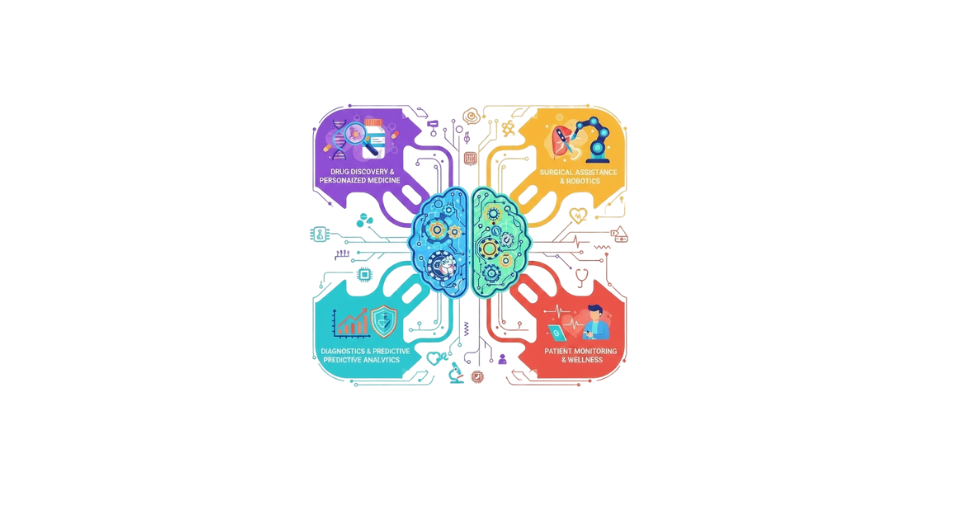
The report “AI In Healthcare Market By Component (Hardware, Software, Services), By Technology (Speech Recognition, Natural Language Processing, Machine Learning, Context-Aware Processing), By End User (Imaging & Diagnostics, Home Health, Medical Devices and Robotics, Virtual Assistants, Others), By End User (Hospitals & Clinics, Medical Device Companies, Diagnostic Centers, Others)” is expected to reach USD 15.58 billion by 2033, registering a CAGR of 31.10% from 2026 to 2033, according to a new report by Transpire Insight.
The global AI in healthcare market is gaining strong traction as healthcare systems increasingly look at intelligent technologies to help drive improvements in clinical accuracy, operational efficiency, and patient outcomes. AI solutions are embedded across diagnostics, treatment planning, patient engagement, and administrative workflows to manage upsurge complexity and intensity of care and data. These growing burdens of chronic diseases and aging populations further strengthen the need for AI-driven healthcare transformation. This is also driven by persistent workforce shortages and increasing pressure to reduce operational costs without sacrificing quality of care. AI-powered clinical tools-advanced machine learning algorithms, virtual assistants, predictive analytics-enable clinicians to automate routine and repetitive tasks, amplify diagnostic confidence, and allocate resources more judiciously. These capabilities are becoming table stakes for healthcare providers operating under value-based care models.
The rising advancements in cloud computing and related technologies, natural language processing algorithms, and the possibility of health data interoperability continue to fuel the adoption in the hospital, diagnostic centers, and home healthcare delivery model system environment. Artificial intelligence solutions continue to witness applications in decision-support solutions and patient surveillance solutions and customized patient pathways. In addition, growing investments in healthcare information solutions and technologies are likely to boost the market growth perspective. With the growing maturity in the required technologies, their relevance and importance in applications related to precision medicine and predictive health solutions would be apparent in the upcoming years. A steady rise would be observed in the healthcare businesses and organizations’ focus on decision-support solutions driven with data in health, thus fueling the growth of this market
The Software segment is projected to witness the highest CAGR in the AI In Healthcare during the forecast period.
According to Transpire Insight, Since software is a critical element in the process of converting unprocessed data in the healthcare sector to useful knowledge, software is the key component type in the artificial intelligence in the healthcare sector market. Artificial intelligence software is a critical element in the healthcare industry because the software helps in diagnosis, automation, prediction, and decision-making. The software is even more valuable to the healthcare sector when combined with imaging and electronic health records systems.
Further enhancing this market is the advent of cloud-based AI software solutions, addressing the scalability requirements of health care organizations with low costs of infrastructure. The long-term phase of health care organizations ensures value addition through upgradeable software solutions, high accuracy level algorithms, and interoperability solutions with an emphasis on efficiency, compliance, and personalized service delivery models.
The Machine Learning segment is projected to witness the highest CAGR in the AI In Healthcare during the forecast period.
Machine learning is prominent the technology segment as it provides predictive analytics, early disease detection, and personalized treatment planning. Its ability to compute large and complex datasets makes health professionals aware of patterns that can be beneficial for making quick and correct clinical conclusions. Machine learning applications are most critical in imaging, diagnostics, and risk assessment.
Because the learning is continuous from real-world data, model accuracy improves, and therefore machine learning easily adapts to evolving clinical needs. With a growing role in precision medicine and population health analytics, it is positioned as a core technology driving long-term market growth across healthcare ecosystems.
The Imaging & Diagnostics segment is projected to witness the highest CAGR in the AI In Healthcare during the forecast period.
According to Transpire Insight, Imaging and diagnostics remain the most prominent application segment, owing largely to the fact that AI has greatly improved the speed of image interpretation and diagnostic accuracy. AI-enabled tools support radiologists through the early detection of abnormalities and lowering of diagnostic errors while efficiently managing increasing imaging volumes. It also benefits from the global rising demand for early disease diagnosis and a lack of radiology professionals. AI-powered imaging solutions see broad adoption because healthcare providers are prioritizing faster diagnosis and better patient outcomes.
The Hospitals & Clinics segment is projected to witness the highest CAGR in the AI In Healthcare during the forecast period.
Hospitals and clinics account for leading end-use due to their complex workflows and large volume of patients. The application of AI will augment their effectiveness in terms of patient care and minimize administrative tasks. The use of AI is also broadly used in the fields of diagnostics, patient monitoring, and virtual assistants. With hospitals experiencing challenges regarding cost and talent, AI technology becomes an important tool in improving care delivery efficiency. Digital transformation strategies in effect ensure that demand from this sector remains constant.
The North America region is projected to witness the highest CAGR in the AI In Healthcare during the forecast period.
The geographical expanse of North America leads the Global AI in Healthcare Market with core support from advanced healthcare infrastructure, high spending on digital health, and early adoptership of AI-driven technologies. The United States has a majority share, driven by pervasive use of AI in imaging diagnostics, clinical decision support, and virtual care platforms across hospitals and health systems.
Consequently, favorable reimbursement frameworks, a surge in investments, and the maturity of the ecosystem related to technology providers and research institutions have accelerated further adoption. Canada adds to this by venturing into national digital health initiatives and an increased use of AI in population health management, while in Mexico, there is gradual uptake as healthcare digitization increases. Together, these aforementioned factors position North America as a mature yet innovation-driven market for AI in healthcare.
Key Players
The top 15 players in the AI In Healthcare market include Microsoft Corporation, Alphabet Inc (Google), IBM Corporation, NVIDIA Corporation, Amazon Web Services, Inc., Intel Corporation, Siemens Healthineers AG, GE Healthcare, Philips Healthcare, Medtronic plc, Epic Systems Corporation, Oracle Corporation, Veradigm LLC, Johnson & Johnson Services, CitiusTech.
Drop us an email at:
Call us on:
+91 7666513636

 inquiry@transpireinsight.com
 APAC:+91 7666513636
 Address





