
Dec 29, 2025
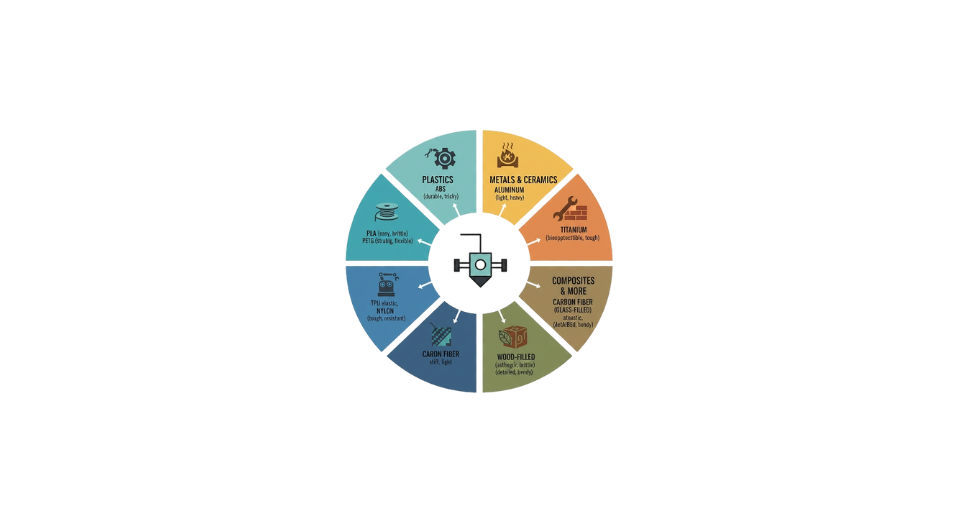
The 3D Printing Materials Market By 3D Printing Technology (Fused Deposition Modeling, Stereolithography, Digital Light Processing, Selective Laser Sintering, Electron Beam Melting, Material Jetting, Binder Jetting, Polyjet, Direct Energy Deposition), By Material(Polymers, Metals, Ceramics, Composites, Bio-Printing Materials), By Application (Prototyping, Tooling, End-Use Parts, Medical, Architectural Models, Automotive Components, Aerospace Components, Others), By End-Users Industry (Aerospace & Defense, Automotive & Transportation, Healthcare & Medical, Industrial, Electronics & Consumer Goods, Construction, Others)" is expected to reach USD 17.68 billion by 2033, registering a CAGR of 20.83% from 2026 to 2033, according to a new report by Transpire Insight.
Layer by layer, the world builds things using a system known as 3D printing, and behind that sits an entire market centered on supplying its raw ingredients. From plastics to powders, substances like polymers, metals, ceramics, blends, and biological compounds make up what gets printed into solid forms. Different jobs demand different traits, such as heat resistance, toughness, and flexibility, so materials are picked based on real-world needs. Right now, plastic-like materials lead because they work well with widely used methods and do not drain budgets. Fused deposition modeling and light-based techniques especially rely on these types of inputs for daily operation.
More use of 3D printing, not just for models but also molds and finished parts. Instead of waiting weeks, companies now build intricate pieces fast, using less material. Sectors like plane making, car building, medical tech, and heavy industry are shifting gears. They are turning to stronger materials because basic plastics will not cut it anymore. Think carbon-filled nylon or fine metal dust stuff that holds up under stress. As factories move beyond testing ideas, these substances become essential. Speed matters, yes, but so does strength you can trust.
Material science progress keeps pushing how 3D printing materials evolve. New developments in heat-resistant plastics, body-safe substances, or eco-friendly raw materials open more ways to apply them. On one hand, North America and Europe stay ahead because research thrives there, along with faster uptake. Yet growth surges in the Asia Pacific, where factories spread fast, industries grow quickly, and money flows into modern production methods.
The Fused Deposition Modeling segment is projected to witness the highest CAGR in the 3D Printing Materials market during the forecast period.
According to Transpire Insight, growth in the 3D printing materials sector points toward FDM leading in expansion rate over the coming years due mainly to strong uptake in factories and tight budget needs. Because it works well with many substances like melted plastics, mix-ins, and strengthened synthetic resins, this method fits tasks ranging from early models to small-batch manufacturing runs. Instead of building parts layer by layer without excess scrap, while keeping daily expenses down, helps explain why companies in aviation, vehicle design, medical gear, and household items lean on this approach most often.
More parts now being made for actual use, not just testing, helps push FDM into wider use. Better accuracy in printers, larger build spaces, the ability to work with multiple materials at once, along with improved heat resistance, allow tougher and stronger pieces to be printed. Due to materials like carbon fiber and glass-filled filaments joining the mix, FDM finds new roles in making light yet sturdy structures. This rise in performance fuels steady expansion for FDM within the 3D printing material sector over the years ahead.
The Polymers segment is projected to witness the highest CAGR in the 3D Printing Materials market during the forecast period.
They work well with common methods, such as FDM, for example, or SLA and DLP. Because they are flexible and affordable, demand keeps rising through the forecast window. Materials such as ABS, PLA, and even nylon fit right into this space, along with tougher options like PEEK. Shaping them takes little effort, which helps when building prototypes or tools. Lightweight builds matter too, especially where intricate shapes are needed. From car parts to medical devices, these substances show up nearly everywhere. That wide reach across sectors pushes polymer use ahead of others in additive production.
New kinds of strong plastics, like those mixed with carbon or glass fibers, now work better in parts that must bear weight or last long. Because people want things light but tough and made to fit specific needs, companies choose these upgraded plastic materials more often than before. These materials handle heat, stress, and harsh chemicals well, giving them an edge over older types. Scientists keep improving how these plastics are made, adding plant-based versions and ones you can recycle again. This steady progress helps solidify their role in the future of printed objects using 3D methods.
The Prototyping segment is projected to witness the highest CAGR in the 3D Printing Materials market during the forecast period.
Growth looks likely in the prototyping part of the 3D printing materials world, driven by more companies turning to additive methods for faster design checks and performance trials. Instead of waiting weeks, teams get physical versions of ideas in days. This speeds up changes while spending less money than old-school techniques. What stands out is how plastics dominate this space, not because they are perfect, but because they work well enough, cost little, and run smoothly on common printers like FDM, SLA, or DLP machines. While metals and composites exist, most labs still reach for polymer filaments when mocking up a new shape. Speed, low risk, and wide access keep them popular across engineering desks. Though newer options emerge, these materials hold ground simply by fitting into today’s workflow without fuss.
Now comes a shift, faster creation times plus tailored designs push more firms toward prototype testing. Not just any material works; stronger plastics and unique light-cured resins now play central roles in building test models that behave like finished items. Think cars, planes, phones, and medical gear; those fields rely heavily on quick mock-ups to move ideas from sketch to reality without delay. Speed here is not optional; it shapes how fast new things reach the world.
The Aerospace and Defense segment is projected to witness the highest CAGR in the 3D Printing Materials market during the forecast period.
Growth in 3D printing materials looks likely for aerospace and defense, due to ongoing needs for strong yet light parts with intricate designs. Because additive methods allow shapes that cut down on weight while needing fewer pieces joined together, these fit well inside planes, rockets, and military systems where every ounce matters. Though polymers were first, now metals and composite blends take center stage when making real-world tools, test versions, or actual flying hardware, all built tough enough to pass strict safety checks.
Now here's a twist: factories making planes and military gear are turning fast to 3D printed stuff. That is old news; now they want it quicker, made just right, while spending less. Think lighter weight, tougher parts built smarter, not bulkier. Surprise, it is not only about speed but also what the materials can handle: heat, pressure, stress in flight. Materials keep getting better, too - stronger plastics, fine metal dusts, blends that fight wear without adding mass. So instead of stacking inventory, teams print what fits exactly when needed. Less waste, fewer delays, tighter control. This change did not come overnight, but today, almost every critical system has some bit grown layer by layer.
The North America region is projected to witness the highest CAGR in the 3D Printing Materials market during the forecast period.
According to Transpire Insight, despite global shifts, North America looks set to stay ahead in the 3D printing materials space through the coming years. Widespread use in industries like aviation, car making, medicine, and heavy manufacturing. What sets it apart is not just innovation, but also access to deep research networks and fast uptake of new tools. Because of this, companies there can work with top-tier materials for models, molds, and finished parts alike.
North America sees faster progress in 3D printing materials thanks to government backing, smart partnerships, also heavy focus on new tech. Progress never stops. Polymers, metals, and composites keep improving because users want lighter, stronger, made-to-order components. That push helps the area stay ahead, shaping its role worldwide without slowing down.
Key Players
Top companies include 3D System Corporation, Stratasys Ltd, Voxeljet, BASF SE, Arkema S.A., Evonik Industries AG, Materialize NV, HP Inc., GE Additives, The ExOne Company, Hoganas AB, Royal DSM N.V., EOS GmbH Electro Optica; System, SLM Solution Group AG, CRP Technology, Renishaw, and others.
Drop us an email at:
Call us on:
+91 7666513636

 inquiry@transpireinsight.com
 APAC:+91 7666513636
 Address





