
Feb 13, 2026
The report “GFRP Rebar Market By Resin Type (Vinyl Ester, Polyester, Epoxy), By Application (Highway and Bridge Construction, Marine Structures, Water Treatment Plants, Residential Construction, Commercial Construction, Industrial Construction, Others) and By End-User (Infrastructure, Construction, Industrial, Marine, Others)” is expected to reach USD 2.80 billion by 2033, registering a CAGR of 14.40% from 2026 to 2033, according to a new report by Transpire Insight.
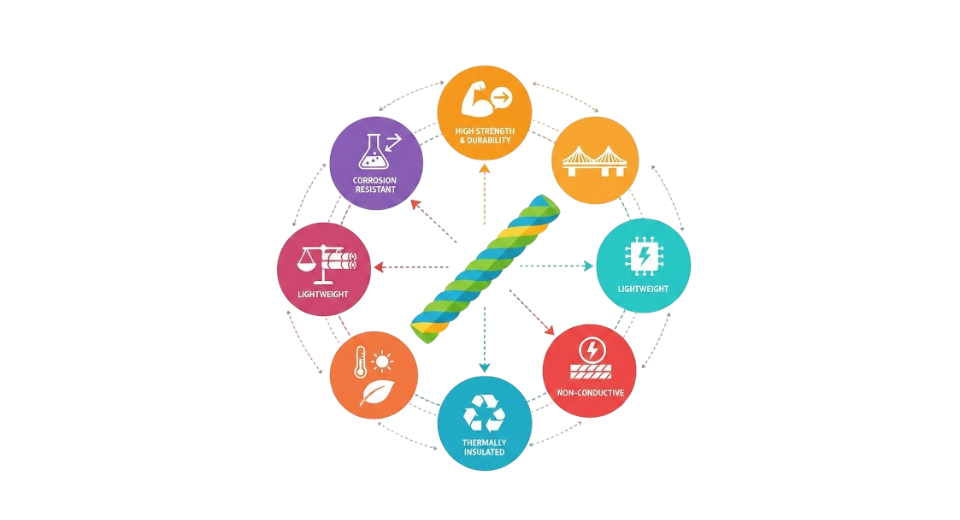
The GFRP rebar market is seeing regular growth due to the increasing demand for durable and corrosion-resistant reinforcement solutions from infrastructure and construction industries. Glass fiber-reinforced polymer rebar provides outstanding resistance to water, chemicals, and environmental degradation compared with traditional steel reinforcement. As a result, these become increasingly applicable in bridges, marine structures, and water management facilities. Gradually, lifecycle cost benefits and reduced maintenance have made engineers and contractors more interested in composite reinforcement materials for new construction and rehabilitation projects. The demand for GFRP rebar is also encouraged by increasing infrastructure modernization and investments in transportation and public utility construction projects in both developed and developing markets. Governments and private developers are focusing on materials that enhance structural longevity while reducing operational expenditures. The lightweight nature of GFRP rebar also improves handling efficiency and installation speed, contributing to improved construction productivity and reduced labor costs. These advantages are strengthening the material's position as a viable alternative to traditional steel reinforcement.
Technological advancements in resin systems, as well as pultrusion process technology, will help improve product quality, strength, and design. Manufacturers are introducing product solutions designed specifically for tough environments like coastal areas or wastewater treatment facilities. Eventually, as these composite reinforcement materials become part of engineering standards, these products will find larger applications in commercial, as well as industrial, construction activities. Further, sustainability aspects have also been impacting material selection with the advent of new constructions. GFRP helps to reduce resource consumption due to the extension of the structure lifespan with minimal need for repairs. The rise of resilient infrastructure, along with growing government support for building durable materials, is driving demand for GFRP rebars at a sustained pace in the global market.
The Vinyl Ester segment is projected to witness the highest CAGR in the GFRP Rebar during the forecast period.
According to Transpire Insight, The vinyl ester resin dominates the market for GFRP rebar, primarily due to its superior resistance to chemical, moisture, and corrosive substances. Several infrastructure development projects, such as building bridges, constructing marine structures and developing wastewater treatment, require reinforced components that can withstand harsh environmental conditions. The GFRP rebar comprises vinyl ester resins, ensuring excellent mechanical strength while providing extended durability. As a result, an increasing number of owners of infrastructures are considering the maintenance costs, rather than the cost of the material, thereby developing more interest in vinyl ester GFRP rebar.
The growth of this segment can also be acknowledged due to improvements made to resin’s chemical characteristics, providing enhanced bonding capabilities. An increased demand for utilizing vinyl ester-based reinforcement materials for critical infrastructures particularly due to their reliability in cyclic loading states, has fueled further growth for the product. An increase in coastal infrastructure projects with water management applications has also shifted the balance towards vinyl ester resin, which leads the market for global GFRP rebars.
The #4 segment is projected to witness the highest CAGR in the GFRP Rebar during the forecast period.
The #4 bar size maintains a considerably high position in the GFRP rebar market due to its balanced combination of strength, flexibility and versatility of application. This size finds wide application in residential foundations, commercial slabs, and medium-load structural applications where moderate reinforcement requirements are present. Its adaptability across multiple construction segments enables contractors to achieve structural performance with cost efficiency, thus contributing to its continuous demand across a wide array of projects.
The #4 bar size also falls well within standard construction practices, making design integration and replacement of traditional steel reinforcement relatively simple in many applications. Growing application of composite reinforcement in mid-scale infrastructure and commercial construction projects also continues to support segment growth. As construction activities continue to grow globally, especially in areas of urbanization the #4 bar size is likely to continue to show strong market penetration because of its practicality and wide engineering acceptance.
The Highway and Bridge Construction segment is projected to witness the highest CAGR in the GFRP Rebar during the forecast period.
According to Transpire Insight, Highway development, followed by bridges, continues to be the major application area for GFRP rebars, primarily because of the need for corrosion resistance, which is a major factor for infrastructure projects. Steel infrastructure may undergo early degradation due to exposure to salt, moisture, and other climatic factors, which increases maintenance costs. A corrosion-resistant GFRP rebar has the potential to extend the lifespan of infrastructure, which may reduce the maintenance requirements of such projects, thus providing cost optimization for infrastructural projects.
The investments made by the government on transportation modernization and rehabilitation of bridges is a key driver of advanced reinforcement materials. The engineering authorities have started to realize the importance of composite reinforcements in improving the longevity and cost reduction of infrastructure construction projects. The global infrastructure networks have started aging, and there is a growing need for reinforcement materials that can offer improved durability and reliability. Therefore, the dominance of highway and bridge construction applications is likely to be maintained.
The Infrastructure segment is projected to witness the highest CAGR in the GFRP Rebar during the forecast period.
It appears that the largest segment of the GFRP rebars market is driven by significant infrastructural development in the form of bridges, highways, tunnels, and water management systems. These infrastructural undertakings require products that will ensure structural stability over a long period while, at the same time, being maintained with minimal disruptions and cost. GFRP rebars are preferred for these infrastructural undertakings because they can resist corrosion and are lightweight.
Additionally, there is an increased emphasis on performance and sustainability during the service life of infrastructure installations in deciding on construction materials. The service life lengthening ability of GFRP rebars also reflects the objectives set by the government. As global infrastructure spending is increasing, particularly in transportation and utility structures, the infrastructure end-user segment is believed to retain its leading position in the market.
The North America region is projected to witness the highest CAGR in the GFRP Rebar during the forecast period.
North America stands out as the prime market for GFRP rebar, fueled by high infrastructure rehabilitation needs and the early adoption of more advanced construction materials. The United States acts as the core market, driven by the persistent bridge refurbishment programs and the rising acceptance of GFRP rebar from the engineering industry owing to corrosion resistance. The general infrastructure aging coupled with the maintenance expenses of steel rebar reinforcements tends to prompt the demand for composite materials.
On the other hand, the support of various regulations, as well as the changing standard for engineering, also contributes to the growth of the market. Another region displaying high demand for GFRP rebars, particularly for transportation infrastructure, is Canada. This is due to the harsh climatic conditions, which require materials to be of high durability. Consequently, North America is likely to maintain the market position of the GFRP rebar business.
Key Players
The top 15 players in the GFRP Rebar market include Dextra Group, Pultron Composites, Schöck Bauteile GmbH, Pultrall Inc., Kodiak Fiberglass Rebar, Neuvokas Corporation, Sireg S.P.A., Hughes Brothers Inc., Composite Rebar Technologies, Armastek, FiReP Rebar Technology, B&B FRP Manufacturing Inc., BP Composites Ltd., Fibrolux GmbH, and Röchling Group.
Drop us an email at:
Call us on:
+91 7666513636

 inquiry@transpireinsight.com
 APAC:+91 7666513636
 Address





