
Feb 13, 2026
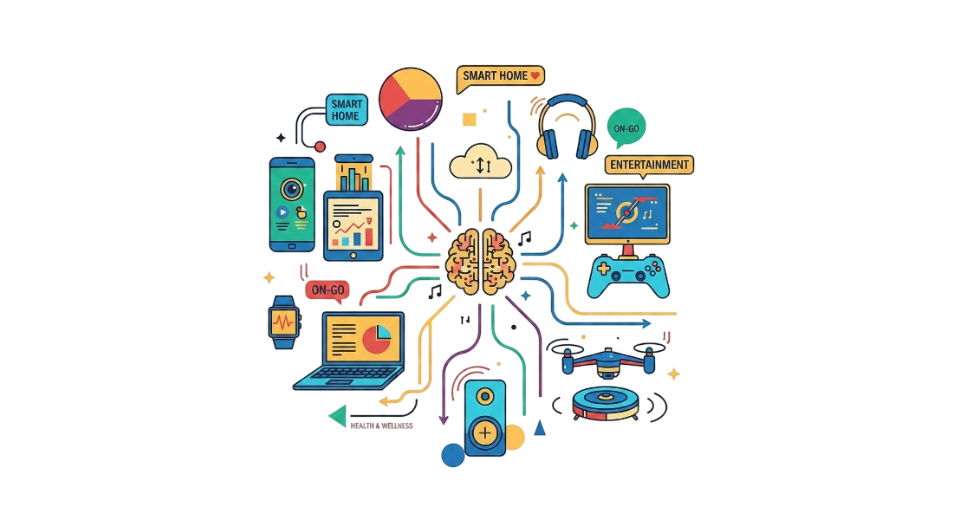
The report “Consumer Electronics Market By Product Type (Smartphones, Televisions, Laptops & Computers, Tablets, Audio & Video Devices, Cameras & Imaging Devices, Wearable Electronics, Gaming Consoles, Home Appliances, Others), By Technology (Smart Devices, Conventional Devices, AI-Enabled Devices, IoT-Connected Devices), By Distribution Channel (Online Retail, Offline Retail) and By End User (Residential, Commercial)” is expected to reach USD 1,900.00 billion by 2033, registering a CAGR of 7.00% from 2026 to 2033, according to a new report by Transpire Insight.
The global market for consumer electronics is a dynamic market characterized by technological innovations with a wide array of electronic products used for individual, residential, and commercial purposes. The market has continued to grow at a rapid pace due to various technological improvements, increased connectability, and changing lifestyles of consumers, which are largely focused on providing convenience, ease of mobility, and integration of technology. Increases in smart devices used for electronic communication and other related purposes have contributed to the growth of the market. Demand growth is mainly fueled by ongoing innovation within the product category, the integration of artificial intelligence, and the increasing footprint of IoT-based ecosystems within consumer households. With manufacturers seeking to enhance the quality and usability of their devices, such a trend is resulting in a high rate of replacement, particularly due to the increasing preference for connected devices among consumers. The trend is also fueled by the uptake of premium class devices within developed economies.
Expansion in e-commerce platforms has further facilitated an increase in accessibility of products, thus allowing manufacturers of various products to expand their markets by reaching a larger consumer base in urban as well as semi-urban areas. Moreover, an increase in disposable income levels in emerging countries is creating fresh opportunities in terms of consumer electronics, which may be categorized as mid-range and budget. In addition, the market is seeing an increase in sustainability, energy-efficient designs, and eco-friendly manufacturing processes. There is a trend of investing in research and development to bring forth products with various features while taking care of environmental and regulatory needs. The amalgamation of entertainment, communication, and automation technologies would continue to influence the long-term pattern and shape competitiveness in the global consumer electronics environment.
The Smartphones segment is projected to witness the highest CAGR in the Consumer Electronics during the forecast period.
According to Transpire Insight, The smartphone segment continues to be the major product category in the global market for consumer electronics because of its multiple features and functionality. The consistent improvements in smartphone technology have helped to maintain the importance of smartphones as devices for universal use. Improved usage of mobile-based services, digital payment options, and social media platforms are expected to ensure frequent upgrades in the market, thus ensuring the consistent generation of revenues for companies. Moreover, the presence of tough competition in the global smartphone market has enhanced the use and expansion of the smartphone segment.
The segment is further benefiting from the increasing penetration within emerging economies, where the usage of smartphones is expected to grow at a good rate due to improvements in internet infrastructure and cost-efficient devices. The smartphone manufacturers are working on various personalized features through the integration of AI, along with increased security and battery life on offer, to appeal to a wider range of consumers. The integration of these devices with various wearable gadgets and cloud services adds to their appeal of being the center of the electronic landscape.
The Smart Devices segment is projected to witness the highest CAGR in the Consumer Electronics during the forecast period.
Smart devices lead the technology segment due to increased demand for automation, connectivity, and the ability to integrate various devices. The upsurge of smart home technology has amplified demand for smart devices, especially with regard to efficient remote control, interaction, and automation of various devices. The technological improvements of smart home devices, particularly with regard to wireless technologies and cloud computing, have enhanced the ability of devices to work with one another, hence widespread acceptance.
Expansion of capability in artificial intelligence and IoT has further enhanced the adoption of smart devices by providing greater predictive features and personalized experiences. There has also been integration of smart features across various categories of products, such as television, home appliances, and wearables, to exhibit differentiation in product lines. This technological convergence achieves consumption behavior based on the ecosystem, in which customers adopt multiple devices, thereby creating opportunities for growth in the long term.
The Online Retail segment is projected to witness the highest CAGR in the Consumer Electronics during the forecast period.
According to Transpire Insight, Online retail has become the leading medium of distribution due to the growth of digitalization in the economy, which affects the purchasing behavior of customers. For customers, online retail offers greater product availability, fair prices, and easier comparison of product specifications before making a purchase. There has been rapid growth of electronic commerce platforms, which has enhanced accessibility, especially for emerging markets where the retail infrastructure is relatively low.
The companies are using techniques such as direct-to-consumer strategies through online platforms to enhance engagement with brands and facilitate more optimized pricing strategies. Promotional campaigns, financing facilities, and deliveries are some of the factors that boost the online channel. Faster product launches and broader geography of online retail allow companies to respond to changing consumer behavior and technological trends in the consumer electronics sector.
The Residential segment is projected to witness the highest CAGR in the Consumer Electronics during the forecast period.
The largest share of the market is occupied by the residential segment, which can be attributed to increased consumption of digital content. The demand for home entertainment systems, smart home devices, as well as personal electronics, is a pointer towards an increased interest among consumers in seeking convenience. Moreover, with trends towards remote working, online learning, as well as entertainment, households do purchase multiple devices.
This growth in this business segment is also fueled by the proliferation of smart homes, along with the inclusion of such smart devices in every aspect of everyday life. Moving forward, people are trying to utilize electronic products that can enhance their work, as well as provide them with convenience and better security. There will always be growth opportunities in terms of augmented expenditure of people in developing countries.
The North America region is projected to witness the highest CAGR in the Consumer Electronics during the forecast period.
North America plays an important role in the overall consumer electronic product market, driven by factors such as higher consumer expenditure capabilities, higher tendency to adopt upgraded and more innovative technologies, and higher usage of products such as smart electronic products. This region has access to a more developed technological platform wherein consumers are ready to purchase upgraded electronic products such as smartphones, smart home electronic products, wearables, and entertainment electronic products. Factors such as ongoing innovation in technology, led by major technology companies based in the United States, also play an important role.
There is also strong replacement demand, fueled by high rates of product innovation cycles. Consumers want upgraded features and enhanced performance. High demand caused by increased use of artificial intelligence devices, cloud-connected ecosystems, and smart home devices further supports the region’s ability to sustain future demand. Additionally, increased use by businesses of consumer electronics devices in hybrid work environments also constitutes sustained demand, further emphasizing the strategic position of the North America region in the global consumer electronics landscape.
Key Players
The top 15 players in the Consumer Electronics market include Samsung Electronics Co., Ltd., Apple Inc., Sony Group Corporation, LG Electronics Inc., Panasonic Holdings Corporation, Xiaomi Corporation, Huawei Technologies Co., Ltd., Lenovo Group Limited, HP Inc., Dell Technologies Inc., Haier Smart Home Co., Ltd., TCL Technology Group Corporation, Hisense Group Co., Ltd., ASUSTeK Computer Inc., and Microsoft Corporation.
Drop us an email at:
Call us on:
+91 7666513636

 inquiry@transpireinsight.com
 APAC:+91 7666513636
 Address





