
.webp)
What is the current size of the wearable technology market?
The global wearable technology market has entered a phase of rapid expansion, hitting a valuation of USD 247.54 billion in 2026. This trajectory is set to accelerate, with market models forecasting a valuation of USD 391.85 billion by 2033. This expansion represents a compound annual growth rate CAGR)of 17.5% during 2026-2033.
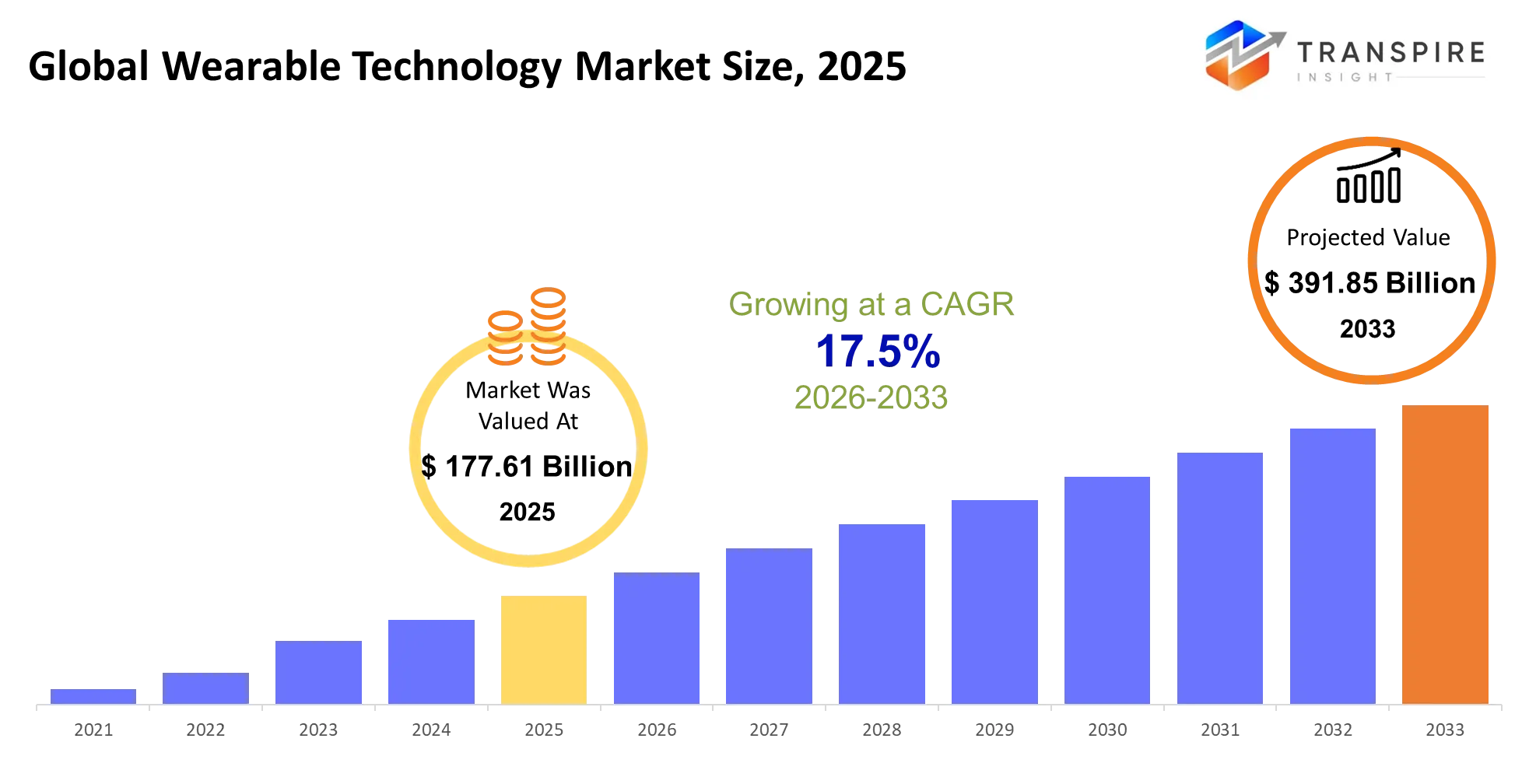
The baseline growth of this sector is fueled by the continuous development of micro-electromechanical systems (MEMS) sensors, deep consumer integration with smartphone ecosystems, and a distinct post-pandemic shift toward preventive digital health monitoring. The integration of advanced on-device artificial intelligence systems has transitioned wearables from passive tracking accessories into active data-processing nodes, fundamentally expanding the total addressable market.
Global Wearable Technology Market Forecast (2025-2033)
The following dataset maps out the projected financial trajectory, tracking year-over-year expansion alongside consistent compound annual growth rates:
|
Report Metrics |
Details |
|
Market size value in 2026 |
USD 247.54 Billion |
|
Market size value in 2025 |
USD 177.61 Billion |
|
Revenue forecast in 2033 |
USD 391.85 Billion |
|
Growth rate |
CAGR of 17.5% from 2026 to 2033 |
|
Base year |
2025 |
|
Historical data |
2021 - 2024 |
|
Forecast period |
2026 - 2033 |
|
Report coverage |
Revenue forecast, competitive landscape, growth factors, and trends |
|
Regional scope |
North America, Europe, Asia Pacific, Latin America, Middle East & Africa |
|
Key company profiled |
Apple Inc., Samsung Electronics Co., Ltd., Xiaomi Corporation, Huawei Technologies Co., Ltd., Garmin Ltd., Google LLC/ Fitbit, Meta Platforms, Inc., Oura Health Ltd., WHOOP Inc., Imagine Marketing Ltd./ boAt, Ultrahuman, Vuzix Corporation, Temple, Neurable, NextSense, Sandbar, Wispr AI, Sesame, Biolinq, Aktiia, Biobeat, RayNeo, VITURE, Mira |
|
Customization scope |
Free report customisation (country, regional & segment scope). Avail customised purchase options to meet your exact research needs. |
|
Report Segmentation |
By Product (Smartwatches, Smart Rings, Fitness Trackers, Smart Glasses/Eyewear, Smart Clothing, Healthcare Patches), By Operation (Autonomous Edge-Processing Devices, Tethered/Smartphone-Dependent Ecosystems), By Type (Active Biometric Monitors, Passive Activity Trackers), and By Application (Consumer Electronics, Institutional Healthcare/Remote Patient Monitoring, Industrial Ergonomics & Safety, Enterprise Logistics, Defense/Military Tracking) |
What is wearable technology and how does the wearable technology market operate?
Wearable technology consists of body-mounted electronic devices engineered to intercept, log, and analyze real-time physiological and environmental telemetry. These systems do not merely function as secondary smartphone displays; they operate as self-contained computing nodes that process complex diagnostic workloads right at the edge of the network.
The functional ecosystem depends on a structured multi-tier framework:
- Data Acquisition Layer: High-precision sensor packages embedded inside devices continuously capture physical phenomena. These include photoplethysmography (PPG) optical arrays for blood perfusion metrics, tri-axial accelerometers and gyroscopes for spatial movement tracking, and specialized galvanic skin response (GSR) electrodes that measure microscopic fluctuations in sweat gland activity to quantify psychological strain.
- Edge Processing Layer: Low-power microcontrollers clean raw, noisy signal baselines directly on the hardware. By executing localized algorithmic operations at the device level, wearables strip out motion artifacts before transmitting information packages, preserving local battery resources and optimizing local memory space.
- Wireless Telemetry Layer: Compressed datasets travel over low-energy protocols like Bluetooth Low Energy (BLE) or cellular 5G network channels to clear synchronization targets.
- Cloud Analytics & System Integration Platform: Cloud architectures process the ingested telemetry through deep learning models. This centralized layer maps historic baselines against population metrics to flag anomalous deviations, streaming actionable insights back to consumer interfaces or routing validated diagnostic fields into institutional Electronic Medical Record (EMR) databases.
Why is the wearable technology market expanding rapidly?
The current surge across the wearable landscape stems from structural changes in consumer health behavior, rapid advancements in device miniaturization, and new opportunities for corporate monetization.
- A Shift From Reactive Care to Continuous Personal Health Management: Consumers no longer wait for annual clinical checkups to understand their physical baseline. Devices now provide 24/7 visibility into heart rate variability (HRV), peripheral oxygen saturation ($SpO_2$), and respiratory stability, making health monitoring a proactive, daily habit.
- The Proliferation of On-Device AI Environments: Integrated machine learning models have shifted hardware away from simplistic threshold alerts. Current systems continuously analyze individual baselines to calculate comprehensive daily recovery metrics, forecast upcoming physical strain capacity, and spot early signs of illness before physical symptoms manifest.
- The Transition of Smart Rings Into Mainstream Consumer Tech: Form-factor innovation has decoupled high-tier tracking from heavy, display-centric form factors. This shift allows users who prefer classic mechanical timepieces to capture dense biometric tracking profiles using discrete, lightweight bands worn on the finger.
- The Broadening Scope of Regulated Remote Patient Monitoring (RPM): Structural updates within national healthcare programs have unlocked recurring medical reimbursement pathways for remote tracking systems. This shifts hardware distribution from voluntary retail purchases directly into structured prescription workflows managed by insurance systems and primary care physicians.
- The Expansion of High-Margin Software Subscription Platforms: Device manufacturers are moving away from single-transaction hardware sales. By locking deep analytics, personalized sleep profiling, and tailored fitness coaching behind premium software paywalls, brands are building highly predictable, recurring monthly recurring revenue (MRR) streams.
What are the major growth drivers in the wearable technology market?
Artificial Intelligence Systems and Edge Integration
Hardware architectures are moving away from standard microcontrollers in favor of specialized neural processing sub-units capable of executing localized deep-learning tasks. Processing data locally at the edge minimizes round-trip cloud communication latencies, keeps sensitive bio-information private on the local device, and enables continuous contextual processing.
These integrated algorithmic layers instantly clean raw signal inputs, filter out movement noise, and calculate precise metrics like heart rate variability and blood oxygen saturation right on the wrist or finger.
Advanced Biosensor Innovation and Multi-Spectral Arrays
Modern multi-spectral optical clusters utilize a wider range of LED wavelengths to probe deeper into subcutaneous tissue layers. This increased precision provides highly stable readings during vigorous movement and forms the technical backbone for next-generation non-invasive tracking.
Advanced engineering efforts are successfully miniaturizing electrochemical and interstitial fluid sensors, setting the stage for continuous, pain-free monitoring of biomarkers like lactic acid, blood glucose, and systemic cortisol levels.
The Structural Digitization of Institutional Healthcare Networks
As traditional clinical facilities look for ways to lower readmission rates and optimize bed availability, hospital networks are embedding consumer-facing hardware directly into post-operative and chronic care plans.
Standardizing APIs across device makers has simplified the process of syncing everyday step, sleep, and heart data into secure institutional health systems. This clear data pipeline gives care teams the ability to track high-risk outpatients continuously, catching potential health deteriorations early and avoiding costly emergency interventions.
Industrial Operations and Enterprise Deployment
Heavy industry, manufacturing hubs, and global logistics networks are scaling up device rollouts to protect field workers and boost operational output. Distributed field teams use ruggedized wrist systems and smart safety vests to monitor real-time muscle fatigue, track ambient heat stress index values, and verify proper lifting forms.
Furthermore, integrated indoor tracking beacons give warehouse operators a clear, live map of facility floor movements, which optimizes picking routes and automatically keeps workers away from active heavy machinery zones.
Extended Reality Implementations and Spatial Compute Form Factors
Smart eyewear is evolving beyond bulky virtual reality headsets into slim, prescription-compatible frames suited for daily wear. Advanced optical waveguide designs project high-definition digital overlays directly onto the user's field of view without obstructing their surroundings.
Equipping these slim glasses with low-power spatial tracking cameras and directional audio arrays allows users to interface naturally with contextual artificial intelligence tools, handle navigation, and view notifications completely hands-free.
Athletic Optimization and Ecosystem Analytics
Elite athletic organizations and consumer fitness enthusiasts are looking for deeper, more actionable performance metrics than simple calorie burn estimates. Current tracking ecosystems gather precise, multi-layered data points, matching oxygen saturation drops against heart rate recovery speeds and sleep architecture phases to calculate exact cardiovascular strain baselines.
These dense data profiles feed straight into automated training systems, giving users customized, daily workout adjustments designed to maximize conditioning while preventing overtraining injuries.
Preventive Diagnostics and Early Disease Detection
By constantly monitoring subtle physical shifts, wearables are proving highly effective at identifying health issues before acute symptoms emerge. On-device systems can detect tiny variations in skin temperature baselines and respiratory rhythms to flag early signs of systemic infections days before a user feels sick.
At the same time, continuous cardiac monitoring algorithms track subtle changes in pulse intervals to detect episodes of silent atrial fibrillation, giving users an early warning to seek preventive medical care.
Distributed Workforce Coordination and Field Efficiency
Modern enterprise systems rely on connected headwear and specialized arm-mounted displays to coordinate field technicians across complex environments like utility grids, aviation hangars, and remote telecommunication hubs.
Field engineers can pull up structural blueprints, overlay wiring diagrams directly onto physical equipment via augmented reality, and stream live first-person video to remote specialists for real-time troubleshooting, keeping their hands free to perform the actual repairs.
What barriers are affecting wearable technology market growth?
The Physical Constraints of Battery Chemistries
The slow pace of lithium-ion chemical development creates a persistent design bottleneck for high-performance wearables. Consumers demand ever-thinner form factors alongside continuous health tracking, bright multi-nit screens, and active cellular connections a feature set that drains small batteries rapidly.
As a result, flagship smartwatches often require daily charging cycles, which disrupts continuous overnight sleep tracking and contributes to user abandonment over time.
Data Privacy Vulnerabilities and Regulatory Compliance Challenges
Collecting and storing highly granular biometric data creates an attractive target for digital intrusions. Because many consumer wearables transfer files over basic, unencrypted Bluetooth lines or store datasets on poorly secured cloud platforms, they risk exposing sensitive user health metrics.
Navigating the complex global regulatory landscape such as Europe's strict GDPR mandates and the United States' rigid HIPAA frameworks requires continuous development investments, slowing down feature rollouts and raising compliance costs for smaller hardware firms.
Device Interoperability and Fragmented Ecosystem Standards
The lack of unified communications standards across consumer tech brands creates friction throughout the user experience. Tech ecosystems often lock advanced diagnostic features to their own smartphones, preventing their devices from functioning properly on competing mobile platforms.
This platform fragmentation stops third-party digital health applications from seamlessly pulling clean, multi-layered biometric streams across different hardware lines.
Sensor Drift and Clinical Accuracy Variations
Miniaturized optical and movement sensors remain prone to reading errors caused by everyday usage variables. Shifting device positions on the skin, intense wrist movements, and differences in skin pigmentation can skew light-based heart rate and blood oxygen readings.
When consumer devices return inconsistent or inaccurate information, they can cause unnecessary anxiety for users or flood medical providers with false-positive alerts, slowing down the integration of consumer hardware into formal medical workflows.
Retail Pricing Thresholds and Market Access Disparities
High-end wearables packed with advanced health tracking, premium materials, and certified sensor arrays carry premium retail prices that limit mass-market adoption. In developing economies, these high costs lock out large segments of the population that could benefit most from continuous health tracking.
Furthermore, because public health systems and insurance providers are slow to subsidize wellness hardware, the latest monitoring tools often remain luxury items restricted to wealthier demographics.
Subscription Fatigue and Paywall Resistance
Device makers are increasingly moving toward software-as-a-service (SaaS) business models, locking premium analytics, deep sleep tracking, and personalized coaching platforms behind monthly paywalls.
Consumers who already pay premium prices for hardware are pushing back against these recurring fees just to view their own biometric data. This ongoing subscription fatigue can hurt brand loyalty and drive users toward competing products that promise fee-free access to health metrics.
Enterprise Integration Overheads and Implementation Hurdles
Deploying wearable systems across large industrial and corporate teams brings significant up-front costs and deployment challenges. Corporate IT departments must build custom middleware to safely ingest field hardware data, update their cybersecurity frameworks to handle new endpoints, and train personnel to use the equipment properly.
These structural hurdles, combined with unclear immediate returns on investment, cause enterprise buyers to delay scaling past initial trial phases.
Which wearable device segments dominate the wearable technology market?
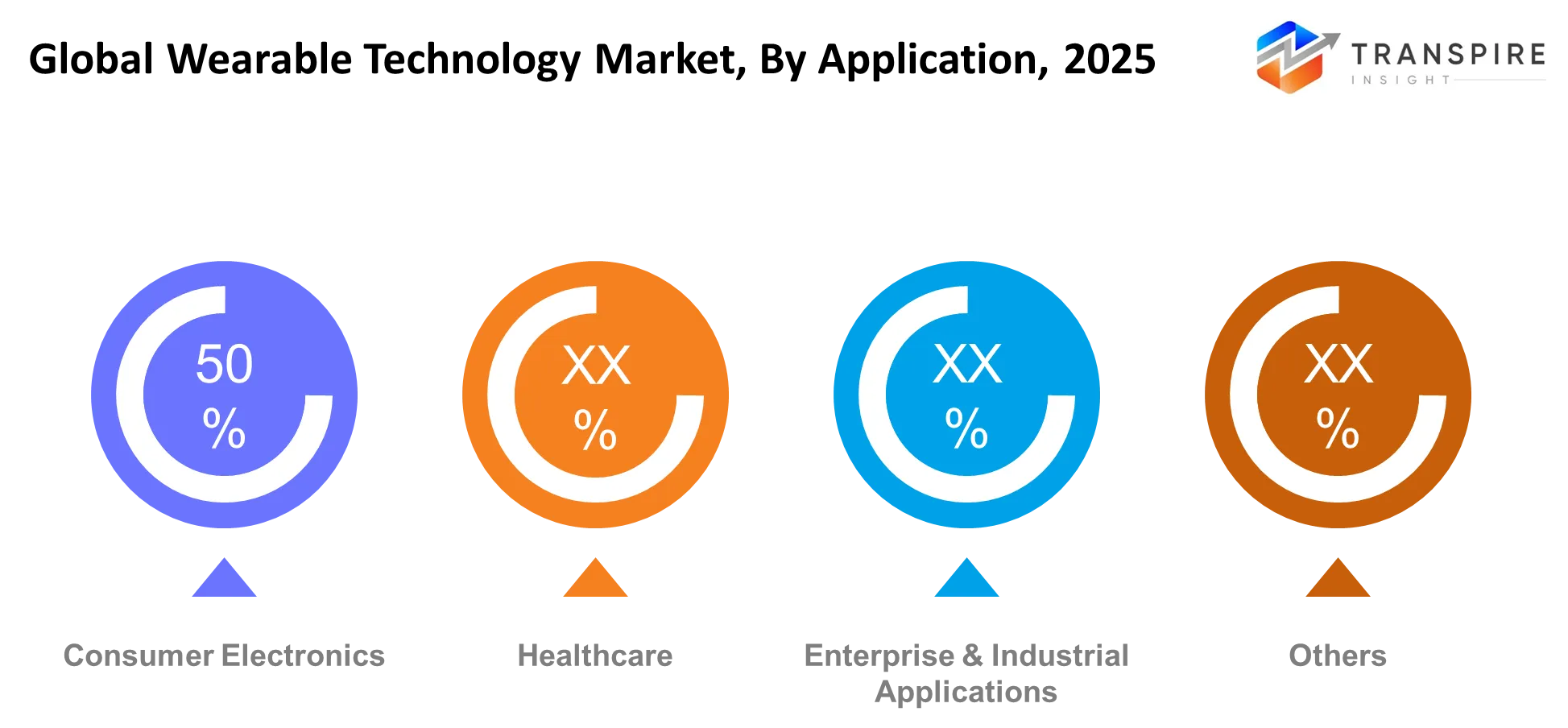
Smartwatches continue to hold the largest share of the market, accounting for roughly 45% of total revenue. This dominance is driven by their versatile feature sets, direct smartphone software integration, and broad consumer appeal across age groups.
At the same time, smart rings are emerging as the fastest-growing form factor, expanding rapidly due to their discrete design, screen-free operation, and excellent suitability for overnight sleep tracking.
Meanwhile, medical-grade patches and dedicated remote health monitors are seeing steady growth within institutional clinical pathways. Driven by regulatory approvals and insurance reimbursement programs, these specialized tools are becoming standard equipment for remote patient monitoring.
Comparative Analysis of Market Segments
The structural position, trajectory, and core operational use cases across dominant device categories map out as follows:
|
Segment |
Volume Market Share (2026) |
Projected Segment CAGR (2026-2033) |
Primary Application |
Core Sensor Payload |
Target Demographics |
|
Smartwatches |
45.2% |
11.4% |
Everyday notification management, multi-sport tracking, and cellular edge communication. |
Multi-wavelength PPG, ECG electrodes, skin temp, altimeters. |
General mass-market consumers and enterprise field teams. |
|
Smart Rings |
12.8% |
25.4% |
Continuous, low-profile sleep tracking, recovery indexing, and biometric monitoring. |
Infrared PPG arrays, digital temperature sensors, 3-axis accelerometer. |
Health-conscious buyers and mechanical watch enthusiasts. |
|
Fitness Trackers |
18.5% |
6.2% |
Entry-level activity logging, active calorie tracking, and basic step counting. |
Green LED optical sensors, basic tri-axial accelerometer units. |
Budget-conscious buyers and fitness beginners. |
|
Healthcare Wearables |
14.1% |
18.2% |
Continuous medical-grade disease management and remote outpatient clinical tracking. |
FDA-cleared ECG strips, bio-impedance grids, transdermal arrays. |
Chronic care outpatients, elderly demographics, and clinical trial cohorts. |
|
Smart Eyewear / AR |
6.1% |
21.3% |
Spatial data access, heads-up workplace navigation, and context-aware AI tools. |
Micro-OLED wave-guides, spatial tracking cams, bone conduction. |
Enterprise field technicians, remote engineers, and early tech adopters. |
|
Smart Clothing |
3.3% |
14.5% |
Elite athletic kinetic performance tracking and ergonomic worker injury prevention. |
Conductive fiber pathways, flexible strain sensors, surface EMG. |
Professional athletic teams, defense forces, and industrial laborers. |
Why are smart rings attracting strong consumer demand?
Smart rings are winning over consumers by solving a primary issue of traditional smartwatches: the friction of wearing a bulky, screen-equipped device 24/7. Because rings lack bright, distracting displays and vibration motors, they provide a screen-free alternative for users looking to disconnect from notification loops while maintaining visibility over their personal health trends.
This compact, unobtrusive form factor makes them particularly successful for overnight sleep monitoring, where heavy watches often cause physical discomfort.
From a data-gathering perspective, the finger offers a distinct physiological advantage over the wrist for tracking vital signs. The digital arteries running close to the surface of the finger provide a clean, clear signal for optical sensors, allowing smart rings to capture accurate heart rate, blood oxygen, and vascular metrics with less interference from movement or skin shifting.
Feature Comparison: Smart Rings vs. Smartwatches
The operational tradeoffs and structural design variations between these two form factors break down as follows:
|
Attribute |
Smart Rings (e.g., Oura Ring 4, Galaxy Ring) |
Smartwatches (e.g., Apple Watch Ultra, Galaxy Watch) |
|
Battery Operating Life |
5 to 7 days on a single charge cycle. |
18 to 48 hours before requiring replenishment. |
|
Primary Interaction Model |
Screenless, automated data collection via app. |
Interactive touchscreens, voice control, and haptic alerts. |
|
Sleep Tracking Comfort |
Highly ergonomic, non-intrusive form factor. |
Bulkier chassis can disrupt natural sleep movements. |
|
Biometric Signal Source |
High-density digital capillary beds in the finger. |
Superficial radial/ulnar artery pathways at the wrist. |
|
Notification Integration |
Zero visual feedback; minimal status LED indicators. |
Real-time text replies, app alerts, and voice calls. |
|
Weight Profiles |
Ultra-lightweight build, typically between 2 to 5 grams. |
Branded options range from 30 to over 65 grams. |
How is artificial intelligence transforming wearable technology?
Real-Time Predictive Health Modeling and Early Warning Systems
On-device machine learning models are shifting the consumer experience from historical data review to forward-looking health forecasting. By continuously tracking variations across baseline metrics like sleeping heart rate, breathing frequency, and skin temperature, AI models can spot minor physiological shifts that indicate systemic stress.
This pattern evaluation allows devices to alert users to potential upcoming illnesses or sudden spikes in physical exhaustion up to 48 hours before physical symptoms become noticeable.
Advanced Algorithmic Sleep Architecture and Rest Recovery Profiling
AI algorithms process multi-layered sensor streams to accurately map out overnight sleep stages. By analyzing heart rate variability shifts alongside movement logs, these systems map exact transitions through deep, light, and REM sleep cycles.
Instead of just calculating a basic sleep duration score, the cloud analytics engine provides actionable guidance, suggesting optimal sleep windows based on individual circadian rhythms and identifying personal behaviors that disrupt recovery.
Personalized Fitness Coaching and Automated Training Management
Instead of relying on rigid, pre-programmed fitness schedules, AI-driven wellness engines adapt to real-time physical readiness. The software analyzes recent training loads, everyday stress indicators, and overnight recovery data to dynamically adjust daily fitness targets.
If a user's recovery metrics drop due to poor sleep or high physical strain, the platform automatically scales back workout targets to prevent overtraining and lower injury risks.
Hyper-Localized Edge AI Processing and Biometric Security
Modern wearable architectures process complex algorithms locally on the device's own silicon, eliminating the need to constantly upload raw data to the cloud. This edge processing enables near-instant analysis of critical events, such as identifying a sudden fall or spotting irregular heart rhythms like atrial fibrillation.
Furthermore, processing data locally protects user privacy by keeping sensitive biometric information secure on the physical device, while also lowering the battery drain caused by frequent wireless data transmissions.
How are healthcare wearables changing digital medicine?
Healthcare wearables are transforming modern medicine by replacing infrequent, in-clinic checkups with continuous, medical-grade monitoring at home. Patients managing chronic conditions like hypertension, heart failure, and diabetes use specialized, FDA-cleared patches and bands that stream real-time vital signs directly to clinical care teams.
This ongoing data pipeline allows doctors to adjust medication dosages based on real-world trends, keeping patients stable and reducing the need for costly emergency room visits.
This structural shift toward continuous home monitoring is gaining momentum through three main deployment avenues:
- Hospital Network Integration and Post-Discharge Monitoring: Health systems use consumer and clinical wearables to build comprehensive "hospital-at-home" frameworks. Discharged patients continue to receive close clinical oversight from home, allowing hospitals to safely free up physical beds while maintaining a high standard of post-operative care.
- Insurance Program Integration and Preventive Wellness Incentives: Global insurance providers are incorporating wearables into premium pricing structures. Policyholders who share their verified step logs, sleep metrics, and activity data can earn direct discounts or financial rewards, helping insurers reduce long-term claims by encouraging healthier daily habits.
- Decentralized Clinical Trial Optimization: Pharmaceutical companies use connected wearable to modernize clinical trials. Instead of requiring participants to make frequent visits to centralized test sites, researchers capture continuous, real-world data on heart health, sleep quality, and physical mobility from participants' everyday lives, improving data accuracy and trial completion rates.
What are the latest wearable technology market developments in 2025 and May 2026?
The market has shifted focus from general data collection toward highly specialized, purpose-built devices featuring advanced AI integration and expanded medical clearances. Product development focuses on building distinct feature profiles for specific user niches, improving device battery life, and expanding structural health capabilities.
Key Industry Moves and Strategic Launches (2025 - May 2026)
The chronological rollout of new products, platform updates, and technological advancements across major tech brands stands as follows:
|
Date |
Leading Brand |
Innovation Milestone |
Immediate Impact on the Industry |
|
January 2025 |
Samsung Electronics |
Unveiled an updated software ecosystem for the Galaxy Ring, introducing subscription-free, predictive metabolic tracking. |
Put competitive pressure on subscription-reliant health brands by offering premium analytics with zero ongoing fees. |
|
March 2025 |
Apple Inc. |
Secured expanded FDA clearance for its watch-based atrial fibrillation algorithm, allowing the system to track erratic heart rhythms during high-intensity exercise. |
Bridged the gap between casual fitness tracking and formal medical diagnostics for high-performance athletes. |
|
June 2025 |
Oura Health |
Rolled out a comprehensive metabolic wellness integration for the Oura Ring 4, blending continuous glucose monitor (CGM) data streams directly into its main sleep and recovery dashboard. |
Combined glucose trends with sleep metrics to give users a clearer view of how diet directly impacts recovery. |
|
September 2025 |
WHOOP Inc. |
Released an updated, screenless bio-tracking pod featuring a high-precision sensor array designed to measure systemic cortisol trends over long periods. |
Expanded consumer tracking from physical training metrics into psychological stress monitoring. |
|
November 2025 |
Meta Platforms |
Released its next-generation smart glasses, featuring multi-modal AI capabilities that let users ask questions about their immediate physical surroundings in real time. |
Demonstrated a practical, hands-free consumer alternative to handheld smartphone displays. |
|
January 2026 |
Amazfit / Zepp Health |
Launched the Active Max smartwatch at CES 2026, featuring an ultra-bright 3,000-nit screen and a 25-day battery life powered by a specialized, lightweight operating system. |
Challenged market leaders by showing that advanced outdoor tracking does not have to mean poor battery life. |
|
March 2026 |
Moto Watch / Motorola |
Announced a strategic product partnership with Polar, integrating professional-grade training load, recovery analysis, and sleep coaching models into entry-level consumer hardware. |
Shifted consumer expectations by making elite-level training metrics accessible at mass-market price points. |
|
May 2026 |
Pebble Technology |
Opened pre-orders for the Pebble Round 2, featuring an energy-efficient reflective color e-paper display and a focus on distraction-free notification management. |
Confirmed a growing consumer niche looking for simple, screen-efficient alternatives to complex, app-heavy smartwatches. |
Which startups and emerging companies are shaping the wearable technology market?
An active ecosystem of agile startups is driving innovation across the wearable industry, pioneering specialized form factors, advanced sensor technologies, and novel digital health applications. Unlike established market leaders that build multi-purpose devices, these emerging companies focus on solving specific technological challenges, such as tracking non-invasive biomarkers or developing intuitive, screen-free AI interfaces.
Startup Landscape and Technology Profiles
The financial backing, core technical focuses, and primary market innovations of these rising market players break down as follows:
|
Venture Entity |
Core Domain Focus |
Recent Funding Stage / Valuation |
Signature Technological Breakthrough |
Long-Term Scaling Potential |
|
Biolinq |
Transdermal Medical Diagnostics |
Series B ($110 Million Validation) |
Developed a multi-sensor intradermal patch that tracks blood glucose levels alongside metabolic lactate trends. |
High potential to disrupt traditional diabetes care by replacing painful finger-prick tests with clean, multi-metric monitoring. |
|
Humon |
Muscle Oxygen Optimization |
Seed Extension ($18 Million) |
Built an optical monitoring system that measures real-time localized muscle oxygen saturation ($SmO_2$) using targeted near-infrared spectroscopy. |
Well-positioned to become the standard data tool for competitive endurance athletes and clinical rehabilitation programs. |
|
Vuzix Corporation |
Enterprise Smart Eyewear |
Strategic Corporate Infusion |
Advanced thin-profile monocular optical waveguides designed for all-day warehouse use. |
High potential within industrial sectors by integrating directly with standard warehouse management platforms. |
|
Circular |
Smart Ring Innovation |
Series A ($14.5 Million) |
Developed a slim smart ring with built-in haptic alerts and an FDA-cleared algorithm for identifying atrial fibrillation episodes. |
Strong challenger to market leaders, especially within the growing European health tracking space. |
|
Ultrahuman |
Metabolic Health Tracking |
Series B ($35 Million) |
Built a connected health platform that combines smart ring data with continuous glucose monitor streams to map real-time metabolic responses. |
High growth potential among corporate wellness programs and fitness enthusiasts looking for deeper metabolic insights. |
|
Nextles |
Conductive Smart Fabric Systems |
Seed Round ($8.2 Million) |
Developed stretchable, wash-safe conductive thread matrices that embed electromyography (EMG) tracking directly into standard activewear. |
Well-suited to displace traditional chest straps by integrating accurate health tracking into everyday clothing. |
Which companies dominate the wearable technology market?
Apple Inc. - Premium Ecosystem Synergy and Healthcare Ambitions
Apple maintains its leading position in the global wearable market by leveraging deep hardware-software integration and its established premium brand presence. The Apple Watch series functions as a central hub for personal wellness and notification management, locking users into the broader iOS ecosystem.
The company's product strategy focuses on securing regulatory medical clearances, positioning its watch as an essential personal health monitoring device. By investing heavily in on-device machine learning chips, the company continues to enhance its real-time fitness coaching, fall detection systems, and cardiac monitoring algorithms.
Samsung Electronics - Form-Factor Diversity and Platform Agility
Samsung stays highly competitive by offering a broad range of form factors and maintaining open compatibility across the wider Android ecosystem. The company's product lineup spans from feature-rich smartwatches to the screen-free Galaxy Ring, giving consumers flexibility in how they track their health.
By avoiding lock-in strategies and offering advanced health analytics without monthly subscription fees, the brand successfully attracts mass-market buyers who want comprehensive health data without ongoing costs.
Xiaomi Corporation - Aggressive Value Engineering and Scale
Xiaomi commands massive global shipment volumes by offering feature-rich fitness bands and smartwatches at highly competitive price points. The company's product strategy relies on efficient high-volume production, allowing it to rapidly introduce premium features like bright AMOLED screens and blood oxygen tracking into budget-friendly device segments.
This value-driven approach has made the brand a dominant force across expanding internet economies in Asia, Eastern Europe, and Latin America, where buyers look for capable tracking tools without premium price tags.
Garmin Ltd. - Specialized Endurance Hardware and Professional Navigation
Garmin protects its highly profitable market position by focusing squarely on outdoor enthusiasts, endurance athletes, and professional sports teams. Eschewing the trend toward fragile, display-centric smartwatches, the company builds ruggedized devices equipped with battery-efficient solar displays and multi-band GPS navigation tools.
Because its core user base prioritizes reliable mapping and long-lasting battery performance over standard smartphone notifications, the brand commands high loyalty and premium pricing across the fitness industry.
Comparative Strategy Matrix of Market Leaders
The competitive market positioning, product focuses, and ecosystem approaches of these dominant industry players break down as follows:
|
Brand |
Signature Wearable Lines |
Core Strategic Focus |
Global Market Position |
Ecosystem Integration Model |
|
Apple Inc. |
Apple Watch Series, Ultra, AirPods Pro. |
Premium consumer health diagnostics, proprietary software integration, and certified medical tracking. |
Holds the largest global revenue share; dominates the premium device segment. |
Closed ecosystem model; requires an active iOS device for full functionality. |
|
Samsung Electronics |
Galaxy Watch Series, Galaxy Ring. |
Form-factor diversification, broad Android ecosystem support, and fee-free health analytics. |
Dominant leader within the Android ecosystem; pioneer in major-brand smart rings. |
Hybrid open model; optimized for Samsung devices but compatible across Android. |
|
Xiaomi Corporation |
Redmi Watch, Smart Band Series. |
High-volume production efficiency, ultra-affordable retail pricing, and rapid global expansion. |
Leads the global market in pure unit shipment volume; dominant in emerging economies. |
Open model; connects seamlessly across iOS and Android via dedicated apps. |
|
Garmin Ltd. |
Fenix Series, Forerunner, Epix. |
High-precision navigation, multi-day battery endurance, and detailed athletic performance metrics. |
Market leader in specialized outdoor, aviation, and elite sports tracking sectors. |
Agnostic platform model; offers identical software functionality across iOS and Android. |
Which region dominates the wearable technology market?
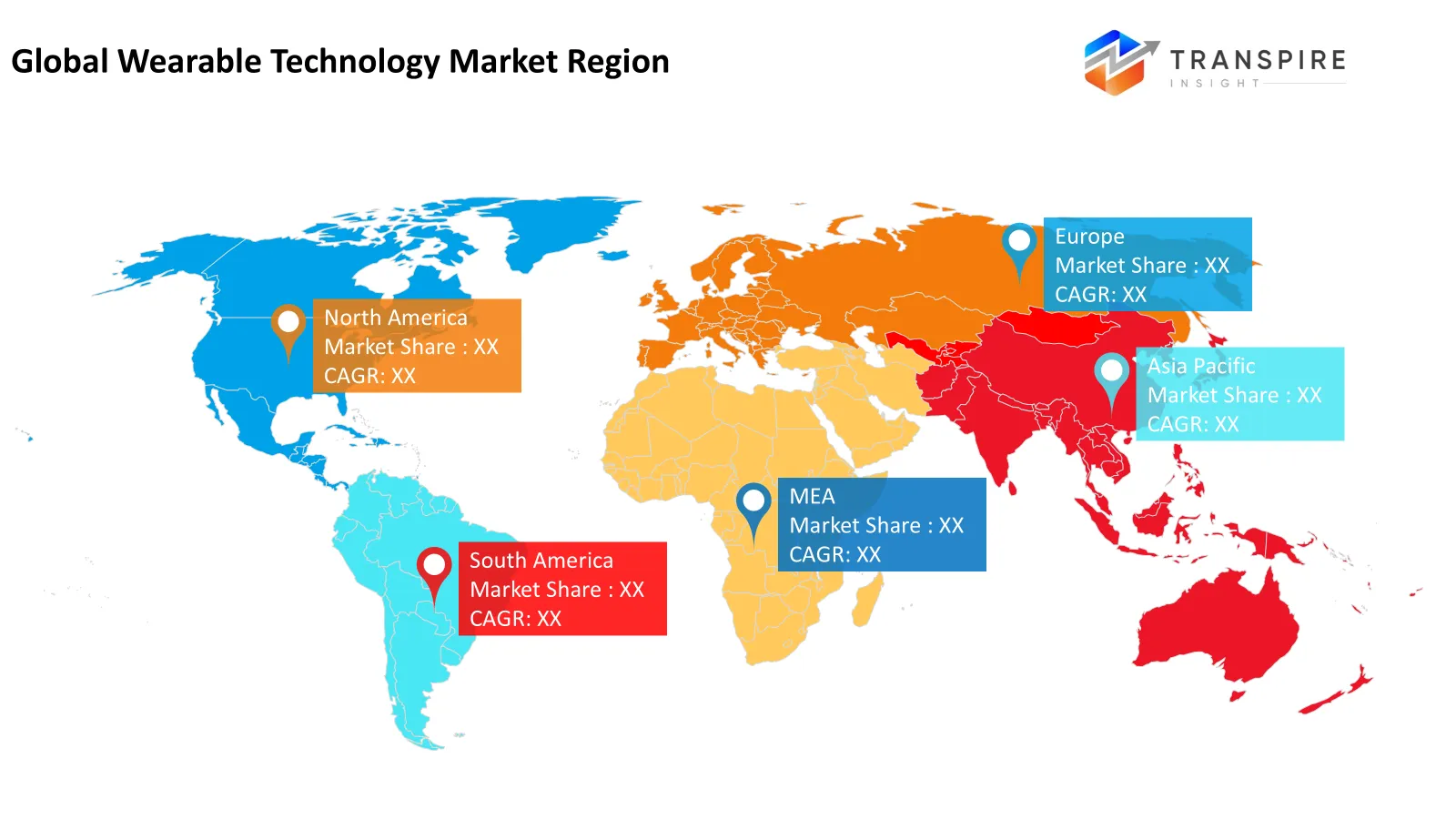
North America continues to hold the largest share of the global wearable technology market, accounting for roughly 39% of total revenue. This leading position is supported by high consumer disposable income, a tech-savvy population quick to adopt new devices, and an institutional healthcare system that actively integrates remote patient monitoring tools into standard care plans.
Major technology hub locations across the United States and Canada accelerate local growth, driving steady consumer demand for premium devices featuring advanced AI capabilities and certified diagnostic tools.
Regional market dynamics display distinct operational variations:
- North America: Market expansion is driven by corporate health programs and expanding medical reimbursement pathways. Local insurance providers frequently subsidize fitness trackers and smartwatches to encourage preventive care, while major clinical networks use continuous monitoring tools to manage high-risk outpatients from home.
- Europe: The European market shows a strong focus on data privacy compliance and sustainable product design. Device manufacturers must ensure strict adherence to regional GDPR mandates regarding how biometric data is stored and handled, while consumers increasingly favor brands that use recycled materials and show a lower environmental impact.
- Asia Pacific: This region stands as the fastest-growing market in the world, fueled by expanding supply chains, rising urban middle-class populations, and an explosion of affordable, localized device options. This massive manufacturing ecosystem allows local brands to scale production rapidly and bring advanced features to budget-conscious buyers.
- Latin America and Middle East & Africa: Growth centers around developing urban areas where improving cellular networks and rising smartphone adoption are making wearables accessible to more people. Initial consumer interest focuses on budget-friendly fitness trackers before gradually moving toward more advanced, connected smartwatches.
Why is Asia Pacific becoming the fastest-growing wearable technology market?
The rapid growth of the Asia Pacific wearable market stems from a combination of massive localized manufacturing operations, expanding middle-class populations, and intense retail competition.
By housing the world's primary consumer electronics supply chains, the region can manufacture high-quality components at a fraction of the cost of western production hubs. This structural advantage allows local tech brands to build capable, sensor-packed hardware and bring it to market at accessible price points.
This manufacturing efficiency, combined with regional economic shifts, creates clear growth catalysts across key major markets:
- India: The country has seen an explosion in smart wearable demand, driven by highly competitive local brands that specialize in budget-conscious smartwatches. Affordable device pricing, combined with a strong consumer focus on personal fitness, has turned the country into one of the largest unit volume consumption markets globally.
- China: Acting as both a primary global production hub and a massive consumer market, China drives regional volume growth. Local tech ecosystems use their close access to component factories to rapidly iterate on designs, rolling out advanced features like integrated gesture controls and automated health tracking ahead of global timelines.
- Southeast Asian Internet Economies: Expanding mobile internet access and the rapid scale of e-commerce platforms across countries like Indonesia, Vietnam, and the Philippines have simplified device distribution. Consumers can easily browse and buy affordable, feature-rich hardware online, bypassing traditional retail bottlenecks.
What are consumers demanding from wearable devices in 2026?
Modern consumers are moving away from devices that simply flood them with raw, unorganized metrics. Users look for actionable insights that interpret what their numbers actually mean, asking for software interfaces that translate complex physiological trends into simple, practical lifestyle adjustments.
At the same time, there is a clear shift toward low-profile, distraction-free designs, with many users choosing screen-free smart rings and minimalist bands that track health data quietly without adding to screen time fatigue.
Core consumer demands center on specific technical improvements:
- Longer Battery Performance and Efficient Power Management: Users are tired of regular charging routines. Consumers expect devices to run for multiple days or even weeks on a single charge while maintaining continuous health monitoring, driving the popularity of energy-efficient displays and low-power software systems.
- Subscription-Free Data Access and Predictable Pricing: As more brands move toward subscription models that hide detailed insights behind monthly paywalls, buyers are pushing back. Consumers increasingly prefer brands that offer open access to personal health metrics with a single upfront hardware purchase.
- Deeper Personal Wellness Tracking and Mental Stress Analysis: Tracking has expanded from simple workout logs into comprehensive mental and physical wellness monitoring. Modern users look for devices equipped with precise galvanic skin response and temperature sensors capable of tracking daily stress patterns, monitoring heart health anomalies, and evaluating overall nervous system recovery.
How are enterprise and industrial wearables expanding?
Enterprise and industrial operations are deploying wearables at scale to protect industrial workers, streamline warehouse tasks, and lower operational overheads. Heavy manufacturing plants, energy facilities, and construction operations equip field personnel with ruggedized sensors and connected vests that monitor environmental hazards and physiological stress indicators in real time.
These safety systems track environmental heat indexes, flag toxic gas exposures, and detect sudden accidental falls, automatically alerting safety teams to hazardous incidents.
Across the corporate and industrial landscape, deployment centers on three main focus areas:
- Logistics Optimization and Warehouse Material Handling: Distribution hubs utilize arm-mounted displays and ring-based barcode scanners to speed up inventory picking. These lightweight tools allow workers to scan packages rapidly and view sorting directions completely hands-free, cutting down processing errors and boosting fulfillment speeds.
- Workplace Ergonomics and Musculoskeletal Injury Prevention: Warehouses and assembly lines deploy body-worn kinetic sensors to monitor lifting forms and repetitive physical strain. The software analyzes movement angles in real time, giving workers immediate physical feedback to prevent long-term strain injuries and reduce corporate insurance liabilities.
- Lone Worker Monitoring and Field Service Operations: Utility providers and remote engineering firms rely on connected smartwatches and smart glasses to keep isolated field workers safe. The devices maintain constant satellite or cellular connections, allowing remote command centers to verify worker safety, track location coordinates, and push live technical support blueprints straight to field personnel during complex repair jobs.
What role do AR glasses and XR wearables play in future wearable technology growth?
Extended reality (XR) hardware and augmented reality (AR) glasses are transitioning from heavy, entertainment-focused headsets into slim, practical devices built for daily productivity and field tasks. Modern smart eyewear integrates advanced optical wave-guide lenses inside standard, lightweight frames, allowing users to view incoming notifications, mapping pathways, and interactive data fields overlaid directly onto their physical surroundings.
This form-factor change expands spatial computing beyond home office environments into an actionable tool for on-the-go professionals.ns
The expansion of spatial computing hardware follows two clear market tracks:
- Enterprise Field Operations and Remote Collaboration: Technical industries utilize augmented reality eyewear to connect field service teams with remote specialists. Maintenance engineers can view live wiring schematics and repair manuals overlaid directly onto complex machinery, keeping their hands free to execute repairs while sharing a live video feed with remote support rooms.
- Consumer Context Engines and AI Smart Eyewear: Consumer-focused smart glasses rely on built-in cameras and directional microphone arrays to function as proactive daily assistants. By connecting directly to multimodal artificial intelligence platforms, the eyewear can analyze what the user is looking at in real time, translating foreign text instantly, assisting with navigation, and providing contextual reminders without requiring the user to look down at a smartphone screen.
What investment and funding trends are shaping the wearable technology market?
Venture capital groups and major technology brands are focusing investment dollars on companies that build advanced biomedical sensor hardware, edge-based artificial intelligence models, and continuous health monitoring systems.
As the broader consumer hardware sector matures, investors look for specialized startups capable of expanding tracking into non-invasive biomarker monitoring or creating unique, low-profile device form factors.
Wearable Technology Market Core Investment Allocations and Sector Trajectories
Strategic investment patterns, funding distributions, and long-term innovation potentials focus across these key target areas:
|
Investment Area |
Current Funding Momentum |
Primary Technology Destination |
Long-Term Market Potential |
|
Edge AI Biomedical Chips |
High Acceleration |
Specialized low-power neural processors built for real-time, on-device health analysis. |
High. Eliminates reliance on constant cloud uploading, protecting user privacy and improving battery life. |
|
Non-Invasive Diagnostic Patches |
High Prioritization |
Continuous transdermal monitoring tools designed to track blood glucose, lactic acid, and alcohol levels. |
Disruptive. Replaces traditional painful needle tests with clean, continuous metabolic health monitoring. |
|
Smart Ring Innovation |
Medium Growth |
Advanced component miniaturization, flexible battery designs, and secure contactless payment integrations. |
Strong. Expands the screen-free consumer tracking market, attracting buyers who prefer classic style with modern metrics. |
|
Industrial Safety Platforms |
Targeted Expansion |
Heavy-duty connected hardware, integrated hazard warning sensors, and corporate health tracking dashboards. |
Stable. Driven by enterprise buyers looking to lower workplace injury rates and streamline logistics tasks. |
|
XR Eyewear Component Design |
Capital Intensive |
Ultra-compact micro-OLED displays, advanced optical waveguide systems, and low-latency tracking cameras. |
High Risk / High Reward. Foundational technology required to scale daily spatial computing hardware for mass adoption. |
How is innovation shaping the future of wearable technology?
Non-Invasive Interstitial Fluid Tracking and Continuous Biomarker Diagnostics
Research teams are successfully moving past basic heart rate tracking toward continuous, non-invasive biochemical monitoring. Advanced sensor arrays use micro-needle patterns and specialized optical scanners to sample the skin's surface fluid without piercing blood vessels, tracking real-time fluctuations in blood glucose, lactic acid, and stress hormones like cortisol.
This continuous chemical visibility gives users an accurate map of their metabolic health and physical stress responses throughout the day.
Conductive Smart Fabric Systems and Textile-Integrated Biometrics
The integration of flexible, conductive fibers directly into standard clothing threads allows apparel makers to turn everyday activewear into precise biometric tracking networks. These wash-safe smart garments use woven sensors to capture detailed electromyography (EMG) signals, measuring exact muscle activation levels and physical movement patterns.
By embedded tracking straight into the clothing fabric, users can capture highly accurate physical performance data without the need for traditional plastic wristbands or chest straps.
Flexible Electronic Circuits and Curving High-Capacity Battery Cells
The structural development of stretchable silicon substrates and flexible battery chemistries is changing the physical limitations of wearable design. Modern circuit components can bend, twist, and contour smoothly around human joints or fit seamlessly inside thin, metallic ring bands without cracking under physical stress.
This mechanical flexibility allows designers to maximize internal battery space within unique form factors, setting the stage for smaller, more discrete health-tracking devices that run for days on a single charge.
Neural Interface Development and Sub-Muscular Kinetic Controls
Next-generation input systems are moving beyond standard physical buttons and touchscreens toward intuitive neural control interfaces. Specialized wristbands use sensitive surface electromyography sensors to detect the tiny electrical impulses sent from the brain to the muscles in the fingers.
By translating these subtle muscle signals into digital commands, the software allows users to navigate augmented reality interfaces, reply to alerts, and control external smart home systems using simple, microscopic hand gestures.
What is the future outlook for the wearable technology market through 2033?
The wearable technology market is on track for steady, long-term expansion through 2033, driven by the convergence of edge-based artificial intelligence, advanced biochemical monitoring, and continuous enterprise deployment. As device form factors become more discrete and sensor arrays grow more precise, wearables will transition from voluntary lifestyle accessories into essential infrastructure for personal health management and industrial productivity.
Industry analysts point to several clear shifts defining this trajectory:
- The Proliferation of Invisible, Frictionless Form Factors: Devices will blend seamlessly into everyday life, with bulky wrist enclosures giving way to durable smart rings, lightweight optical eyewear, and flexible sensor patches that run for weeks without user intervention.
- The Standardization of Clinical Remote Patient Networks: Primary care frameworks will integrate wearable telemetry by default, using continuous vital data streams to proactively identify health risks, manage chronic illnesses, and reduce hospital readmission rates.
- The Dominance of Context-Aware Enterprise Environments: Industrial, manufacturing, and logistics companies will scale up device rollouts, utilizing connected eyewear and ergonomic safety sensors to protect field personnel, optimize picking routes, and verify proper operational forms.
- The Stability of Recurring Subscription Revenue Streams: Hardware manufacturers will continue to shift toward service-oriented models, locking predictive health scoring and deep metabolic analysis behind premium software paywalls to build predictable, long-term corporate revenue.
Top Key Companies List 2026:
- Apple Inc.
- Samsung Electronics Co., Ltd.
- Xiaomi Corporation
- Huawei Technologies Co., Ltd.
- Garmin Ltd.
- Google LLC / Fitbit
- Meta Platforms, Inc.
- Oura Health Ltd.
- WHOOP Inc.
- Imagine Marketing Ltd. / boAt
- Ultrahuman
- Vuzix Corporation
- Temple
- Neurable
- NextSense
- Sandbar
- Wispr AI
- Sesame
- Biolinq
- Aktiia
- Biobeat
- RayNeo
- VITURE
- Mira
Frequently Asked Questions
Find quick answers to common questions.
The global wearable technology market has entered a phase of rapid expansion, hitting a valuation of USD 247.54 billion in 2026. This trajectory is set to accelerate, with market models forecasting a valuation of USD 391.85 billion by 2033. This expansion represents a compound annual growth rate CAGR)of 17.5% during 2026-2033.
The future of wearable technology centers on structural minimization, non-invasive biomarker monitoring, and predictive artificial intelligence coaching. Devices are moving away from bulky, display-centric wrist configurations toward screen-free smart rings, prescription-compatible augmented reality glasses, and wash-safe conductive fabrics.
The wearable technology market is led by volume and revenue giants Apple Inc.,Samsung Electronics Co., Ltd.,Xiaomi Corporation,Huawei Technologies Co., Ltd.,Garmin Ltd.,Google LLC/ Fitbit,Meta Platforms, Inc.,Oura Health Ltd.,WHOOP Inc.,Imagine Marketing Ltd./ boAt,Ultrahuman,Vuzix Corporation,Temple,Neurable,NextSense,Sandbar,Wispr AI,Sesame,Biolinq,Aktiia,Biobeat,RayNeo,VITURE,Mira
AI wearables are a class of connected hardware devices featuring specialized onboard neural microcontrollers designed to process complex machine learning models directly at the network's edge. Unlike legacy devices that rely on smartphone apps or cloud platforms to calculate data, these smart devices analyze multi-layered biosensor telemetry locally.
The smart ring segment stands as the fastest-growing category within the global wearable market, driven by a compound annual growth rate of 25.4% through 2033. Consumer demand is rising due to the screen-free, lightweight design of rings, which addresses the digital fatigue and charging friction associated with traditional smartwatches.
Smart rings are gaining popularity because they solve major consumer pain points: frequent battery charging and notification fatigue. These screen-free devices deliver an energy-efficient operating life of five to seven days on a single charge, providing an ideal solution for continuous, uninterrupted sleep tracking.
Healthcare wearables are transforming traditional medicine by shifting care delivery from reactive hospital checkups to continuous, proactive remote patient monitoring at home. Patients managing chronic conditions use FDA-cleared sensor patches and bands to stream real-time vital signs directly into clinical electronic medical records.
North America dominates the global wearable technology market, accounting for approximately 39% of total revenue. This leading position is supported by high consumer purchasing power, a strong culture of adopting new technologies, and an institutional healthcare infrastructure that integrates remote tracking systems into standard care plans.
The biggest trends in 2026 focus on specialized device designs, extended battery life, and subscription-free pricing models. The industry is moving away from generic, all-in-one smartwatches toward niche hardware like the ultra-bright, long-lasting Amazfit Active Max and the Polar-powered Moto Watch, which bring elite-level athletic analysis to mass-market price points.
AI enhances wearable tech by transforming raw, unstructured sensor data into actionable health insights. Onboard machine learning models clean up signal interference caused by physical movement, ensuring highly stable heart rate and blood oxygen readings during high-intensity workouts.
The wearable technology market faces several challenges, including the physical limitations of battery chemistry, data privacy risks, and sensor reading errors. Consumer demand for slim, lightweight devices limits the physical size of internal batteries, resulting in short operating lives for feature-rich smartwatches and leading to user abandonment over time.
- Apple Inc.
- Samsung Electronics Co., Ltd.
- Xiaomi Corporation
- Huawei Technologies Co., Ltd.
- Garmin Ltd.
- Google LLC / Fitbit
- Meta Platforms, Inc.
- Oura Health Ltd.
- WHOOP Inc.
- Imagine Marketing Ltd. / boAt
- Ultrahuman
- Vuzix Corporation
- Temple
- Neurable
- NextSense
- Sandbar
- Wispr AI
- Sesame
- Biolinq
- Aktiia
- Biobeat
- RayNeo
- VITURE
- Mira
Recently Published Reports
-
Apr 2026
3D Optical Profiler Market
3D Optical Profiler Market Size, Share & Analysis Report By Type (Desktop 3D Optical Profiler, and Portable 3D Optical Profiler), By Technology (Confocal Technology, and White Light Interference), By End-Use Industry (Manufacturing, Research Institutions, Automotive, Aerospace and Defense, Medical Devices, and Other), and Geography (North America, Europe, Asia-Pacific, Middle East and Africa, South and Central America), 2021 - 2031
-
Apr 2026
Depth Sensor Market
Depth Sensor Market Size, Share & Analysis Report By Type (Infrared Depth Sensors, Time-of-Flight (ToF) Sensors, Stereo Vision Sensors, Structured Light Sensors, Ultrasonic Depth Sensors), By Application (Automotive, Robotics, Gaming, Consumer Electronics, Industrial Automation, Healthcare, Security & Surveillance, Others), By End Users (Automotive Manufacturers, Consumer Electronics Companies, Healthcare Providers, Industrial Companies, Security Agencies, Gaming Companies, Robotics Companies, Others), and Geography (North America, Europe, Asia-Pacific, Middle East and Africa, South and Central America), 2021 – 2031
-
Apr 2026
Digital Manufacturing Market
Digital Manufacturing Market Size, Share & Analysis Report By Component (Hardware, Software, and Services), By Technology (Robotics, 3D Printing, Internet of Things (IoT), and Others), By Application (Automotive and Transportation, Aerospace and Defense, Consumer Electronics, Industrial Machinery, and Others), By Process Type (Computer-Based Designing, Computer-Based Simulation, Computer 3D Visualization, Analytics, and Others), and Geography (North America, Europe, Asia-Pacific, Middle East and Africa, South and Central America), 2021 – 2031
-
Apr 2026
Digital Visa Services Market
Digital Visa Services Market Size, Share & Analysis Report By Type (Individual Travelers, Group Travelers), By Application (Tourism, Business Travel, Others), and Geography (North America, Europe, Asia-Pacific, Middle East and Africa, South and Central America), 2021 – 2031