Europe Wearable Healthcare Devices Market Size & Forecast:
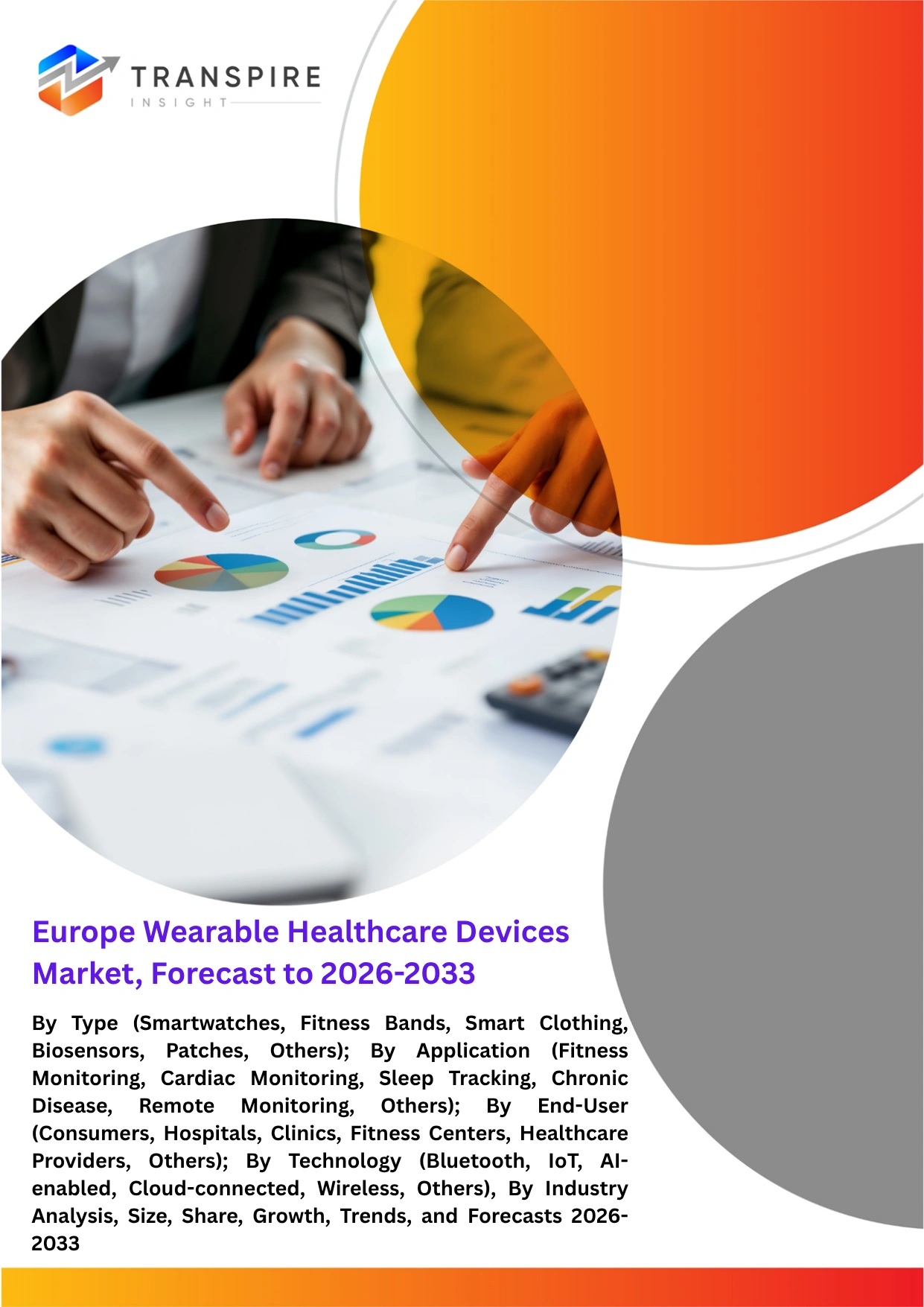
- Europe Wearable Healthcare Devices Market Size 2025: USD 16.01 Billion
- Europe Wearable Healthcare Devices Market Size 2033: USD 102.38 Billion
- Europe Wearable Healthcare Devices Market CAGR: 26.13%
- Europe Wearable Healthcare Devices Market Segments: By Type (Smartwatches, Fitness Bands, Smart Clothing, Biosensors, Patches, Others); By Application (Fitness Monitoring, Cardiac Monitoring, Sleep Tracking, Chronic Disease, Remote Monitoring, Others); By End-User (Consumers, Hospitals, Clinics, Fitness Centers, Healthcare Providers, Others); By Technology (Bluetooth, IoT, AI-enabled, Cloud-connected, Wireless, Others)
To learn more about this report,  Download Free Sample Report
Europe Wearable Healthcare Devices Market Summary:
The Europe Wearable Healthcare Devices Market size is estimated at USD 16.01 Billion in 2025 and is anticipated to reach USD 102.38 Billion by 2033, growing at a CAGR of 26.13% from 2026 to 2033. Functional Brain Imaging Systems in Europe will be a niche area dedicated to visualizing neural activity in patients using medical imaging systems. The trend will be characterized by a gradual movement towards precise neurology where physicians will utilize dynamic information rather than fixed imagery. Changes in demand trends can be expected due to the desire for early diagnosis of disorders and personalized care. Stringent regulation policies governing the accuracy of imaging results will ensure that manufacturers improve the reliability of imaging systems. Developments in imaging technology such as hybrid imaging will provide a new perspective into neurological disorders.
What Has the Impact of Artificial Intelligence Been on the Europe Wearable Healthcare Devices Market?
AI technology has become an integral part of the Europe wearable healthcare devices market and will be responsible for its transformation into a space where intelligent, data-based health services will replace traditional methods of monitoring health statistics. In Europe wearable healthcare devices market, artificial intelligence is expected to change approaches to market research and the analysis of health data in terms of their immediate evaluation by machines. Thanks to machine learning algorithms, behavioral patterns will be recognized, which means that market players will have access to valuable insights for their product positioning strategies.
Moreover, AI in Europe wearable healthcare devices market will contribute to improved forecasting of demand and trends in the industry based on historical information, biometric data, and health trends specific to individual regions. On the production side, AI technologies are expected to optimize work flows thanks to intelligent automation of production lines, increased accuracy of manufacturing operations, and reduced potential errors in device manufacturing.
In addition to manufacturing, AI technology would help in optimizing and cutting costs in supply chains in the Europe wearable healthcare devices industry. The intelligent technology would be used in the detection of inefficiencies in logistics and subsequently adapting to a more effective strategy in distribution. With respect to personalization, the use of AI in providing tailor-made health insights would result in enhanced customer loyalty.
Key Market Trends & Insights:
- The Europe wearable healthcare devices market is growing at a steady pace, propelled by the growing prevalence of chronic diseases and increasing consumer awareness of continuous monitoring health solutions.
- AI in Europe wearable healthcare devices market helps in predictive analysis, enhances diagnostics, and contributes to creating customized experiences in healthcare for various consumers.
- The increasing use of IoT and sensors brings changes to the trends of this market, increases device connectivity, and promotes seamless data transfer within the healthcare system.
- Market drivers include demographic change, growth in the number of digital health users, and government-sponsored remote patient monitoring programs.
- Western Europe has over 45% market share in 2025 because of its well-developed healthcare system and a high level of penetration of wearables.
- Eastern Europe will be the fastest-growing region due to rapid development and digital transformation in the healthcare industry.
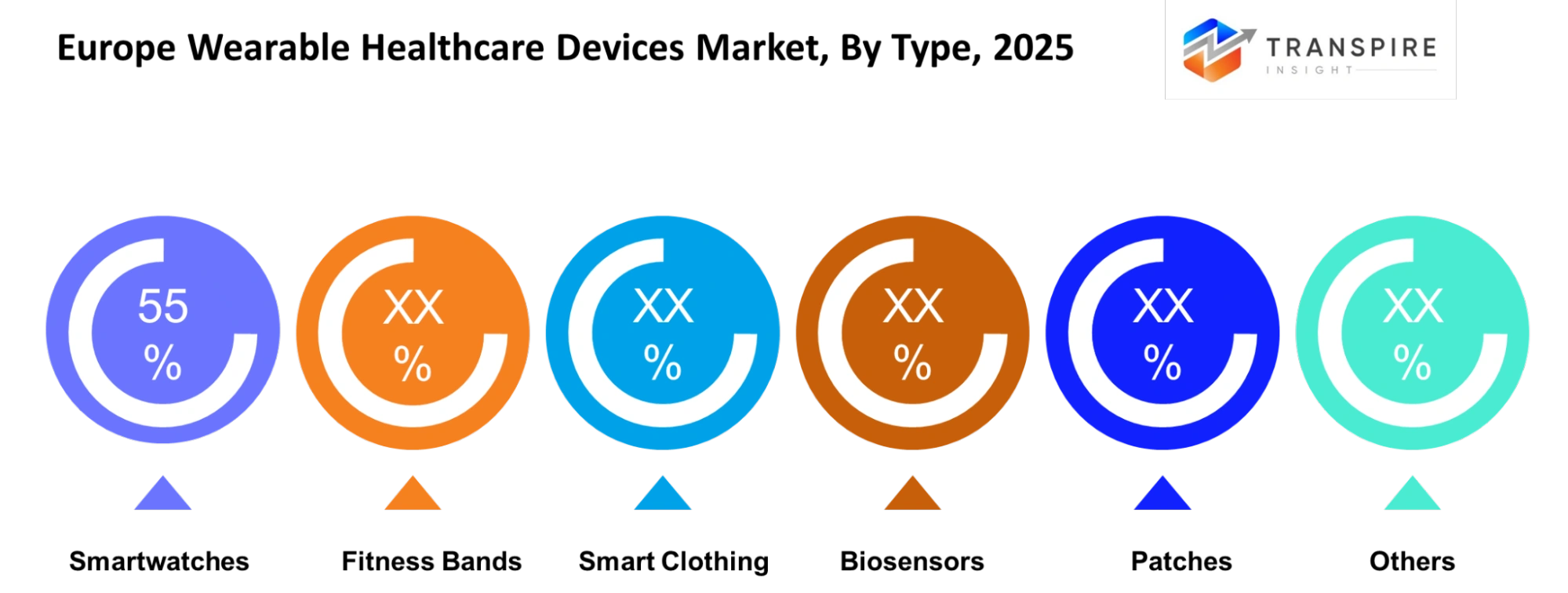
- Smartwatches hold a dominant 40% market share owing to their numerous health-monitoring features.
- The second-largest segment is fitness bands, thanks to their affordability and widespread consumer acceptance.
- The advanced medical wearables segment will witness the fastest growth between 2025 and 2030, driven by increased demand for clinical-grade monitoring devices.
- Technology-based remote patient monitoring devices enjoy a market share exceeding 35% owing to the increasing use of telemedicine and hospital at home services.
- Management of chronic diseases is the most rapidly expanding application due to an increase in cardiovascular and metabolic disorders in Europe.
- Individual customers represent around 55% market share owing to heightened health consciousness and fitness trend.
Europe Wearable Healthcare Devices Market Segmentation
By Type
The smartwatch category will maintain its dominance owing to various functionalities for monitoring purposes, including heart rate, oxygen saturation, and activity metrics. The fitness band segment will continue to be popular due to low cost and basic health monitoring capabilities. The uptake of smart clothes will be enhanced through integration of sensors within fabrics to make the use of additional devices unnecessary.
The comfort and reliability of devices will be maintained through advancements in miniaturization and sensing technologies. The research will concentrate on developing tiny and non-disruptive devices that users can incorporate into their daily activities without feeling any hindrance.
To learn more about this report, Download Free Sample Report
By Application
Fitness tracking will remain one of the major applications of wearables because of an increased concern for fitness. There is going to be an expansion in cardiac tracking since there will be an increased need for the constant tracking of heart-related ailments using wearables. Sleep tracking will increase in popularity owing to the increased awareness of sleep being an important indicator of health. Continuous monitoring of chronic ailments like diabetes and hypertension will be done using wearable technology.
Remote patient monitoring is going to grow because of the adoption of digital health services by the healthcare system. This will help improve patients’ health while at the same time reducing the number of times they visit the hospitals. Multi-application wearables will become more popular.
By End-User
Customers are set to be the dominant group since there is growing awareness about personal health monitoring and prevention. Wearable devices will be increasingly adopted in hospitals for tracking patients and providing after-treatment services. Clinics are likely to adopt wearable devices during routine checkups and patient evaluations. Fitness centers will utilize information from wearables in improving training.
Providers will leverage this technology's potential for remote consultations and ongoing client engagement. Growing popularity of digital services within healthcare will raise dependency on wearable-based information. Increasing adoption among different groups of end users will positively influence efficiency and effectiveness of healthcare provision.
By Technology
The Bluetooth technology will help to ensure smooth connectivity within devices and mobile phones over short ranges. IoT connectivity will facilitate real-time data transmission among interconnected healthcare systems. The use of AI in wearable technology will boost predictive analysis and offer personal health information. Cloud-based health technology will allow storing and processing vast amounts of data easily.
Wireless technologies will improve the mobility of devices without wires. Connectivity innovations will boost the efficiency and reliability of devices. Multiple technological connections will make wearables highly effective and intelligent.
What are the Main Challenges for the Europe Wearable Healthcare Devices Market Growth?
The technical and operational problems will still be relevant to the Europe wearable healthcare devices market, particularly considering the clinical-grade nature of these devices. Issues relating to performance will include battery capacity, sensor accuracy, and data reliability. The integration process with healthcare systems in Europe will create interoperability problems, making scalability difficult. Further, supply chain issues such as the shortage of semiconductors and dependence on external components will pose production challenges in the Europe wearable healthcare devices market.
Production and commercialization challenges will also impede the expansion of the industry due to high-quality requirements in the manufacturing process and engineering capability. Following the medical devices directives within Europe is going to be costly. Also, small to medium sized companies are bound to face difficulties in complying with the medical device directives; this is likely to affect the launch of their products. Costs associated with testing, research, and compliance will restrict price options in the Europe wearable healthcare devices market.
Adoption barriers will remain in place due to disparate digital infrastructure and healthcare preparedness across regions. Adoption will be delayed due to lack of awareness about the technology among specific segments, while insufficient numbers of trained personnel will prevent the effective use of data generated by the devices. Financial constraints in some of the developing European countries will also affect implementation of the wearables. All of the above will impact the speed of adoption in the Europe wearable healthcare devices market.
Other factors that can negatively impact the Europe wearable healthcare devices market include stiff competition from other methods of patient monitoring, changing prices and profit margins due to rapid technological innovations, and issues regarding the security of personal information.
Regional Insights
Western Europe is bound to dominate because of well-equipped health care facilities, high digitization rates, and advanced wearable technology implementation. Some examples of countries that will lead this market include Germany, France, and the United Kingdom, owing to the popularity of the reimbursement model and supportive policy initiatives. Consumers’ awareness and enhanced purchasing ability will play a crucial role in the uptake within the urban population.
Eastern Europe will record steady growth, driven by the availability of healthcare services and digitalization. Telemedicine and remote monitoring solutions will see more investments, leading to better utilization of wearables within developing countries. There will still be disparities in infrastructure within rural regions; however, continued efforts by the government and private organizations will aid in regional expansion.
Recent Development News
In April 2026, Francisco Partners announced acquisition discussions involving MyFitnessPal. The firm explored a potential sale of the fitness and health tracking platform to strengthen its digital health portfolio and capitalize on rising wearable-linked app usage.https://www.reuters.com
In March 2026, Navis Capital Partners announced plans to relaunch the sale of Device Technologies following integration of prior acquisitions. The move aimed to attract global buyers and expand healthcare device distribution capabilities, including wearable-linked technologies.https://www.theaustralian.com.au
|
Report Metrics |
Details |
|
Market size value in 2025 |
USD 16.01 Billion |
|
Market size value in 2026 |
USD 20.16 Billion |
|
Revenue forecast in 2033 |
USD 102.38 Billion |
|
Growth rate |
CAGR of 26.13% from 2026 to 2033 |
|
Base year |
2025 |
|
Historical data |
2021 - 2024 |
|
Forecast period |
2026 - 2033 |
|
Report coverage |
Revenue forecast, competitive landscape, growth factors, and trends |
|
Regional scope |
Europe (Germany, United Kingdom, France, Italy, Spain, Rest of Europe) |
|
Key company profiled |
Apple, Fitbit, Garmin, Samsung, Philips, Medtronic, Omron, Abbott, Xiaomi, Huawei, Polar, Withings, Dexcom, Biotronik, AliveCor |
|
Customization scope |
Free report customization (country, regional & segment scope). Avail customized purchase options to meet your exact research needs. |
|
Report Segmentation |
By Type (Smartwatches, Fitness Bands, Smart Clothing, Biosensors, Patches, Others); By Application (Fitness Monitoring, Cardiac Monitoring, Sleep Tracking, Chronic Disease, Remote Monitoring, Others); By End-User (Consumers, Hospitals, Clinics, Fitness Centers, Healthcare Providers, Others); By Technology (Bluetooth, IoT, AI-enabled, Cloud-connected, Wireless, Others) |
How Can New Companies Establish a Strong Foothold in the Europe Wearable Healthcare Devices Market?
It is possible to secure a competitive advantage by concentrating on specialized niches rather than broad categories in the Europe wearable healthcare devices market. This means companies can focus on developing wearable devices for applications such as chronic disease management, elderly patients, and post-surgical tracking, where more efficient devices are needed. There are still many opportunities in the Europe wearable healthcare devices market for innovators to provide solutions to unsolved problems in terms of inaccurate or unreliable devices. It is essential to design products in line with prevailing trends, including remote monitoring and preventive care.
The European Wearable Health Devices market calls for an exceptionally innovative environment. This means that technology must be used in order to add value to consumers. Companies that do this include Biobeat from Israel, who have created a cuffless blood pressure monitor.In addition, the Switzerland-based company Withings is one of the firms making advances in hybrid medical-grade devices with stylish designs.
Strategic partnerships will accelerate growth by enhancing credibility and the availability of distribution channels. Partnerships with hospitals, insurance companies, and technology solutions will ensure that startups grow fast in the Europe wearable healthcare devices market. Furthermore, attention to regulatory issues and data privacy will help to gain credibility in this very delicate market environment. By aligning innovation with regulatory requirements, emerging market players can establish their presence.
Key Europe Wearable Healthcare Devices Market Company Insights
There will be stiff competition because there will always be both new and existing international companies expanding their ranges and technologies. Improvements in sensor precision, power consumption, and user experience will help them stay ahead of the competition. Having a strong presence in the market and well-established marketing channels will provide a distinct advantage for dominating companies.
New players will try to distinguish themselves by introducing innovative products and healthcare applications which can meet unmet medical requirements. Cooperation with hospitals, ISPs, and scientific organizations will speed up their penetration in the market. Additional studies and compliance with security rules will affect their position in the future.
Company List
- Apple
- Fitbit
- Garmin
- Samsung
- Philips
- Medtronic
- Omron
- Abbott
- Xiaomi
- Huawei
- Polar
- Withings
- Dexcom
- Biotronik
- AliveCor
What are the Key Use-Cases Driving the Growth of the Europe Wearable Healthcare Devices Market?
Europe wearable healthcare devices market growth occurs through application-based use-cases that provide tangible benefits in both clinical and commercial scenarios. Remote patient monitoring can be seen as one of the most significant use-cases for the Europe wearable healthcare devices market, where it enables healthcare professionals to monitor their patients' vital signs and minimize trips to the hospital. It allows healthcare professionals to take early steps to ensure positive patient outcomes, and therefore, represents one of the main drivers of the Europe wearable healthcare devices market.
Another important use-case driving Europe wearable healthcare devices market growth includes chronic disease management. Devices that will be used for the continuous monitoring of patients suffering from diabetes and other diseases will allow patients to keep better control of health parameters.
In the consumer category, fitness and wellness monitoring remain important factors driving demand, particularly those that monitor sleep quality, stress, and activity levels. In addition, wearable technology is being incorporated into corporate wellness initiatives to improve health among employees. The incorporation of wearable technology in these categories opens new opportunities for the Europe wearable healthcare devices market.
Some emerging use-cases involve the incorporation of wearable devices in telehealth systems and artificial intelligence analytics. This will ensure improved diagnostic services and management of patients in the long run. With further innovations, solutions scalable across the entire healthcare system and enterprise level can be developed, creating more opportunities in the Europe wearable healthcare devices market.
Europe Wearable Healthcare Devices Market Report Segmentation
By Type
- Smartwatches
- Fitness Bands
- Smart Clothing
- Biosensors
- Patches
- Others
By Application
- Fitness Monitoring
- Cardiac Monitoring
- Sleep Tracking
- Chronic Disease
- Remote Monitoring
- Others
By End-User
- Consumers
- Hospitals
- Clinics
- Fitness Centers
- Healthcare Providers
- Others
By Technology
- Bluetooth
- IoT
- AI-enabled
- Cloud-connected
- Wireless
- Others
Frequently Asked Questions
Find quick answers to common questions.
The approximate Europe Wearable Healthcare Devices Market size for the market will be USD 102.38 Billion in 2033.
Key segments for the Europe Wearable Healthcare Devices Market are By Type (Smartwatches, Fitness Bands, Smart Clothing, Biosensors, Patches, Others); By Application (Fitness Monitoring, Cardiac Monitoring, Sleep Tracking, Chronic Disease, Remote Monitoring, Others); By End-User (Consumers, Hospitals, Clinics, Fitness Centers, Healthcare Providers, Others); By Technology (Bluetooth, IoT, AI-enabled, Cloud-connected, Wireless, Others).
Major Europe Wearable Healthcare Devices Market players are Apple, Fitbit, Garmin, Samsung, Philips, Medtronic, Omron, Abbott, Xiaomi, Huawei, Polar, Withings, Dexcom, Biotronik, AliveCor.
The Europe Wearable Healthcare Devices Market size is USD 16.01 Billion in 2025.
The Europe Wearable Healthcare Devices Market CAGR is 26.13%.
- Apple
- Fitbit
- Garmin
- Samsung
- Philips
- Medtronic
- Omron
- Abbott
- Xiaomi
- Huawei
- Polar
- Withings
- Dexcom
- Biotronik
- AliveCor
Recently Published Reports
-
Apr 2026
AI in Diabetic Retinopathy Market
AI in Diabetic Retinopathy Market Size, Share & Analysis Report By Type (Screening AI Systems, Diagnostic AI Systems, and Predictive AI Models), By Application Segment (Hospitals, Ophthalmology Clinics, Diagnostic Centers, and Research and Development), and Geography (North America, Europe, Asia-Pacific, Middle East and Africa, South and Central America), 2021 - 2031
-
Apr 2026
Psychometric Tests Market
Psychometric Tests Market Size, Share & Analysis Report By Type (Personality Tests, Ability/Aptitude Tests, Skill/Knowledge Tests, and Others), By Application (Talent Acquisition and Talent Management), and Geography (North America, Europe, Asia-Pacific, Middle East and Africa, South and Central America), 2021 – 2031
-
Apr 2026
Rare Biological Sample Collection Market
Rare Biological Sample Collection Market Size, Share & Analysis Report By Type (Isolation Kits & Reagent, Blood Collection Tubes, and Others), By Application (Oncology, Transcriptomics, Pharmacogenomics, and Others), and Geography (North America, Europe, Asia-Pacific, Middle East and Africa, South and Central America), 2021 – 2031
-
Apr 2026
Patient Lift Pendant Market
Patient Lift Pendant Market By Product Type (Wired Pendants, Wireless, Programmable), By Operation Type(Manual, Electric), By End-Users (Healthcare Professionals, Patients), By Application (Hospitals, Homecare, Rehabilitation Centers, Others), By Industry Analysis, Size, Share, Growth, Trends, and Forecasts 2021-2033
Our Clients
.jpg)