
United Kingdom Flight Data Analytics Market Size & Forecast:
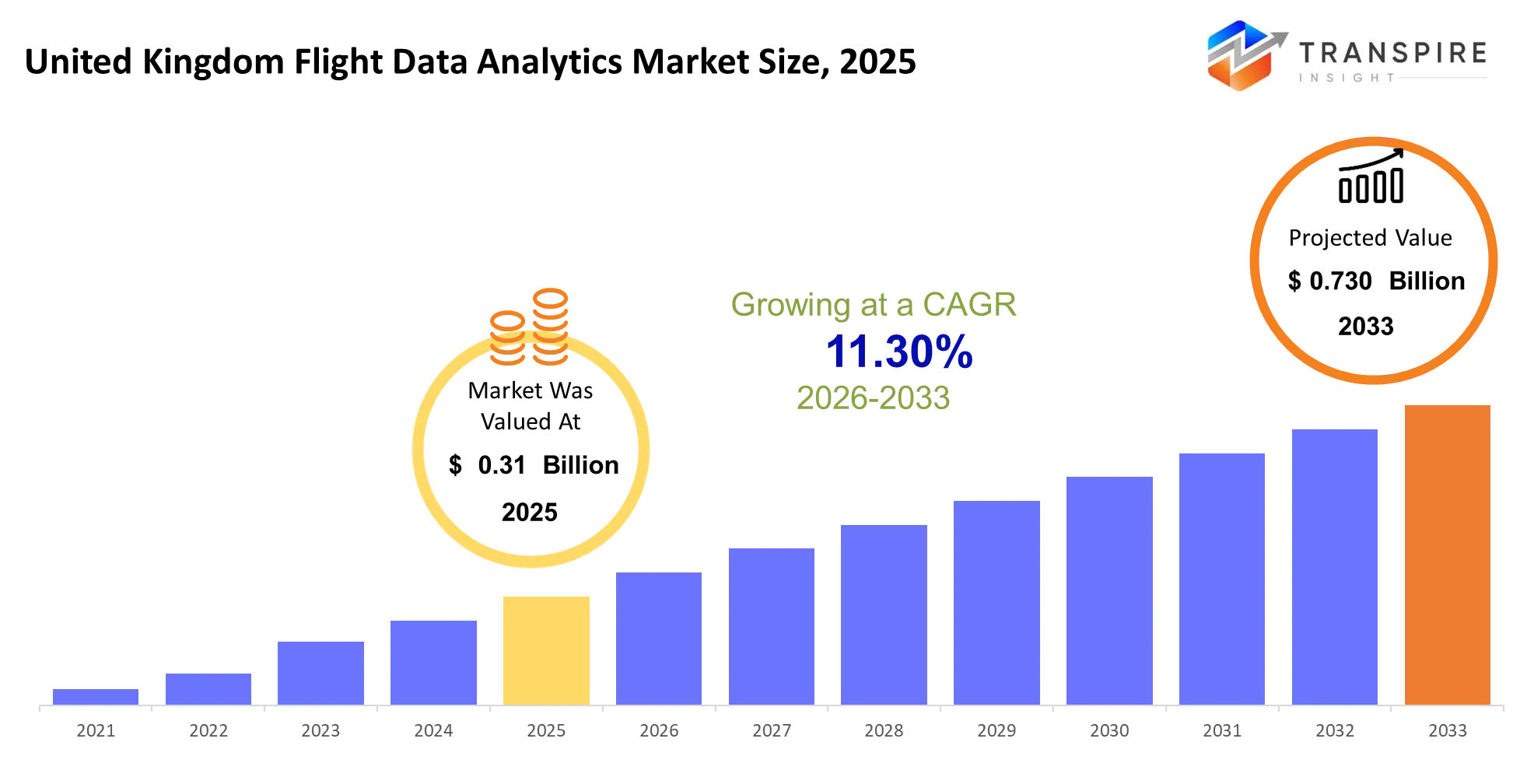
- United Kingdom Flight Data Analytics Market Size 2025: USD 0.31 Billion
- United Kingdom Flight Data Analytics Market Size 2033: USD 0.730 Billion
- United Kingdom Flight Data Analytics Market CAGR: 11.30%
- United Kingdom Flight Data Analytics Market Segments: By Solution Type (Flight Operations Analytics, Predictive Maintenance Analytics, Fuel Efficiency Analytics, Safety Analytics, Crew Performance Analytics, Weather Analytics, Route Analytics, Others); By Deployment (Cloud-based Analytics, On-premise Analytics, Hybrid Analytics, AI-powered Analytics, Real-time Analytics, Edge Analytics, SaaS Analytics, Others); By Application (Commercial Aviation, Military Aviation, Cargo Aviation, Business Aviation, Helicopter Operations, UAV Operations, Airport Operations, Others); By End User (Airlines, Airports, MRO Providers, Defense Organizations, Aviation Regulators, Charter Operators, Training Institutes, Others); By Technology (AI-based Analytics, Big Data Analytics, Real-time Monitoring, IoT Integration, Predictive Algorithms, Digital Twin Technology, Blockchain-enabled Systems, Others)
To learn more about this report,  Download Free Sample Report
United Kingdom Flight Data Analytics Market Summary
The United Kingdom Flight Data Analytics Market was valued at USD 0.31 Billion in 2025. It is forecast to reach USD 0.730 Billion by 2033. That is a CAGR of 11.30% over the period.
In the United Kingdom, the flight data analytics market matters a lot for airlines, airports, and aviation operators, because it helps them turn raw aircraft metrics and day to day operational info into something that actually can be used, not just reported. Basically, these systems are often put in place to cut fuel burn, boost fleet steadiness, track how pilots perform, forecast maintenance needs, and also back up compliance with tougher aviation safety rules that keep getting stricter.
Over the last few years, the whole market has moved away from slow, retrospective reporting setups, and toward real-time analytics platforms that are tied in through cloud infrastructure and AI-based monitoring tools. The shift got faster after the pandemic, when airline economics got disrupted and carriers had to pull more efficiency out of the fleets they already had while also handling passenger demand that was anything but stable. Then, at the same time, the UK’s net-zero aviation push made operators pay closer attention to emissions, and also optimize flight routes with a lot more precision than before.
Because airlines keep focusing on operational resilience and cost control, analytics platforms are starting to sit inside daily flight routines, and this is leading to longer software agreements, plus stronger recurring service revenue across the sector.
Key Market Insights
- London remains the dominant aviation analytics hub, mostly because there is a dense airline concentration, big airport traffic volumes , and ongoing digital aviation investment programs that keep expanding.
- There’s also a push by expanding aerospace technology clusters and defense aviation analytics demand, so that part kinda feeds into it too.
- In the United Kingdom Flight Data Analytics Market , software platforms sit on top with around 57% share in 2025, mainly due to rising cloud based fleet monitoring adoption , which makes it easier to standardize processes.
- Services are the second-largest segment. Airlines are increasingly outsourcing data integration, compliance monitoring, and aviation performance optimization operations; it's like they don’t want to handle everything in-house anymore.
- AI-driven predictive analytics solutions are the fastest-growing segment between 2025 and 2030, driven by maintenance cost reduction plus operational efficiency targets, that’s the main story.
- For applications , flight operations management accounts for nearly 42% share because airlines need continuous route optimization and fuel consumption monitoring systems working without breaks.
- Predictive maintenance applications show the fastest growth rate as carriers try to reduce unscheduled aircraft downtime and improve fleet utilization performance.
- When it comes to end users, commercial airlines dominate demand with over 61% market share in 2025. This is tied to expanding digital transformation across passenger aviation networks.
- Low-cost carriers are also emerging as a rapidly growing end-user category. Competitive pricing pressures keep rising, and that seems to boost demand for operational analytics platforms.
- Overall, the United Kingdom Flight Data Analytics Market is seeing strong demand for drivers from carbon emission tracking and sustainable aviation efficiency , kind of all at once.
What are the Key Drivers, Restraints, and Opportunities in the United Kingdom Flight Data Analytics Market?
The most powerful force driving the United Kingdom Flight Data Analytics Market, is kinda the aviation sector’s urge to shave off operational inefficiencies after the financial pressure that came from the pandemic, plus the back and forth on fuel prices. Airlines in the UK are leaning on real-time analytics platforms now, to watch fuel burn more closely, optimize flight routes, forecast component failures, and also tighten aircraft turnaround time. This momentum really took off after the UK Civil Aviation Authority raised the level of focus on operational safety reporting and emissions tracking. So, because even tiny fuel savings can turn into millions of pounds per year in reduced running costs, airlines are steering bigger tech budgets toward predictive analytics plus cloud based monitoring setups.
Meanwhile, the market’s most stubborn structural issue is the integration headache from legacy aircraft systems, combined with fragmented aviation IT infrastructure. A lot of UK carriers still fly mixed fleets, with onboard data setups that do not really line up, which makes standardizing analytics rather costly and also technically hard. On top of that, airlines have to meet tight aviation cybersecurity rules and data sovereignty demands, and that whole process tends to stretch deployment timelines. Because of those limitations, mid-sized operators often adopt more slowly, and in turn it suppresses the recurring software revenue chances for analytics vendors.
A big growth moment seems to be showing up via AI based predictive maintenance platforms that are integrated into the next gen aircraft fleets, somehow. There is also money moving toward connected aviation infrastructure at places like Heathrow and Manchester, and that is making the whole setup easier for real time fleet intelligence systems to work well. As UK airlines go on modernizing their fleets with digitally connected aircraft, the analytics vendors can really push into higher margin subscription offerings that link straight back to maintenance forecasting, emissions analysis, and even autonomous day to day operational decision support.
What Has the Impact of Artificial Intelligence Been on the United Kingdom Flight Data Analytics Market?
Artificial intelligence and advanced digital technologies are, in a way, significantly re-shaping the United Kingdom Flight Data Analytics Market by changing how airlines run aircraft operations, handle maintenance cycles and even do regulatory paperwork, more efficiently, or at least that's the idea. Airlines and aviation service providers are increasingly deploying AI enabled flight monitoring platforms that can analyze cockpit , engine and route performance information in real time. With these setups operators can spot fuel inefficiencies sooner, automate parts of compliance reporting, and adjust flight paths based on weather, traffic congestion, and aircraft load conditions. Some UK based carriers are already using machine learning models to forecast component wear, and also to surface maintenance risks before actual failures appear, which tends to cut down on unexpected downtime and keeps fleet availability steadier.
On top of that, predictive analytics tools are assisting airlines with lowering day to day operational spending by improving fuel efficiency and reducing excessive engine stress during takeoff and landing cycles. In many situations, airlines running advanced flight analytics platforms have shown measurable decreases in fuel consumption as well as fewer maintenance related disruptions. Then there are AI driven emissions forecasting systems, which further support alignment with the UK aviation sector’s carbon reduction targets by highlighting operational patterns that can cause unnecessary emissions.
Still, adoption is not fully smooth, because integrating AI platforms with older aircraft systems can be complex, plus the aviation data is often fragmented. A lot of mid sized operators deal with high implementation costs, and the data quality can be inconsistent, so the accuracy and scalability of machine learning models across mixed aircraft fleets ends up limited.
Key Market Trends
- Since 2021, UK airlines have sort of, increased investment in predictive maintenance analytics after fuel price volatility really spiked and then pushed operational cost pressures up, pretty sharply.
- Cloud based flight monitoring platforms ended up replacing quite a few on premise systems between 2022 and 2025 , mostly because data processing felt quicker and the infrastructure costs looked smaller.
- Airlines have also been moving away from periodic compliance reporting toward continuous real time safety analytics after stricter UK Civil Aviation Authority oversight requirements started tightening up.
- Heathrow and Manchester airports expanded their connected aviation infrastructure after 2023, which helped with faster blending of AI powered operational intelligence platforms into their workflows.
- Carriers using machine learning driven route optimization tools reported measurable fuel savings by lowering unnecessary altitude changes and by cutting through inefficient flight paths, in a straightforward kind of way.
- Since 2022, low cost airlines have adopted subscription based analytics platforms faster than legacy carriers because they tend to keep lean operational cost structures, and they stick to that mindset.
- Aerospace companies including Airbus and Honeywell expanded AI enabled aviation analytics partnerships across UK commercial aviation networks, more and more as time went on.
- Aviation operators increasingly consolidated scattered fleet data into unified cloud environments, in order to improve maintenance forecasting and reduce unexpected aircraft downtime.
- Cybersecurity concerns got louder after 2023 as airlines connected more aircraft systems to cloud based operational analytics, plus third party software ecosystems.
United Kingdom Flight Data Analytics Market Segmentation
By Solution Type:
Flight operations analytics helps with all that monitoring of aircraft movement, fuel spending, flight timing, and this kind of operational coordination across aviation networks, kind of the whole picture. Then predictive maintenance analytics, it spots equipment wear way before it fails, so that means less repair delay and better aircraft availability overall. Fuel efficiency analytics is still getting more attention too, since airlines want to shrink the operating costs that are tied directly with fuel consumption.
Safety analytics stays relevant for keeping track of operational risks, pilot performance trends, and aircraft condition reporting that’s coming in. Crew performance analytics also supports training evaluation and operational planning for flight staff, you know, for the day to day decision making. Weather analytics along with route analytics makes navigation planning better by using real-time environmental info and traffic data, rather than guessing. Plus other analytics solutions keep backing scheduling, airport coordination, and aircraft utilization management, across aviation operations, even when the systems get complicated.
By Deployment:
Cloud based analytics has been growing in a steady way, mostly because aviation operators need flexible storage and also quicker processing, plus they want operational data to be reachable remotely. Still, on premise analytics hasn’t fully gone away, it stays relevant for organizations that handle sensitive aviation information and rely on their own internal infrastructure systems. Hybrid analytics kind of sits in the middle, it works by mixing local data control with cloud scalability in a more balanced manner.
AI powered analytics, along with real time analytics, keeps getting better at boosting operational visibility, mainly through automated monitoring and tools that support predictive decision making. Edge analytics helps too, since it runs data processing right near aircraft systems and airport infrastructure. SaaS analytics adoption has increased as well, because subscription based platforms lower the upfront cost pressure that aviation operators often face. And yes, other deployment models continue to serve certain operational needs and regulatory expectations in a more specialized way.
By Application:
Commercial aviation is still a big application area, since airlines kind of rely on flight analytics for operational efficiency , passenger scheduling, and fuel management stuff. On the military side , aviation analytics systems are used for mission planning, aircraft health condition tracking, and operational readiness monitoring too. Meanwhile cargo aviation keeps folding in analytics tools for route planning, fuel optimization, and shipment coordination actions.
For business aviation, the applications back private aircraft management, maintenance scheduling, and operational planning. Helicopter operations are also leaning into analytics for route monitoring and safety management , especially during emergency and industrial services. UAV operations along with airport operations keep integrating more data systems for traffic control, surveillance coordination, and broader operational efficiency improvement. And then there are other aviation applications that also keep pushing wider analytics adoption.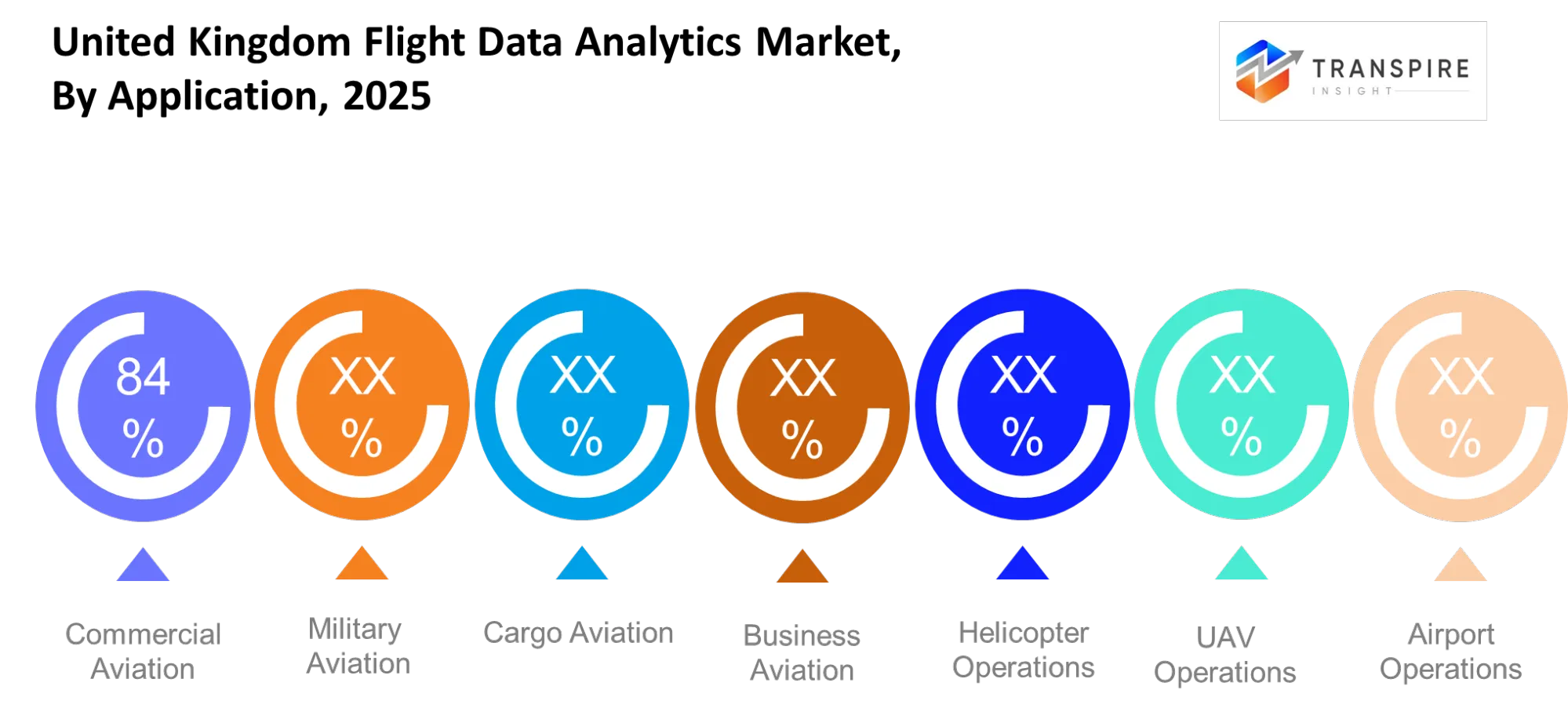
To learn more about this report, Download Free Sample Report
By End User:
Airlines stand as this main, kind of, end user group because commercial carriers need ongoing monitoring of fleet performance, operational efficiency, and fuel utilization. Airports also rely on analytics systems for better runway oversight, passenger flow coordination , and air traffic operations. MRO providers lean on aviation analytics too, mainly for maintenance scheduling , repair planning, and aircraft inspection management you know the whole cycle.
Defense organizations keep adopting advanced analytics systems for mission readiness and fleet reliability review. Aviation regulators use data platforms to track compliance reporting, safety standards, and operational transparency. Charter operators and training institutes add analytics tools as well, for operational planning, pilot assessment, and flight performance monitoring. Beyond that, other end users continue supporting broader technology uptake across aviation activities.
By Technology:
AI based analytics, sort of supports automated operational monitoring, it also does predictive maintenance assessment and route optimization across aviation systems. Big data analytics processes huge volumes of aircraft and operational information, for performance evaluation, and strategic planning in a kind of holistic way. Real time monitoring tech helps aviation operators track aircraft condition, fuel usage, and day to day operational activity, without any noticeable delay.
Then IoT integration boosts aircraft connectivity via sensor based communication systems linked with maintenance and operational platforms. Predictive algorithms, in a sense, help forecast technical issues, operational risks, and the maintenance requirements before real disruptions occur . Digital twin technology also supports virtual simulation of aircraft systems, for operational analysis, and gradual performance improvement. Blockchain enabled systems keep assisting secure aviation data sharing, plus operational transparency across aviation networks.
What are the Key Use Cases Driving the United Kingdom Flight Data Analytics Market?
Flight operations optimization is still the main use case that keeps showing up behind the adoption trend across the United Kingdom aviation sector. Commercial airlines lean on flight data analytics platforms in order to keep an eye on fuel consumption, tweak route planning, cut turnaround delays , and also reinforce operational safety compliance. This particular application builds pretty strong demand, mainly because fuel and maintenance costs continue putting pressure on airline profitability, in the long run.
Predictive maintenance applications are getting more traction with MRO providers plus airport operators who manage big aircraft fleets. Now analytics systems go beyond simple monitoring, they help with early fault detection, component health tracking, and maintenance scheduling , all to reduce that annoying unexpected aircraft downtime. Cargo aviation operators are not standing still either , they’re putting more money into route analytics to improve delivery timelines and to raise fleet utilization efficiency.
More emerging themes are starting to appear too, like AI driven emissions forecasting and digital twin technology that supports aircraft performance simulation. On the defense side, aviation programs and UAV operators are looking at these tools for mission planning and autonomous operational analysis, as well as for long term fleet reliability management , particularly within aviation environments that are becoming more and more connected every year.
|
Report Metrics |
Details |
|
Market size value in 2025 |
USD 0.31 Billion |
|
Market size value in 2026 |
USD 0.345 Billion |
|
Revenue forecast in 2033 |
USD 0.730 Billion |
|
Growth rate |
CAGR of 11.30% from 2026 to 2033 |
|
Base year |
2025 |
|
Historical data |
2021 - 2024 |
|
Forecast period |
2026 - 2033 |
|
Report coverage |
Revenue forecast, competitive landscape, growth factors, and trends |
|
Regional scope |
Middle East and Africa (Saudi Arabia, United Arab Emirates, South Africa, Rest of Middle East and Africa) |
|
Key company profiled |
GE Aerospace, Honeywell, Lufthansa Technik, Airbus, Boeing, Collins Aerospace, IBM, SAP, Skywise, Flydocs, Rolls-Royce, Wipro, TCS, Infosys, Thales Group |
|
Customization scope |
Free report customization (country, regional & segment scope). Avail customized purchase options to meet your exact research needs. |
|
Report Segmentation |
By Solution Type (Flight Operations Analytics, Predictive Maintenance Analytics, Fuel Efficiency Analytics, Safety Analytics, Crew Performance Analytics, Weather Analytics, Route Analytics, Others); By Deployment (Cloud-based Analytics, On-premise Analytics, Hybrid Analytics, AI-powered Analytics, Real-time Analytics, Edge Analytics, SaaS Analytics, Others); By Application (Commercial Aviation, Military Aviation, Cargo Aviation, Business Aviation, Helicopter Operations, UAV Operations, Airport Operations, Others); By End User (Airlines, Airports, MRO Providers, Defense Organizations, Aviation Regulators, Charter Operators, Training Institutes, Others); By Technology (AI-based Analytics, Big Data Analytics, Real-time Monitoring, IoT Integration, Predictive Algorithms, Digital Twin Technology, Blockchain-enabled Systems, Others) |
Which Regions are Driving the United Kingdom Flight Data Analytics Market Growth?
England stays pretty much the leading regional market in the United Kingdom, mostly because the biggest commercial aviation action is clustered near London, around airport sites and airline operations centers. Heathrow , Gatwick, and Manchester keep spending on connected aviation infrastructure, cloud integration, and real time operational monitoring systems. On top of that, solid regulatory control from the UK Civil Aviation Authority has pushed airlines to bring in advanced analytics for safety reporting , emissions tracking , and maintenance optimization. In general, the whole area has a more mature aerospace ecosystem too, with airline operators, analytics software providers, aircraft manufacturers, and newer aviation technology startups all working in a tightly integrated operational setup.
Scotland adds to market revenue in a steady sort of way, driven by defense aviation programs, aerospace engineering work, and ongoing investment into digital aviation systems. But unlike England, where commercial airline operations bring most of the analytics pull, Scotland leans more toward niche aerospace use cases and military aviation modernization initiatives. Consistent government backing for aerospace research, plus regional technology partnerships, has helped keep adoption on course for predictive analytics and aircraft monitoring platforms. That consistency in turn keeps drawing aviation software providers looking for reliable long-term agreements and practical operational collaborations across defense and engineering related efforts.
Wales seems to be emerging as the quickest growing regional market, kind of because there’s more aerospace manufacturing activity going on and also more money flowing into aviation technology infrastructure. In the last while, fleet modernization efforts, plus a bunch of airport development programs, have pushed regional operators to move toward AI enabled maintenance analytics and some operational performance systems. At the same time, there’s growing cooperation between aerospace manufacturers and digital technology companies, that has really helped strengthen demand for connected aviation platforms all across the region. From 2026 through 2033 , this particular growth path should open appealing opportunities for analytics providers, cloud infrastructure companies and even investors looking at new aviation technology ecosystems.
Who are the Key Players in the United Kingdom Flight Data Analytics Market and How Do They Compete?
The competitive landscape of the United Kingdom Flight Data Analytics Market still looks moderately consolidated, but it’s kinda mixed, you know. On one hand you’ve got global aerospace technology companies competing alongside more specialized aviation software providers. On the other hand, the competition is hinging more and more on real-time analytics, predictive maintenance accuracy, cloud integration strength, and those long-term airline service contracts, not just pricing . Established aerospace players keep defending their market share using integrated aviation ecosystems, where aircraft systems, operational software, and maintenance support services come together, pretty much as one whole package. Meanwhile smaller analytics firms are stepping in, with AI-oriented platforms built for faster deployment, lower infrastructure costs, and flexible subscription models that are aimed at regional airlines, and also airport operators.
Airbus tends to stand out because it has deeper integration between aircraft systems and Skywise data analytics platforms. This lets airlines bring operational, maintenance, and engineering data into one shared environment. With that unified setup Airbus gains stronger access to airlines running large, mixed fleets across Europe. The company also keeps expanding through airline partnerships, especially those centered on predictive maintenance and fuel optimization programs that are tied to connected aircraft infrastructure.
Honeywell tends to lean into real time operational intelligence and cockpit connectivity solutions that help with flight efficiency and maintenance forecasting. GE Aerospace builds more of its competitive edge via engine health monitoring systems that hook straight into predictive analytics services , especially for commercial aviation fleets. Thales keeps pushing deeper into UK defense and airport operations, by offering cybersecurity led aviation analytics platforms for regulated operational settings and sensitive aviation infrastructure systems .
Company List
- GE Aerospace
- Honeywell
- Lufthansa Technik
- Airbus
- Boeing
- Collins Aerospace
- IBM
- SAP
- Skywise
- Flydocs
- Rolls-Royce
- Wipro
- TCS
- Infosys
- Thales Group
Recent Development News
In May 2026, Iridium Communications announced acquisition of Aireon. The deal unified Aireon’s space-based ADS-B flight surveillance and aviation analytics capabilities with Iridium’s satellite network, enhancing real-time flight tracking, operational analytics, and aviation safety services used by partners including UK-based NATS.Source https://www.nasdaq.com/
In March 2026, OpenAirlines announced the acquisition of CEFA Aviation. The acquisition combined AI-powered fuel efficiency analytics with 3D flight data animation technology to create an integrated flight operations analytics platform for airlines, improving operational performance, safety analysis, and sustainability management.Source https://www.cefa-aviation.com/
What Strategic Insights Define the Future of the United Kingdom Flight Data Analytics Market?
The United Kingdom Flight Data Analytics Market is headed toward fully connected , AI-driven operational ecosystems where flight analytics platforms sort of work like ongoing decision-support engines, not just post-flight reporting stuff. That change is being pushed by the pressure on airlines to boost fuel efficiency, bring down maintenance expenses, and also meet stricter emissions reporting rules throughout European aviation routes. Over the next five to seven years, analytics vendors that bundle predictive maintenance, operational intelligence, and cybersecurity features into one unified cloud environment will likely end up with better long-term positions.
There is also a less noticeable risk, it’s more like a dependency problem, where airlines get more reliant on a relatively small set of connected software ecosystems run by big aerospace technology companies. When carriers cluster around only a few analytics platforms, switching costs go up, and data ownership worries can show up too. In that kind of setup, smaller providers may lose some competitive agility and innovation can end up feeling slower than it could be.
On the opportunity side, digital twin technology is starting to matter more for aircraft performance simulation and emissions forecasting , especially across defense aviation and the newer UAV operations. Market participants should focus on partnerships with airports, MRO providers, and regional aerospace technology hubs to lock in longer-term data access. That way they can strengthen recurring analytics service revenues before platform consolidation goes further and gets even harder to resist.
United Kingdom Flight Data Analytics Market Report Segmentation
By Solution Type
- Flight Operations Analytics
- Predictive Maintenance Analytics
- Fuel Efficiency Analytics
- Safety Analytics
- Crew Performance Analytics
- Weather Analytics
- Route Analytics
By Deployment
- Cloud-based Analytics
- On-premise Analytics
- Hybrid Analytics
- AI-powered Analytics
- Real-time Analytics
- Edge Analytics
- SaaS Analytics
By Application
- Commercial Aviation
- Military Aviation
- Cargo Aviation
- Business Aviation
- Helicopter Operations
- UAV Operations
- Airport Operations
By End User
- Airlines
- Airports
- MRO Providers
- Defense Organizations
- Aviation Regulators
- Charter Operators
- Training Institutes
By Technology
- AI-based Analytics
- Big Data Analytics
- Real-time Monitoring
- IoT Integration
- Predictive Algorithms
- Digital Twin Technology
- Blockchain-enabled Systems
Frequently Asked Questions
Find quick answers to common questions.
The United Kingdom Flight Data Analytics Market size is USD 0.730 Billion in 2033.
Key Segments for the United Kingdom Flight Data Analytics Market are By Solution Type (Flight Operations Analytics, Predictive Maintenance Analytics, Fuel Efficiency Analytics, Safety Analytics, Crew Performance Analytics, Weather Analytics, Route Analytics, Others); By Deployment (Cloud-based Analytics, On-premise Analytics, Hybrid Analytics, AI-powered Analytics, Real-time Analytics, Edge Analytics, SaaS Analytics, Others); By Application (Commercial Aviation, Military Aviation, Cargo Aviation, Business Aviation, Helicopter Operations, UAV Operations, Airport Operations, Others); By End User (Airlines, Airports, MRO Providers, Defense Organizations, Aviation Regulators, Charter Operators, Training Institutes, Others); By Technology (AI-based Analytics, Big Data Analytics, Real-time Monitoring, IoT Integration, Predictive Algorithms, Digital Twin Technology, Blockchain-enabled Systems, Others).
Major United Kingdom Flight Data Analytics Market Players are GE Aerospace, Honeywell, Lufthansa Technik, Airbus, Boeing, Collins Aerospace, IBM, SAP, Skywise, Flydocs, Rolls-Royce, Wipro, TCS, Infosys, Thales Group.
The Current United Kingdom Flight Data Analytics Market size is USD 0.31 Billion in 2025.
The United Kingdom Flight Data Analytics Market CAGR is 11.30% from 2026 to 2033.
- GE Aerospace
- Honeywell
- Lufthansa Technik
- Airbus
- Boeing
- Collins Aerospace
- IBM
- SAP
- Skywise
- Flydocs
- Rolls-Royce
- Wipro
- TCS
- Infosys
- Thales Group
Recently Published Reports
-
Apr 2026
Aerospace Fluoropolymers Market
Aerospace Fluoropolymers Market Size, Share & Analysis Report By Type (PTFE, FEP, PFA, ETFE, and Others), By Application (Electrical Insulation, Seals & Gaskets, Coatings, and Others), By End User (Commercial Aviation, Military Aviation, General Aviation, and Others), and Geography (North America, Europe, Asia-Pacific, Middle East and Africa, South and Central America), 2021 - 2031
-
Apr 2026
Airborne SATCOM System Market
Airborne SATCOM System Market Size, Share & Analysis Report By Type (SATCOM Terminals, Transceivers, Airborne Radio, Modems and Routers, SATCOM Radomes, and Other), By Application (Government and Defense and Commercial), and Geography (North America, Europe, Asia-Pacific, Middle East and Africa, South and Central America), 2021 – 2031
-
Apr 2026
Ship Leasing Market
Ship Leasing Market Size, Share & Analysis Report By Vessel Type (Container Ships, Bulk Carriers, Tankers, and Specialized Vessels), By Lease Duration (Short-Term Lease (Less than 1 year), Medium-Term Lease (1-5 years), and Long-Term Lease (More than 5 years)), By Lease Type (Bareboat Charter, Time Charter, Financial Lease, and Others), By End-User Industry (Oil and Gas, Manufacturing and Industrial, Automotive, Agriculture and Food, Retail and Consumer Goods, and Others), and Geography (North America, Europe, Asia-Pacific, Middle East and Africa, South and Central America), 2021 – 2031
-
Apr 2026
Thread Rolling Dies Market
Thread Rolling Dies Market Size, Share & Analysis Report By Type (Flat Thread Rolling Dies, Circular (Cylindrical) Dies, Tangential Thread Rolling Dies, Planetary Thread Rolling Dies, and Other Types), By Material Type (High-Speed Steel (HSS), Carbide, Tool Steel, Alloy Steel, and Other Specialized Alloys), By Distribution Channel (Direct Sales, Distributors and Dealers, and Online Platforms), By Application (Automotive Industry, Aerospace and Defense, Construction and Infrastructure, Industrial Machinery, Electronics and Electrical Components, Medical Devices, and Fastener Production), and Geography (North America, Europe, Asia-Pacific, Middle East and Africa, South and Central America), 2021 – 2031
Our Clients