
United Kingdom Digital Dermatoscopes Market Size & Forecast:
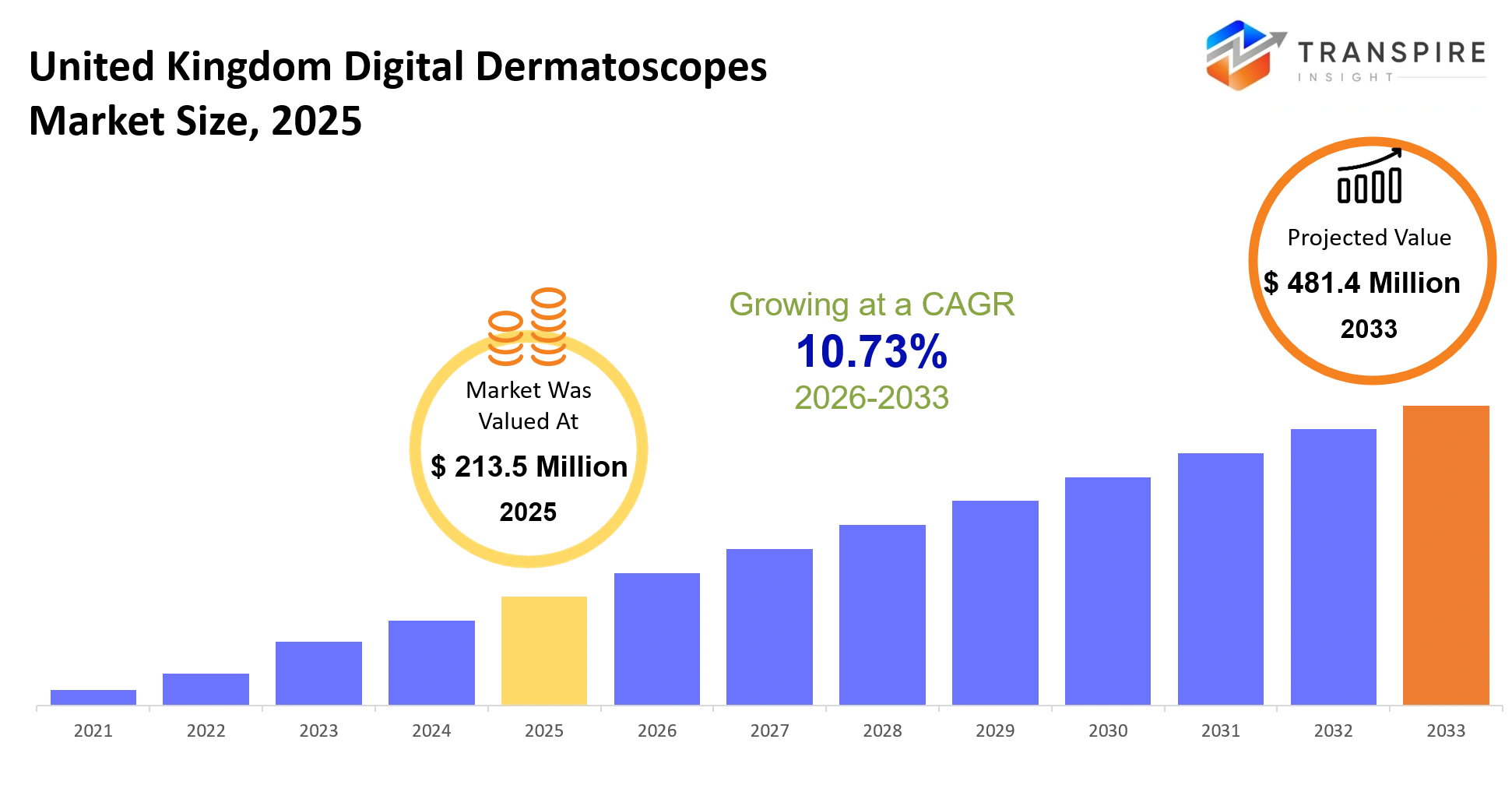
- United Kingdom Digital Dermatoscopes Market Size 2025: USD 213.5 Million
- United Kingdom Digital Dermatoscopes Market Size 2033: USD 481.4 Million
- United Kingdom Digital Dermatoscopes Market CAGR: 10.73%
- United Kingdom Digital Dermatoscopes Market Segments: By Product Type (Handheld Dermatoscopes, Digital Video Dermatoscopes, Smartphone-connected Dermatoscopes, AI-enabled Dermatoscopes, Polarized Dermatoscopes, Non-polarized Dermatoscopes, Wireless Dermatoscopes, Others); By Application (Skin Cancer Detection, Melanoma Diagnosis, Clinical Dermatology, Cosmetic Dermatology, Teledermatology, Research Applications, Others); By End User (Hospitals, Dermatology Clinics, Diagnostic Centers, Research Institutes, Others); By Technology (LED Illumination, AI-assisted Imaging, Cloud-connected Imaging, High-resolution Imaging, Others)
To learn more about this report,  Download Free Sample Report
United Kingdom Digital Dermatoscopes Market Summary
The United Kingdom Digital Dermatoscopes Market was valued at USD 213.5 Million in 2025. It is forecast to reach USD 481.4 Million by 2033. That is a CAGR of 10.73% over the period.
The United Kingdom digital dermatoscopes market sort of plays a big part in modern dermatology , mostly because it helps clinicians capture, magnify, store and then analyze high-resolution skin images for the early detection of melanoma and a bunch of other skin disorders. In practice these tools can boost diagnostic accuracy, they also support longer term patient tracking and they make remote consultations easier, whether that is across hospitals, specialist clinics, or primary care sites .
Over the last five years the market has moved away from standalone optical exam instruments , and instead leaned more toward connected digital platforms. These platforms are typically paired with imaging software, cloud storage, and teledermatology workflows. That shift kind of picked up speed after healthcare digitization programs expanded and, after the COVID-19 pandemic, remote consults became much more common.
Meanwhile, the growing burden of skin cancer cases in the United Kingdom has made the whole need for quicker and more precise diagnostic pathways even stronger. So as providers push for earlier detection and smoother specialist referrals, digital dermatoscopes are turning into an almost indispensable diagnostic asset. That in turn is driving device upgrades , software subscriptions and that recurring service income that keeps showing up across the dermatology ecosystem .
Key Market Insights
- England runs the United Kingdom Digital Dermatoscopes Market, with a guesstimated 65%+ share in 2025, backed by more robust dermatology infrastructure.
- Scotland is also moving fast through 2033, partly because digital healthcare spending keeps rising, and telemedicine keeps expanding in a kind of continuous way.
- When you look at what’s selling, handheld digital dermatoscopes make up around 55% of market revenue in 2025, which ties to the practical need for clinical portability in day to day use.
- Then there are smartphone-connected dermatoscopes, which are growing the fastest as a product category, mainly due to lower upfront acquisition costs and the ability to conduct remote consultations with less friction.
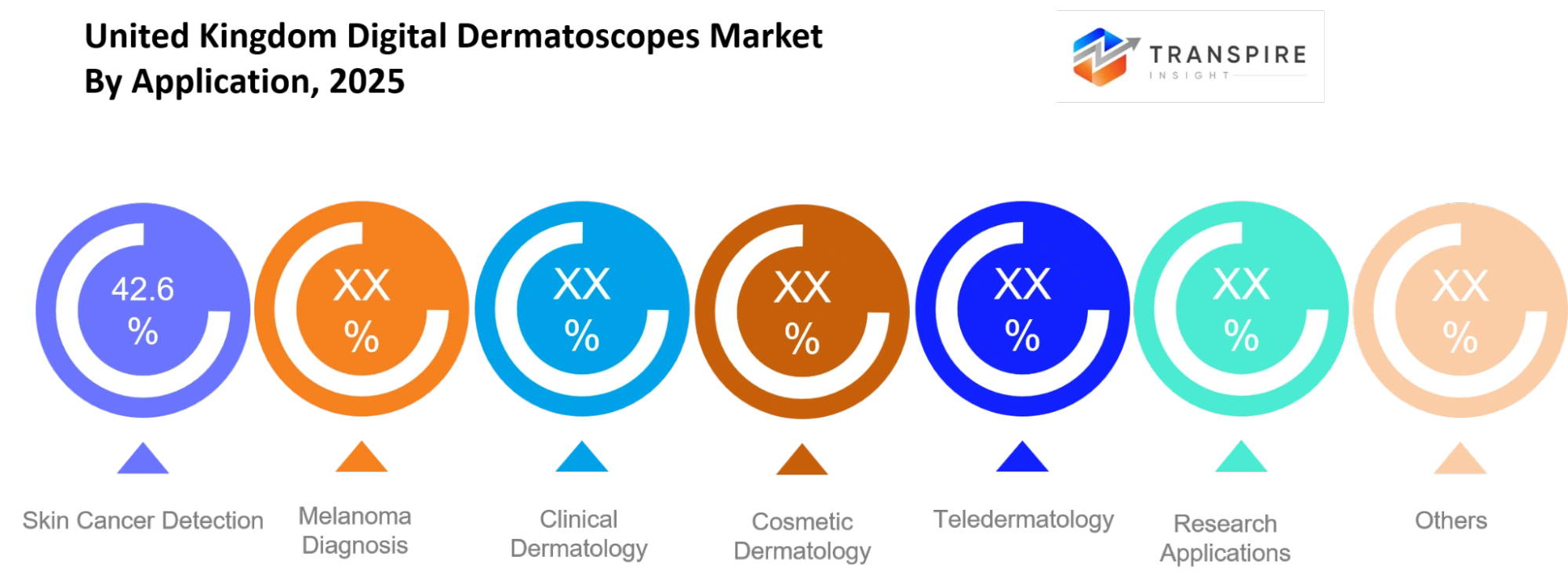
- For applications, skin cancer diagnosis stays on top, it drives nearly 60% of total market demand, largely as melanoma screening volumes climb.
- Teledermatology assessment is gaining steam too, with NHS-supported digital consultation programs helping speed up image-based referrals.
- Hospitals and specialist dermatology clinics, together hold over 50% market share, and the reason is straightforward, higher patient throughput plus more demanding imaging requirements.
- At the same time, primary care providers are adopting digital skin imaging tools more often to cut down on specialist referral waiting times, which people notice quickly.
- Key players like FotoFinder Systems, Canfield Scientific, HEINE Optotechnik, DermLite, and 3Gen are beefing up portfolios using software-enabled imaging platforms.
- Overall, the competitive edge is shifting toward AI-assisted lesion analysis, cloud based image management, strategic partnerships, and more integrated telehealth ecosystems, sort of all at once.
What are the Key Drivers, Restraints, and Opportunities in the United Kingdom Digital Dermatoscopes Market?
The strongest growth driver is basically the growing clinical focus on catching skin cancer earlier combined with digital transformation across healthcare systems. The fact that melanoma incidence keeps climbing has made healthcare providers more willing to bring in imaging technologies that raise diagnostic confidence, and also lower the number of unnecessary biopsies. At the same time, NHS digital health programs have encouraged referrals based on images , plus specialist triage models that move faster. Digital dermatoscopes help clinicians record lesions over time, check older images, and make decisions sooner. That whole thing helps workflow efficiency pretty directly, while also boosting equipment procurement and even software-related revenues across dermatology practices and hospitals.
The biggest restraint is the high cost and the overall complexity tied to fitting advanced dermatoscopy systems into the existing healthcare setup. Past just buying the device, providers usually need image management software , cybersecurity controls, cloud storage, plus some form of staff training. Those costs become a kind of structural obstacle, especially for smaller clinics and community healthcare providers that are already working with tight budgets. And since healthcare procurement timelines are long, and reimbursement models change slowly, adoption tends to lag behind what the technology can do. As a result, this limitation delays market penetration and keeps revenue growth constrained in cost-sensitive healthcare areas.
One major future opportunity is AI-enabled diagnostic guidance together with teledermatology networks. Healthcare organizations are putting more money into digital platforms that link primary care physicians with dermatology specialists. AI-based lesion assessment software can rank suspicious cases and assist triage decisions, so the right patients are routed sooner and with less friction.
What Has the Impact of Artificial Intelligence Been on the United Kingdom Digital Dermatoscopes Market?
Artificial intelligence has, quite a bit, enhanced the clinical worth of digital dermatoscopy systems by turning image capture devices into more advanced diagnostic support platforms and kind of letting them “think” during acquisition.In practice, modern AI algorithms sift through lesion traits such as asymmetry, border oddness, color contrasts, and internal structural patterns—so clinicians can sort out which cases might be higher risk and need extra attention sooner. This kind of automation cuts down the time spent on manual image review, and it tends to make screening workflows feel more steady , from one place to another.
At the same time, machine learning models are increasingly used to compare older lesion images with newer ones, which enables a more forward-looking sense of how a condition might be changing. With that, teams can push earlier intervention tactics, and also tune how specialist time and resources are allocated. A lot of healthcare providers use AI-assisted image management platforms as well, not only for analysis but to streamline referral pathways , improve the quality of documentation, and accelerate teledermatology consults. The overall effect is faster clinical decision-making, stronger diagnostic throughput, and a more efficient use of dermatology services.
Operationally, AI-supported systems can help reduce the number of unnecessary biopsies , shorten referral waiting times, and raise diagnostic confidence for non-specialist clinicians who are working with less lived experience. Some healthcare organizations even describe meaningful reductions in the administrative burden, thanks to automated image categorization and reporting functions that run in the background.
Still, even with those gains, AI adoption hits a major wall. For algorithms to perform well they need large, diverse, and clinically validated image datasets. Differences in skin types, changes in imaging conditions, and variation in lesion presentation can all sway the accuracy of the model, which makes it tricky to roll out “everywhere” in a universal way across all healthcare settings.
Key Market Trends
- England is basically pulling ahead in the United Kingdom Digital Dermatoscopes Market, with an estimated 65%+ share in 2025, mostly because there is a more mature dermatology infrastructure.
- Scotland meanwhile looks like one of the quickest regional movers through 2033, and that is tied to digital health investments along with telemedicine expansion that is getting bigger by the year.
- By 2025 handheld digital dermatoscopes make up about 55% of the market revenue, this shows how much clinicians need portable exam setups, not just fixed devices.
- Smartphone connected dermatoscopes are moving the fastest product-wise, in part because the initial purchase price tends to be lower, plus you can do remote checkups more easily.
- When it comes to use, skin cancer diagnosis is still the main application, it accounts for nearly 60% of overall demand, mainly due to the rise in melanoma screening volumes.
- At the same time teledermatology assessment is expanding fast, with NHS-backed digital consultation programs speeding up image based referrals, and the whole process feels more connected than before.
- Hospitals and specialist dermatology clinics together hold over 50% market share, they benefit from higher patient throughput and stronger needs for advanced imaging.
- Primary care providers are also adopting digital skin imaging tools more and more, partly to cut down specialist referral waiting times.
- Key companies like FotoFinder Systems, Canfield Scientific, HEINE Optotechnik, DermLite and 3Gen are basically beefing up their lineups by building software enabled imaging platforms.
- Overall, competitive edge is increasingly coming from AI supported lesion analysis, cloud driven image management, smart partnerships, and an integrated telehealth ecosystem that ties things together.
United Kingdom Digital Dermatoscopes Market Segmentation
By Product Type
Handheld Dermatoscopes keep the dominant position, not only because of portability but also because they are kinda easy to use and allow quick examinations, so adoption grows pretty fast across hospitals, clinics, and outpatient settings. A lot of daily skin checks end up needing flexible tools that can slip between exam rooms without a big setup routine , so that matters more than people think. Digital Video Dermatoscopes sit in the second-largest slot due to better image capture, plus visualization tools that help clinicians do more careful lesion analysis, you know the detailed kind. Smartphone-connected Dermatoscopes are also getting more attention these days, mainly because healthcare providers want cost effective options that mesh with the mobile tech they already use.
AI-enabled Dermatoscopes are projected to show the fastest growth, as image analysis software gets increasingly folded into day to day dermatology workflows. Polarized Dermatoscopes remain widely liked for clearer viewing of deeper skin structures, and they do this without requiring direct skin contact. Non-polarized Dermatoscopes still find their place too, especially where surface-level inspection stays important for clinical evaluation. Wireless Dermatoscopes, along with other advanced formats, are expected to benefit from rising demand for connected healthcare systems, remote consultations, and also digital image sharing, which is becoming pretty normal.
By Application
Skin Cancer Detection sort of holds the dominant position, since early spotting of suspicious lesions is still a big priority across most healthcare systems. The strong usage is also backed by more frequent screening efforts ,and an extra push towards cutting down diagnostic delays, like they are really trying to close that gap. Melanoma Diagnosis keeps the second-largest slot because doctors must judge high-risk pigmented lesions carefully, and patients often need long term follow-ups. Clinical Dermatology also takes a substantial slice as dermatologists rely on advanced imaging tools during everyday check ups.
Skin Cancer Detection is expected to keep leading, because healthcare providers keep putting money into technologies that increase diagnostic precision and improve patient outcomes. Teledermatology should grow the fastest, as digital consults become more and more stitched into care delivery models. Cosmetic Dermatology keeps expanding steadily, helped by imaging technologies used for treatment planning and for assessing skin conditions. Research Applications and other more specialized uses are likely to keep fueling market growth through innovation, clinical studies, and technology validation programs.
To learn more about this report, Download Free Sample Report
By End User
Hospitals kind of keep the dominant position, mostly because huge patient volumes and reliable access to specialist expertise generate steady demand for advanced diagnostic gear. On top of that, investment into digital imaging infrastructure and integrated healthcare systems, really pushes adoption even more in hospital settings where it’s routine. Dermatology Clinics end up in the second-largest spot, not surprising, since skin care services rely on sharp visualization and ongoing lesion tracking capabilities. Diagnostic Centers are still moving upward too, mainly because referral networks are increasingly slotting digital imaging into day to day assessment workflows.
Hospitals are expected to keep leadership, since there are constant technology upgrades and also rising expectations for smoother patient management. Dermatology Clinics are projected to see strong growth, as specialized skin assessment services become more reachable across different regions. Research Institutes continue adopting advanced imaging technologies for clinical investigations, algorithm building, and validation studies. Other end users will gain from wider digital health adoption and the increasing availability of interconnected diagnostic solutions , in a more practical sense.
By Technology
LED Illumination basically keeps the dominant position because, even when everything else changes, dependable lighting quality stays pretty essential for accurate skin review and image capture. When illumination is consistent, lesion visibility tends to improve, and standardized clinical evaluations can be carried out across quite different healthcare settings. High-resolution Imaging sits in the second-largest spot as the need for crisp image recording grows, plus more longitudinal patient monitoring is being demanded. Better imaging quality also tends to help healthcare professionals work together more effectively, especially while diagnosing and deciding on treatment plans.
LED Illumination is anticipated to hold a strong market position as dependable image quality remains a core requirement for dermatological assessment. AI-assisted Imaging is projected to grow the fastest, mainly because more healthcare providers are adopting decision support tools that boost diagnostic efficiency. Cloud-connected Imaging is also picking up speed due to improved image storage, remote access, and teleconsultation functions across healthcare networks. Other emerging technologies should back future progress too, by refining workflow integration, making data easier to reach, and enabling more digital collaboration throughout dermatology services.
What are the Key Use Cases Driving the United Kingdom Digital Dermatoscopes Market?
So the main use case for digital dermatoscopes is basically skin cancer evaluation and melanoma screening. Dermatologists as well as specialized clinics depend on high resolution imaging to judge questionable lesions, keep track of changes over time, and generally sharpen diagnostic accuracy. And yeah, this particular application seems to make up the largest part of demand because spotting issues early really shifts treatment results, also affects healthcare costs.
After that, beyond those specialist dermatology offices, digital dermatoscopes are getting used more and more in primary care environments and teledermatology programs. General practitioners take the lesion images and then send them electronically to specialists for quick review. Hospitals too, are adopting these setups in order to streamline referral routes , and help cut down the time patients wait before being seen.
Newer directions are showing up like AI assisted risk sorting and big population screening efforts. Research groups are looking into automated image analysis platforms that can help with earlier detection of high risk lesions. As the digital health setup keeps maturing, remote dermatology services and predictive diagnostic workflows are expected to play a bigger role in future market takeup .
|
Report Metrics |
Details |
|
Market size value in 2025 |
USD 213.5 Million |
|
Market size value in 2026 |
USD 235.8 Million |
|
Revenue forecast in 2033 |
USD 481.4 Million |
|
Growth rate |
CAGR of 10.73%from 2026 to 2033 |
|
Base year |
2025 |
|
Historical data |
2021 - 2024 |
|
Forecast period |
2026 - 2033 |
|
Report coverage |
Revenue forecast, competitive landscape, growth factors, and trends |
|
Regional scope |
United Kingdom |
|
Key company profiled |
3Gen, FotoFinder Systems, Heine Optotechnik, Canfield Scientific, DermLite, Firefly Global, Welch Allyn, Dino-Lite, Optilia Instruments, MetaOptima, AMD Global Telemedicine, Caliber Imaging, Pixience, Barco, MedX Health |
|
Customization scope |
Free report customization (country, regional & segment scope). Avail customized purchase options to meet your exact research needs. |
|
Report Segmentation |
By Product Type (Handheld Dermatoscopes, Digital Video Dermatoscopes, Smartphone-connected Dermatoscopes, AI-enabled Dermatoscopes, Polarized Dermatoscopes, Non-polarized Dermatoscopes, Wireless Dermatoscopes, Others); By Application (Skin Cancer Detection, Melanoma Diagnosis, Clinical Dermatology, Cosmetic Dermatology, Teledermatology, Research Applications, Others); By End User (Hospitals, Dermatology Clinics, Diagnostic Centers, Research Institutes, Others); By Technology (LED Illumination, AI-assisted Imaging, Cloud-connected Imaging, High-resolution Imaging, Others) |
Which Regions are Driving the United Kingdom Digital Dermatoscopes Market Growth?
England is still kind of the dominant region in the United Kingdom digital dermatoscopes market, mostly because it has the concentration of major NHS trusts, specialist dermatology centers, and several academic medical institutions, so it just ends up pulling demand in. It also helps that England has a pretty extensive digital health infrastructure in place, which supports image based referrals, teledermatology services, and integrated patient record systems. London and then Manchester, Birmingham and other big healthcare hubs keep drawing investment into advanced diagnostic technologies, plus skin cancer screening initiatives. put all that clinical know how, funding, and technology adoption together, and you get a solid ecosystem that keeps England in the lead.
Scotland is also a major player and is usually second in size, but the growth pattern is not the same as England. Instead of leaning only on huge city based healthcare networks, Scotland has a more structured rollout of digital healthcare services, aimed at better access for people spread across different locations. The regional health boards have been putting money into remote consultation capabilities, so digital dermatoscopy becomes a practical way to link patients to specialist care without so much friction. That steady investment atmosphere, along with long term healthcare planning, makes Scotland a dependable contributor to market revenue.
Wales is moving faster than the others, and it feels like it is growing at the quickest pace lately. This is happening because more healthcare providers are using teledermatology platforms, not just for convenience but also to manage specialist workforce limitations and to cut down diagnostic delays. More recently there have been investments in digital transformation programs and remote diagnostic pathways, and that has sped up adoption of connected skin imaging technologies. And because the focus there is on expanding access to specialist services beyond major urban centers, the region ends up creating favorable conditions for digital dermatoscope deployment.
Who are the Key Players in the United Kingdom Digital Dermatoscopes Market and How Do They Compete?
Competition across the United Kingdom digital dermatoscopes market is fairly fragmented, and in practice the manufacturers keep circling the same themes: image quality, software integration, artificial intelligence strength, and day to day clinical workflow efficiency. The older imaging specialists still try to hold share using proprietary diagnostic ecosystems, while newer players often pivot toward mobile connectivity and cloud based dermatology platforms. What seems to matter more and more is whether a company can blend hardware, software, and data handling into one overall clinical solution, not just sell an independent device that kinda stands alone.
FotoFinder Systems differentiates itself with total body mapping and AI supported skin analysis tools. The firm feels it has pushed ahead by building an integrated imaging ecosystem, and also by encouraging MDR certified AI applications for dermatology. This supports clinicians in managing high risk patients more efficiently, at least that’s how they frame it. Canfield Scientific competes by leaning into advanced imaging software and dermoscopy platforms that pair high resolution visualization with AI led analytics. Their approach is basically about tying dermoscopy, total body imaging, and clinical documentation together into one uninterrupted workflow.
HEINE Optotechnik puts the spotlight on premium optical engineering and diagnostic precision, which tends to appeal to clinicians who care a lot about image quality and examination reliability. MetaOptima is more about cloud based dermatology software, mobile imaging tools, and AI enabled clinical decision support that helps enable remote skin assessments. Then 3Gen, through the DermLite portfolio, leans into portability and smartphone compatibility. They aim to make adoption quicker among dermatologists and primary care practitioners, so clinicians can run flexible diagnostic routines, without the usual friction.
Company List
- 3Gen
• FotoFinder Systems
• Heine Optotechnik
• Canfield Scientific
• DermLite
• Firefly Global
• Welch Allyn
• Dino-Lite
• Optilia Instruments
• MetaOptima
• AMD Global Telemedicine
• Caliber Imaging
• Pixience
• Barco
• MedX Health
Recent Development News
In January 2026, MetaOptima joined the Digital Health & Discovery Platform (DHDP). The collaboration expands access to AI-enabled dermatology tools and supports broader deployment of intelligent skin imaging technologies across healthcare networks.https://www.metaoptima.com
In February 2025, Canfield Scientific introduced its new D2 digital dermatoscope and enhanced VEOS® imaging platform at the American Academy of Dermatology Annual Meeting. The product launch expanded the company's portfolio of AI-enabled dermoscopy solutions and strengthened its position in digital skin imaging.https://www.canfieldsci.com
What Strategic Insights Define the Future of the United Kingdom Digital Dermatoscopes Market?
The United Kingdom digital dermatoscopes market seems to be slowly drifting toward a software focused model, where the diagnostic value is coming more from artificial intelligence, ongoing image analytics and smooth integration with teledermatology networks, rather than just hardware upgrades. Underneath it, the main driver is the healthcare system trying to cope with more and more skin cancer screening volume, while also facing specialist workforce limits. There’s also a quieter risk too, like a heavier reliance on a relatively small group of imaging software providers, which could introduce interoperability issues and quietly bump up the switching costs for healthcare organizations, even when the devices themselves look modern.
At the same time, there is a developing opportunity in AI assisted screening programs placed in primary care environments where earlier triage might cut down a lot of the load on dermatology specialists. Market players should really concentrate on putting money into interoperable platforms that link imaging devices with electronic health records, plus AI decision support capabilities. Firms that manage to build scalable digital ecosystems, not only standalone instruments, may end up capturing the more durable long term value across 2026 to 2033.
United Kingdom Digital Dermatoscopes Market Report Segmentation
By Product Type
- Handheld Dermatoscopes
- Digital Video Dermatoscopes
- Smartphone-connected Dermatoscopes
- AI-enabled Dermatoscopes
- Polarized Dermatoscopes
- Non-polarized Dermatoscopes
- Wireless Dermatoscopes
- Others
By Application
- Skin Cancer Detection
- Melanoma Diagnosis
- Clinical Dermatology
- Cosmetic Dermatology
- Teledermatology
- Research Applications
- Others
By End User
- Hospitals
- Dermatology Clinics
- Diagnostic Centers
- Research Institutes
- Others
By Technology
- LED Illumination
- AI-assisted Imaging
- Cloud-connected Imaging
- High-resolution Imaging
- Others
Frequently Asked Questions
Find quick answers to common questions.
The expected United Kingdom Digital Dermatoscopes Market size for the market will be USD 481.4 Million in 2033.
Key segments for the United Kingdom Digital Dermatoscopes Market are By Product Type (Handheld Dermatoscopes, Digital Video Dermatoscopes, Smartphone-connected Dermatoscopes, AI-enabled Dermatoscopes, Polarized Dermatoscopes, Non-polarized Dermatoscopes, Wireless Dermatoscopes, Others); By Application (Skin Cancer Detection, Melanoma Diagnosis, Clinical Dermatology, Cosmetic Dermatology, Teledermatology, Research Applications, Others); By End User (Hospitals, Dermatology Clinics, Diagnostic Centers, Research Institutes, Others); By Technology (LED Illumination, AI-assisted Imaging, Cloud-connected Imaging, High-resolution Imaging, Others).
Major United Kingdom Digital Dermatoscopes Market players are 3Gen, FotoFinder Systems, Heine Optotechnik, Canfield Scientific, DermLite, Firefly Global, Welch Allyn, Dino-Lite, Optilia Instruments, MetaOptima, AMD Global Telemedicine, Caliber Imaging, Pixience, Barco, MedX Health.
The United Kingdom Digital Dermatoscopes Market size is USD 213.5 Million in 2025.
The United Kingdom Digital Dermatoscopes Market CAGR is 10.73% from 2026 to 2033.
• 3Gen
• FotoFinder Systems
• Heine Optotechnik
• Canfield Scientific
• DermLite
• Firefly Global
• Welch Allyn
• Dino-Lite
• Optilia Instruments
• MetaOptima
• AMD Global Telemedicine
• Caliber Imaging
• Pixience
• Barco
• MedX Health
About the Authors

Pankaj Ghogare Patil
I am Pankaj Ghogare Patil, a Senior Research Analyst at Transpire Insight, specializing in the Pharmaceutical, Chemicals & Materials, Healthcare IT, and Biotechnology industry. My expertise lies in conducting comprehensive market research, analyzing industry trends, evaluating competitive landscapes, and translating complex data into actionable insights. At Transpire Insight, I closely follow emerging technologies, regulatory developments, and market innovations to create accurate, well-researched, and informative content that helps businesses and professionals make informed decisions. I am committed to producing credible, evidence-based articles that reflect industry best practices while making technical topics accessible and valuable for a broad audience.

Chakradhar Khansole
Chakradhar serves as the Research Director at Transpire Insight, bringing over 8 years of experience in technology, innovation, and strategic market intelligence. He specializes in transforming complex market data into actionable business insights that enable organizations to make informed, growth-oriented decisions. Recognized for his strategic vision and analytical expertise, Chakradhar leads high-impact research initiatives, delivering comprehensive market assessments, competitive intelligence, and forward-looking industry analysis.
Recently Published Reports
-
Apr 2026
AI in Diabetic Retinopathy Market
AI in Diabetic Retinopathy Market Size, Share & Analysis Report By Type (Screening AI Systems, Diagnostic AI Systems, and Predictive AI Models), By Application Segment (Hospitals, Ophthalmology Clinics, Diagnostic Centers, and Research and Development), and Geography (North America, Europe, Asia-Pacific, Middle East and Africa, South and Central America), 2021 - 2031
-
Apr 2026
Psychometric Tests Market
Psychometric Tests Market Size, Share & Analysis Report By Type (Personality Tests, Ability/Aptitude Tests, Skill/Knowledge Tests, and Others), By Application (Talent Acquisition and Talent Management), and Geography (North America, Europe, Asia-Pacific, Middle East and Africa, South and Central America), 2021 – 2031
-
Apr 2026
Rare Biological Sample Collection Market
Rare Biological Sample Collection Market Size, Share & Analysis Report By Type (Isolation Kits & Reagent, Blood Collection Tubes, and Others), By Application (Oncology, Transcriptomics, Pharmacogenomics, and Others), and Geography (North America, Europe, Asia-Pacific, Middle East and Africa, South and Central America), 2021 – 2031
-
Jul 2026
Diabetic Retinopathy Market
Diabetic Retinopathy Market Size, Share & Analysis Report By Type (Proliferative Diabetic Retinopathy, and Diabetic Macular Edema (DME)), By Treatment Type (Anti VEGF Drug, Steroid Implants, Laser Surgeries, and Vitrectomy), and Geography (North America, Europe, Asia-Pacific, Middle East and Africa, South and Central America), 2021 – 2031
Our Clients







