
United Kingdom Athletic Footwear Market Size & Forecast:
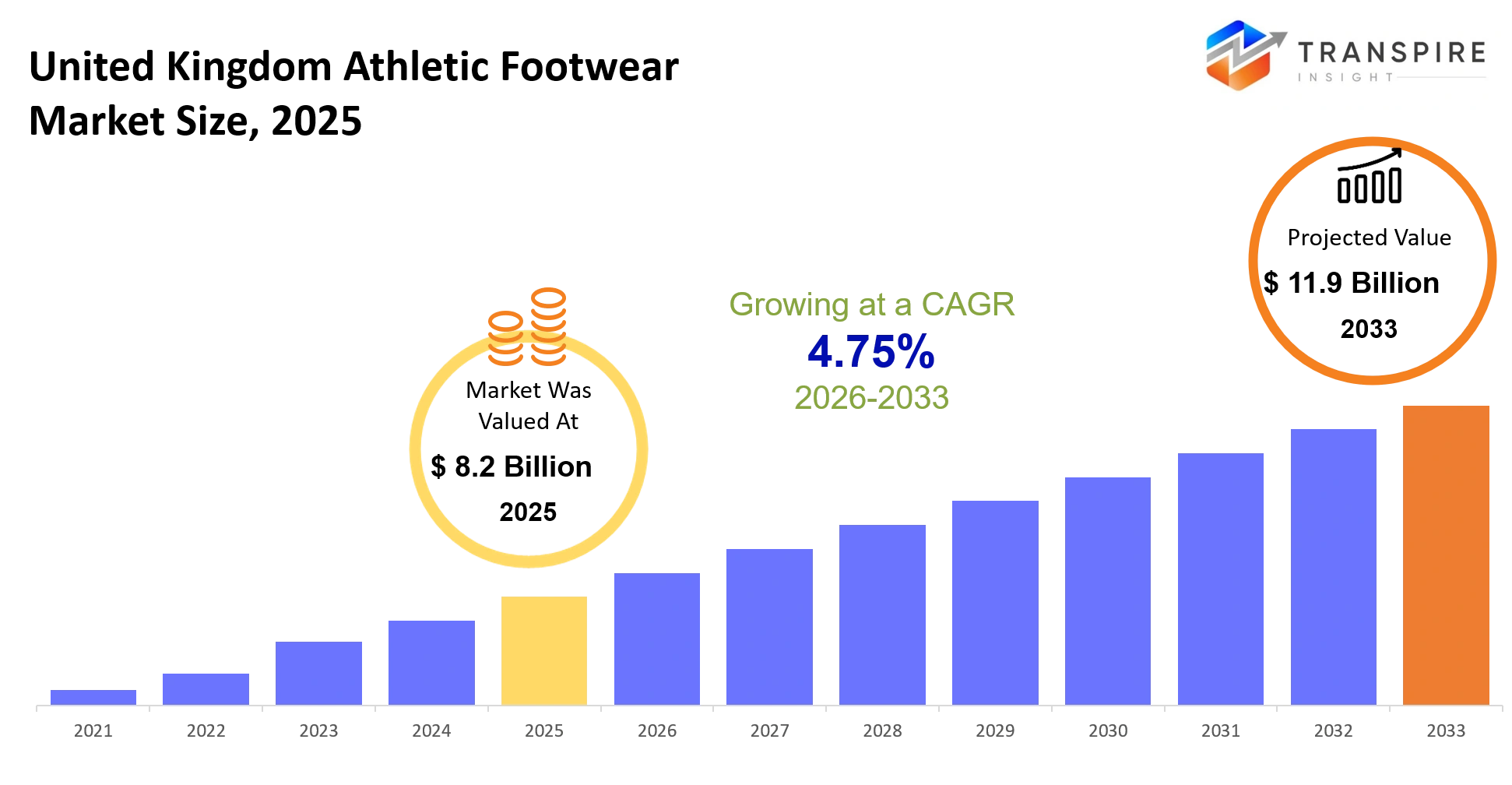
- United Kingdom Athletic Footwear Market Size 2025: USD 8.2 Billion
- United Kingdom Athletic Footwear Market Size 2033:USD 11.9 Billion
- United Kingdom Athletic Footwear Market CAGR: 4.75%
- United Kingdom Athletic Footwear Market Segments: By Product Type (Running Shoes, Training Shoes, Walking Shoes, Sports-specific Shoes, Casual Athletic Shoes, Others); By Material (Mesh Footwear, Leather Footwear, Knit Footwear, Sustainable Materials Footwear, Others); By Distribution Channel (Online Retail, Brand Stores, Supermarkets, Specialty Sports Stores, Others); By End User (Men, Women, Children, Professional Athletes, Others)
To learn more about this report,  Download Free Sample Report
United Kingdom Athletic Footwear Market Summary
The United Kingdom athletic footwear market was valued at USD 8.2 billion in 2025. It is forecast to reach USD 11.9 billion by 2033. That is a CAGR of 4.75% over the period.
The United Kingdom athletic footwear market sort of plays a real-world role, delivering performance-driven yet casual lifestyle shoes that support sports participation, fitness routines, commuting, and that everyday comfort everyone claims they need. Athletic footwear tends to reduce physical load a bit, lets movement flow more efficiently, and it lines up with what buyers want now—like blending sportswear with daily style choices. So yeah, the market kind of sits right in the overlap zone between health, performance, and lifestyle shopping, in a pretty tangible way.
In the last three to five years, there’s been a clear structural shift toward premium tech-enabled footwear, featuring more advanced cushioning layouts, lightweight materials, and designs that lean into sustainability. The COVID-19 pandemic acted as a major trigger, and it accelerated those changes not just for running, but also for home workouts and outdoor recreation. This change in habits widened the audience beyond the classic kind of athlete, and it also pushed brands to launch a broader range of product mixes and option sets.
Right now, the market keeps expanding, partly because people stay involved in fitness, and partly because athleisure trends are still being adopted more and more. Since a lot of shoppers show a higher willingness to pay for performance-related plus comfort features, manufacturers can hold premium pricing. That in turn helps revenue growth, while still feeding the loop of product refinement and brand differentiation, across the board.
Key Market Insights
- England basically eats up the United Kingdom Athletic Footwear Market, taking something like 80% market share in 2025, and it’s pretty much backed by really thick retail networks, plus people spending a bit more on shoes overall.
- Scotland is the region that’s moving fastest through 2032, though, with growth driven by more outdoor fitness participation, and also by the steady climb of e-commerce footwear sales… which is kinda everywhere now.
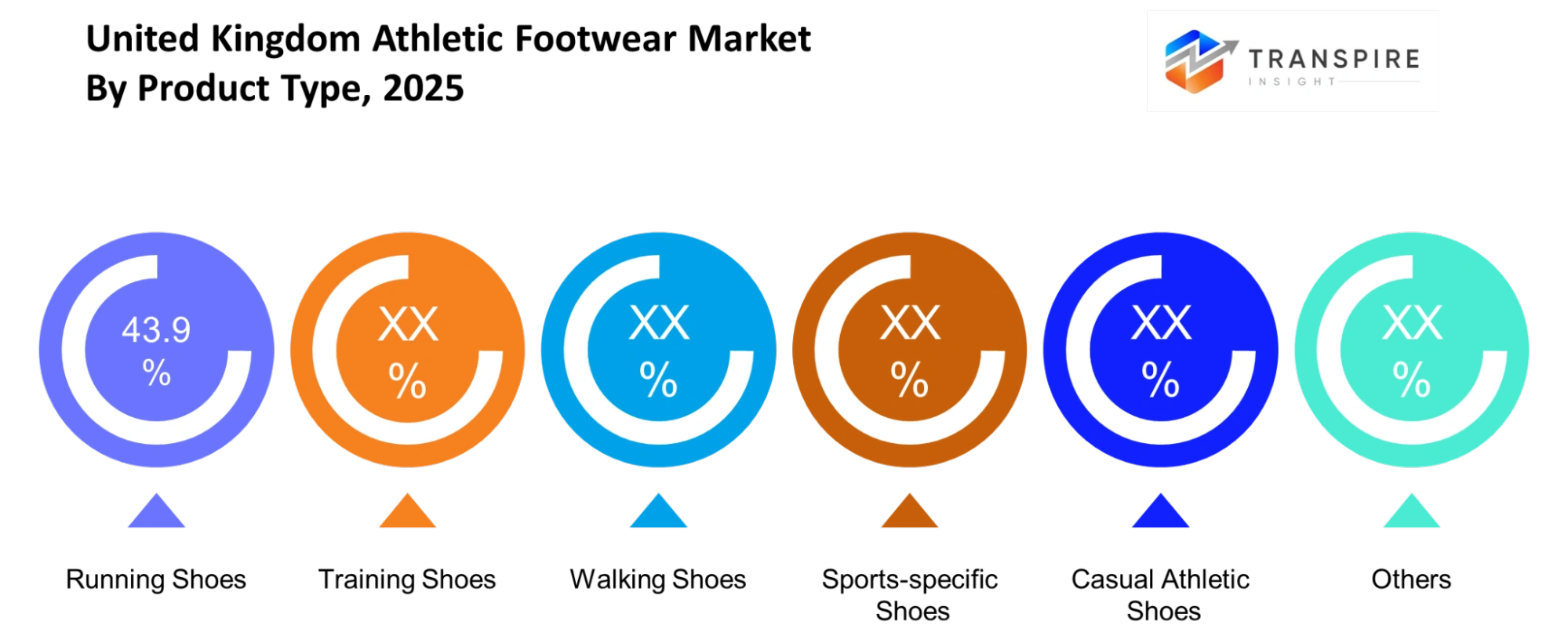
- When it comes to type, running shoes dominate at nearly 35% market share in 2025, mainly because fitness people and recreational runners keep showing up in large numbers. Casual athletic shoes are next in line, holding the second-largest share, helped along by athleisure trends and the demand for adaptable everyday footwear.
- On the segment side, sustainable material footwear is the fastest-growing segment from now until 2032. Brands are investing more in recycled and lower-impact materials, so the shift is noticeable.
- For usage, everyday lifestyle plus athleisure wear make up over 50% of footwear demand. It seems to mirror the way fashion and comfort priorities keep changing, like people want versatile things, not only “sport-only” options.
- In categories, performance training applications are the ones growing quickest, supported by gym memberships expanding, and consumers spending more on fitness-focused gear.
- By consumer group, adults aged 25–44 are leading with around 45% market share, largely due to active lifestyles and buying more premium products. Women also show the fastest growth as brands roll out specialized designs and wider product collections.
- Major players include Nike, Adidas, Puma, New Balance, ASICS, and Under Armour.
What are the Key Drivers, Restraints, and Opportunities in the United Kingdom Athletic Footwear Market?
The strongest force shaping the United Kingdom athletic footwear market seems to be that fitness participation is combining with athleisure fashion, kind of at the same time, but not in a really clean, neat way. This shift sped up after the pandemic when running, walking, gym-based training, and outdoor activities got worked into everyday habits, and yeah, it feels more normal now. And at the same time, athletic shoes became more acceptable in workplaces, during travel, and even in casual get-togethers. Because of that wider use, people often end up buying more than once, like having different pairs for different moments or errands, rather than just one “main” option. And when brands roll out better cushioning arrangements, lighter materials, and designs aimed at actual performance, premium products start gaining traction. That, in turn, lets manufacturers raise average selling prices and push higher revenue, even if shoppers are a bit picky, or maybe compare features longer than before.
Still, persistent cost pressures across global supply chains look like the biggest structural obstacle. Athletic footwear production relies on a layered, international sourcing setup for materials, components, and manufacturing steps, and it’s complicated. Freight costs can swing, labor expenses can drift around, and raw material prices don’t sit still, even for short stretches. Also, these problems can’t be fixed overnight since the production ecosystems have been built over many decades, more or less locked in place. So retail prices tend to rise, and affordability takes a hit for some consumers. Some buyers even delay the purchase, which then lowers possible sales volumes, and that part can ripple pretty quickly.
The best opportunity kind of feels like sustainable performance footwear, you know. Brands are going all in on recycled polyester, biobased foams, and circular production approaches to try to mix environmental goals with athletic output. Companies that can actually scale these solutions while staying on top of durability and comfort will probably end up in a pretty strong position. And if that happens, they can draw in premium consumers, then build steadier market distinction over the long run, not just a quick wave.
What Has the Impact of Artificial Intelligence Been on the United Kingdom Athletic Footwear Market?
Artificial intelligence, combined with advanced digital tools are reshaping the United Kingdom athletic footwear industry, not only in product development, but also in manufacturing, inventory management, and the way brands respond to customer contact. More brands are leaning on AI-powered design platforms to look into consumer preferences, athlete performance records, and purchasing routines. In practice, these systems kinda help automate the product roadmap, adjust inventory placement, and refine demand forecasts. It all tends to reduce excess stock, and it lowers the everyday operating costs across the whole supply chain, step by step.
Then there’s machine learning, which gives predictive powers by scanning sales movements, seasonal demand swings, and local buying patterns. Manufacturers use these little clues to tweak production schedules and lower the odds of running out of the popular sizes, you know. For product work, AI can also help with cushioning behavior, how tough the material feels over time, and even subtle fit improvements via digital simulations. That speeds up the whole development window and makes the results more dependable before any real prototypes get built. On top of that, digital supply chain tools improve throughput by making sourcing choices easier and by tightening up warehouse workflows a bit.
Overall, these tools bring faster launches, better inventory turnover, and a smarter distribution of marketing resources. Still, the biggest constraint is the expensive integration of advanced AI across manufacturing, retail, and logistics networks. Smaller brands often don’t have enough consumer data or the specialized expertise, so adoption can drag. So, they might not fully benefit from data-driven decision-making, at least not immediately.
Key Market Trends
- Since 2021, premium running shoes with advanced cushioning technologies have gained more share, as shoppers increasingly prioritize performance, comfort, and injury prevention, stuff like that,t which is kind of the main point.
- From 2020 to 2025, direct-to-consumer sales expanded a lot, and that helped brands like Nike and Adidas boost margins, while also gathering better customer insights, at the same time.
- Recycled polyester as well as bio-based materials moved from a sort of niche offering into the mainstream product lineup, because sustainability targets became more visible and harder to ignore.
- Carbon-plated running shoes got wider adoption after elite athletic competitions showcased measurable gains, so competitive runners paid attention and started buying them.
- Mobile shopping apps took up a bigger portion of footwear purchases too, so dependence on traditional brick-and-mortar retail channels went down, slightly less foot traffic, etc.
- Manufacturers more often leaned into data analytics and AI-driven demand forecasting, aiming for better inventory accuracy and fewer excess stock situations, which sounds obvious, but it really matters.
- Collaborations between sportswear brands and fashion designers have also happened more frequently, which has expanded the athletic footwear appeal beyond the usual sports users, for sure.
- Supply chain diversification accelerated after pandemic disruptions, because those problems showed the risks of having concentrated sourcing and manufacturing networks, and nobody wanted that again.
- Since 2022, women’s performance footwear has received greater investment in product development, reflecting changing participation patterns in fitness activities, and that shift has kept growing.
- Brands have been moving marketing budgets toward social media creators and digital communities, which replaced portions of traditional advertising strategies with more targeted engagement campaigns, and it kinda feels more direct now.
United Kingdom Athletic Footwear Market Segmentation
By Product Type:
Running Shoes take up a noticeable part of footwear sales, mostly because so many folks are out there doing running, jogging, and general fitness routines on this kind of forever loop. Shoppers feel drawn to performance-minded parts, like cushioning, energy rebound, and a lighter build; it’s just what happens. Also, when brands keep rolling out new launches and doing tech upgrades, it usually keeps demand steady, not just for the serious performance crowd but also for casual everyday recreational use.
Training Shoes still stay in the game too, since gym sessions, fitness plans, and cross-training basically ask for adaptable shoe choices. Walking Shoes bring in people who want comfort, stability, and plain, daily practicality, you know that vibe. Sports-specific Shoes are aimed at the dedicated athletes, the ones playing football, tennis, basketball, and others. Casual Athletic Shoes ride the athleisure trend, mixing comfort with normal street clothing. And Others is there for the smaller lane categories plus new, emerging footwear kinds, so the market doesn’t end up stuck moving in just one direction.
To learn more about this report, Download Free Sample Report
By Material:
Mesh Footwear still feels like the go-to choice for a lot of people, because breathable fabric makes things more comfortable, particularly during workouts or fitness sessions. It’s that lightweight build plus better airflow, which kind of makes the difference, and honestly, it’s a big reason folks accept it so quickly. On top of that, performance shoe innovation keeps nudging mesh-oriented designs ahead, even if it starts to feel a bit competitive.
Meanwhile, Leather Footwear is hanging onto its relevance too, mainly because it’s durable, gives that premium look, and usually lasts for a long time without losing its character. Then there’s Knit Footwear, which is getting more attention as well, since the flexible structure sort of bends with you—giving comfort, while still staying true to a solid fit. And Sustainable Materials Footwear keeps growing too, since brands are steadily increasing the use of recycled and biobased inputs during the making process. Other options show up in the form of alternative material combinations, where the blend is used to handle specific performance demands and, at the same time, match lifestyle expectations depending on what someone wants from the shoe.
By Distribution Channel:
Online retail has kinda changed the way people buy things, mostly because there is this huge product choice, and it makes price comparison pretty easy, plus home delivery that feels more convenient, like honestly. At the same time, digital platforms let brands talk directly with customers, and then they can gather useful buying signals too. If brands keep investing in e-commerce infrastructure, this should keep pushing the channel forward and expanding, possibly even quicker than it did before.
Brand stores still matter, well… a lot actually, because they bring exclusive product launches and more tailored shopping experiences, which tend to attract loyal customers. Supermarkets help as well, especially when it comes to footwear choices that are reachable for value-conscious shoppers. Specialty sports stores stay relevant by giving guidance and stocking a sport-specific range that fits what people are doing day to day. Then there are Others, which are basically alternative retail formats; they improve product accessibility across different customer groups, so it’s not all pooled in one place or one particular style, if you get me.
By End User:
Men show up as a pretty decent consumer chunk, mostly because they’re pretty active in sports and fitness routines, and then there’s this growing focus toward performance sneakers. Premium product take-up and the fact that people switch pairs pretty frequently basically keep sales moving in this segment. Also, the ongoing upgrades across running and training shoes will keep the market kind of breathing, even if it feels a little incremental.
Women are still climbing in importance. Manufacturers are expanding their lineup, aimed at comfort, performance, and that style-leaning look that people are chasing. Children also bring real demand, coming from school sports, playground recreation, and, yeah, the usual need for ongoing shoe replacement. Professional athletes end up shaping premium footwear adoption because their performance needs are intense, and they often connect that to brand partnerships, as well. There are Others, which are like more specialized consumer groups; these can add extra variety and help widen the overall market appetite.
What are the Key Use Cases Driving the United Kingdom Athletic Footwear Market?
Running and fitness activities still feel like the main reason people buy athletic footwear across the United Kingdom, you know, like road running, gym sessions, and even organized sporting events, they keep nudging consumers toward shoes that are made for performance. Then there’s all the usual stuff—comfort, durability, and injury prevention features—really, they matter a lot, so the need for replacements stays pretty solid, in this whole space.
After that, there is athleisure and everyday lifestyle wear, which is sort of growing into a secondary use case. Working professionals, students, and health-minded buyers are increasingly selecting athletic footwear for commuting, casual meet-ups, and even inside office settings where comfort is basically the first concern. The women’s footwear side, along with the more premium casual athletic styles, has shown the clearest lift from this change; honestly, it’s noticeable.
Also, a few newer use cases are starting to appear, not super loud yet, but they’re there. Like smart footwear that uses performance tracking technologies, plus shoes built with sustainable materials and circular manufacturing processes. People are also leaning toward personalized fit solutions, and that’s helped by digital foot scanning tools. These ideas are still pretty early stage, and you can feel it in how much is visible right now. Still, they’re expected to unlock new growth opportunities during the forecast period, even if it’s not fully visible yet.
|
Report Metrics |
Details |
|
Market size value in 2025 |
USD 8.2 Billion |
|
Market size value in 2026 |
USD 8.6 Billion |
|
Revenue forecast in 2033 |
USD 11.9 Billion |
|
Growth rate |
CAGR of 4.75% from 2026 to 2033 |
|
Base year |
2025 |
|
Historical data |
2021 - 2024 |
|
Forecast period |
2026 - 2033 |
|
Report coverage |
Revenue forecast, competitive landscape, growth factors, and trends |
|
Regional scope |
United Kingdom |
|
Key company profiled |
Nike, Adidas, Puma, New Balance, ASICS, Skechers, Under Armour, Reebok, Brooks, Mizuno, Converse, Vans, Li-Ning, Anta Sports, Decathlon |
|
Customization scope |
Free report customization (country, regional & segment scope). Avail customized purchase options to meet your exact research needs. |
|
Report Segmentation |
By Product Type (Running Shoes, Training Shoes, Walking Shoes, Sports-specific Shoes, Casual Athletic Shoes, Others); By Material (Mesh Footwear, Leather Footwear, Knit Footwear, Sustainable Materials Footwear, Others); By Distribution Channel (Online Retail, Brand Stores, Supermarkets, Specialty Sports Stores, Others); By End User (Men, Women, Children, Professional Athletes, Others) |
Which Regions are Driving the United Kingdom Athletic Footwear Market Growth?
England is still kinda the most dominant region in the United Kingdom athletic footwear market, mostly because it has this huge consumer base and tons of retail coverage, plus a strong clustering of major sports and fitness happening every day. A lot of people keep joining running events, signing up for gyms, and doing leisure sports too, so the footwear buying stays steady across different groups, not really dipping. And then there’s all the extra stuff like flagship stores, e-commerce distribution centers, and brand headquarters, that together just make the market leadership feel even more solid. There’s also a pretty complete web of retailers, sports organizations, fitness chains, and online commerce platforms, which keeps the whole thing moving along, even when demand shifts a bit here and there.
Scotland is basically in second place, and it somehow feels off compared with England, in a way where the mindset leans more toward open-air recreation plus performance-oriented shoe buys. Consumer spending keeps looking fairly even, and people still show up for hiking and trail running, while money placed in sporting activities stays pretty steady. So because of that, demand keeps coming across as dependable. Regional sellers and specialty sports shops are still easy to spot in big places and also in the smaller towns, which helps build a stable revenue base. That solid foundation then feeds overall market stability, not only in one area.
Wales looks like it is moving the fastest, and it’s likely tied to digital retail adoption going up, plus community fitness involvement that continues to broaden. More funding is flowing into sports facilities, running events, and active lifestyle programs, so footwear consumption has widened, at least in the last few years. On top of that, access to online shopping has improved, and it has expanded the number of options available across the region. If this keeps going, it should create interesting openings for brands, retailers, and investors, especially for growth paths between 2026 and 2033, even if the speed is a little uneven here and there.
Who are the Key Players in the United Kingdom Athletic Footwear Market and How Do They Compete?
Competition in the United Kingdom athletic footwear market feels kind of moderately consolidated, but it’s still lively enough that it doesn’t really sit still. Global brands take a notable slice of sales, mostly because people already recognize the name, they’re everywhere in terms of distribution, and they keep updating products, like constantly. It’s not just price that gets fought over, either, so the battle shifts toward things like tech, performance benefits, visual differentiation, and the direct-to-consumer advantage. Meanwhile, the older, established companies keep defending their stance through bigger research-and-development spending, while newer brands are looking for breathing room in smaller performance pockets, plus they push sustainability-focused footwear lines. On top of all that, digital engagement, athlete endorsements, and premium placement in stores and channels tend to influence outcomes pretty directly.
Nike and Adidas mostly clash by driving nonstop innovation in cushioning platforms, light weight materials, and footwear technologies intended to boost performance. Nike often separates itself using proprietary systems like Air and Zoom. Adidas leans harder into Boost cushioning, and it also benefits from strong athlete ties, plus it does those lifestyle-type collaborations that get attention. They both keep expanding by putting money into digital commerce, running sustainability projects, and launching limited or exclusive drops that help lock in customer loyalty, even when shoppers do the annoying comparison thing and check specs across brands.
New Balance, ASICS, and Puma each carve out little specialized zones that kind of set them apart from the bigger rivals. New Balance leans into running performance, plus that domestic manufacturing know-how in a few carefully picked locations, and honestly, it shows. ASICS builds an edge by leaning on biomechanics research, then translating it into performance-first running shoes that feel tuned. Puma mixes athletic usefulness with fashion-minded collaborations, and this sort of thing usually broadens who feels connected to the brand in the first place. When these companies expand together, it tends to mean strategic partnerships, tighter direct-to-consumer lanes, and money going into growth initiatives, so they stay visible and relevant.
Company List
- Nike
- Adidas
- Puma
- New Balance
- ASICS
- Skechers
- Under Armour
- Reebok
- Brooks
- Mizuno
- Converse
- Vans
- Li-Ning
- Anta Sports
- Decathlon
Recent Development News
"In March 2026, Nike launched the Nike Air Liquid Max. The new footwear platform introduced advanced Air Max cushioning technology and strengthened Nike’s premium sportswear innovation strategy.https://about.nike.com
"In April 2026, Adidas unveiled a 3D-printed football boot under Project R.A.P. The launch highlighted Adidas’ investment in additive manufacturing technology and athlete-informed footwear development, supporting next-generation performance footwear innovation.https://footwearmagazine.com
"In December 2025, Nike launched the Nike Structure Plus running shoe. The product introduced ZoomX and ReactX foam technologies into Nike’s stability footwear category, expanding performance-focused offerings and strengthening competitiveness in the running segment.https://about.nike.com
What Strategic Insights Define the Future of the United Kingdom Athletic Footwear Market?
The United Kingdom Athletic Footwear Market is slowly shifting toward a future kind of defined by performance personalization, digital product development, and sustainability-led innovation, like all at once and not really in that neat order. Over the next five to seven years, competitive advantage will be more and more about how well brands can mash up advanced materials, data-driven design, and direct consumer engagement in real terms. Underneath it all, the driver seems pretty clear: footwear is expected to give measurable performance benefits while also matching environmental and lifestyle preferences, kind of like two things at once.
There is also a quieter problem, though, the concentration of critical raw material sourcing and manufacturing capacity. When a brand keeps leaning on a limited set of supply regions, it can get exposed to interruptions and cost swings, plus longer product development timelines, even if consumer demand stays strong and steady.
At the same time, an opportunity is coming into view: customized footwear that’s commercial in a real way. Digital foot-scanning technologies, plus on-demand manufacturing, can turn “personal” into something scalable. As production technologies get cheaper and more dependable, personalized fit solutions might move from a premium boutique into wider consumer groups. Market players should start putting money into digital design skills and flexible supply chains now, so their products are positioned to capture what’s next: customization, quicker delivery, and higher value customer experiences, without getting stuck later.
United Kingdom Athletic Footwear Market Report Segmentation
-
By Product Type
- Running Shoes
- Training Shoes
- Walking Shoes
- Sports-specific Shoes
- Casual Athletic Shoes
- Others
-
By Material
- Mesh Footwear
- Leather Footwear
- Knit Footwear
- Sustainable Materials Footwear
- Others
-
By Distribution Channel
- Online Retail
- Brand Stores
- Supermarkets
- Specialty Sports Stores
- Others
-
By End User
- Men
- Women
- Children
- Professional Athletes
- Others
Frequently Asked Questions
Find quick answers to common questions.
The expected United Kingdom Athletic Footwear Market size for the market will be USD 11.9 Billion in 2033.
By Product Type (Running Shoes, Training Shoes, Walking Shoes, Sports-specific Shoes, Casual Athletic Shoes, Others); By Material (Mesh Footwear, Leather Footwear, Knit Footwear, Sustainable Materials Footwear, Others); By Distribution Channel (Online Retail, Brand Stores, Supermarkets, Specialty Sports Stores, Others); By End User (Men, Women, Children, Professional Athletes, Others)
Major United Kingdom Athletic Footwear Market players are Nike, Adidas, Puma, New Balance, ASICS, Skechers, Under Armour, Reebok, Brooks, Mizuno, Converse, Vans, Li-Ning, Anta Sports, Decathlon
The United Kingdom Athletic Footwear Market size is USD 8.2 Million in 2025.
The United Kingdom Athletic Footwear Market CAGR is 4.75% from 2026 to 2033.
- Nike
- Adidas
- Puma
- New Balance
- ASICS
- Skechers
- Under Armour
- Reebok
- Brooks
- Mizuno
- Converse
- Vans
- Li-Ning
- Anta Sports
- Decathlon
About the Authors

Chetan Dhatrak
I’m Chetan Dhatrak, a Senior Research Analyst at Transpire Insight, specializing in the Consumer Goods, Foods and Beverages industry. I focus on analyzing market trends, consumer behavior, competitive landscapes, and industry developments to deliver accurate, data-driven insights. My research at Transpire Insight is built on credible sources and in-depth analysis, helping businesses and readers better understand market dynamics, emerging opportunities, and evolving consumer preferences. I’m committed to creating reliable, well-researched content that supports informed decision-making and reflects the latest developments in the consumer goods and food & beverage sectors.

Chakradhar Khansole
Chakradhar serves as the Research Director at Transpire Insight, bringing over 8 years of experience in technology, innovation, and strategic market intelligence. He specializes in transforming complex market data into actionable business insights that enable organizations to make informed, growth-oriented decisions. Recognized for his strategic vision and analytical expertise, Chakradhar leads high-impact research initiatives, delivering comprehensive market assessments, competitive intelligence, and forward-looking industry analysis.
Recently Published Reports
-
Apr 2026
Bottled Water Market
Bottled Water Market Size, Share & Analysis Report By Product Type (Still Bottled Water, Carbonated Bottled Water, Functional Bottled Water, and Others), By Packaging (PET, Cans, and Others), By Sales Channel (Supermarkets/Hypermarkets, Convenience Stores/Drug Stores, Grocery Stores/Club Stores, Foodservice, and Others) and Geography (North America, Europe, Asia-Pacific, Middle East and Africa, South and Central America), 2021 - 2032
-
Apr 2026
Color Cosmetic Packaging Market
Color Cosmetic Packaging Market Size, Share & Analysis Report By Application (Mascara Packaging, Liquid Packaging, and Liquid Face), By Type (Tubes & Bottles, Pens & Markers, Compacts & Containers, and Droppers & Pumps), and Geography (North America, Europe, Asia-Pacific, Middle East and Africa, South and Central America), 2021 - 2031
-
Apr 2026
External Microphone For Camera Market
External Microphone For Camera Market Size, Share & Analysis Report By Type (Shotgun Microphone, Lavalier Microphone, and Others), By Application (Digital Camera, Professional Video Camera, and Others), and Geography (North America, Europe, Asia-Pacific, Middle East and Africa, South and Central America), 2021 - 2031
-
Apr 2026
Foot Orthotic Insoles Market
Foot Orthotic Insoles Market Size, Share & Analysis Report By Type (Pre-fabricated, and Custom-made), By Material (Thermoplastic, Composite Carbon Fiber, and Others), By Distribution Channel (Drug Stores, Hospitals & Clinics, and Others), and Geography (North America, Europe, Asia-Pacific, Middle East and Africa, South and Central America), 2021 - 2031