

United States Footwear Market Size & Forecast:
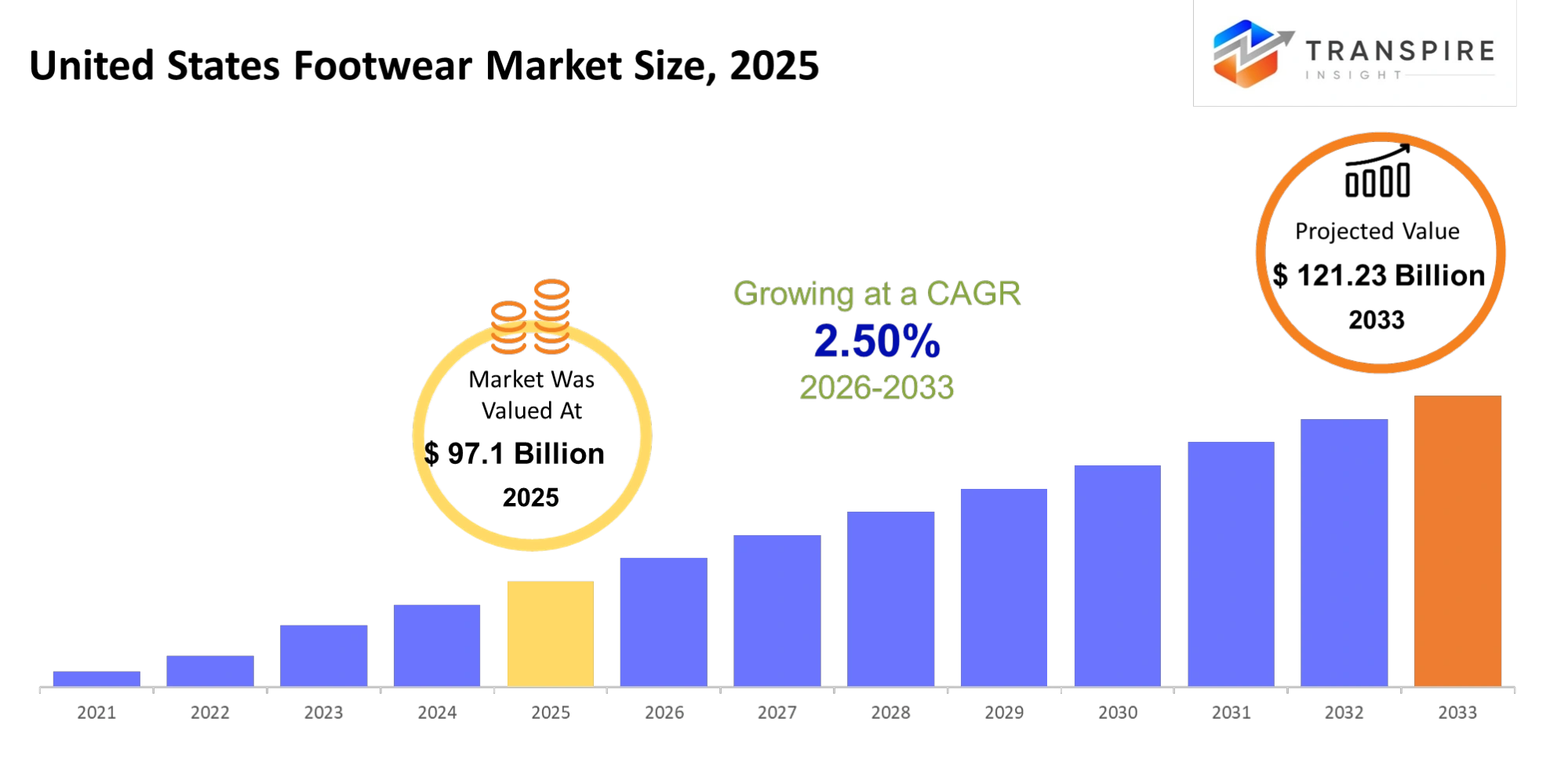
- United States Footwear Market Size 2025: USD 97.1 Billion
- United States Footwear Market Size 2033: USD 121.23 Billion
- United States Footwear Market CAGR: 2.50%
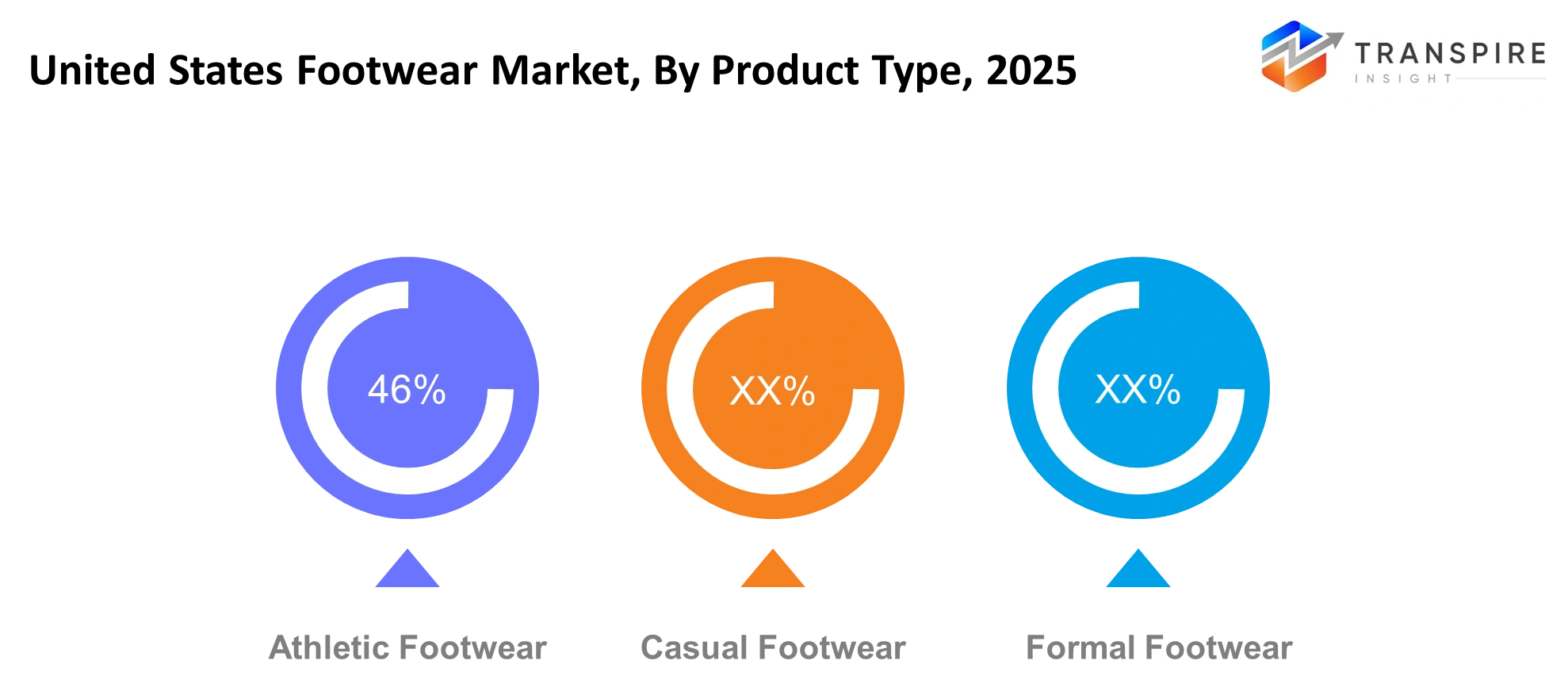
- United States Footwear Market Segments:By Product Type (Athletic Footwear, Casual Footwear, Formal Footwear), By Distribution Channel (Online Retail, Offline Retail), By End User (Men, Women, Children).
To learn more about this report,  Download Free Sample Report
United States Footwear Market Summary:
The United States footwear market size is estimated at USD 97.1 billion in 2025 and is anticipated to reach USD 121.23 billion by 2033, growing at a CAGR of 2.50% from 2026 to 2033. The United States footwear market remains in its current state because consumer lifestyle changes and fashion trends and customer demand for comfortable yet environmentally friendly products drive the market. Health-conscious consumers who lead active lives prefer athletic and casual shoes because these shoes match their needs. To maintain their market position, brands now spend money on sustainable materials and online shopping experiences. E-commerce development, together with customised shopping experiences, has changed consumer purchasing patterns. The market remains active because design and functional advancements meet various customer needs.
Key Market Trends & Insights:
- Eco-conscious buyers require brands to use recycled materials while following ethical production methods. Companies are creating sustainable product lines which enable customers to make buying choices based on environmental responsibility.
- People now prefer online shopping for purchasing shoes because it provides them with both convenience and product selection. Brands are developing digital experiences by implementing virtual try-ons together with simple return procedures, which help establish customer reliability.
- Social media platforms function as essential tools which determine what consumers prefer while they create fast-moving fashion trends. The combination of influencer marketing and celebrity endorsements creates an instant increase in demand for particular fashion items.
- The demand for shoes which serve particular sports activities has increased among consumers. When people shop for products, they first look for durable items which provide them with proper support and advanced technological capabilities.
- Customers want to find distinct items which showcase their individual fashion preferences. Customers now have the ability to create their own footwear through brand customisation features which allow them to select their preferred colours and materials and designs.
- People choose to buy trustworthy brands which have established themselves throughout time because they want to discover good deals. In this competitive marketplace discounts, together with seasonal sales and loyalty programmes, drive customer purchasing decisions.
United States Footwear Market Segmentation
By Product Type
- Athletic Footwear: The United States market for athletic footwear maintains a substantial market share because people increasingly recognize the benefits of fitness and active physical activities. The performance, comfort and durability of sports shoes serve as the main requirements that consumers seek. The introduction of new cushioning systems together with lightweight materials and innovative design solutions enables athletes and general users to find suitable products for their all-day performance needs.
- Casual Footwear: The popularity of casual footwear has increased because people now select comfortable shoes which match their informal daily outfits. Sneakers and loafers and slip-ons serve as popular shoe choices because they provide users with flexible styling options. People now choose casual footwear because work and social practices have evolved, which allows them to combine stylish appearance with functional use for different situations.
- Formal Footwear: The demand for formal footwear remains consistent because people require these shoes for their work and special events. Business environments continue to use traditional footwear designs, which include Oxfords, heels and dress shoes. People still prefer to buy formal shoes that exhibit high-quality craftsmanship and elegant design, although demand has reduced because casual fashion trends have become popular.
To learn more about this report, Download Free Sample Report
By Distribution Channel
- Online Retail: The way people buy shoes in the United States has changed because online retail provides them with new shopping methods. Customers can shop conveniently because they can access multiple brands and shoe styles while enjoying competitive prices. The digital shopping experience has gained customer trust because it provides virtual try-on options and user-generated content and flexible return procedures.
- Offline Retail: The offline retail sector maintains its essential function because it enables customers to test products before making purchases. Shoppers continue to prefer physical stores because these locations deliver them two main benefits: tactile product assessment and individualised service. Customers trust brand outlets and multi-brand stores because these stores provide instant access to products without requiring them to wait for delivery.
By End User
- Men: Men's footwear purchasing decisions are influenced by two factors, which include their need for practical footwear and their desire for stylish footwear options. The trend toward trendy sneakers and casual shoes has expanded beyond traditional designs, which continue to enjoy popularity. Working professionals and active individuals base their purchasing choices on three factors, which include comfort, durability and brand reputation.
- Women: Women's footwear represents a diverse and fashion-driven segment of the market. The product selection includes heels, flats and sneakers, which together create a wide range of options that customers use to decide what to buy. Customers select their products based on style and comfort and current seasonal trends, which drive their desire to find products that match their aesthetic preferences and everyday practical needs.
- Children: Children's footwear design prioritises three key elements, which include comfort, safety and durability to support the development of their growing feet. Parents want their children to have good-fitting shoes made from high-quality materials which they can afford. The combination of bright colours and fun designs and popular character themes create an emotional connection with consumers who see this product segment as both functional and sentimental.
Country Insights
The United States footwear market shows diverse consumer purchasing patterns which businesses must adapt to because consumers choose their footwear based on their cultural background and their current economic situation. Urban consumers prefer fashionable and expensive shoes, while people living in suburban and rural areas choose footwear because of its comfortable feel, long-lasting quality and affordable price.
The market operates successfully because retail stores exist throughout the country and customers recognise many different brands. Customers show different buying habits during different seasons because back-to-school times and holiday seasons create times of increased shopping activity. Health-conscious people increase their demand for athletic and walking shoes, which people of all ages now prefer to wear. Regional climate differences cause people to choose different types of footwear, which include lightweight shoes for warm states and protective footwear for cold areas.
The U.S. footwear market maintains its active nature through shoe innovation and diverse consumer needs and the ongoing combination of style and practical use in footwear selection.
Recent Development News
Retail Consolidation Reshapes Footwear Industry: Major consolidation is taking place as companies aim to strengthen market presence and compete with direct-to-consumer brands. This reflects shifting retail dynamics and evolving consumer behaviour.
Nike Expands Women’s Footwear Strategy: Nike is focusing on the women’s segment through strategic collaborations, aiming to capture a fast-growing consumer base and strengthen brand relevance.
|
Report Metrics |
Details |
|
Market size value in 2025 |
USD 97.1 Billion |
|
Market size value in 2026 |
USD 102.02 Billion |
|
Revenue forecast in 2033 |
USD 121.23 Billion |
|
Growth rate |
CAGR of 2.50% from 2026 to 2033 |
|
Base year |
2025 |
|
Historical data |
2021 – 2024 |
|
Forecast period |
2026 – 2033 |
|
Report coverage |
Revenue forecast, competitive landscape, growth factors, and trends |
|
Country scope |
United States |
|
Key company profiled |
Nike Inc., Adidas AG, Skechers USA Inc., Under Armour Inc., Puma SE, New Balance Athletics Inc., VF Corporation, Wolverine World Wide Inc., Deckers Outdoor Corporation, Crocs Inc., Steve Madden Ltd., Columbia Sportswear Company, ASICS Corporation, Brooks Running Company, Hoka (Deckers Brands). |
|
Customization scope |
Free report customization (country, regional & segment scope). Avail customized purchase options to meet your exact research needs. |
|
Report Segmentation |
By Product Type (Athletic Footwear, Casual Footwear, Formal Footwear), By Distribution Channel (Online Retail, Offline Retail), By End User (Men, Women, Children). |
Key United States Footwear Company Insights
The United States footwear market competes at a high level because both international brands and new companies control its operations. Companies are focusing their efforts on three strategic areas, which include innovation, sustainability and customer engagement, to achieve market relevance. Nike, Adidas and Skechers, established companies, continue to allocate their resources toward product development and digital initiatives. The direct-to-consumer business model and niche products which smaller brands offer have helped them establish themselves in the market. The market maintains its active state through this combination of business size and creative approaches, which centres on delivering value to customers.
Company List
- Nike Inc
- Adidas AG
- Skechers USA Inc
- Under Armour Inc
- Puma SE
- New Balance Athletics Inc
- VF Corporation
- Wolverine World Wide Inc
- Deckers Outdoor Corporation
- Crocs Inc
- Steve Madden Ltd
- Columbia Sportswear Company
- ASICS Corporation
- Brooks Running Company
- Hoka (Deckers Brands).
United States Footwear Market Report Segmentation
By Product Type
- Athletic Footwear
- Casual Footwear
- Formal Footwear
By Distribution Channel
- Online Retail
- Offline Retail
By End User
- Men
- Women
- Children
Frequently Asked Questions
Find quick answers to common questions.
The approximate United States Footwear market size for the Market will be USD 121.23 billion in 2033.
The key segments of the United States Footwear Market are By Product Type (Athletic Footwear, Casual Footwear, Formal Footwear), By Distribution Channel (Online Retail, Offline Retail), By End User (Men, Women, Children).
Major players in the United States Footwear Market are Nike Inc., Adidas AG, Skechers USA Inc., Under Armour Inc., Puma SE, New Balance Athletics Inc., VF Corporation, Wolverine World Wide Inc., Deckers Outdoor Corporation, Crocs Inc., Steve Madden Ltd., Columbia Sportswear Company, ASICS Corporation, Brooks Running Company, Hoka (Deckers Brands).
The current market size of the United States Footwear Market is USD 97.1 billion in 2025.
The United States Footwear Market CAGR is 2.50%.
- Nike Inc
- Adidas AG
- Skechers USA Inc
- Under Armour Inc
- Puma SE
- New Balance Athletics Inc
- VF Corporation
- Wolverine World Wide Inc
- Deckers Outdoor Corporation
- Crocs Inc
- Steve Madden Ltd
- Columbia Sportswear Company
- ASICS Corporation
- Brooks Running Company
- Hoka (Deckers Brands).
Recently Published Reports
-
Apr 2026
Bottled Water Market
Bottled Water Market Size, Share & Analysis Report By Product Type (Still Bottled Water, Carbonated Bottled Water, Functional Bottled Water, and Others), By Packaging (PET, Cans, and Others), By Sales Channel (Supermarkets/Hypermarkets, Convenience Stores/Drug Stores, Grocery Stores/Club Stores, Foodservice, and Others) and Geography (North America, Europe, Asia-Pacific, Middle East and Africa, South and Central America), 2021 - 2032
-
Apr 2026
Color Cosmetic Packaging Market
Color Cosmetic Packaging Market Size, Share & Analysis Report By Application (Mascara Packaging, Liquid Packaging, and Liquid Face), By Type (Tubes & Bottles, Pens & Markers, Compacts & Containers, and Droppers & Pumps), and Geography (North America, Europe, Asia-Pacific, Middle East and Africa, South and Central America), 2021 - 2031
-
Apr 2026
External Microphone For Camera Market
External Microphone For Camera Market Size, Share & Analysis Report By Type (Shotgun Microphone, Lavalier Microphone, and Others), By Application (Digital Camera, Professional Video Camera, and Others), and Geography (North America, Europe, Asia-Pacific, Middle East and Africa, South and Central America), 2021 - 2031
-
Apr 2026
Foot Orthotic Insoles Market
Foot Orthotic Insoles Market Size, Share & Analysis Report By Type (Pre-fabricated, and Custom-made), By Material (Thermoplastic, Composite Carbon Fiber, and Others), By Distribution Channel (Drug Stores, Hospitals & Clinics, and Others), and Geography (North America, Europe, Asia-Pacific, Middle East and Africa, South and Central America), 2021 - 2031