
Global Women Intimate Care Products Market Size & Forecast
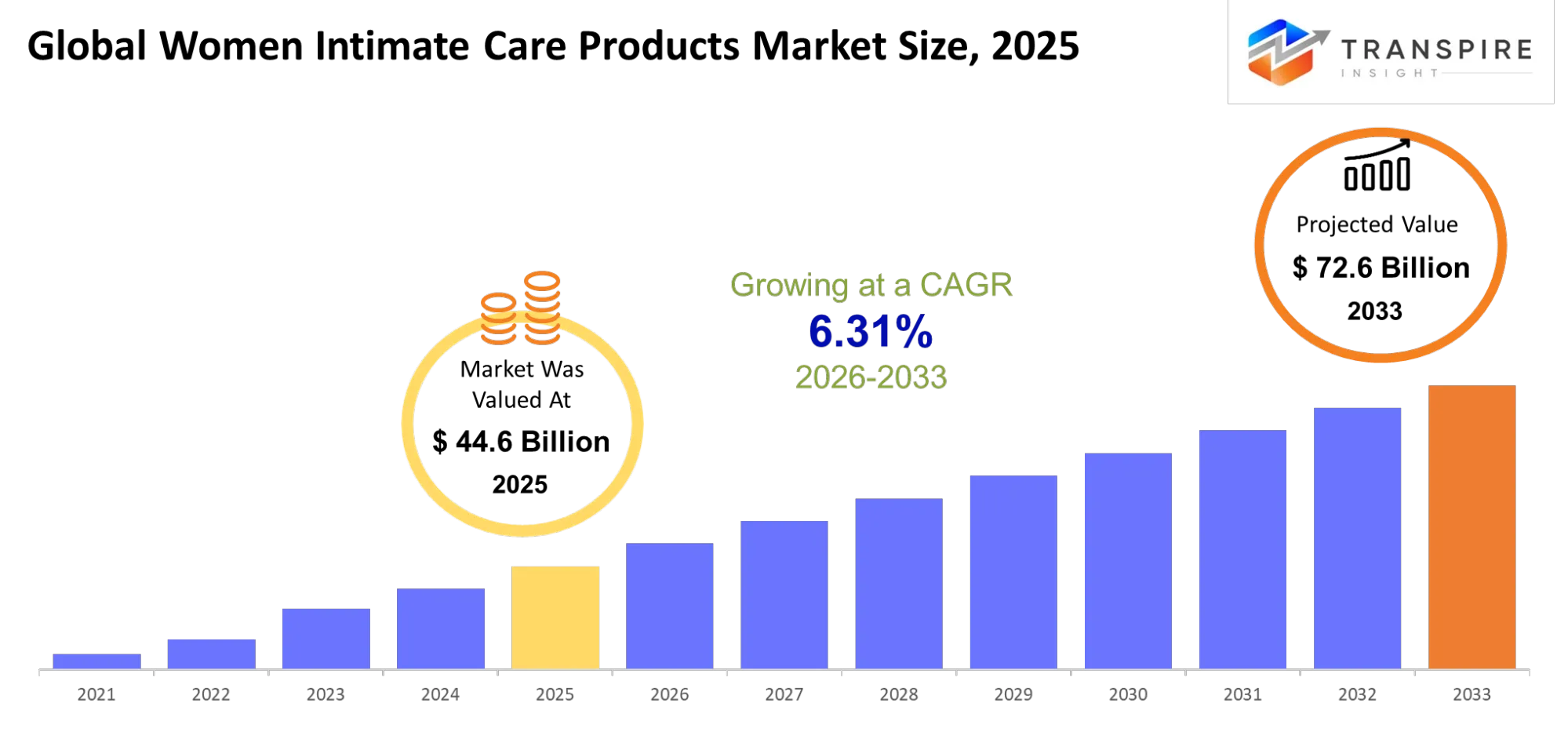
- Global Women Intimate Care Products Market Size 2025: USD 44.6 Billion
- Global Women Intimate Care Products Market Size 2033: USD 72.6 Billion
- Global Women Intimate Care Products Market CAGR: 6.31%
- Global Women Intimate Care Products Market Segments: By Product Type (Feminine Wash, Intimate Wipes, Moisturizers & Creams, Hair Removal Products), By Distribution Channel (Supermarkets & Hypermarkets, Pharmacies & Drug Stores, Online Retail), By End-User (Teenagers, Adults)
To learn more about this report,  Download Free Sample Report
Global Women Intimate Care Products Market Summary
The global women intimate care products market was valued at USD 44.6 billion in 2025 and is projected to reach USD 72.6 billion by 2033, growing at a CAGR of 6.31%. Women's intimate care products address both a very practical and a clinically important requirement - keeping the pH level, hygiene, and comfort of the intimate area intact using formulas that are dermatologically suitable for very sensitive skin. These are really not vanity or luxury products in the common sense - they play a daily functional role that crosses personal health, dermatological science, and consumer wellness itself. Feminine wash, intimate wipes, lotions, creams, and hair removal products altogether form a category that exists right on the border between personal care and over-the-counter health products.
The structural change that really changed the market over the last four years was the de-stigmatizing of intimate health as a consumer conversation topic. Until roughly 2019, intimate care products were sold very discreetly and marketed quite carefully indeed. A convergence of social media openness pushed by femtech influencers, gynecologist-led educational content on platforms like Instagram and TikTok, and a generational shift in just how younger women discuss their reproductive and intimate health completely transformed the category so it's one where public dialogue, product review culture, and ingredient transparency have become highly competitive requirements rather than optional brand decisions. The real-world trigger that really accelerated this shift was the expansion of clean beauty standards into intimate care itself: consumer pressure around pH-balanced, fragrance-free, gynecologist-tested formulations actually forced legacy brands to reformulate - and created quite an opportunity for challenger brands including The Honey Pot Company and SweetSpot Labs to take share with very different ingredient narratives indeed.
Key Global Women Intimate Care Products Market Insights
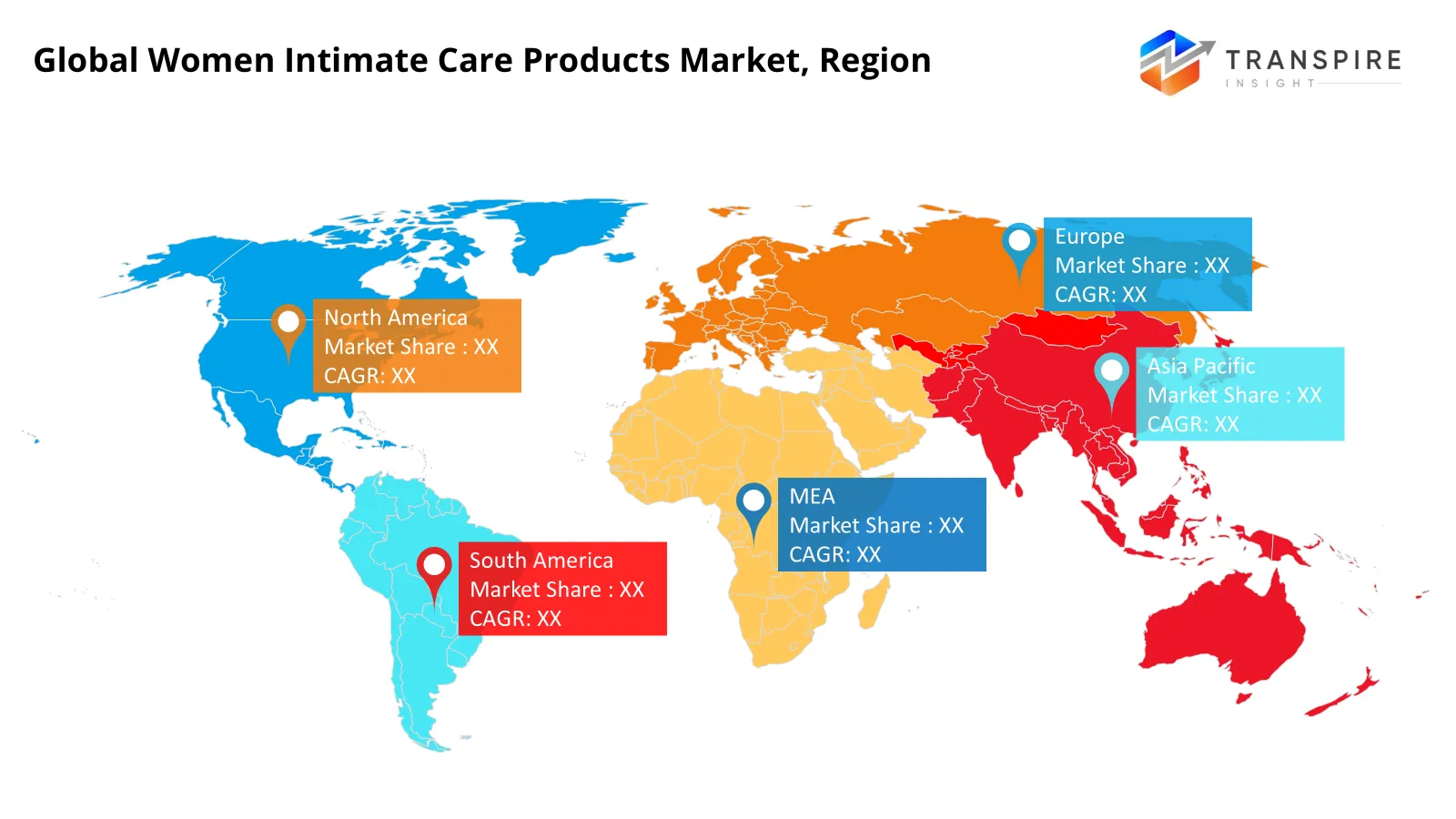
- North America dominates the women intimate care products industry with approximately 35% revenue share in 2024, supported by high consumer awareness, strong pharmacy retail infrastructure, and an established femtech ecosystem that normalizes intimate health spending across all age groups.
- Asia Pacific is the most rapidly expanding regional market - with India, China, and the economies of Southeast Asia really accelerating their adoption as urbanisation, increasing disposable income, and digital health literacy tear down traditional cultural obstacles to buying personal intimate care products.
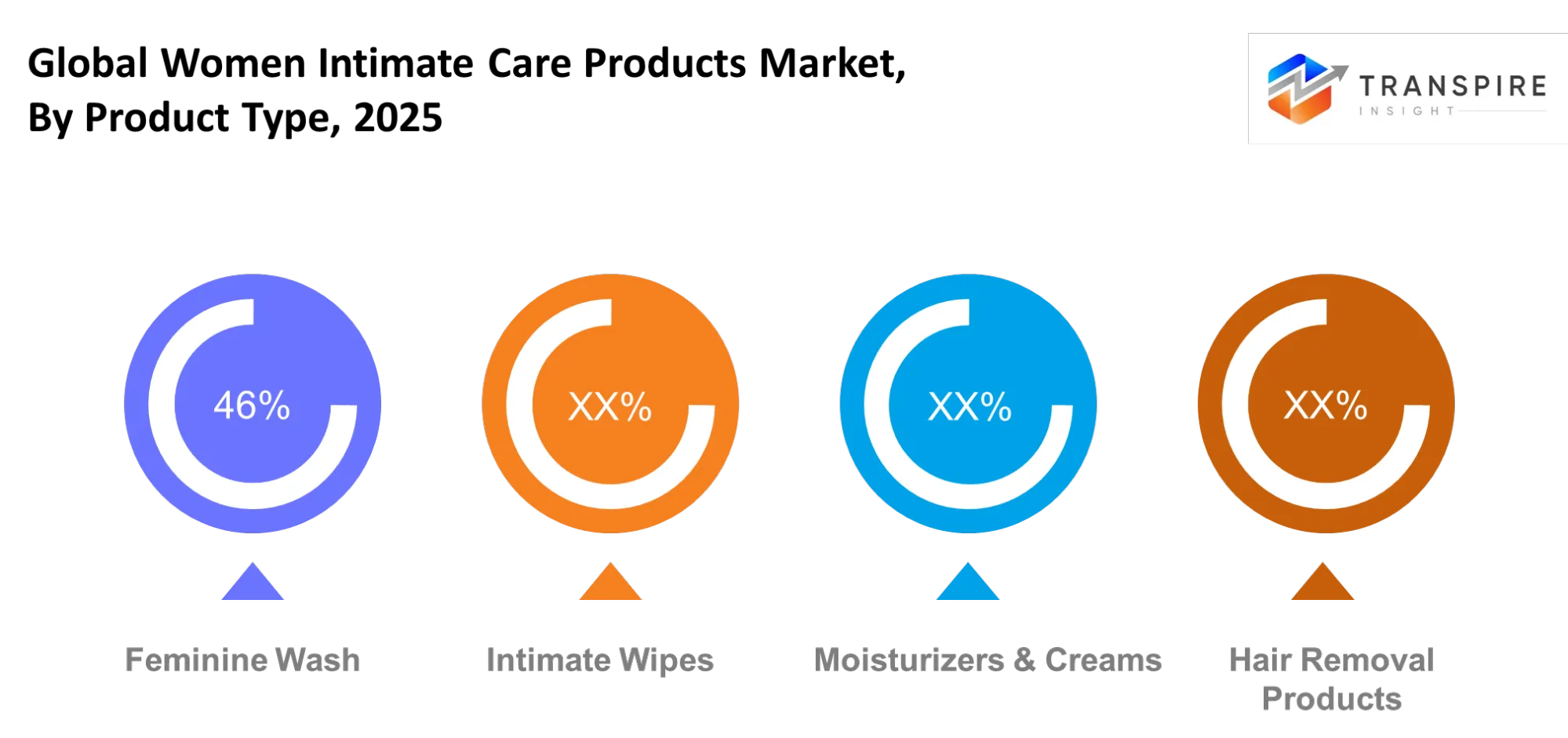
- Feminine wash holds the top position in the product landscape within the women's intimate care products market - commanding approximately 46% of revenue share by 2024 - driven by its daily-use frequency, clinical endorsement from gynaecologists, and its role as the entry point to the category for first-time buyers of intimate care products.
- Intimate wipes rank second in terms of product segment, with their portability and expanding availability through travel retail, gym facilities, and online subscription services resulting in consistent volume growth.
- Moisturisers and creams are actually the fastest-growing product segment - showing a growing awareness among consumers about vaginal dryness as something that can be managed rather than something considered taboo, with adult and perimenopausal women driving disproportionately high demand.
- Pharmacies and drug stores hold the position as the leading distribution channel in the global women's intimate care products industry - accounting for approximately 38% of sales in 2024 - because the clinical framing of intimate care products positions pharmacy shelves as the most trustworthy retail environment for this particular category.
- Online retailing is the fastest-growing distribution channel, with subscription-box models, DTC brand storefronts, and digital consultation services eliminating the in-store discomfort that previously suppressed purchasing frequency among younger shoppers.
- Adults constitute the largest end-user segment - holding approximately 68% of the market share in 2024 - although the teenager segment is actually growing at a faster rate since sex education curricula and online communities of peers are normalising the use of intimate hygiene products from early adolescence itself.
- Procter & Gamble and Unilever lead the competitive landscape through legacy brand scale and pharmacy distribution dominance, while challenger brands including The Honey Pot Company and SweetSpot Labs are capturing share in premium and natural formulation sub-categories through DTC channels and clean beauty retail.
- Lactacyd (Sanofi) maintains a strong clinical positioning in European and Asian pharmacy markets, with gynecologist-recommendation programs creating switching barriers that mass-market competitors cannot easily replicate through pricing or packaging alone.
What are the Key Drivers, Restraints, and Opportunities in the Global Women Intimate Care Products Market?
The primary driving force behind market growth is really the convergence of de-stigmatization and clinical validation into a commercially viable consumer category. As gynecologists and dermatologists started openly endorsing pH-balanced intimate wash products - and when platforms like TikTok made intimate health discussions highly visible and normalized - the purchase decision really shifted from a privately managed, somewhat rare transaction to a carefully considered personal care routine. The commercial effect is quite measurable: category penetration among women aged 18–34 in North America and Western Europe increased by an estimated 12–15 percentage points between 2019 and 2024, as new consumers entered the category for the first time rather than changing brands. That penetration expansion is basically the fundamental driver of our current revenue growth - and it's quite structural rather than promotional driven by cultural change rather than ad spend.
The biggest structural restraint is really regulatory fragmentation across markets, especially around the classification of intimate care products as cosmetics versus quasi-pharmaceutical items. In the European Union, intimate wash products are under the EU Cosmetics Regulation and have to demonstrate safety through a designated responsible person - which creates compliance costs that really disproportionately burden smaller challenger brands.
The clearest forward-looking opportunity is the expansion of the category into menopausal and perimenopausal intimate health - a segment currently addressed by pharmaceutical products such as topical estrogen but largely unserved by consumer-grade intimate care.
An estimated 1.1 billion women globally will be in menopause or perimenopause by 2025, with vaginal dryness, pH disruption, and intimate discomfort among the most commonly reported symptoms. Brands like Reckitt and Kimberly-Clark are starting to develop product lines specifically formulated for this life stage - and the price premium these formulations can command relative to standard intimate wash products is quite substantial. The regulatory risk is manageable because most of these formulations can be positioned as cosmetics rather than medical devices - and the clinical partnership model that Lactacyd pioneered provides a proven commercial template.
What Has the Impact of Artificial Intelligence Been on the Global Women Intimate Care Products Market?
Development of formulations has been one of the first and most concrete applications of artificial intelligence in the women's intimate care products market. Consumer goods companies such as Unilever and L'Oreal have deployed machine learning models that analyze clinical trial data, dermatological safety databases, and consumer feedback on a large scale to identify ingredient combinations that optimize for both effectiveness and skin tolerance in sensitive intimate areas. This has greatly shortened the bench-to-brief timeline for developing new products: formulation cycles that had previously taken 18-24 months of iterative testing can now be finished in 9-12 months - especially when AI-guided ingredient screening eliminates candidate combinations early in the process. The real result is a much faster pace of product reformulation in response to clean beauty trends and consumer ingredient concerns.
Personalization is the second very active application area. Many direct-to-consumer intimate care brands, such as SweetSpot Labs, are piloting digital consultation tools that use symptom-matching algorithms to recommend specific product combinations based on consumer inputs regarding sensitivity, pH symptoms, and lifestyle factors. These tools do not constitute a medical diagnosis, but they do serve a navigation function in a category where consumer knowledge is somewhat uneven and selecting a product can be a common barrier to trying it out.
The very real limitation of current AI adoption in this market is the lack of clinically validated training data on a large scale. Intimate health is a field where consumer self-reported symptom data is less reliable than clinical data, and the clinical datasets necessary to build truly predictive recommendation models are not currently available to consumer brands outside of formal pharmaceutical research partnerships. Until that data infrastructure matures, AI tools in this market will mainly be useful for operational efficiency and marketing optimization but will fall short of the personalized health guidance that represents the category's most significant untapped value proposition.
Key Market Trends
- Gynecologist-endorsement programs became a standard commercial strategy between 2020 and 2024, with brands including Lactacyd and The Honey Pot Company using clinical advisory boards to differentiate from legacy personal care brands.
- Clean label and pH-balanced formulation claims replaced fragrance and freshness messaging as the dominant consumer communication framework across the category between 2021 and 2024.
- Subscription-based buying models for intimate wipes and wash products really took off as a big DTC revenue stream after 2020, reducing customer churn and increasing average order values for digitally native intimate care brands a great deal.
- Menopause-related intimate care was attracting a lot of product development investment from Reckitt, Kimberly-Clark, and several European pharmacy brands from 2022 to 2024 - it was really the first time that perimenopause had been looked at as a unique commercial target in consumer intimate care products.
- Retail pharmacy chains like Boots, CVS, and Walgreens really rearranged their intimate care product displays from 2021 to 2023, putting premium and clinical-positioned products into dedicated feminine wellness sections - with a lot more category visibility all over the store.
- Probiotics as an active ingredient started showing up in women's intimate care products from 2022 to 2024, with brands positioning Lactobacillus-based formulas as microbiome-supportive alternatives to traditional antiseptic intimate wash products all together.
- Teen-targeted intimate care lines launched by Himalaya Wellness and Oriflame between 2021 and 2024 really responded to documented demand from adolescent consumers who had been exposed to the category through digital health education content online.
- Sustainable packaging including refillable intimate wash dispensers and compostable intimate wipe formats really went from niche to standard brand expectation in Western European markets between 2022 and 2025.
Global Women Intimate Care Products Market Segmentation
By Product Type
Feminine wash commands the biggest product segment share in the global women's intimate care products market - garnering about 46% revenue share by 2024 - and the basis of this dominance really lies in usage frequency and professional legitimacy itself. Unlike other personal care categories where a high-end product might be used once a week or once a month, a well-developed feminine wash functions as a daily hygiene product - generating ongoing purchase cycles that very much support consistent revenue generation all the time.
Over our forecast period, feminine wash will hold onto its number one spot quite closely though face margin pressure from some pretty pricey challengers. The entry-level price tier of feminine wash is quite highly competitive and rather commoditized, with store-brand pharmacy products really squeezing margins for common formulations themselves. The growth opportunity actually lies in premiumized variants: probiotic-enhanced, organically certified, and age-stage-specific feminine wash products command price increases of 60 to 120 percent over regular SKUs - and are the sub-category getting the most new product development investment through 2033. For product developers and investors, the real opportunity in feminine wash isn't volume growth - that will be steady, but somewhat unimpressive - it's actually margin expansion through formulation differentiation itself.
To learn more about this report, Download Free Sample Report
By Distribution Channel
Pharmacies and drug stores lead the global women intimate care products distribution landscape with approximately 38% channel share in 2024, and the dominant reason is trust. Intimate care is a health-adjacent category where consumers prioritize safety and clinical credibility over price, and the pharmacy environment delivers both.
Supermarkets and hypermarkets serve the volume end of the market, where price sensitivity is highest and brand familiarity drives purchase decisions. The supermarket channel benefits from high foot traffic and the co-location of intimate care products with adjacent personal care categories, creating impulse discovery opportunities among buyers who had not planned to purchase intimate care on a given shopping trip.
Online retail is the fastest-growing distribution channel, and the growth driver is behavioral as much as logistical. Many women prefer to purchase intimate care products without the social exposure of an in-store transaction, and e-commerce eliminates that barrier entirely.
By End-User
Adults represent the biggest end-user group with roughly 68% of the market in 2024 - showing both their spending power and established habits for intimate care of women over 25 years old. Within this adult group, the fastest-growing subgroup is women between 40-55 years old - here menopausal symptoms like vaginal dryness, pH sensitivity, and an increased risk of irritation really create a clinical need for special intimate care formulas. This subgroup has traditionally been neglected by mass-market intimate care brands that mainly focus their product development on younger adult demographics. The commercial implication for our forecast period is that brands that create truly effective perimenopausal product lines will get to a big and greatly underaddressed revenue pool.
Teenagers make up a smaller but much faster-growing end-user group - and the growth factor is more about cultural attitudes rather than age groups. Young women aged 13-19 are coming across intimate care as a category before their parents' generation did, thanks to digital health information, peer discussions on platforms like TikTok and Reddit's intimate health communities, and the proactive inclusion of intimate hygiene products in school health programs in many countries. Brands like Himalaya Wellness and Oriflame have started teen-specific intimate care lines with pH-balanced, fragrance-free formulas and packaging created to reduce embarrassment. The teen segment has a lower average transaction amount than the adult segment but offers a very smart brand entry point: consumers who form intimate care habits and brand relationships in their teens really hold a lot of lifetime value.
What are the Key Use Cases Driving the Global Women Intimate Care Products Market?
The primary use case is every day very close hygiene maintenance amongst adult women who have really taken in pH-balanced feminine wash into their daily personal care routines. This particular use case really generates the market's most steady and recurring revenue: a woman washing with a special intimate wash product every day buys approximately 10-15 units per year at an average retail price of USD 8-15, creating an annual per-consumer spend that really compounds across the category's continuously growing penetration rate. The clinical reasoning really is quite established — the intimate area's natural pH of 3. 8-4. 5 is really disrupted by ordinary body wash formulations, and every day use of a correctly formulated product really decreases irritation, odor, and susceptibility to bacterial imbalance. As gynecologists increasingly communicate this reasoning to patients, clinical recommendation is really the most powerful conversion mechanism driving first-time purchase in this particular use case.
Expanding applications are really growing in two adjacent areas. Post-exercise and on-the-go hygiene management, served mostly by intimate wipes, is really growing rapidly amongst very active adult women who look for a convenient format that functions outside the bathroom context. Gym chains, health clubs, and yoga studios have started stocking branded intimate wipes in their locker room amenity kits, creating a trial opportunity with a highly engaged demographic. Simultaneously, intimate moisturizers are really expanding from a purely clinical use case — prescribed or recommended for vaginal dryness — into a daily comfort and wellness routine amongst adult women across a wider age range, really reframing the product from a reactive remedy into a preventive care product.
The emerging use cases are really in post-partum intimate care and intimate care for women undergoing oncological treatment, both of which represent medically specific demand that standard intimate care formulations don't adequately serve. Post-partum intimate care — addressing tissue sensitivity, suture healing, and microbiome restoration in the weeks following delivery — is currently served mostly by hospital-dispensed products and basic wound-care formats. Consumer brands that develop validated post-partum intimate care lines would address a use case with both medical significance and a strong emotional resonance for new mothers, a consumer group with historically high brand loyalty once trust is established.
Report Overview Table
|
Report Metrics |
Details |
|
Market size value in 2025 |
USD 44.6 Billion |
|
Market size value in 2026 |
USD 47.3 Billion |
|
Revenue forecast in 2033 |
USD 72.6 Billion |
|
Growth rate |
CAGR of 6.31% from 2026 to 2033 |
|
Base year |
2025 |
|
Historical data |
2021 – 2024 |
|
Forecast period |
2026 – 2033 |
|
Report coverage |
Revenue forecast, competitive landscape, growth factors, and trends |
|
Regional scope |
United States; Canada; Mexico; United Kingdom; Germany; France; Italy; Spain; China; Japan; India; Australia; South Korea; Thailand; Brazil; Argentina; South Africa; Saudi Arabia; United Arab Emirates |
|
Key companies profiled |
Procter & Gamble Company, Unilever PLC, Johnson & Johnson, Kimberly-Clark Corporation, Edgewell Personal Care Company, Kao Corporation, Reckitt Benckiser Group plc, L'Oréal S.A., Himalaya Wellness Company, Dabur India Ltd., Lactacyd (Sanofi), Oriflame Cosmetics AG, Corman S.p.A., The Honey Pot Company, SweetSpot Labs Inc. |
|
Customization scope |
Free report customization (country, regional & segment scope). Avail customized purchase options to meet your exact research needs. |
|
Report Segmentation |
By Product Type (Feminine Wash, Intimate Wipes, Moisturizers & Creams, Hair Removal Products), By Distribution Channel (Supermarkets & Hypermarkets, Pharmacies & Drug Stores, Online Retail), By End-User (Teenagers, Adults) |
Which Regions are Driving the Global Women Intimate Care Products Market Growth?
North America holds the top spot in the global market, with reasons very much structural, rather than just coincidental. The United States boasts the most commercially developed femtech ecosystem worldwide, where intimate health has been normalized as both a consumer category and an investment proposition: venture capital flows into intimate care brands such as The Honey Pot Company and SweetSpot Labs have provided challenger brands with the runway to build their distribution networks and brand awareness at a pace simply not possible in markets with less developed startup funding environments.
Europe ranks second regionally, and what distinguishes it from North America is the dominance of the pharmacy channel and the strength of clinical brand positioning. Lactacyd, distributed in over 40 European markets by Sanofi's consumer health division, commands a remarkable degree of market penetration - there's no direct North American equivalent - its brand equity lies in pharmacist recommendation programs developed over three decades rather than through advertising spend.
Asia Pacific is the fastest-growing region up to 2033, with the change being driven by structural changes in consumer behavior rather than by a single regulatory event. India presents the most significant growth opportunity within the region: a combination of rapidly expanding urban middle-class purchasing power, increasing investment by brands such as Himalaya Wellness and Dabur India in category education, and the expansion of pharmacy chains and organized modern retail trade is accelerating category penetration from a relatively low starting point. China's domestic intimate care market is growing both through international brand penetration and the expansion of domestic players via e-commerce platforms like Tmall and JD. com.
To learn more about this report, Download Free Sample Report
Who are the Key Players in the Global Women Intimate Care Products Market and How Do They Compete?
The women's intimate care products market is split between very large consumer goods multinationals that use a huge distribution network and the reputation of their well-known brands, and a growing tier of specialist and challenger brands competing on product formulation differentiation, clinical positioning, and how quickly they can move their products directly to customers through online channels. Procter & Gamble, Unilever, Johnson & Johnson, and Kimberly-Clark really hold quite a lot of the market share through the setup of their well-established brands and their connections with pharmacies that they've built over many years, but their share in the high-end and digitally native sub-categories is actually being reduced by smaller competitors who've moved much faster on developing clean beauty formulations and doing community-driven marketing themselves.
Lactacyd, working under Sanofi's consumer health division, holds the strongest competitive position in the clinical segment through a network of pharmacist recommendations that they've built over three decades in European and Asian markets. The brand's competitive advantage isn't really its product formulation (because multiple competitors offer pretty similar pH-balanced chemistry) - but its deeply embedded position in the healthcare recommendation system. Trust transfer from clinician to consumer isn't something you can easily recreate through just advertising, and no new challenger brand has yet managed to develop a similar recommendation network outside of some individual efforts in specific markets.
The Honey Pot Company and SweetSpot Labs represent the competitive model that's gaining market share the quickest in North American high-end and online channels. Both brands compete on being completely transparent about their ingredients (plant-derived, fragrance-free, and clinically tested) communicated through personal stories from the founders themselves and endorsements from gynecologists - and they've built a very loyal customer base through DTC subscription economics that the traditional brands really can't easily replicate. Himalaya Wellness and Dabur India are executing a similar model in the Indian market, combining Ayurvedic ingredient credentials with pharmacy and modern trade distribution at prices that are pretty affordable to emerging middle-class consumers. Their competitive advantage in India actually lies in educating consumers about the product category itself and how to market their products, since many consumers in this region are seeing intimate care products as a formal product category for the very first time.
Global Women Intimate Care Products Market Companies
- Procter & Gamble Company
- Unilever PLC
- Johnson & Johnson
- Kimberly-Clark Corporation
- Edgewell Personal Care Company
- Kao Corporation
- Reckitt Benckiser Group plc
- L'Oréal S.A.
- Himalaya Wellness Company
- Dabur India Ltd
- Lactacyd (Sanofi)
- Oriflame Cosmetics AG
- Corman S.p.A.
- The Honey Pot Company
- SweetSpot Labs Inc.
Recent Developments
In January 2026, The Honey Pot Company announced an expanded retail partnership with CVS Health to extend its full intimate care product range — including feminine wash, intimate wipes, and new moisturizer SKUs — across 4,500 CVS pharmacy locations across the United States. The expansion more than doubles the brand's physical retail footprint and positions it directly against Lactacyd and Procter & Gamble's Femfresh in the pharmacy channel. https://thehoneypot.co
In February 2026, Reckitt Benckiser Group plc launched a new perimenopausal intimate care line under its Replens brand extension, featuring a daily intimate moisturizer and wash system clinically formulated for women experiencing hormonal changes. The product line, developed in partnership with a panel of European gynecologists, is initially available through UK and German pharmacy chains including Boots and dm. https://www.reckitt.com
What Strategic Insights Define the Future of the Global Women Intimate Care Products Market?
Over the next five to seven years, the women intimate care products market will be shaped primarily by the bifurcation of its consumer base into two clinically distinct groups: everyday hygiene buyers who are increasingly educated about formulation basics and price-sensitive to commoditized options, and life-stage-specific buyers postpartum women, perimenopausal women, and adolescents who have medically motivated needs that standard intimate care formulations do not address. Brands that build product portfolios calibrated to life-stage specificity will capture the highest margin growth in the market; brands that continue to treat intimate care as a single-demographic, single-formulation category will face structural share erosion from more specialized competitors.
The risk that headline CAGR figures obscure is regulatory tightening around intimate care product claims, particularly in the European Union and increasingly in the United States. The FTC's increased scrutiny of feminine health product marketing claims specifically around pH balance, microbiome support, and clinical efficacy language represents a risk to the marketing frameworks that challenger brands have used to differentiate from legacy competitors. A brand whose primary competitive advantage is a clinical efficacy claim that cannot withstand regulatory scrutiny is exposed to significant brand damage. The brands best insulated from this risk are those with genuine clinical substantiation from peer-reviewed studies and formal gynecologist advisory relationships.
The most significant emerging opportunity is the convergence of intimate care with the broader femtech data ecosystem. Wearable devices, period tracking applications, and telehealth platforms are generating intimate health data at scale for the first time, and the brands that build product recommendation and subscription systems connected to that data infrastructure will create personalisation advantages that shelf-based retail cannot replicate.
Global Women Intimate Care Products Market Report Segmentation
By Product Type
- Feminine Wash
- Intimate Wipes
- Moisturizers & Creams
- Hair Removal Products
By Distribution Channel
- Supermarkets & Hypermarkets
- Pharmacies & Drug Stores
- Online Retail
By End-User
- Teenagers
- Adults
Frequently Asked Questions
Find quick answers to common questions.
The Global Women Intimate Care Products Market size is expected to reach USD 72.6 Billion by 2033.
The key segments of the Global Women Intimate Care Products Market are By Product Type (Feminine Wash, Intimate Wipes, Moisturizers & Creams, Hair Removal Products), By Distribution Channel (Supermarkets & Hypermarkets, Pharmacies & Drug Stores, Online Retail), By End-User (Teenagers, Adults).
Major players in the Global Women Intimate Care Products Market include Procter & Gamble Company, Unilever PLC, Johnson & Johnson, Kimberly-Clark Corporation, Edgewell Personal Care Company, Kao Corporation, Reckitt Benckiser Group plc, L'Oréal S.A., Himalaya Wellness Company, Dabur India Ltd., Lactacyd (Sanofi), Oriflame Cosmetics AG, Corman S.p.A., The Honey Pot Company, and SweetSpot Labs Inc.
The Global Women Intimate Care Products Market size is USD 44.6 Billion in 2025.
The Global Women Intimate Care Products Market CAGR is 6.31% from 2026 to 2033.
- Procter & Gamble Company
- Unilever PLC
- Johnson & Johnson
- Kimberly-Clark Corporation
- Edgewell Personal Care Company
- Kao Corporation
- Reckitt Benckiser Group plc
- L'Oréal S.A.
- Himalaya Wellness Company
- Dabur India Ltd.
- Lactacyd (Sanofi)
- Oriflame Cosmetics AG
- Corman S.p.A.
- The Honey Pot Company
- SweetSpot Labs Inc.
Recently Published Reports
-
Apr 2026
Bottled Water Market
Bottled Water Market Size, Share & Analysis Report By Product Type (Still Bottled Water, Carbonated Bottled Water, Functional Bottled Water, and Others), By Packaging (PET, Cans, and Others), By Sales Channel (Supermarkets/Hypermarkets, Convenience Stores/Drug Stores, Grocery Stores/Club Stores, Foodservice, and Others) and Geography (North America, Europe, Asia-Pacific, Middle East and Africa, South and Central America), 2021 - 2032
-
Apr 2026
Color Cosmetic Packaging Market
Color Cosmetic Packaging Market Size, Share & Analysis Report By Application (Mascara Packaging, Liquid Packaging, and Liquid Face), By Type (Tubes & Bottles, Pens & Markers, Compacts & Containers, and Droppers & Pumps), and Geography (North America, Europe, Asia-Pacific, Middle East and Africa, South and Central America), 2021 - 2031
-
Apr 2026
External Microphone For Camera Market
External Microphone For Camera Market Size, Share & Analysis Report By Type (Shotgun Microphone, Lavalier Microphone, and Others), By Application (Digital Camera, Professional Video Camera, and Others), and Geography (North America, Europe, Asia-Pacific, Middle East and Africa, South and Central America), 2021 - 2031
-
Apr 2026
Foot Orthotic Insoles Market
Foot Orthotic Insoles Market Size, Share & Analysis Report By Type (Pre-fabricated, and Custom-made), By Material (Thermoplastic, Composite Carbon Fiber, and Others), By Distribution Channel (Drug Stores, Hospitals & Clinics, and Others), and Geography (North America, Europe, Asia-Pacific, Middle East and Africa, South and Central America), 2021 - 2031