

Therapeutic Products Market Summary:
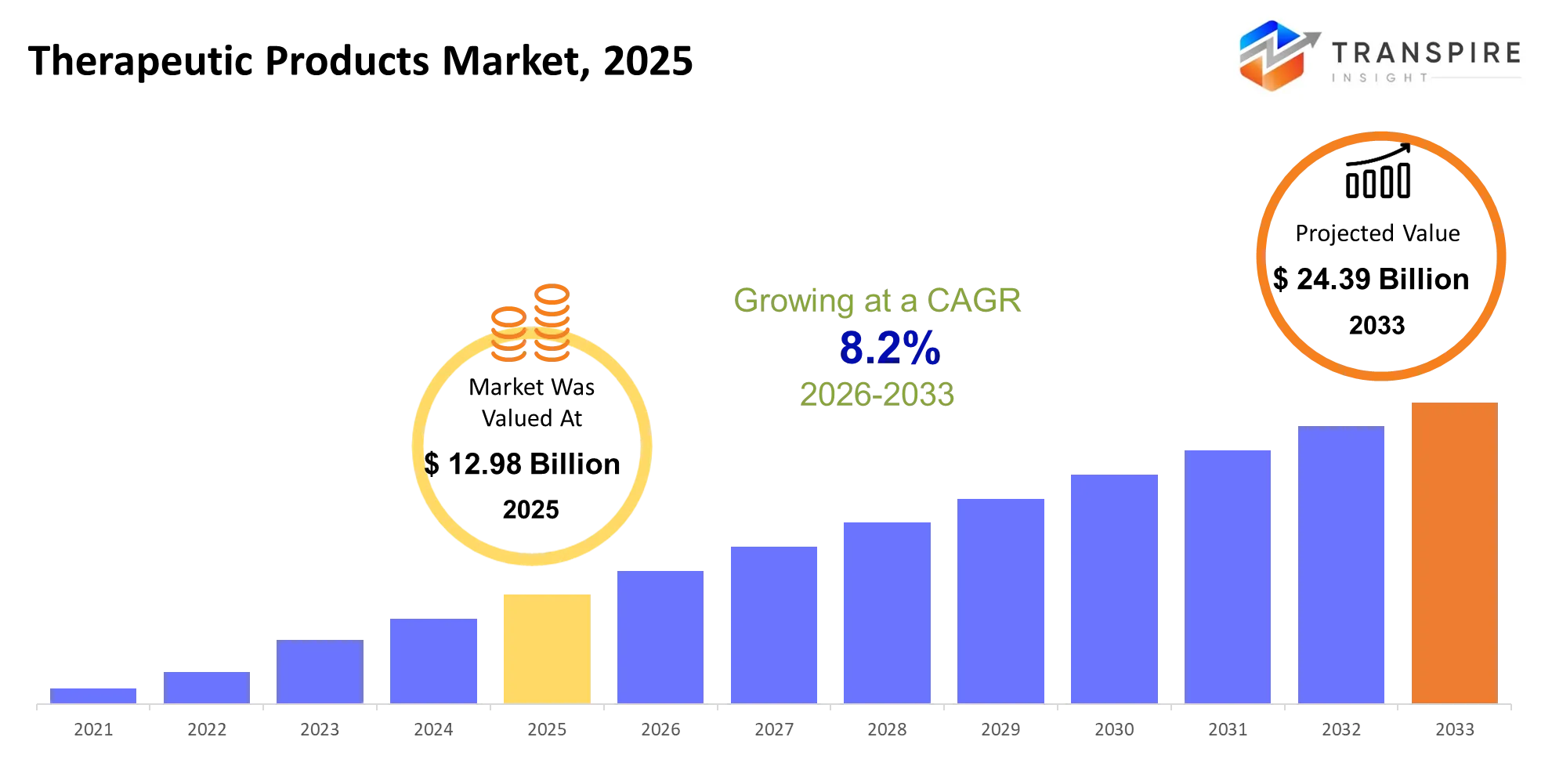
As per Transpire Insight, the Therapeutic Products Market size is estimated at USD 12.98 billion in 2025 and is anticipated to reach USD 24.39 billion by 2033, growing at a CAGR of 8.2% from 2026 to 2033.
The market for treatments is changing as doctors and nurses look for better ways to stop, control and cure illnesses. It includes medicines that you get from a doctor, medicines you can buy without a prescription, special treatments made from living things, shots that protect against diseases, ways to change genes and other types of care used for many different health problems. In the past three to five years, the market has moved toward treatments that focus on specific issues, more advanced medicines made from living cells and care that is designed just for each person. pushed things forward, sped up the creation of vaccines, made more money flow into drug research and showed how important it is to have a steady supply of medicine. At the same time more people having long-term health problems, older people needing more help, and a bigger need for special treatments are making drug companies try to add more products to their list. Improvements in science and drug development are helping scientists deal with tough health issues, while better access to health care, in poorer countries is making more people use these treatments and helping the market grow more.
Therapeutic Products Market Size & Forecast:
- Market Size 2025: USD 12.98 Billion
- Expected Market Value (2033): USD 24.39 Billion
- Forecast CAGR (2026–2033): 8.2%
- Leading Region in 2025: North America
- Fastest Growing Region: Asia Pacific
- Key Company Profiles: Pfizer, Roche, Novartis, Johnson & Johnson, Merck & Co., AbbVie, AstraZeneca, Sanofi, Bristol Myers Squibb, Eli Lilly, GSK, Amgen, Takeda, Gilead Sciences, Novo Nordisk
Key Market Insights
Industry can be seen to represent a balance between traditional pharmaceutical requirements and rising interest in new technology in treatment. Competition is now more influenced by research strength, treatment efficacy, accessibility, and commercial prospects for innovations.
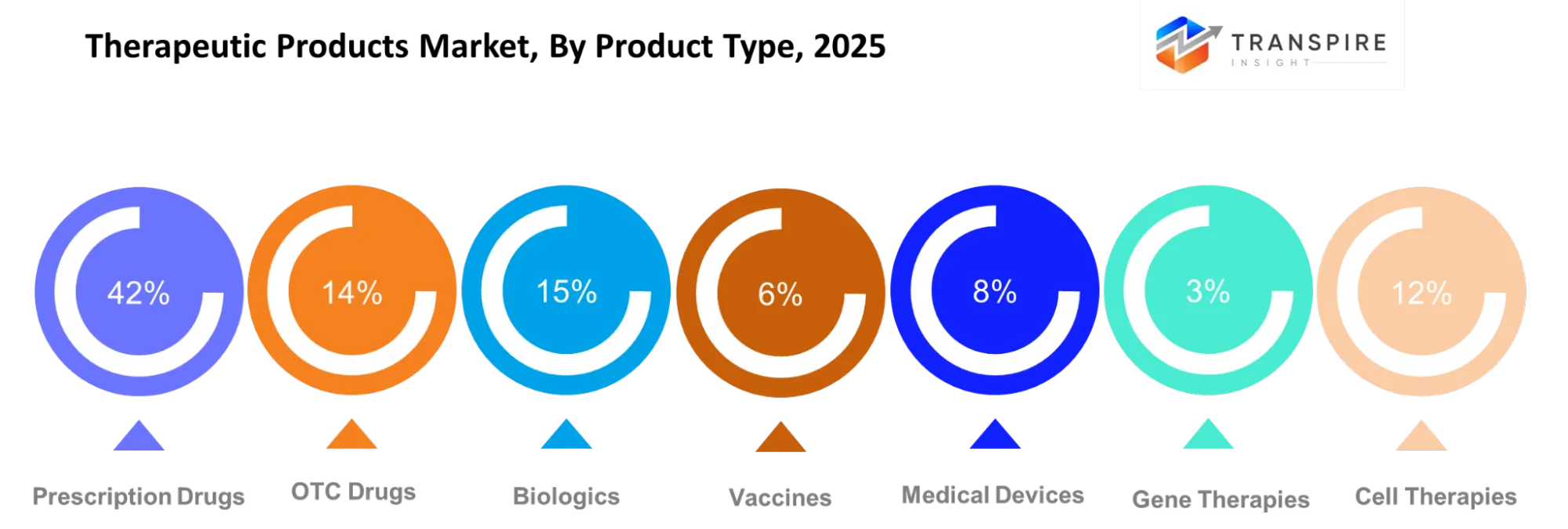
- Prescription drugs constitute 41.80% of the reported product-type segmentation, thus pointing to the key significance of drugs in treating acute and chronic illnesses.
- Biologics hold 15.00% of the product-type split, showing the significance of biologics in the treatment of different diseases and complications.
- Digital therapeutics constitute 7.70% of the offered segmentation, thus constituting an already developed category of treatment that is enabled by digital solutions.
- Medical devices are 8.00% of the product type; medical devices are important instruments that enable diagnosis, treatment delivery, and clinical procedures.
- Vaccines are 6.00% of the product-type split; at the same time, producers are continuing to develop prevention medications and improving delivery methods of vaccines.
What are the Key Drivers, Restraints, and Opportunities in the Therapeutic Products Market?
Drivers:
The rise in chronic diseases, drug discovery, and access to healthcare services is expected to fuel the growth of the market. With rising demand for vaccine platforms, biologics, and pharmaceuticals, companies need to focus on the discovery and manufacture of these products. Molecular diagnostics and precision medicine provide room for opportunities by allowing identification of suitable therapy for particular patients.
High cost of research and development, lengthy process of clinical trial, regulations, and uncertainty about future development success are some of the challenges. The complexity and high costs of manufacture, storage, distribution, and skills needed for advanced therapy make the treatment expensive, limiting its access to price-sensitive markets. Patents expiration and competition from generics and biosimilars exert downward pressure on prices and revenues.
Opportunities:
opportunities for growth in the area of personalised medicine, cell and gene therapy, biosimilars, and digital health care solutions. A company could strengthen its market position by investing in biomarker-enabled products, automation, and more efficient production processes. There are opportunities in the Asia Pacific region as well through improved healthcare infrastructure and greater access to drugs, as well as greater drug manufacturing in the region. Collaboration with biotech firms, incumbent pharmas, and research institutions will help reduce costs of development and speed up time to market. Finally, differentiation, affordability, and trusted supply chain can result in a sustainable growth model.
|
Driver |
Relative Impact on Growth (%) |
Geographic Relevance |
Impact Timeline |
Demand Strength |
Growth Mechanism (5–10 words) |
Key Beneficiaries (5–10 words) |
Major Constraint (5–10 words) |
|
Rising Prevalence of Chronic and Age-Related Diseases |
28% |
North America, Europe, Asia-Pacific |
Short-term |
High |
Increases long-term demand for medicines and disease management. |
Pharmaceutical companies, biologics developers, hospitals, patients. |
High treatment costs and unequal healthcare access. |
|
Advancements in Biologics, Gene Therapies, and Precision Medicine |
24% |
North America, Europe, Asia-Pacific |
Long-term |
High |
Enables targeted treatments and expands previously limited options. |
Biotechnology firms, specialty drug manufacturers, research institutions, patients. |
Complex manufacturing and stringent regulatory approval requirements. |
|
Increasing Healthcare Expenditure and Improved Access to Treatment |
19% |
Asia-Pacific, North America, Europe |
Medium-term |
High |
Expands treatment coverage and increases prescription volumes. |
Drug manufacturers, healthcare providers, distributors, patients. |
Budget constraints and uneven reimbursement coverage. |
|
Growing Investment in Pharmaceutical R&D and AI-Enabled Drug Discovery |
16% |
North America, Europe, Asia-Pacific |
Medium-term |
High |
Accelerates drug discovery and improves development efficiency. |
Pharmaceutical innovators, AI vendors, CROs, research laboratories. |
High development costs and uncertain clinical success. |
|
Expanding Government Support and Access to Affordable Therapeutics |
13% |
Asia-Pacific, Europe, North America |
Short-term |
Medium |
Supports generic production and broadens medicine availability. |
Generic drugmakers, contract manufacturers, public healthcare systems, patients. |
Pricing pressure and evolving regulatory compliance requirements. |
|
Total |
100% |
Global |
— |
— |
— |
— |
— |
What Has the Impact of artificial intelligence on the Therapeutic Products Market?
AI is transforming the process of developing, producing, and distributing a drug. Scientists may design an AI-powered machine that would analyze biological datasets, find possible targets for drugs, screen drug candidates, and choose the best candidates for clinical trials. Although this method could aid researchers in narrowing down their options and improving lab work processes, it cannot take the place of experimenting. AI can be employed in many other ways, for instance, predicting the results of the clinical development process. The analysis of clinical trial datasets and patients' attributes may help choose patients, spot safety concerns, and compare different treatments. Healthcare professionals could use AI-powered instruments to help diagnose and customize certain parts of the treatment plan. Implementation issues caused by the fragmented, sensitive, and standardized nature of pharmaceutical data, by the expenses associated with the integration of AI into the current system, by the bias of datasets, and incorrect predictions may occur. However, the disclosure of data, control and human examination, clinical validation, and human evaluation continue to be vital. Overall, AI is a tool that helps with research and operations, not a replacement.
Instance:
In April 2026,Novo Nordisk and OpenAI have entered into a strategic alliance for the utilisation of artificial intelligence in the process of discovering and developing drugs. This will be done by analysing large amounts of data and finding potential drug candidates that can be developed further. This can prove beneficial for the Therapeutic Products Market.
Key Market Trends:
The industry is shifting away from traditional drug development toward the development of more customised, connected, and patient-focused medicines. There is more of an emphasis being placed on combining scientific advancement with the production and delivery process itself.
- Development of new treatments is becoming more dependent on biomarkers, genetic data and patient characteristics to facilitate the choice of treatment options.
- The field of research is increasingly moving towards cellular therapies, gene editing, etc., which will be targeted at specific diseases at their biological core.
- Manufacturers are becoming more interested in complex medicines such as antibodies, etc., and creating special capabilities for their production.
- Healthcare provision is becoming more reliant on remote monitoring, connected devices, and digital patient interaction with software for disease management.
- Digitalisation of pharmaceutical manufacturing: Manufacturers are using digital monitoring and automation technologies to increase consistency, traceability, productivity, and quality control.
Therapeutic Products Market Segmentation
By Product Type:
Prescription drugs constitute the leading reported product segment with a 41.80% market share on the back of their importance in the management of chronic illnesses, infections, and diseases. The biologics segment constitutes 15.00%, whereas OTC drugs segment constitutes 14.00% due to the significance of specialised treatments and self-treatment options, respectively. Medical devices make up 8.00%, digital therapeutics make up 7.70%, vaccines 6.00%, gene therapies 4.00% and cell therapies 3.50%. Advanced therapies can be expected to provide growth opportunities alongside prescription drugs, which are likely to play an integral part in treatments. The fastest-growing product type is cell & gene therapies, constituting 15.40%.
By Disease Area:
Significant areas of treatment include Oncology, with over 30% market share, supported by new medicines and immunotherapies. Targeted and specific treatments for many cancers; cardiovascular diseases, with over 30% share, in particular treatments for the heart and blood vessels. Diabetes, with over 10% market share. Neurology and rare diseases, with over 5% market share, in particular in the field of rare diseases, a promising market but with difficult research conditions in the case of a clinical hurdle.
By Route of Administration:
In various indications, oral, injectable, topical, inhalation, transdermal, ophthalmic, nasal and other delivery routes address different patient and clinical needs. Oral drugs are still manageable for a variety of long-term therapies as the common patient-friendly method of delivery. Injectable versions are vital for biologic drugs, vaccines, and other medicines where tight control of delivery is important, and inhaled and topical products aim to treat certain respiratory and other conditions. Improved drug-delivery technology could expand dosing convenience, compliance and the delivery of complex medicines.
By End User:
Hospitals, clinics, pharmacies, home healthcare, speciality centers, ambulatory centers, and research institutes will be the main end-users of the technology. The hospitals and the speciality centers are required for the complicated therapy and high-end procedures while the clinics and pharmacies will act as a backup for the everyday treatments and medications. On the other hand, the home healthcare units will play a role in some cases for the long-term treatment purposes. The home healthcare will probably play a role for only a few patients with help of the modern healthcare infrastructure.
By Distribution Channel:
The distribution channels include hospital pharmacies, retail pharmacies, speciality pharmacies, e-pharmacies, wholesalers, and clinics. Speciality pharmacies are specialized channels through which certain medicines are distributed because they require supervision, handling, or storage under certain conditions. The use of digital ordering and logistic processes as well as stock management systems can even further improve access, subject to certain conditions related to the characteristics of prescription and delivery of the medicine..
By Treatment Type:
Preventive, curative, supportive, palliative, rehabilitative, personalized, and precision-medicine products target the same objectives at different times. The preventive products are used to improve health or prevent a particular disease or disorder. Curative products cure the disease or its symptoms. Supportive and palliative products make the patient's life better or longer by relieving symptoms and aiding in the treatment process. Rehabilitation products help in the improvement of health or functionality. Personalized and precision medicine products target certain patients based on the patient's individual features, diagnosis, biomarkers, or other forms of information. Scientific breakthroughs open up new opportunities for more targeted treatment.
What are the Key Use Cases Driving the Therapeutic Products Market?
Prescription medications are one of the use cases, as per the product type segment. They are commonly used in the management of diabetes, cardiovascular diseases, infections, cancers, and other ailments that require expert medical intervention and treatment. Their significance can be appreciated from their constant use, disease-specific nature, and patient management. Preventive and supplementary healthcare services using vaccinations, OTC drugs, medical devices, and digital health care are some other use cases. Such health care products offer immunisations, self-care, monitoring, and adherence to treatment in various settings, including hospitals, clinics, pharmacies, and home healthcare facilities. Some of the emerging use cases are those of cell and gene therapy for specific diseases, precision oncology based on biomarkers, and digitally enabled monitoring of chronic diseases.
|
Report Metrics |
Details |
|
Market size value in 2025 |
USD 12.98 Billion |
|
Market size value in 2026 |
USD 14.05 Billion |
|
Revenue forecast in 2033 |
USD 24.39 Billion |
|
Growth rate |
CAGR of 8.2% from 2026 to 2033 |
|
Base year |
2025 |
|
Historical data |
2021 - 2024 |
|
Forecast period |
2026 - 2033 |
|
Report coverage |
Revenue forecast, competitive landscape, growth factors, and trends |
|
Regional scope |
United States; Canada; Mexico; United Kingdom; Germany; France; Italy; Spain; Denmark; Sweden; Norway; China; Japan; India; Australia; South Korea; Thailand; Brazil; Argentina; South Africa; Saudi Arabia; United Arab Emirates |
|
Key company profiled |
Pfizer, Roche, Novartis, Johnson & Johnson, Merck & Co., AbbVie, AstraZeneca, Sanofi, Bristol Myers Squibb, Eli Lilly, GSK, Amgen, Takeda, Gilead Sciences, Novo Nordisk |
|
Customization scope |
Free report customization (country, regional & segment scope). Avail customized purchase options to meet your exact research needs. |
|
Report Segmentation |
Product Type (Prescription Drugs, OTC Drugs, Biologics, Vaccines, Medical Devices, Gene Therapies, Cell Therapies, Digital Therapeutics); Therapeutic Area (Oncology, Cardiovascular, Neurology, Immunology, Infectious Diseases, Diabetes, Respiratory Diseases, Rare Diseases); Route of Administration (Oral, Injectable, Topical, Inhalation, Transdermal, Ophthalmic, Nasal, Other Routes); End User (Hospitals, Clinics, Pharmacies, Home Healthcare, Specialty Centers, Ambulatory Centers, Research Institutions); Distribution Channel (Hospital Pharmacies, Retail Pharmacies, Specialty Pharmacies, Online Pharmacies, Wholesalers, Direct-to-Patient, Clinics); Treatment Type (Preventive, Curative, Supportive, Palliative, Rehabilitative, Personalized, Precision Medicine) |
Which Regions are Driving the Therapeutic Products Market Growth?
North America:
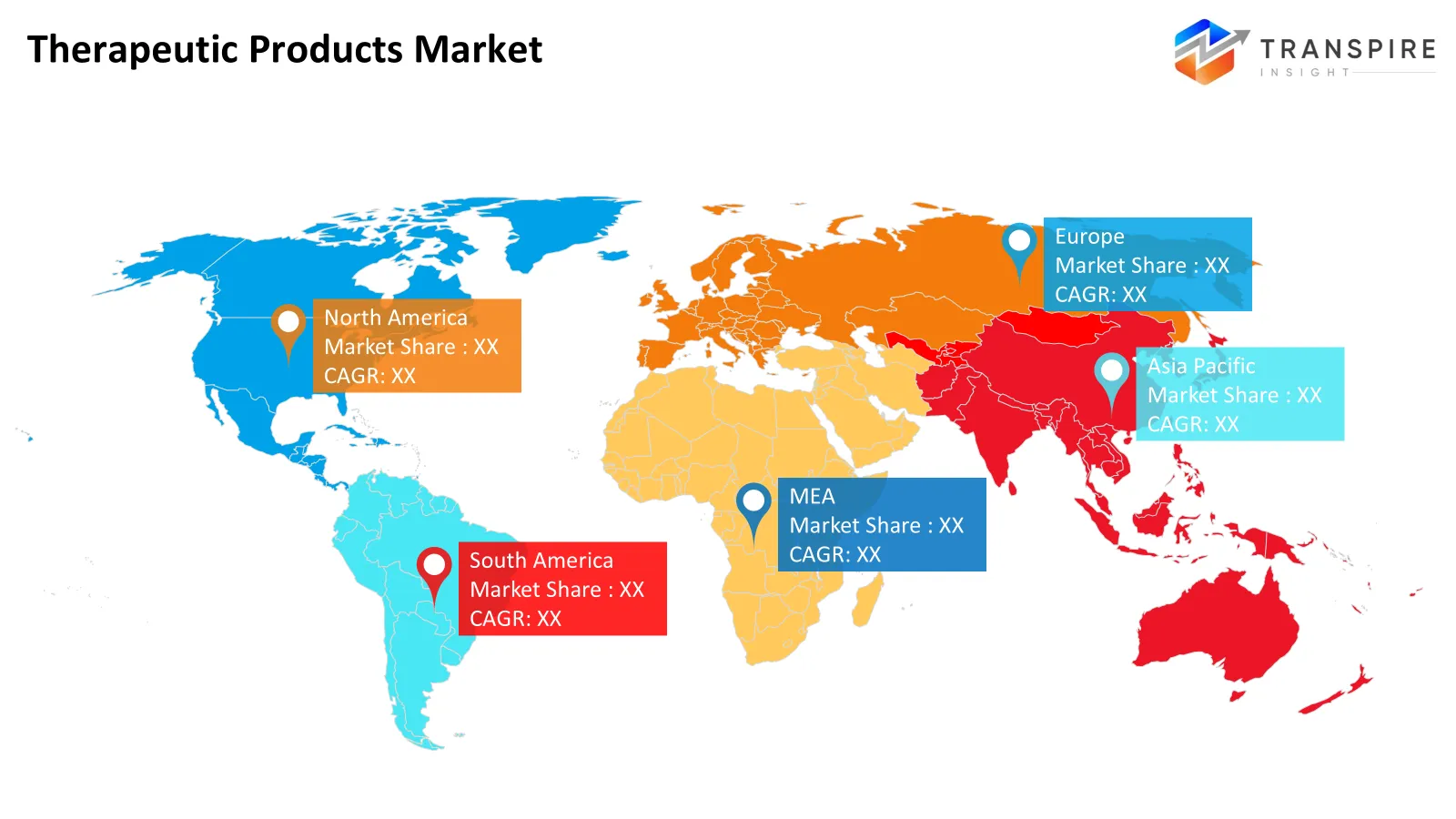
North America holds a leading position in the market with a share of 44.80%, which is based on pharmaceutical firms, a highly developed healthcare system and research institutes, as well as investment in drug development. North America possesses developed systems of clinical trials and facilities for treatment. In addition, its commercial environment provides for the introduction of innovative medicines; however, reimbursement and treatment costs are among the factors that should be considered. Future success can be provided through further investments in biotechnologies.
In February 2025, Eli Lilly and Company planned to invest more in manufacturing in the United States. This will help increase the production capacity of pharmaceuticals and also boost the availability of medicines due to the robust manufacturing base of North America and investment in therapeutic products.
Europe:
Europe constitute 27.00% of the market. The reason behind this is healthcare systems, production capabilities of pharmaceuticals, research collaborations, and regulations. Europe differs from North America in terms of having a developed system of healthcare, reimbursement system, and international scientific collaborations. Pharmaceutical firms can count on research institutes, specialised treatment hospitals, and distribution networks of medicines. The future success of the region will rely on innovations, pricing policies, manufacturing capabilities, and treatment access in different healthcare systems of nations.
In March 2026, Novo Nordisk invested EUR to expand the manufacturing plant in Athlone, Ireland. This expansion will help increase the production capacity of GLP-1 therapies, contributing to the pharmaceutical manufacturing strength of Europe and innovative medicines.
https://www.novonordisk.com/news-and-media/news-and-ir-materials/news-details.html?id=916508
Asia Pacific:
Asia Pacific holds 21.00% of the total market split and is considered to be the fastest-growing region owing to a forecasted CAGR of 8.90%. Growth in healthcare infrastructure, increased treatment access, investment in pharmaceutical production, and increased clinical research capability will drive its growth. The region presents an opportunity in terms of local manufacturing and generic drugs, biological drugs, and expanded access to healthcare facilities such as hospitals and clinics.
In June 2025, AstraZeneca invested to expand the Hub in Bengaluru, India. This expansion will help in enhancing the research and development, digital health, and innovations, which is an indication of the rising importance of Asia Pacific in pharmaceutical research and therapeutic products.
Who are the Key Players in the Therapeutic Products Market and how do they compete?
The competition in the therapeutic products industry involves prescription medicines, biologics, vaccines, consumer health care, medical devices, and advanced therapy. Firms compete in terms of research activities, clinical studies, manufacturing capacity, portfolio of products, and access to health care providers. Well-established firms in the pharmaceutical industry compete based on extensive distribution channels and brand names, while biotech firms compete through their specialised treatments and science platforms. Pfizer has a focus on pharmaceutical research, vaccines, and collaborations to enhance its development pipeline and distribution. Roche differentiates itself in terms of oncology, biotechnology, and a combination of diagnostics and treatments. Johnson & Johnson is a company that is involved in both pharmaceutical innovation and medical technology. Novartis has an emphasis on innovative medicines and selected specialist treatments, which involve research-led development and collaboration with other firms to enhance its pipeline. There are various methods of expansion adopted by the above-mentioned firms, and these include research, acquisition, licensing, manufacturing, and geographical market development. The future competitiveness of the above firms will be dependent on clinical differentiation, regulatory approval, pricing, and delivery of products.
Therapeutic Products Market Companies
- Pfizer
- Roche
- Novartis
- Johnson & Johnson
- Merck & Co.
- AbbVie
- AstraZeneca
- Sanofi
- Bristol Myers Squibb
- Eli Lilly
- GSK
- Amgen
- Takeda
- Gilead Sciences
- Novo Nordisk
|
Company |
Est. Revenue Share Range |
Key Offerings |
Strategic Positioning |
Geographic Strength |
Technology Focus |
Company |
|
Johnson & Johnson |
Estimated 2.5–4.0% |
Oncology medicines, immunology therapies, cardiovascular treatments, electrophysiology devices |
Diversified pharmaceutical and medical technology leadership |
North America, Europe, Asia Pacific |
Biologics, targeted oncology, robotic-assisted surgery |
Johnson & Johnson |
|
Roche Holding AG |
Estimated 2.0–3.5% |
Oncology medicines, immunology therapies, ophthalmology treatments, specialty biologics |
Precision medicine and specialty therapeutics differentiation |
North America, Europe, Asia Pacific |
Personalized medicine, antibody engineering, biomarker-driven treatment |
Roche Holding AG |
|
Eli Lilly and Company |
Estimated 1.5–3.0% |
Diabetes medicines, obesity treatments, oncology drugs, immunology therapies |
Innovation-led growth in metabolic and specialty medicines |
North America, Europe, Asia Pacific |
Incretin therapies, advanced drug discovery, biologics manufacturing |
Eli Lilly and Company |
|
Pfizer Inc. |
Estimated 1.5–3.0% |
Oncology medicines, vaccines, cardiovascular drugs, rare-disease treatments |
Broad pharmaceutical portfolio and commercialization |
North America, Europe, Asia Pacific |
mRNA platforms, antibody-drug conjugates, vaccine technologies |
Pfizer Inc. |
|
AbbVie Inc. |
Estimated 1.5–2.5% |
Immunology medicines, oncology treatments, neuroscience drugs, eye-care therapies |
Specialty medicine leadership and portfolio diversification |
North America, Europe, Asia Pacific |
Immunology biologics, targeted oncology, neurotherapeutics |
AbbVie Inc. |
|
AstraZeneca PLC |
Estimated 1.5–2.5% |
Oncology drugs, respiratory medicines, cardiovascular treatments, rare-disease therapies |
Research-driven expansion across high-growth therapeutic areas |
North America, Europe, Asia Pacific |
Antibody-drug conjugates, precision oncology, cell therapy research |
AstraZeneca PLC |
|
Merck & Co., Inc. |
Estimated 1.5–2.5% |
Oncology medicines, vaccines, infectious-disease treatments, immunotherapies |
Oncology leadership supported by vaccines and infectious-disease products |
North America, Europe, Asia Pacific |
Immuno-oncology, vaccine development, targeted drug discovery |
Merck & Co., Inc. |
|
Novartis AG |
Estimated 1.5–2.5% |
Cardiovascular medicines, oncology therapies, immunology drugs, radioligand therapies |
Focused innovative medicines and specialty treatment expansion |
North America, Europe, Asia Pacific |
Radioligand therapy, gene therapy, precision medicine |
Novartis AG |
|
Sanofi |
Estimated 1.5–2.5% |
Vaccines, immunology medicines, rare-disease treatments, specialty biologics |
Vaccine expertise and expansion in immunology and rare diseases |
Europe, North America, Asia Pacific |
Monoclonal antibodies, recombinant vaccines, biologics engineering |
Sanofi |
|
Novo Nordisk A/S |
Estimated 1.0–2.0% |
Diabetes medicines, obesity treatments, insulin products, hormone therapies |
Metabolic disease specialization and branded treatment leadership |
North America, Europe, Asia Pacific |
Peptide therapeutics, GLP-1 medicines, advanced drug-delivery systems |
Novo Nordisk A/S |
Recent Development News
- In June 2026, Eli Lilly introduced Tanstrive (selpercatinib) in India for use among eligible patients with advanced or metastatic solid tumours having mutations in the RET gene. The orally administered drug adds another choice for those patients with cancer associated with such genetic alterations. This is part of the commercial development of precision oncology products based on molecular features. https://www.lilly.com/in/news/press-releases/lilly-launches-tanstrive-selpercatinib-the-first-and-only-ret-inhibitor-for-patients-with-advanced-or-metastatic-solid-tumors-with-a-ret-gene-alteration
- In June 2025, Abbott and MSD Pharmaceuticals formed a distribution arrangement for oral diabetes drugs in India. This included sitagliptin, the sitagliptin/metformin combination, and an extended-release combination. Abbott's distribution system would help to make the availability of such therapies possible. It was one instance of commercial partnerships for the expansion of product access rather than just internal developments. https://www.abbott.in/media-center/press-releases/abbott-and-msd-announce-strategic-partnership-to-distribute-innovative-oral-anti-diabetic-medicines-in-india.html
What Strategic Insights Define the Future of the Therapeutic Products Market?
The therapeutic products market is moving towards more targeted therapy, advanced biologics, personalised medicines, and technologically-enabled healthcare. The prescription, but the forecast for cell and gene therapies suggests that there is a possibility of a move towards more specialised treatment options. Nevertheless, scientific advancement alone will not ensure commercial success. There is an underlying threat associated with the difference between innovations in treatment and the affordability of treatment. High development costs, difficult manufacturing, limited reimbursement, and uncertain clinical results could become obstacles on the road to commercial success. Therefore, companies need to assess the commercial viability of treatment along with its clinical efficacy. There is an opportunity to combine precision medicine with more efficient manufacturing and broader access to treatment in Asia Pacific. Companies need to focus on therapies addressing medical needs, collaborate with biotechnology companies, and make research-data-driven decisions on development.
Key Segmentations are:
Product Type
- Prescription Drugs
- OTC Drugs
- Biologics
- Vaccines
- Medical Devices
- Gene Therapies
- Cell Therapies
- Digital Therapeutics
Therapeutic Area
- Oncology
- Cardiovascular
- Neurology
- Immunology
- Infectious Diseases
- Diabetes
- Respiratory Diseases
- Rare Diseases
Route of Administration
- Oral
- Injectable
- Topical
- Inhalation
- Transdermal
- Ophthalmic
- Nasal
- Other Routes
End User
- Hospitals
- Clinics
- Pharmacies
- Home Healthcare
- Specialty Centers
- Ambulatory Centers
- Research Institutions
Distribution Channel
- Hospital Pharmacies
- Retail Pharmacies
- Specialty Pharmacies
- Online Pharmacies
- Wholesalers
- Direct-to-Patient
- Clinics
Treatment Type
- Preventive
- Curative
- Supportive
- Palliative
- Rehabilitative
- Personalized
- Precision Medicine
By Regional Analysis
North America
- US
- Canada
- Mexico
Europe
- Germany
- UK
- France
- Italy
- Spain
- Russia
- Rest of Europe
Asia Pacific
- China
- Japan
- India
- South Korea
- Australia
- Rest of Asia Pacific
South America
- Brazil
- Argentina
- Rest of South America
Middle East & Africa
- UAE
- Saudi Arabia
- Qatar
- South Africa
- Rest of the Middle East & Africa
Frequently Asked Questions
Find quick answers to common questions.
The therapeutic products market size was valued at USD 12.98 Billion in 2025 and is poised to reach USD 24.39 Billion by 2033, expanding at an 8.2% CAGR.
Key segments for the therapeutic products market are Product Type (Prescription Drugs, OTC Drugs, Biologics, Vaccines, Medical Devices, Gene Therapies, Cell Therapies, Digital Therapeutics); Therapeutic Area (Oncology, Cardiovascular, Neurology, Immunology, Infectious Diseases, Diabetes, Respiratory Diseases, Rare Diseases); Route of Administration (Oral, Injectable, Topical, Inhalation, Transdermal, Ophthalmic, Nasal, Other Routes); End User (Hospitals, Clinics, Pharmacies, Home Healthcare, Specialty Centers, Ambulatory Centers, Research Institutions); Distribution Channel (Hospital Pharmacies, Retail Pharmacies, Specialty Pharmacies, Online Pharmacies, Wholesalers, Direct-to-Patient, Clinics); Treatment Type (Preventive, Curative, Supportive, Palliative, Rehabilitative, Personalized, Precision Medicine).
Growth is primarily driven by increasing demand for effective treatments, advancements in biotechnology and pharmaceutical research, growing healthcare expenditure, an ageing population, and the increasing adoption of personalised medicine and innovative therapies.
The market is led by major manufacturers including Pfizer, Roche, Novartis, Johnson & Johnson, Merck & Co., AbbVie, AstraZeneca, Sanofi, Bristol Myers Squibb, Eli Lilly, GSK, Amgen, Takeda, Gilead Sciences, Novo Nordisk.
North America accounts for a 44.80% share of the total world market of therapeutic products due to its superior healthcare system, high health expenditure, strong pharmaceuticals and biotech industry, research and development spending and adoption of innovative therapies. The presence of major market players and supportive regulations further boosts the market dominance of North America.
The market has huge potential from business due to the creation of personalised medicines, therapies, biologics, and gene and cell therapies. Rising demand for novel medicines, improved access to healthcare in developing nations, increased investment in pharma research, and AI-based drug discovery provide further opportunity for market participants.
- Pfizer
- Roche
- Novartis
- Johnson & Johnson
- Merck & Co.
- AbbVie
- AstraZeneca
- Sanofi
- Bristol Myers Squibb
- Eli Lilly
- GSK
- Amgen
- Takeda
- Gilead Sciences
- Novo Nordisk
About the Authors

Pankaj Ghogare Patil
I am Pankaj Ghogare Patil, a Senior Research Analyst at Transpire Insight, specializing in the Pharmaceutical, Chemicals & Materials, Healthcare IT, and Biotechnology industry. My expertise lies in conducting comprehensive market research, analyzing industry trends, evaluating competitive landscapes, and translating complex data into actionable insights. At Transpire Insight, I closely follow emerging technologies, regulatory developments, and market innovations to create accurate, well-researched, and informative content that helps businesses and professionals make informed decisions. I am committed to producing credible, evidence-based articles that reflect industry best practices while making technical topics accessible and valuable for a broad audience.

Chakradhar Khansole
Chakradhar serves as the Research Director at Transpire Insight, bringing over 8 years of experience in technology, innovation, and strategic market intelligence. He specializes in transforming complex market data into actionable business insights that enable organizations to make informed, growth-oriented decisions. Recognized for his strategic vision and analytical expertise, Chakradhar leads high-impact research initiatives, delivering comprehensive market assessments, competitive intelligence, and forward-looking industry analysis.
Recently Published Reports
-
Jul 2026
Alopecia Treatment Market
Alopecia Treatment Market Size, Share & Analysis Report By Disease Type (Alopecia Areata, Cicatricial Alopecia, Traction Alopecia, Alopecia Totalis, Androgenetic Alopecia, Alopecia Universalis, and Other Disease Types), By Treatment Type (Topical Treatments, Oral Medications, Injectable Therapies, and Hair Transplantation), By Gender (Male, and Female), By Distribution Channel (Hospitals and Clinics, Retail Pharmacies, and Online Retailers), and Geography (North America, Europe, Asia-Pacific, Middle East and Africa, South and Central America), 2021 - 2031
-
Jul 2026
Medical Ultrasound Probe Market
Medical Ultrasound Probe Market Size, Share & Analysis Report By Type (Linear Type, Convex Type, Endocavitary Probe, Phased Array/Cardiac Probe, Transesophageal (TEE) Probe, and Others), By Application (Ophthalmology, Cardiology, Musculoskeletal, Oncology, Obstetrics & Gynecology, General Imaging, and Others), By End User (Hospitals & Clinics, Diagnostic Centers, Ambulatory Surgical Centers, and Others), and Geography (North America, Europe, Asia-Pacific, Middle East and Africa, South and Central America), 2021 – 2031
-
May 2026
Biosimilars Market
Biosimilars Market By Product Type (Monoclonal Antibodies, Recombinant Hormones, Erythropoietin, G-CSF, Others), By Indication (Oncology, Autoimmune Diseases, Blood Disorders, Diabetes, Others), By Manufacturing Type (In-House Manufacturing, Contract Manufacturing), By Distribution Channel (Hospital Pharmacies, Retail Pharmacies, Online Pharmacies), By Industry Analysis, Size, Share, Growth, Trends, and Forecasts 2021-2033
-
Apr 2026
Gastrointestinal Endoscopy Market
Gastrointestinal Endoscopy Market By Type (Rigid Gastrointestinal Endoscope, Flexible Gastrointestinal Endoscopes, Disposable Gastrointestinal Endoscope), By Procedure Type (Colonoscopy, Gastroscopy, Duodenoscopy, Enteroscopy, Flexible Sigmoidoscopy, Others), By Application (Diagnosis, Treatment), By End-Users (Hospitals, Ambulatory Surgical Centers, Specialty Clinics, Laboratories, Others), By Industry Analysis, Size, Share, Growth, Trends, and Forecasts 2021-2033