
Subsea Equipment Market Summary:
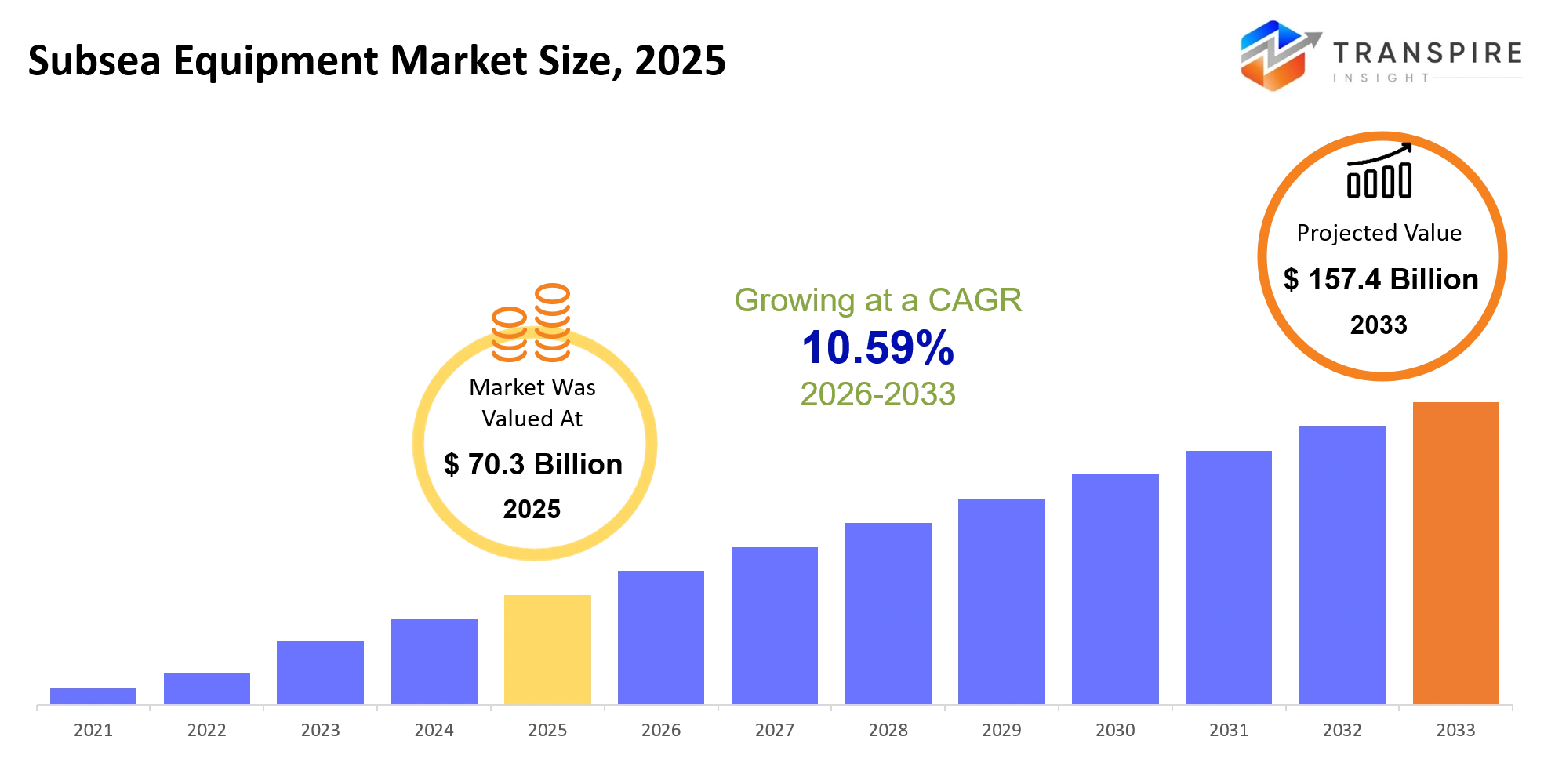
As per Transpire Insight Analysis, the Subsea Equipment Market size is estimated at USD 70.3 Billion in 2025 and is anticipated to reach USD 157.4 Billion by 2033, growing at a CAGR of 10.59% from 2026 to 2033. The increase in exploration activities of offshore oil and gas resources, increased deep-water and ultra-deep-water operations, and the development of new technology in subsea systems.
The subsea equipment market is of great importance to oil and gas operations. It helps with the installation and maintenance of systems in deep water. Over the past few years, the industry has adopted better subsea production technologies. This is because energy companies want to work efficiently and spend less money.
There are investments in offshore projects now. This is because energy demand is stable and big exploration projects are starting again. So operators are updating offshore equipment. One big change is that more companies are using integrated subsea production systems. These systems are easier to install and help the field work better in the run. At the same time, digital technologies are helping to make sure the equipment works well and does not break down unexpectedly. These changes are helping the subsea equipment market to grow. Offshore operators want subsea operations that're safe and cost-efficient. They want to produce oil and gas without spending too much money. The subsea equipment market is supporting this goal by providing equipment and technologies.
Subsea Equipment Market Size & Forecast:
- Market Size 2025: USD 70.3 Billion
- Expected Market Value (2033): USD 157.4 Billion
- Forecast CAGR (2026–2033): 10.59%
- Leading Region in 2025: North America
- Fastest Growing Region: Middle East & Africa
- Key Company Profiles: SLB, Baker Hughes, TechnipFMC, OneSubsea, Aker Solutions, Oceaneering International, NOV, Halliburton, Saipem, Subsea7, Vallourec, Dril-Quip, Weatherford, Fugro, Expro.
Key Market Insights:
The market for subsea technology is changing as offshore producers focus on state-of-the-art production systems, monitoring, and cost-effective field development. The innovation of subsea technology is enhancing project efficiency and ensuring future offshore energy production.
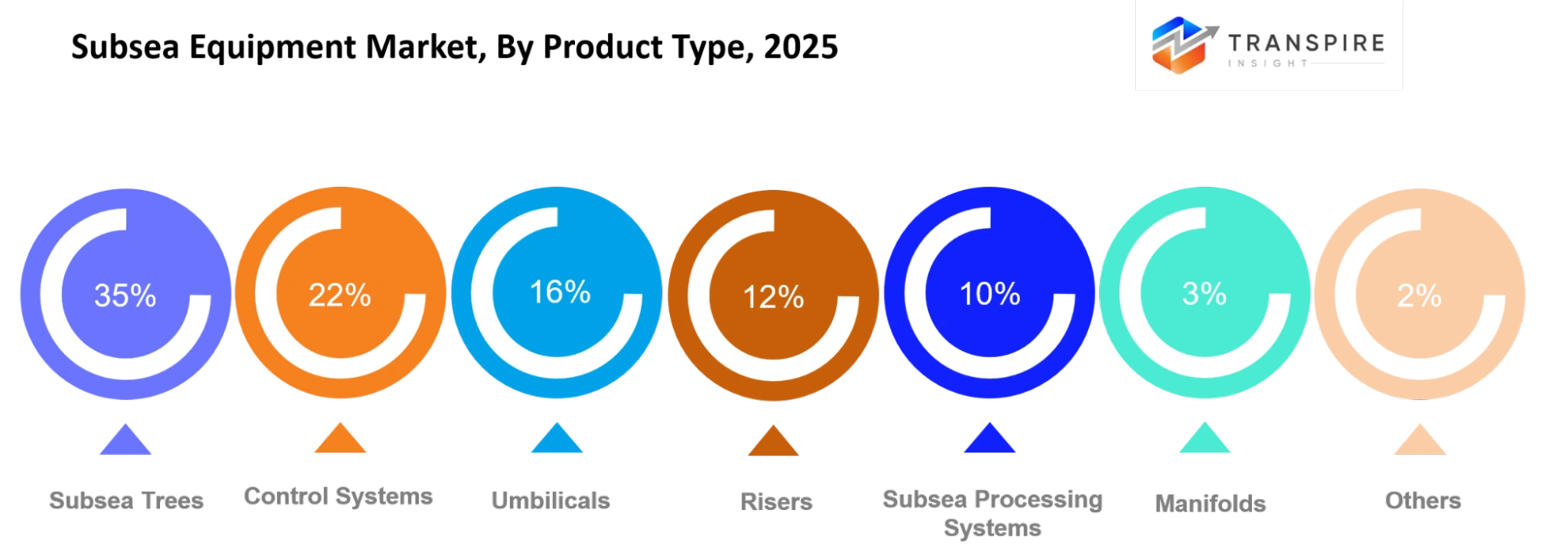
- Subsea Trees constitute 35% of the market and remain the market leader due to the increase in the adoption of intelligent tree systems for better well control and production efficiency.
- Control Systems have 22% of the market and are being enhanced by the inclusion of real-time monitoring and diagnostics.
- Umbilicals account for 16% of the market as there is rising demand for reliable power and communication systems.
- The Rise constitutes 12%, and the industry is seeing the use of lightweight and corrosion-resistant materials.
- Subsea Processing Systems remain the fastest-growing segment, growing at 15.9% CAGR due to the rise in investments in seabed processing systems that will reduce reliance on surface-based systems.
- Manifolds account for 3% of the market with the inclusion of modular designs.
- The others have 2% of the market, and they refer to special subsea systems needed for offshore applications.
- Digital inspection, predictive maintenance, and remotely operated systems are increasingly being adopted in energy companies.
What are the Key Drivers, Restraints, and Opportunities in the Subsea Equipment Market?
Drivers,
Growth in the subsea equipment market in the world can be attributed to increased spending on oil and gas exploration in the offshore sector, especially in deepwater and ultra-deepwater areas where traditional extraction techniques are not as effective. Recovery in energy demand combined with increased offshore project approvals has led to increased spending in advanced subsea production technology. Increased efficiency, lower maintenance needs, and longer asset life through modern technologies such as smart subsea trees have led to higher market penetration.
Restraints
There are still several issues that the market faces due to the high costs incurred while developing and installing subsea systems. Offshore projects require a lot of engineering knowledge and specialised vessels for the job, along with environmental compliance; this makes the whole process costly and time-consuming. Fluctuating prices of crude oil often affect investment plans and lead to the postponement of offshore developments.
Opportunities
A major advantage in the current market environment is associated with the increasing application of advanced technologies and processes in the subsea sector. Energy companies are now investing a lot in automation of production systems and maintenance platforms as well as remote monitoring of assets. Increased exploration activities taking place in the Middle East, South America and certain regions in Africa, alongside innovations in the field, will bring new business opportunities in the upcoming years.
What Has the Impact of Artificial Intelligence Been on the Subsea Equipment Market?
The subsea equipment industry has witnessed the growing application of artificial intelligence technology that has been beneficial for offshore operators in increasing equipment performance, reducing operating risks, and making timely decisions based on data analysis. The use of intelligent technologies that analyse the data gathered by subsea sensors, ROVs, and inspection tools allows for spotting the first signs of wear or malfunctions and taking the appropriate action before the problem impacts production processes.
AI has been beneficial for automating the process of work. Intelligent monitoring systems allow for evaluating the current state of subsea trees, control systems, and processing equipment, which enables the operators to maximise production while maintaining high safety levels in difficult underwater conditions. Certain issues may hamper the further implementation of artificial intelligence technology. Incorporation of AI solutions into the current infrastructure of offshore activities is technologically challenging and demands major investment in digitalisation, data management, and human resources. In spite of the mentioned barriers, the further development of digital offshore solutions will promote the implementation of artificial intelligence technology.
Key Market Trends:
There is a constant change taking place within the subsea equipment market globally because offshore operators are aiming at improving efficiency and lowering their operational costs, and extending the lifetime of offshore equipment. There have been many changes in terms of technological advancement, digitalisation, and deep-sea exploration.
- There is a trend where offshore energy companies are opting for digitally connected subsea equipment, making it possible for them to monitor their operations continuously.
- The trend where automation is taking place in subsea equipment, and there is intelligent control technology in subsea equipment that allows operators to minimise manual effort.
- More investments are being made in deep water and ultra deep water developments because there is a need to develop more oil and gas reserves.
- The equipment makers are introducing modular subsea equipment that makes the process of installation, inspection and maintenance easier for the offshore companies.
- There is a trend where predictive maintenance technologies are used instead of the traditional inspection method to avoid interruption of production.
- Low-carbon subsea operations are gaining importance among the offshore operators.
Subsea Equipment Market Segmentation
By Product Type
Subsea Trees is the dominant segment as it has the highest market share, occupying 35% of the subsea production equipment market. This is because of the crucial importance of subsea trees in managing production from offshore wells. The Control Systems occupy 22%, boosted by the increasing use of digital monitoring and production control. Umbilicals occupy 16% of the market as offshore developments need a dependable power supply and communication connection between subsea and onshore facilities. The Risers segment occupies 12% as there are consistent investments being made in deep-water developments, which require robust fluid transportation solutions. The Subsea Processing Systems have a market share of 10% and are the fastest-growing segment at 15.9% CAGR. Manifolds have a market share of 3%, while Others make up 2% of the market.
By Water Depth
Deep water projects still have the greatest demand for subsea equipment since they provide access to big offshore reserves but at the same time keep it commercially viable. Ultra-deepwater projects are developing in an ever-increasing manner due to energy companies’ investments in technology that is able to operate in extremely difficult underwater conditions. Shallow water projects still play a crucial role in developed offshore sites, and floating production facilities and offshore platforms assist in oil production. Increased exploration activities in difficult offshore waters should increase the demand for equipment used in deeper waters.
By End User
The major end users will still be oil and gas companies as they continue to invest in offshore exploration and production in order to boost long-term energy supply. The role of offshore contractors has increased since they provide services in engineering, installation, and maintenance of increasingly complex subsea developments. Advanced subsea production technology is being embraced by energy companies in an effort to boost their operations, while EPC contractors offer comprehensive project execution of large offshore developments. Marine operators and government authorities have helped in this regard as well.
By Application
Offshore oil production has emerged as the major application segment due to consistent investments in deep-water field development and production process optimisation. Gas production has started growing due to the efforts of countries in diversifying their energy sources and boosting production from offshore natural gas resources. Subsea processing is experiencing rapid growth to the implementation of intelligent production systems, which increase recovery rates and reduce surface facilities. Offshore exploration, pipelines, and deepwater developments are also creating demand for sophisticated subsea equipment.
By Distribution Channel
Direct sales are the best distribution channel used by large offshore projects, enabling manufacturers to customise technical solutions as well as offer service contracts for an extended period. EPC contractors are important because they include subsea equipment in offshore development projects. service networks have been continuously expanding among offshore equipment suppliers and OEMs in order to cover installation, maintenance, and replacement needs. In addition, exporters help expand international markets due to the provision of subsea equipment to new offshore areas.
What are the Key Use Cases Driving Subsea Equipment Market?
Subsea devices find extensive applications in offshore oil production, wherein the subsea trees, being the major sub-segment, control oil flow, facilitate efficient oil production, and ensure safety during deep-water and ultra-deep water projects. The equipment allows maximising oil extraction from the reservoir and minimises the need for interventions.
The market for the subsea devices is growing on the back of its application in gas production offshore, subsea processing, and pipelines. Investments made by companies in digital controls and remote management and underwater oil production technologies increase the efficiency and reliability of the equipment and reduce its maintenance costs.
Innovative applications of subsea equipment include deep-water exploration, autonomous subsea inspections, and seabed processing systems. With technological advancements in offshore energy projects, the need for intelligent subsea devices that can ensure efficient operations underwater increases day by day.
|
Report Metrics |
Details |
|
Market size value in 2025 |
USD 70.3 Billion |
|
Market size value in 2026 |
USD 77.8 Billion |
|
Revenue forecast in 2033 |
USD 157.4 Billion |
|
Growth rate |
CAGR of 10.59% from 2026 to 2033 |
|
Base year |
2025 |
|
Historical data |
2021 - 2024 |
|
Forecast period |
2026 - 2033 |
|
Report coverage |
Revenue forecast, competitive landscape, growth factors, and trends |
|
Regional scope |
United States; Canada; Mexico; United Kingdom; Germany; France; Italy; Spain; Denmark; Sweden; Norway; China; Japan; India; Australia; South Korea; Thailand; Brazil; Argentina; South Africa; Saudi Arabia; United Arab Emirates |
|
Key company profiled |
SLB, Baker Hughes, TechnipFMC, OneSubsea, Aker Solutions, Oceaneering International, NOV, Halliburton, Saipem, Subsea7, Vallourec, Dril-Quip, Weatherford, Fugro, Expro. |
|
Customization scope |
Free report customization (country, regional & segment scope). Avail customized purchase options to meet your exact research needs. |
|
Report Segmentation |
By Product Type (Subsea Trees, Manifolds, Control Systems, Umbilicals, Risers, Flowlines, Subsea Processing Systems, Others); By Water Depth (Shallow Water, Deepwater, Ultra-deepwater, Offshore Platforms, Floating Production Systems, Others); By End User (Oil & Gas Companies, Offshore Contractors, Energy Companies, EPC Contractors, Marine Operators, Government Agencies, Others); By Application (Offshore Oil Production, Gas Production, Subsea Processing, Offshore Exploration, Pipeline Infrastructure, Deepwater Projects, Others); By Distribution Channel (Direct Sales, EPC Contractors, Offshore Equipment Suppliers, OEM Partners, Exporters, Others). |
Which Regions are Driving the Subsea Equipment Market Growth?
North America
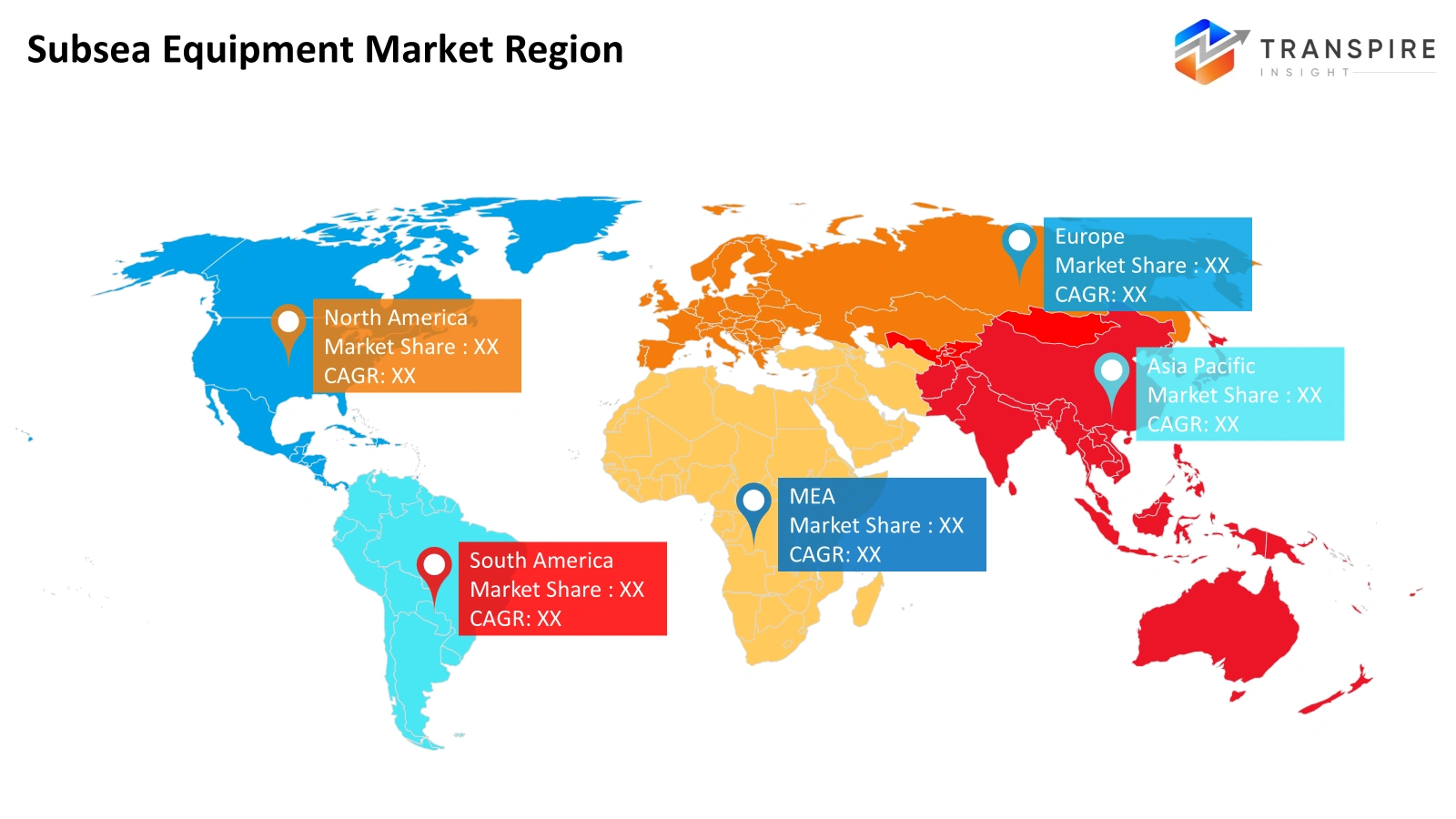
The North American market leads in terms of the market share in subsea equipment, amounting to 39% due to the well-developed offshore hydrocarbon sector, advanced drilling techniques, and consistent investment in deepwater projects. The Gulf of Mexico continues to be an important source of production as operators strive to update subsea equipment in order to increase its efficiency and prolong the life of existing offshore wells. Well-developed engineering, favourable regulation and the presence of leading equipment producers contribute to the dominance of this market segment. Further digitalisation and implementation of intelligent subsea solutions will add to its competitiveness.
Europe
Europe represents 27% of the market and is a mature offshore market where energy producers concentrate their efforts on achieving maximum efficiency of operations and sustainable offshore development. As compared to North America, Europe has more experience in operations in the North Sea and consistently modernises its ageing offshore facilities. Oil and gas companies invest in the development of advanced subsea production systems, remote monitoring systems, and low-emission offshore projects in order to increase long-term efficiency. In June 2025,Aker Solutions won a substantial contract from Vår Energi for the Balder Phase VI offshore project in the Norwegian Continental Shelf. The contract involves engineering, procurement, and delivery of subsea production systems, helping in modernising North Sea offshore infrastructure
Asia-Pacific
Asia-Pacific region accounts for 18% of the total market and is expanding its reach with increased offshore exploration operations and rising regional energy demands. Nations like China, India, Malaysia, and Australia are working on building offshore operations in order to increase domestic energy production and decrease dependency on imports. At the same time, the Middle East & Africa, which holds 12% of the total market, is expected to exhibit the highest growth at a rate of 16.8% CAGR due to the development of offshore discoveries and investments in offshore facilities. The Latin American region is responsible for 4% of the total market owing to offshore operations in countries like Brazil and Guyana. In April 2025, Baker Hughes won a contract from Petronas Carigali for the supply of subsea production systems in an offshore gas field development in Malaysia. The project helps in increasing offshore exploration and production operations in the Asia-Pacific region.
Who are the Key Players in the Subsea Equipment Marketand how do they Compete?
The competition in the market for subsea equipment is fueled by constant innovations in technology, offshore integration services, and long-term support services. Manufacturers are striving to increase their competitive advantage by creating dependable subsea production systems, developing digital technology and obtaining multiyear offshore contracts. Collaborations with energy producers and engineering companies can also be used by manufacturers to enhance project execution and their worldwide business.
SLB (Schlumberger) concentrates on digital offshore technologies and integrated subsea production systems, providing high efficiency and low complexity of operation. Baker Hughes differentiates itself with intelligent subsea control systems, remote monitoring solutions, and long-term lifecycle service agreements, which result in greater equipment reliability. TechnipFMC offers integrated Engineering, Procurement, Construction, and Installation (EPCI) solutions, helping customers decrease development costs and accelerate offshore projects.OneSubsea gains its competitive advantage by merging advanced subsea processing technologies with digital asset management systems, allowing customers to increase efficiency of deepwater field production. Aker Solutions creates standardised subsea equipment designed to decrease installation time and lower costs of projects. Oceaneering International achieves competitive advantage through remotely operated vehicle (ROV) services, subsea inspection, maintenance, and intervention solutions, allowing offshore producers to increase safety and equipment lifespan.
Subsea Equipment Market companies
- SLB
- Baker Hughes
- TechnipFMC
- OneSubsea
- Aker Solutions
- Oceaneering International
- NOV
- Halliburton
- Saipem
- Subsea7
- Vallourec
- Dril-Quip,
- Weatherford
- Fugro
- Expro
Recent Development News
In September 2025, TechnipFMC got an important contract from Petrobras where TechnipFMC was to provide subsea production systems for several offshore projects in Brazil. The contract is related to engineering, manufacturing, installation support, and life-of-field services for TechnipFMC, which is very beneficial for TechnipFMC in one of the world's largest deepwater regions.
Source: https://www.technipfmc.com
In April 2026, Baker Hughes established a Subsea Services Centre of Excellence along with the manufacturing facility in Dusavik, Norway. This manufacturing facility will be used to produce subsea production trees, wellheads, and control systems, as well as to enhance the capability of repair and maintenance services.
Source: https://www.bakerhughes.com
What Strategic Insights Define the Future of the Subsea Equipment Market?
The market for subsea equipment is predicted to develop due to offshore companies' focus on deep exploration, digitisation of their assets, and integration of subsea production systems as means of enhancing their efficiency and lowering operating costs. Modernisation of offshore equipment through automation, remote monitoring, and development of intelligent subsea technologies will help improve production efficiency and prolong the lifespan of offshore assets. On the other hand, one not-so-obvious issue that can arise due to the use of new digital technologies is the increasing complexity of integration with existing outdated offshore assets, resulting in delays in projects' implementation and increased costs. The increasing number of offshore developments in emerging markets in the Middle East, Africa, and South America creates many growth prospects for producers of subsea equipment that are focused on cost-efficient and standardised products.
Key Segmentations are:
By Product Type
- Subsea Trees
- Manifolds
- Control Systems
- Umbilicals
- Risers
- Flowlines
- Subsea Processing Systems
By Water Depth
- Shallow Water
- Deepwater
- Ultra-deepwater
- Offshore Platforms
- Floating Production Systems
By End User
- Oil & Gas Companies
- Offshore Contractors
- Energy Companies
- EPC Contractors
- Marine Operators
- Government Agencies
By Application
- Offshore Oil Production
- Gas Production
- Subsea Processing
- Offshore Exploration
- Pipeline Infrastructure
- Deepwater Projects
By Distribution Channel
- Direct Sales
- EPC Contractors
- Offshore Equipment Suppliers
- OEM Partners
- Exporters
Regional Outlook
North America
- United States
- Canada
- Mexico
Europe
- Germany
- United Kingdom
- France
- Spain
- Italy
- Rest of Europe
Asia Pacific
- Japan
- China
- Australia & New Zealand
- South Korea
- India
- Rest of Asia Pacific
South America
- Brazil
- Argentina
- Rest of South America
Middle East & Africa
- Saudi Arabia
- United Arab Emirates
- South Africa
- Rest of the Middle East & Africa
Frequently Asked Questions
Find quick answers to common questions.
The subsea equipment market size was valued at USD 70.3 billion in 2025 and is poised to reach USD 157.4 billion by 2033, expanding at a 10.59% CAGR.
Key segments for the subsea equipment market are By Product Type (Subsea Trees, Manifolds, Control Systems, Umbilicals, Risers, Flowlines, Subsea Processing Systems, Others); By Water Depth (Shallow Water, Deepwater, Ultra-deepwater, Offshore Platforms, Floating Production Systems, Others); By End User (Oil & Gas Companies, Offshore Contractors, Energy Companies, EPC Contractors, Marine Operators, Government Agencies, Others); By Application (Offshore Oil Production, Gas Production, Subsea Processing, Offshore Exploration, Pipeline Infrastructure, Deepwater Projects, Others); By Distribution Channel (Direct Sales, EPC Contractors, Offshore Equipment Suppliers, OEM Partners, Exporters, Others).
Growth is primarily driven by Increased offshore oil and gas exploration, increased deep water and ultra-deep water ventures, increased energy demands, development of new subsea production technologies, and offshore renewable energy projects.
The market is led by major manufacturers including SLB, Baker Hughes, TechnipFMC, OneSubsea, Aker Solutions, Oceaneering International, NOV, Halliburton, Saipem, Subsea7, Vallourec, Dril-Quip, Weatherford, Fugro, Expro.
North America has a share of 39% of the worldwide subsea equipment market owing to the large number of offshore oil & gas exploration, substantial investments in deep water projects, high technology subsea equipment, and the presence of prominent energy firms.
Commercial opportunities within the subsea equipment industry around the world comprise increased deep water and ultra-deep water exploration, an increase in offshore wind projects, increased investment in subsea tiebacks, increased use of subsea production systems, and technological advancement in digital monitoring and automation technologies.
- SLB
- Baker Hughes
- TechnipFMC
- OneSubsea
- Aker Solutions
- Oceaneering International
- NOV
- Halliburton
- Saipem
- Subsea7
- Vallourec
- Dril-Quip,
- Weatherford
- Fugro
- Expro
About the Authors

Avinash Kumar
I’m Avinash Kumar, a Senior Research Analyst at Transpire Insight, with expertise in the Electronics and Semiconductor and Energy & Power industry. My work focuses on analyzing emerging technologies, market trends, industry developments, and innovation across these sectors. I specialize in transforming complex technical and market insights into clear, research-backed content that helps professionals, businesses, and decision-makers stay informed. Through continuous industry research and data-driven analysis, I strive to deliver accurate, reliable, and practical perspectives on the latest advancements shaping the semiconductor and energy landscape.

Chakradhar Khansole
Chakradhar serves as the Research Director at Transpire Insight, bringing over 8 years of experience in technology, innovation, and strategic market intelligence. He specializes in transforming complex market data into actionable business insights that enable organizations to make informed, growth-oriented decisions. Recognized for his strategic vision and analytical expertise, Chakradhar leads high-impact research initiatives, delivering comprehensive market assessments, competitive intelligence, and forward-looking industry analysis.
Recently Published Reports
-
Apr 2026
Active Power Filter Market
Active Power Filter Market Size, Share & Analysis Report By Type (Shunt Active Power Filters, Series Active Power Filter, Hybrid Active Power Filter), By Application (Harmonics Mitigation, Reactive Power Compensation, Voltage Regulation, Power Factor Correction), By Phase (Single Phase, Three Phase), By End-User Industry (Manufacturing, Healthcare, Commercial, Automotive, Oil and Gas, Others), and Geography (North America, Europe, Asia-Pacific, Middle East and Africa, South and Central America), 2021 - 2031
-
Apr 2026
Electrical Transformer Market
Electrical Transformer Market Size, Share & Analysis Report By Core (Closed, Shell, and Berry), By Insulation (Gas, Oil, Solid, Air, and Other), By Phase (Single, and Three), By Rating (100 MVA to 500 MVA, 501 MVA to 800 MVA, and 801 MVA to 1200 MVA), and Geography (North America, Europe, Asia-Pacific, Middle East and Africa, South and Central America), 2021 – 2031
-
Apr 2026
Hydraulic Piston Pumps Market
Hydraulic Piston Pumps Market Size, Share & Analysis Report By Type (Axial Piston Pumps, Radial Piston Pumps), By Operating Pressure (Low Pressure, Medium Pressure, High Pressure), By Application (Construction, Mining, Agriculture, Automotive, Oil & Gas, Industrial Machinery, Others), By End-User (OEMs, Aftermarket), and Geography (North America, Europe, Asia-Pacific, Middle East and Africa, South and Central America), 2021 – 2031
-
Apr 2026
Laboratory Gas Generators Market
Laboratory Gas Generators Market Size, Share & Analysis Report By Product (Nitrogen Gas Generator, Hydrogen Gas Generator, Zero Air Gas Generator, Purge Gas Generator, TOC Gas Generators, Others), By Application (Gas Chromatography, Liquid Chromatography-mass Spectrometry (LC-MS), Gas Analyzers, Others), By End-user (Life Science, Chemical & Petrochemical, Food & Beverage, Others), and Geography (North America, Europe, Asia-Pacific, Middle East and Africa, South and Central America), 2021 – 2031