

Market Summary
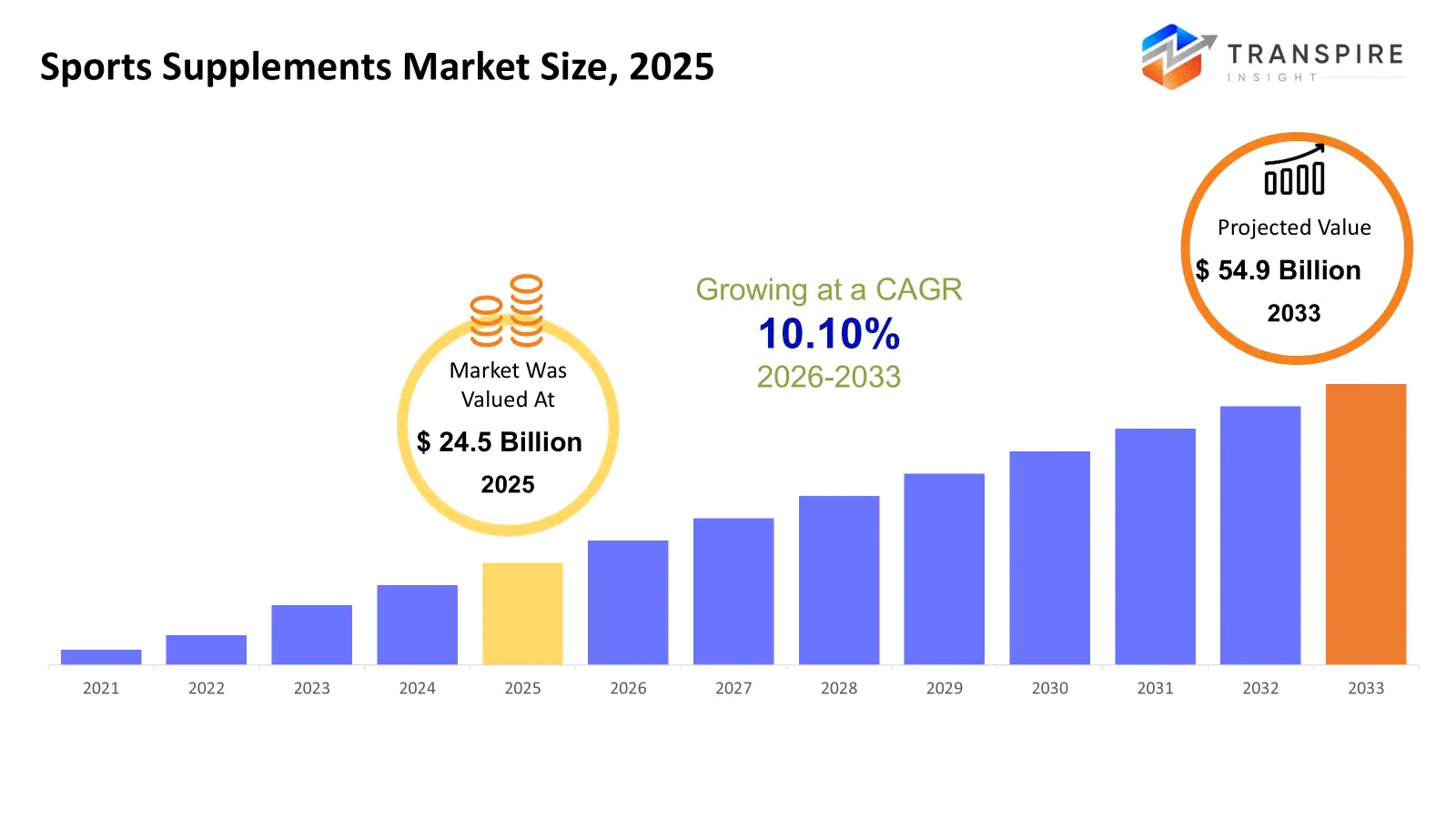
The global Sports Supplements market size was valued at USD 24.5 billion in 2025 and is projected to reach USD 54.9 billion by 2033, growing at a CAGR of 10.10% from 2026 to 2033. The global sports supplement market is expected to show significant and sustained CAGR-driven performance during the forthcoming years, owing to factors such as increased health awareness levels, the widening fitness movement across the globe, and an increase in the number of participants in both sporting activities and the workplace. Factors such as increased consumption rates for performance upgrades and health prevention services across the global health and fitness community also contribute to the sustained demand for the same. Additionally, increased per capita income levels across emerging economies and resultant high rates of urbanization act as key factors for the sustained growth of the global sports supplement marketplace in the upcoming years of the future business scenario.
Market Size & Forecast
- 2025 Market Size: USD 24.5 Billion
- 2033 Projected Market Size: USD 54.9 Billion
- CAGR (2026-2033): 10.10%
- North America: Largest Market in 2026
- Asia Pacific: Fastest Growing Market
To learn more about this report,  Download Free Sample Report
Key Market Trends Analysis
- The sports supplement market in North America appears to have reached maturity with a strong presence of protein-based powders and amino acid and drinkable sports supplements. Furthermore, bodybuilders and competing professionals understand that they require scientifically proven supplements to improve their performance.
- United States, due to its high structured and developed culture for fitness, highly developed and structured gyms, and high consumer knowledge base, remains the market leader in North America for plant-based proteins and functional blends, including RTD liquids and capsule delivery forms.
- Asia-Pacific is showing the fastest growth rate with increasing urbanization levels, more emphasis on fitness and health, along with the expansion of gyms in this region. This is because of the demand for supplements including protein powder, amino acids, vitamins, etc., for both professional as well as regular consumers.
- Protein-based supplements continue to be the dominant form worldwide due to the persistent need for muscle building, recovery, and performance augmentation. Research in plant-based products has made them more appealing to both professional consumers and the broader user base.
- Powder formulations continue to hold the highest place due to their inherent cost-effectiveness, versatility, and ease of preparation, along with their ability to blend in other additional functional ingredients, thus forming a highly desired product.
- Ready-to-drink liquids and functional ingredient blends are popular forms rising in global prominence due to convenience, portability, and health benefits; this is a manifestation of consumer demand for on-the-go health benefits as well as specialized supplementation for energy, performance, or health benefits.
- Fitness enthusiasts or gym-goers account for the largest audience to be addressed, generating inelastic demand for proteins, functional ingredients, or ready-to-consume formats, complimented by rising participation rates in recreational or boutique gyms/training programs.
- Online retailing has evolved as the most dynamic form of direct distribution channels. It is providing the advantages of convenience, a broad range of products offered at lower costs along with digital engagement in the marketing tactics, enabling the manufacturer to efficiently reach both urban as well as semi-urban consumers.
So, “The global sports supplement market is an increasingly expanding segment of the global nutraceutical space owing to the rise in health and fitness levels across the globe.” Sports supplements include different varieties of products such as protein-based supplements, amino acids, creatine powder, vitamins, and minerals, which help athletes and fitness enthusiasts build their physique and remain healthy during their rigorous workout sessions every day. In the present day and age, the number of people who use gyms and professional sportspersons has increased dramatically, thus raising the demand for sports supplements across different ages and geographies. Apart from that, the choice and preference for plant-based supplements will help shape the product segment in this space going ahead. It may be mentioned that the industry showcases healthy growth rates in terms of innovation-led growth; producers compete in efforts to develop value-added products. Currently, there has been an increased push in strategic alliances and an extension of online business channels. There has been a considerable push in marketing through social media influencers. Support from supplement regulations in markets like North America and Europe, combined with an increase in disposable incomes in emerging markets like Asia-Pacific and Latin America, ensures that this industry like many others promises robust growth in terms of CAGR.
Sports Supplements Market Segmentation
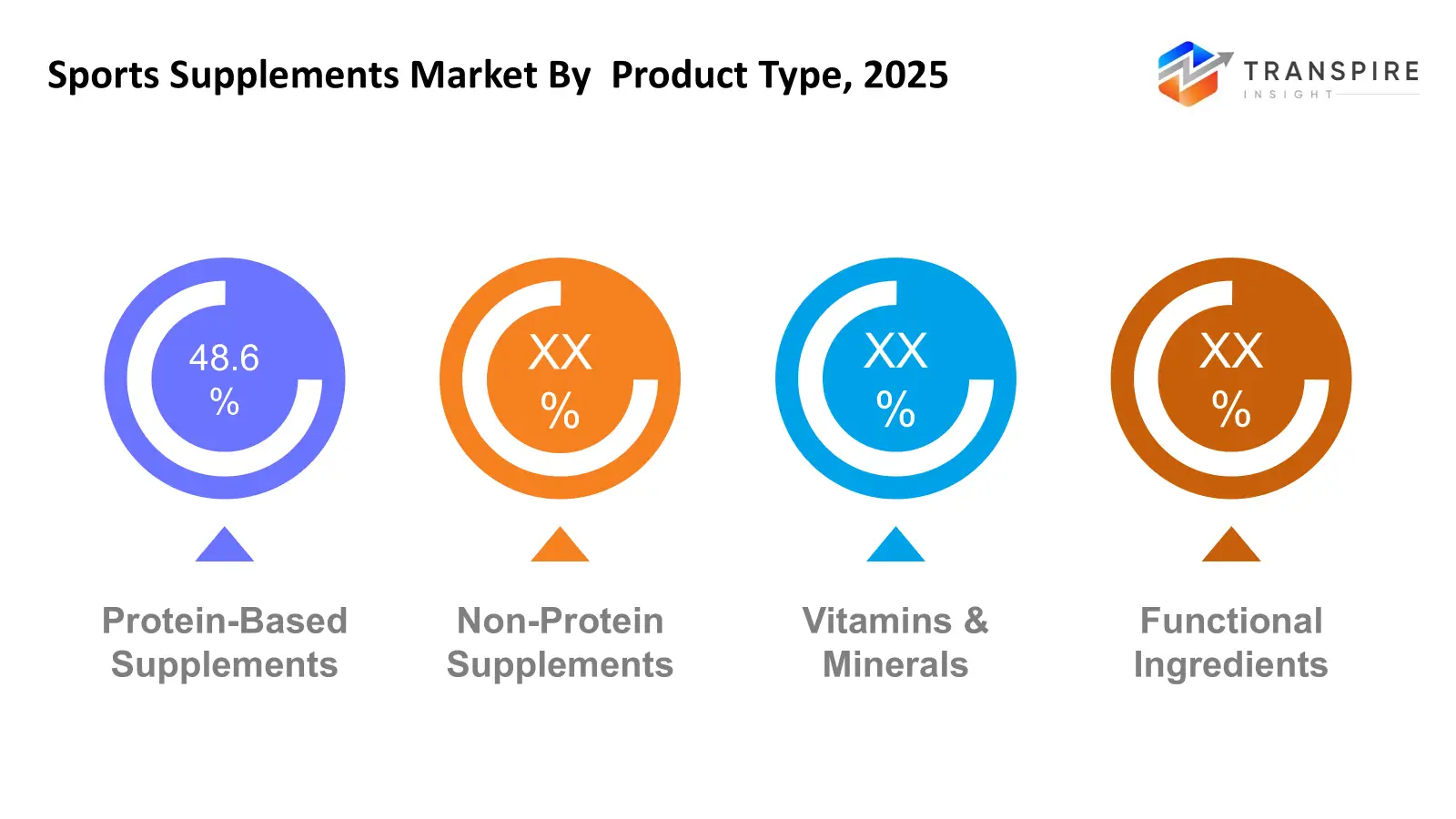
By Product Type
- Protein-Based Supplements
The market share of this segment is dominated by this factor because of the high demand among bodybuilders and fitness enthusiasts for muscle growth and recovery functions of muscle-building proteins such as whey, casein, and those in plants.
- Non-Protein Supplements
It also includes amino acids, creatine, beta-alanine, and L-carnitines, mainly focusing on performance enhancement. Its growth can also be seen in the Asia-Pacific region, especially focusing on professional athletes and young fitness enthusiasts.
- Vitamins & Minerals:
The product is beneficial to overall wellness, immunity, and recovery and thus serves as a supplementary product to protein and non-protein supplements. Its consumption is highest in North America and Europe because of high health and wellness consciousness and because of fitness regimes.
- Functional Ingredients
Some of the segments that cater to fitness enthusiasts, hyrdration, digestive benefits, and post-workout nourishment, such as electrolytes, probiotics, omega-3 fatty acids, and carbohydrate blends, show increased demand in emerging markets in Asia-Pacific and South American countries due to an increase in sports.
To learn more about this report, Download Free Sample Report
By Formulation
- Powder
Powders continue to hold the largest market size. Powders are the preferred format among users for their cost efficiency and flexibility in dosage forms. Powders are the most popular format in North America and Europe and are now gaining popularity in the Asia-Pacific region for use in the domestic market.
- Ready to Drink (RTD)
Convenient to carry around and use, the product suits urban professionals. High growth is being observed in Asia-Pacific and Middle East & Africa segments due to the product’s overall convenience for consumers.
- Bars & Chews
Primarily these supplements are used as energy boosters for workouts, marathons, and outdoor activities. Europe and North America are mature markets, whereas South America is a growing market.
- Capsules
Most suitable for delivery of targeted nutrients like vitamins, minerals, and performance enhancers. The uptake is high for such supplements because of familiarity and convenience, especially within developed markets like North America and Europe.
- Softgels
Softgels have seen steady uptake because of their ease of consumption and formulation, and their appropriateness for delivery of fat-soluble ingredients like omega-3s and vitamins to people with particular lifestyles and growing demographic demands for such substantiated delivery forms.
- Others
Other products such as gummies, gels, and sachets are witnessing emerging demand from young audience groups and first-time users through improved taste profiles and the business potential to encourage entry to the sports nutrition market.
By Target Consumer
- Professional Athletes
Demand high-end products with claims of performance enhancement, recovery assistance, and improved strength. Concentration is seen in regions like North America, Europe. and some of the Asian Pacific countries with high-end infrastructure and leagues.
- Bodybuilders / Strength Trainers
High consumption of protein and creatine supplements to boost muscle bulk and strength. North America and Europe lead the market, with the Asia-Pacific market seeing a surge due to the increasing popularity of gymming.
- Fitness Enthusiasts / Gym‑Goers
This massive number presents more demands for protein, functional, and consume-ready types of supplements. The market is growing worldwide and has huge market potential in South America and the Middle East and Africa regions.
- Lifestyle Users / Recreational Users
Motivated by factors like general well-being/wellness, weight reduction, and vitality, these individuals contribute to the market growth of functional ingredients and vitamins. Growing awareness about health and well-being in markets like India, Brazil, and the UAE is driving the market.
By Distribution Channel
- Online Retail:
E-commerce sites are experiencing rapid growth in terms of convenience factors, wide product offerings and competitive price advantages. North America, Europe, and Asia Pacific are currently driving the market
- Offline Retail
This is because this category comprises stores such as supermarkets, pharmacies and gyms. This category remains strong, particularly within regions such as Europe and South America. In these regions, trust is placed in shopping physically.
- Others
The direct sales method and tie-ups through vending machines and health center tie-ups also contribute to a niche distribution channel. The channel is expanding in Asia Pacific and Middle East regions of Asia in urban markets due to lifestyle integration of the product category of fitness and supplementation.
Regional Insights
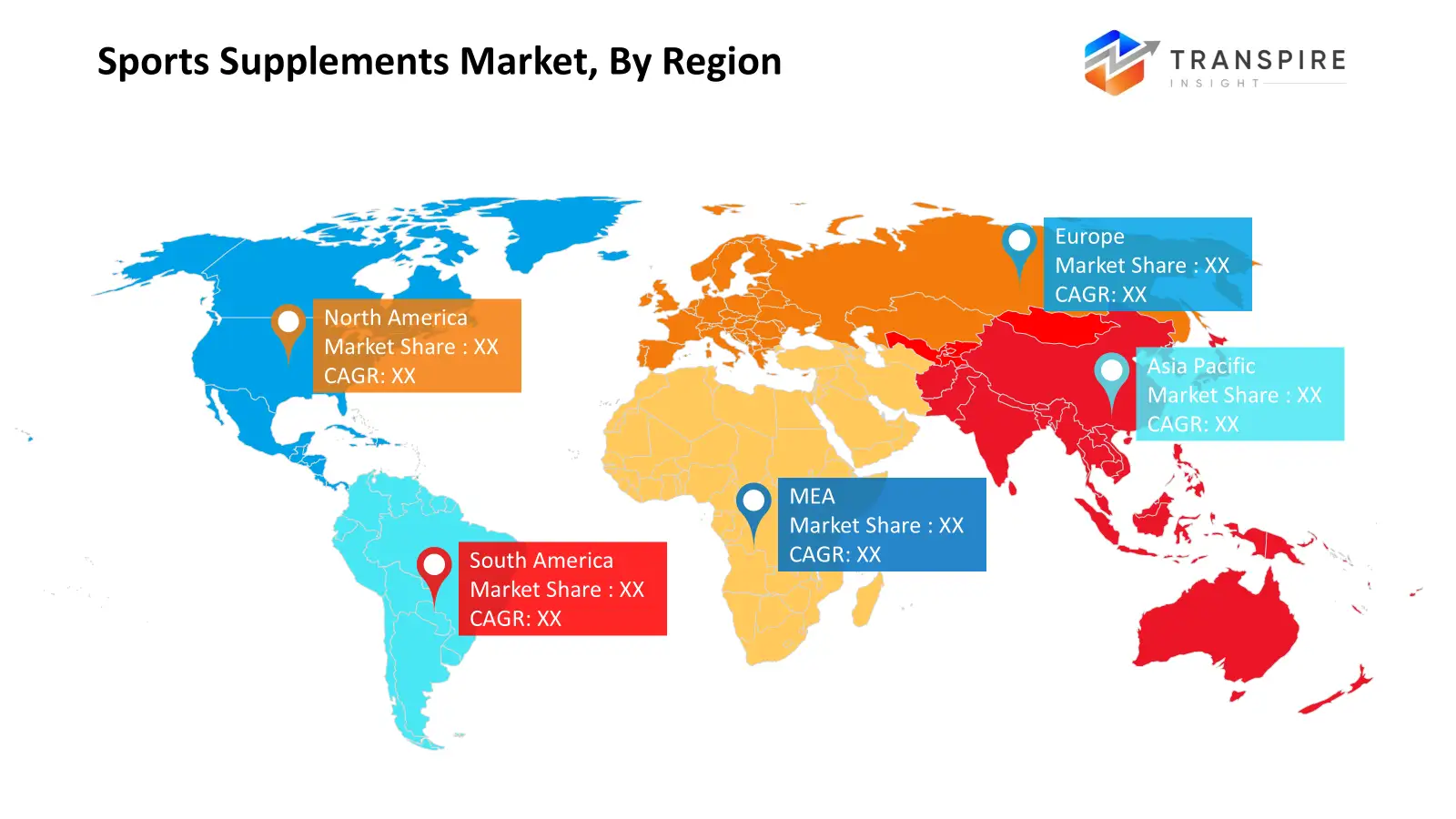
North America including the US, Canada, and Mexico is maintaining its position in the Sports Supplements market due to high-end consumer knowledge and distribution networks, and high consumption rates for both proteins and functionals, and the US is the biggest market in North America. Europe guided by countries like Germany, the United Kingdom, France, Spain, Italy, and many others is observed with steady growth fueled by stringent quality standards, regulatory support, health consciousness, and the increasing popularity of consuming plant-based proteins, amino acids, and functional supplements within the fitness market. Asia Pacific markets like Japan, China, Australia, New Zealand, South Korea, India, and the rest benefit hugely because the Asia Pacific is seeing tremendous voluminous growth owing to factors such as urbanization, higher disposable incomes for population living in the Asia Pacific, the fitness culture trend, and an increase in the number of youth using protein powder supplements, vitamins, and minerals.
Region like South America which includes countries like Brazil and Argentina has shown the growth potential as gym penetration is increasing and the health and nutritional awareness is improving. Convenient forms like bars, RTD liquids, and capsules are gaining acceptance. Middle East & Africa, comprising Saudi Arabia, UAE, South Africa, and other nations, experience a gradual growth pattern due to improvement in fitness lifestyles, an increase in discretionary income, as well as an increase in urban population that incorporates various supplements like protein powder, vitamins, and minerals in their regimen.
To learn more about this report, Download Free Sample Report
Recent Development News
- October 2025, Sports nutrition company Isopure, owned by Ireland-based Ireland dairy giant Glanbia, has extended its footprint to the UK market after launching its whey protein and collagen products, following its remarkable success in the U.S., representing growth and expansion to the high potential region in Europe.
(Source:https://www.nutraingredients.com/Article/2025/10/13/glanbias-isopure-launches-in-uk-market)
- In July 2025, Herbalife Nutrition introduced MultiBurn, which is a science-based weight loss and metabolism health benefit supplement containing clinical strength botanicals, highlighting advancements in sports-related health and wellness supplements.
|
Report Metrics |
Details |
|
Market size value in 2025 |
USD 24.5 Billion |
|
Market size value in 2026 |
USD 28 Billion |
|
Revenue forecast in 2033 |
USD 54.9 Billion |
|
Growth rate |
CAGR of 10.10% from 2026 to 2033 |
|
Base year |
2025 |
|
Historical data |
2021 – 2024 |
|
Forecast period |
2026 – 2033 |
|
Report coverage |
Revenue forecast, competitive landscape, growth factors, and trends |
|
Regional scope |
North America; Europe; Asia Pacific; Latin America; Middle East & Africa |
|
Country scope |
United States; Canada; Mexico; United Kingdom; Germany; France; Italy; Spain; Denmark; Sweden; Norway; China; Japan; India; Australia; South Korea; Thailand; Brazil; Argentina; South Africa; Saudi Arabia; United Arab Emirates |
|
Key company profiled |
Glanbia plc, PepsiCo, Inc., The Coca‑Cola Company, Abbott Laboratories, Herbalife Nutrition, Amway Corporation, Nestlé S.A., NOW Foods, GNC Holdings, LLC, BellRing Brands, Cellucor (Nutrabolt), MyProtein (THG plc), Dymatize Enterprises LLC, BSN (Bio‑Engineered Supplements & Nutrition, Inc.), Quest Nutrition (The Simply Good Foods Company) |
|
Customization scope |
Free report customization (country, regional & segment scope). Avail customized purchase options to meet your exact research needs. |
|
Report Segmentation |
By Product Type (Protein-Based Supplements, Non‑Protein Supplements, Vitamins & Minerals, Functional Ingredients), By Formulation (Powder, Ready‑to‑Drink (RTD) liquids, Bars & Chews, Capsules/Tablets, Softgels, Others), By Target Consumer (Professional Athletes, Bodybuilders / Strength Trainers, Fitness Enthusiasts / Gym‑Goers, Lifestyle Users / Recreational Users) and By Distribution Channel (Online Retail, Offline Retail, Others) |
Key Sports Supplements Company Insights
Glanbia plc has been a leader in the sports supplements industry through their extensive experience in producing varied supplements that include high-performance protein powders, amino acid supplements, ready-to-drink beverages, along with post-workout recovery supplements that fall under the Optimum Nutrition and BSN brands. The success can be attributed to their strong research capabilities, extensive network of suppliers, and their strong equity in sports supplements brands. Over time, they have been able to cover plant-based supplements through their expansion strategy in response to consumer demands. The wide geographical network enables them to keep generating revenue with their strong research capabilities.
Key Sports Supplements Companies:
- Glanbia plc
- PepsiCo, Inc.
- The Coca‑Cola Company
- Abbott Laboratories
- Herbalife Nutrition
- Amway Corporation
- Nestlé S.A.
- NOW Foods
- GNC Holdings, LLC
- BellRing Brands
- Cellucor (Nutrabolt)
- MyProtein (THG plc)
- Dymatize Enterprises LLC
- BSN (Bio‑Engineered Supplements & Nutrition, Inc.)
- Quest Nutrition (The Simply Good Foods Company)
Global Sports Supplements Market Report Segmentation
By Product Type
- Protein-Based Supplements
- Non‑Protein Supplements
- Vitamins & Minerals
- Functional Ingredients
By Formulation
- Powder
- Ready‑to‑Drink (RTD) liquids
- Bars & Chews
- Capsules/Tablets
- Softgels
- Others
By Target Consumer
- Professional Athletes
- Bodybuilders / Strength Trainers
- Fitness Enthusiasts / Gym‑Goers
- Lifestyle Users / Recreational Users
By Distribution Channel
- Online Retail
- Offline Retail
- Others
Regional Outlook
- North America
- United States
- Canada
- Mexico
- Europe
- Germany
- United Kingdom
- France
- Spain
- Italy
- Rest of Europe
- Asia Pacific
- Japan
- China
- Australia & New Zealand
- South Korea
- India
- Rest of Asia Pacific
- South America
- Brazil
- Argentina
- Rest of South America
- Middle East & Africa
- Saudi Arabia
- United Arab Emirates
- South Africa
- Rest of the Middle East & Africa
Frequently Asked Questions
Find quick answers to common questions.
The approximate Sports Supplements Market size for the market will be USD 54.9 billion in 2033.
Key segments for the Sports Supplements Market are By Product Type (Protein-Based Supplements, Non‑Protein Supplements, Vitamins & Minerals, Functional Ingredients), By Formulation (Powder, Ready‑to‑Drink (RTD) liquids, Bars & Chews, Capsules/Tablets, Softgels, Others), By Target Consumer (Professional Athletes, Bodybuilders / Strength Trainers, Fitness Enthusiasts / Gym‑Goers, Lifestyle Users / Recreational Users) and By Distribution Channel (Online Retail, Offline Retail, Others).
Major Sports Supplements Market players are Glanbia plc, Abbott Laboratories, Herbalife Nutrition, PepsiCo, Inc., Nestlé S.A.l.
The North America region is leading the Sports Supplements Market.
The CAGR of the Sports Supplements Market is 10.10%.
- Glanbia plc
- PepsiCo, Inc.
- The Coca‑Cola Company
- Abbott Laboratories
- Herbalife Nutrition
- Amway Corporation
- Nestlé S.A.
- NOW Foods
- GNC Holdings, LLC
- BellRing Brands
- Cellucor (Nutrabolt)
- MyProtein (THG plc)
- Dymatize Enterprises LLC
- BSN (Bio‑Engineered Supplements & Nutrition, Inc.)
- Quest Nutrition (The Simply Good Foods Company)
Recently Published Reports
-
Apr 2026
Baby Infant Formula Market
Baby Infant Formula Market Size, Share & Analysis Report By ype (Infant Milk, Follow On Milk, Specialty Baby Milk, Growing-Up Milk), By Ingredient (Carbohydrate, Fat, Protein, Minerals, Vitamins, and Others), By Product Form (Powder, Liquid, and Ready-to-feed), By Distribution Channels (Supermarket/Hypermarket, Specialty Store, Pharmacies, Online Retail, and Others), and Geography (North America, Europe, Asia-Pacific, Middle East and Africa, South and Central America), 2021 - 2031
-
Apr 2026
Edible Insects for Animal Feed Market
Edible Insects for Animal Feed Market Size, Share & Analysis Report By Type (Insect Powder, Insect Meal, Insect Bar, Insect Paste, Insect Oil, and Others), By Insect Type (Beetles, Cricket, Caterpillar, Hymenoptera, Orthoptera, Tree Bugs, and Others), By Application (Livestock, Pet Food, and Aquaculture), By Livestock Type (Poultry, Swine, and Others), and Geography (North America, Europe, Asia-Pacific, Middle East and Africa, South and Central America), 2021 - 2031
-
Apr 2026
Food Industry Disinfection and Bacterial Control Market
Food Industry Disinfection and Bacterial Control Market Size, Share & Analysis Report By Type (Chemical Disinfectants, Physical Disinfectants, and Biocides and Antimicrobials), By Application (Food Processing Equipment Surface Disinfection, Food Preparation Areas Surface Disinfection, Storage Areas Surface Disinfection, Anti-microbial Coatings Food Preservation, and Preservative Solutions Food Preservation), By End User (Meat and Poultry Processing, Dairy Processing, Seafood Processing, Bakery and Confectionery, Restaurants and Commercial Kitchens, and Food Service Providers), By Sales Channel (Online, Offline), and Geography (North America, Europe, Asia-Pacific, Middle East and Africa, South and Central America), 2021 - 2031
-
Apr 2026
Freeze Dried Food Market
Freeze Dried Food Market Size, Share & Analysis Report By Product Type (Fruits, Vegetables, Freeze-Dried Dairy Products, Freeze-Dried Meat and Seafood, Freeze-Dried Pet Food, and Prepared Meal), By Nature (Organic, and Conventional), By Form (Powdered, Granules, and Diced), By End Use (Breakfast Cereals, Dairy Products, Bakery & Confectionery, Nutritional Bars & Supplements, Powdered Beverages, Snacks, and Retail (Household)), and Geography (North America, Europe, Asia-Pacific, Middle East and Africa, South and Central America), 2021 - 2031