

South Korea Vaginal Pessary Market Size & Forecast:
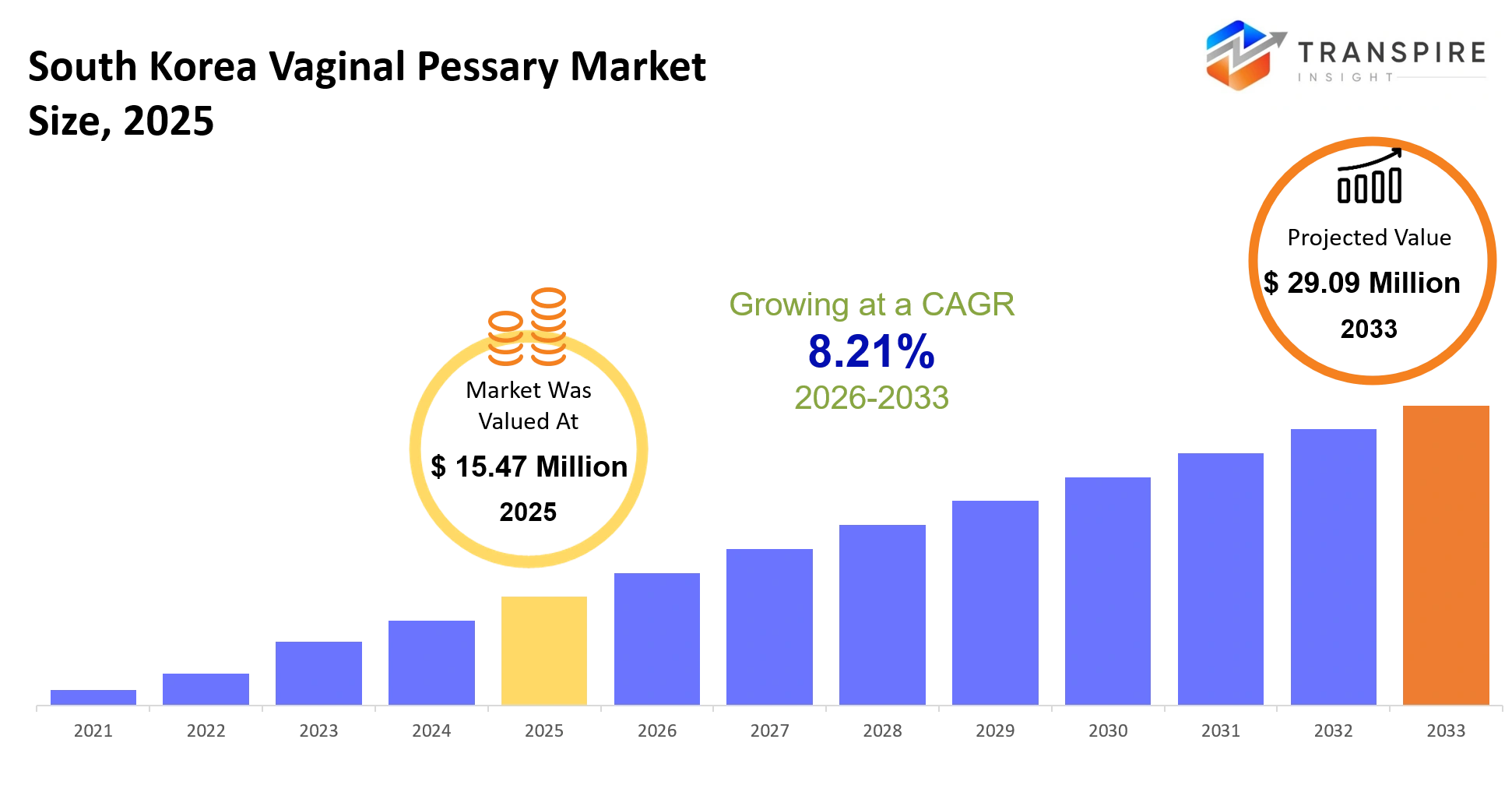
- South Korea Vaginal Pessary Market Size 2025: USD 15.47 Million
- South Korea Vaginal Pessary Market Size 2033: USD 29.09 Million
- South Korea Vaginal Pessary Market CAGR: 8.21%
- South Korea Vaginal Pessary Market Segments: By Type (Ring Pessary, Gellhorn Pessary, Cube Pessary, Donut Pessary, Others); By Application (Pelvic Organ Prolapse, Urinary Incontinence, Others); By End User (Hospitals, Gynecology Clinics, Others)
To learn more about this report,  Download Free Sample Report
South Korea Vaginal Pessary Market Summary
The South Korea Vaginal Pessary Market was valued at USD 15.47 Million in 2025. It is forecast to reach USD 29.09 Million by 2033. That is a CAGR of 8.21% over the period.
South Korea’s vaginal pessary market sort of revolves around non surgical medical devices that are put into the vagina to help keep pelvic organs in place when prolapse shows up, or when incontinence is a problem, so symptoms can be managed without going straight into surgery right away. For day to day use, it really tends to support aging women who like outpatient care more, and also want steadier, long term symptom control, not all those repeated hospital loops. Over the past five years, the market has shifted in a more structural way from surgery first treatment paths toward more conservative pelvic floor management, and this has been backed by broader acceptance of minimally invasive gynecological care, plus better clinical training. One big accelerant for adoption was the COVID-19 disruption. Elective pelvic surgeries were delayed, and that nudged both hospitals and patients toward device based management options instead. Then, with South Korea’s fast aging female population, the reliance on these non-invasive solutions grew. That, in turn, helped keep recurring demand stronger at clinics, and it also improved procurement for outpatient gynecology centers and long term care providers.
Key Market Insights
- The Seoul metropolitan area keeps around 40% of the South Korea Vaginal Pessary Market, mainly because medical hubs are more developed, and specialists are easier to find, so it feels more “ready” for patients.
- Meanwhile the southern provinces look like the quickest rise, projected 2026 to 2032, this is mostly tied to better geriatric care access and more neighborhood clinic penetration, not just bigger hospitals.
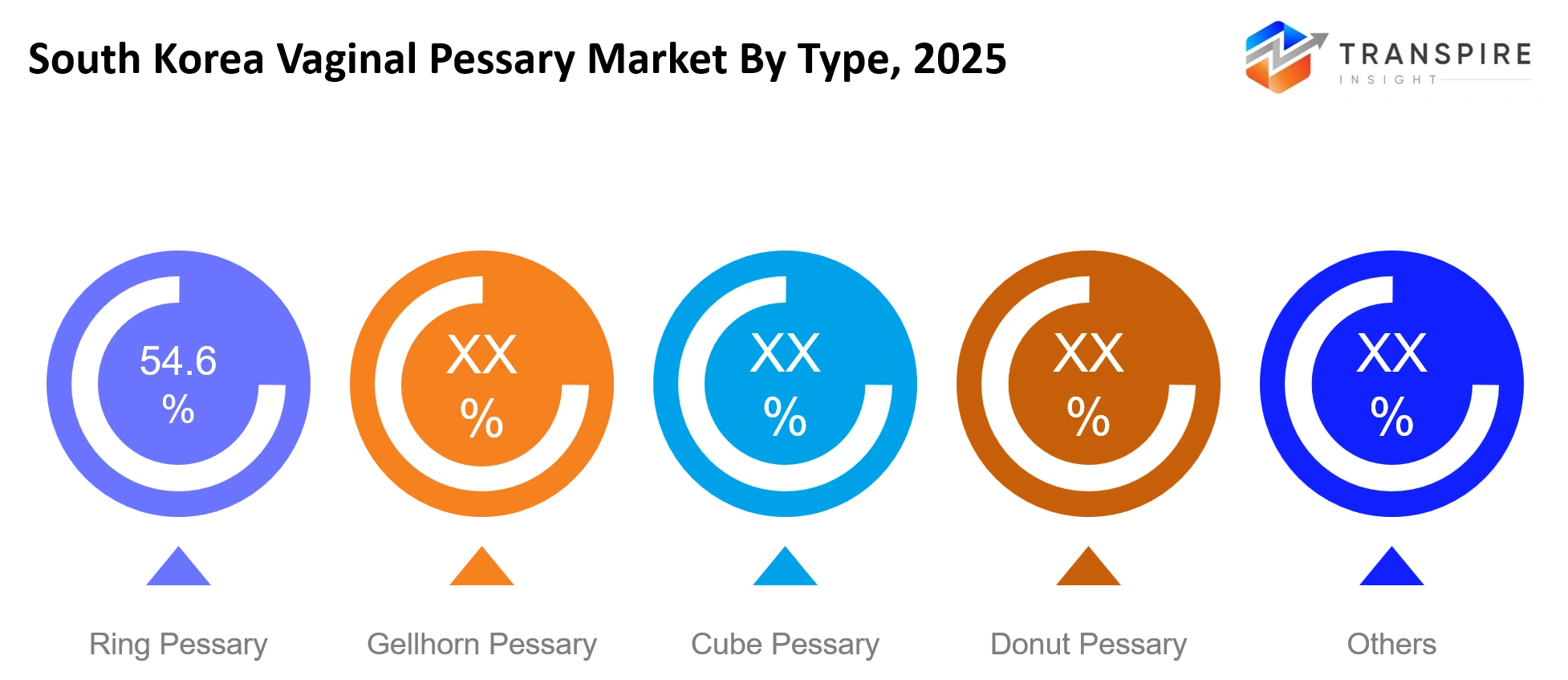
- For types, ring pessaries lead the market with close to 45% share, they’re simple to handle and they get picked again in repeat clinical adoption.
- Gel and silicone based pessaries sit in the second spot, backed by upgraded biocompatibility and patient comfort, which also helps adherence.
- Customized and soft fit pessaries are expected to grow fastest up to 2032, because personalization matters in pelvic floor therapy, and people tend to stick with what fits better.
- When it comes to use cases, pelvic organ prolapse management stays the main application, holding more than 50% share in the South Korea Vaginal Pessary Market, by a wide margin.
- Stress urinary incontinence is kind of the fastest-emerging application, propped up by more early diagnosis rates and a conservative treatment preference, overall.
- Hospitals and gynecology clinics are taking the lead in end-user adoption with close to 55% share, mainly because of procedural know-how, and they often get referrals too .
- Ambulatory surgical centers are also the fastest-growing end-user category since outpatient care shifts are slowly reducing dependence on hospitalization.
What are the Key Drivers, Restraints, and Opportunities in the South Korea Vaginal Pessary Market?
The primary growth driver is South Korea’s accelerating aging female population, together with a clinical shift toward more conservative pelvic organ prolapse management, you know, the kind that doesn’t jump straight to surgery. Over the last five years, gynecology departments have been adopting non-surgical intervention pathways more and more, to reduce the operating room burden, and also to lower post-surgical complications. This change kinda got reinforced after COVID, when hospital capacity constraints made it harder to schedule elective work, so physicians more often prioritized outpatient pessary fittings, instead of surgical correction. So, as a consequence, the recurring device replacement cycles plus follow-up consultations have helped support revenue stability for the South Korea Vaginal Pessary Market.
Still, the most significant barrier is inconsistent long-term patient adherence. It’s mostly because of discomfort, hygiene management complexity, and also limited standardized follow-up protocols in smaller clinics. And yes, it’s structural—like it comes from patient experience and clinical workflow gaps, not from any lack of product availability. A lot of patients stop within months, which drags down repeat purchase rates, and it also caps sustained market penetration even when clinicians view pessaries as clinically accepted.
The key opportunity is expanding customized silicone-based pessaries along with tele-gynecology follow-ups, especially across regional hospitals beyond Seoul. There are already pilot digital pelvic health programs in Busan and Daegu that are improving compliance monitoring, and that implies remote care integration could unlock the next growth phase for the South Korea Vaginal Pessary Market.
What Has the Impact of Artificial Intelligence Been on the South Korea Vaginal Pessary Market?
Artificial intelligence and advanced digital health tools are gradually reshaping the South Korea Vaginal Pessary Market, by changing how clinicians assess fit and even watch pelvic support therapies in outpatient settings. In a lot of major tertiary hospitals, AI assisted imaging and pelvic floor diagnostic software basically help gynecologists classify pelvic organ prolapse severity more precisely, which in turn boosts the right pessary choice at the start and cuts down early device mismatches. This kind of day to day operational tweaking streamlines clinic workflows and shortens consult time, especially in busy urban hospitals where things move fast
More predictive abilities are starting to show up as machine learning models get integrated with electronic health record systems. These models look at patient history, tissue response, and follow up behavior patterns, then estimate the chance of pessary intolerance or the risk of early stopping. That means earlier action, better care continuity, and fewer repeat outpatient visits, so the whole revenue stability of the South Korea Vaginal Pessary Market gets a quieter, steadier benefit
On the operational side, digital follow up platforms and tele gynecology systems are improving adherence tracking and supporting higher long term device retention by letting patients report symptoms remotely. Clinics that use structured digital monitoring often see better patient retention and smoother scheduling. As a result administrative costs drop, and physician throughput can improve without as many bottlenecks
Still, adoption is not fully smooth because standardized clinical datasets are limited, and digital integration can be inconsistent across smaller gynecology clinics. Many providers still lean on manual fitting routines, this reduces model precision and slows scalable rollout across the broader South Korea Vaginal Pessary Market.
Key Market Trends
- From 2020 up through 2024, a lot of South Korean hospitals kind of shifted pessary fitting work away from inpatient settings and into outpatient gynecology clinics, partly to cut down that surgical load. Not sure if it was the only cause but the pattern was pretty clear, less operating, more clinic level care.
- Around after 2023, AI assisted pelvic floor imaging tools started to gain momentum, and that helped improve prolapse classification accuracy across multiple tertiary hospitals around the Seoul metropolitan area. It seems like once clinicians trusted the measurements, adoption went faster.
- Also, tele-gynecology platforms rolled out more broadly across 2022–2025, so patients could do remote pessary follow ups, and clinic revisit frequency went down especially among older patient cohorts. In practice this made follow up logistics a lot easier, or at least less annoying.
- In 2024, machine learning adherence models came into the picture, and they help predict the risk of pessary discontinuation by using electronic health record data plus prior treatment history. The idea is to flag patients sooner, before they stop using it.
- Then, between 2021 and 2025, manufacturers increasingly moved toward medical grade silicone materials, which generally improved durability and also reduced replacement frequency in everyday clinical use.
- Global players like CooperSurgical and Boston Scientific, got a bit more serious about hospital partnerships in Korea after 2022 , mainly so device procurement channels could stretch out further.
- In 2023 they also started insurance reimbursement talks around conservative pelvic organ prolapse treatments, and that sort of back-and-forth made institutions more ready to adopt pessary solutions.
- Then in secondary cities like Busan and Daegu adoption seemed faster after 2024, because more money went into geriatric outpatient infrastructure investments, not just in major areas but also around them.
South Korea Vaginal Pessary Market Segmentation
By Type :
Ring pessary is still widely used for mild ,and moderate pelvic organ prolapse support, mostly because it is fairly easy to put in and then take out. Gellhorn pessary tends to be chosen for more advanced prolapse, since it gives stronger structural retention, and that part matters. Cube pessary offers a kind of higher suction based support, and it’s generally used for more complex presentations, often when patients are managed in specialist gynecology settings.
Donut pessary helps with moderate prolapse care too, with a stable fit and a longer wear period. There are also other styles, like soft silicone variations which are meant to feel gentler, allow a flexible fit and, in practice, reduce irritation during extended clinical use, especially in outpatient care environments.
To learn more about this report, Download Free Sample Report
By Application :
Pelvic organ prolapse stays the main application, it keeps needing internal structural support so the organs don’t sink as much, and daily physical function looks better too. Urinary incontinence management often uses a pessary support setup to help improve urethral positioning, which in turn reduces leakage during movement, and during regular activity as well.
Other uses can include post-surgical pelvic support, plus a kind of temporary stabilization for patients who are not really eligible for surgery. This is especially common in aging population groups, and it’s typically handled through outpatient gynecology care systems, across hospitals and clinics.
By End User :
Hospital settings still show up as the main end user, mostly because there’s specialist availability, the diagnostic imaging support is right there, and the fitting process is pretty structured for complex situations that need close medical supervision. In gynecology clinics, outpatient pessary fitting happens, then there are scheduled check ins, for sustained long term management
Other end users are ambulatory care centers and long term care facilities too, they help aging patients who need routine device maintenance and occasional product replacement, while clinicians keep an eye on things through clinical monitoring and established care protocols.
What are the Key Use Cases Driving the South Korea Vaginal Pessary Market?
Pelvic organ prolapse management is still basically the main use case behind the South Korea Vaginal Pessary Market, because more and more aging women seem to prefer non-surgical support. They want help with discomfort, trouble moving , and limitations in everyday activities, so clinics keep leaning on pessaries. Hospitals and gynecology clinics use these devices to delay or sometimes even skip surgery, which in turn boosts the chance that doctors will keep recommending them, plus it pulls in more repeat follow-up visits.
More and more expanding use cases are showing up too, like urinary incontinence management and post-surgical pelvic stabilization. Both areas are getting momentum in outpatient gynecology clinics. In practice, these uses support patients who require temporary structure holding or longer-term support. It helps during recovery from a procedure, or when someone is dealing with early-stage pelvic floor weakness , without needing invasive intervention.
Then there are emerging use cases as well, such as tele-gynecology monitoring for remote follow-ups. Also AI-supported fitting tools are starting to gain attention, mainly because they help with picking the right device more accurately. Preventive pelvic floor care programs are getting noticed too, especially in urban health centers where early action matters for women who might be at risk of prolapse.
|
Report Metrics |
Details |
|
Market size value in 2025 |
USD 15.47 Million |
|
Market size value in 2026 |
USD 16.74 Million |
|
Revenue forecast in 2033 |
USD 29.09 Million |
|
Growth rate |
CAGR of 8.21% from 2026 to 2033 |
|
Base year |
2025 |
|
Historical data |
2021 - 2024 |
|
Forecast period |
2026 - 2033 |
|
Report coverage |
Revenue forecast, competitive landscape, growth factors, and trends |
|
Country scope |
South Korea |
|
Key company profiled |
CooperSurgical, MedGyn, Panpac Medical, Personal Medical Corp, Dr Arabin, Integra LifeSciences, Smiths Medical, Coloplast, B. Braun, Cook Medical, Uromed, Sterimed, Kangge Medical, Wallach Surgical, Thomas Medical |
|
Customization scope |
Free report customization (country, regional & segment scope). Avail customized purchase options to meet your exact research needs. |
|
Report Segmentation |
By Type (Ring Pessary, Gellhorn Pessary, Cube Pessary, Donut Pessary, Others); By Application (Pelvic Organ Prolapse, Urinary Incontinence, Others); By End User (Hospitals, Gynecology Clinics, Others) |
Which Regions are Driving the South Korea Vaginal Pessary Market Growth?
Seoul Capital Area is basically leading the South Korea Vaginal Pessary Market, mostly because there’s a dense web of tertiary hospitals and specialist gynecology centers, so access is kind of quick, and the whole pathway feels smoother. The area also has advanced diagnostic infrastructure that helps with more precise pelvic organ prolapse checks, plus earlier intervention, which is a big deal. On top of that, strong health insurance coverage plus faster outpatient procedure scheduling push adoption upward. And because the medical procurement ecosystem is already well set up, hospitals and clinics can keep getting advanced pessary devices without too much interruption.
Busan–Ulsan–Gyeongnam works as a stable second contributor, it keeps pace thanks to a large aging population and pretty consistent hospital investment cycles. Here, adoption is a bit different than Seoul, it’s less about diagnostic novelty and more about longer-term care needs, especially within industrial workforce communities. Regional hospitals tend to follow standardized treatment protocols that lean toward affordability, and also continuity of care. So demand stays steady, but it moves at a slower rhythm, which is still good for device suppliers because the pipeline doesn’t fully stall.
Then there are secondary cities like Daegu and Gwangju, they show the fastest growth momentum in the South Korea Vaginal Pessary Market. Since 2024, the expansion of outpatient gynecology clinics plus improved elderly care infrastructure has widened access to non-surgical pelvic treatments. Also the government, through decentralization efforts in healthcare services, has encouraged local adoption outside major metro hospitals. With this kind of shift, there are strong chances for new players to form distribution relationships, and expand clinic-level penetration from 2026–2033 without waiting too long.
Who are the Key Players in the South Korea Vaginal Pessary Market and How Do They Compete?
The South Korea Vaginal Pessary Market kinda looks moderately consolidated, like a few big names are buying most of what hospitals need, while smaller local distributors quietly help with clinic-level movement. In practice, competition is shaped less by price, more by that “feel” part of product comfort, the silicone material quality, and the way clinicians get trained so the fitting is correct. Also the whole regulatory approval path under South Korea’s MFDS framework matters a lot, it can slow or speed up market entry, so suppliers with solid compliance capability often win early when they aim at hospitals and outpatient gynecology centers.
CooperSurgical leans hard into clinical training and procedure support, so they end up stronger in hospital networks where correct pessary fitting plus follow-up outcomes are basically the priority. MedGyn Products sets itself apart with a wide gynecology portfolio, which makes bundled supply arrangements easier for clinics and, in turn, improves procurement efficiency. Boston Scientific meanwhile uses its strong hospital relationships and its minimally invasive know-how, and tries to plug necessary solutions into broader pelvic health treatment pathways, not only standalone usage.
Teleflex grows by leaning on distributor partnerships across Asia-Pacific, and the focus seems to be on expanding access into secondary cities where outpatient gynecology is picking up. Integra LifeSciences talks up product reliability and clinical support programs, which helps hospitals manage long-term pelvic organ support cases more consistently, even when staffing or turnover changes. Overall, these firms keep expanding through regional collaborations with Korean hospitals and distributor networks, and that helps them push penetration beyond Seoul and catch outpatient-driven demand growth as it keeps rising.
Company List
- CooperSurgical
- MedGyn
- Panpac Medical
- Personal Medical Corp
- Dr Arabin
- Integra LifeSciences
- Smiths Medical
- Coloplast
- B. Braun
- Cook Medical
- Uromed
- Sterimed
- Kangge Medical
- Wallach Surgical
- Thomas Medical
Recent Development News
In March 2025, Vespexx secured a 2 billion KRW Pre-A investment from Inlight Ventures. The funding supports the company’s femtech platform expansion and strengthens Korea’s women’s health innovation ecosystem, which includes adjacent pelvic health and gynecological device markets such as vaginal pessaries.Source https://www.vespexx.com/
In February 2026, Organon entered into an agreement to exclusively license MIUDELLA®, a hormone-free intrauterine device developed by Sebela Pharmaceuticals. The deal strengthens Organon’s global women’s health portfolio and reinforces strategic investment momentum in non-hormonal reproductive and pelvic health device segments relevant to adjacent pessary-market applications.Source ttps://www.newswire.co.kr/
What Strategic Insights Define the Future of the South Korea Vaginal Pessary Market?
South Korea Vaginal Pessary Market is kind of sliding into a more outpatient oriented and digitally supported care set up, pushed by the aging demographics and a stronger liking for non surgical pelvic organ management. In the next 5–7 years, the real demand is expected to cluster around clinic based treatment networks, not just the hospital only kind of pathways. This shift is happening because healthcare systems keep moving routine gynecological care away from tertiary facilities. And as a result, repeat device use is likely to rise, plus it can lock in longer term, service led revenue that is tied to follow up care and patient monitoring, you know that kind of ongoing support.
There is also a less obvious risk in the background, namely clinical standardization gaps across smaller gynecology clinics. If fittings are handled inconsistently, that may drive up discontinuation rates and lower patient confidence in pessary based treatment. That could also slow adoption, even in areas where demographic demand is actually strong. At the same time though, there’s a decent opportunity forming around AI assisted pelvic assessment tools that get folded into tele gynecology platforms. This feels especially relevant in secondary cities like Daegu and Gwangju, where digitization in healthcare is picking up faster than before though still from a lower base.
So, market players should probably emphasize integrated care ecosystems, meaning they connect device supply with clinician training and digital follow up support. Instead of only chasing product sales, that broader approach should help them keep a more stable position in the changing South Korea Vaginal Pessary Market, with less volatility and better durability over time.
South Korea Vaginal Pessary Market Report Segmentation
By Type
- Ring Pessary
- Gellhorn Pessary
- Cube Pessary
- Donut Pessary
By Application
- Pelvic Organ Prolapse
- Urinary Incontinence
By End User
- Hospitals
- Gynecology Clinics
Frequently Asked Questions
Find quick answers to common questions.
The expected South Korea Vaginal Pessary Market size is USD 29.09 Million in 2033.
Key segments for the South Korea Vaginal Pessary Market are By Type (Ring Pessary, Gellhorn Pessary, Cube Pessary, Donut Pessary, Others); By Application (Pelvic Organ Prolapse, Urinary Incontinence, Others); By End User (Hospitals, Gynecology Clinics, Others).
Major South Korea Vaginal Pessary Market players are CooperSurgical, MedGyn, Panpac Medical, Personal Medical Corp, Dr Arabin, Integra LifeSciences, Smiths Medical, Coloplast, B. Braun, Cook Medical, Uromed, Sterimed, Kangge Medical, Wallach Surgical, Thomas Medical.
The South Korea Vaginal Pessary Market size is USD 15.47 Million in 2025.
The South Korea Vaginal Pessary Market CAGR is 8.21% from 2026 to 2033.
- CooperSurgical
- MedGyn
- Panpac Medical
- Personal Medical Corp
- Dr Arabin
- Integra LifeSciences
- Smiths Medical
- Coloplast
- B. Braun
- Cook Medical
- Uromed
- Sterimed
- Kangge Medical
- Wallach Surgical
- Thomas Medical
About the Authors

Pankaj Ghogare Patil
I am Pankaj Ghogare Patil, a Senior Research Analyst at Transpire Insight, specializing in the Pharmaceutical, Chemicals & Materials, Healthcare IT, and Biotechnology industry. My expertise lies in conducting comprehensive market research, analyzing industry trends, evaluating competitive landscapes, and translating complex data into actionable insights. At Transpire Insight, I closely follow emerging technologies, regulatory developments, and market innovations to create accurate, well-researched, and informative content that helps businesses and professionals make informed decisions. I am committed to producing credible, evidence-based articles that reflect industry best practices while making technical topics accessible and valuable for a broad audience.

Chakradhar Khansole
Chakradhar serves as the Research Director at Transpire Insight, bringing over 8 years of experience in technology, innovation, and strategic market intelligence. He specializes in transforming complex market data into actionable business insights that enable organizations to make informed, growth-oriented decisions. Recognized for his strategic vision and analytical expertise, Chakradhar leads high-impact research initiatives, delivering comprehensive market assessments, competitive intelligence, and forward-looking industry analysis.
Recently Published Reports
-
Apr 2026
AI in Diabetic Retinopathy Market
AI in Diabetic Retinopathy Market Size, Share & Analysis Report By Type (Screening AI Systems, Diagnostic AI Systems, and Predictive AI Models), By Application Segment (Hospitals, Ophthalmology Clinics, Diagnostic Centers, and Research and Development), and Geography (North America, Europe, Asia-Pacific, Middle East and Africa, South and Central America), 2021 - 2031
-
Apr 2026
Psychometric Tests Market
Psychometric Tests Market Size, Share & Analysis Report By Type (Personality Tests, Ability/Aptitude Tests, Skill/Knowledge Tests, and Others), By Application (Talent Acquisition and Talent Management), and Geography (North America, Europe, Asia-Pacific, Middle East and Africa, South and Central America), 2021 – 2031
-
Apr 2026
Rare Biological Sample Collection Market
Rare Biological Sample Collection Market Size, Share & Analysis Report By Type (Isolation Kits & Reagent, Blood Collection Tubes, and Others), By Application (Oncology, Transcriptomics, Pharmacogenomics, and Others), and Geography (North America, Europe, Asia-Pacific, Middle East and Africa, South and Central America), 2021 – 2031
-
Jul 2026
Diabetic Retinopathy Market
Diabetic Retinopathy Market Size, Share & Analysis Report By Type (Proliferative Diabetic Retinopathy, and Diabetic Macular Edema (DME)), By Treatment Type (Anti VEGF Drug, Steroid Implants, Laser Surgeries, and Vitrectomy), and Geography (North America, Europe, Asia-Pacific, Middle East and Africa, South and Central America), 2021 – 2031
Our Clients







