
Global Home Diagnostics Market Size & Forecast:
- Global Home Diagnostics Market Size 2025: USD 6.89 Billion
- Global Home Diagnostics Market Size 2033: USD 10.24 Billion
- Global Home Diagnostics Market CAGR: 5.08%
- Global Home Diagnostics Market Segments: By Type (Blood Glucose Monitors, Pregnancy & Fertility Tests, Cholesterol Test Kits, Infectious Disease Test Kits, Blood Pressure Monitors, Smart Home Diagnostic Devices, Others); By Application (Chronic Disease Monitoring, Pregnancy Monitoring, Infectious Disease Detection, Cardiovascular Health Monitoring, Wellness Tracking, Others); By End-User (Individuals, Elderly Population, Homecare Providers, Others); By Distribution (Pharmacies, Online Retail, Supermarkets, Specialty Healthcare Stores, Others)

To learn more about this report,  Download Free Sample Report
Global Home Diagnostics Market Summary:
The Global Home Diagnostics Market size is estimated at USD 6.89 billion in 2025 and is anticipated to reach USD 10.24 billion by 2033, growing at a CAGR of 5.08% from 2026 to 2033. The Global Home Diagnostics Market is progressing rapidly within the broader healthcare system. The state of technological innovation advancement, shifting consumer choices, and continuous adoptions characterizes it.
Earlier, the diagnostics market was primarily driven by the expansion of blood glucose monitors and pregnancy test kits. In recent years, this market has been expanding in scope to include advanced diagnostics such as lipid panels, infectious disease testing, and even genetic screening tools. The integration of digital health, paired with speedy infectious disease testing and even genetic screening tools.
Structural transition within the market is obvious in the shift from independent devices to combined, platform-based solutions that integrate diagnostics, data analytics, and telehealth services. The increase in connected health ecosystems allows for real-time data sharing with healthcare providers, fostering a more collaborative approach to patient care.
Key Market Insights:
- North America is the dominant region with a market share of 37%.
- This market is projected to grow to 10.24 billion by 2033.
- Patients can directly buy medical test tools from online as well as offline stores to regularly check their health.
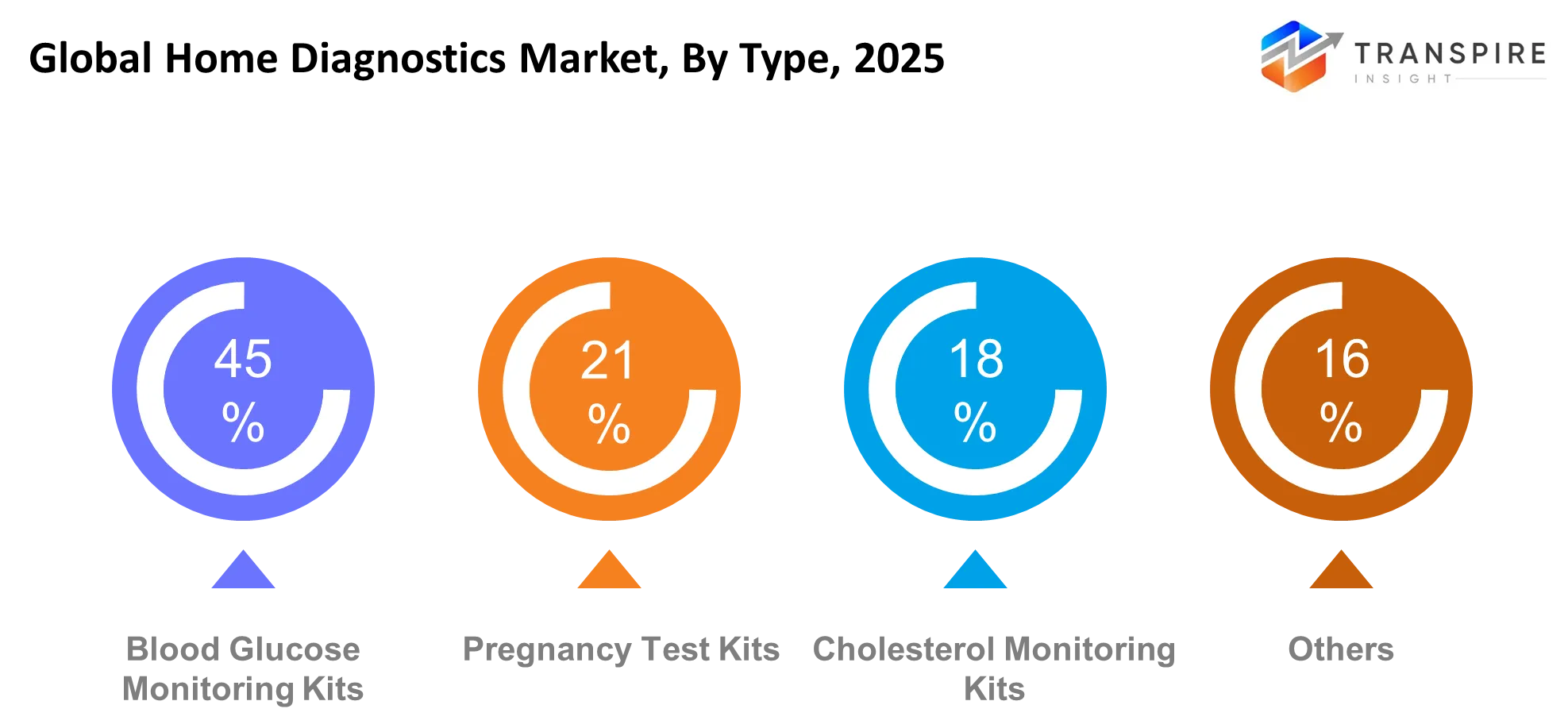
- Blood glucose monitoring kits are the dominant segment of this market, with a share of 45%.
- Pregnancy Test Kits have a market share of 21% at the home diagnostics centre.
- Cholesterol Monitoring Kits have a market share of 18% in the Global Home Diagnostics Market.
- The benefits of multi-disease testing kits are that they are more convenient.
What are the Key Drivers, Restraints, and Opportunities in the Global Home Diagnostics Market?
Drivers
There are many driving factors in this home diagnostic market. Nowadays, people are having chronic diseases due to unhealthy habits of eating junk food, not exercising regularly, etc. Heart disease and diabetes are very common forms of disease in today’s world. These conditions require patients to check their health numbers every day from home. People need the comfort of doing the tests at home instead of visiting the hospital, then waiting for their turn. This saves time and energy. Also, the equipment is available in a smaller size, so comparatively, it's not as expensive then the equipment used in hospitals.
Restraints
There is a higher chance of getting wrong results due to user error. And the other problem of this industry is that the government frequently checks the products. If there’s even a minor problem, they don’t approve. Because it's a matter of health. When kits do not meet these high standards, they get recalled (pulled from stores), which hurts company profits and consumer trust.
Opportunities
There are many opportunities in this field. Just like linking kits with telehealth is going to be one of the biggest opportunities. To connect directly with virtual doctors integrated with home tests. So, they can immediately see the results of home tests and prescribe medicines according to that. Expanding the business of test kits, such as different types of test tools, can be discovered.
What Has the Impact of Artificial Intelligence Been on the Global Home Diagnostics Market?
Home diagnostics are becoming much smarter and easier with the power of Artificial Intelligence (AI). Automation powered by AI takes advantage of the camera on the smartphone to read test strips. That gets rid of human error, and regular users will not misread their medical results. AI also resolves operational improvement by automatically updating digital medical records. It serves as a connector to telehealth, which reduces virtual doctor visits by 30% and makes it possible to complete electronic prescriptions quickly.
AI has great predictive power. It captures the trends in data from wearable devices rather than just presenting current numbers. This enables the software to anticipate future health issues and detect potentially hazardous circumstances, such as a heart problem or a low blood sugar level, before the patient experiences any symptoms.
Whether in a virtual hospital or at home, AI is automating the delivery of healthcare. AI-powered virtual hospitals and home healthcare. Machine learning algorithms can monitor more subtle changes in a patient's home health records, such as heart rate and behavior, and detect red flags hours or days before standard tests. New technologies are enabling telehealth to become more than just a video call, more of a powerful tool to monitor patients over time and to avert serious health events.
Key Market Trends:
- The top North American firms are Cresta, Open BB, and LlamaIndex.
- Increasing use of home diagnostic testing for ease of health monitoring.
- AI enhances diagnostic precision and accelerates disease identification.
- The increasing need for early disease detection and diagnosis is a component of preventive care.
- Digital health platforms can help to share diagnostic results remotely.
- Diagnostic capabilities for constant health monitoring have become part of wearable devices.
- Healthcare providers invest in new diagnostics, which help to cut down on delays.
- Advanced biomarker-based diagnostic tests are needed as a result of personalized medicine.
- Growing access to healthcare leads to increased uptake of diagnostics in emerging markets.
- Higher standards for regulation promote better and more reliable diagnostics.
Global Home Diagnostics Market Segmentation
By Type
The blood glucose monitors are the most popular category in the Global Home Diagnostics Market. It holds a market share of 45%. These devices are used by millions of people around the world who have diabetes to check their blood sugar levels daily. Patients can quickly check their blood sugar level with a finger prick or a continuous sensor attached to their arm to know whether their blood sugar is high or low, and what to do, and when to do it, to manage their diabetes.
Private and instant Pregnancy & Fertility Tests are most in demand. Simple plastic test strips are used at home by women to assess certain hormones in their urine to determine whether they are pregnant or to monitor their most fertile days for family planning. These easy-to-read kits remove any urgent need to go to a laboratory for initial testing.
Cholesterol Test Kits enable people to monitor their heart health at home. This segment has a market share of 18%. These kits need a small amount of blood to perform different fat level measurements in the body, including good cholesterol and bad cholesterol. Watching a person's blood sugar levels can help them adjust their daily eating habits or determine the effectiveness of their prescription drugs.
During a health emergency, there was a huge surge in the growth of Infectious Disease Test Kits, and it still plays an important role. These are the tests that are performed quickly, in just 15 minutes or less, and may be conducted at the nose or from saliva with simple swabs. They assist people in determining whether or not they have become infectious before leaving home or visiting a doctor.
Blood Pressure Monitors are easy-to-use electronic cuffs that fit around a person's arm or wrist to evaluate the force of the heart pumping blood. They are used at home by people with high blood pressure to help keep their blood pressure within a safe range. These electronic devices allow for the monitoring of dangerous situations, such as a heart attack or stroke, every day.
Smart Home Diagnostic Devices are high-tech devices that communicate directly with smartphone apps through Bluetooth. In this category are smart scales, connected thermometers, and patches you wear around your body to monitor your vital signs for the whole day. Over time, they automatically store your daily health data, making it convenient to display to your digital doctor.
Other tests include special test strips for kidneys, home colon screening kits, and drug detection panels. This category includes special wellness tests that are not classified into the general categories but are becoming more popular. They give a rapid initial screening of certain health indicators before a patient's formal laboratory testing.
To learn more about this report, Download Free Sample Report
By Application
The largest application area is for Chronic Disease Monitoring, as these illnesses are a long-term concern. People with diseases such as diabetes, kidney disease, or asthma monitor their health parameters at home on a daily basis with the help of home kits. This continuous monitoring enables people to control their lifelong diseases safely without having to remain in a hospital room.
During Pregnancy Monitoring, the emphasis is on supporting women's reproductive health, and the interventions are on identifying reproductive milestone targets at home. This app has a feature to check out the ovulation schedule for trying to conceive, confirm the pregnancy early on, and monitor the essentials throughout the entire nine months. Parenting is a stressful experience, and it provides peace of mind for families by providing them with swift answers in their parenting journey.
The Infectious Disease Detection application is about knowing whether you have an infectious disease, caused by a virus or bacteria, that can be spread to others quickly. If someone catches a cold or respiratory virus at home, he or she can begin to isolate as soon as possible and not infect other people in the workplace or family. It is crucial as the first line of defense in public health.
Cardiovascular Health Monitoring refers to the monitoring of any heart and blood vessel-related aspect. Patients use at-home tools to monitor their pulse rates, watch for irregular heartbeats, and monitor blood pressure on a daily basis. The application is especially important for older people or people who have recently had a big heart operation, and they should keep a close eye on their bodies.
Wellness Tracking is an application that is selected by people who are focused on wellness and want to optimize their daily habits. This includes taking a home vitamin deficiency test, a food sensitivity test, or a hormone balance test. It is also very popular among the younger generation as they are concerned about improving their fitness, sleep, and overall energy levels before issues begin.
Others refer to certain clinical testing sections, such as toxic substance detection, heavy metal analysis, or skin condition testing via specialized testing kits. This application type deals with specific niche testing requirements that arise within a particular workplace rule, environmental issue, or beauty regimen. It's the adaptable, tailor-made aspect of the home healthcare business.
By End-User
People are a significant percentage of the market; they are the common people who seek to control their own health. Usually, tech-savvy adults, busy parents, and fitness enthusiasts are the users of these devices who value speed, comfort, and private data. They purchase their own kits for immediate results, so they do not have to wait days to get to a clinic.
The elderly population is also a significant end-user group due to increased health issues experienced by these users and the difficulty they have in getting to clinics. Simple home diagnostic tools can help seniors keep track of things such as high blood pressure or heart problems while sitting up in their favorite chair. It assists them to live independently longer, while also informing their medical teams.
Homecare Providers & Others: These include visiting nurses, family caregivers, and remote health assistants who care for patients at home. They are using portable diagnostic equipment to monitor a patient's vital signs while visiting their home, to ensure that treatments are effective. Also included in this segment are local small practices that are using consumer-friendly kits to obtain quick data.
By Distribution
The pharmacies are still the place that people go to buy home diagnostic kits, as it is the traditional and most trusted place. Consumers can stroll right into small, independent stores or even large, corporate retail drugstores, and purchase blood pressure machines, pregnancy kits, or glucose meters on the spot. It's also reassuring for buyers to have a pharmacist on hand to answer any questions they may have about the test.
The top growing distribution channel in the market is now online retail. Shopping on digital e-commerce platforms, official company websites, or online pharmacies is popular among consumers who can easily read reviews and compare prices. Getting home tests online also provides maximum privacy, as the plain packages are sent directly to the buyer's door.
For consumers who go shopping at the supermarket regularly, it is very convenient to buy health tools from the supermarket and hypermarket. Today, numerous giant grocery stores have entire aisles dedicated to wellness products that carry staples such as basic thermometers and fast flu tests. Purchasing common items that are used in daily health care as easy as shopping for cereal.
Specialty Healthcare Stores specialize in the sale of medical equipment to the public, made for use in healthcare settings. Unlike grocery stores, these brick-and-mortar stores have advanced monitoring systems, high-end wearable sensors, and special testing kits that are not found in grocery stores. When shoppers are seeking an affordable option for acquiring long-lasting equipment endorsed by their specialist physicians, they head for these specialized storefronts.
Others examine other locations for the provision of diagnostic kits (direct workplace wellness programs, school health offices, automated vending machines in transit hubs). This includes government public health programs delivering free test kits to communities during the virus season. It makes it easier to access testing tools for those who may not go to a regular store.
What are the Key Use Cases Driving the Global Home Diagnostics Market?
Every day monitoring of blood sugar levels for diabetes management is the primary driver behind the growth of home testing. This persistent disease necessitates people to check their blood levels regularly, and as a result, millions of people depend on routine finger pricks and wearable sensors to keep an eye on their blood levels at home without going to a clinic.
In addition to blood sugar, increasingly, families rely on home kits to monitor reproductive milestones or even to check for seasonal illness. Women depend on private tests for pregnancy confirmation and monitoring of fertility, and regular households depend on rapid nasal swabs to diagnose the flu, RSV, or other viruses in minutes.
Last but not least, consumers are starting to care about preventive wellness tracking. Younger individuals are now purchasing specialized home tests to observe their hormone balances, monitor their cholesterol, and even check for vitamin deficiencies due to the quick results, which are being used to make a quiet adjustment in their daily eating, sleeping, and fitness programs.
Report Metrics
|
Report Metrics |
Details |
|
Market size value in 2025 |
USD 6.89 Billion |
|
Market size value in 2026 |
USD 7.24 Billion |
|
Revenue forecast in 2033 |
USD 10.24 Billion |
|
Growth rate |
CAGR of 5.08% from 2026 to 2033 |
|
Base year |
2025 |
|
Historical data |
2021 - 2024 |
|
Forecast period |
2026 - 2033 |
|
Report coverage |
Revenue forecast, competitive landscape, growth factors, and trends |
|
Regional scope |
United States; Canada; Mexico; United Kingdom; Germany; France; Italy; Spain; Denmark; Sweden; Norway; China; Japan; India; Australia; South Korea; Thailand; Brazil; Argentina; South Africa; Saudi Arabia; United Arab Emirates |
|
Key company profiled |
Abbott Laboratories, Roche Diagnostics, Siemens Healthineers, Philips Healthcare, Omron Healthcare, Becton Dickinson, QuidelOrtho, Everlywell, LetsGetChecked, ACON Laboratories, iHealth Labs, Bio-Rad Laboratories, Danaher, Dexcom, Medtronic. |
|
Customization scope |
Free report customization (country, regional & segment scope). Avail customized purchase options to meet your exact research needs. |
|
Report Segmentation |
By Type (Blood Glucose Monitors, Pregnancy & Fertility Tests, Cholesterol Test Kits, Infectious Disease Test Kits, Blood Pressure Monitors, Smart Home Diagnostic Devices, Others); By Application (Chronic Disease Monitoring, Pregnancy Monitoring, Infectious Disease Detection, Cardiovascular Health Monitoring, Wellness Tracking, Others); By End-User (Individuals, Elderly Population, Homecare Providers, Others); By Distribution (Pharmacies, Online Retail, Supermarkets, Specialty Healthcare Stores, Others) |
Which Regions are Driving the Global Home Diagnostics Market Growth?
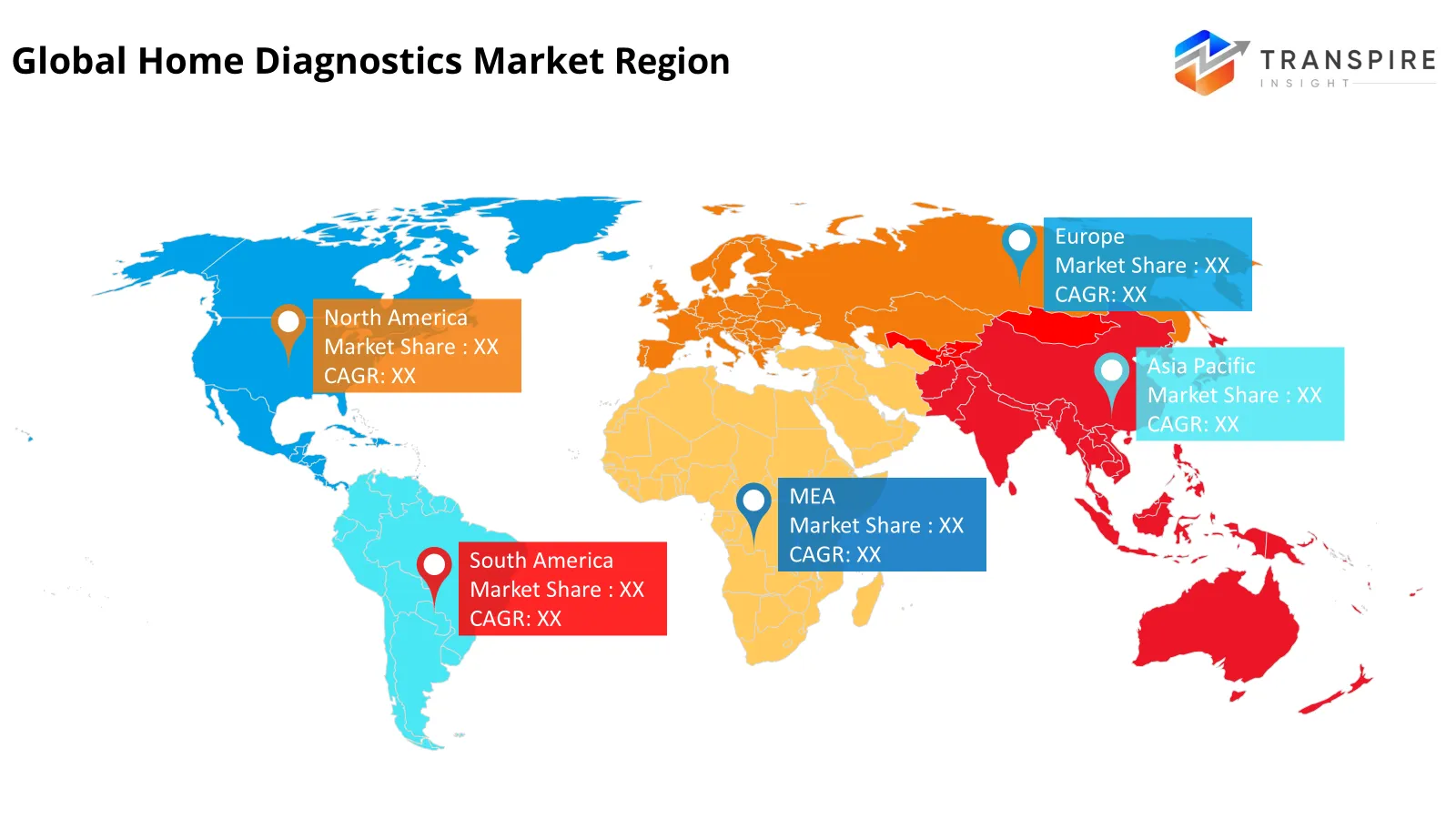
North America accounts for the largest market share, 37%, of the global market. The advanced healthcare system, large consumer spending power, and early adoption of digital health tools account for this massive dominance. However, in the United States, a significant investment has been made by the government, and a large population with chronic diseases such as diabetes continues to drive consistent demand for home testing kits. Some of the major companies of the Global Home Diagnostics Market include Trividia Health, Labcorp, and OraSure Technologies. These are the companies that are helping in the development of North America.
ACON Laboratories has introduced the Flowflex® Plus RSV + Flu A/B + COVID 4-in-1 Home Test to the U.S. market. It is the first FDA-cleared home test to detect three viral pathologies – RSV, Influenza A and B, and COVID-19 - in a single test. It will enable a family to detect several respiratory infections at home without having to travel to a clinic, which will make it more convenient and will help meet the rising demand for testing solutions that can be carried out at home.
Europe accounted for 29% of the Global Home Diagnostics Market. Home diagnostics is the second largest market in Europe with 29% share. European countries are well-supported by strict but supportive health regulations, high clinical standards, and well-developed public healthcare systems, which underpin growth across European countries. Moreover, Europe's rapidly ageing population demands readily available everyday medical monitoring devices at home in large numbers. Roche, Siemens Healthineers, QIAGEN, and SYNLAB are some of the prominent companies. Roche received approval from European and U.S. health regulators for its new rapid PCR test that can detect Bordetella infections, including whooping cough, in about 15 minutes. The approval allows the test to be used in healthcare settings for faster diagnosis and treatment. The test delivers PCR-accurate results in just 15 minutes and is designed for use in GP practices and emergency departments. This development supports faster diagnosis, quicker treatment decisions, and wider adoption of decentralized diagnostic testing across Europe.
The Asia Pacific region is the fastest- growing region with a CAGR of 5.08%. It has the largest population base, and the sudden transition from COVID focus to preventive medicine and online pharmacies will make it the world's most dynamic growth hub. Some of the prominent players of the Global Home Diagnostics Market in the Asia- Pacific region are Sysmex Corporation, Mindray, Trivitron Healthcare, and SD Biosensor. Introduction of the Shield Multi-Cancer Detection Test is a very important change in this part of the world. In March 2026, Guardant Health launched the Shield Multi-Cancer Detection Test in the Asia-Pacific market. The blood-based test is designed to help detect multiple types of cancer at an early stage through a simple blood sample.
To learn more about this report, Download Free Sample Report
Who are the Key Players in the Global Home Diagnostics Market and how do they Compete?
The Global Home Diagnostics Market is competitive as consumers demand tests that are cost-effective, user-friendly, and accurate. Companies race by creating quicker test kits, adding digital components, and extending products by including pharmacies, online, and healthcare collaborations. Leading companies in the market include diabetes monitoring, infectious disease testing, pregnancy testing, and connected health devices companies. Today, innovation and convenience are key to success.
Abbott Labs is committed to innovation, specifically in glucose monitoring and at-home health monitoring. The company stands out with the technology of connected devices that share health data in real time with patients and decrease the number of trips to the clinic. Abbott grows through the introduction of new monitoring technologies and its expansion in both developed and emerging markets. Roche Diagnostics also has a similar innovation strategy, but has a more diverse portfolio of home diagnostics, including chronic disease and infectious disease diagnostics. It has a distribution network throughout the world, which enables the company to access a large customer base.
Siemens Healthineers differentiates itself with innovative digital diagnostic technologies and easy-to-use home diagnostics solutions. The company stands out with digital health platforms that are deeply integrated with diagnostics. In the meantime, SD Biosensor is working on the development of low-cost rapid testing products, particularly for infectious diseases. The cost-effective strategy allows it to rapidly penetrate the Asia-Pacific and international markets. The two firms still grow their businesses with new product developments, collaboration, and expansion into new markets.
Key Global Home Diagnostics Market Companies
- Abbott Laboratories
- Roche Diagnostics
- Siemens Healthineers
- Philips Healthcare
- Omron Healthcare
- Becton Dickinson
- QuidelOrtho
- Everlywell
- LetsGetChecked
- ACON Laboratories
- iHealth Labs, Bio-Rad Laboratories
- Danaher
- Dexcom
- Medtronic
Recent Development News
In April 2026, healthcare providers across the Asia-Pacific region expanded the adoption of next-generation molecular diagnostic technologies and advanced immunoassays. This trend is improving early disease detection and driving demand for decentralized and home-based diagnostic solutions. https://andamanmed.com
In June 2025, Amazon India, in partnership with Orange Health Labs, launched Amazon Diagnostics, an at-home diagnostics service across six Indian cities. The service allows customers to book more than 800 diagnostic tests, schedule doorstep sample collection, and receive digital reports through the Amazon app, improving access to convenient home-based healthcare testing. https://www.aboutamazon.in
What Strategic Insights Define the Future of the Health Diagnostics Market?
The Health Diagnostics Market is moving toward faster, smarter, and more convenient testing. More healthcare providers and patients are using digital tools, AI-based analysis, and at-home diagnostic solutions to detect diseases earlier and improve treatment outcomes. The growing focus on preventive healthcare and personalized medicine is also driving demand for advanced diagnostic technologies.
One hidden risk is the increasing concern over data privacy and cybersecurity. As more diagnostic devices become connected to digital platforms, protecting patient information becomes more important. A major data breach could reduce consumer trust and slow market adoption.
An emerging opportunity is the expansion of home-based and remote diagnostic testing. Consumers are increasingly looking for convenient ways to monitor their health without visiting hospitals or clinics. Companies should focus on developing accurate, affordable, and easy-to-use diagnostic solutions while strengthening digital security and expanding access to underserved regions to support long-term growth.
Global Home Diagnostics Market Segmentation
By Type
- Blood Glucose Monitors
- Pregnancy & Fertility Tests
- Cholesterol Test Kits
- Infectious Disease Test Kits
- Blood Pressure Monitors
- Smart Home Diagnostic Devices
- Others
By Application
- Chronic Disease Monitoring
- Pregnancy Monitoring
- Infectious Disease Detection
- Cardiovascular Health Monitoring
- Wellness Tracking, Others
By End-User
- Individuals
- Elderly Population
- Homecare Providers
- Others
By Distribution
- Pharmacies
- Online Retail
- Supermarkets
- Specialty Healthcare Stores
- Others
Regional Outlook
North America
- United States
- Canada
- Mexico
Europe
- Germany
- United Kingdom
- France
- Spain
- Italy
- Rest of Europe
Asia Pacific
- Japan
- China
- Australia & New Zealand
- South Korea
- India
- Rest of Asia Pacific
South America
- Brazil
- Argentina
- Rest of South America
Middle East & Africa
- Saudi Arabia
- United Arab Emirates
- South Africa
- Rest of the Middle East & Africa
Frequently Asked Questions
Find quick answers to common questions.
The expected global home diagnostics market size for the market will be USD 10.24 billion in 2033.
Key segments for the global home diagnostics market are By Type (Blood Glucose Monitors, Pregnancy & Fertility Tests, Cholesterol Test Kits, Infectious Disease Test Kits, Blood Pressure Monitors, Smart Home Diagnostic Devices, Others); By Application (Chronic Disease Monitoring, Pregnancy Monitoring, Infectious Disease Detection, Cardiovascular Health Monitoring, Wellness Tracking, Others); By End-User (Individuals, Elderly Population, Homecare Providers, Others); By Distribution (Pharmacies, Online Retail, Supermarkets, Specialty Healthcare Stores, Others).
Major global home diagnostics market players are Abbott Laboratories, Roche Diagnostics, Siemens Healthineers, Philips Healthcare, Omron Healthcare, Becton Dickinson, QuidelOrtho, Everlywell, LetsGetChecked, ACON Laboratories, iHealth Labs, Bio-Rad Laboratories, Danaher, Dexcom, and Medtronic.
The global home diagnostics market size is USD 7.24 billion in 2026.
The global home diagnostics market is expected to grow 5.08% during the forecast period.
- Abbott Laboratories
- Roche Diagnostics
- Siemens Healthineers
- Philips Healthcare
- Omron Healthcare
- Becton Dickinson
- QuidelOrtho
- Everlywell
- LetsGetChecked
- ACON Laboratories
- iHealth Labs, Bio-Rad Laboratories
- Danaher
- Dexcom
- Medtronic
About the Authors

Pankaj Ghogare Patil
I am Pankaj Ghogare Patil, a Senior Research Analyst at Transpire Insight, specializing in the Pharmaceutical, Chemicals & Materials, Healthcare IT, and Biotechnology industry. My expertise lies in conducting comprehensive market research, analyzing industry trends, evaluating competitive landscapes, and translating complex data into actionable insights. At Transpire Insight, I closely follow emerging technologies, regulatory developments, and market innovations to create accurate, well-researched, and informative content that helps businesses and professionals make informed decisions. I am committed to producing credible, evidence-based articles that reflect industry best practices while making technical topics accessible and valuable for a broad audience.

Chakradhar Khansole
Chakradhar serves as the Research Director at Transpire Insight, bringing over 8 years of experience in technology, innovation, and strategic market intelligence. He specializes in transforming complex market data into actionable business insights that enable organizations to make informed, growth-oriented decisions. Recognized for his strategic vision and analytical expertise, Chakradhar leads high-impact research initiatives, delivering comprehensive market assessments, competitive intelligence, and forward-looking industry analysis.
Recently Published Reports
-
Apr 2026
AI in Diabetic Retinopathy Market
AI in Diabetic Retinopathy Market Size, Share & Analysis Report By Type (Screening AI Systems, Diagnostic AI Systems, and Predictive AI Models), By Application Segment (Hospitals, Ophthalmology Clinics, Diagnostic Centers, and Research and Development), and Geography (North America, Europe, Asia-Pacific, Middle East and Africa, South and Central America), 2021 - 2031
-
Apr 2026
Psychometric Tests Market
Psychometric Tests Market Size, Share & Analysis Report By Type (Personality Tests, Ability/Aptitude Tests, Skill/Knowledge Tests, and Others), By Application (Talent Acquisition and Talent Management), and Geography (North America, Europe, Asia-Pacific, Middle East and Africa, South and Central America), 2021 – 2031
-
Apr 2026
Rare Biological Sample Collection Market
Rare Biological Sample Collection Market Size, Share & Analysis Report By Type (Isolation Kits & Reagent, Blood Collection Tubes, and Others), By Application (Oncology, Transcriptomics, Pharmacogenomics, and Others), and Geography (North America, Europe, Asia-Pacific, Middle East and Africa, South and Central America), 2021 – 2031
-
Jul 2026
Diabetic Retinopathy Market
Diabetic Retinopathy Market Size, Share & Analysis Report By Type (Proliferative Diabetic Retinopathy, and Diabetic Macular Edema (DME)), By Treatment Type (Anti VEGF Drug, Steroid Implants, Laser Surgeries, and Vitrectomy), and Geography (North America, Europe, Asia-Pacific, Middle East and Africa, South and Central America), 2021 – 2031
Our Clients







