

South Korea Pulmonary Fibrosis Biomarkers Market Summary:
According to Transpire Insights, a detailed research report on the market reflects that the dietary supplements application segment dominates the South Korea Pulmonary Fibrosis Biomarkers Market, accounting for approximately 67% of the total share worldwide. Givaudan SA leads the market with approximately (around USD 7.8 billion) in annual revenue and an estimated 17–21% United Kingdom market share, making it the leading contributor to United Kingdom market development, innovation, advanced blueberry extract antioxidant production, expanding manufacturing capabilities, and growth dynamics.
Market Snapshot
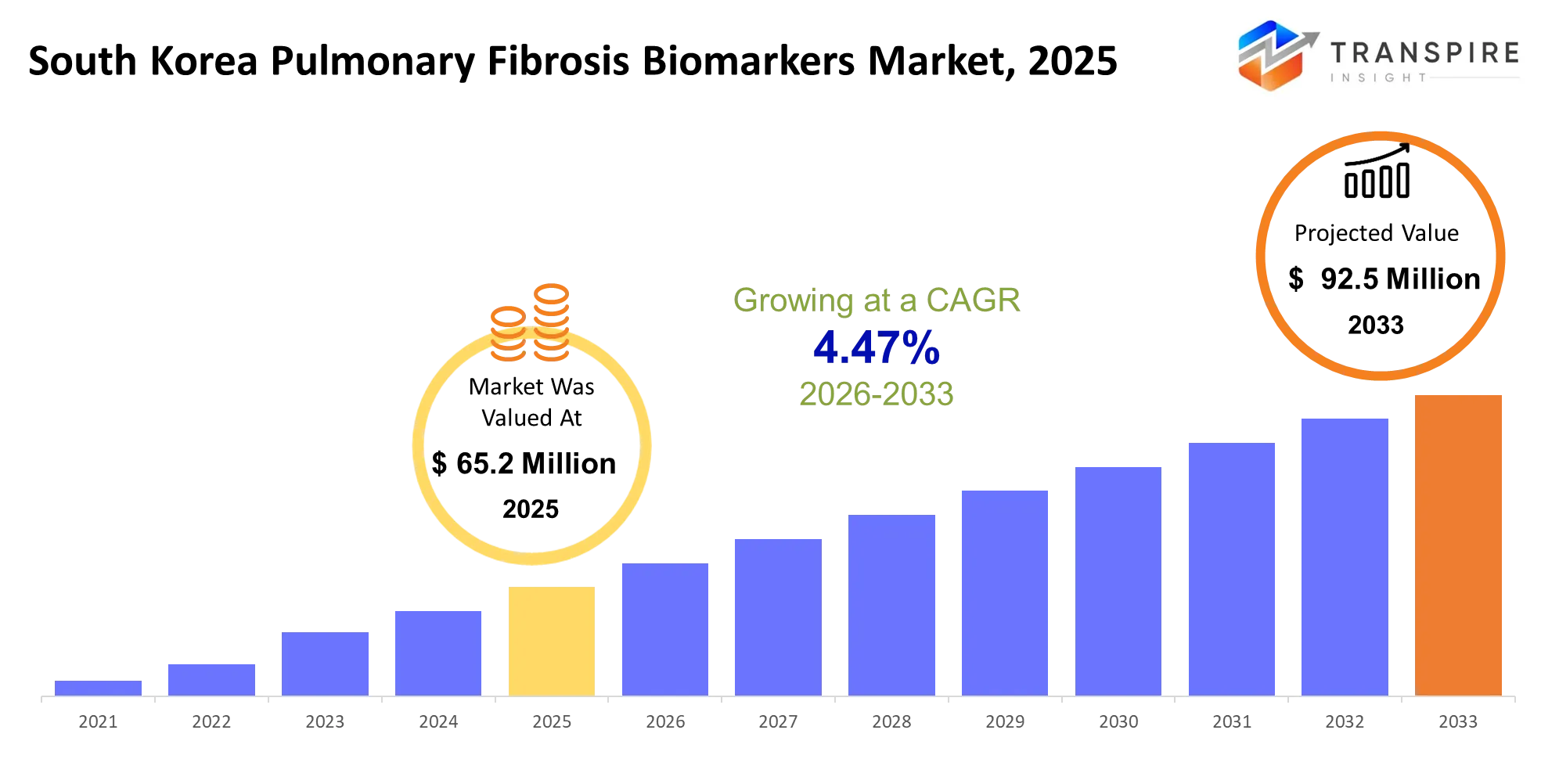
- Market Value (2025): USD 65.2 Million.
- Expected Market Value (2026): USD 68.1 Million.
- Estimated Market Value (2033): USD 92.5 Million.
- Forecast CAGR (2026–2033): 4.47%
Introduction
Market for pulmonary fibrosis biomarkers comprises the identification, development, and use of biological molecules or other measurable substances or imaging features (in blood, sputum, or lung tissue) that indicate the existence, severity, progression, and/or response to therapy for pulmonary fibrosis, including idiopathic pulmonary fibrosis (IPF). Biomarkers: Objective measures or characteristics that reflect or indicate the existence, extent, or significance of normal biological processes, pathogenic processes, or responses to therapeutic interventions. They include biological molecules present in blood, sputum, or lung tissue (KL-6, SP-D, and MMP-7), which can be used to detect or predict disease severity and/or response to therapy. There are several advantages of pulmonary fibrosis biomarkers due to their contribution to the early diagnosis of the condition, precise prognosis, and customized treatment. For example, molecular biomarkers such as KL-6 and SP-D can help to diagnose changes associated with the disease before the development of severe and irreversible scarring of lungs. Additionally, non-invasive biomarkers that include blood biomarkers can help clinicians to stratify patients in accordance with the severity of their condition. In addition, biomarkers will contribute to a more precise assessment of patients' prognosis. Finally, biomarkers can help clinicians make treatment decisions and evaluate the effectiveness of treatments for antifibrotic agents such as pirfenidone and nintedanib.
Key Market Highlights: -
- By disease, the Idiopathic Pulmonary Fibrosis segment dominated the market and holds nearly 44% share in 2025 and is projected to grow at a substantial CAGR during the forecast period.
- By test, the Immunoassay segment dominated the market and holds nearly 54% share in 2025 and is projected to grow at a substantial CAGR during the forecast period.
- By end user, the Hospitals segment dominated the market and holds nearly 45% share in 2025 and is projected to grow at a substantial CAGR during the forecast period.
- Government-sponsored biotechnology research and development initiatives of South Korea promote the discovery of biomarkers, molecular diagnosis, and precision medicine, which enhance the pulmonary fibrosis research and boost the pulmonary fibrosis biomarkers market of the country.
How is Technology Driving Growth in the South Korea Pulmonary Fibrosis Biomarkers Market?
Integration of omics, artificial intelligence (AI), digital biomarkers, and advanced diagnostic technologies are the major drivers propelling the South Korea Pulmonary Fibrosis Biomarkers Market forward. Genomic, proteomic, and metabolic research studies are helping in the discovery of multi-analyte biomarker panels, which can aid in early detection of pulmonary fibrosis. AI and machine learning are aiding radiological and pathological procedures to detect disease patterns and increase diagnostic precision. Wearable devices, mobile applications, and remote monitoring systems are providing data on patients' respiration for longitudinal studies of disease. Multiplexing and non-invasive sensors can help in detecting multiple molecular targets at once without requiring large samples.
Market Drivers
The South Korea Pulmonary Fibrosis Biomarkers Market is growing due to an increase in the aging population, pulmonary fibrosis prevalence, governmental support for research on chronic and rare diseases, and technological advancements in the field of diagnosis. As the aging population rises, there will be more need for early detection and diagnosis of disease. At the same time, as the clinical awareness increases, there will be more utilization of biomarkers. There will be governmental support for research that will aid in the discovery and validation of biomarkers. In addition, the advancements in HRCT, molecular diagnostics, and prognostic biomarkers offer substantial growth prospects. The South Korea Pulmonary Fibrosis Biomarkers Market will thrive due to factors such as superior healthcare infrastructure, incorporation of healthcare systems, high research and development, and increasing trend of precision medicine. The advanced tertiary care hospitals and specialty centers for respiratory conditions in South Korea enable the application of molecular diagnostics, high resolution imaging, and disease assessment through biomarkers. Health insurance in the region ensures the availability of diagnostic testing and management of pulmonary fibrosis among patients. In addition, there is high public-private R&D funding and growth in the pharmaceutical industry, which is fostering clinical research and biomarker development in the region.
Restrain
The South Korea Pulmonary Fibrosis Biomarkers Market is hampered by issues like high costs of developing biomarkers, strict regulatory environment, complexity of disease and uncertain reimbursement mechanisms. The rigorous process of validation may lead to delayed market entry and disease heterogeneity makes identification of good prognostic biomarkers a challenging task. Besides, uncertain reimbursement structures may hinder the uptake and research of biomarkers.
|
Driver |
Relative Impact on Growth (%) |
Geographic Relevance |
Impact Timeline |
Demand Strength |
Growth Mechanism |
Key Beneficiaries |
Major Constraint |
|
Rising IPF and Fibrotic ILD Disease Burden |
28% |
South Korea; major urban healthcare centers |
Short-term |
High |
Expands diagnostic and longitudinal monitoring requirements |
Diagnostic laboratories, hospitals, biomarker manufacturers |
Limited disease-specific screening protocols |
|
Growing Adoption of Molecular and Serum Biomarkers |
23% |
Nationwide; tertiary hospitals and specialty clinics |
Short-term |
High |
Improves early detection, risk stratification, and monitoring |
Assay developers, laboratories, hospitals |
Variable clinical validation across biomarkers |
|
Advancement of AI-Assisted Imaging and Precision Diagnostics |
19% |
Seoul and major metropolitan healthcare networks |
Medium-term |
High |
Combines imaging, biomarkers, and analytics for diagnosis |
AI vendors, imaging providers, hospitals |
Data quality and clinical integration challenges |
|
Government Support for Biomedical R&D and Precision Medicine |
16% |
National; research and biotechnology hubs |
Medium-term |
Medium |
Accelerates biomarker discovery, validation, and translational research |
Biotech firms, research institutes, CROs |
Lengthy research-to-commercialization cycles |
|
Expansion of Personalized and Data-Driven Pulmonary Care |
14% |
Nationwide; advanced specialty-care institutions |
Long-term |
Medium |
Enables patient stratification and therapy-response monitoring |
Pharma companies, diagnostic firms, specialty clinics |
Reimbursement and adoption uncertainties |
Analysis of Prices and Consumer Behaviour
The market share of the pulmonary fibrosis biomarkers is largely held by the high-quality biomarker assays (accounting for about 65% of the total market; mainly owing to the demands from hospitals, diagnostic laboratories and clinical research industries). The selling price of high purity and clinically validated biomarker assays will be estimated to be about 30% higher than other competing products, since the product would be developed employing advanced molecular testing techniques and quality validated methods and analytical performance. About 48% of the unit sales of the pulmonary fibrosis biomarkers will be in the form of laboratory based testing. This sales volume is attributable to the versatility in usage in hospitals, diagnostic laboratories and research institutions and also due to the increasing use of biomarkers for disease diagnostics. The clinical diagnostics and research industries constitute 68% of the total demand in these industries. The purchasing behavior of the healthcare providers is such that 58% of the buyers value the biomarker sensitivity, analytical accuracy and clinical validations highly. On the other hand, another 35% of customers want to buy their products via bulk buying or contractual arrangements so that they can minimize their cost of purchasing diagnostics and also secure their sources of supply for the health care establishments and research institutions in South Korea.
Who are the Key Players in the South Korea Pulmonary Fibrosis Biomarkers Market and how do they compete?
South Korea Pulmonary Fibrosis Biomarkers Market competitiveness is achieved through companies specializing in biomarker discovery, diagnostics, and the development of innovative testing solutions. Competing not only in diagnostics but also in biomarker sensitivity, molecular testing capabilities, clinical validation, and integration into the precision medicine platform, such competitiveness ensures innovation, as well as the possibility for earlier diagnostics, disease management, and patient stratification.
Through creating advanced biomarker testing, molecular diagnostics, and precision medicine solutions, leading diagnostic and biotechnology companies create their competitive advantages in the market. Through creation of highly efficient diagnostic solutions designed for application in hospitals, clinical labs, and research centers, companies create their competitive advantage in accuracy and effectiveness. Companies like Roche and Thermo Fisher Scientific create their competitive advantages through creating integrated diagnostic, molecular testing, and life science solutions for pulmonary diseases research, biomarker discovery, and clinical decisions.
Top Companies in the South Korea Pulmonary Fibrosis Biomarkers Market
- Roche
- Thermo Fisher Scientific
- QIAGEN
- Bio-Rad Laboratories
- Illumina
- Abbott
- Danaher
- Siemens Healthineers
- Agilent Technologies
- Merck
- Fujirebio
- Sysmex
- H.U. Group Holdings
- Samsung Biologics
- GC Biopharma
|
Company |
Est. Revenue Share Range |
Key Offerings |
Strategic Positioning |
Geographic Strength |
Technology Focus |
|
Roche |
10–14% |
cobas immunoassay, molecular diagnostics, automated laboratory systems, biomarker testing workflows |
Integrated diagnostics leadership across laboratory workflows |
Europe, Asia Pacific, North America |
ECL immunoassay, PCR, laboratory automation, molecular diagnostics |
|
Thermo Fisher Scientific |
8–11% |
PCR, NGS, molecular testing, sequencing workflows, biomarker research solutions |
Broad molecular research-to-diagnostics platform strategy |
North America, Europe, Asia Pacific |
NGS, qPCR, sequencing, microarrays, biomarker discovery |
|
QIAGEN |
7–10% |
QIAcuity digital PCR, molecular assays, sample preparation, genomic testing |
Specialized molecular diagnostics and sample-to-answer workflows |
Europe, North America, Asia Pacific |
Digital PCR, qPCR, NGS, molecular profiling |
|
Bio-Rad Laboratories |
6–9% |
multiplex immunoassays, ELISA, PCR, protein analysis, biomarker research |
Multiplex biomarker analysis and laboratory specialization |
North America, Europe, Asia Pacific |
Multiplex immunoassays, PCR, protein quantification |
|
Illumina |
5–8% |
sequencing platforms, genomic analysis, clinical sequencing, bioinformatics |
Genomic technology leadership for precision diagnostics |
North America, Europe, Asia Pacific |
NGS, whole-genome sequencing, genomic analytics |
|
Abbott |
5–8% |
immunoassay analyzers, clinical chemistry, molecular diagnostics, laboratory systems |
High-throughput clinical diagnostics and laboratory integration |
North America, Asia Pacific, Europe |
Immunoassay, molecular diagnostics, laboratory automation |
|
Danaher |
5–8% |
Beckman Coulter diagnostics, molecular testing, immunoassays, laboratory automation |
Diversified diagnostics ecosystem with workflow integration |
North America, Europe, Asia Pacific |
Automation, immunoassay, molecular testing, digital workflows |
|
Siemens Healthineers |
4–7% |
Atellica immunoassay, clinical chemistry, laboratory automation, diagnostic platforms |
Scalable integrated laboratory diagnostics and automation |
Europe, North America, Asia Pacific |
Immunoassay, automation, clinical chemistry, informatics |
|
Fujirebio / H.U. Group |
3–6% |
Lumipulse CLEIA, biomarker assays, specialty IVD, CDMO services |
Specialty biomarker innovation and immunoassay specialization |
Asia Pacific, Europe, North America |
CLEIA, biomarker discovery, ultra-sensitive detection |
|
Sysmex |
2–5% |
molecular diagnostics, laboratory testing, hematology, clinical laboratory systems |
Regional diagnostics strength with integrated laboratory solutions |
Asia Pacific, Europe, North America |
Molecular diagnostics, automation, laboratory analytics |
South Korea Pulmonary Fibrosis Biomarkers Market Segmentation
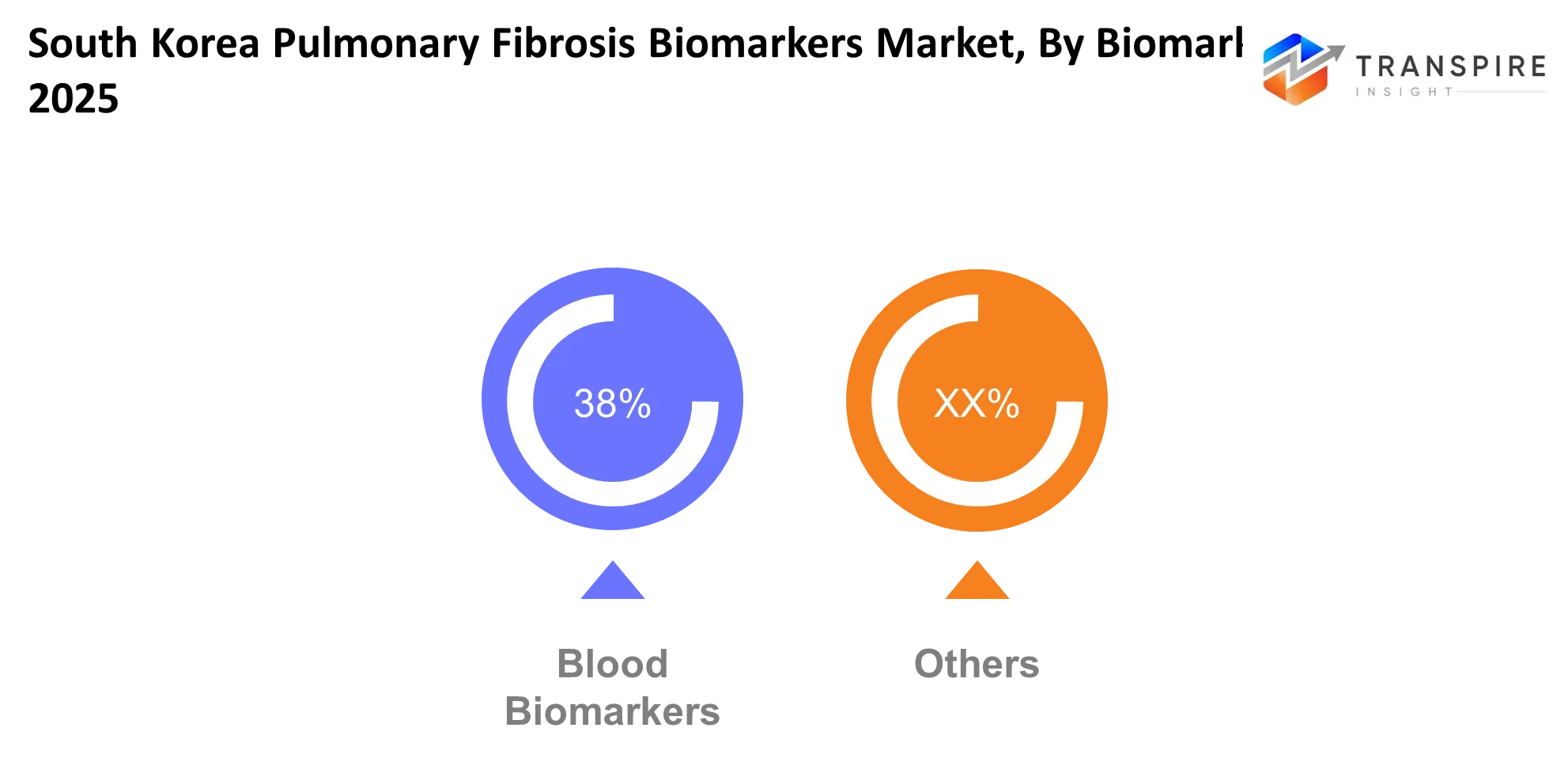
The South Korea Pulmonary Fibrosis Biomarkers Market share is divided into five categories: By biomarker type, disease, test, sample and end user.
The Idiopathic Pulmonary Fibrosis dominated the market, accounting for nearly 44% in 2025 and is expected to rise at a significant CAGR during the forecast period.
The South Korea Pulmonary Fibrosis Biomarkers Market is segmented by disease into Idiopathic Pulmonary Fibrosis, Progressive Pulmonary Fibrosis, Interstitial Lung Disease, Systemic Sclerosis-Associated PF, Hypersensitivity Pneumonitis, Connective Tissue Disease-Associated ILD, Other Fibrotic Lung Diseases. Among these, the Idiopathic Pulmonary Fibrosis segment dominated the market, accounting for nearly 44% in 2025 and expected to increase at a significant CAGR during the forecast period. Idiopathic pulmonary fibrosis market share is held by the dominant segment due to increasing disease prevalence, diagnostic awareness, and increased demand for anti-fibrotic drugs. High-resolution imaging techniques, early diagnosis, clinical studies, and advanced treatments are boosting segment growth. Moreover, higher healthcare spending and respiratory care infrastructure are contributing to the diagnosis and treatment of idiopathic pulmonary fibrosis.
The Immunoassay dominated the market, accounting for nearly 54% in 2025, and is expected to rise at a significant CAGR during the forecast period.
The South Korea Pulmonary Fibrosis Biomarkers Market is segmented by test into ELISA, PCR, Sequencing, Immunoassay, Multiplex Assay, Imaging Analysis, Biomarker Panels. Among these, the Immunoassay segment dominated the market, accounting for nearly 54% in 2025 and expected to increase at a significant CAGR during the forecast period. The Immunoassay category leads the market because of its sensitivity, specificity, and wide application in the diagnosis of diseases and biomarkers. High demand for accurate and timely diagnosis, prevalence of chronic and infectious diseases, technological developments, and increased lab facilities in the clinical laboratories are among the factors that are propelling the immunoassay market.
The Hospitals dominated the market, accounting for nearly 45% in 2025 and is expected to rise at a significant CAGR during the forecast period.
The South Korea Pulmonary Fibrosis Biomarkers Market is segmented by end user into Hospitals, Diagnostic Laboratories, Research Institutes, Specialty Clinics, Pharmaceutical Companies, CROs, Academic Centers. Among these, the Hospitals segment dominated the market, accounting for nearly 45% in 2025 and expected to increase at a significant CAGR during the forecast period. The Hospitals market segment holds the dominant position in the market owing to high patient footfall, robust diagnostics infrastructure, and the growing need for special disease management. Hospitals offer diagnostic, treatment, monitoring, and therapeutic services. Growing spending on healthcare, growth in hospital chains and early diagnostics add on to the growth in the segment.
Future Market Trends for the South Korea Pulmonary Fibrosis Biomarkers Market: -
- Early and Accurate Diagnosis: Doctors depend more and more on specific protein biomarkers like KL-6 and SP-D along with imaging technologies for early detection of scar formation.
- Precision Treatment: Genomic analysis and biomarker tests are used by doctors for precision medicine by finding the best treatment options for patients.
- Central Government Funding: The South Korean central government invests in infrastructure and research related to respiratory diseases, improving the country’s diagnostic capability.
- Hospitals as Testing Sites: Major hospitals are major centers of testing facilities.
Recent Development
- In May 2026: FDA Type C feedback, aTyr Pharma progressed with efzofitimod clinical development, which will be used in Phase 3 studies on pulmonary sarcoidosis with restrictive lung disease. The advancement is important for interstitial lung disease research and can also help improve patient stratification, disease monitoring, and biomarker-driven pulmonary care, contributing to the South Korea Pulmonary Fibrosis Biomarkers Market.
- In June 2026: The Simcere Pharmaceutical Company partnered with Stanford Medicine for the development of new scientific studies regarding idiopathic pulmonary fibrosis (IPF). This partnership will help promote translational science research that will aid in enhancing knowledge about the disease, patient stratification, pulmonary care based on biomarkers and contribute to growth in the South Korea Pulmonary Fibrosis Biomarkers Market.
Market Segment
This study forecasts revenue at South Korea, regional and country levels from 2020 to 2033. Transpire Insights has segmented the South Korea Pulmonary Fibrosis Biomarkers Market based on the below-mentioned segments:
South Korea Pulmonary Fibrosis Biomarkers Market, By Biomarker Type
- Blood Biomarkers
- Serum Biomarkers
- Plasma Biomarkers
- Genetic Biomarkers
- Protein Biomarkers
- Imaging Biomarkers
- Molecular Biomarkers
South Korea Pulmonary Fibrosis Biomarkers Market, By Disease
- Idiopathic Pulmonary Fibrosis
- Progressive Pulmonary Fibrosis
- Interstitial Lung Disease
- Systemic Sclerosis-Associated PF
- Hypersensitivity Pneumonitis
- Connective Tissue Disease-Associated ILD
- Other Fibrotic Lung Diseases
South Korea Pulmonary Fibrosis Biomarkers Market, By Test
- ELISA
- PCR
- Sequencing
- Immunoassay
- Multiplex Assay
- Imaging Analysis
- Biomarker Panels
South Korea Pulmonary Fibrosis Biomarkers Market, By Sample
- Blood
- Serum
- Plasma
- Bronchoalveolar Lavage
- Tissue
- Sputum
- Urine
South Korea Pulmonary Fibrosis Biomarkers Market, By End User
- Hospitals
- Diagnostic Laboratories
- Research Institutes
- Specialty Clinics
- Pharmaceutical Companies
- CROs
- Academic Centers
Frequently Asked Questions
Find quick answers to common questions.
The market is expected to reach USD 92.5 million by 2033, growing at a 4.47% CAGR from 2026.
Idiopathic Pulmonary Fibrosis dominates the market, accounting for approximately 44% share in 2025, supported by rising prevalence and diagnosis.
Immunoassay dominates the test segment with approximately 54% share in 2025, driven by sensitivity, specificity, and broad diagnostic applications.
Hospitals lead with approximately 45% share, supported by advanced diagnostic infrastructure, high patient volumes, specialized care, and monitoring capabilities.
Omics, AI, machine learning, digital biomarkers, multiplex assays, and molecular diagnostics are enhancing detection, monitoring, and precision medicine.
- Roche
- Thermo Fisher Scientific
- QIAGEN
- Bio-Rad Laboratories
- Illumina
- Abbott
- Danaher
- Siemens Healthineers
- Agilent Technologies
- Merck
- Fujirebio
- Sysmex
- H.U. Group Holdings
- Samsung Biologics
- GC Biopharma
About the Authors

Pankaj Ghogare Patil
I am Pankaj Ghogare Patil, a Senior Research Analyst at Transpire Insight, specializing in the Pharmaceutical, Chemicals & Materials, Healthcare IT, and Biotechnology industry. My expertise lies in conducting comprehensive market research, analyzing industry trends, evaluating competitive landscapes, and translating complex data into actionable insights. At Transpire Insight, I closely follow emerging technologies, regulatory developments, and market innovations to create accurate, well-researched, and informative content that helps businesses and professionals make informed decisions. I am committed to producing credible, evidence-based articles that reflect industry best practices while making technical topics accessible and valuable for a broad audience.

Chakradhar Khansole
Chakradhar serves as the Research Director at Transpire Insight, bringing over 8 years of experience in technology, innovation, and strategic market intelligence. He specializes in transforming complex market data into actionable business insights that enable organizations to make informed, growth-oriented decisions. Recognized for his strategic vision and analytical expertise, Chakradhar leads high-impact research initiatives, delivering comprehensive market assessments, competitive intelligence, and forward-looking industry analysis.
Recently Published Reports
-
Apr 2026
AI in Diabetic Retinopathy Market
AI in Diabetic Retinopathy Market Size, Share & Analysis Report By Type (Screening AI Systems, Diagnostic AI Systems, and Predictive AI Models), By Application Segment (Hospitals, Ophthalmology Clinics, Diagnostic Centers, and Research and Development), and Geography (North America, Europe, Asia-Pacific, Middle East and Africa, South and Central America), 2021 - 2031
-
Apr 2026
Psychometric Tests Market
Psychometric Tests Market Size, Share & Analysis Report By Type (Personality Tests, Ability/Aptitude Tests, Skill/Knowledge Tests, and Others), By Application (Talent Acquisition and Talent Management), and Geography (North America, Europe, Asia-Pacific, Middle East and Africa, South and Central America), 2021 – 2031
-
Apr 2026
Rare Biological Sample Collection Market
Rare Biological Sample Collection Market Size, Share & Analysis Report By Type (Isolation Kits & Reagent, Blood Collection Tubes, and Others), By Application (Oncology, Transcriptomics, Pharmacogenomics, and Others), and Geography (North America, Europe, Asia-Pacific, Middle East and Africa, South and Central America), 2021 – 2031
-
Jul 2026
Diabetic Retinopathy Market
Diabetic Retinopathy Market Size, Share & Analysis Report By Type (Proliferative Diabetic Retinopathy, and Diabetic Macular Edema (DME)), By Treatment Type (Anti VEGF Drug, Steroid Implants, Laser Surgeries, and Vitrectomy), and Geography (North America, Europe, Asia-Pacific, Middle East and Africa, South and Central America), 2021 – 2031
Our Clients







