Europe Pulmonary Embolism Market Size & Forecast:
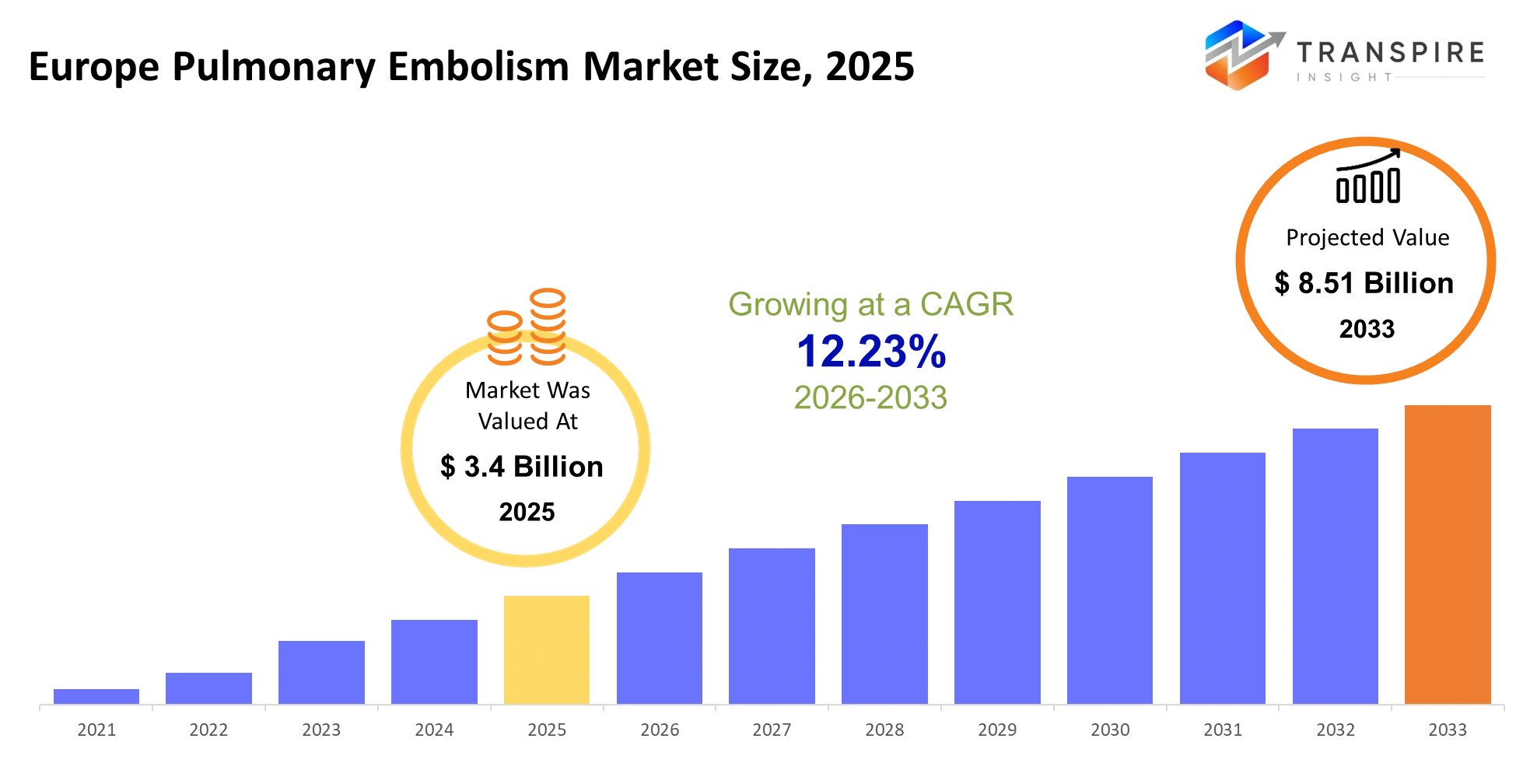
- Europe Pulmonary Embolism Market Size 2025: USD 3.4 Billion
- Europe Pulmonary Embolism Market Size 2033: USD 8.51 Billion
- Europe Pulmonary Embolism Market CAGR: 12.23%
- Europe Pulmonary Embolism Market Segments: By Type (Anticoagulants, Thrombolytics, Surgical Treatments, Others), By Application (Diagnosis, Treatment, Prevention, Monitoring, Others), By End-User (Hospitals, Clinics, Emergency Centers, Specialty Centers, Homecare Settings, Others), By Distribution (Hospitals, Pharmacies, Online, Others).
To learn more about this report,  Download Free Sample Report
Europe Pulmonary Embolism Market Summary:
The Europe Pulmonary Embolism Market size is estimated at USD 3.4 Billion in 2025 and is anticipated to reach USD 8.51 Billion by 2033, growing at a CAGR of 12.23% from 2026 to 2033. The Europe pulmonary embolism market operates through its capacity to detect and treat lung blockages which endanger lives. The system provides emergency departments and imaging centers and critical care units with diagnostic CT pulmonary angiography and therapeutic solutions which include anticoagulant medications and catheter-based treatments.
Over the past 3–5 years, care pathways have shifted toward faster, protocol-driven diagnosis which uses advanced imaging methods and AI-powered triage systems. The healthcare system now uses outpatient treatment for low-risk patients which helps to decrease hospital operations. The COVID-19 pandemic created the main trigger because it showed that infection had a strong connection with thrombotic events which caused hospitals to improve their diagnostic capabilities and anticoagulant treatment protocols.
The combination has reduced treatment latency while it has boosted the rate of case identification. Revenue growth now shows two sources of increase because it includes higher case numbers and the increased application of valuable diagnostic tools and specific treatments throughout different medical environments.
Key Market Insights
- The European Pulmonary Embolism Market shows Western Europe as its leading region which controls more than 45% of the market in 2025 through its major contributors Germany France and the UK.
- Through 2030 Northern Europe shows itself as the region with the highest growth rate which receives support from its investments in healthcare infrastructure and its implementation of digital diagnostics.
- The diagnostic imaging field will lead the market with 50% market share in 2025 because CT pulmonary angiography usage has become widespread.
- The second largest market segment for anticoagulant therapy reaches approximately 30% market share which results from the increasing use of direct oral anticoagulants.
- The segment of catheter-directed thrombolysis shows the fastest growth rate which will continue to expand during the period from 2025 to 2030 because of its advantages as a minimally invasive treatment option.
- The treatment of hospital-based patients shows 60% market share in 2025 because hospitals need to provide acute care for patients who experience high-risk pulmonary embolism episodes.
- The application of outpatient management shows the highest growth rate because risk stratification tools and cost optimization strategies become more popular among healthcare providers.
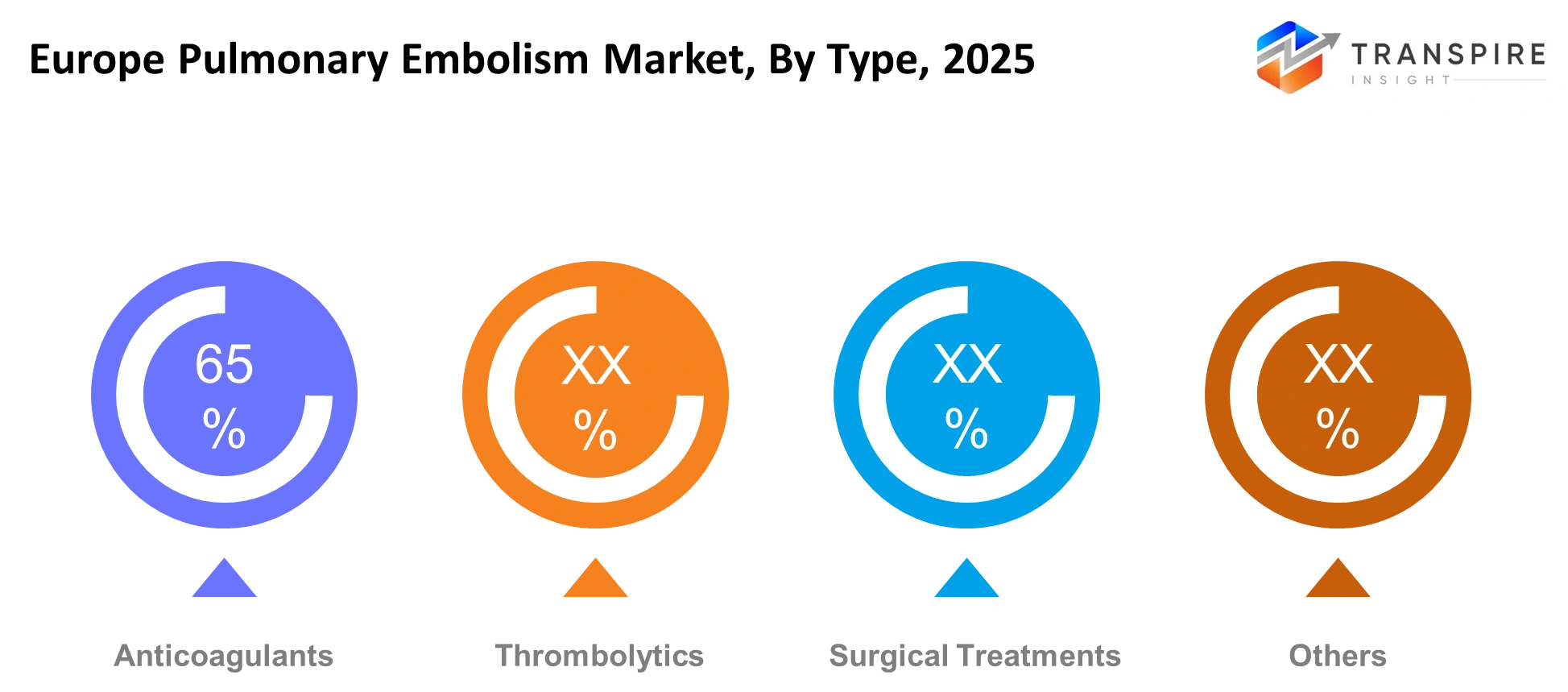
- The Europe Pulmonary Embolism Market distribution shows hospitals capturing 65% market share in 2025 because they possess advanced imaging and emergency care technologies.
- The decentralized care models which specialty clinics provide will help them become the leading end-user segment between now and 2030 because of their need for patient follow-up treatment.
What are the Key Drivers, Restraints, and Opportunities in the Europe Pulmonary Embolism Market?
The current market for pulmonary embolism treatment in Europe operates under two main dynamics which include the growing demand for rapid emergency medical diagnostics. The COVID-19 pandemic created a shift towards standardized treatment protocols which resulted in hospitals adopting CT pulmonary angiography and risk assessment tools as common practice. The hospital system experienced revenue growth through three developments which included better patient detection processes and faster treatment times and increased adoption of effective anticoagulant and interventional treatment methods.
The main obstacle exists because smaller healthcare facilities operating in rural areas lack sufficient diagnostic tools to serve their patient base. Numerous regions continue to face challenges because they do not provide 24-hour access to advanced imaging technologies and skilled professionals who specialize in vascular medicine which leads to delays in diagnosing pulmonary embolism. Under-resourced locations create treatment time disparities throughout Europe which results in lost revenue opportunities because patients receive delayed treatments instead of advanced care options.
AI-assisted imaging systems deliver the best hospital networks which create decision-support systems through hospital connections. The hospitals in Germany and The Netherlands test AI-based triage tools which identify potential embolism cases from CT scans, resulting in faster diagnosis times. The systems will expand throughout Western and Northern Europe to accomplish three goals which include solving staffing shortages, enhancing diagnostic accuracy, and enabling faster use of less invasive treatments which will lead to a period of technological advancement in the Europe Pulmonary Embolism Market.
What Has the Impact of Artificial Intelligence Been on the Europe Pulmonary Embolism Market?
The Europe Pulmonary Embolism Market operates as a healthcare system that provides diagnostic services and treatment options, while evidence-based AI usage focuses on clinical decision support and imaging systems in medical facilities. Artificial intelligence now functions as a core component in CT pulmonary angiography procedures which use algorithms to identify potential clots and manage emergency scan priorities and notify radiologists about critical cases that require quick assessment. The system streamlines operations which benefit high-volume hospitals by enabling physicians to diagnose patients who need immediate medical attention while treating emergency situations.
Machine learning algorithms enable hospitals to establish venous thromboembolism risk assessment for patients by using electronic health records and mobility information and laboratory test results. The available tools assist healthcare professionals in predicting patient decline while they determine the appropriate time for anticoagulation and they minimize unnecessary hospital readmissions. The hospitals that use these systems experience quicker patient assessments and better compliance with standardized treatment protocols which results in improved efficiency for their emergency departments and intensive care units.
Interoperability problems between hospital IT systems and differing training data across European healthcare systems create obstacles for organizations to implement new technologies. Smaller hospitals that lack advanced digital systems face accuracy issues because their algorithms function differently than expected. The combination of high integration expenses and lengthy EU medical device regulations results in delayed implementation of medical devices at hospitals. The Europe Pulmonary Embolism Market shows significant changes in diagnostic processing through AI technology which enables quicker diagnosis and more efficient patient management at specialized care facilities.
Key Market Trends
- The implementation of CT pulmonary angiography experienced significant growth after 2022 which resulted in faster diagnosis and transformed emergency medical procedures throughout major hospitals in Europe.
- The period between 2023 and 2025 saw improvements in AI imaging technologies which helped healthcare facilities to detect blood clots and manage radiology work more effectively.
- Post-COVID treatment protocols increased routine screening for thrombotic complications which resulted in a major rise of early-stage pulmonary embolism detection across Europe.
- The prescription share of direct oral anticoagulants exceeded that of traditional therapies after 2021 because patients preferred the safer and more accessible outpatient treatment options.
- Between 2022 and 2025 hospitals transitioned from inpatient-based treatment systems to hybrid outpatient management methods which helped decrease their demand for hospital bed space.
- The use of catheter-directed therapies which require less invasive methods became more common after 2023 because they provided preferred options for high-risk patients in tertiary care centers.
- Siemens Healthineers and GE HealthCare developed AI-powered imaging systems which improved the speed of diagnosis and enhanced hospital decision-making assistance systems.
- The EU medical device regulations for 2024 brought about stricter compliance requirements which resulted in delayed AI tool implementations and increased costs for digital diagnostic systems.
- Eastern European healthcare systems began to increase their infrastructure spending after 2022 which enabled them to improve their diagnostic capabilities through Western European technology.
Europe Pulmonary Embolism Market Segmentation
By Type
Anticoagulants lead the European Pulmonary Embolism Market because they serve as the primary treatment which helps doctors stabilize patients while stopping further blood clot development. The direct oral anticoagulants market experienced growth because doctors preferred these newer treatment options which provided improved safety and allowed outpatient treatment compared to traditional methods. Thrombolytics hold a smaller but critical share, primarily used in high-risk acute cases where rapid clot dissolution is required.
The medical field restricts surgical procedures and interventional treatments to patients who handle severe conditions because these methods carry high risks and need specialized facilities. The segment experiences growth because medical professionals prefer non-invasive treatments which offer safer drug options. The medical community will develop next-generation anticoagulants which reduce bleeding incidents and provide predictable dosing because these advancements will enable more patients to receive outpatient treatment while decreasing hospital visits.
To learn more about this report, Download Free Sample Report
By Application
The Europe Pulmonary Embolism Market shows treatment as its leading segment because emergency departments need treatments for managing acute thrombotic incidents. The diagnosis segment closely follows diagnosis through expanded CT pulmonary angiography usage and AI-powered imaging technologies that enable faster detection. Through implementation of hospital risk assessment protocols prevention has become essential for protecting post-surgical and immobilized patients.
Digital health tools now enable continuous patient monitoring which has become a standard practice after patients leave the hospital. The primary growth driver is the shift toward early detection and protocol-driven care pathways established after recent public health crises. Future implications show that diagnostic and treatment workflows will become more integrated while manufacturers develop diagnostic-treatment platforms which will shorten intervention times and enhance clinical results.
By End-User
The European Pulmonary Embolism Market shows hospitals as the main market drivers because they possess superior imaging technology and emergency facilities and their medical staff includes specialists. Emergency centers contribute significantly as first-contact points for acute cases because they provide quick patient assessment and critical condition management. Specialty centers are expanding their role through specialized cardiovascular and pulmonary care programs which receive increasing patient referrals. Clinics and homecare settings maintain smaller market shares which are presently expanding because of rising outpatient anticoagulation management practices.
Healthcare systems experience growth through two main factors which include their move toward decentralized delivery methods and their implementation of patient-based risk assessment systems to decrease hospital workload. The upcoming period will see low-risk patients being transferred from hospitals to integrated care networks which will enable healthcare facilities to make investments in outpatient treatment systems and digital patient monitoring technologies.
By Distribution
The European Pulmonary Embolism Market depends on hospitals as its main distribution center because most patients receive treatment through acute care facilities. The primary function of pharmacies is to assist with outpatient anticoagulant distribution and help patients maintain their medication schedules. The online distribution of products faces restrictions because of legal requirements and physician prescription needs but is making progress in the areas of chronic care management and electronic prescription systems.
Advanced medical treatment delivery for institutions depends on specialty procurement systems and other supply channels. The market reacts to two main factors which include government regulations and the urgent need for pulmonary embolism treatment. The future direction of the industry indicates that hospitals and pharmacy networks will establish tighter connections which will enhance the process of managing medications after patients leave hospitals and provide better treatment throughout different stages of care.
What are the Key Use Cases Driving the Europe Pulmonary Embolism Market?
The primary application of the Europe Pulmonary Embolism Market involves hospitals treating patients with dangerous pulmonary artery blockages. The highest demand for medical services occurs in emergency departments and intensive care units because doctors need to deliver urgent care for patients in critical situations. This medical process starts with immediate imaging followed by anticoagulant delivery and proceeds to thrombolytic therapy when the patient reaches critical condition.
The medical field uses risk-based screening for post-surgical patients while monitoring high-risk patients in specialized cardiovascular units. Emergency centers and tertiary hospitals increasingly use structured protocols to identify early-stage thrombotic events which results in better intervention timing and fewer complications.
Healthcare organizations implement AI-powered risk assessment tools that combine electronic health record systems with home health monitoring through digital platforms. The healthcare industry adopts these technologies because they help outpatient facilities and specialized clinics identify health issues earlier while decreasing patient returns to hospitals.
|
Report Metrics |
Details |
|
Market size value in 2025 |
USD 3.4 Billion |
|
Market size value in 2026 |
USD 3.79 Billion |
|
Revenue forecast in 2033 |
USD 8.51 Billion |
|
Growth rate |
CAGR of 12.23% from 2026 to 2033 |
|
Base year |
2025 |
|
Historical data |
2021 - 2024 |
|
Forecast period |
2026 - 2033 |
|
Report coverage |
Revenue forecast, competitive landscape, growth factors, and trends |
|
Regional scope |
Europe (Germany, United Kingdom, France, Italy, Spain and Rest of Europe) |
|
Key company profiled |
Pfizer, Bayer, Johnson & Johnson, Bristol Myers Squibb, Boehringer Ingelheim, Sanofi, Novartis, Roche, Abbott, Medtronic, GE Healthcare, Siemens Healthineers, AstraZeneca, GSK, Daiichi Sankyo. |
|
Customization scope |
Free report customization (country, regional & segment scope). Avail customized purchase options to meet your exact research needs. |
|
Report Segmentation |
By Type (Anticoagulants, Thrombolytics, Surgical Treatments, Others), By Application (Diagnosis, Treatment, Prevention, Monitoring, Others), By End-User (Hospitals, Clinics, Emergency Centers, Specialty Centers, Homecare Settings, Others), By Distribution (Hospitals, Pharmacies, Online, Others). |
Which Regions are Driving the Europe Pulmonary Embolism Market Growth?
The Pulmonary Embolism Market in Western Europe outperforms other European regions because of its superior healthcare system and effective emergency medical treatment regulations. The countries of Germany France and the United Kingdom possess strong diagnostic capabilities because they provide extensive access to CT pulmonary angiography and dedicated vascular treatment facilities. The implementation of strict clinical protocols enables hospitals to identify patients who need treatment at an early stage while providing them with standardized care which boosts their operational efficiency and creates stable revenue streams. The existing connections between tertiary hospitals and academic medical centers play a crucial role in promoting the use of advanced anticoagulant treatments and interventional medical procedures. The established ecosystem maintains its market position through ongoing clinical advancements and efficient medical operations that take place in emergency departments and critical care units.
Southern Europe serves as a steady market segment which receives support from improved healthcare access and ongoing hospital system upgrades. The region experiences growth through public hospital diagnostic expansion which occurs at a slower pace than Western Europe because it lacks advanced technological developments. The Italian and Spanish healthcare systems function through centralized models which guarantee that all medical facilities will deliver identical treatment methods throughout their operational areas. Healthcare facilities located in urban areas experience economic stability which enables them to keep investing in vital imaging equipment and anticoagulant treatments. A steady market demand exists which will continue through forthcoming years because AI technologies and minimal invasive methods will take longer to become widely used than they currently are in leading markets.
The Pulmonary Embolism Market in Europe experiences its highest growth rate through Northern and Eastern Europe because targeted healthcare digitalization investments and diagnostic system development projects. The recent establishment of EU funding programs together with national hospital upgrades has made advanced imaging technologies more accessible in Poland Sweden and the Baltic countries. The public has become more aware of thrombotic complications which has resulted in higher emergency care readiness in response to recent public health emergencies. The current trend creates fresh requirements for diagnostic and treatment products. The region provides market entrants and investors with substantial growth opportunities which will occur from 2026 to 2033 through digital diagnostics and hospital infrastructure collaboration.
Who are the Key Players in the Europe Pulmonary Embolism Market and How Do They Compete?
The European market for pulmonary embolism medical treatment shows moderate consolidation because pharmaceutical companies and imaging firms control most of the market share. Incumbents maintain their market position because they provide complete diagnostic and therapeutic systems instead of using price wars to compete. Hospitals select vendors who provide imaging equipment and artificial intelligence triage systems and drug compatibility solutions. The new AI diagnostic system designs create market disruption while the requirements for regulatory approval and hospital procurement agreements create barriers for entering medical institutions. The company needs to achieve competitive edge through clinical precision and operational system compatibility and payment system matching.
Siemens Healthineers uses AI-powered CT pulmonary angiography systems which enable hospitals to incorporate their systems into existing operations to achieve faster processing results. The company establishes its unique market position through extensive PACS system connectivity and its imaging system's real-time triage features. GE HealthCare competes through flexible imaging systems and cloud-based diagnostic solutions which enable hospitals to operate multiple medical facilities. The two companies establish Eastern European market presence through their cooperation with public hospitals to enhance imaging technology and establish common emergency diagnostic procedures.
Bayer develops long-term anticoagulant solutions for outpatient care by combining its anticoagulant drug portfolio with its European cardiovascular medication distribution network. Pfizer focuses its business operations on establishing research partnerships for clinical studies and creating safe next-generation anticoagulant drugs. Johnson & Johnson establishes its market position through its specialized devices for interventional cardiovascular treatments which doctors use during catheter-directed thrombolysis operations. The companies increase their business operations through their collaborations with hospitals and their cardiovascular research networks and their strategic acquisitions of thrombotic treatment devices which work to unify patient care systems throughout the entire treatment process.
Company List
- Pfizer
- Bayer
- Johnson & Johnson
- Bristol Myers Squibb
- Boehringer Ingelheim
- Sanofi
- Novartis
- Roche
- Abbott
- Medtronic
- GE Healthcare
- Siemens Healthineers
- AstraZeneca
- GSK
- Daiichi Sankyo
Recent Development News
In April 2026, Pulmonary Embolism Mortality Prediction Using Multimodal Learning Based on Computed Tomography Angiography and Clinical Data: This work is a medical AI research study that develops deep learning–based models to predict mortality in patients with acute pulmonary embolism (PE) by combining chest CT angiography images with structured clinical data and the Pulmonary Embolism Severity Index (PESI). It aims to improve risk stratification beyond traditional clinical scoring alone.
Source: https://arxiv.org
In January 2026, Human-AI Collaboration in Radiology: The Case of Pulmonary Embolism: It is a 2026 working paper that analyzes how radiologists actually use an FDA-approved AI system for diagnosing pulmonary embolism (PE) on CT pulmonary angiography in real clinical practice. It combines health-care operations, behavioral analysis, and economics, using a large dataset from a multi-hospital rollout.
Source: https://arxiv.org
What Strategic Insights Define the Future of the Europe Pulmonary Embolism Market?
The European Pulmonary Embolism Market will develop an AI-enabled outpatient treatment system which will unify its operational structure during the next five to seven years. The hospital system requires two main improvements which will help achieve emergency response time reduction and better diagnostic capabilities and decreased need for inpatient care through risk assessment and standardized treatment methods. The combination of digital imaging technology with predictive analytics and the use of direct oral anticoagulants creates a new approach to treating acute thrombotic disorders throughout Europe.
Centralized AI diagnostic platforms create hidden dangers because they require hospitals to depend on one system which suffers from performance issues when testing various hospital data sets. The regulatory process will experience delays because of EU medical device regulations while clinical outcomes will show differences based on the new approach.
The establishment of cross-border digital triage networks between Eastern European hospitals and Western European advanced imaging centers creates a new opportunity to provide doctors with real-time diagnostic assistance. The market needs to focus on developing AI systems which can work with current hospital systems while building partnerships in areas which need digital healthcare progress to achieve enduring clinical usage and patient demand.
Europe Pulmonary Embolism Market Report Segmentation
By Type
- Anticoagulants
- Thrombolytics
- Surgical Treatments
- Others
By Application
- Diagnosis
- Treatment
- Prevention
- Monitoring
- Others
By End-User
- Hospitals
- Clinics
- Emergency Centers
- Specialty Centers
- Homecare Settings
- Others
By Distribution
- Hospitals
- Pharmacies
- Online
- Others
Frequently Asked Questions
Find quick answers to common questions.
The approximate Europe Pulmonary Embolism Market size for the market will be USD 8.51 Billion in 2033.
The key segments of the Europe Pulmonary Embolism Market are By Type (Anticoagulants, Thrombolytics, Surgical Treatments, Others), By Application (Diagnosis, Treatment, Prevention, Monitoring, Others), By End-User (Hospitals, Clinics, Emergency Centers, Specialty Centers, Homecare Settings, Others), By Distribution (Hospitals, Pharmacies, Online, Others).
Major players in the Europe Pulmonary Embolism Market are Pfizer, Bayer, Johnson & Johnson, Bristol Myers Squibb, Boehringer Ingelheim, Sanofi, Novartis, Roche, Abbott, Medtronic, GE Healthcare, Siemens Healthineers, AstraZeneca, GSK, Daiichi Sankyo.
The current market size of the Europe Pulmonary Embolism Market is USD 3.4 Billion in 2025.
The Europe Pulmonary Embolism Market CAGR is 12.23%.
- Pfizer
- Bayer
- Johnson & Johnson
- Bristol Myers Squibb
- Boehringer Ingelheim
- Sanofi
- Novartis
- Roche
- Abbott
- Medtronic
- GE Healthcare
- Siemens Healthineers
- AstraZeneca
- GSK
- Daiichi Sankyo
Recently Published Reports
-
Apr 2026
AI in Diabetic Retinopathy Market
AI in Diabetic Retinopathy Market Size, Share & Analysis Report By Type (Screening AI Systems, Diagnostic AI Systems, and Predictive AI Models), By Application Segment (Hospitals, Ophthalmology Clinics, Diagnostic Centers, and Research and Development), and Geography (North America, Europe, Asia-Pacific, Middle East and Africa, South and Central America), 2021 - 2031
-
Apr 2026
Psychometric Tests Market
Psychometric Tests Market Size, Share & Analysis Report By Type (Personality Tests, Ability/Aptitude Tests, Skill/Knowledge Tests, and Others), By Application (Talent Acquisition and Talent Management), and Geography (North America, Europe, Asia-Pacific, Middle East and Africa, South and Central America), 2021 – 2031
-
Apr 2026
Rare Biological Sample Collection Market
Rare Biological Sample Collection Market Size, Share & Analysis Report By Type (Isolation Kits & Reagent, Blood Collection Tubes, and Others), By Application (Oncology, Transcriptomics, Pharmacogenomics, and Others), and Geography (North America, Europe, Asia-Pacific, Middle East and Africa, South and Central America), 2021 – 2031
-
Apr 2026
Patient Lift Pendant Market
Patient Lift Pendant Market By Product Type (Wired Pendants, Wireless, Programmable), By Operation Type(Manual, Electric), By End-Users (Healthcare Professionals, Patients), By Application (Hospitals, Homecare, Rehabilitation Centers, Others), By Industry Analysis, Size, Share, Growth, Trends, and Forecasts 2021-2033
Our Clients
.jpg)