
South Korea Polybutylene Adipate Terephthalate Market Size & Forecast:
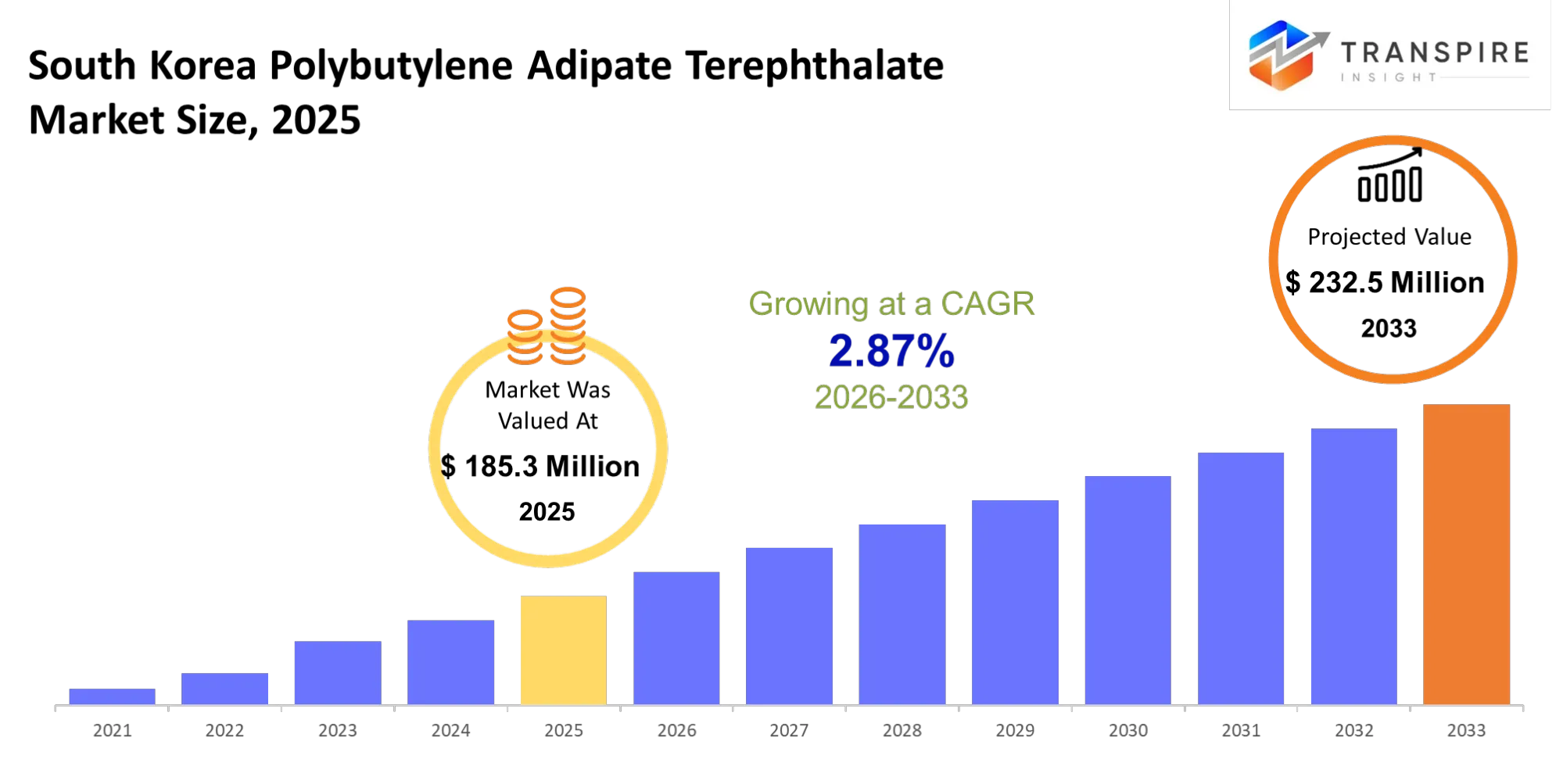
- South Korea Polybutylene Adipate Terephthalate Market Size 2025: USD 185.3 Million
- South Korea Polybutylene Adipate Terephthalate Market Size 2033: USD 232.5 Million
- South Korea Polybutylene Adipate Terephthalate Market CAGR: 2.87%
- South Korea Polybutylene Adipate Terephthalate Market Segments: By Grade (Film Grade, Injection Molding Grade, Extrusion Grade, Compostable Grade, High Flexibility Grade, Blended Grade, Industrial Grade, Others); By Application (Packaging, Agriculture Films, Consumer Goods, Compost Bags, Food Service Products, Medical Applications, Industrial Products, Others); By End User (Packaging Companies, Agriculture Sector, Consumer Goods Manufacturers, Food Industry, Healthcare Sector, Retail Brands, Industrial Users, Others)
South Korea Polybutylene Adipate Terephthalate Market Summary
The South Korea Polybutylene Adipate Terephthalate Market was valued at USD 185.3 Million in 2025. It is forecast to reach USD 232.5 Million by 2033. That is a CAGR of 2.87% over the period.
South Korea’s Polybutylene Adipate Terephthalate (PBAT) market, plays a practical sort of role in swapping out conventional plastics in use cases where flexibility, compostability, and shorter product lifecycles matter, especially across packaging films, food service pieces, and agricultural mulch films. Over the past few years things have moved, noticeably, as sustainability targets changed from mostly voluntary corporate efforts into more strict regulatory expectations and procurement rules. That kind of structural shift nudged manufacturers to redesign their products with biodegradable materials in mind, not just as a side alternative. One big trigger was the disruption in global petrochemical supply chains, and afterward the extra scrutiny around plastic waste management following the pandemic, which made companies diversify how they source inputs, and speed up investment in bio based solutions. And as converters plus brand owners roll out broader compostable product lineups, PBAT adoption is stepping away from trial scale use, toward bigger commercial runs, giving clearer revenue visibility across the whole value chain.
Key Market Insights
- Southeastern industrial hubs are kind of fast growing regions through 2032, as converters ramp up biodegradable film output and start diversifying supply chains more carefully, though not always in the same way everywhere.
- Packaging films still sit at the top, taking over 50% market share, because retailers move away from conventional flexible plastics and look for alternatives that sound better and behave better.
- Compostable shopping bags land in the second place as the bigger segment, backed by municipal waste reduction programs that were rolled out after 2021, with a few cities adopting them faster than others.
- Agricultural mulch films are the fastest-growing segment through 2032. Farmers are increasingly swapping to biodegradable alternatives, which helps lower the collection and disposal costs, at least according to multiple industry reports.
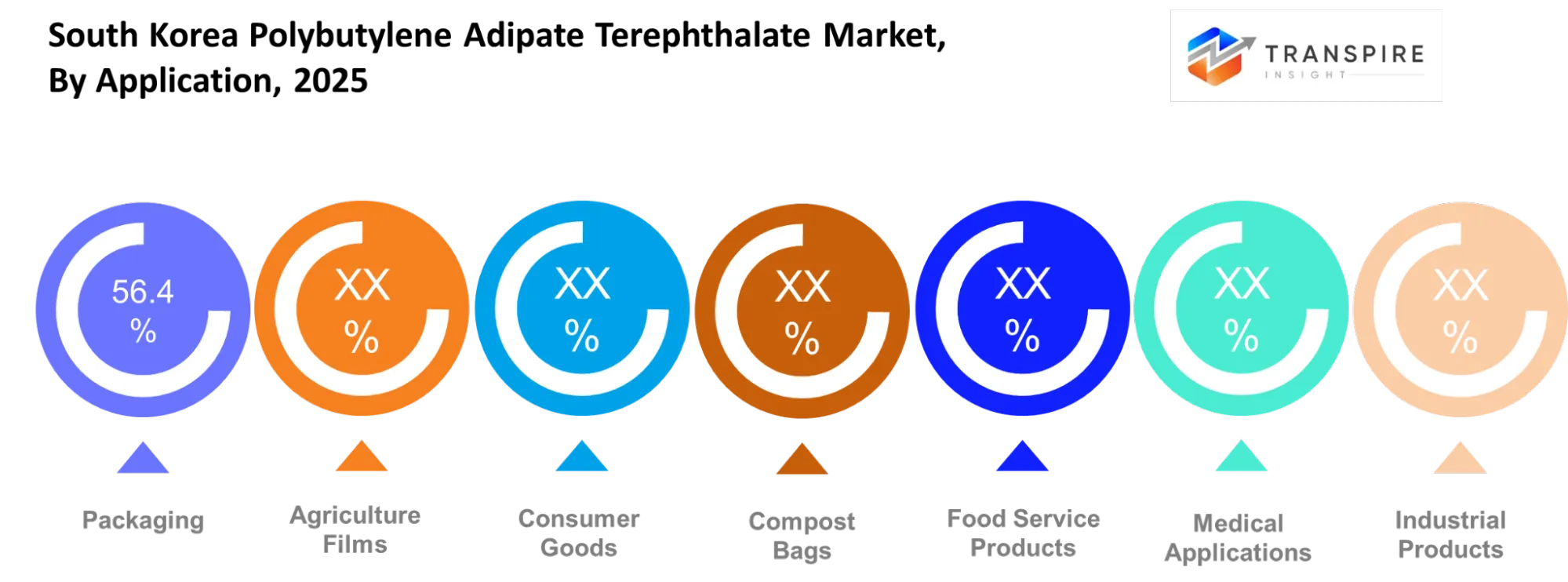
- Food packaging is the main application pull, holding about 48% share in 2025. This is pushed by tighter waste management rules, plus compostability requirements that keep getting stricter, year over year.
- E-commerce packaging is showing up as the fastest-growing application too. Brands are reworking mailers and cushioning materials using compostable polymers, more often than before, so yeah the packaging is changing.
- When it comes to end users, consumer goods manufacturers are the leading group, with more than 40% share, supported by product redesign efforts and those sustainable packaging targets companies keep mentioning.
- Agricultural producers are also becoming the fastest-growing end-user category as biodegradable mulch technologies gain real commercial acceptance, not just pilot projects.
- Key players such as BASF, Novamont, SK Chemicals, Kingfa and Mitsubishi Chemical compete using product innovation, strategic expansion, improved resin formulations and local partnerships, all to protect and build market share.
What are the Key Drivers, Restraints, and Opportunities in the South Korea Polybutylene Adipate Terephthalate Market?
The main push in the South Korea Polybutylene Adipate Terephthalate market is, in a way, the tightening of plastic waste rules plus the fast commercialization of compostable packaging, even if the whole thing sounds a bit circular. Since 2020, retailers, food service businesses, and consumer goods manufacturers have been speeding up the swap from regular polyethylene films to biodegradable alternatives, mostly to match the constantly shifting waste reduction policies. Because of that, commercial scale production has grown a lot and resin vendors plus packaging converters get clearer revenue forecasts, or at least more predictable upside.
The biggest limitation is the structural cost gap between PBAT and petroleum based plastics, which means the difference in pricing is not just “a little”. Making PBAT often needs dedicated feedstocks, limited manufacturing capacity, and fairly involved processing know-how. These issues keep prices relatively elevated and they also curb uptake among buyers who are very cost sensitive. So penetration into high-volume use cases tends to be slower, and downstream processing investments come later than expected.
A key opportunity sits in farming applications, especially biodegradable mulch films. More and more farmers are looking for materials that basically remove film collection and disposal expenses after harvest. Over the next ten years, investment in upgraded PBAT blends, with better tensile performance and faster soil breakdown properties, should open fresh revenue avenues and expand adoption across South Korea agriculture in a more steady way.
What Has the Impact of Artificial Intelligence Been on the South Korea Polybutylene Adipate Terephthalate Market?
Artificial intelligence is kinda reshaping the South Korea Polybutylene Adipate Terephthalate Market, by making manufacturing run more smoothly, tightening up quality control, and pushing supply chain responsiveness, a bit faster than before. Producers are more often rolling out AI based process control setups to fine tune polymerization temperatures, watch reactor conditions closely, and tweak material formulations live in the middle of production. In practice this tends to cut energy use, reduce off-spec batches, and lift how fully plants can run day to day.
Machine learning is also showing up as a way to foresee equipment troubles, then arrange maintenance ahead of time, so sudden shutdowns are less likely to happen. With predictive analytics, manufacturers can spot shifts in feedstock quality, estimate production yields earlier, and manage inventory levels across distribution networks moreq cleanly. Because of that many companies are seeing better uptime, less material waste, and improved cost efficiency overall.
Meanwhile, digital twins plus advanced simulation tools are starting to look useful for designing new PBAT grades that fit packaging needs and agricultural uses. These platforms can shorten product development timelines, and they often lower the experimental costs too, which sounds simple but matters a lot.
Still, AI uptake is held back by the high integration price tags, and by limited historical production data. A lot of facilities keep relying on older, legacy systems. That makes it harder to train dependable predictive models, and it complicates scaling digital transformation initiatives across the whole value chain, not just one site.
Key Market Trends
- Since 2021 , packaging manufacturers kind of moved money and focus toward compostable films while plastic waste regulations got stricter across South Korea. You know, it’s been a slow but noticeable shift.
- PBAT blends with higher tensile strength started showing up more after 2022 , and that helped them stick in food packaging as well as agricultural film uses, even if the adoption pace wasn’t identical everywhere.
- Manufacturers also started localizing their supply chains , partly so they have less exposure to feedstock volatility and those overseas transportation disruptions that can be a real headache.
- Retailers have been pushing harder to replace regular shopping bags, which created measurable changes in procurement strategies since around 2020.
- For agriculture , many users now seem to prefer biodegradable mulch films because they reduce or even eliminate post-harvest collection costs , and also lower labor requirements at the same time.
- On the partnerships side , strategic collaborations between resin producers and packaging converters expanded after 2021 to speed up commercialization for new formulations.
- Meanwhile global suppliers increasingly compete using technology licensing, plus customized material grades, rather than just depending on production capacity alone.
- Investment also moved from pilot projects toward commercial scale biodegradable polymer facilities, as market economics improved and the numbers looked less risky.
- And product development cycles shortened , because digital simulation and AI based material design tools became more common after 2023 .
South Korea Polybutylene Adipate Terephthalate Market Segmentation
By Grade:
Film Grade is made for flexible packing and compostable bags. It’s valued because it has strong stretchability, and it’s pretty easy to process, if you know the workflow. Injection Molding Grade works well for trays containers and molded products, especially when shape stability matters. Extrusion Grade is more about sheets and films, made via continuous processing methods It kinda keeps things steady.
Compostable Grade is for items built to degrade in a controlled way after use. High Flexibility Grade gives softness plus durability, so it fits applications that involve repeated bending, again and again. Blended Grade mixes PBAT with other biodegradable materials, in order to nudge performance higher, but still stay eco-friendly.
Industrial Grade supports heavy-duty industrial goods, where higher strength requirements show up. Others include custom grades too—those are made for niche applications, research work, and specialty manufacturing needs, across several industries.
By Application:
Packaging takes a big slice, biodegradable films and pouches help to lessen reliance on conventional plastics, kinda like lessening the footprint overall. Agriculture Films back mulch film production, and they also cut down waste disposal costs after the crop cycles are done. Consumer Goods cover day to day items such as shopping bags, wraps, and everyday household things.
Compost Bags are getting more attention because municipal waste segregation programs, and composting initiatives. Food Service Products includes disposable cutlery, cups, and containers meant for short term use , with compostable characteristics. Medical Applications focus on a selected set of disposable products, plus specialty materials. Industrial Products cover protective films, liners, and technical components. While Others sort of points to new uses in development that are still being explored.
By End User:
Packaging Companies count as a major end user crowd while sustainable packaging strategies keep spreading through retail, and consumer markets. The Agriculture Sector leans on biodegradable films to reduce the collection costs, and to make post harvest field routines more manageable.
Consumer Goods Manufacturers pick PBAT materials for bags wraps, and disposable items that bring compostable benefits. The Food Industry relies on biodegradable packaging for ready meals and takeaway service.
In the Healthcare Sector, attention goes mainly to a few disposable applications where biodegradability adds extra value. Retail Brands push greener product lineups, Industrial Users take on specialized materials for technical purposes, and Others cover smaller producers as well as research organizations.
What are the Key Use Cases Driving the South Korea Polybutylene Adipate Terephthalate Market?
In South Korea the Packaging remains, kind of the main use case pushing adoption in the Polybutylene Adipate Terephthalate Market. Food manufacturers, retailers and e-commerce companies use PBAT-based films, pouches, and shopping bags, to satisfy compostability requirements and lessen reliance on conventional plastics. There is also strong regulatory pressure on single-use plastics, and that keeps boosting large scale procurement.
Agricultural mulch films ,plus compost bags are finding more room across farming activities and municipal waste handling. Farmers lean toward biodegradable films because they basically remove the need for post-harvest collection. Meanwhile local governments increasingly back compostable waste bags, aiming to enhance organic waste processing, in a more streamlined way.
Newer use cases are showing up too, including medical disposables and specialty consumer products built with advanced PBAT blends. Material innovation keeps moving forward—strength, flexibility and processing efficiency are all being improved, which will let these applications shift from small pilots to commercial adoption across the forecast period.
|
Report Metrics |
Details |
|
Market size value in 2025 |
USD 185.3 Million |
|
Market size value in 2026 |
USD 190.7 Million |
|
Revenue forecast in 2033 |
USD 232.5 Million |
|
Growth rate |
CAGR of 2.87% from 2026 to 2033 |
|
Base year |
2025 |
|
Historical data |
2021 - 2024 |
|
Forecast period |
2026 - 2033 |
|
Report coverage |
Revenue forecast, competitive landscape, growth factors, and trends |
|
Country scope |
South Korea |
|
Key company profiled |
BASF, Novamont, Kingfa, SK Chemicals, LG Chem, Wanhua Chemical, Sinopec, Mitsubishi Chemical, Toray, Eastman, Danimer Scientific, Biome Bioplastics, FKuR, NatureWorks, TotalEnergies Corbion |
|
Customization scope |
Free report customization (country, regional & segment scope). Avail customized purchase options to meet your exact research needs. |
|
Report Segmentation |
By Grade (Film Grade, Injection Molding Grade, Extrusion Grade, Compostable Grade, High Flexibility Grade, Blended Grade, Industrial Grade, Others); By Application (Packaging, Agriculture Films, Consumer Goods, Compost Bags, Food Service Products, Medical Applications, Industrial Products, Others); By End User (Packaging Companies, Agriculture Sector, Consumer Goods Manufacturers, Food Industry, Healthcare Sector, Retail Brands, Industrial Users, Others) |
Which Regions are Driving the South Korea Polybutylene Adipate Terephthalate Market Growth?
The Seoul Metropolitan Area is still kind of the main driver in the South Korea Polybutylene Adipate Terephthalate Market. There is strong push from food packaging firms, consumer goods makers, and retail brands, which basically keeps consumption of biodegradable materials on a large scale. Government programs meant to curb plastic waste have nudged companies toward compostable packaging solutions, and honestly at a faster pace than before. Also, you know, the region has a dense manufacturing network, solid research facilities, and close teamwork between material providers and converters, all of that keeps the area at the top.
Then the southeastern side, with Busan and Ulsan included, shows up as the second important market. The reason for growth here is not only “consumer demand” but more a rooted industrial base plus continued investments in specialty chemicals. Chemical producers and packaging converters get to rely on established supply chains, steady logistics infrastructure, and long-term ties with customers. Put together, this setup brings a dependable revenue stream, and it helps the region keep a steady share in overall market expansion.
As for the central and southwestern regions, they are expected to move the quickest, from 2026 to 2033. Agricultural modernization efforts , plus broader use of biodegradable mulch films, have shifted how the market behaves lately. Local governments are also pushing compostable materials through waste management initiatives, and that opens up extra business chances for manufacturers. This kind of growth path will likely attract fresh entrants and investors too, so they expand production capacity and develop products that match agriculture needs, and regional consumer preferences, at the same time.
Who are the Key Players in the South Korea Polybutylene Adipate Terephthalate Market and How Do They Compete?
In the South Korea Polybutylene Adipate Terephthalate Market the competition is sort of moderately concentrated, and most companies are mostly going at it via how well the material performs, what production tech they can run, and those application oriented formulations that fit a buyer’s needs. The more established chemical producers keep defending their share, not only by staying present but also by putting money into research . Meanwhile newer entrants tend to aim at niche biodegradable compound types, and they also lean on local partnerships for momentum. In practice product quality really matters, compostability certifications matter too , and the ability to tweak or customize formulations is what usually sways purchasing decisions most.
BASF is especially focused on technology innovation; they develop PBAT grades that have better flexibility and easier processability , mainly for packaging and agricultural uses. Novamont stands out with a deep know-how in compostable materials and also with a close, sort of hands-on collaboration with packaging manufacturers, to build tailored solutions. SK Chemicals keeps improving its position through regional manufacturing strength and continued investments in more sustainable polymer technologies.
Kingfa competes by supplying reasonably priced biodegradable compounds, the kind that are adjusted to customer requirements across several industries. Mitsubishi Chemical meanwhile leans on advanced material science, and it continues expanding biodegradable polymer offerings through research partnerships and ongoing new product development. Taken together these approaches help firms keep relationships strong with customers and create benefits that go beyond simple price competition, even when the market pressure feels pretty close.
Company List
- BASF
- Novamont
- Kingfa
- SK Chemicals
- LG Chem
- Wanhua Chemical
- Sinopec
- Mitsubishi Chemical
- Toray
- Eastman
- Danimer Scientific
- Biome Bioplastics
- FKuR
- NatureWorks
- TotalEnergies Corbion
Recent Development News
In January 2026, Novamont unveiled a rebranding and communication campaign for its MATER-BI compostable bioplastics portfolio. The initiative strengthened product visibility across biodegradable plastics markets and reinforced the company's positioning in compostable packaging and film applications. Source: https://www.novamont.com/
In October 2025, SK leave presented crystal nanocellulose reinforced PBAT formulations for specialty applications. The technology improved crystallization performance and expanded potential use cases for PBAT in coatings, spinning technologies, and other higher-value biodegradable material segments. Source: https://www.european-bioplastics.org/
What Strategic Insights Define the Future of the South Korea Polybutylene Adipate Terephthalate Market?
The South Korea Polybutylene Adipate Terephthalate Market is starting to lean toward larger scale commercialization, over the next five to seven years, as biodegradable materials get pulled into mainstream manufacturing, not just staying as a niche option. The core driver behind this shift is basically the mix of tighter waste control regulations corporate packaging commitments and, polymer processing improvements that help shrink the performance difference with regular plastics
There is also a quieter type of risk, not always talked about much, which comes from raw material dependence and a bit of market concentration. In practice, only a small set of suppliers hold the key feedstocks and the production know-how, so manufacturers could face price swings and supply interruptions, even while end use demand stays steady. Meanwhile, there are greener opportunities on the horizon too, especially in biodegradable agricultural films with stronger soil breakdown traits, and this is showing up most in central plus southwestern areas where sustainable farming programs are slowly expanding
Market players are likely to do well if they invest early into localized supply chains and they develop PBAT formulations tailored to specific applications, because that can balance cost efficiency, and also keep performance targets in line
South Korea Polybutylene Adipate Terephthalate Market Report Segmentation
By Grade
- Film Grade
- Injection Molding Grade
- Extrusion Grade
- Compostable Grade
- High Flexibility Grade
- Blended Grade
- Industrial Grade
By Application
- Packaging
- Agriculture Films
- Consumer Goods
- Compost Bags
- Food Service Products
- Medical Applications
- Industrial Products
By End User
- Packaging Companies
- Agriculture Sector
- Consumer Goods Manufacturers
- Food Industry
- Healthcare Sector
- Retail Brands
- Industrial Users
Frequently Asked Questions
Find quick answers to common questions.
The South Korea Polybutylene Adipate Terephthalate Market size is USD 232.5 Million in 2033.
Key segments for the South Korea Polybutylene Adipate Terephthalate Market are By Grade (Film Grade, Injection Molding Grade, Extrusion Grade, Compostable Grade, High Flexibility Grade, Blended Grade, Industrial Grade, Others); By Application (Packaging, Agriculture Films, Consumer Goods, Compost Bags, Food Service Products, Medical Applications, Industrial Products, Others); By End User (Packaging Companies, Agriculture Sector, Consumer Goods Manufacturers, Food Industry, Healthcare Sector, Retail Brands, Industrial Users, Others).
Major South Korea Polybutylene Adipate Terephthalate Market players are BASF, Novamont, Kingfa, SK Chemicals, LG Chem, Wanhua Chemical, Sinopec, Mitsubishi Chemical, Toray, Eastman, Danimer Scientific, Biome Bioplastics, FKuR, NatureWorks, TotalEnergies Corbion.
The South Korea Polybutylene Adipate Terephthalate Market size is USD 185.3 Million in 2025.
The South Korea Polybutylene Adipate Terephthalate Market CAGR is 2.87% from 2026 to 2033.
- BASF
- Novamont
- Kingfa
- SK Chemicals
- LG Chem
- Wanhua Chemical
- Sinopec
- Mitsubishi Chemical
- Toray
- Eastman
- Danimer Scientific
- Biome Bioplastics
- FKuR
- NatureWorks
- TotalEnergies Corbion
About the Authors

Pankaj Ghogare Patil
I am Pankaj Ghogare Patil, a Senior Research Analyst at Transpire Insight, specializing in the Pharmaceutical, Chemicals & Materials, Healthcare IT, and Biotechnology industry. My expertise lies in conducting comprehensive market research, analyzing industry trends, evaluating competitive landscapes, and translating complex data into actionable insights. At Transpire Insight, I closely follow emerging technologies, regulatory developments, and market innovations to create accurate, well-researched, and informative content that helps businesses and professionals make informed decisions. I am committed to producing credible, evidence-based articles that reflect industry best practices while making technical topics accessible and valuable for a broad audience.

Chakradhar Khansole
Chakradhar serves as the Research Director at Transpire Insight, bringing over 8 years of experience in technology, innovation, and strategic market intelligence. He specializes in transforming complex market data into actionable business insights that enable organizations to make informed, growth-oriented decisions. Recognized for his strategic vision and analytical expertise, Chakradhar leads high-impact research initiatives, delivering comprehensive market assessments, competitive intelligence, and forward-looking industry analysis.
Recently Published Reports
-
May 2026
Healthcare Polymer Packaging Market
Healthcare Polymer Packaging Market Size, Share & Analysis Report By Packaging Type (Syringes, IV Bottles and Pouches, Clamshells, Blisters, Bottles & Jars, Containers, Tubes, IV Parental Packaging, Others), By Type (Regulated, Non-regulated), By Polymer Type (LDPE (Low-Density Polyethylene), HDPE (High-Density Polyethylene), Homo-polymer (Homo), Random Copolymer (Random), Block Copolymer (Block), PET, Polystyrene, Polyvinyl Chloride, Polyamide/EVOH, Others), and Geography (North America, Europe, Asia-Pacific, Middle East and Africa, South and Central America), 2021 - 2031
-
Apr 2026
Hydrophilic Tape (Waterstop) Market
Hydrophilic Tape (Waterstop) Market Size, Share & Analysis Report By Type (Bentonite-Based Hydrophilic Tape, Rubber-Based Hydrophilic Tape), By Application (Residential Buildings, Commercial Buildings, Infrastructure Projects), and Geography (North America, Europe, Asia-Pacific, Middle East and Africa, South and Central America), 2021 - 2031
-
Apr 2026
Metalens Market
Metalens Market Size, Share & Analysis Report By Type (Visible Light Metalens, and Infrared Metalens), By Application (Consumer Electronics, Automotive Electronics, Industrial, Medical, and Others), and Geography (North America, Europe, Asia-Pacific, Middle East and Africa, South and Central America), 2021 - 2031
-
Apr 2026
PBT Resin Market
PBT Resin Market Size, Share & Analysis Report By Type (Reinforced PBT Resin, Unreinforced PBT Resin), By Processing Method (Injection Molding, Extrusion, Blow Molding, Others), By End-User (Automotive, Electrical & Electronics, Consumer Appliances, Industrial Machinery, Medical Devices, Packaging, Others), and Geography (North America, Europe, Asia-Pacific, Middle East and Africa, South and Central America), 2021 - 2031