
South Korea Milk Protein Market Size & Forecast:
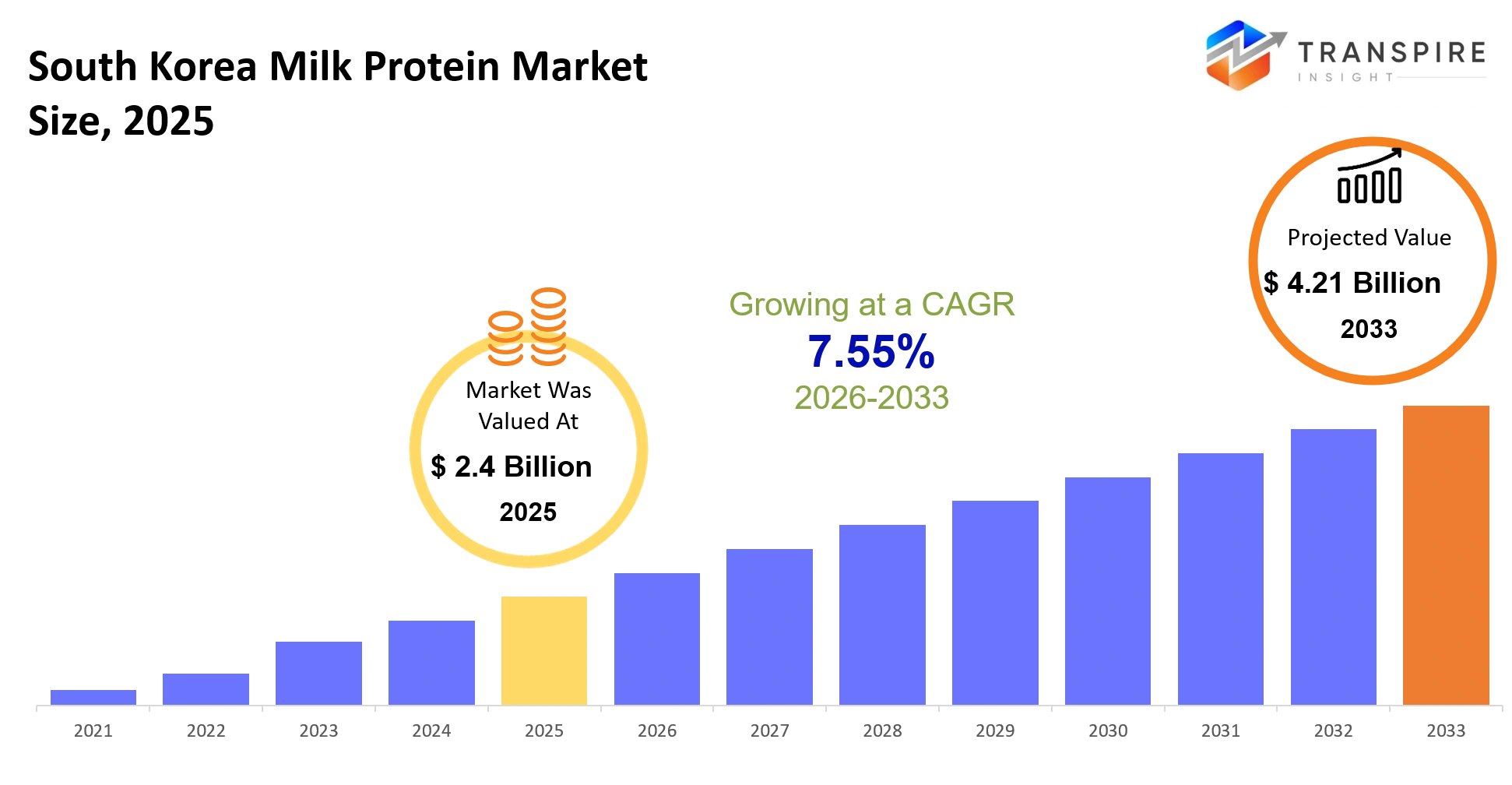
- South Korea Milk Protein Market Size 2025: USD 2.4 Billion
- South Korea Milk Protein Market Size 2033: USD 4.21 Billion
- South Korea Milk Protein Market CAGR: 7.55%
- South Korea Milk Protein Market Segments: By Type (Milk Protein Concentrate, Milk Protein Isolate, Casein, Whey Protein, Others); By Application (Sports Nutrition, Dairy Products, Infant Formula, Bakery, Others)
To learn more about this report,  Download Free Sample Report
South Korea Milk Protein Market Summary
The South Korea Milk Protein Market was valued atUSD 2.4 billion in 2025. It is forecast to reach USD4.21 Billion by 2033. That is a CAGR of 7.55% over the period.
Milk protein ingredients sort of matter a lot in modern food manufacturing; they help with texture, more protein content, and the overall stability you need in things like sports nutrition drinks, infant formula, bakery goods, and other dairy-based formulations. Like in real use, milk protein concentrates and milk protein isolates let manufacturers reach a higher nutritional density while still keeping a steady product structure during processing, and later during storage as well, which becomes pretty essential for big scale, packaged food production.
Over the past 3–5 years, the market has changed in a more structural way, moving toward high-protein and functional food formulations because consumers are increasingly leaning into protein-enriched diets. One key trigger was global supply chain disruption, around the pandemic period, which made dairy ingredient availability tighter, and it pretty much nudged manufacturers toward securing steadier long term sourcing contracts. That same shift also encouraged broader uptake of standardized milk protein ingredients across industrial food production lines, not only in one niche, you know. So right now, growth is mainly pulled forward by expanding sports nutrition and infant formula manufacturing, where protein consistency can directly change product performance and also how well it meets regulatory requirements. For suppliers, this means better margin contracts, plus more integration with major global dairy processors, and as a consequence, you get steadier revenue streams and a clearer demand outlook across B2B food manufacturing channels.
Key Market Insights
- Industry expansion is supported by a 28% rise in protein-fortified food launches between 2022 and 2025 across South Korean food manufacturers.
- Seoul metropolitan region dominates the South Korea Milk Protein Market with nearly 42% share in 2025 due to dense food R&D and manufacturing clusters.
- Gyeonggi-do is the fastest-growing region (2025–2030), driven by expanding sports nutrition and dairy processing facilities.
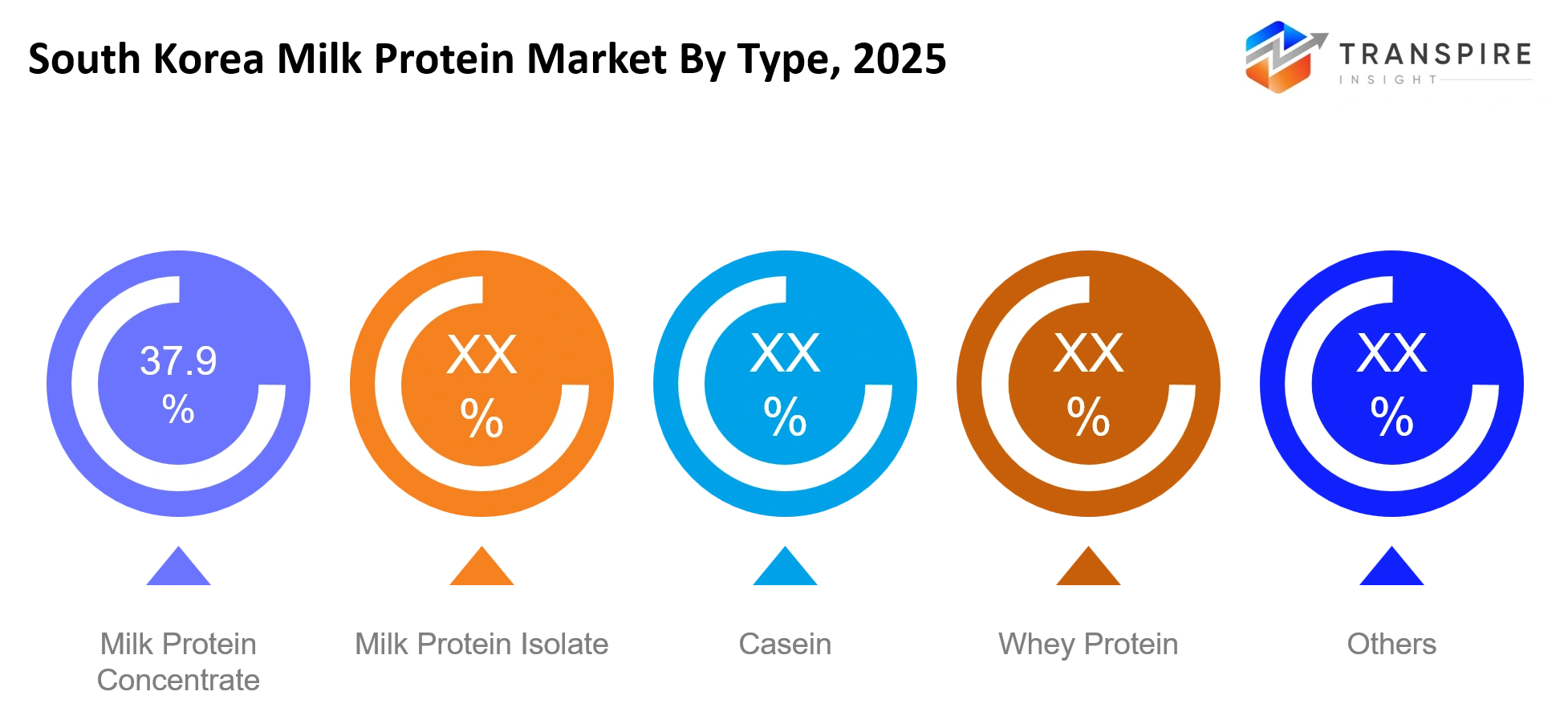
- Milk Protein Concentrate dominates with approximately 48% share due to cost efficiency and broad application in food manufacturing.
- Milk Protein Isolate is the fastest-growing segment (2025–2030) due to rising demand for high-purity protein ingredients.
- Sports nutrition dominates the South Korea Milk Protein Market with nearly 45% share, driven by fitness and performance supplement demand.
- Food and beverage manufacturers tend to dominate with roughly 50% share, mostly because they integrate protein ingredients at a massive scale, you know, it’s like more consistency.
- The main players are things like Fonterra, Arla Foods, FrieslandCampina, Glanbia, Kerry Group, and Nestlé.
- Right now, a lot of them are pouring money into advanced filtration and protein fractionation technologies, aiming for better purity, plus improved functionality in the final blend.
- Also, there are more strategic partnerships with sports nutrition brands, which are helping them push product penetration deeper into those fast-growing consumer segments.
What are the Key Drivers, Restraints, and Opportunities in the South Korea Milk Protein Market?
In South Korea, the Milk Protein Market is mostly driven forward by the quick rollout of high-protein functional foods along with sports nutrition products. It seems this change happened because more consumers want performance-led eating routines, and also dairy goods that are reformulated so the protein level is denser. Food makers are leaning harder on milk protein concentrates and milk protein isolates, not just to boost nutrition but also to keep texture steady and improve overall stability in packaged items. As a result, procurement volumes are moving up from global dairy ingredient suppliers, and the bigger B2B arrangements last longer, especially within the food and beverage industries.
One main issue, or should I say structural constraint, is the heavy dependence on imported dairy raw materials. That means manufacturers can get hit by global pricing swings, and even supply chain interruptions can happen pretty fast. South Korea does not really have enough domestic milk protein production capacity, so suppliers from New Zealand, Europe, and North America become the default choice. This situation adds cost uncertainty for food manufacturers, and it can delay formulation improvements, particularly for smaller and mid-sized firms that have less purchasing power.
At the same time, there is a newer opportunity that is starting to show up. Advanced protein fractionation, plus customized dairy ingredient solutions, are getting attention for sports nutrition and also infant formula uses. More investment is going into precision filtration technology, and regional processing hubs are being built in Asia-Pacific, with South Korea’s Gyeonggi-do cluster being a notable example. When manufacturers start using specialized protein blends, suppliers that can provide high-purity, application-specific ingredients tend to win a stronger long-term pull, mainly across the premium nutrition category.
What Has the Impact of Artificial Intelligence Been on the South Korea Milk Protein Market?
Artificial intelligence, along with advanced digital technologies are now increasingly, in kind of a steady way, reshaping milk protein production and the way dairy ingredients are processed in South Korea, especially when it comes to higher-value functional nutrition manufacturing. In modern processing plants, AI-enabled control systems keep an eye on filtration efficiency, protein concentration levels, and drying parameters all at once, in real time, so the output quality stays steady for milk protein concentrates as well as isolates. With this kind of automation, there are fewer manual changes during spray drying and membrane filtration, which in turn makes each batch more similar to the next. That matters on big production lines used for sports nutrition products and also infant formula ingredients.
Machine learning models are being applied to predictive maintenance of important dairy equipment like ultrafiltration membranes, evaporators, and homogenizers. These systems look at pressure shifts, temperature wavering, and flow inconsistencies, then they can flag early signs of equipment wear before it becomes obvious. When facilities use predictive analytics, they tend to see directional improvements around 10–15% in operational uptime, plus reduced unplanned downtime, and that supports a more stable ingredient supply for food manufacturers.
Still, there is a major limitation, meaning the integration cost for AI systems into older dairy processing infrastructure can be high, particularly for mid-sized facilities. A lot of plants run with scattered sensor networks and legacy control systems, and that situation weakens both data consistency and model accuracy. Because of that, full adoption mostly shows up among large processors, while smaller producers keep doing gradual partial rollouts even if the efficiency gains seem clear.
Key Market Trends
- Milk protein procurement in South Korea went up around 32% between 2022 and 2025, mostly because functional food manufacturing kept expanding so fast that it was almost like everything accelerated at once.
- Sports nutrition product releases that use milk protein isolates actually started rising a lot after 2023, as fitness-oriented consumption habits got stronger in the urban areas.
- Meanwhile, the import dependency also got deeper after 2022, with well over 80% of milk protein ingredients arriving from New Zealand and several European dairy exporters.
- Infant formula producers started shifting toward higher purity protein blends, beginning after 2023, mainly to match tighter nutritional and quality compliance requirements, not only to do with marketing.
- Dairy processors began using membrane filtration upgrades more often after 2024, which helped lift protein yield efficiency by trimming waste during the separation steps.
- Fonterra and FrieslandCampina expanded Asia supply agreements in 2025, aiming to keep milk protein availability steady for South Korean food manufacturers.
- Kerry Group strengthened ingredient customization partnerships with sports nutrition brands after 2023, so brands could pursue differentiation with more specific formulations.
- Processing clusters in Gyeonggi-do expanded their protein formulation capacity after 2024, supporting more local production of premium dairy ingredients.
- Automation inside dairy processing plants increased after 2023, and that reduced operational downtime by roughly 10–15% across the bigger facilities.
- And since 2022, price swings in worldwide dairy markets have pressured manufacturers into using longer-term procurement contracts, just to protect the supply chain from getting unstable.
South Korea Milk Protein Market Segmentation
By Type
Milk Protein Concentrate is seeing solid demand across the South Korean milk protein market, mostly because it’s cost-efficient and also pretty flexible in food manufacturing. Many food processors like it for a stable formulation, especially in bakery and dairy style products, they say it works reliably day to day. Adoption really picked up after 2022, when manufacturers shifted toward standardized protein inputs for bigger-scale production. The trend keeps going, since industrial buyers are leaning more toward consistent quality and steady supply, not just lower pricing.
Milk Protein Isolate looks like it’s rising too, largely because premium nutrition products often need higher purity levels. Whey protein stays in steady use for sports nutrition applications, where quick absorption matters, and it’s kind of the go-to ingredient. Casein also plays a role, mainly for slow-release protein formulations in specialized dietary products, which are not as fast-moving. Other protein types are more limited, but they still show up in niche formulation needs depending on the exact food application. Overall, the South Korean milk protein market shows a noticeable shift toward high-purity protein formats, driven by nutrition-focused industries, and the direction feels like it’s holding.
To learn more about this report, Download Free Sample Report
By Application
Sports nutrition is kind of dominating the South Korean Milk Protein Market, mostly because the fitness culture keeps getting louder, and people are adopting a protein-rich diet. Manufacturers are leaning on milk protein ingredients to help them build performance-focused formulations, and it seems to work well for buyers who want results. After 2023, the growth really picked up, partly because more urban populations started grabbing protein supplements on a regular basis. This expansion keeps moving too, since brands are rolling out new high-protein beverage and supplement lines.
Dairy products remain a major application area, supported by ongoing product tweaks in processed dairy foods. Infant formula is also moving fast, driven by strict nutritional standards and the need for reliable, high-quality protein sources. Bakery applications remain fairly steady, mainly for texture enhancement and protein enrichment, no surprise there. Other uses show up in nutritional drinks and specialty foods too, especially for institutional catering and the health-oriented product segments across South Korea.
What are the Key Use Cases Driving the South Korea Milk Protein Market?
Sports nutrition is still kinda the main reason the South Korea Milk Protein Market is going. The big demand is coming from protein powders, ready-to-drink beverages, and recovery supplements that fitness-focused people actually use. Manufacturers lean on milk protein ingredients because it gives steady amino acid profiles and help product performance when they make everything on a large scale. This whole thing keeps getting stronger as gym culture keeps expanding, and more people in cities start wanting protein-heavy diets.
Infant formula, plus dairy-based functional foods, are also getting more attention, especially from premium nutrition brands and older established food processing companies. These uses come with strict quality controls, and they want high protein purity too, so they can satisfy regulations and keep consumer safety concerns handled. bakery items and fortified food products, meanwhile, use milk protein to help with texture, shelf stability, and nutritional value, which supports a pretty steady demand from industrial food producers.
Medical nutrition and clinical dietary products feel like the newest use case, with real upside ahead. Hospitals and specialized healthcare providers are increasingly picking protein-enriched formulations for patient recuperation and elderly nutrition support. Sports recovery drinks, designed for higher-level athletic performance, are also showing more innovation, like targeted protein delivery solutions that fit specific needs.
|
Report Metrics |
Details |
|
Market size value in 2025 |
USD 2.4 Billion |
|
Market size value in 2026 |
USD 2.53 Billion |
|
Revenue forecast in 2033 |
USD 4.21 Billion |
|
Growth rate |
CAGR of 7.55% from 2026 to 2033 |
|
Base year |
2025 |
|
Historical data |
2021 - 2024 |
|
Forecast period |
2026 - 2033 |
|
Report coverage |
Revenue forecast, competitive landscape, growth factors, and trends |
|
Regional scope |
South Korea |
|
Key company profiled |
Fonterra, Arla, FrieslandCampina, Kerry, Lactalis, Saputo, Glanbia, Nestle, Danone, Hilmar, Agropur, Leprino, Tatua, Armor Proteines, Idaho Milk |
|
Customization scope |
Free report customization (country, regional & segment scope). Take advantage of customized purchase options tailored to meet your exact research needs. |
|
Report Segmentation |
By Type (Milk Protein Concentrate, Milk Protein Isolate, Casein, Whey Protein, Others); By Application (Sports Nutrition, Dairy Products, Infant Formula, Bakery, Others) |
Which Regions are Driving the South Korea Milk Protein Market Growth?
Seoul and the nearby Gyeonggi-do area are basically leading the South Korea Milk Protein Market, mostly because there’s a dense clumping of food processing companies, dairy component manufacturers, and sports nutrition brands. With strong regulatory compliance for food safety and nutritional labeling, buyers are more willing to adopt higher-quality milk protein ingredients. On top of that, the region gets a big boost from advanced R&D setups and a lot of back-and-forth collaboration between universities and food technology firms, so the whole ecosystem keeps feeding experimentation and production, even at a large scale. So yeah, protein-based functional foods keep getting new ideas, and factories can actually scale them out.
Busan then acts like a stable secondary hub, mainly supported by its import and logistics strength. Instead of relying on domestic production concentration as Seoul does, Busan’s momentum comes from being a major port gateway for dairy ingredient imports. Cold chain facilities, plus reliable warehousing systems, help keep the supply moving so manufacturers across southern South Korea can get consistent deliveries. Also, long-running food trade activity, combined with continued logistics investment, makes Busan a dependable piece of the market’s supply continuity.
Meanwhile, Incheon is showing the quickest growth, and it looks tied to expansion inside food processing clusters and logistics modernization projects that have been rolling out recently. After 2024, investments in cold storage and distribution infrastructure have improved dairy ingredient handling efficiency, without too much friction. There’s also rising demand from export-focused food manufacturers, which is pushing more milk protein ingredients into standardized production lines. Overall, this pattern suggests a solid opportunity for suppliers that want to plug into integrated supply chain networks during 2026–2033.
Who are the Key Players in the South Korea Milk Protein Market and How Do They Compete?
Competition in the South Korea Milk Protein Market is kind of moderately consolidated, meaning a few big global dairy ingredient suppliers control most of the volume, while some regional food ingredient distributors go more for customization and quick dispatch. Most established players keep their ground by leaning on long-term agreements with sports nutrition brands, infant formula manufacturers, and large food processors. Meanwhile, new entrants run into annoying barriers tied to cold chain logistics, quality certification rules, and also price swings linked to global dairy sourcing. Overall, rivalry tends to be shaped less by price alone and more by protein purity levels, formulation that fits a specific use case, and plain supply reliability.
Fonterra uses a cost leadership plus scale approach, basically leaning on large dairy sourcing capacity to keep milk protein supply steady for Asian markets. What sets it apart is the consistent protein quality, plus an export infrastructure that handles bulk ingredient shipments without much trouble. For expansion, it concentrates on strengthening long-term supply agreements with South Korean food manufacturers and sports nutrition brands, which is where it can lock demand.
FrieslandCampina competes by pushing technology-driven protein fractionation and developing high-purity ingredients. It differentiates via advanced filtration systems, which improve solubility and overall functional results, especially in infant formula applications. Its growth plan includes widening partnerships with premium nutrition brands across Asia, so its ingredients get picked more often for application-specific needs rather than just generic use.
Glanbia, on the other hand, leans into niche specialization in sports nutrition ingredients. It stands out with tailored protein blends, made specifically for performance beverages and recovery products. Expansion is supported through collaborations with fitness nutrition companies, and also by increasing distribution in high-growth urban food markets, where demand can move faster than in some smaller areas.
Company List:
- Fonterra
- Arla Foods
- FrieslandCampina
- Kerry Group
- Lactalis
- Saputo
- Glanbia
- Nestlé
- Danone
- Hilmar Cheese Company
- Agropur
- Leprino Foods
- Tatua Co-operative Dairy Company
- Armor Protéines
- Idaho Milk Products
Recent Development News
In January 2025, Fonterra Co-operative Group announced expanded supply commitments for functional dairy ingredients across Asia, strengthening its milk protein distribution network for sports nutrition and infant formula manufacturers. The move improved ingredient availability and reduced supply volatility for South Korean food processors relying on imported milk protein concentrates.https://www.fonterra.com
In March 2025, Kerry Group plc entered a strategic collaboration with regional sports nutrition brands in Asia to develop customized high-protein formulations using milk protein isolates. The partnership enhanced product differentiation in performance nutrition and increased adoption of premium protein ingredients in South Korean beverage applications.https://www.kerry.com
In October 2025, FrieslandCampina Ingredients launched an upgraded milk protein fractionation technology aimed at improving solubility and functional performance in infant formula and clinical nutrition products. The innovation strengthened ingredient consistency and supported higher compliance standards for premium dairy applications in Asian markets.https://www.frieslandcampina.com
What Strategic Insights Define the Future of the South Korean Milk Protein Market?
South Korea’s Milk Protein Market seems to be moving, kind of, toward higher-value protein systems that are built for specific applications, not just bulk ingredient supply, mostly because demand is climbing for sports nutrition, infant formula, and that functional food innovation push. In the next 5 to 7 years, growth is likely to be shaped by product differentiation, so manufacturers start focusing more on protein purity, solubility, and digestibility, since formulation rules keep getting tighter and consumers expect performance-based nutrition that actually works.
There’s also a less obvious risk, not everyone talks about, which is the supply getting more concentrated among a small set of global dairy exporters. That kind of concentration puts South Korean manufacturers in a situation with pricing power imbalances, and it can also trigger supply disruptions if there’s a global dairy shortage. As a result, this dependency may narrow bargaining flexibility for mid-sized food producers and, in quieter ways, slow innovation cycles when input prices are swinging.
At the same time, a noticeable opportunity is showing up through localized high-protein formulation hubs in Gyeonggi-do. In those areas, food tech companies are combining advanced fractionation and blending technologies to put together customized protein solutions, rather than using one standard component for everything. These hubs are starting to support sports nutrition and clinical nutrition brands with tailored ingredients. Market players should consider longer-term supply agreements along with application-driven R and D collaborations so they can strengthen differentiated positioning, while also dialing down exposure to global supply fluctuations.
South Korea Milk Protein Market Report Segmentation
-
By Type
- Milk Protein Concentrate
- Milk Protein Isolate
- Casein
- Whey Protein
- Others
-
By Application
- Sports Nutrition
- Dairy Products
- Infant Formula
- Bakery
- Others
Frequently Asked Questions
Find quick answers to common questions.
The expected South Korea Milk Protein Market size for the market will be USD 4.21 Billion in 2033.
By Type (Milk Protein Concentrate, Milk Protein Isolate, Casein, Whey Protein, Others); By Application (Sports Nutrition, Dairy Products, Infant Formula, Bakery, Others).
Major South Korea Milk Protein Market players are Fonterra, Arla, FrieslandCampina, Kerry, Lactalis, Saputo, Glanbia, Nestle, Danone, Hilmar, Agropur, Leprino, Tatua, Armor Proteines, and Idaho Milk.
The South Korea Milk Protein Market size is USD 2.4 Billion in 2025.
The South Korea Milk Protein Market CAGR is 7.55% from 2026 to 2033.
- Fonterra
- Arla Foods
- FrieslandCampina
- Kerry Group
- Lactalis
- Saputo
- Glanbia
- Nestlé
- Danone
- Hilmar Cheese Company
- Agropur
- Leprino Foods
- Tatua Co-operative Dairy Company
- Armor Protéines
- Idaho Milk Products
About the Authors

Chetan Dhatrak
I’m Chetan Dhatrak, a Senior Research Analyst at Transpire Insight, specializing in the Consumer Goods, Foods and Beverages industry. I focus on analyzing market trends, consumer behavior, competitive landscapes, and industry developments to deliver accurate, data-driven insights. My research at Transpire Insight is built on credible sources and in-depth analysis, helping businesses and readers better understand market dynamics, emerging opportunities, and evolving consumer preferences. I’m committed to creating reliable, well-researched content that supports informed decision-making and reflects the latest developments in the consumer goods and food & beverage sectors.

Chakradhar Khansole
Chakradhar serves as the Research Director at Transpire Insight, bringing over 8 years of experience in technology, innovation, and strategic market intelligence. He specializes in transforming complex market data into actionable business insights that enable organizations to make informed, growth-oriented decisions. Recognized for his strategic vision and analytical expertise, Chakradhar leads high-impact research initiatives, delivering comprehensive market assessments, competitive intelligence, and forward-looking industry analysis.
Recently Published Reports
-
Apr 2026
Baby Infant Formula Market
Baby Infant Formula Market Size, Share & Analysis Report By ype (Infant Milk, Follow On Milk, Specialty Baby Milk, Growing-Up Milk), By Ingredient (Carbohydrate, Fat, Protein, Minerals, Vitamins, and Others), By Product Form (Powder, Liquid, and Ready-to-feed), By Distribution Channels (Supermarket/Hypermarket, Specialty Store, Pharmacies, Online Retail, and Others), and Geography (North America, Europe, Asia-Pacific, Middle East and Africa, South and Central America), 2021 - 2031
-
Apr 2026
Edible Insects for Animal Feed Market
Edible Insects for Animal Feed Market Size, Share & Analysis Report By Type (Insect Powder, Insect Meal, Insect Bar, Insect Paste, Insect Oil, and Others), By Insect Type (Beetles, Cricket, Caterpillar, Hymenoptera, Orthoptera, Tree Bugs, and Others), By Application (Livestock, Pet Food, and Aquaculture), By Livestock Type (Poultry, Swine, and Others), and Geography (North America, Europe, Asia-Pacific, Middle East and Africa, South and Central America), 2021 - 2031
-
Apr 2026
Food Industry Disinfection and Bacterial Control Market
Food Industry Disinfection and Bacterial Control Market Size, Share & Analysis Report By Type (Chemical Disinfectants, Physical Disinfectants, and Biocides and Antimicrobials), By Application (Food Processing Equipment Surface Disinfection, Food Preparation Areas Surface Disinfection, Storage Areas Surface Disinfection, Anti-microbial Coatings Food Preservation, and Preservative Solutions Food Preservation), By End User (Meat and Poultry Processing, Dairy Processing, Seafood Processing, Bakery and Confectionery, Restaurants and Commercial Kitchens, and Food Service Providers), By Sales Channel (Online, Offline), and Geography (North America, Europe, Asia-Pacific, Middle East and Africa, South and Central America), 2021 - 2031
-
May 2026
Freeze Dried Food Market
Freeze Dried Food Market Size, Share & Analysis Report By Product Type (Fruits, Vegetables, Freeze-Dried Dairy Products, Freeze-Dried Meat and Seafood, Freeze-Dried Pet Food, and Prepared Meal), By Nature (Organic, and Conventional), By Form (Powdered, Granules, and Diced), By End Use (Breakfast Cereals, Dairy Products, Bakery & Confectionery, Nutritional Bars & Supplements, Powdered Beverages, Snacks, and Retail (Household)), and Geography (North America, Europe, Asia-Pacific, Middle East and Africa, South and Central America), 2021 - 2031