

South Korea Fish Protein Market Size & Forecast:
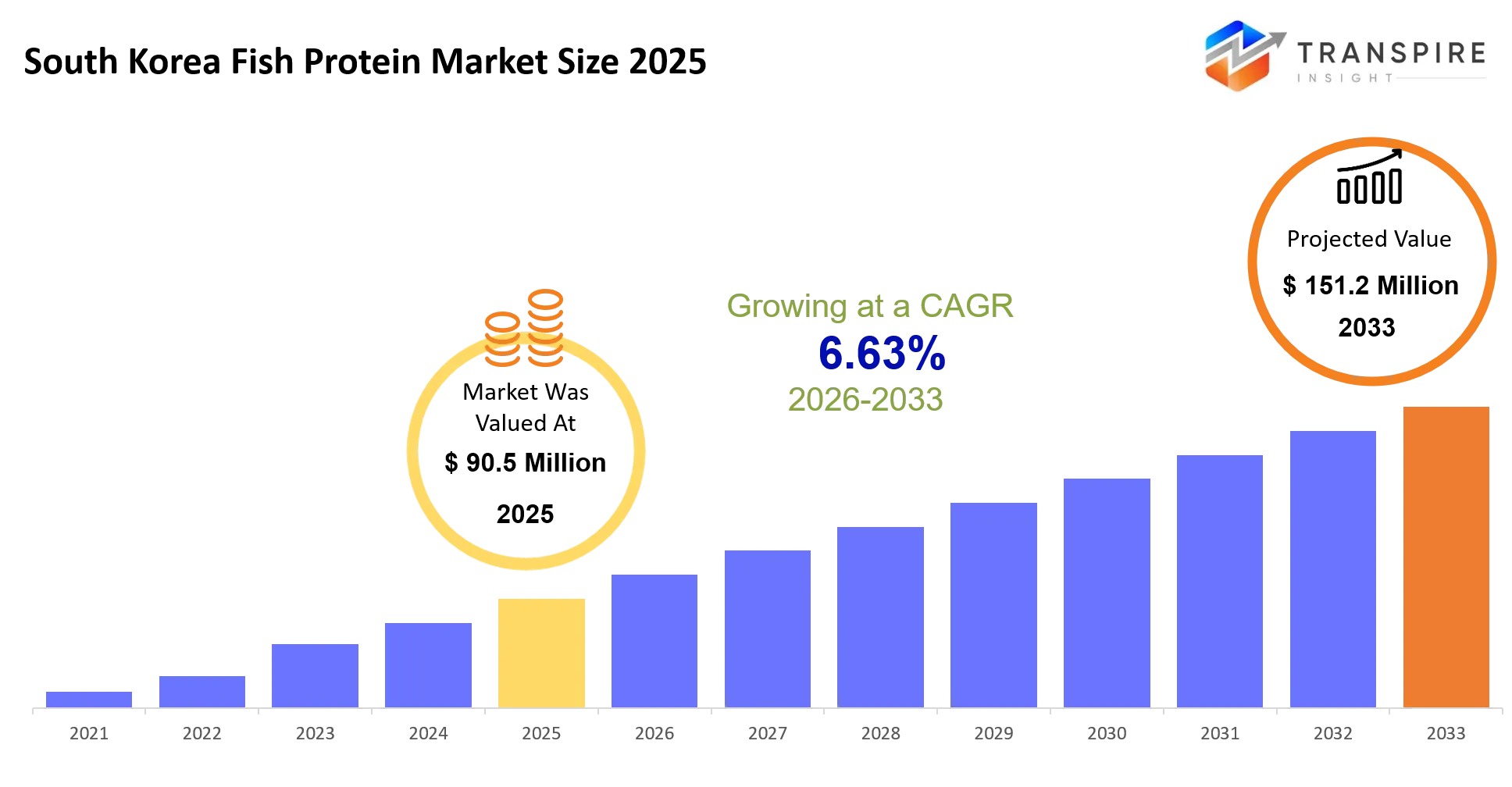
- South Korea Fish Protein Market Size 2025: USD 90.5 Million
- South Korea Fish Protein Market Size 2033: USD 151.2 Million
- South Korea Fish Protein Market CAGR: 6.63%
- South Korea Fish Protein Market Segments: By Product Type (Fish Protein Concentrate, Fish Protein Isolate, Fish Protein Hydrolysates, Fish Meal Protein, Collagen Peptides, Gelatin Protein, Others) | By Source (Tuna, Salmon, Cod, Sardine, Anchovy, Mackerel, Others) | By Application (Food & Beverages, Animal Feed, Nutraceuticals, Pharmaceuticals, Cosmetics, Sports Nutrition, Others) | By End User (Food Industry, Feed Industry, Healthcare Industry, Cosmetics Industry, Sports Nutrition Companies, Others)
South Korea Fish Protein Market Summary
The South Korea Fish Protein Market was valued at USD 90.5 Million in 2025. It is forecast to reach USD 151.2 Million by 2033. That is a CAGR of 6.63% over the period.
South Korea’s fish protein market kind of turns seafood byproducts into concentrated protein ingredients , which then get used in aquaculture feed , pet nutrition, and functional food formulations. In real life it helps curb waste from fish processing plants, while still giving higher digestibility protein for precision nutrition systems, if you want the short version. Over the last five years the market kind of moved away from relying on bulk fishmeal, and toward enzymatically hydrolyzed and higher purity protein fractions. That change feels like a real structural pivot toward value-added bio processing, more than just incremental tweaking.
One big trigger that sped everything up was supply chain volatility during global shipping disruptions, because it basically highlighted how much some players depended on imported feed proteins. Domestic processors then hurried to lock in local circular inputs, not only for cost reasons but for continuity. At the same time stricter environmental rules around seafood waste disposal put extra pressure on processors, so byproducts had to become revenue sources instead of treated as pure cost headaches.
So now investment is leaning into integrated biorefinery models, and that tends to lift margins, while also making domestic supply resilience stronger across both feed and nutraceutical applications.
Key Market Insights
- South Korea Fish Protein Market is now getting kinda quietly taken over by enzymatic hydrolysis approaches, which boost protein digestibility and also make feed performance work better by 2025, overall.
- Meanwhile, circular economy rules in South Korea are basically pointing almost 35% of fish processing waste into protein recovery channels, and that’s already changing the way the industry is shaped.
- Hydrolyzed fish protein is driving clear product segmentation, with roughly 48% share in 2025, because aquaculture feed is being optimized more and more, plus the bioavailability upsides are pretty noticeable.
- Fishmeal still sits as the second-largest segment, but its relative share is slowly easing off, since premium protein concentrates are getting more favored during formulation.
- Protein peptides look like they’re the fastest-growing segment for 2024–2030, helped along by more activity in nutraceuticals and pet nutrition uses, which keeps expanding year by year.
- On the applications side, aquaculture feed keeps the lead with about 55% share, and it really shows how much the South Korea Fish Protein Market leans on better marine farming efficiency improvements.
- Pet food applications are seeing the quickest growth too, mostly tied to premiumization trends, plus rising demand for hypoallergenic protein ingredients that won’t irritate sensitive animals.
- For end-users, aquafeed producers are still dominant with more than 50% share, while nutraceutical manufacturers are ramping up procurement at a faster pace.
- Bigger players, like Biomar, Cargill, CP Foods, Nutreco, Pelagia, and IFFO, are also strengthening R&D on marine protein valorization, as if it’s becoming the new baseline.
- Overall, competitive advantage is starting to shift toward enzyme technology, integrated biorefineries, and localized sourcing strategies, so companies can reduce import dependency risks, without sounding dramatic about it.
What are the Key Drivers, Restraints, and Opportunities in the South Korea Fish Protein Market?
The main engine behind the South Korea Fish Protein Market is more like a regulatory shove toward turning seafood leftovers into value , mixed with the pressure for better aquaculture feed efficiency. Because new environmental compliance rules basically make fish processing residue disposal more expensive, many processors feel pushed to shift toward hydrolyzed protein streams made from those side outputs. In practice this move helps them grab value from stuff that used to be very low-priced waste , and it also supports steadier domestic feed ingredient availability especially when import volatility messes with the wider fishmeal supply chain globally.
The biggest brake is the structural reliance on seasonal fish catch swings , so raw material supply for protein extraction is never truly calm. Unfortunately this kind of variation can’t be fixed overnight, since it follows ecological timing and fishing quotas. So the supply unpredictability keeps showing up, and then production scheduling inefficiencies follow, which in turn lift operational costs and make it harder to grow big capacity inside the South Korea Fish Protein Market.
One notable opening is scaling enzymatic precision fermentation that’s linked with fish byproduct biorefineries . In pilot programs around Busan’s seafood processing zones, teams are pairing microbial protein conversion with more traditional hydrolysis, and they’re reporting better yield efficiency while keeping output quality more consistent. If this path keeps building, it could open higher margin routes in nutraceuticals and higher-end pet nutrition categories over the next cycle or two.
What Has the Impact of Artificial Intelligence Been on the South Korea Fish Protein Market?
Artificial intelligence is now getting kinda embedded into fish protein production systems, to help make the yield more consistent and to use resources more efficiently. In marine processing facilities, AI-driven automation is used to keep an eye on the protein extraction conditions like temperature, enzymatic dosage, and moisture levels, all in real time. This helps cut down on batch wobbling, and it tends to improve overall output quality. On top of that, these setups also connect to digital control platforms that log and track compliance with environmental discharge regulations, so there’s more careful oversight across processing lines , all the time.
Predictive analytics models are also being leaned on to estimate equipment wear in hydrolysis units and drying systems. The goal is to run predictive maintenance plans that lower the chance of sudden stoppages. In certain more advanced facilities, machine learning tools are even used to fine-tune energy consumption during protein concentration stages, which boosts thermal efficiency and can shrink operating costs.
Overall, these approaches have led to measurable gains, like about 10–15% higher production uptime, and up to 8% energy savings in the most optimized facilities. Still, adoption is kinda held back by expensive integration costs, and also by the lack of standardized, real-world training datasets for marine biomass processing. Because of that, model accuracy can drop when the raw material conditions change a lot.
Key Market Trends
- By 2021, fish processing plants mostly were still stuck on disposal style operations, but by 2025 they had started moving, kinda steadily, toward protein extraction systems that actually bring revenue in.
- In that same shift, hydrolyzed fish protein adoption rose a lot, especially when aquafeed manufacturers started caring more about digestibility upgrades rather than relying on older fishmeal inputs.
- Then in 2023 , regulators tightened the rules around marine waste discharge, and that pushed more than 30% of the processors to put money into valorization technologies, not just for compliance, but also for better output.
- After 2022, premiumization trends showed up big in pet nutrition, and demand from pet nutrition brands jumped hard, which in turn reshaped ingredient sourcing strategies in the South Korea Fish Protein Market.
- Also the integrated biorefinery models expanded in Busan and Incheon, and they kind of replaced the more fragmented processing setups with centralized systems, even if it took some time.
- Import dependence on fishmeal went down too, as domestic protein recovery capacity expanded, so supply chain resilience improved after the post-2022 disruptions.
- Meanwhile Cargill and Nutreco expanded their partnerships with Korean processors in order to lock in marine protein supply contracts, earlier rather than later.
- In many facilities enzymatic hydrolysis technologies started taking the place of conventional thermal processing, because the goal became higher yield efficiency, plus better amino acid retention.
- By 2024 aquaculture feed formulators also shifted toward blended protein matrices, so they relied less on single source fishmeal ingredients, even when it was easier to standardize.
- And sustainability certification requirements increasingly started influencing procurement decisions across export oriented seafood and feed supply chains, whether companies wanted it or not.
South Korea Fish Protein Market Segmentation
By Product Type:
Fish Protein Concentrate helps with feed blending requirements and gives a steady protein base for aquaculture, also pet nutrition use cases. Fish Protein Isolate goes a step further and brings a higher purity protein that fits specialized nutrition recipes, plus that functional food development side. Fish Protein Hydrolysates are often chosen because they support faster absorption, and better digestibility, so they land well in premium feed setups. Fish Meal Protein still stays pretty common too, mostly because it is cost-efficient and the supply is steady when people make bulk feed.
Collagen Peptides back skin, joint and recovery oriented nutrition products, like in healthcare routines and cosmetics lines. Gelatin Protein is the one that supports thickening and stabilization roles, in processed foods and pharmaceutical applications. Other marine based protein types cover more niche requirements, when someone really needs customized protein performance for a particular use. Overall, the product mix is shifting toward higher purity and more processed formats, simply because demand keeps pushing for better absorption and nutrition performance that can be controlled.
By Source:
Tuna kind of serves as a big raw material, because the processing volumes are strong and the industrial supply chains stay pretty steady. Salmon also acts as a high-value raw input for premium protein extraction, mainly for those nutrition-focused use cases. Cod helps with consistent fish protein production, since the global sourcing is stable and it still works well with standard processing setups. Sardine and anchovy chip in with high-volume raw supply , which in turn backs cost-efficient protein manufacturing.
Mackerel brings a balanced protein yield , and it is usually available in local processing zones. Meanwhile, other marine species add a bit of sourcing flexibility, and they help lower dependence on only one catch type. The choice of source depends on seasonality, yield efficiency, and the protein recovery rate. If you diversify across fish types it improves production stability, and it supports continuous output in processing facilities too.
By Application:
Food and Beverages often use fish-derived proteins, not only for functional enrichment but also for protein strengthening in processed products. Animal Feed still sits as the biggest application place, mostly because of the strong pull from aquaculture and livestock nutrition systems. Nutraceuticals typically rely on hydrolyzed proteins for digestion help and kind of recovery aimed formulations.
For Pharmaceutical uses, marine proteins are used in tightly controlled formulations, for therapeutic purposes as well as supplement development. In Cosmetics you’ll see collagen and peptide type ingredients for skin care support, plus hydration centered products. Sports Nutrition focuses on high-absorption protein for recovery and performance backing.Then there are Other applications, like niche industrial needs where protein functionality, and overall stability are the key.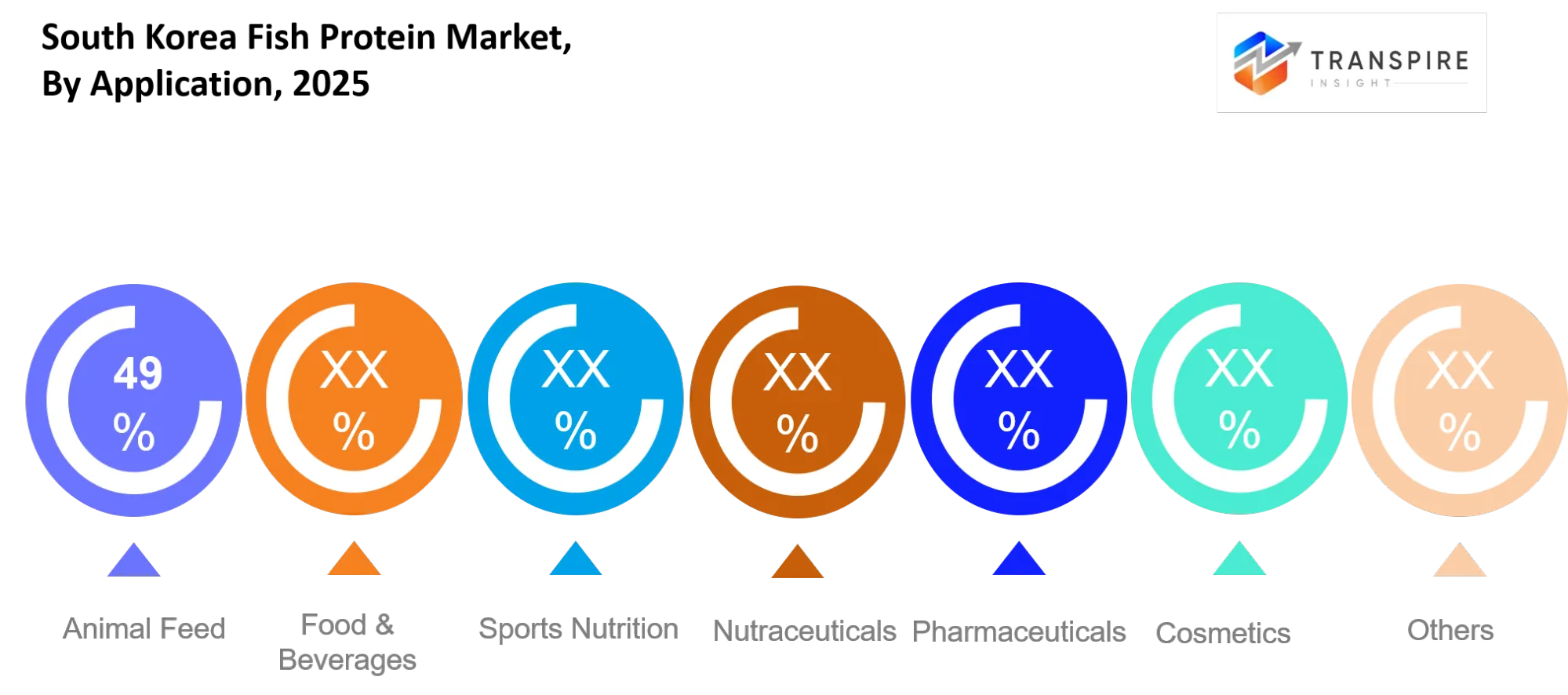
By End User:
In the Food Industry, marine proteins are often used for enrichment in processed food making and for functional ingredient development and such. Meanwhile the Feed Industry tends to be the biggest end user group, mostly because aquaculture and livestock protein demand keeps staying strong . The Healthcare Industry meanwhile leans on protein based ingredients for supplements and for clinical nutrition support, you know.
Then there is the Cosmetics Industry, where collagen and peptide based inputs are common for skin care routines and anti-aging type formulations. The Sports Nutrition Companies tend to favor fast absorbing protein formats so they can get better recovery and muscle support products out to the market. Other end users also show up, like specialty manufacturers, who use marine proteins to do customized product development.Across all these end users , demand keeps moving up as the focus on high quality protein and sustainable sourcing gets stronger throughout the supply chains.
What are the Key Use Cases Driving the South Korea Fish Protein Market?
Aquaculture feed still seems like the most used thing in the South Korea Fish Protein Market , mainly because fish protein offers top digestibility and a well balanced amino acid set for pretty intensive fish farming setups. Feed makers lean on it to push faster growth, lower the feed conversion ratio , and keep production quality steadier inside both controlled marine and inland environments. On top of that, the added regulatory focus on sustainable aquaculture practices kind of keeps the demand more or less steady for marine based protein inputs.
Pet nutrition along with functional food uses are growing too, since brands are chasing hypoallergenic and higher protein recipes. Nutraceutical firms and health minded buyers often choose hydrolyzed fish protein for digestion friendly supplements and recovery focused items. Even cosmetics companies fit collagen rich marine protein into skin care lines , which is happening because shoppers want bio based and traceable components , not just “anything” from a lab shelf.
New directions are also forming , including pharmaceutical grade protein isolates used for clinical nutrition and specialized recovery therapies. Sports nutrition labels are trying high purity marine protein as a quick absorption option, mostly for performance recovery blends. This shift is getting helped by better extraction technologies and tighter quality checks in processing plants , so the product stays consistent from batch to batch.
|
Report Metrics |
Details |
|
Market size value in 2025 |
USD 90.5 Million |
|
Market size value in 2026 |
USD 96.5 Million |
|
Revenue forecast in 2033 |
USD 151.2 Million |
|
Growth rate |
CAGR of 6.63% from 2026 to 2033 |
|
Base year |
2025 |
|
Historical data |
2021 - 2024 |
|
Forecast period |
2026 - 2033 |
|
Report coverage |
Revenue forecast, competitive landscape, growth factors, and trends |
|
Country scope |
South Korea |
|
Key company profiled |
BioMarine, Omega Protein, Scanbio Marine Group, TripleNine Group, Colpex International, Nutrifish, Hofseth BioCare, Diana Aqua, Symrise Aqua Feed, Copalis, Aker BioMarine, GC Rieber VivoMega, Janatha Fish Meal, Sopropêche, KD Pharma Group |
|
Customization scope |
Free report customization (country, regional & segment scope). Avail customized purchase options to meet your exact research needs. |
|
Report Segmentation |
By Product Type (Fish Protein Concentrate, Fish Protein Isolate, Fish Protein Hydrolysates, Fish Meal Protein, Collagen Peptides, Gelatin Protein, Others) | By Source (Tuna, Salmon, Cod, Sardine, Anchovy, Mackerel, Others) | By Application (Food & Beverages, Animal Feed, Nutraceuticals, Pharmaceuticals, Cosmetics, Sports Nutrition, Others) | By End User (Food Industry, Feed Industry, Healthcare Industry, Cosmetics Industry, Sports Nutrition Companies, Others) |
Which Regions are Driving the South Korea Fish Protein Market Growth?
The Busan–Ulsan coastal corridor is basically driving the South Korea Fish Protein Market, mainly because there are so many seafood processing clusters right there, plus direct access to big fishing ports. The area is holding up well thanks to solid cold-chain infrastructure, and also because byproduct collection systems are already in place so raw material keeps moving pretty reliably. With marine waste rules being enforced pretty strictly, processors in this zone have been pushed to put money into protein recovery facilities. And the supply links between the ports and feed manufacturers are integrated in a way that really reinforces the region’s leading status.
Meanwhile the Incheon–Seoul metropolitan industrial belt acts more like a steady secondary hub, supported by ongoing demand from feed formulators and nutraceutical manufacturers. Compared to Busan’s coastal strength, this belt leans less on being close to the catch and more on advanced processing, formulation, and distribution skills. The logistics connectivity is strong, and regulation enforcement is usually predictable, so it keeps contributing to stable revenue streams. Here the investment mindset stays a bit cautious, mostly incremental upgrades rather than any big capacity re-configuration.
The Jeolla coastal region is showing the fastest growth in the South Korea Fish Protein Market , and that’s tied to recent modernization efforts for fishing ports, plus government-backed upgrades for seafood processing. New cold storage setups and better landing infrastructure have improved how efficiently raw material gets handled. Local authorities have also been nudging waste-to-protein conversion projects, and that has pulled in private funding for enzymatic hydrolysis units. Overall this expansion points to more decentralized production capacity which is creating openings for new entrants and tech providers, especially over the 2026–2033 window.
Who are the Key Players in the South Korea Fish Protein Market and How Do They Compete?
The competitive landscape of the South Korea Fish Protein Market is still, sort of moderately consolidated, with the usual feed and marine ingredient players holding on pretty tightly. Most of the rivalry comes from processing efficiency, enzyme technology adoption, and having a steady run of raw material supply. Fresh companies are starting to eye smaller, more specific pockets like high-purity hydrolysates, or collagen peptides, but the scale thing still works against them, because the bigger guys already have integrated supply chains plus long-term contracts, so they can breathe easier.
For example, Cargill keeps leaning into large-scale feed ingredient integration, basically using its global procurement muscle and advanced formulation know-how, to keep costs in check across marine protein lines. Nutreco tends to stand out with aquaculture-focused nutrition research and more customized feed solutions, aiming to lift growth performance in intensive farming setups. Biomar strengthens its stance via specialized aquafeed formulations and by building steady partnerships with regional fish farmers across Asia, which helps them match local production needs more closely.
Pelagia, on the other hand, competes with vertically integrated marine byproduct processing, so they can control raw material quality better and keep traceability tighter too. CP Foods expands through aquaculture along with feed integration tactics, tying upstream seafood sourcing to downstream feed production, so it feels like a continuous loop. Overall these firms are putting more money into enzymatic processing upgrades, regional collaboration, and sustainability certification systems—mostly to lock in supply stability long-term, and to make sure their product performance is distinct, even when the market gets crowded.
Company List
- BioMarine
- Omega Protein
- Scanbio Marine Group
- TripleNine Group
- Colpex International
- Nutrifish
- Hofseth BioCare
- Diana Aqua
- Symrise Aqua Feed
- Copalis
- Aker BioMarine
- GC Rieber VivoMega
- Janatha Fish Meal
- Sopropêche
- KD Pharma Group
Recent Development News
In April 2026, Dongwon Industries announced a strategic push to develop tuna-byproduct–derived functional ingredients as part of its entry into the marine bio and functional protein space. The initiative focuses on converting tuna processing waste into high-value protein ingredients for health foods and potential pharmaceutical applications, strengthening Korea’s circular seafood protein ecosystem and expanding demand beyond conventional fish protein hydrolysates. Sourcehttps://biz.chosun.com/
In June 2026, Pulmuone Co. Ltd. entered a memorandum of understanding with U.S.-based BlueNalu to accelerate the commercialization of cell-based seafood products in South Korea and broader Asia. The partnership signals convergence between cultivated seafood and traditional marine protein markets, potentially reshaping competitive dynamics in the fish protein and alternative seafood protein sector. Sourcehttps://www.seafoodsource.com/
What Strategic Insights Define the Future of the South Korea Fish Protein Market?
South Korea's fish protein market is slowly, kind of, shifting away from that straight up volume-driven protein commodity space and into a higher value biofunctional ingredient ecosystem. In the next 5–7 years the growth story looks like it will be pulled by a meeting point between seafood processing waste valorization , precision fermentation inputs , and then the demand side from health , sports nutrition and medical food sectors all together.
There is also a quieter risk that people do not talk about enough—overdependence on byproduct based feedstock streams where if marine catch quotas get tighter, or if supply chains consolidate among the bigger processors, then raw material availability can get constrained. That can squeeze margins even while demand keeps rising, which feels a bit unfair.
Meanwhile there’s a non mainstream opportunity that’s moving faster than you would expect: hybrid marine protein platforms. These mix enzymatic fish hydrolysates with cultivated or plant-based proteins, especially since regulatory pathways for novel foods in Korea are gradually opening. Strategically, companies should probably move early on secured byproduct sourcing agreements with major seafood processors, while also co-developing certified functional protein applications with food and nutraceutical brands, so they can lock in downstream demand before the market becomes vertically integrated.
South Korea Fish Protein Market Report Segmentation
By Product Type
- Fish Protein Concentrate
- Fish Protein Isolate
- Fish Protein Hydrolysates
- Fish Meal Protein
- Collagen Peptides
- Gelatin Protein
By Source
- Tuna
- Salmon
- Cod
- Sardine
- Anchovy
- Mackerel
By Application
- Food & Beverages
- Animal Feed
- Nutraceuticals
- Pharmaceuticals
- Cosmetics
- Sports Nutrition
By End User
- Food Industry
- Feed Industry
- Healthcare Industry
- Cosmetics Industry
- Sports Nutrition Companies
Frequently Asked Questions
Find quick answers to common questions.
The South Korea Fish Protein Market size is USD 151.2 Million in 2033.
Key Segments for the South Korea Fish Protein Market are By Product Type (Fish Protein Concentrate, Fish Protein Isolate, Fish Protein Hydrolysates, Fish Meal Protein, Collagen Peptides, Gelatin Protein, Others) | By Source (Tuna, Salmon, Cod, Sardine, Anchovy, Mackerel, Others) | By Application (Food & Beverages, Animal Feed, Nutraceuticals, Pharmaceuticals, Cosmetics, Sports Nutrition, Others) | By End User (Food Industry, Feed Industry, Healthcare Industry, Cosmetics Industry, Sports Nutrition Companies, Others).
Major South Korea Fish Protein Market players are BioMarine, Omega Protein, Scanbio Marine Group, TripleNine Group, Colpex International, Nutrifish, Hofseth BioCare, Diana Aqua, Symrise Aqua Feed, Copalis, Aker BioMarine, GC Rieber VivoMega, Janatha Fish Meal, Sopropêche, KD Pharma Group.
The Current South Korea Fish Protein Market size is USD 90.5 Million in 2025.
The South Korea Fish Protein Market CAGR is 6.63% from 2026 to 2033.
- BioMarine
- Omega Protein
- Scanbio Marine Group
- TripleNine Group
- Colpex International
- Nutrifish
- Hofseth BioCare
- Diana Aqua
- Symrise Aqua Feed
- Copalis
- Aker BioMarine
- GC Rieber VivoMega
- Janatha Fish Meal
- Sopropêche
- KD Pharma Group
About the Authors

Pankaj Ghogare Patil
I am Pankaj Ghogare Patil, a Senior Research Analyst at Transpire Insight, specializing in the Pharmaceutical, Chemicals & Materials, Healthcare IT, and Biotechnology industry. My expertise lies in conducting comprehensive market research, analyzing industry trends, evaluating competitive landscapes, and translating complex data into actionable insights. At Transpire Insight, I closely follow emerging technologies, regulatory developments, and market innovations to create accurate, well-researched, and informative content that helps businesses and professionals make informed decisions. I am committed to producing credible, evidence-based articles that reflect industry best practices while making technical topics accessible and valuable for a broad audience.

Chakradhar Khansole
Chakradhar serves as the Research Director at Transpire Insight, bringing over 8 years of experience in technology, innovation, and strategic market intelligence. He specializes in transforming complex market data into actionable business insights that enable organizations to make informed, growth-oriented decisions. Recognized for his strategic vision and analytical expertise, Chakradhar leads high-impact research initiatives, delivering comprehensive market assessments, competitive intelligence, and forward-looking industry analysis.
Recently Published Reports
-
May 2026
Healthcare Polymer Packaging Market
Healthcare Polymer Packaging Market Size, Share & Analysis Report By Packaging Type (Syringes, IV Bottles and Pouches, Clamshells, Blisters, Bottles & Jars, Containers, Tubes, IV Parental Packaging, Others), By Type (Regulated, Non-regulated), By Polymer Type (LDPE (Low-Density Polyethylene), HDPE (High-Density Polyethylene), Homo-polymer (Homo), Random Copolymer (Random), Block Copolymer (Block), PET, Polystyrene, Polyvinyl Chloride, Polyamide/EVOH, Others), and Geography (North America, Europe, Asia-Pacific, Middle East and Africa, South and Central America), 2021 - 2031
-
Apr 2026
Hydrophilic Tape (Waterstop) Market
Hydrophilic Tape (Waterstop) Market Size, Share & Analysis Report By Type (Bentonite-Based Hydrophilic Tape, Rubber-Based Hydrophilic Tape), By Application (Residential Buildings, Commercial Buildings, Infrastructure Projects), and Geography (North America, Europe, Asia-Pacific, Middle East and Africa, South and Central America), 2021 - 2031
-
Apr 2026
Metalens Market
Metalens Market Size, Share & Analysis Report By Type (Visible Light Metalens, and Infrared Metalens), By Application (Consumer Electronics, Automotive Electronics, Industrial, Medical, and Others), and Geography (North America, Europe, Asia-Pacific, Middle East and Africa, South and Central America), 2021 - 2031
-
Apr 2026
PBT Resin Market
PBT Resin Market Size, Share & Analysis Report By Type (Reinforced PBT Resin, Unreinforced PBT Resin), By Processing Method (Injection Molding, Extrusion, Blow Molding, Others), By End-User (Automotive, Electrical & Electronics, Consumer Appliances, Industrial Machinery, Medical Devices, Packaging, Others), and Geography (North America, Europe, Asia-Pacific, Middle East and Africa, South and Central America), 2021 - 2031