

North America Marine Peptide Market Size & Forecast:
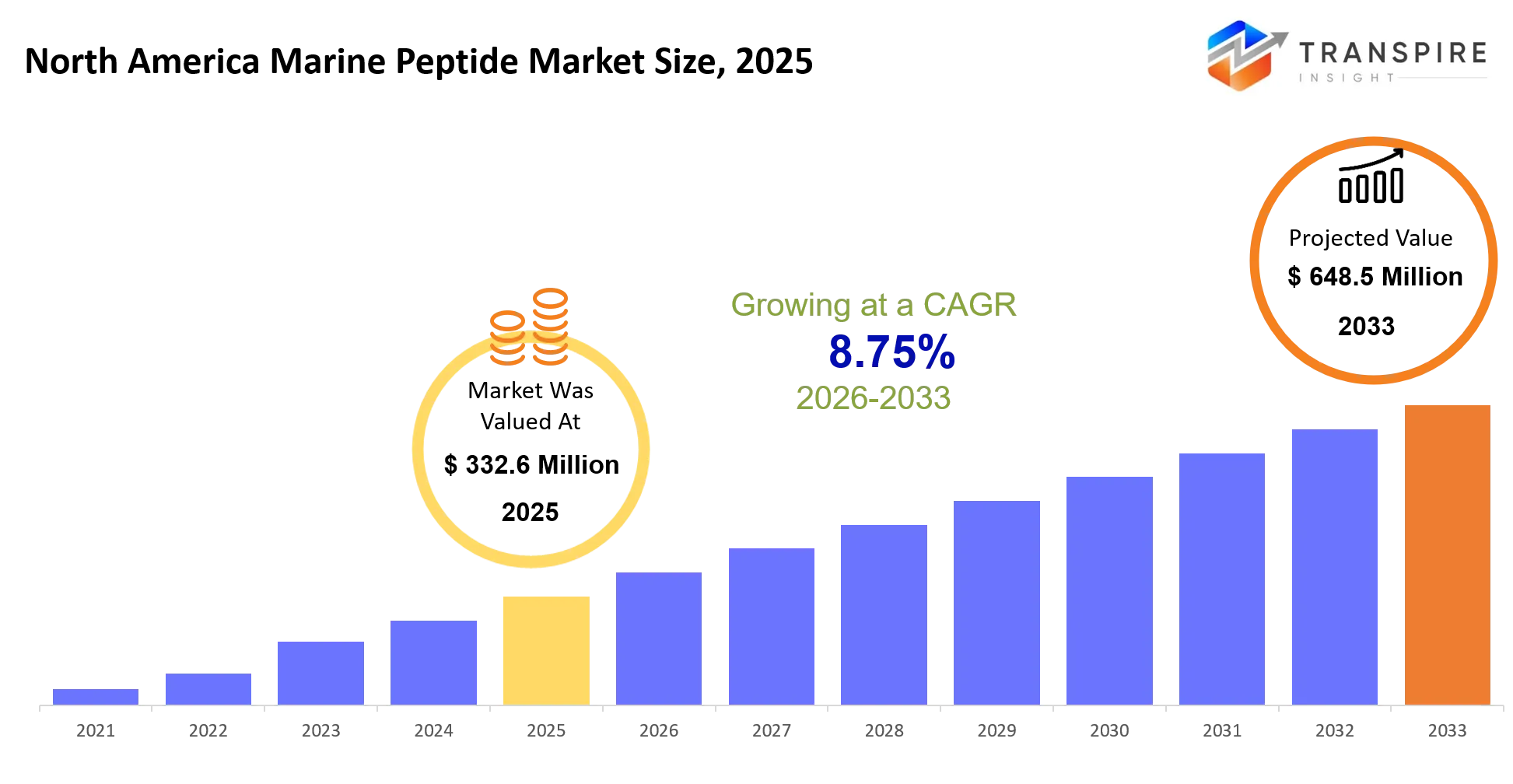
- North America Marine Peptide Market Size 2025: USD 332.6 Million
- North America Marine Peptide Market Size 2033: USD 648.5 Million
- North America Marine Peptide Market CAGR: 8.75%
- North America Marine Peptide Market Segments: By Product Type (Collagen Peptides, Bioactive Peptides, Fish Protein Hydrolysates, Gelatin Peptides, Others); By Application (Nutraceuticals, Cosmetics, Pharmaceuticals, Functional Foods, Others); By Source (Fish-derived Peptides, Algae-derived Peptides, Shellfish-derived Peptides, Others); By End User (Food & Beverage Companies, Cosmetic Companies, Pharmaceutical Companies, Others).
To learn more about this report,  Download Free Sample Report
North America Marine Peptide Market Summary:
The North America Marine Peptide Market size is estimated at USD 332.6 Million in 2025 and is anticipated to reach USD 648.5 Million by 2033, growing at a CAGR of 8.75% from 2026 to 2033.Marine peptides are being used more and more as high value bioactive ingredients in pharmaceuticals, nutraceuticals, cosmetics, and also in specialty industrial uses, and they help makers build products with health focused, antimicrobial, and performance boosting effects. In real life, the market kind of turns underused marine biomass into commercially useful compounds so you get new income channels while also improving resource efficiency across the whole blue economy, if that makes sense.
Over the last three to five years, the market has shifted in a structural way, from producing simple marine extracts toward doing more advanced peptide isolation, purification, and bioengineering work that allows better efficacy and formulations that are matched to specific uses. One big thing that pushed the change was the supply chain disruption that happened during and after the COVID-19 period. It made it clear where the weak points were in the usual raw material sourcing, and that encouraged companies to diversify toward marine-derived bioactive ingredients. Because of this, many firms have put more money into marine biotechnology platforms, which then expands the number of commercial applications, and also improves product differentiation in practice. This whole evolution is now showing up as stronger uptake in healthcare and consumer wellness, supporting premium pricing chances, and turning the revenue model into something more innovation driven for everyone involved.
Key Market Insights
- In 2025 the United States kinda dominates the North America marine peptide market, it is taking around 78% of regional market share.
- And yeah, most of the focus stays here, North America in general, while Canada is there too.
- Canada is the second-largest market in this space, it is being backed by expanding marine biotechnology research, and also by the idea of sustainable marine resource utilization which sounds simple but matters a lot.
- Looking ahead, Canada is projected to be the fastest-growing regional market all the way through 2032, with innovation funding and blue economy initiatives pushing the pace.
- When it comes to types, collagen peptides still lead the marine peptide industry, they hold close to 42% market share because they get used a lot in nutraceuticals, and also in beauty products.
- Bioactive marine peptides sit in second place, mainly because pharmaceutical uses are growing, plus they’re showing up more as functional ingredients.
- Antimicrobial marine peptides are expected to be the fastest-growing segment during 2025–2032, mostly because people want fresh therapeutic solutions that can actually work.
- For applications, nutraceuticals remain the dominant segment, contributing roughly 38% of North America marine peptide market revenue in 2025.
- Pharmaceutical applications are also a big chunk, since peptide based drug development keeps expanding. Cosmetics and personal care is the fastest-growing application category, fueled by demand for anti aging and skin repair formulations, and it keeps getting more traction each year.
- On the demand side, pharmaceutical and biotechnology companies lead the market, representing nearly 45% of overall demand for marine peptide products.
- Nutraceutical manufacturers have the second-largest share, they keep leaning into marine derived inputs for premium health supplements.
- Cosmetic product developers are emerging as the fastest-growing end-user group through the forecast period, which is honestly kind of noticeable.
What are the Key Drivers, Restraints, and Opportunities in the North America Marine Peptide Market?
The biggest driver pushing the North America Marine Peptide Market forward is kind of the rapid expansion of clinically validated, bioactive ingredients inside nutraceutical and pharmaceutical formats. Lately, improvements in peptide extraction, purification, and characterization technologies have reduced the know how barriers that used to block commercial scale production. At the same time, manufacturers are really looking for ingredients with scientifically documented functionality, so they can support a more premium product image. That change has made marine peptides pop up more often in joint wellness, skin related formulations, and metabolic wellness categories, which lets suppliers charge stronger margins and also open up new revenue channels via more specialized product builds.
Still, the biggest obstacle is the complex, fragmented marine raw material supply chain. Marine peptides require consistent access to fish, shellfish, and other marine biomass sources, but that access can swing because of seasonal harvesting patterns, fisheries management policies, and general environmental variability. Trying to build alternative sourcing networks also takes a lot of capital, plus longer term supplier connections. Since this limitation is more structural rather than cyclical, it tends to slow down production scale, reduce pricing stability , and stretch out the timeline for commercializing new peptide based products.
One big growth opportunity is in precision marine biotech, especially where AI helps with peptide discovery, plus those more advanced bioinformatics platforms that kinda tie everything together. Lately research groups and biotechnology firms in the United States and Canada are spending more, to find fresh marine peptides that have targeted medicinal effects. Because these platforms, shorten development timelines and they also raise success rates, the end result is that they can open up high value drug like uses, not just the usual nutraceutical lane. In other words, the market can stretch further than before, even if it has been kinda focused traditionally.
What Has the Impact of Artificial Intelligence Been on the North America Marine Peptide Market?
Artificial intelligence and advanced digital technologies are kinda transforming the North America Marine Peptide Market, by speeding up peptide discovery, tuning bioprocessing activities, and also making commercial development feel faster overall. Pharmaceutical, biotechnology, and nutraceutical firms are using AI based screening platforms more and more, to sift through huge marine genomic and proteomic datasets, so they can spot promising bioactive peptide candidates in a fraction of the time it would take with classic lab routines. On top of that, automated laboratory setups help simplify extraction, purification, and quality control workflows, which cuts down the need for constant human handling, and it also helps keep batch performance more consistent.
Machine learning models are being used too, to estimate peptide bioactivity, stability, toxicity, and even formulation performance ahead of any expensive clinical or commercial testing. With these predictions, companies can rank the highest potential candidates first, compress development schedules, and raise research output. Then, in manufacturing environments, advanced analytics give support for process improvement by keeping track of things like extraction yield, temperature regulation, and purification effectiveness. That tends to improve how well resources get used, it can also cut down production losses, and increase plant throughput overall.
So basically the outcome is quicker commercialization of marine derived ingredients, reduced development costs, and better returns on research spending. Still, AI rollout has a big roadblock, because high quality marine biological datasets are still pretty rare and sort of scattered across different sources. When training data is limited, model accuracy can drop, especially when forecasting the traits of newly discovered marine compounds, which slows down broader industry adoption.
Key Market Trends
- Since 2021, manufacturers kinda shifted their investment away from bulk marine protein ingredients an toward purified bioactive peptide s, with specific health and therapeutic purposes.
- After 2020, AI led peptide screening platforms started showing up, and this apparently cut down the time to identify candidates, so overall research output looked better across many biotech companies.
- During the 2020–2022 window, supply chain problems kind of pushed producers to rethink how they source marine biomass ,they diversified their strategies and tightened up regional procurement connections, a bit more than before i guess.
- Between 2021 and 2025, nutraceutical brands started using marine collagen peptides more often, partly so they could stand out in premium wellness, and also for healthy aging framing.
- On the pharma side, developers kept widening their partnerships with marine biotechnology firms, because interest in antimicrobial and anti-inflammatory peptide candidates kept climbing, steadily, like that.
- Companies like Aker BioMarine and Rousselot also leaned harder into value-added peptide portfolios instead of depending mainly on volume based ingredient sales.
- At the same time, research funding shifted further toward marine genomics and bioinformatics platforms, these help accelerate the identification of peptide compounds that may actually reach the market.
- Over the past five years regulatory scrutiny around product efficacy got more intense, so suppliers invested more in scientific substantiation, in general, pretty directly.
- In Canada, marine biotechnology clusters increased their role in peptide innovation after 2022, through public-private research collaborations and commercialization programs.
- And honestly, competition now feels more about proprietary extraction technologies, intellectual property portfolios, and clinically supported claims, not just raw material access alone.
North America Marine Peptide Market Segmentation
By Product Type
The product type landscape is kinda led by collagen peptides, they hold the strongest market position since they have broad commercial acceptance across wellness, beauty and healthy aging products. Strong clinical backing and already established manufacturing know how have helped collagen peptides grab a bigger share than most other categories. Bioactive peptides are moving fast, more and more as pharmaceutical and nutraceutical firms look for ingredients with targeted biological roles, like antimicrobial, anti inflammatory and metabolic benefits.
Fish protein hydrolysates keep pulling attention for functional nutrition uses, while gelatin peptides still matter for food and supplement formulations because the processing traits are favorable. Other specialized marine peptide products are still relatively niche, even so they feed into innovation pipelines. Going forward, development is expected to tilt toward highly purified, application specific peptide products, which should push manufacturers to invest in advanced extraction methods and tighter scientific validation, also creating chances for investors looking at premium differentiated ingredient platforms.
By Application
Application patterns kind of show nutraceuticals as the main segment, because marine peptides are very often used in products meant for joint well being, skin repair, muscle recovery, and general wellness. Then cosmetics comes right after that, mostly due to steady demand for anti aging mixes and ingredients that help with skin restoration. Pharmaceutical uses are smaller in today’s market size, but they’re getting more strategic value as research keeps moving toward therapeutic peptides, the kind that could provide clinical benefits with a more targeted approach. Functional foods are also a big deal, since producers keep folding in marine derived components into protein rich, and health oriented items.
Beyond that, other uses keep appearing, because new research uncovers further biological activities and possible market applications. Each category has its own demand rhythm, nutraceuticals get pushed by consumer health trends, cosmetics tends to ride on premium brand positioning, and pharmaceuticals basically depends on regulatory clearance procedures. Looking ahead, growth should favor firms that can put real clinical proof behind their claims and tune the peptide formulations for the specific needs of each application.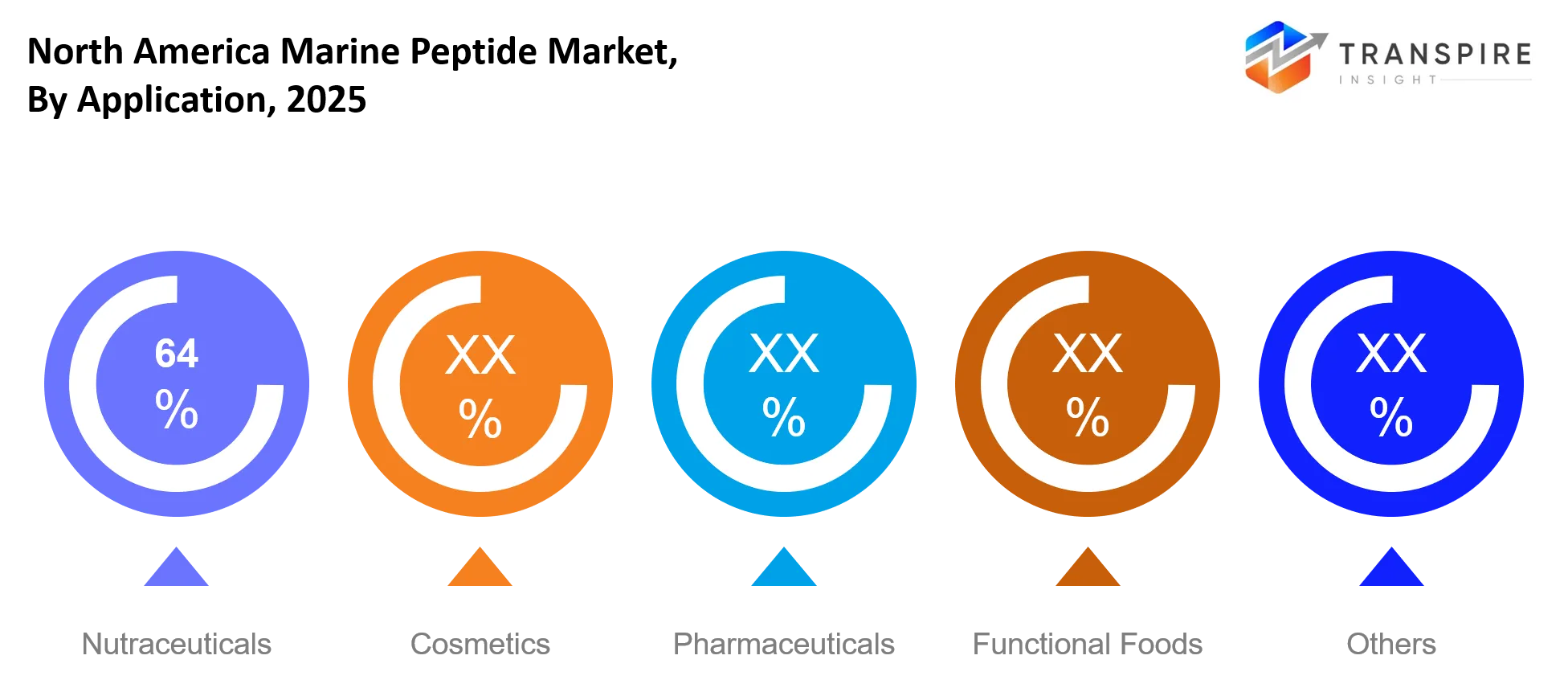
To learn more about this report, Download Free Sample Report
By Source
Source based segmentation still feels mostly centered on fish derived peptides, they are the ones that show up first, and honestly they dominate because fish processing industries keep offering plenty of raw material availability, plus they already have supply chains that are kind of “ready to go.” Having access to large volumes of marine biomass helps keep costs under control and makes commercial scaling more straightforward, so fish derived ingredients end up with a stronger market position. Algae derived peptides are starting to gather momentum too, as biotechnology improvements keep refining extraction methods and opening doors to new bioactive compounds. Shellfish derived peptides are smaller in share, but they matter in a different way, especially for niche health or pharmaceutical uses where distinctive biological properties provide clear differentiation.
Other marine sources are still drawing research interest, but they run into the same familiar hurdles, like commercial scalability gaps and supply consistency issues, even when the science looks promising. Looking ahead, market development is expected to diversify sourcing strategies since companies want proprietary ingredients, and also they want less dependence on just one raw material stream. That kind of change could push more investment into marine biotechnology platforms and also support alternative marine resource development, even when the path is slower.
By End-User
Pharmaceutical companies are, pretty much, the leading end user segment right now, mostly because they keep pouring serious investment into peptide research, drug development and the commercialization of bioactive compounds. Food and beverage companies also take up a major portion, they often use marine peptides so consumer products get a better nutritional profile and more useful functionality. Cosmetic companies still hold a strong position too, by putting marine-derived ingredients into higher-end skincare and personal care formulas. Then there are other end users, like research institutions and specialty ingredient manufacturers, who also push innovation and help drive product development activities.
Each of these end user groups seems to have their own buying priorities, from performance and regulatory compliance to formulation flexibility, and even brand differentiation. Looking forward, more collaboration between ingredient suppliers and end user industries is expected to speed up new product creation. Manufacturers that can show solid scientific proof, offer tailored formulations, and maintain dependable sourcing capabilities are the ones most likely to lock in long-term partnerships and improve their competitive stance across several customer groups.
What are the Key Use Cases Driving the North America Marine Peptide Market?
Honestly the main use case for marine peptides stays pretty much anchored in nutraceutical formulations, especially ones aimed at joint mobility , skin health, and that whole healthy aging story. Supplement manufacturers keep showing up as the biggest demand driver, since marine-derived peptides tend to be high in bioavailability and they help brands keep a more premium wellness positioning, like, on shelves and in marketing.
At the same time, more expanding applications are showing up in cosmetics and pharmaceutical development. Cosmetic firms increasingly weave marine peptides into anti-aging creams, serums ,and skin-repair products. Meanwhile pharmaceutical players are also looking at bioactive peptide pathways for anti-inflammatory, antimicrobial, and metabolic health use cases. In the background, these directions are supported by progress in peptide purification and characterization technologies.
Then there are the newer, emerging use cases too, such as precision nutrition offerings that are tuned for specific health outcomes. And also next-generation therapeutic peptide development, not just the usual stuff. Research institutions and biotechnology companies are browsing marine-derived compounds for wound healing, tissue regeneration, and even microbiome-centered health solutions. If clinical validation lands successfully, it could unlock brand-new commercial routes during the forecast period, pretty quickly.
|
Report Metrics |
Details |
|
Market size value in 2025 |
USD 332.6 Million |
|
Market size value in 2026 |
USD 360.4 Million |
|
Revenue forecast in 2033 |
USD 648.5 Million |
|
Growth rate |
CAGR of 8.75% from 2026 to 2033 |
|
Base year |
2025 |
|
Historical data |
2021 - 2024 |
|
Forecast period |
2026 - 2033 |
|
Report coverage |
Revenue forecast, competitive landscape, growth factors, and trends |
|
Country scope |
North America (Canada, The United States, and Mexico) |
|
Key company profiled |
Gelita, Rousselot, Nitta Gelatin, Weishardt, BioMarine Ingredients, Seagarden, Copalis Sea Solutions, Hofseth BioCare, Amicogen, Darling Ingredients, Titan Biotech, Ashland, Vital Proteins, PB Leiner, Marine Biologics |
|
Customization scope |
Free report customization (country, regional & segment scope). Avail customized purchase options to meet your exact research needs. |
|
Report Segmentation |
By Product Type (Collagen Peptides, Bioactive Peptides, Fish Protein Hydrolysates, Gelatin Peptides, Others); By Application (Nutraceuticals, Cosmetics, Pharmaceuticals, Functional Foods, Others); By Source (Fish-derived Peptides, Algae-derived Peptides, Shellfish-derived Peptides, Others); By End User (Food & Beverage Companies, Cosmetic Companies, Pharmaceutical Companies, Others) |
Which Regions are Driving the North America Marine Peptide Market Growth?
The United States is widely seen as the leading regional market because its advanced biotechnology sector, solid research funding climate, and broad commercialization infrastructure. In addition , federal backing for life sciences innovation , together with a high concentration of nutraceutical, pharmaceutical, and specialty ingredient firms has helped push marine peptide development ahead. Big universities, biotechnology clusters, and contract research organizations form a pretty established ecosystem that supports both product discovery, and later scale-up too. All of that scientific capability plus commercial demand lets the United States keep a dominant footing across several end-use industries.
Canada comes next as the second-largest market, but the growth pattern feels a bit different than the United States. It has strong marine resources, steady regulatory rules, and long-term public spending for ocean sciences, which together make a dependable base for industry expansion. In particular, biotechnology hubs across Atlantic Canada help keep research activity consistent, especially around marine bioactives and sustainable resource use. That steadiness tends to draw ingredient manufacturers and investors who prefer predictable development situations, and also less supply chain “surprise” overall.
Mexico is showing up as the fastest-growing market, since biotechnology investment is gradually widening, and marine resource commercialization is getting more policy attention. More recent actions aimed at improving marine research capacity, plus efforts to boost value-added processing of fisheries byproducts, have opened up fresh opportunities for peptide producers. Also , more involvement from domestic nutraceutical and functional food manufacturers has improved the outlook further. Between 2026 and 2033 , this momentum is expected to create attractive .
Who are the Key Players in the North America Marine Peptide Market and How Do They Compete?
Competition in the North America Marine Peptide Market is still sort of moderately fragmented, i mean with established ingredient manufacturers, marine biotechnology firms, and more specialized peptide developers all moving through different value chains. In practice, technology innovation rather than price has kind of become the main way to compete, since buyers are increasingly looking for clinically supported, application specific peptide ingredients. Big suppliers keep defending their share via scale, research abilities, and a tighter supply chain setup, but smaller biotech companies push back with novel bioactive discoveries and proprietary extraction platforms. Overall, the setting seems to reward things like scientific validation , intellectual property building, and the capability to turn marine biomass into higher value specialty inputs.
Aker BioMarine stands out because it has vertically integrated access to marine raw materials and deep know how in marine bioactive extraction. This setup gives more control over ingredient quality and traceability, while also enabling smoother product development across health and nutrition segments. Gelita AG instead leans into advanced collagen peptide technologies, pairing formulation know how with scientific research so it can support premium use cases in wellness and healthy aging. Then Rousselot reinforces its position through specialized collagen solutions , supported by technical assistance strengths and ongoing investments into tailored formulations that actually match specific customer needs.
Nitta Gelatin Inc. competes by focusing on product specialization and having broad manufacturing know-how in collagen and peptide ingredients, there. They keep investing in research partnerships , plus formulation development, which helps them stretch into higher value health use cases. Then there’s BioMarine Ingredients Ireland that leans into a kind of niche plan, centered on marine derived bioactive compounds, each with pretty distinct functional properties. For the broader sector, expansion is getting more and more tied to research collaborations, biotech partnerships, and new product pipelines. These are meant to lock in intellectual property advantages and also build offerings that feel more differentiated for pharmaceutical, nutraceutical , and cosmetic customers.
Company List
- Gelita
- Rousselot
- Nitta Gelatin
- Weishardt
- BioMarine Ingredients
- Seagarden
- Copalis Sea Solutions
- Hofseth BioCare
- Amicogen
- Darling Ingredients
- Titan Biotech
- Ashland
- Vital Proteins
- PB Leiner
- Marine Biologics
Recent Development News
In March 2026, Vital Proteins Expands Marine Collagen Peptide Portfolio with New Formulations: Vital Proteins, a major North American collagen brand, was reported to have introduced new marine collagen peptide powders and ready-to-drink formulations enriched with vitamin C and hyaluronic acid, targeting skin-health and wellness consumers. The launch reflects continued product innovation within the marine peptide segment.
Source: https://www.openpr.com
In May 2026, BioMarin Reports Q1 2026 Financial Results and Acquisition Financing: BioMarin Pharmaceutical announced first-quarter 2026 revenue of approximately $766 million and disclosed financing arrangements supporting its acquisition of Amicus. The company highlighted continued investment in innovation and manufacturing capabilities, developments relevant to the broader peptide and biologics ecosystem in North America.
Source: https://www.prnewswire.com
What Strategic Insights Define the Future of the North America Marine Peptide Market?
The North America Marine Peptide Market is moving toward a more higher-value, science driven style, where commercial success depends less on raw material access. And more on things like proprietary peptide discovery, clinical validation, and precision formulation chops. What’s really pushing this shift is the growing overlap between biotechnology, bioinformatics, and functional ingredient development, which helps firms find and sell targeted marine derived compounds that come with clear health results, not just hype.
There’s also a quieter risk, and it’s about raw material concentration. When demand slides toward specialized marine bioactives, relying on only a few marine biomass sources can make producers vulnerable to supply disruptions, fisheries policy changes, and cost swings. Those issues may not be fully showing up in today’s growth assumptions, at least not yet.
At the same time, there’s a new opportunity starting to form. AI assisted peptide discovery platforms could help uncover novel therapeutic candidates and precision nutrition ingredients from underutilized marine organisms. If companies lock in intellectual property around these peptide assets they may capture more value as pharmaceutical and personalized health markets keep expanding. Market players should put focus on investing in proprietary research collaborations and diversified sourcing networks, so they can build a more defensible position before the industry gets more consolidated.
North America Marine Peptide Market Report Segmentation
By Product Type
- Collagen Peptides
- Bioactive Peptides
- Fish Protein Hydrolysates
- Gelatin Peptides
- Others
By Application
- Nutraceuticals
- Cosmetics
- Pharmaceuticals
- Functional Foods
- Others
By Source
- Fish-derived Peptides
- Algae-derived Peptides
- Shellfish-derived Peptides
- Others
By End User
- Food & Beverage Companies
- Cosmetic Companies
- Pharmaceutical Companies
- Others
Frequently Asked Questions
Find quick answers to common questions.
The Approximate North America Marine Peptide Market size for the Market will be USD 648.5 Million in 2033.
The key Segments of the North America Marine Peptide Market are By Product Type (Collagen Peptides, Bioactive Peptides, Fish Protein Hydrolysates, Gelatin Peptides, Others); By Application (Nutraceuticals, Cosmetics, Pharmaceuticals, Functional Foods, Others); By Source (Fish-derived Peptides, Algae-derived Peptides, Shellfish-derived Peptides, Others); By End User (Food & Beverage Companies, Cosmetic Companies, Pharmaceutical Companies, Others).
Major Players in the North America Marine Peptide Market are Gelita, Rousselot, Nitta Gelatin, Weishardt, BioMarine Ingredients, Seagarden, Copalis Sea Solutions, Hofseth BioCare, Amicogen, Darling Ingredients, Titan Biotech, Ashland, Vital Proteins, PB Leiner, Marine Biologics.
The Current Market size of the North America Marine Peptide Market is USD 332.6 Million in 2025.
The North America Marine Peptide Market CAGR is 8.75%.
- Gelita
- Rousselot
- Nitta Gelatin
- Weishardt
- BioMarine Ingredients
- Seagarden
- Copalis Sea Solutions
- Hofseth BioCare
- Amicogen
- Darling Ingredients
- Titan Biotech
- Ashland
- Vital Proteins
- PB Leiner
- Marine Biologics
About the Authors

Pankaj Ghogare Patil
I am Pankaj Ghogare Patil, a Senior Research Analyst at Transpire Insight, specializing in the Pharmaceutical, Chemicals & Materials, Healthcare IT, and Biotechnology industry. My expertise lies in conducting comprehensive market research, analyzing industry trends, evaluating competitive landscapes, and translating complex data into actionable insights. At Transpire Insight, I closely follow emerging technologies, regulatory developments, and market innovations to create accurate, well-researched, and informative content that helps businesses and professionals make informed decisions. I am committed to producing credible, evidence-based articles that reflect industry best practices while making technical topics accessible and valuable for a broad audience.

Chakradhar Khansole
Chakradhar serves as the Research Director at Transpire Insight, bringing over 8 years of experience in technology, innovation, and strategic market intelligence. He specializes in transforming complex market data into actionable business insights that enable organizations to make informed, growth-oriented decisions. Recognized for his strategic vision and analytical expertise, Chakradhar leads high-impact research initiatives, delivering comprehensive market assessments, competitive intelligence, and forward-looking industry analysis.
Recently Published Reports
-
Apr 2026
Cord Blood Banking Services Market
Cord Blood Banking Services Market Size, Share & Analysis Report By Type of Service (Collection, Processing, Storage), By Bank Type (Private Banks, Public Banks, and Hybrid Banks), By Component (Cord Blood, and Cord Tissue), By End User (Hospitals, Research Institutions, Biotechnology Companies, and Others) and Geography (North America, Europe, Asia-Pacific, Middle East and Africa, South and Central America), 2021 - 2031
-
Apr 2026
ELISA Processors Market
ELISA Processors Market Size, Share & Analysis Report By Type (Optical Filter ELISA Analyzer, and Optical Grating ELISA Analyzers), By Mode (Automated ELISA Analyzers, and Semi-Automated ELISA Analyzers), By Applications (Immunology, Vaccine development, Drug Monitoring, and Others), By End Users (Biotechnology Companies, Pharmaceutical Companies, Contract Research Organization, and Diagnostic Laboratories) and Geography (North America, Europe, Asia-Pacific, Middle East and Africa, South and Central America), 2021 - 2031
-
May 2026
Microscope Slide Scanner Market
Microscope Slide Scanner Market Size, Share & Analysis Report By Type (Portable Microscope Slide Scanner, and Desktop Microscope Slide Scanner), By Application (Biological Research, Medicine, Veterinary, and Other) and Geography (North America, Europe, Asia-Pacific, Middle East and Africa, South and Central America), 2021 - 2031
-
Apr 2026
Microwave Cookware Market
Microwave Cookware Market Size, Share & Analysis Report By Material Type (Plastic, Glass, Ceramic, Silicone, and Metal), By Application (Cooking, Reheating, and Defrosting), By End User (Household, Commercial (Restaurants, Hotels, and Cafes), and Food Service Industry), By Sales Channel (Online Retail, Offline Retail (Supermarkets, Hypermarkets, Specialty Stores), and Direct Sales (Company Outlets)) and Geography (North America, Europe, Asia-Pacific, Middle East and Africa, South and Central America), 2021 - 2031