
Market Summary
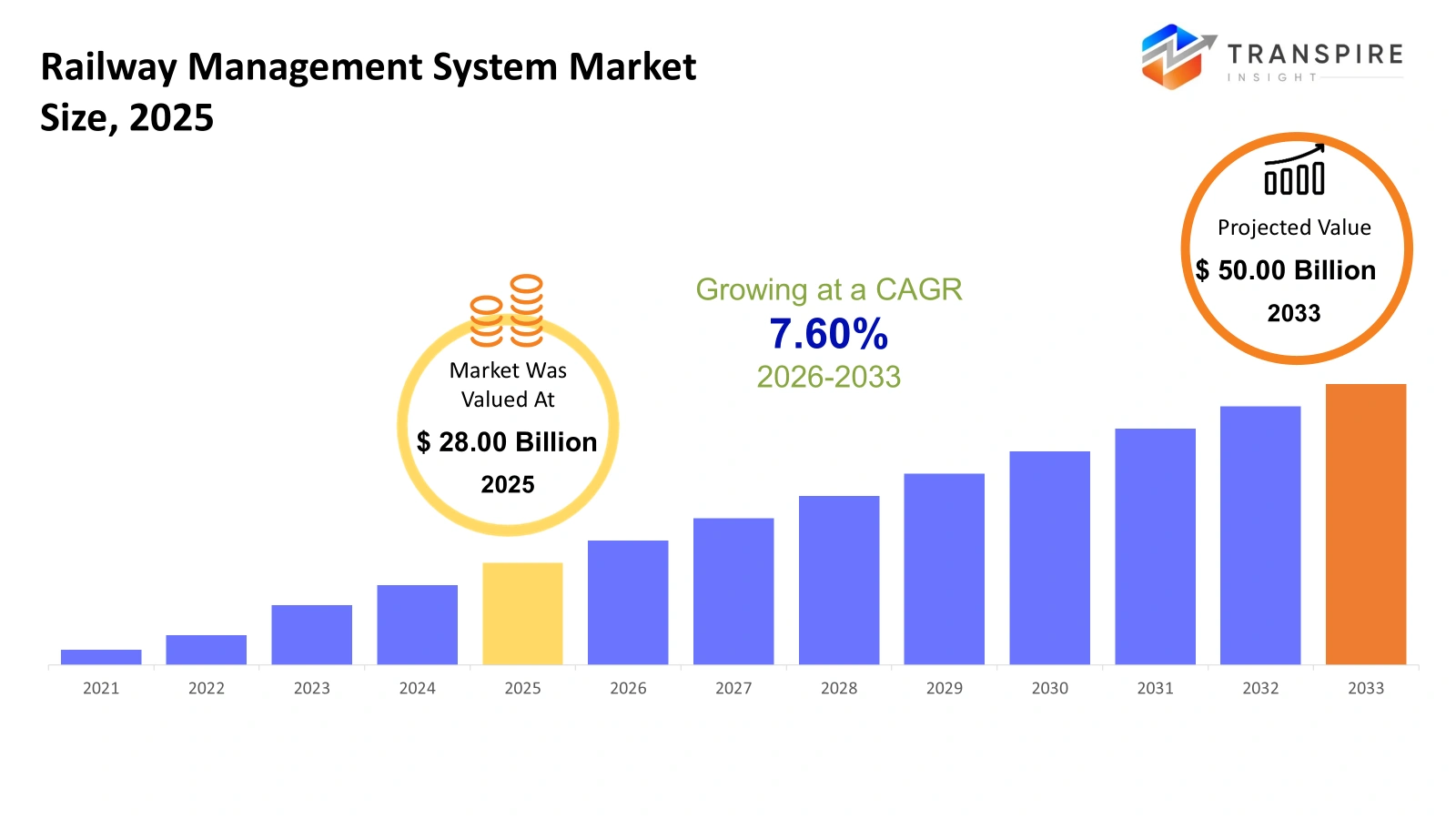
The global Railway Management Systems market size was valued at USD 28.00 billion in 2025 and is projected to reach USD 50.00 billion by 2033, growing at a CAGR of 7.60% from 2026 to 2033. Cities grow faster, needing more tracks and quicker commutes. Smart signals pop up where old ones once failed without warning. Because machines learn patterns, fixes happen before problems do. Control centers watch everything from one room, like nerves feeding a brain. High-speed lines spread as if they were routes on a growing web. When sensors talk to software, delays shrink without anyone lifting a tool. New tech slips into stations and rails, quiet but sharp. Efficiency climbs not by accident, just constant updates behind the scenes. Infrastructure breathes differently when data flows like current through wires.
Market Size & Forecast
- 2025 Market Size: USD 28.00 Billion
- 2033 Projected Market Size: USD 50.00 Billion
- CAGR (2026-2033): 7.60%
- North America: Largest Market in 2026
- Asia Pacific: Fastest Growing Market
To learn more about this report,  Download Free Sample Report
Key Market Trends Analysis
- The North American market share is estimated to be approximately 30% in 2026. Investment flows into updating trains, which pushes progress. New signal systems pop up, thanks to fresh tech adoption. Digital tools take charge of train movements, quietly boosting space on tracks. Safety climbs as data guides decisions behind the scenes. Freight lines feel the shift just as much as passenger routes do.
- Fueled by federal cash, the United States needs grow for updated infrastructure. Monitoring tech rolls out across networks. Safety pushes rise, quietly shaping rail operations. Automation finds its way into daily routines.
- Fueled by surging demand for rail travel, the Asia Pacific pushes ahead fast. New metro lines stretch across growing cities, one station at a time. High-speed tracks multiply, linking regions with sharper efficiency. Integrated systems take root, quietly streamlining operations behind the scenes. Smart city drives add momentum, shaping how transport evolves. Emerging economies embrace these tools, adapting quickly. Progress unfolds without fanfare - just steady movement forward.
- Software shares approximately 65% in 2026. Cloud-based systems push software ahead, while live tracking grows more common alongside data analysis tools. Real-time insights help teams stay on top, replacing older methods with smarter setups that adapt quickly.
- Safety sits at the front of every decision when rails move people. Systems that manage speed and track signals take up most attention. Automation slips in quietly behind strict rules. Collision prevention shapes how machines talk to each other along the line.
- Fewer breakdowns matter more now, so watching equipment closely has moved up the priority list. Staying ahead of failures is easier with data tools that spot issues before they grow. Machines talk through sensors, feeding insights that help teams act sooner rather than later. This shift cuts long-term expenses, thanks to smarter upkeep powered by live information.
- Funded projects kick off upgrades, since safety goals push officials to act. Trains run more often now because updated tracks support tighter schedules. Officials back changes, given pressure to reduce delays nationwide.
Railway operations keep changing fast now that more companies use digital tools to run things better, stay safer, and stay on time. Inside central hubs, signaling links up with traffic oversight, equipment tracking, data flows, analysis dashboards, and everything talks at once. When people demand smoother trips while cargo loads climb higher, managers turn toward intelligent setups that fine-tune timetables, cut holdups, and lift total line strength.
New tech is reshaping how the Railway Management Systems market works. Because of connected sensors, smart algorithms, vast data processing, and remote servers, old-school rail systems now run on live information flows. Fewer breakdowns happen since machines can foresee issues before they occur; trains follow exact routes without error due to self-regulating controls, while virtual copies of physical assets help plan and watch tracks more closely. Instead of fixing things after failure, companies now adjust course ahead of time using insights drawn from constant feedback loops. This shift runs deeper than tools; it changes when actions take place, where decisions form, and even who responds first.
Fresh attention on greener travel helps push the market forward. Because trains need smarter ways to run, software that plans paths wisely gains importance. These tools watch power use closely while cutting down pollution over time. When cities add subways or faster train lines, coordination gets harder without flexible systems. Building special lanes for cargo trains also means control platforms must work across bigger setups.
Working together, rail operators team up with tech firms and system builders to shape how services evolve. Instead of just selling products, companies now highlight flexible designs, stronger defenses against cyber threats, and smooth links to older systems. When trains run smarter and rely more on networks, the need grows for reliable control setups that can handle what comes next. Driven by ongoing upgrades in digital tools, this push isn’t slowing down any time soon.
Railway Management Systems Segmentation
By Component
- Hardware
Out on the tracks, signaling gear stands alongside sensors that feed data back to central hubs. Control panels sit inside secure rooms where operators monitor live conditions. Communication units link distant sections, passing updates without delay. Surveillance cameras watch key zones, recording activity as trains pass through. Together, these pieces make up the tangible core of rail oversight networks.
- Software
What runs behind the scenes includes platforms that guide traffic flow. These tools watch patterns closely, feeding live updates into display panels. Instead of waiting, responses happen as events unfold. Systems connect, so choices reflect current conditions clearly.
- Services
From planning to ongoing care, help comes through advice, connecting tools, setting up systems, regular updates, plus troubleshooting - each part keeps operations running without hiccups over time.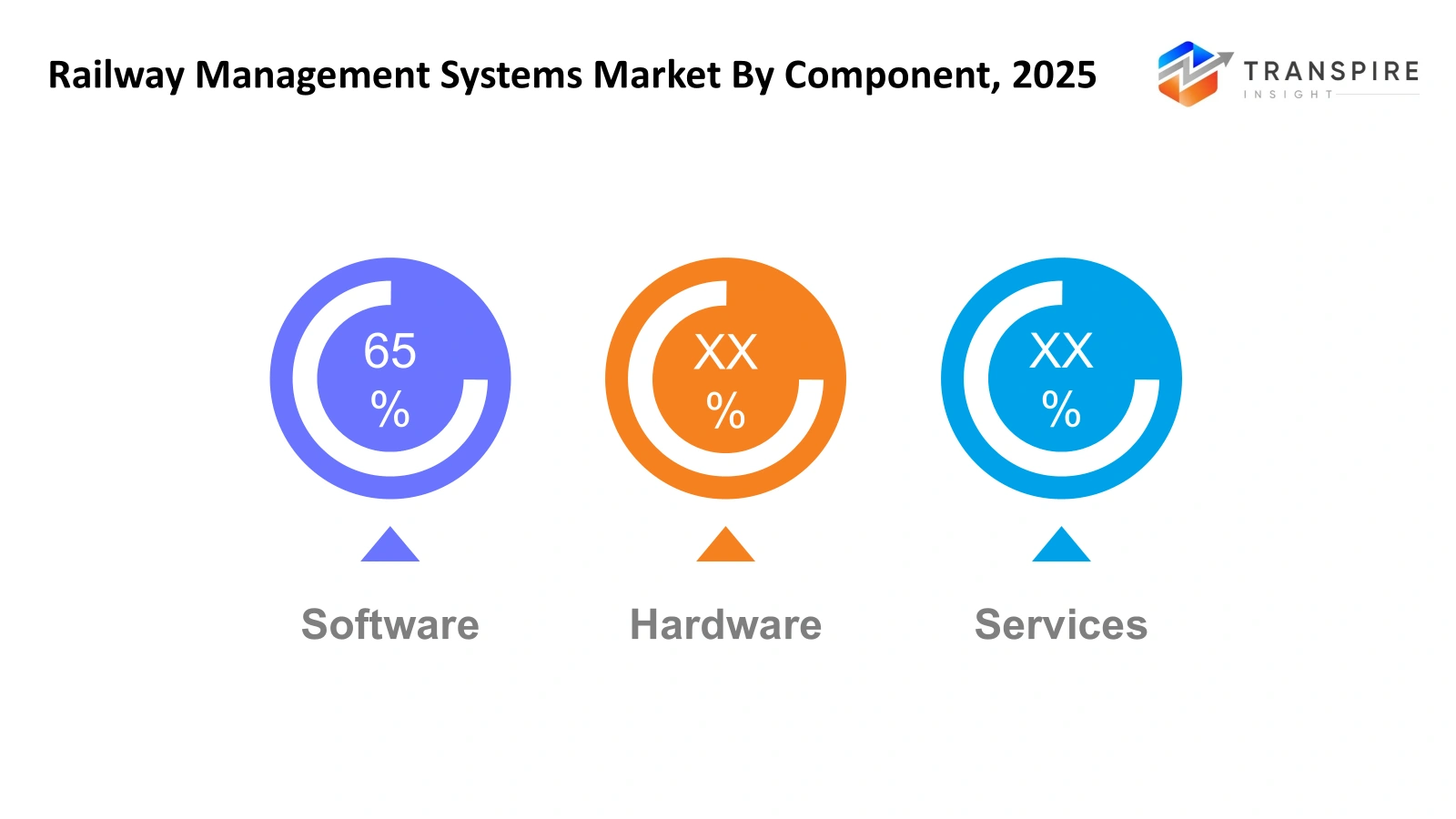
To learn more about this report, Download Free Sample Report
By Solution Type
- Traffic Management Systems
A single rail line moves better when the timing fits. Trains find open paths because signals adjust on their own. Routes shift as conditions change across the grid. Delays drop once movement flows without stacking up. Efficiency grows from constant small corrections.
- Rail Asset Management Systems
From the moment trains roll out until they retire, every piece stays logged. Updates happen live, so location and status never lag. Tracking follows each part through years of service. Maintenance schedules shift based on actual wear, not guesswork. Ownership details stay updated without delays. Infrastructure elements get the same close watch as vehicles. Records grow richer the longer a component runs. Decisions come from current facts, pulled straight from active systems.
- Train Control & Signaling Systems
Signals keep trains moving safely by using automatic controls that prevent crashes. These systems link switches and track sections so only one train uses a route at a time. Safety comes from built-in rules that block conflicting movements before they happen.
- Communication & Network Systems
Messages move safely among trains, stops, and main hubs through linked systems that keep contact steady. Connectivity stays strong because signals pass without delay across coordinated channels.
- Passenger Information Systems
Travelers get up-to-the-minute details about departures, hold-ups, or track changes through smart displays and alerts. These tools help people move smoothly by sharing what they need when it matters. Updates appear where needed on screens, apps, or signs so confusion fades without fanfare. Knowing what comes next cuts down stress while waiting around stations. Clarity arrives step-by-step, keeping everyone one beat ahead of chaos.
- Operation & Maintenance Management Systems
With these systems, upkeep tasks get scheduled before breakdowns happen. Teams stay aligned because updates flow smoothly across departments. Equipment behavior is tracked, so patterns reveal when fixes are due. Instead of waiting, workers act on clear signals from machinery. Performance data shapes how resources get used day to day.
By Application
- Rail Traffic Control
Not quite just someone watching them all at once. A single hub keeps things moving without crashing into tomorrow. Tracks stretch far, yet decisions come from one clear place. Coordination means no whistle blows by mistake. Movement follows a plan, not luck or hope. Each switch knows its role because guidance never sleeps. Across long lines, control stays tight and calm. No chaos sneaks in when eyes stay wide open.
- Asset Monitoring & Predictive Maintenance
When machines are watched closely, problems show up sooner. Sensors keep track of how things run every day. This data helps spot trouble before it grows. Instead of waiting for a breakdown, fixes happen ahead of time. Downtime drops because alerts come earlier. Analytics turn small changes into clear warnings. Equipment stays online longer when shifts are caught fast.
- Crew Management
Running crew operations means handling shifts without clutter. Schedules fall into place when rules are followed closely. People get placed where they are needed most, smoothly. Efficiency grows as tasks align with team strengths.
- Energy Management
This system keeps an eye on how trains use electricity. It tweaks usage where needed, so things stay efficient. Smooth changes happen behind the scenes. Less waste shows up over time. Performance stays strong without guzzling power. Small shifts add up across the network. Efficiency grows without slowing service down.
- Ticketing & Fare Management
Paying your way gets handled automatically now. Systems track each ride, plus sort out what everyone owes. Money moves are watched closely behind the scenes. Tickets work smarter, not harder, across the network.
- Safety & Security Management
Cameras keep watch while sensors track activity across stations and trains. Alerts go out when something unusual happens nearby. Systems respond fast if emergencies unfold on platforms or inside tunnels. Workers get warnings before small issues grow serious. Protection improves because equipment checks conditions nonstop. Risks drop as technology spots trouble early.
By End-Users
- Government & Public Rail Authorities
Most big train projects come from state-backed groups pushing updates across country lines. These bodies care deeply about keeping tracks safe while meeting legal rules. Updates often follow strict guidelines meant to reduce risk. Safety checks shape how routes get upgraded over time. National systems evolve through careful planning cycles led by these agencies.
- Private Rail Operators
Try upgrading your software tools; better tracking often means smoother days. A modern setup might just keep costs down while service gets stronger. Think about how data flows through scheduling; small shifts can boost results. Tools that adapt help teams move faster without extra strain. When systems talk to each other, delays tend to fade away. Profit grows where confusion shrinks.
- Infrastructure Management Companies
From tracking tracks to handling tech, firms managing infrastructure use smart tools made for railways. These systems keep trains running by watching over equipment and lines closely. Instead of waiting, they act fast when issues pop up across the network. Keeping things moving becomes easier with constant digital oversight. Problems get spotted before they grow thanks to updated monitoring methods.
Regional Insights
Heavy spending on updating train networks pushes the rail management scene in North America forward. Though freight leads here, companies now lean on smarter traffic tools, forecast-driven repairs, and digital signals to run more smoothly and spend less. Big tech players already rooted in the area help too, especially as public money keeps flowing into safety improvements. On top of that, using artificial intelligence for oversight and cloud-powered command hubs adds muscle to how digitally connected railways operate.
Europe’s rail scene thrives thanks to mature tracks and strict rules built around safe, green, seamless travel. Spending keeps flowing into fast trains that link nations, while old signal tech gets upgrades through common blueprints. Greener transport goals push railways toward smarter control systems across the board. Nations like Germany, France, and the United Kingdom now focus heavily on connected rail setups, boosting how people ride and how efficiently lines operate.
Fastest gains should appear across Asia-Pacific, fueled by surging city populations alongside wider subway expansions and major bullet-train initiatives in nations like China, India, and Japan. Heavy state funding flows into intelligent transit frameworks, pushing the need for upgraded signaling tools, driverless train handling, and unified oversight platforms. Elsewhere, Latin America plus parts of Africa and the Middle East move slowly toward rail upgrades, progress anchored on fresh route construction, cargo capacity boosts, joint ventures between government and business investors - opening sustained opportunities for firms supplying rail coordination technology.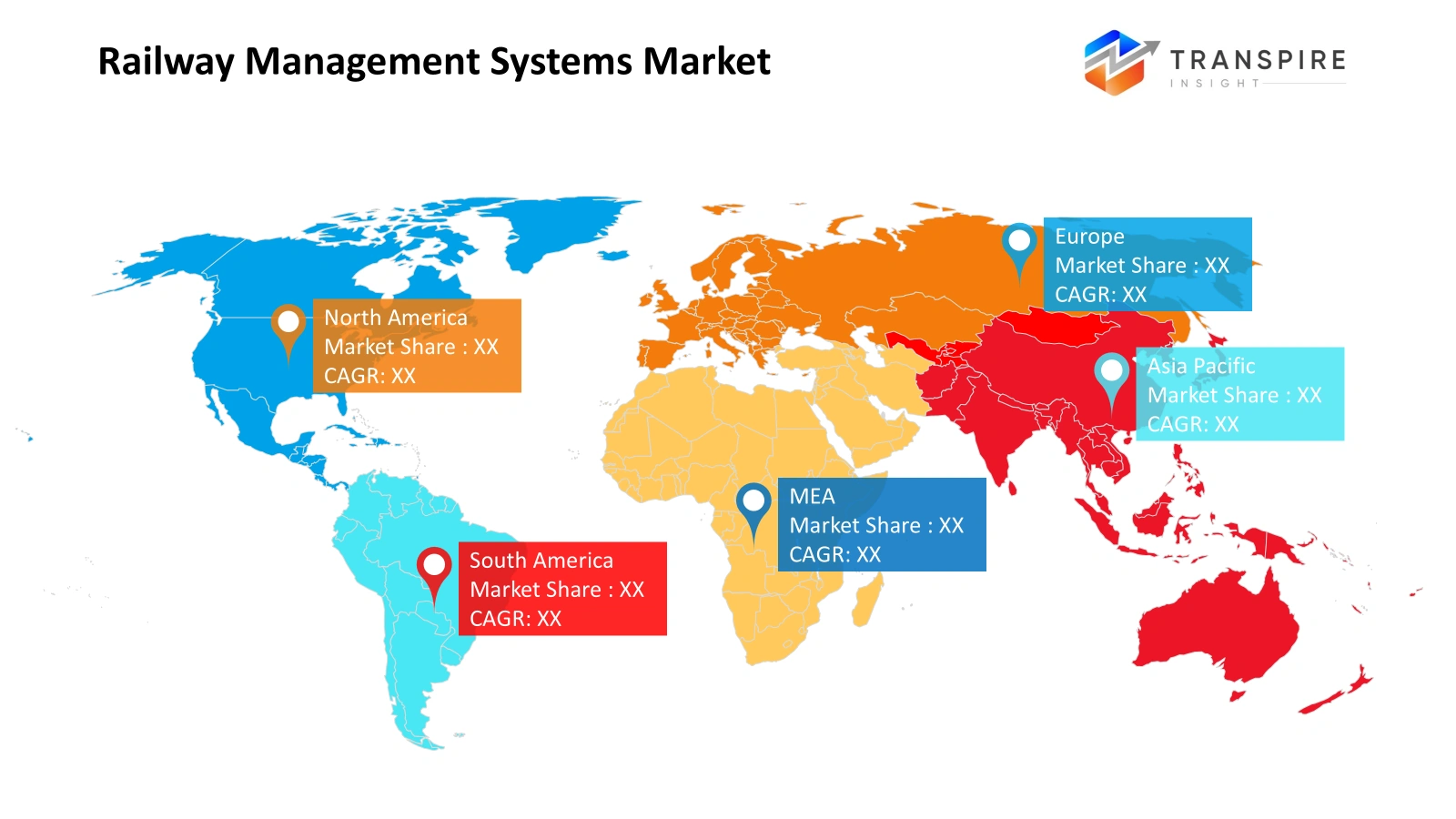
To learn more about this report, Download Free Sample Report
Recent Development News
- February 26, 2026 – RailTech Policy launched the railway claims Tribunal to go fully digital.
- February 23, 2026 – Western Railway launched the Queue System at Nalasopara railway station to ease rush hour chaos.
|
Report Metrics |
Details |
|
Market size value in 2025 |
USD 28.00 Billion |
|
Market size value in 2026 |
USD 30.00 Billion |
|
Revenue forecast in 2033 |
USD 50.00 Billion |
|
Growth rate |
CAGR of 7.60% from 2026 to 2033 |
|
Base year |
2025 |
|
Historical data |
2021 – 2024 |
|
Forecast period |
2026 – 2033 |
|
Report coverage |
Revenue forecast, competitive landscape, growth factors, and trends |
|
Regional scope |
North America; Europe; Asia Pacific; Latin America; Middle East & Africa |
|
Country scope |
United States; Canada; Mexico; United Kingdom; Germany; France; Italy; Spain; Denmark; Sweden; Norway; China; Japan; India; Australia; South Korea; Thailand; Brazil; Argentina; South Africa; Saudi Arabia; United Arab Emirates |
|
Key company profiled |
Alstom SA, Siemens Mobility, Hitachi Rail, ABB Ltd., Cisco Systems, Inc., IBM Corporation, Huawei Technologies Co., Ltd., Wabtec Corporation, Indra Sistemas SA, General Electric Company, Thales Group, Mitsubishi Electric Corporation, Schneider Electric SE, CAF S.A., and Nokia Corporation |
|
Customization scope |
Free report customization (country, regional & segment scope). Avail customized purchase options to meet your exact research needs. |
|
Report Segmentation |
By Component (Hardware, Software, Services), By Solution Type (Traffic Management System, Rail Asset Management Systems, Train Control & Signaling Systems, Communication & Network Systems, Passenger Information Systems, Operation & Maintenance Management Systems), By Application (Rail Traffic Control, Asset Monitoring & Predictive Maintenance, Crew Management, Energy Management, Ticketing & Fare Management, Safety & Security Management), By End-Users (Government & Public Rail Authorities, Private Rail Operators, Infrastructure Management Companies |
Key Railway Management Systems Company Insights
Headquartered in Munich, Germany, Siemens Mobility leads globally in railway signaling and management tech. Operating independently within Siemens AG, it focuses on digital tools for controlling, automating, or connecting rail networks. With these platforms, train operators manage traffic, oversee infrastructure, or predict maintenance needs more effectively. One newer system called Signalling X uses the cloud to bring separate signal setups under one roof - improving capacity while simplifying upkeep. Instead of scattered fixes, updates happen through a unified hub that sharpens responsiveness. At the same time, Railigent X taps artificial intelligence to watch equipment live and suggest smarter repair timing. Merging proven safety protocols with modern data services, its solutions work across long-distance lines, city metros, or local transit. While technology shifts, their core aim stays fixed: reliable, future-ready operations. Expertise built over years now shapes how cities move people today.
Key Railway Management Systems Companies:
- Alstom SA
- Siemens Mobility
- Hitachi Rail
- ABB Ltd.
- Cisco Systems, Inc.
- IBM Corporation
- Huawei Technologies Co., Ltd.
- Wabtec Corporation
- Indra Sistemas SA
- General Electric Company
- Thales Group
- Mitsubishi Electric Corporation
- Schneider Electric SE
- CAF S.A.
- Nokia Corporation
Global Railway Management Systems Market Report Segmentation
By Component
- Hardware
- Software
- Services
By Solution Type
- Traffic Management System
- Rail Asset Management Systems
- Train Control & Signaling Systems
- Communication & Network Systems
- Passenger Information Systems
- Operation & Maintenance Management Systems
By Application
- Rail Traffic Control
- Asset Monitoring & Predictive Maintenance
- Crew Management
- Energy Management
- Ticketing & Fare Management
- Safety & Security Management
By End-Users
- Government & Public Rail Authorities
- Private Rail Operators
- Infrastructure Management Companies
Regional Outlook
- North America
- United States
- Canada
- Mexico
- Europe
- Germany
- United Kingdom
- France
- Spain
- Italy
- Rest of Europe
- Asia Pacific
- Japan
- China
- Australia & New Zealand
- South Korea
- India
- Rest of Asia Pacific
- South America
- Brazil
- Argentina
- Rest of South America
- Middle East & Africa
- Saudi Arabia
- United Arab Emirates
- South Africa
- Rest of the Middle East & Africa
Frequently Asked Questions
Find quick answers to common questions.
The approximate Railway Management Systems Market size for the market will be USD 50.00 billion in 2033.
Key segments for the Railway Management Systems Market are By Component (Hardware, Software, Services), By Solution Type (Traffic Management System, Rail Asset Management Systems, Train Control & Signaling Systems, Communication & Network Systems, Passenger Information Systems, Operation & Maintenance Management Systems), By Application (Rail Traffic Control, Asset Monitoring & Predictive Maintenance, Crew Management, Energy Management, Ticketing & Fare Management, Safety & Security Management), By End-Users (Government & Public Rail Authorities, Private Rail Operators, Infrastructure Management Companies).
Major Railway Management Systems Market players are Alstom SA, Siemens Mobility, Hitachi Rail, ABB Ltd., Cisco Systems, Inc., IBM Corporation, and Huawei Technologies Co., Ltd.
The North America region is leading the Railway Management Systems Market.
The Railway Management Systems Market CAGR is 7.60%.
- Alstom SA
- Siemens Mobility
- Hitachi Rail
- ABB Ltd.
- Cisco Systems, Inc.
- IBM Corporation
- Huawei Technologies Co., Ltd.
- Wabtec Corporation
- Indra Sistemas SA
- General Electric Company
- Thales Group
- Mitsubishi Electric Corporation
- Schneider Electric SE
- CAF S.A.
- Nokia Corporation
Recently Published Reports
-
Apr 2026
3D Optical Profiler Market
3D Optical Profiler Market Size, Share & Analysis Report By Type (Desktop 3D Optical Profiler, and Portable 3D Optical Profiler), By Technology (Confocal Technology, and White Light Interference), By End-Use Industry (Manufacturing, Research Institutions, Automotive, Aerospace and Defense, Medical Devices, and Other), and Geography (North America, Europe, Asia-Pacific, Middle East and Africa, South and Central America), 2021 - 2031
-
Apr 2026
Depth Sensor Market
Depth Sensor Market Size, Share & Analysis Report By Type (Infrared Depth Sensors, Time-of-Flight (ToF) Sensors, Stereo Vision Sensors, Structured Light Sensors, Ultrasonic Depth Sensors), By Application (Automotive, Robotics, Gaming, Consumer Electronics, Industrial Automation, Healthcare, Security & Surveillance, Others), By End Users (Automotive Manufacturers, Consumer Electronics Companies, Healthcare Providers, Industrial Companies, Security Agencies, Gaming Companies, Robotics Companies, Others), and Geography (North America, Europe, Asia-Pacific, Middle East and Africa, South and Central America), 2021 – 2031
-
Apr 2026
Digital Manufacturing Market
Digital Manufacturing Market Size, Share & Analysis Report By Component (Hardware, Software, and Services), By Technology (Robotics, 3D Printing, Internet of Things (IoT), and Others), By Application (Automotive and Transportation, Aerospace and Defense, Consumer Electronics, Industrial Machinery, and Others), By Process Type (Computer-Based Designing, Computer-Based Simulation, Computer 3D Visualization, Analytics, and Others), and Geography (North America, Europe, Asia-Pacific, Middle East and Africa, South and Central America), 2021 – 2031
-
Apr 2026
Digital Visa Services Market
Digital Visa Services Market Size, Share & Analysis Report By Type (Individual Travelers, Group Travelers), By Application (Tourism, Business Travel, Others), and Geography (North America, Europe, Asia-Pacific, Middle East and Africa, South and Central America), 2021 – 2031