
Market Summary
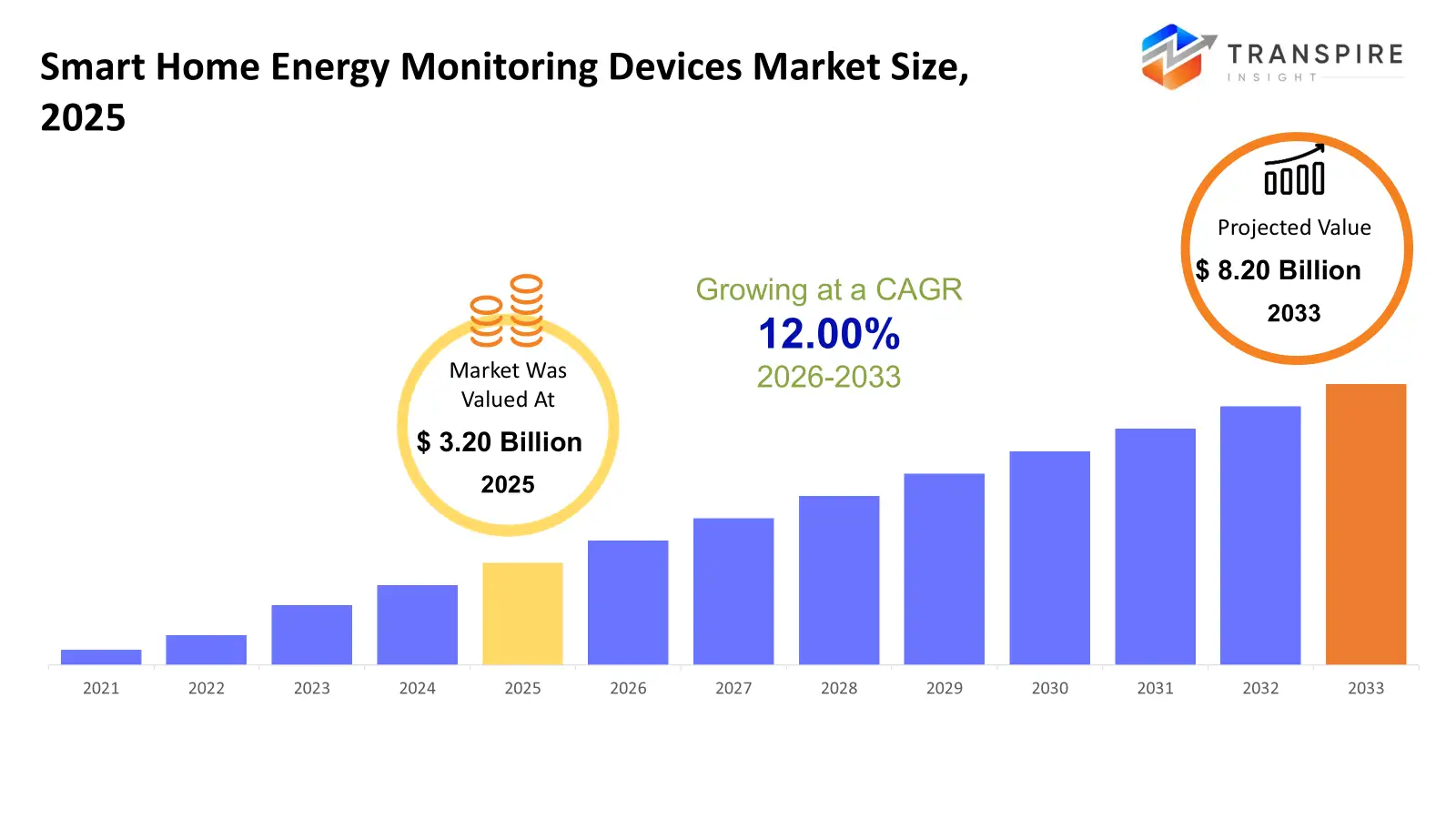
The global Smart Home Energy Monitoring Devices market size was valued at USD 3.20 billion in 2025 and is projected to reach USD 8.20 billion by 2033, growing at a CAGR of 12.00% from 2026 to 2033. The market CAGR growth is aided by the increasing cost of electricity and the growing interest of consumers in energy efficiency, thus promoting the use of monitoring devices that offer real-time consumption data and facilitate efficient energy use.
Market Size & Forecast
- 2025 Market Size: USD 3.20 Billion
- 2033 Projected Market Size: USD 8.20 Billion
- CAGR (2026-2033): 12.00%
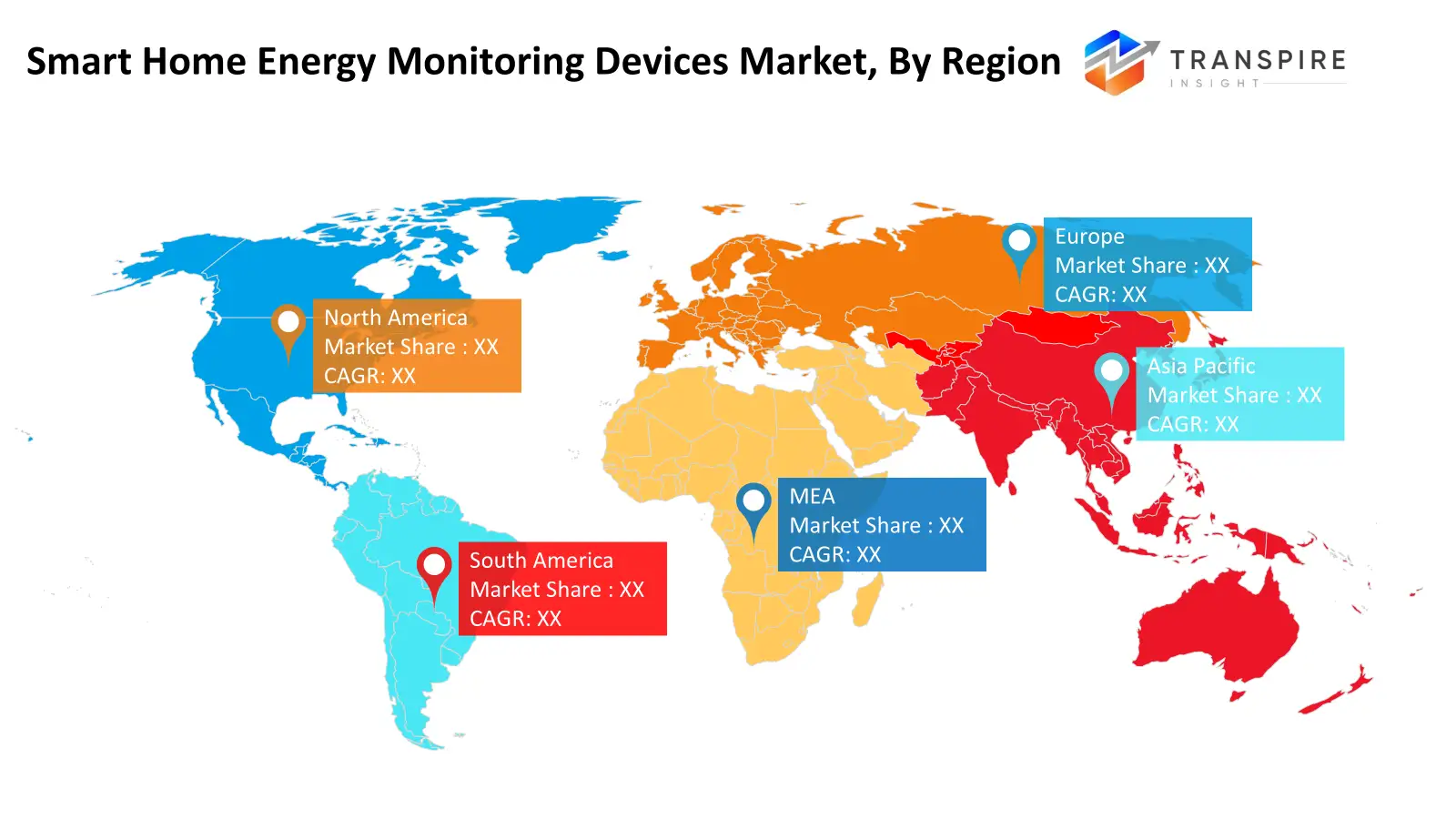
- North America: Largest Market in 2026
- Asia Pacific: Fastest Growing Market
To learn more about this report,  Download Free Sample Report
Key Market Trends Analysis
- North America: The region is experiencing steady growth, thanks to the mature adoption of smart homes, the emphasis of regulations on energy savings, and the high penetration of digital infrastructure, with the energy monitoring technology being promoted by the utilities to facilitate demand response initiatives.
- The market in the United States is experiencing significant adoption, thanks to the advanced deployment of smart grids, rising costs of electricity, and awareness among consumers about energy optimization, thereby encouraging the integration of energy monitoring devices with home automation solutions and renewable energy solutions for better energy management.
- The Asia Pacific market is experiencing significant growth, thanks to urbanization, growing electricity demand, and the adoption of smart homes, supported by investments in digital infrastructure and renewable energy integration by the government, thereby encouraging the adoption of energy monitoring solutions in residential and small business sectors.
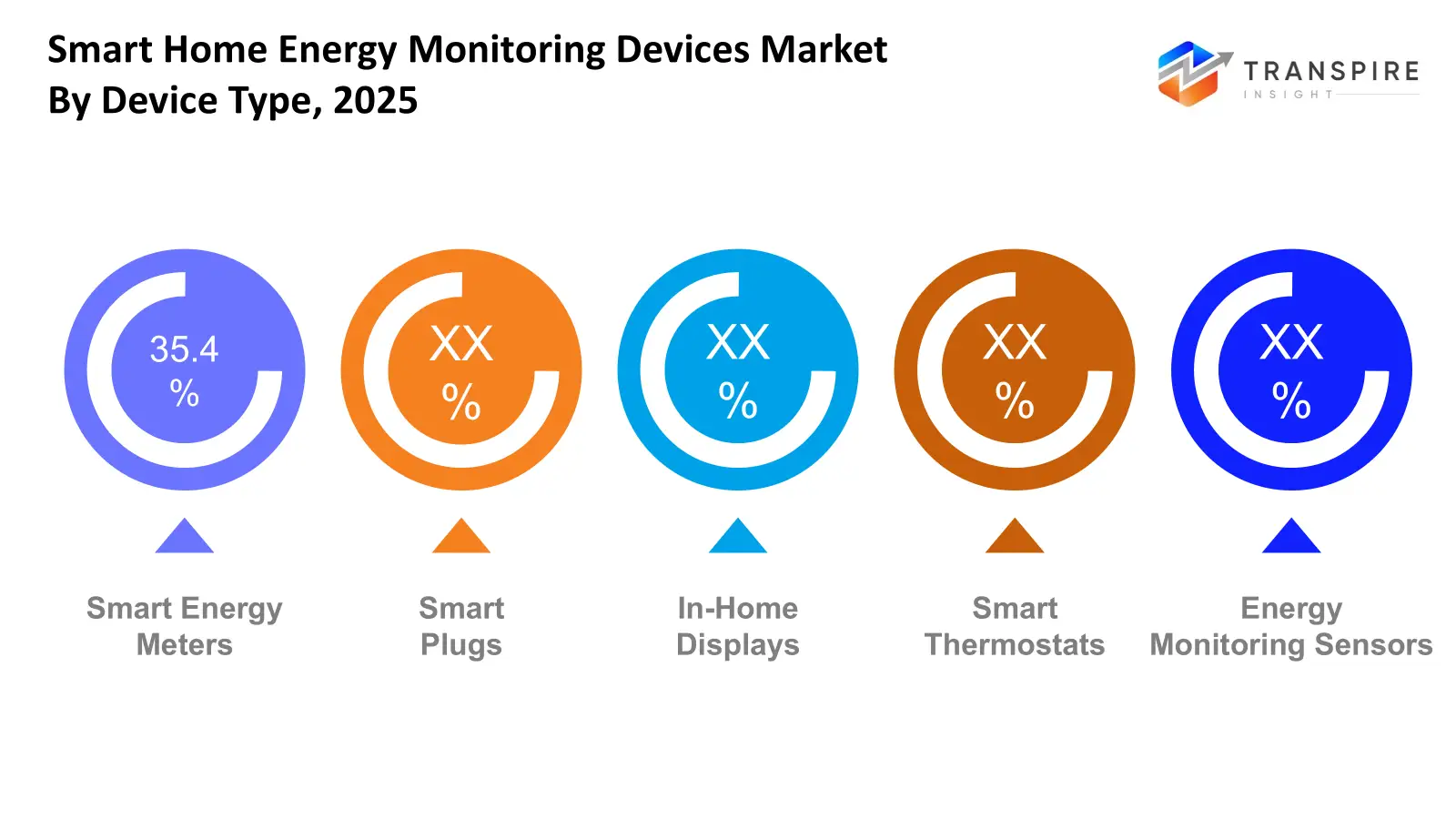
- Smart energy meters continue to be the most popular device type, thanks to the emphasis of utilities and consumers on precise consumption measurement and real-time energy metering, thereby enabling efficient billing, demand management, and enhanced grid interaction capabilities in the emerging smart energy environment.
- Wireless technology leads the way because of the simplicity of installation, scalability, and the ability to work well in an IoT-based smart home setting, allowing for smooth communication between devices and platforms with reduced infrastructure complexity.
- Electricity consumption tracking is the leading application area, as electricity consumption contributes to the largest share of energy consumption in a house, thereby promoting the adoption of electricity consumption tracking solutions that help consumers optimize appliance usage and minimize energy waste through data analysis.
- Residential end users form the key demand driver in the market, as more and more residential end users are adopting smart home solutions to enhance energy efficiency, cut down on electricity bills, and meet sustainability goals.
So, The smart home energy monitoring devices market includes technologies that are developed for the measurement, analysis, and optimization of energy consumption in residential and small-scale commercial settings. The devices allow for real-time monitoring of electricity, gas, water, and renewable energy consumption, which helps in making informed decisions for optimizing energy consumption and lowering operational expenses. The growth of the smart home energy monitoring devices market is inextricably linked with the development of smart home systems and the adoption of smart devices. Energy monitoring systems are increasingly being integrated with automation systems, which enable consumers to monitor and control energy consumption remotely and automate energy-saving operations. Developments in wireless connectivity and data analytics are also contributing to the improvement of system functionality and engagement.
Increasing concerns about the environment and energy efficiency policies are also fueling the development of the smart home energy monitoring devices market, as consumers and energy companies are increasingly focusing on minimizing energy waste and optimizing resource management. The integration of renewable energy sources and distributed power production also increases the demand for energy monitoring systems that can track energy consumption patterns and optimize energy use in connected environments.
Smart Home Energy Monitoring Devices Market Segmentation
By Device Type
- Smart Energy Meters
Smart energy meters are a primary market segment that is driven by the growing adoption of smart grid infrastructure and real-time energy monitoring. The growing demand for accurate energy consumption measurement and billing transparency is also driving the adoption of smart energy meters.
- Smart Plugs
Smart plugs are used for energy monitoring and control at the appliance level. The market is driven by the growing awareness of standby power consumption and the integration of smart plugs with home automation systems. The cost-effectiveness of smart plugs makes them an attractive solution for retrofitting.
- In-Home Displays
In-home displays are used for real-time energy consumption monitoring and behavioral energy conservation. The market is driven by the growing interest of consumers in energy efficiency and sustainability. The integration of in-home displays with mobile applications and home automation systems makes them more engaging.
- Smart Thermostats
Smart thermostats are finding popularity because of their capability to automatically control heating and cooling operations based on usage patterns and presence information. The potential for energy savings and compatibility with HVAC systems are factors that ensure robust adoption in the residential sector.
- Energy Monitoring Sensors
Energy monitoring sensors are applied for the detailed monitoring of particular circuits or energy consumption in a household or small facility. Demand for energy monitoring sensors is rising with the growing number of distributed energy resources and home energy management systems.
To learn more about this report, Download Free Sample Report
By Technology
- Wired
The wired energy monitoring system has stable communication, high reliability, and less interference. It is ideal for permanent connections. Wired energy monitoring systems are mainly used in new buildings and in a structured energy management environment where a stable connection is a priority. The complexity of the installation process might be a barrier to the adoption of wired energy monitoring systems in retrofit projects.
- Wireless
The wireless technology is the most used due to its ease of installation, scalability, and compatibility with smart home systems. Technologies such as Wi-Fi and low-power communication systems make data transmission seamless. The rising use of IoT devices continues to fuel the adoption of wireless-enabled energy monitoring devices.
By Application
- Electricity Monitoring
The largest application area remains that of electricity monitoring, given the fact that electricity consumption contributes to the largest share of overall energy consumption in a household. Increasing energy prices and the need for consumption optimization are key factors that contribute to the growth of this application area.
- Gas Monitoring
Gas monitoring devices are being increasingly employed for consumption monitoring and enhanced safety in residential and small-scale commercial applications. The growing need for energy conservation and compliance with regulations supports the adoption of gas monitoring devices.
- Water Monitoring
Water monitoring applications are gaining traction due to the growing need for water conservation and management. Smart monitoring devices enable leakages to be detected and consumption patterns to be optimized. Sustainability initiatives and the growing need for resource management contribute to the adoption of water monitoring applications.
- Solar and Renewable Energy Monitoring
The solar and renewable energy monitoring system is growing in tandem with residential solar installations. These devices allow users to monitor the generation, consumption, and interaction with the grid in real-time. This is due to the growing use of renewable energy sources and the need to optimize performance.
By End User
- Residential
The residential market leads because of the widespread acceptance of smart home solutions and the growing awareness of energy efficiency among residential consumers. Rising electricity costs and the availability of government subsidies for energy-efficient solutions fuel adoption.
- Small & Medium Enterprises
Small and medium enterprises use energy monitoring solutions to control operational expenses and optimize energy efficiency. The increasing focus on sustainability reporting and energy optimization fuels adoption. The solution helps by offering insights without the need for large-scale industrial energy management solutions.
Regional Insights
From a geographical perspective, North America has been a leader in adopting smart grid technology and has high consumer awareness, with the United States, Canada, and Mexico being key contributors. Europe is the second major market with robust regulatory policies, especially in Germany, the United Kingdom, France, Spain, Italy, and the rest of Europe, where energy efficiency mandates drive the adoption of monitoring technology. The Asia Pacific market is the fastest-growing geographical region, especially in Japan, China, Australia & New Zealand, South Korea, India, and the rest of Asia Pacific, driven by the growing urban population and infrastructure development. The rise in renewable energy sources and smart city projects has fueled the adoption of monitoring technology in the residential sector. The South America market is growing at a steady pace, especially in Brazil and Argentina, where the volatility of energy costs and the development of utility infrastructure are key drivers. The Middle East & Africa market, including Saudi Arabia, the United Arab Emirates, South Africa, and the rest of the Middle East & Africa, is experiencing nascent demand, especially due to smart city initiatives, energy diversification plans, and growing investments in digital energy management solutions.
To learn more about this report, Download Free Sample Report
Recent Development News
- October 2025, Enphase Energy enhanced its IQ Energy Management solutions by incorporating intelligent water heater management into its home energy solution. This innovation allows homeowners to manage their energy usage effectively by integrating solar production, batteries, EV charging, and heating loads using AI-based energy management solutions.
- In September 2024, Schneider Electric launched an AI-driven feature in its Wiser Home solution, which allows for predictive energy monitoring and automatic optimization of the main energy loads in a home, such as water heaters and EV charging stations. This technology improves the accuracy of energy monitoring and also allows homes to save on electricity bills.
|
Report Metrics |
Details |
|
Market size value in 2025 |
USD 3.20 Billion |
|
Market size value in 2026 |
USD 3.70 Billion |
|
Revenue forecast in 2033 |
USD 8.20 Billion |
|
Growth rate |
CAGR of 11.30% from 2026 to 2033 |
|
Base year |
2025 |
|
Historical data |
2021 – 2024 |
|
Forecast period |
2026 – 2033 |
|
Report coverage |
Revenue forecast, competitive landscape, growth factors, and trends |
|
Regional scope |
North America; Europe; Asia Pacific; Latin America; Middle East & Africa |
|
Country scope |
United States; Canada; Mexico; United Kingdom; Germany; France; Italy; Spain; Denmark; Sweden; Norway; China; Japan; India; Australia; South Korea; Thailand; Brazil; Argentina; South Africa; Saudi Arabia; United Arab Emirates |
|
Key company profiled |
Schneider Electric SE, Siemens AG, Honeywell International Inc., ABB Ltd., Eaton Corporation plc, General Electric Company, Enphase Energy, Inc., Sense Labs, Inc., Emporia Energy, Inc., Smappee NV, Leviton Manufacturing Co., Inc., Belkin International, Inc., Panasonic Corporation, LG Electronics Inc., and Landis+Gyr Group AG |
|
Customization scope |
Free report customization (country, regional & segment scope). Avail customized purchase options to meet your exact research needs. |
|
Report Segmentation |
By Device Type (Smart Energy Meters, Smart Plugs, In-Home Displays, Smart Thermostats, Energy Monitoring Sensors), By Technology (Wired, Wireless), By Application (Electricity Monitoring, Gas Monitoring, Water Monitoring, Solar and Renewable Energy Monitoring) and By End User (Residential, Small & Medium Enterprises) |
Key Smart Home Energy Monitoring Devices Company Insights
Schneider Electric SE has a robust competitive advantage in the smart home energy monitoring devices market because of its comprehensive energy management solution that encompasses hardware, software, and automation platforms. The company’s approach to the market is focused on compatibility with renewable energy solutions, smart panels, and IoT-enabled home appliances, which helps in energy optimization and sustainability initiatives. Schneider Electric SE’s ongoing focus on digital energy solutions and AI-driven analytics helps in product differentiation, especially in residential energy monitoring solutions. Its wide-reaching distribution network across the globe, along with associations with energy providers and installation companies, helps the company penetrate the market widely and makes it a major player in the smart home energy monitoring devices market.
Key Smart Home Energy Monitoring Devices Companies:
- Schneider Electric SE
- Siemens AG
- Honeywell International Inc.
- ABB Ltd.
- Eaton Corporation plc
- General Electric Company
- Enphase Energy, Inc.
- Sense Labs, Inc.
- Emporia Energy, Inc.
- Smappee NV
- Leviton Manufacturing Co., Inc.
- Belkin International, Inc.
- Panasonic Corporation
- LG Electronics Inc.
- Landis+Gyr Group AG
Global Smart Home Energy Monitoring Devices Market Report Segmentation
By Device Type
- Smart Energy Meters
- Smart Plugs
- In-Home Displays
- Smart Thermostats
- Energy Monitoring Sensors
By Technology
- Wired
- Wireless
By Application
- Electricity Monitoring
- Gas Monitoring
- Water Monitoring
- Solar and Renewable Energy Monitoring
By End User
- Residential
- Small & Medium Enterprises
Regional Outlook
- North America
- United States
- Canada
- Mexico
- Europe
- Germany
- United Kingdom
- France
- Spain
- Italy
- Rest of Europe
- Asia Pacific
- Japan
- China
- Australia & New Zealand
- South Korea
- India
- Rest of Asia Pacific
- South America
- Brazil
- Argentina
- Rest of South America
- Middle East & Africa
- Saudi Arabia
- United Arab Emirates
- South Africa
- Rest of the Middle East & Africa
Frequently Asked Questions
Find quick answers to common questions.
The approximate Smart Home Energy Monitoring Devices Market size for the market will be USD 8.20 billion in 2033.
Key segments for the Smart Home Energy Monitoring Devices Market By Device Type (Smart Energy Meters, Smart Plugs, In-Home Displays, Smart Thermostats, Energy Monitoring Sensors), By Technology (Wired, Wireless), By Application (Electricity Monitoring, Gas Monitoring, Water Monitoring, Solar and Renewable Energy Monitoring) and By End User (Residential, Small & Medium Enterprises).
Major Smart Home Energy Monitoring Devices Market players are Schneider Electric SE, Siemens AG, Honeywell International Inc., ABB Ltd., Enphase Energy, Inc.
The North America region is leading the Smart Home Energy Monitoring Devices Market.
The CAGR of the Smart Home Energy Monitoring Devices Market is 12.00%.
- Schneider Electric SE
- Siemens AG
- Honeywell International Inc.
- ABB Ltd.
- Eaton Corporation plc
- General Electric Company
- Enphase Energy, Inc.
- Sense Labs, Inc.
- Emporia Energy, Inc.
- Smappee NV
- Leviton Manufacturing Co., Inc.
- Belkin International, Inc.
- Panasonic Corporation
- LG Electronics Inc.
- Landis+Gyr Group AG
Recently Published Reports
-
Apr 2026
Active Power Filter Market
Active Power Filter Market Size, Share & Analysis Report By Type (Shunt Active Power Filters, Series Active Power Filter, Hybrid Active Power Filter), By Application (Harmonics Mitigation, Reactive Power Compensation, Voltage Regulation, Power Factor Correction), By Phase (Single Phase, Three Phase), By End-User Industry (Manufacturing, Healthcare, Commercial, Automotive, Oil and Gas, Others), and Geography (North America, Europe, Asia-Pacific, Middle East and Africa, South and Central America), 2021 - 2031
-
Apr 2026
Electrical Transformer Market
Electrical Transformer Market Size, Share & Analysis Report By Core (Closed, Shell, and Berry), By Insulation (Gas, Oil, Solid, Air, and Other), By Phase (Single, and Three), By Rating (100 MVA to 500 MVA, 501 MVA to 800 MVA, and 801 MVA to 1200 MVA), and Geography (North America, Europe, Asia-Pacific, Middle East and Africa, South and Central America), 2021 – 2031
-
Apr 2026
Hydraulic Piston Pumps Market
Hydraulic Piston Pumps Market Size, Share & Analysis Report By Type (Axial Piston Pumps, Radial Piston Pumps), By Operating Pressure (Low Pressure, Medium Pressure, High Pressure), By Application (Construction, Mining, Agriculture, Automotive, Oil & Gas, Industrial Machinery, Others), By End-User (OEMs, Aftermarket), and Geography (North America, Europe, Asia-Pacific, Middle East and Africa, South and Central America), 2021 – 2031
-
Apr 2026
Laboratory Gas Generators Market
Laboratory Gas Generators Market Size, Share & Analysis Report By Product (Nitrogen Gas Generator, Hydrogen Gas Generator, Zero Air Gas Generator, Purge Gas Generator, TOC Gas Generators, Others), By Application (Gas Chromatography, Liquid Chromatography-mass Spectrometry (LC-MS), Gas Analyzers, Others), By End-user (Life Science, Chemical & Petrochemical, Food & Beverage, Others), and Geography (North America, Europe, Asia-Pacific, Middle East and Africa, South and Central America), 2021 – 2031