

North America Zanubrutinib Market Size & Forecast:
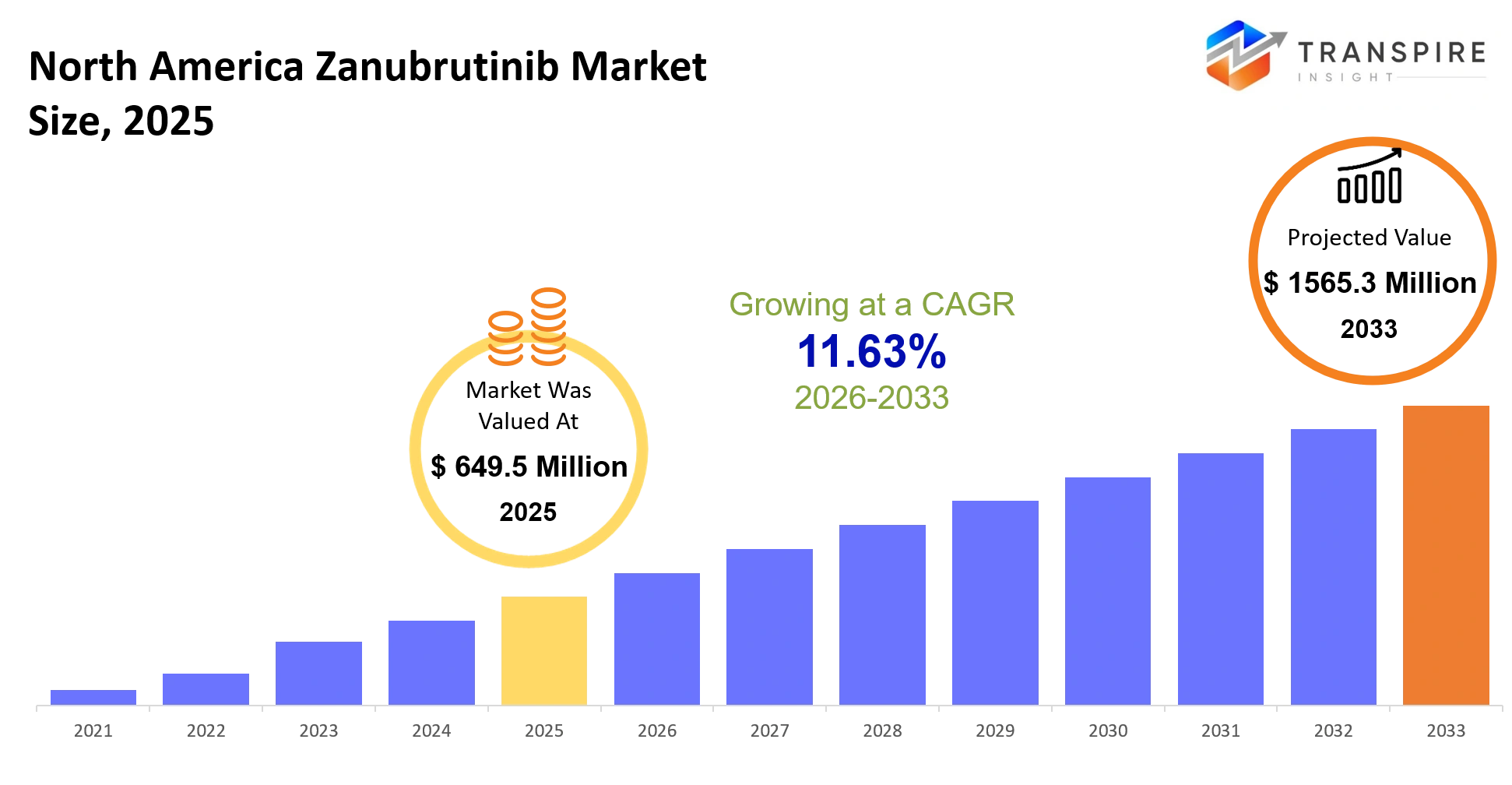
- North America Zanubrutinib Market Size 2025: USD 649.5 Million
- North America Zanubrutinib Market Size 2033: USD 1565.3 Million
- North America Zanubrutinib Market CAGR: 11.63%
- North America Zanubrutinib Market Segments: By Application (Chronic Lymphocytic Leukemia, Mantle Cell Lymphoma, Waldenström Macroglobulinemia, Marginal Zone Lymphoma, Others); By Distribution Channel (Hospital Pharmacies, Retail Pharmacies, Online Pharmacies, Others); By End User (Hospitals, Oncology Clinics, Cancer Research Institutes, Others); By Dosage Form (Capsules, Combination Therapies, Others)
To learn more about this report,  Download Free Sample Report
North America Zanubrutinib Market Summary
The North America Zanubrutinib Market was valued at USD 649.5 Million in 2025. It is forecast to reach USD 1565.3 Million by 2033. That is a CAGR of 11.63% over the period.
In North America, the Zanubrutinib market seems to be about delivering an oral targeted therapy for people with B-cell cancers, like CLL, SLL, and mantle cell lymphoma, and yes it also lowers the need for old school chemotherapy that’s usually administered in hospitals. In real life it lets hematology clinics keep long term cancer control going, using continuous outpatient treatment, with fewer infusion visits, so it’s more of a steady routine than a series of hospital days. Over the last five years the whole market kinda quietly moved from first generation BTK inhibitors toward more selective next generation agents, because clinicians really are focusing on less cardiovascular toxicity and better daily tolerability , not just the raw response rates. A big driver was the set of expanded FDA approvals together with refreshed oncology guidance, which nudged BTK inhibitors into earlier treatment lines, and then after the pandemic the diagnostic backlogs came back, which sort of enlarged the treated patient pool in practice. These shifts helped with therapy persistence and made more patients eligible , so prescription uptake got stronger. As a result, revenue growth is getting more tied to how long patients remain on therapy and how early therapy starts, rather than only later line switching, or stepping up after failures.
Key Market Insights
United States is basically leading the North America Zanubrutinib Market, with an estimated 65–70% share, thanks to pretty advanced oncology infrastructure and also early approvals that seem to move things along faster. In the same way, Canada looks like the fastest-growing region through 2024–2030, supported by expanded reimbursement coverage, and this growing hematology clinic penetration is becoming more visible year over year.
Branded BTK inhibitor therapies, with zanubrutinib at the front, still take the leading share in North America because the uptake is strong when it comes to clinical efficacy. Meanwhile, the competing next generation BTK inhibitors sit as the second-largest segment, largely because physicians are switching away from first generation options like ibrutinib. Then there’s the oral capsule-based targeted therapies, which are growing the quickest as outpatient cancer management keeps expanding through North American oncology networks, and it’s kind of reshaping how treatment pathways are handled.
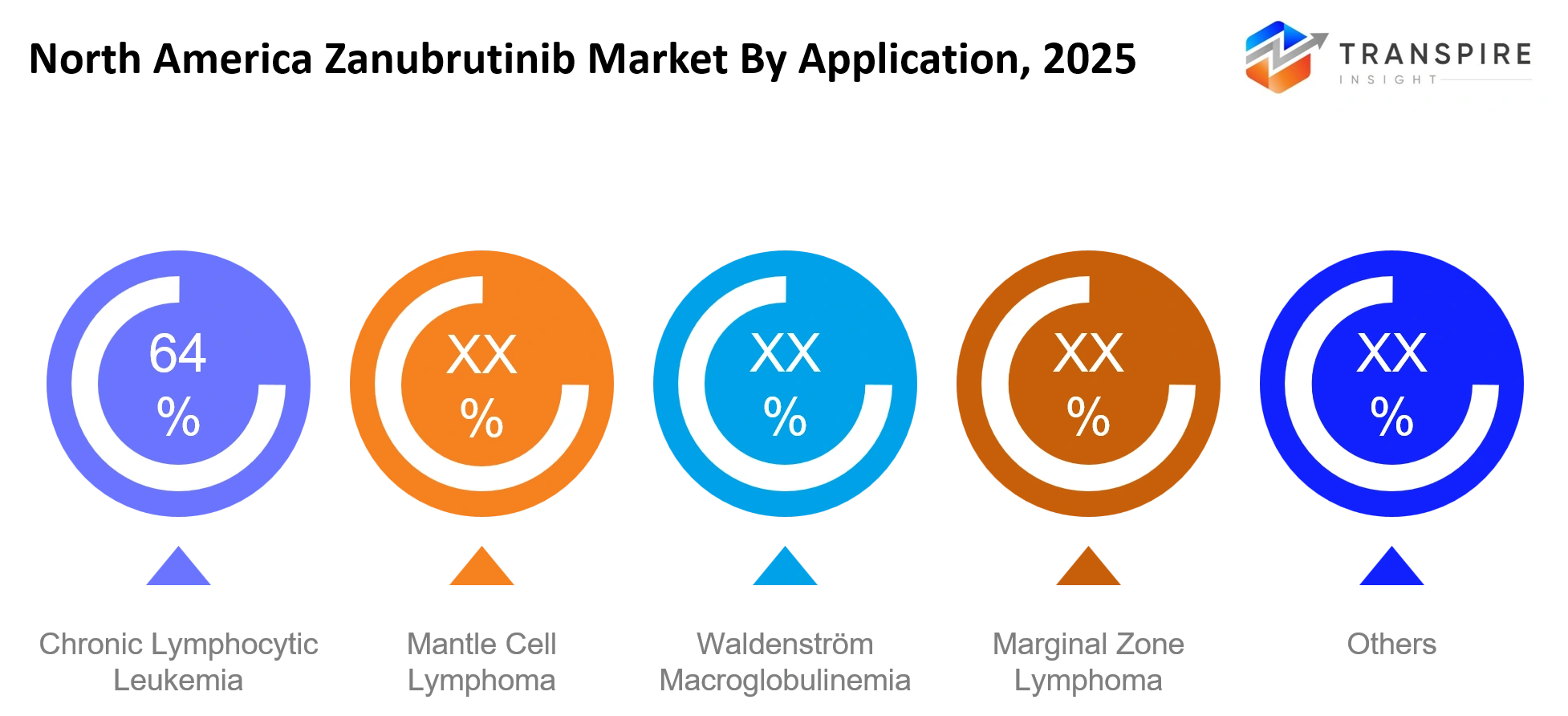
For applications, chronic lymphocytic leukemia (CLL/SLL) is the top driver, holding nearly 45% share in the North America Zanubrutinib Market due to high prevalence rates. Mantle cell lymphoma treatment is moving fastest too, and that growth is tied to expanding FDA label indications, plus earlier diagnostic detection trends showing up in practice.
Hospitals and cancer treatment centers lead adoption, with over 55% share, mostly because integrated oncology care delivery systems make coordination easier. At the same time, specialty oncology clinics are the fastest-growing end-user group, pushed by this continued outpatient shift and long-term oral therapy management models that are becoming more common in real life.
Regional expansion, and physician education programs kinda help with early adoption in frontline treatment settings, across North America.
What are the Key Drivers, Restraints, and Opportunities in the North America Zanubrutinib Market?
The main thing driving the North America Zanubrutinib Market is basically the clinical shift toward next generation BTK inhibitors, with better safety profiles. That change really picked up after comparative trial results suggested fewer cases of atrial fibrillation, and fewer cardiovascular complications compared with earlier options like ibrutinib. Regulators along with oncology guideline committees then started widening frontline options for chronic lymphocytic leukemia and mantle cell lymphoma. As clinicians steered higher risk patients toward oral therapies that are often more tolerable, prescription duration went up, and patient retention improved too. That ends up reinforcing recurring treatment revenue across oncology networks, which is kind of the whole point for sustained growth.
The biggest brake is still the steep structural cost of targeted hematology drugs in the North American reimbursement environment. Zanubrutinib, in practice, tends to be used for a long stretch, so annual therapy expenses become a heavy burden. Private insurers struggle with it, and public healthcare programs do too. This cannot be fixed fast because it’s wrapped up in patent protections, specialty drug pricing rules, plus fragmented payer discussions that don’t line up neatly. The downstream effect is delayed formulary acceptance in some systems , and slower uptake among providers who are especially cost sensitive. All of that narrows broader revenue expansion.
A key opportunity is combination therapy work and earlier intervention in the cancer pathway. Companies are spending a lot on pairing zanubrutinib with monoclonal antibodies and more tailored precision oncology approaches, aiming to improve progression free survival. If usage expands in community oncology clinics across the United States and Canada, it could open access to a bigger patient group, especially as outpatient cancer infrastructure keeps getting stronger.
What Has the Impact of Artificial Intelligence Been on the North America Zanubrutinib Market?
Artificial intelligence and advanced analytics are starting to nudge the North America Zanubrutinib Market, kind of reshaping things by boosting oncology workflow efficiency patient surveillance, and how treatment is fine-tuned. More cancer centers plus specialty pharmacies are moving toward AI-enabled clinical decision support platforms, where eligibility checks can be automated, treatment sequencing gets streamlined, and adverse event monitoring for BTK inhibitor therapies becomes more continuous. In practice this is letting oncologists spot higher-risk cardiovascular profiles sooner and nudge dosing pathways that are more calibrated. The general outcome is fewer treatment pauses, and a better chance that patients stick with long term therapy.
Then there are machine learning models, supporting predictive treatment response work too, by combing through electronic health records, genomic datasets, and overall progression trends across hematologic malignancies. A few oncology networks now lean on predictive analytics to estimate hospitalization risks ahead of time, and manage side effect interventions earlier than before. This approach tends to cut down emergency care usage, while keeping outpatient treatment continuity stronger. On the commercial side, pharmaceutical firms often deploy AI-driven forecasting tools to manage specialty drug inventory, plan distribution more precisely, and handle reimbursement workflows with less friction. In the end, it reduces supply chain hiccups and shortens prescription fulfillment time, even with ongoing demand volatility.
All of these digital abilities tend to support better patient retention, improved operational throughput, and steadier recurring therapy revenue. Still, AI adoption has a big snag, because oncology datasets remain scattered across healthcare systems. Real world clinical data can be inconsistent, and privacy rules are strict, so progress on model accuracy—at scale—and cross-platform integration keeps moving slower than expected.
Key Market Trends
Since 2021 hematologists have more and more moved away from first-generation BTK inhibitors, toward zanubrutinib, partly because cardiovascular safety worries sort of shook long term prescribing confidence , and honestly it made clinicians pause a bit.
Meanwhile community oncology clinics started expanding oral cancer therapy management programs from 2022 through 2025. That shift lowered the reliance on infusion based treatment infrastructure across North America, which seemed like a pretty big operational change for a lot of sites.
Also updated NCCN treatment guidelines have been pushing frontline BTK inhibitor adoption faster. As a result, physician prescribing patterns shifted for chronic lymphocytic leukemia and mantle cell lymphoma patients, you could see that in how people were choosing regimens.
At the same time specialty pharmacies leaned into digital adherence monitoring harder after treatment discontinuation rates began influencing reimbursement outcomes , and then that also affected long term oncology contract performance.
Pharmaceutical companies too— including BeiGene and AbbVie— ramped up head to head clinical trial work since 2020, aiming to reach earlier stage hematology treatment opportunities rather than waiting.
Payer organizations then tightened reimbursement reviews for high cost oncology drugs. That basically forced manufacturers to expand patient assistance and to use more value based contracting strategies , even when margins were already under pressure.
Real world evidence programs also gained momentum, especially after hospitals started asking for post approval cardiovascular and progression free survival data before broad formulary expansion decisions.
And tele-oncology adoption increased a lot after the pandemic, letting hematologists monitor oral BTK therapy adherence remotely. This helped across underserved patient groups, where access has been uneven for years.
Combination therapy development accelerated between 2023 and 2026 too. Manufacturers tested zanubrutinib alongside monoclonal antibodies and precision oncology regimens , which felt like a deliberate push to improve sequencing outcomes.
Finally oncology providers began adopting AI assisted treatment sequencing tools more often , aiming to spot high risk patients sooner and limit adverse event related therapy interruptions.
North America Zanubrutinib Market Segmentation
By Application
Chronic lymphocytic leukemia currently sits in the leading position across zanubrutinib applications, mainly because the disease is common and frontline treatment is widely adopted within North American oncology networks. More expanded clinical evidence, especially around improved cardiovascular safety compared with earlier BTK inhibitors, helped physicians feel more comfortable with longer duration use . In addition, hospital systems and hematology specialists are gradually moving protocol choices toward targeted oral therapies, particularly for older patients who still need manageable outpatient treatment. On top of that, solid reimbursement support for chronic lymphocytic leukemia treatments also reinforced its commercial dominance across specialty oncology channels, which kinda keeps everything steady.
Mantle cell lymphoma stays the second-largest application segment, largely driven by the growing use of next generation BTK inhibitors in relapsed and refractory scenarios . Regulatory approvals tied to extra treatment indications added extra speed to prescribing momentum from 2022 through 2025. Meanwhile, Waldenström macroglobulinemia and marginal zone lymphoma keep picking up momentum as precision oncology programs improve diagnostic identification for rare hematologic cancers. Over the forecast period, wider label expansion plus combination therapy development should push treatment penetration further into these smaller lymphoma categories. That creates more room, for clinical trial investment and also specialty drug commercialization .
To learn more about this report, Download Free Sample Report
By Distribution Channel
Hospital pharmacies keep the biggest market slice, mainly because oncology drug administration, reimbursement coordination, and adverse event monitoring stay kind of tightly linked inside hospital cancer programs. For hematologic malignancies, the treatment routes are more tangled, so direct work is needed between oncologists, pharmacists, and the payer authorization teams, so it doesn’t really happen smoothly any other way. On top of that, large hospital systems often have established specialty drug procurement arrangements, which helps with inventory oversight and steadier prescription continuity. There’s also strong institutional groundwork that keeps high prescription concentration moving through hospital based distribution channels.
Retail pharmacies sit in the middle range, yet they have some constraints. This is partly due to limited capabilities for handling specialty oncology medications, which really need close clinical supervision. Online pharmacies grew fairly steadily after tele-oncology adoption increased across North America in the post pandemic period. Digital prescription fulfillment tools made therapy access easier for longer term outpatient groups, especially in suburban zones and places that are less served. Going forward, growth is expected to tilt toward hybrid specialty pharmacy models that blend remote dispensing, adherence observation, and reimbursement support that’s built in, which in turn should spur investment into digital oncology distribution ecosystems.
By End User
Hospitals capture the leading end user share, since advanced hematology diagnostics, oncology infusion services, and multidisciplinary cancer care are still mostly centralized within bigger institutional environments. The complicated patient monitoring demands linked to BTK inhibitor therapies keep reinforcing hospital centered treatment routines.Academic medical centers also bring a lot by joining clinical trials that test broader zanubrutinib uses, and yes even combination regimens. There are established reimbursement systems and integrated oncology departments too which kind of keeps hospital leadership stronger, especially in hematologic cancer care.
Oncology clinics are currently the fastest-growing end user category, mainly because outpatient cancer management is getting more commercially practical for oral targeted therapies. Lower infrastructure costs, plus more telemedicine integration, help treatment spread past the big hospital networks. Cancer research institutes keep shaping how the market moves, through biomarker studies and next generation precision oncology development programs. During the forecast period, decentralized oncology care models are expected to make treatment more reachable while also nudging pharmaceutical partnerships with regional specialty clinics and community based hematology centers.
By Dosage Form
Capsules still lead this dosage form segment, because taking it orally makes treatment feel easier, supports long term adherence, and improves outpatient disease management efficiency. Hematology specialists increasingly prefer capsule-based targeted therapies for older patients who need continuous treatment while staying less dependent on hospitals. Consistent dosing schedules and simpler prescription handling also help lift patient retention across specialty oncology practices. Strong physician comfort with oral BTK inhibitor protocols just keeps reinforcing why capsules stay on top, in practice.
Combination therapies are sort of emerging as the fastest growing dosage category , mainly because ongoing clinical investigations keep pairing zanubrutinib with monoclonal antibodies, and also with precision oncology agents. Over time , pharmaceutical companies intensified investment in combination regimens, after clinical studies showed better progression free survival results in particular lymphoma groups. Also, more work on personalized treatment sequencing is expected to speed up commercial adoption through the forecast period. As the combination therapy pipelines expand , it will likely drive more strategic collaborations between biotech firms, oncology centers and specialty drug manufacturers.
What are the Key Use Cases Driving the North America Zanubrutinib Market?
Chronic lymphocytic leukemia still stays the main use case that drives zanubrutinib adoption across North American oncology systems. Big hospital networks, and hematology centers more and more prescribe oral BTK inhibitors for longer term outpatient disease management because the cardiovascular profile is safer, and that helps treatment continuity with older patient populations dealing with cancer.
There’s also added momentum coming from mantle cell lymphoma and Waldenström macroglobulinemia treatment programs inside specialty oncology clinics. With expanded FDA approvals , and easier reimbursement access, community based cancer providers got encouraged to fold targeted BTK inhibitor therapy into relapsed, and refractory hematologic cancer care pathways.
Some emerging use cases are showing up too, like combo immunotherapy regimens, plus biomarker guided precision oncology applications that are currently being evaluated at cancer research institutes. Clinical trials are looking at zanubrutinib together with monoclonal antibodies and CAR-T support therapies, and if those results keep going, future treatment options could broaden for rarer lymphoma categories and for high risk patient groups.
|
Report Metrics |
Details |
|
Market size value in 2025 |
USD 649.5 Million |
|
Market size value in 2026 |
USD 724.7 Million |
|
Revenue forecast in 2033 |
USD 1565.3 Million |
|
Growth rate |
CAGR of 11.63% from 2026 to 2033 |
|
Base year |
2025 |
|
Historical data |
2021 - 2024 |
|
Forecast period |
2026 - 2033 |
|
Report coverage |
Revenue forecast, competitive landscape, growth factors, and trends |
|
Regional scope |
North America (Canada, The United States, and Mexico) |
|
Key company profiled |
BeiGene, Novartis, Roche, AstraZeneca, Johnson & Johnson, Bristol Myers Squibb, AbbVie, Eli Lilly, Pfizer, Merck & Co., Gilead Sciences, Sanofi, Takeda Pharmaceutical, Amgen, Bayer |
|
Customization scope |
Free report customization (country, regional & segment scope). Avail customized purchase options to meet your exact research needs. |
|
Report Segmentation |
By Application (Chronic Lymphocytic Leukemia, Mantle Cell Lymphoma, Waldenström Macroglobulinemia, Marginal Zone Lymphoma, Others); By Distribution Channel (Hospital Pharmacies, Retail Pharmacies, Online Pharmacies, Others); By End User (Hospitals, Oncology Clinics, Cancer Research Institutes, Others); By Dosage Form (Capsules, Combination Therapies, Others) |
Which Regions are Driving the North America Zanubrutinib Market Growth?
North America still stays as the leading regional market, mainly because its regulatory environment is pretty mature and there’s this extensive maritime compliance framework. The United States and Canada keep enforcing strict emissions monitoring standards across commercial fleets, and most of the major ports along the Gulf Coast , and the Atlantic corridor also run advanced digital inspection and vessel tracking systems. On top of that, the region has one of the largest concentrations of offshore support vessels , tankers, and cargo fleets that really need continuous operational upgrades, you know. Plus there’s a solid “ecosystem” of classification societies, marine technology providers, and established shipowners, which basically helps the region sustain long-term market leadership, even when conditions get complicated.
Europe comes next as the second-largest contributor, but its role is more tied to stability and coordinated investment than it is to sheer fleet size. Local governments continue to push phased environmental regulations with fairly predictable timelines, so shipowners can schedule capital expenditures with more confidence. Northern European operators especially focus on fuel efficiency , lifecycle optimization, and preventive maintenance programs, which ends up generating consistent demand across the maritime value chain. That disciplined investment culture, paired with resilient intra-European trade activity, makes Europe a dependable source of recurring market revenue during periods when global shipping gets a bit volatile or unpredictable.
Asia-Pacific is turning into the fastest-growing regional market, largely because port modernization and fleet renewal programs are speeding up across China, India, South Korea, and Southeast Asia. A few governments have recently rolled out incentives for cleaner vessels, smart port systems , and domestically built next-generation ships, creating a sharp increase in procurement activity. Expanding export capacity and rising regional trade volumes have also pushed shipping companies to modernize aging fleets more aggressively than in previous years. Between 2026 and 2033, this momentum is expected to create substantial opportunities for equipment suppliers, digital solution providers, and investors seeking exposure to rapidly expanding maritime infrastructure projects.
Who are the Key Players in the North America Zanubrutinib Market and How Do They Compete?
The North America Zanubrutinib market looks like a moderately consolidated kind of setup, where a small group of oncology-centered pharmaceutical firms really control most of the commercial action. What people call competition here tends to revolve around clinical differentiation, regulatory expansion, and physician confidence in long term safety results, not just price by itself. Incumbents keep defending their footing via broader indication approvals and additional clinical evidence, but newer players try to nudge or even disrupt older treatment pathways using targeted therapies and combination regimens. On top of that, the market shows pretty intense rivalry across patient support services, reimbursement access, and oncology network partnerships, which end up shaping prescribing habits across the United States and Canada, day to day.
BeiGene has pushed its position forward using aggressive clinical development plus direct commercialization of zanubrutinib under the BRUKINSA brand. It differentiates itself with a lot of head to head trial data versus earlier BTK inhibitors, especially in chronic lymphocytic leukemia and mantle cell lymphoma. BeiGene keeps enlarging its North American presence through oncology partnerships, physician education initiatives, and further regulatory submissions aimed at wider hematologic indications. AstraZeneca, for its part, backs its hematology portfolio with combination therapy research and strong ties to hospital networks, and that helps improve access to advanced cancer treatments across big healthcare systems.
Johnson & Johnson stays a competitive pressure point through its long standing BTK inhibitor know how and deep relationships with oncology specialists built around the Imbruvica franchise. Its edge is largely tied to broad physician familiarity and the sheer scale of reimbursement infrastructure that supports patient retention within existing treatment pathways. Eli Lilly has increased competitive intensity by investing in precision oncology research and targeted acquisition strategies that strengthen its hematology pipeline. These developments are pushing the market toward more specialized therapies with stronger efficacy data and improved tolerability profiles.
Company List
- BeiGene
- Novartis
- Roche
- AstraZeneca
- Johnson & Johnson
- Bristol Myers Squibb
- AbbVie
- Eli Lilly
- Pfizer
- Merck & Co.
- Gilead Sciences
- Sanofi
- Takeda Pharmaceutical
- Amgen
- Bayer
Recent Development News
“In March 2026, Gilead Sciences announced acquisition of Ouro Medicines. The acquisition strengthened Gilead’s hematology and autoimmune pipeline through the addition of BCMAxCD3 T-cell engager programs, increasing competitive activity in the North American BTK inhibitor and oncology therapeutics market that includes zanubrutinib-based treatments. https://investors.gilead.com
What Strategic Insights Define the Future of the North America Zanubrutinib Market?
The North America Zanubrutinib market is sort of moving—structurally—toward a more precision-led hematology treatment landscape, where the long term therapeutic value and day to day tolerability will shape how clinicians prescribe, more than the whole first-to-market story. You know, there is a growing physician preference for next generation BTK inhibitors with better safety profiles, and that is expected to rework the way therapy is sequenced for chronic lymphocytic leukemia and other related blood cancers, during the next five to seven years. Still, there is this one not talked about enough risk: the increasing concentration of market power around a small set of targeted oncology treatments. That could make payers look closer, and add reimbursement pressure, as treatment costs keep climbing.
At the same time, combination strategies that integrate zanubrutinib with newer immuno-oncology agents feel like a real opportunity, but they’re still in early stage commercial adoption. So the companies that start now—by funding biomarker-driven clinical trials and setting up real-world evidence collaborations with oncology networks—should be positioned better to secure formulary placement and hold onto pricing power as competitive intensity keeps increasing.
North America Zanubrutinib Market Report Segmentation
By Application
- Chronic Lymphocytic Leukemia
- Mantle Cell Lymphoma
- Waldenström Macroglobulinemia
- Marginal Zone Lymphoma
- Others
By Distribution Channel
- Hospital Pharmacies
- Retail Pharmacies
- Online Pharmacies
- Others
By End User
- Hospitals
- Oncology Clinics
- Cancer Research Institutes
- Others
By Dosage Form
- Capsules
- Combination Therapies
- Others
Frequently Asked Questions
Find quick answers to common questions.
The North America Zanubrutinib Market size is USD 1565.3 Million in 2033.
Key segments for the North America Zanubrutinib Market are By Application (Chronic Lymphocytic Leukemia, Mantle Cell Lymphoma, Waldenström Macroglobulinemia, Marginal Zone Lymphoma, Others); By Distribution Channel (Hospital Pharmacies, Retail Pharmacies, Online Pharmacies, Others); By End User (Hospitals, Oncology Clinics, Cancer Research Institutes, Others); By Dosage Form (Capsules, Combination Therapies, Others).
Major North America Zanubrutinib Market players are BeiGene, Novartis, Roche, AstraZeneca, Johnson & Johnson, Bristol Myers Squibb, AbbVie, Eli Lilly, Pfizer, Merck & Co., Gilead Sciences, Sanofi, Takeda Pharmaceutical, Amgen, Bayer.
The North America Zanubrutinib Market size is USD 649.5 Million in 2025.
The North America Zanubrutinib Market CAGR is 11.63% from 2026 to 2033.
- BeiGene
- Novartis
- Roche
- AstraZeneca
- Johnson & Johnson
- Bristol Myers Squibb
- AbbVie
- Eli Lilly
- Pfizer
- Merck & Co.
- Gilead Sciences
- Sanofi
- Takeda Pharmaceutical
- Amgen
- Bayer
About the Authors

Pankaj Ghogare Patil
I am Pankaj Ghogare Patil, a Senior Research Analyst at Transpire Insight, specializing in the Pharmaceutical, Chemicals & Materials, Healthcare IT, and Biotechnology industry. My expertise lies in conducting comprehensive market research, analyzing industry trends, evaluating competitive landscapes, and translating complex data into actionable insights. At Transpire Insight, I closely follow emerging technologies, regulatory developments, and market innovations to create accurate, well-researched, and informative content that helps businesses and professionals make informed decisions. I am committed to producing credible, evidence-based articles that reflect industry best practices while making technical topics accessible and valuable for a broad audience.

Chakradhar Khansole
Chakradhar serves as the Research Director at Transpire Insight, bringing over 8 years of experience in technology, innovation, and strategic market intelligence. He specializes in transforming complex market data into actionable business insights that enable organizations to make informed, growth-oriented decisions. Recognized for his strategic vision and analytical expertise, Chakradhar leads high-impact research initiatives, delivering comprehensive market assessments, competitive intelligence, and forward-looking industry analysis.
Recently Published Reports
-
Apr 2026
AI in Diabetic Retinopathy Market
AI in Diabetic Retinopathy Market Size, Share & Analysis Report By Type (Screening AI Systems, Diagnostic AI Systems, and Predictive AI Models), By Application Segment (Hospitals, Ophthalmology Clinics, Diagnostic Centers, and Research and Development), and Geography (North America, Europe, Asia-Pacific, Middle East and Africa, South and Central America), 2021 - 2031
-
Apr 2026
Psychometric Tests Market
Psychometric Tests Market Size, Share & Analysis Report By Type (Personality Tests, Ability/Aptitude Tests, Skill/Knowledge Tests, and Others), By Application (Talent Acquisition and Talent Management), and Geography (North America, Europe, Asia-Pacific, Middle East and Africa, South and Central America), 2021 – 2031
-
Apr 2026
Rare Biological Sample Collection Market
Rare Biological Sample Collection Market Size, Share & Analysis Report By Type (Isolation Kits & Reagent, Blood Collection Tubes, and Others), By Application (Oncology, Transcriptomics, Pharmacogenomics, and Others), and Geography (North America, Europe, Asia-Pacific, Middle East and Africa, South and Central America), 2021 – 2031
-
Jul 2026
Diabetic Retinopathy Market
Diabetic Retinopathy Market Size, Share & Analysis Report By Type (Proliferative Diabetic Retinopathy, and Diabetic Macular Edema (DME)), By Treatment Type (Anti VEGF Drug, Steroid Implants, Laser Surgeries, and Vitrectomy), and Geography (North America, Europe, Asia-Pacific, Middle East and Africa, South and Central America), 2021 – 2031
Our Clients







