

North America Incretin Mimetics Market Size & Forecast:
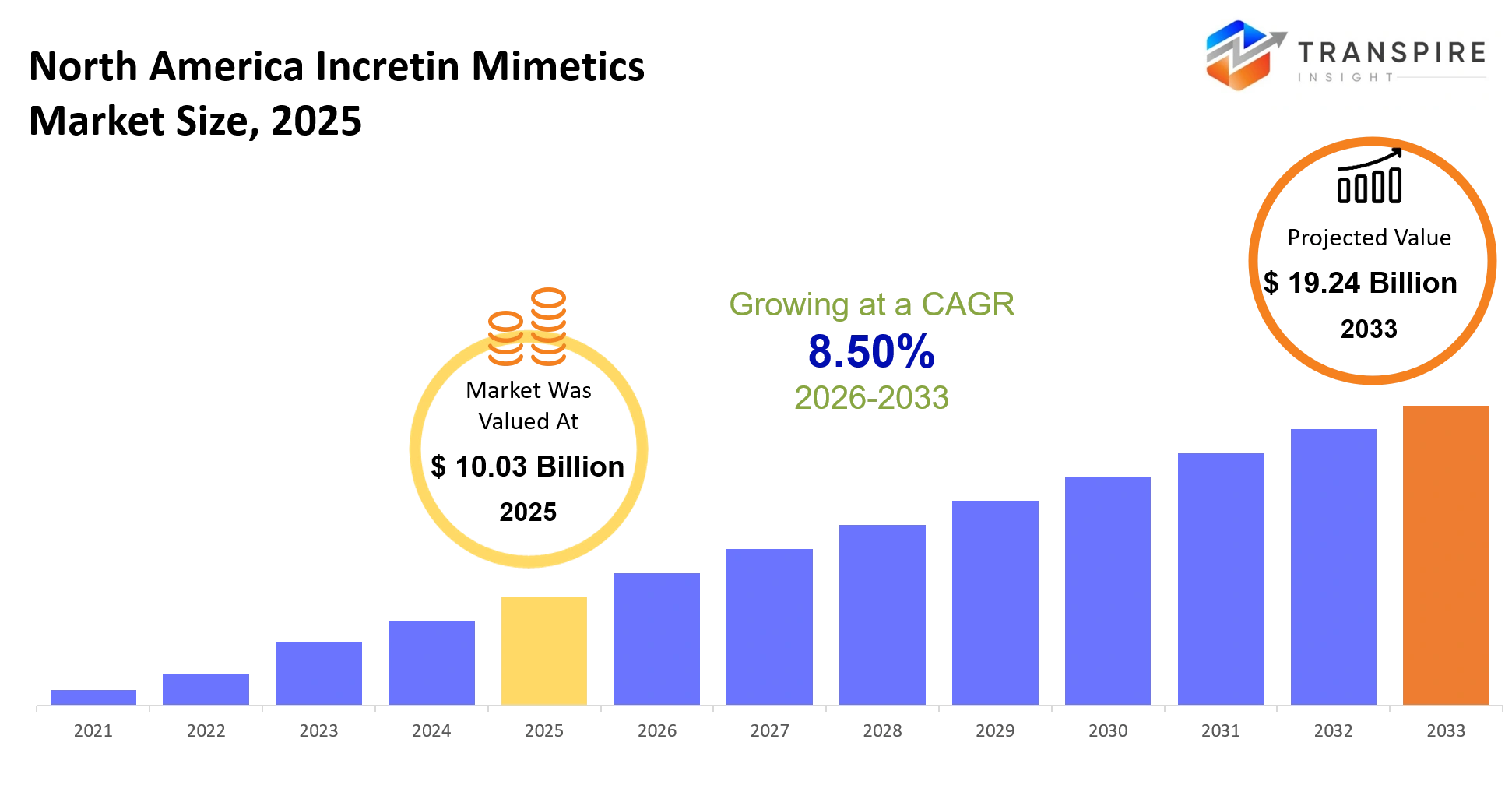
- North America Incretin Mimetics Market Size 2025: USD 10.03 Billion
- North America Incretin Mimetics Market Size 2033: USD 19.24 Billion
- North America Incretin Mimetics Market CAGR: 8.50%
- North America Incretin Mimetics Market Segments: By Drug Type (GLP-1 Receptor Agonists, Dual GIP/GLP-1 Agonists, Long-Acting GLP-1 Agonists, Short-Acting GLP-1 Agonists, Oral GLP-1 Therapies, Injectable GLP-1 Therapies, Combination Incretin Therapies, Others); By Indication (Type 2 Diabetes, Obesity, Cardiovascular Risk Reduction, Metabolic Syndrome, Prediabetes, Non-Alcoholic Fatty Liver Disease (NAFLD), Clinical Research, Others); By Route of Administration (Subcutaneous Injection, Oral, Intravenous, Weekly Injection, Daily Injection, Extended-Release Injection, Combination Therapy, Others); By End User (Hospitals, Diabetes Clinics, Specialty Clinics, Home Healthcare, Retail Pharmacies, Academic Medical Centers, Research Institutes, Others); By Distribution Channel (Hospital Pharmacies, Retail Pharmacies, Online Pharmacies, Specialty Pharmacies, Government Programs, Direct Supply, Others)
North America Incretin Mimetics Market Summary
As per Transpire Insight Analysis, the North America Incretin Mimetics Market was valued at USD 10.03 Billion in 2025. It is forecast to reach USD 19.24 Billion by 2033. That is a CAGR of 8.50% over the period.
The North America Incretin Mimetics Market backs the long haul management of type 2 diabetes and obesity, by letting healthcare providers tighten glycemic control, lower cardiovascular risk, and keep a more steady weight reduction going while also reducing how much patients rely on heavy insulin regimens. Over the last several years, the whole market kinda looks like it has moved, in a more structural way, away from older glucose lowering medicines and over to more advanced GLP-1 receptor agonists, plus dual acting incretin therapies that give broader metabolic wins. That, in turn, messes with treatment routines and even reimbursement priorities, a bit.
One real-world push factor was the supply chain disruption after the COVID-19 pandemic. It showed weak points in pharmaceutical manufacturing and distribution systems, not just once but, across multiple steps. In response, manufacturers then boosted their production capacity, diversified sourcing approaches, and tried to fortify regional supply resilience, so that the day to day flow stays more dependable.At the same time, healthcare systems and payers adjusted their prescribing choices and inventory planning a bit, to support treatment continuity for patients who need ongoing metabolic disease management over time.
Key Market Insights
- North America, steered by the United States really, still takes the biggest chunk, with around 91% share in 2025, backed by advanced reimbursement frameworks and steady prescription volumes, which is kind of the main signal here.
- Canada is seen as the fastest moving regional market through 2025–2032, because broader access to obesity treatment is expanding and provincial reimbursement policies have been updated, sort of in a domino way.
- GLP-1 receptor agonists keep sitting at the front of the product lineup with almost 72% market share in 2025, and this is tied to strong physician preference plus expanded clinical indications too.
- Dual incretin therapies come in next, as the second-largest segment, supported by premium pricing and broader commercialization across metabolic disease treatment routes.
- Dual GIP/GLP-1 therapies are projected to become the fastest-growing product category by 2032, fueled by better outcomes in weight reduction as well as glycemic control.
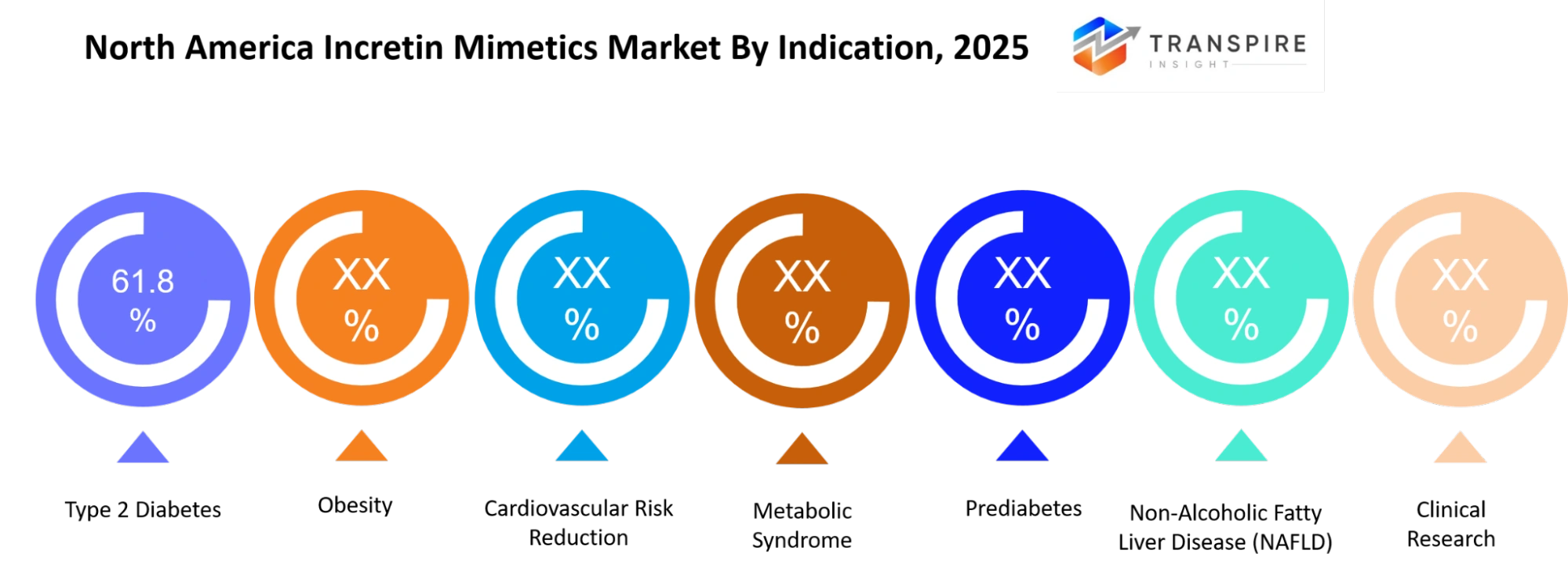
- For applications, Type 2 diabetes management dominates with roughly 64% market share in 2025, mainly because clinical guidelines got updated and long-term treatment is being adopted more consistently.
- Obesity management is expected to grow the quickest during 2025–2032, since prescribing eligibility is widening and payer acceptance is becoming more common.
- For end users—like, the people actually using the solutions hospitals and specialty clinics are kind of leading the adoption curve, with almost 46% market share in 2025, and it is backed by multidisciplinary metabolic care programs.
- Meanwhile, specialty obesity treatment centers are expected to be the fastest-growing end-user group through 2032, which kind of mirrors the rollout of more integrated weight management services, plus a growing push to coordinate care, across settings.
What are the Key Drivers, Restraints, and Opportunities in the North America Incretin Mimetics Market?
The strongest driver is the shift toward more advanced metabolic treatments that tackle diabetes, obesity, and cardiovascular risk at the same time. Fresh clinical care guidelines and wider insurance reimbursement helped speed up physician take up. With better clinical results than older glucose lowering medicines, prescribing behavior kind of moved over. Pharmaceutical companies then answered by ramping up manufacturing capacity and pushing out commercial launches. Altogether this mix pushed prescription volumes upward, supported stronger premium pricing, and opened more revenue chances across both diabetes and obesity care.
The biggest restraint is the manufacturing complexity tied to peptide based therapies, plus continuing supply problems that never fully go away. Growing biologics output means specialized sites, regulatory checks, and basically years of capacity planning. So, these limits cannot be removed quickly, no matter what. When shortages happen, patients start to get delayed and physicians can not prescribe as they would like, even if demand is there. A few launches were even staggered by geography because supply stayed tight. Based on a Transpire Insight review of regional procurement notices and launch timelines, supply chain concentration is still the main execution risk. So the near term revenue gets held back and penetration across eligible patient groups ends up slower.
Honestly, the most promising opportunity seems to be in next-generation oral incretin therapies and, like, combination metabolic medicines. Pharmaceutical investment keeps moving toward more convenient formulations, with broader patient acceptance and just less hassle. Also, artificial intelligence-supported drug discovery is shortening the whole candidate optimization timing, sort of, quicker than before. North America still looks well positioned, mainly due to a strong clinical research infrastructure, high biologics investment, and generally favorable commercialization pathways. Put together, these factors could help unlock the next stage of a sustained market expansion.
What Has the Impact of Artificial Intelligence Been on the North America Incretin Mimetics Market?
Artificial intelligence with digital technologies are kinda reshaping the regional incretin therapeutics industry, while simultaneously nudging pharmaceutical research, manufacturing workflows, and commercial planning into something faster. With AI platforms , clinical trial recruitment can be kind of automated, protocol compliance can be monitored, and adverse event reports can be analyzed in near real time, so developers end up reducing that admin heavy burden but they also end up reinforcing regulatory paperwork. Then machine learning models show up and they forecast prescription volumes, they tune production schedules, and they even figure out inventory requirements across those complicated biologics manufacturing networks.In practice, these prediction features help manufacturers avoid stock imbalances and keep supply more steady for high value metabolic therapies.
On the commercial side, digital analytics help quite a bit too, mainly by spotting prescribing patterns, refining distribution approaches, and supporting value-based reimbursement talks with healthcare providers and payers. AI assisted molecular modeling tends to speed up candidate selection for next generation GLP-1, and for dual incretin therapies as well, which shortens early stage development, and it improves where resources get allocated. At the same time manufacturers can rely on predictive maintenance systems to reduce equipment downtime and raise production efficiency inside biologics facilities, which lowers operational cost and minimizes manufacturing interruptions. Still though, adoption isn’t wide open, because integration costs are high, healthcare data often feels fragmented, and interoperability between pharma, provider, and payer systems is limited. Data quality inconsistencies plus regulatory expectations keep algorithm performance from reaching its best, so human oversight stays essential for important development, manufacturing, and commercialization choices.
Key Market Trends
- Since 2023, dual GIP/GLP-1 therapies have been expanding prescribing rhythms fast, mainly delivering more weight reduction than the usual GLP-1 medicines.
- During 2024–2026, pharmaceutical manufacturers said they’re planning multi-billion-dollar manufacturing expansions, to deal with ongoing peptide medicine supply constraints that keep showing up.
- After 2024, development of oral incretin therapy kind of took off, because the goal is better patient convenience , and also longer-term adherence to treatment.
- More and more regulatory approvals are now also bringing cardiovascular outcome benefits, and that seems to boost physician confidence , and even supports broader reimbursement decisions across North America.
- Between 2023 and 2026, real-world evidence programs grew a lot, and that ended up shaping payer negotiations and revisions to treatment guideline documents.
- Digital health platforms are increasingly mixing remote metabolic monitoring with prescription management, which improves long term patient engagement , and therapy persistence too.
- Since 2024, contract manufacturing partnerships have expanded, helping to reduce production bottlenecks, and improving regional supply resilience for biologic medicines.
- Competition has shifted away from glucose control only, toward full metabolic disease handling, including obesity, cardiovascular protection, and renal-related outcome goals.
- Finally, top pharmaceutical companies keep funding combination regimens, lifecycle management strategies, and next-generation peptide technologies, so they can hold stronger competitive positioning.
North America Incretin Mimetics Market Segmentation
By Drug Type :
GLP-1 receptor agonists kind of keep the leading spot , because the more solid clinical outcomes really back up blood glucose control and also weight management. Dual GIP/GLP-1 agonists are still getting a lot of attention, since clinical studies show improved metabolic results for quite a few patient groups. Long-acting GLP-1 agonists are still widely used, mainly because fewer doses make it easier to keep treatment going , so continuity goes up. Short-acting GLP-1 agonists still fit into selected plans where flexible dosing matters.
Oral GLP-1 therapies keep drawing interest, because tablet formulations make day to day convenience better for many patients. Injectable GLP-1 therapies keep a meaningful share, due to long-standing physician confidence and broad clinical use , honestly. Combination incretin therapies open up new choices by aiming at multiple metabolic pathways at the same time. Other products exist to meet specialized care needs, and they also support research programs across different healthcare systems.
By Indication :
Type 2 diabetes is probably the biggest indication because long-term disease management actually hinges on getting glucose controlled properly and also gaining extra metabolic benefits, you know. Obesity keeps on growing as a key treatment area too, especially after broader clinical acceptance of incretin-based medicines, and yes it matters. Cardiovascular risk reduction has turned into a more intense priority since the clinical evidence showed benefits that go beyond blood sugar control, not just the usual stuff. Metabolic syndrome also helps widen product adoption across integrated care programs in a more routine way.
Prediabetes gets more clinical attention these days through early intervention strategies, designed to slow down progression. Non-Alcoholic Fatty Liver Disease (NAFLD) creates fresh opportunities since research keeps looking at metabolic therapies and their broader health advantages. Clinical research programs remain active, they keep evaluating other therapeutic uses and better treatment pairings. Other indications also support future product development through continued scientific studies, basically staying open-ended for what comes next.
By Route of Administration :
Subcutaneous injection stays the go-to route, because proven effectiveness and established treatment protocols back routine clinical practice , even if it’s not always the most convenient choice at first glance. Oral administration keeps growing too as pharmaceutical companies launch convenient alternatives for eligible patients. Intravenous administration is mostly for limited situations where specialized medical supervision is still required, and you know… it can’t just be “anywhere” in routine care. Weekly injection schedules get a strong nod because fewer visits or sessions mean more everyday convenience for many people.
Meanwhile daily injection products still help those who need a steady, established treatment plan with consistent monitoring. Extended-release injections also keep showing up as helpful, since they maintain therapeutic effects while cutting down on how often dosing happens. Combination therapy approaches add flexibility by aligning different administration methods with patient needs. Other delivery options remain in the mix as well , especially when research goals or specialized healthcare requirements come into play.
By End User :
Hospitals take up a huge chunk of the market because those multidisciplinary care teams kind of handle complex metabolic conditions and they make tweaks to treatment as needed, all the time. Diabetes clinics stay busy with steady demand thanks to specialized disease management, plus continuous patient surveillance. Specialty clinics keep growing too, with more services that zero in on obesity and metabolic disorders. Home healthcare is also getting more traction, since treatment models are moving toward long term support that happens outside hospital settings.
Retail pharmacies help patients reach care more easily through wider medicine availability and prescription services. Academic medical centers back innovation via clinical trials and more advanced treatment programs. Research institutes push future product development forward, using ongoing scientific investigations. Other healthcare facilities round things out by offering extra treatment options across different patient populations.
By Distribution Channel :
Hospital pharmacies kinda lead the distribution side, because inpatient treatment and specialist care need medicine to be there, reliably, always. Meanwhile retail pharmacies keep spreading outward too, by using broad geographic coverage and easier prescription fulfillment, like it’s supposed to be. Online pharmacies also push harder into the market as digital healthcare keeps improving medicine ordering and home delivery options, and people notice. Then specialty pharmacies back up complex therapies with extra patient education and dedicated clinical assistance, sort of handholding through the process.
Government programs help lift treatment availability for eligible patient groups, using structured reimbursement plus procurement systems, which makes the flow more stable. Direct supply channels let manufacturers build steadier relationships with healthcare providers, and also helps inventory management stay cleaner. There are other distribution channels as well, to meet regional needs and for specialized healthcare networks. If investment continues in supply efficiency, product availability should get stronger across those different care settings, not just one place.
What are the Key Use Cases Driving the North America Incretin Mimetics Market?
In North America, the biggest use case in the Incretin Mimetics Market stays tied to type 2 diabetes management. In practice, hospitals, diabetes clinics, and even specialty clinics buy these therapies, to help with longer-term glucose control, and to lower complications. They also aim to back better patient outcomes overall, and well, the clinical guideline updates along with reimbursement support keep strengthening this path.
Then there is obesity treatment, which has become a big and still growing application. This is especially visible in specialty clinics and in home healthcare providers, who handle long duration weight reduction plans. On top of that, cardiovascular risk reduction is showing up more often. A lot of healthcare systems are folding metabolic therapies into preventive care plans, mostly for those higher-risk patient groups.
More new use cases are also emerging, like care for metabolic syndrome and non-alcoholic fatty liver disease, though this is in carefully selected patients. Academic medical centers and research institutes are examining these therapies through clinical studies, kind of to justify future regulatory approvals. If the trial results keep looking strong and the evidence keeps widening, commercial adoption could broaden further across the forecast period.
|
Report Metrics |
Details |
|
Market size value in 2025 |
USD 10.03 Billion |
|
Market size value in 2026 |
USD 10.87 Billion |
|
Revenue forecast in 2033 |
USD 19.24 Billion |
|
Growth rate |
CAGR of 8.50% from 2026 to 2033 |
|
Base year |
2025 |
|
Historical data |
2021 - 2024 |
|
Forecast period |
2026 - 2033 |
|
Report coverage |
Revenue forecast, competitive landscape, growth factors, and trends |
|
Regional scope |
North America (Canada, The United States, and Mexico) |
|
Key company profiled |
Novo Nordisk, Eli Lilly, AstraZeneca, Sanofi, Pfizer, Amgen, Zealand Pharma, Boehringer Ingelheim, Hanmi Pharmaceutical, Structure Therapeutics, Viking Therapeutics, Roche, Carmot Therapeutics, Altimmune, Regeneron Pharmaceuticals |
|
Customization scope |
Free report customization (country, regional & segment scope). Avail customized purchase options to meet your exact research needs. |
|
Report Segmentation |
By Drug Type (GLP-1 Receptor Agonists, Dual GIP/GLP-1 Agonists, Long-Acting GLP-1 Agonists, Short-Acting GLP-1 Agonists, Oral GLP-1 Therapies, Injectable GLP-1 Therapies, Combination Incretin Therapies, Others); By Indication (Type 2 Diabetes, Obesity, Cardiovascular Risk Reduction, Metabolic Syndrome, Prediabetes, Non-Alcoholic Fatty Liver Disease (NAFLD), Clinical Research, Others); By Route of Administration (Subcutaneous Injection, Oral, Intravenous, Weekly Injection, Daily Injection, Extended-Release Injection, Combination Therapy, Others); By End User (Hospitals, Diabetes Clinics, Specialty Clinics, Home Healthcare, Retail Pharmacies, Academic Medical Centers, Research Institutes, Others); By Distribution Channel (Hospital Pharmacies, Retail Pharmacies, Online Pharmacies, Specialty Pharmacies, Government Programs, Direct Supply, Others) |
Which Regions are Driving the North America Incretin Mimetics Market Growth?
The United States roughly accounts for around 91% of the North America Incretin Mimetics Market, and the reason is pretty straightforward but also a bit layered. It has strong reimbursement frameworks, already established regulatory pathways, and broad access to specialty healthcare services which all help keep that dominance. Then you’ve got major pharmaceutical manufacturers, contract manufacturing organizations, clinical research centers, plus distribution networks that form a kind of mature commercial ecosystem. As a result, continued investment in manufacturing capacity, product development, and clinical research should keep the regional leadership steady for most of the forecast period.
Canada is the second-largest regional market, but it plays the game differently. The healthcare system there leans toward long-term disease management and evidence-based prescribing, so the market tends to feel more consistent. Provincial reimbursement reviews and fairly steady regulatory standards give pharmaceutical companies predictable conditions when they plan commercial expansion. On top of that, public healthcare funding, and stable procurement practices generate dependable demand across hospitals, specialty clinics, and even retail pharmacy networks. So even with a smaller patient base, Canada still ends up being a dependable contributor to regional revenue.
Canada is also expected to see the fastest growth over the 2026–2033 period, because wider reimbursement for obesity therapies and expanded metabolic care programs have recently sped up treatment adoption, a lot. In the meantime additional funding for specialty clinics and digital healthcare infrastructure has helped patients reach advanced incretin therapies sooner, and with more ease. Pharmaceutical companies are reacting as well by ramping up commercial efforts, running physician education campaigns and tightening distribution partnerships across the country. All of that momentum should eventually build quite attractive opportunities, for makers and healthcare providers plus investors looking for long term growth, in metabolic disease care.
Who are the Key Players in the North America Incretin Mimetics Market and How Do They Compete?
The competitive landscape of the North America Incretin Mimetics Market stays pretty consolidated, largely because only a few pharmaceutical firms effectively steer most commercial products and also the late-stage development efforts. So yeah, competition is less about price alone, and more about how well things work in clinics, how inventive the products are, whether manufacturing can keep up, and how smoothly regulatory approvals come through. Older manufacturers tend to hold their ground by scaling production, widening clinical use cases, and keeping solid relationships with healthcare providers . Meanwhile, the newer pipeline groups usually push differentiated therapies and more convenient formulations, it’s kind of a parallel track.
Novo Nordisk keeps its position strong via ongoing investment in GLP-1 innovation, plus extra manufacturing capacity that helps ensure dependable product availability. Eli Lilly leans into differentiation through dual GIP/GLP-1 technology, giving pronounced clinical results for diabetes and obesity and at the same time ramping up production facilities to match real world commercial demand. AstraZeneca, meanwhile, emphasizes metabolic disease research and uses strategic collaborations to widen treatment options inside well-established healthcare networks, rather than trying to break entirely new ground.
Pfizer is progressing oral incretin therapy development, aiming for a convenient alternative to injections, and it differentiates through formulation technology. Amgen is also shaping the scene by putting resources toward next-generation obesity treatments, backed by late-stage clinical development plus focused research programs. Altogether these moves reinforce each company’s product portfolio, and help position them for broader commercial chances across North America throughout the forecast period.
Company List
- Novo Nordisk
- Eli Lilly
- AstraZeneca
- Sanofi
- Pfizer
- Amgen
- Zealand Pharma
- Boehringer Ingelheim
- Hanmi Pharmaceutical
- Structure Therapeutics
- Viking Therapeutics
- Roche
- Carmot Therapeutics
- Altimmune
- Regeneron Pharmaceuticals
Recent Development News
In April 2026, Eli Lilly and Company received U.S. FDA approval for Foundayo (orforglipron), an oral GLP-1 weight-loss medicine. The launch introduced the first once-daily GLP-1 obesity pill without food or water restrictions, expanding treatment options and intensifying competition in the increasing therapeutics market.Source https://www.reuters.com/
In March 2026, Novo Nordisk secured U.S. FDA approval for a 7.2 mg dose of Wegovy under the National Priority Voucher fast-track program. The higher-dose approval strengthened the company's obesity portfolio and supported broader clinical differentiation as competition in GLP-1 therapies accelerated. Source https://www.reuters.com/
What Strategic Insights Define the Future of the North America Incretin Mimetics Market?
The North America Incretin Mimetics Market is likely to drift toward broader metabolic disease management during the next five to seven years, since treatment strategies are handling diabetes , obesity, cardiovascular well being and other long term chronic issues via more combined therapeutic approaches. This change should be backed by steady progress in dual action therapies, oral formulations, and also by wider reimbursement coverage for high value metabolic medicines.
There is also a quieter sort of risk , the concentration of peptide manufacturing capacity which can bottleneck product availability if there are production interruptions or raw material shortages, even while prescriptions keep climbing . An emerging opening is precision medicine , where biomarker driven patient selection helps clinicians match treatments more efficiently with the person's metabolic picture. Firms that start early on diversified manufacturing networks , build real world evidence, and form strategic ties with healthcare systems will generally be set up to improve market access and keep that longer term competitive edge.
North America Incretin Mimetics Market Report Segmentation
By Drug Type
- GLP-1 Receptor Agonists
- Dual GIP/GLP-1 Agonists
- Long-Acting GLP-1 Agonists
- Short-Acting GLP-1 Agonists
- Oral GLP-1 Therapies
- Injectable GLP-1 Therapies
- Combination Incretin Therapies
By Indication
- Type 2 Diabetes
- Obesity
- Cardiovascular Risk Reduction
- Metabolic Syndrome
- Prediabetes
- Non-Alcoholic Fatty Liver Disease (NAFLD)
- Clinical Research
By Route of Administration
- Subcutaneous Injection
- Oral
- Intravenous
- Weekly Injection
- Daily Injection
- Extended-Release Injection
- Combination Therapy
By End User
- Hospitals
- Diabetes Clinics
- Specialty Clinics
- Home Healthcare
- Retail Pharmacies
- Academic Medical Centers
- Research Institutes
By Distribution Channel
- Hospital Pharmacies
- Retail Pharmacies
- Online Pharmacies
- Specialty Pharmacies
- Government Programs
- Direct Supply
Frequently Asked Questions
Find quick answers to common questions.
The expected North America Incretin Mimetics Market size for the market will be USD 19.24 Billion in 2033.
Key segments for the North America Incretin Mimetics Market are Type By Drug Type (GLP-1 Receptor Agonists, Dual GIP/GLP-1 Agonists, Long-Acting GLP-1 Agonists, Short-Acting GLP-1 Agonists, Oral GLP-1 Therapies, Injectable GLP-1 Therapies, Combination Incretin Therapies, Others); By Indication (Type 2 Diabetes, Obesity, Cardiovascular Risk Reduction, Metabolic Syndrome, Prediabetes, Non-Alcoholic Fatty Liver Disease (NAFLD), Clinical Research, Others); By Route of Administration (Subcutaneous Injection, Oral, Intravenous, Weekly Injection, Daily Injection, Extended-Release Injection, Combination Therapy, Others); By End User (Hospitals, Diabetes Clinics, Specialty Clinics, Home Healthcare, Retail Pharmacies, Academic Medical Centers, Research Institutes, Others); By Distribution Channel (Hospital Pharmacies, Retail Pharmacies, Online Pharmacies, Specialty Pharmacies, Government Programs, Direct Supply, Others) .
Major North America Incretin Mimetics Market players are Novo Nordisk, Eli Lilly, AstraZeneca, Sanofi, Pfizer, Amgen, Zealand Pharma, Boehringer Ingelheim, Hanmi Pharmaceutical, Structure Therapeutics, Viking Therapeutics, Roche, Carmot Therapeutics, Altimmune, Regeneron Pharmaceuticals.
The North America Incretin Mimetics Market size is USD 10.03 Billion in 2025.
The North America Incretin Mimetics Market CAGR is 8.50% from 2026 to 2033.
- Novo Nordisk
- Eli Lilly
- AstraZeneca
- Sanofi
- Pfizer
- Amgen
- Zealand Pharma
- Boehringer Ingelheim
- Hanmi Pharmaceutical
- Structure Therapeutics
- Viking Therapeutics
- Roche
- Carmot Therapeutics
- Altimmune
- Regeneron Pharmaceuticals
About the Authors

Pankaj Ghogare Patil
I am Pankaj Ghogare Patil, a Senior Research Analyst at Transpire Insight, specializing in the Pharmaceutical, Chemicals & Materials, Healthcare IT, and Biotechnology industry. My expertise lies in conducting comprehensive market research, analyzing industry trends, evaluating competitive landscapes, and translating complex data into actionable insights. At Transpire Insight, I closely follow emerging technologies, regulatory developments, and market innovations to create accurate, well-researched, and informative content that helps businesses and professionals make informed decisions. I am committed to producing credible, evidence-based articles that reflect industry best practices while making technical topics accessible and valuable for a broad audience.

Chakradhar Khansole
Chakradhar serves as the Research Director at Transpire Insight, bringing over 8 years of experience in technology, innovation, and strategic market intelligence. He specializes in transforming complex market data into actionable business insights that enable organizations to make informed, growth-oriented decisions. Recognized for his strategic vision and analytical expertise, Chakradhar leads high-impact research initiatives, delivering comprehensive market assessments, competitive intelligence, and forward-looking industry analysis.
Recently Published Reports
-
Apr 2026
AI in Diabetic Retinopathy Market
AI in Diabetic Retinopathy Market Size, Share & Analysis Report By Type (Screening AI Systems, Diagnostic AI Systems, and Predictive AI Models), By Application Segment (Hospitals, Ophthalmology Clinics, Diagnostic Centers, and Research and Development), and Geography (North America, Europe, Asia-Pacific, Middle East and Africa, South and Central America), 2021 - 2031
-
Apr 2026
Psychometric Tests Market
Psychometric Tests Market Size, Share & Analysis Report By Type (Personality Tests, Ability/Aptitude Tests, Skill/Knowledge Tests, and Others), By Application (Talent Acquisition and Talent Management), and Geography (North America, Europe, Asia-Pacific, Middle East and Africa, South and Central America), 2021 – 2031
-
Apr 2026
Rare Biological Sample Collection Market
Rare Biological Sample Collection Market Size, Share & Analysis Report By Type (Isolation Kits & Reagent, Blood Collection Tubes, and Others), By Application (Oncology, Transcriptomics, Pharmacogenomics, and Others), and Geography (North America, Europe, Asia-Pacific, Middle East and Africa, South and Central America), 2021 – 2031
-
Jul 2026
Diabetic Retinopathy Market
Diabetic Retinopathy Market Size, Share & Analysis Report By Type (Proliferative Diabetic Retinopathy, and Diabetic Macular Edema (DME)), By Treatment Type (Anti VEGF Drug, Steroid Implants, Laser Surgeries, and Vitrectomy), and Geography (North America, Europe, Asia-Pacific, Middle East and Africa, South and Central America), 2021 – 2031
Our Clients







