

North America Human Fibrinogen Concentrates Market Summary
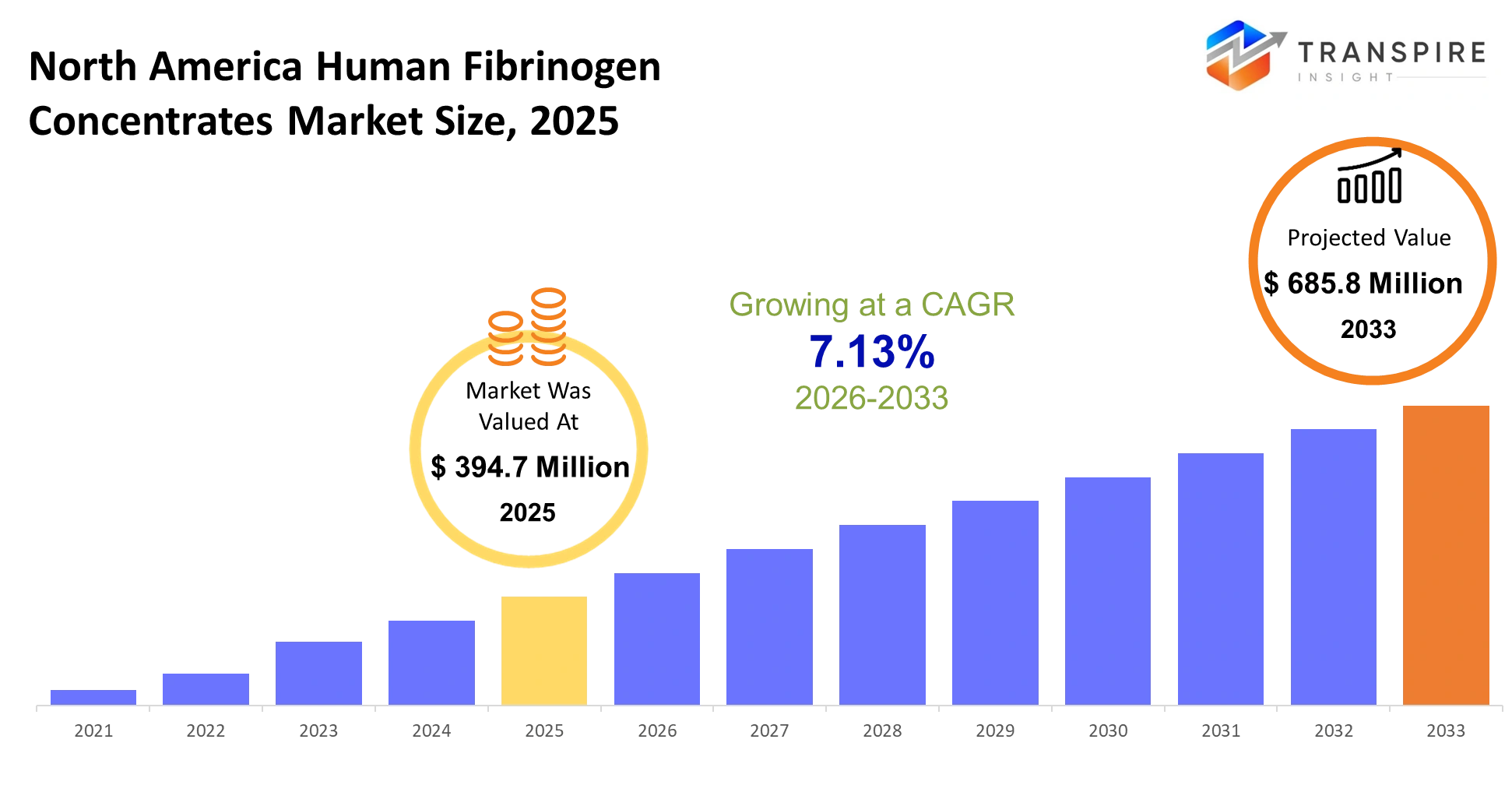
As per Transpire Insight Analysis the North America Human Fibrinogen Concentrates Market size is estimated at USD 394.7 Million in 2025 and is anticipated to reach USD 685.8 Million by 2033, growing at a CAGR of 7.13% from 2026 to 2033.
The North America Human Fibrinogen Concentrates market kinda helps hospitals and trauma centers by delivering fast fibrinogen replacement for people with severe bleeding during surgery, childbirth issues, traumatic injuries, or even inherited fibrinogen deficiencies. In real use these products sort of help kickstart the clotting process relatively quick, so transfusion volumes can drop a bit and overall patient outcomes get better, particularly when timing is critical. Over the last three to five years, the whole market has moved away from depending mostly on cryoprecipitate, and toward more standardized fibrinogen concentrate therapies, mainly because they come together faster, the dosing stays more steady, and the safety profile looks improved. Then COVID-19 kinda changed procurement choices too, it showed weak spots in plasma derived supply routes, and many providers started pushing inventory planning harder. Now that hospitals are still adopting evidence based bleeding management pathways and they are investing in quicker hemostatic interventions, human fibrinogen concentrates are spreading across emergency care, operating rooms, and critical care environments, and that tends to create steadier, more predictable revenue chances for the manufacturers.
North America Human Fibrinogen Concentrates Market Size & Forecast:
- North America Human Fibrinogen Concentrates Market Size 2025: USD 394.7 Million
- Expected Market Value 2033: USD 685.8 Million
- Forecast CAGR: 7.13%
- Leading region in 2025: United States
- Fastest Growing region: Canada
- Key Profile: CSL Behring, Octapharma, Grifols, Takeda, Kedrion Biopharma, LFB Group, Biotest, Bio Products Laboratory, Sanquin, Emergent BioSolutions, Baxter, Pfizer, Fresenius Kabi, GC Biopharma, SK Plasma
Key Market Insights
- In 2025, the United States really pulled ahead in the North America Human Fibrinogen Concentrates Market, holding around 88% share, which was kind of enabled by modern trauma networks and a strong plasma collection setup.
- Canada should end up being the quickest growing region in the 2025 to 2033 window, mainly because hospitals are putting more money in and transfusion protocols get refreshed more often.
- On the product side, human plasma derived fibrinogen concentrates were in the lead with roughly 85% market share during 2025. This seems to come from the long standing clinical buy-in and the regulatory clearances already in place.
- Combination hemostatic therapies became the second biggest segment, since hospitals are increasingly stitching together multimodal bleeding management into day to day surgical practice, not just one approach.
- Looking ahead, next generation high purity fibrinogen formulations are expected to post the fastest growth from 2025 through 2033, with manufacturing improvements and wider clinical use cases helping them.
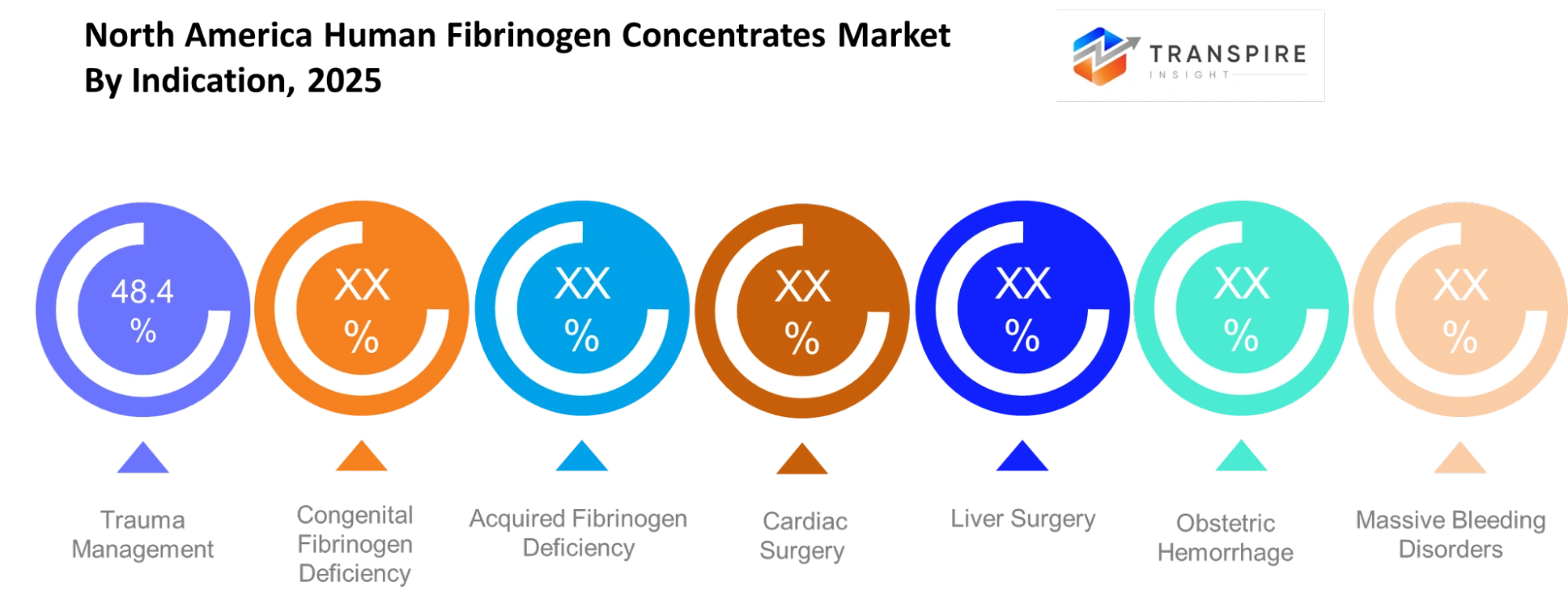
- For indications, acquired fibrinogen deficiency treatment took up around 68% market share in 2025. This jump is pretty much linked to more usual use in trauma care, cardiovascular surgery, and postpartum hemorrhage situations, and that makes it a bit more visible.
- On the other hand congenital fibrinogen deficiency treatment is expected to expand at the fastest pace through 2033. That forecast is tied to better diagnosis levels, plus the growth of dedicated care centers, so patients can more easily reach specialized services.
- Looking at end users, hospitals held the top position with close to 76% share in 2025, backed by elevated procedure volumes and emergency bleeding interventions.
- Lastly specialty clinics, together with ambulatory surgical centers are likely to grow the quickest through 2033. This is because outpatient surgical capacity keeps expanding, year by year .
What are the Key Drivers, Restraints, and Opportunities in the North America Human Fibrinogen Concentrates Market?
The primary driver is the fast transition toward more evidence based patient blood management protocols across North American hospitals. Updated clinical guidance, plus a broader take up of viscoelastic testing has pushed physicians to give focused fibrinogen replacement earlier when severe bleeding episodes happen. That change cuts down the dependence on cryoprecipitate , shortens the time it takes to prepare treatment, and makes dosing more uniform. When intervention is earlier it helps surgical results, increases the hospitals confidence in fibrinogen concentrates, and it also broadens how often these products get used across trauma care, cardiac surgery, liver transplantation, and obstetric settings. All of that feeds right into stronger market revenue , because treatment frequency rises and premium product adoption goes up.
The biggest restraint though is still the narrow availability of plasma derived raw materials and the slow manufacturing cycle. Plasma collection, fractionation , purification, and regulatory quality checks demand heavy investment and they cant be scaled quickly. Based on a Transpire Insight review of regional sourcing announcements and product launch timing, supply chain concentration stays the main execution risk. Manufacturing bottlenecks delay deliveries, reduce on hand product availability, and postpone hospital purchasing decisions. So even with solid clinical demand, revenue potential gets held back.
The strongest opportunity kind of sits in broadening precision bleeding management, with digital diagnostics and more advanced coagulation testing behind it. Extra investment into fast point of care coagulation checks lets clinicians spot fibrinogen deficiencies earlier, and then give the right, targeted therapies. Canada as well as multiple U.S. academic medical centers keeps putting money into integrated surgical care platforms, so that overall makes for good conditions for wider uptake of premium fibrinogen concentrate products, and it also supports the next phase of market expansion.
What Has the Impact of Artificial Intelligence Been on the North America Human Fibrinogen Concentrates Market?
Artificial intelligence and digital technologies are getting better at improving how efficiently operations run across the regional human fibrinogen concentrate industry , especially when it comes to plasma collection manufacturing quality assurance, and hospital inventory management. AI powered monitoring systems keep checking plasma processing parameters all the time, spotting deviations during fractionation and also making regulatory compliance stronger via automated documentation. At the same time digital manufacturing platforms lower how much manual inspection is needed , while also making batch consistency for plasma derived therapies more reliable.
Machine learning models are now commonly used to help forecast hospital demand by looking at things like surgical volumes, trauma admissions, seasonal use patterns and procurement history. With those predictions manufacturers can plan production more intelligently and cut down the risk of inventory shortages across distribution networks, which is basically the whole point.
Healthcare providers, meanwhile, can use AI assisted clinical decision support that pulls together lab results with patient characteristics to help guide fibrinogen replacement choices during urgent bleeding events. Better forecasting plus automated supply planning improves how available inventory is , while also reducing product waste and the expense of emergency procurement. Digital traceability systems also make pharmacovigilance more robust and speed up product recall management if it ever becomes necessary.
That said, broad AI rollout is still held back by steep integration costs and by uneven access to standardized clinical datasets across hospitals. Differences in electronic health record systems and in plasma manufacturing data can reduce algorithm accuracy , which slows wider deployment even if the operational benefits are clearly there.
Key Market Trends
- Since 2021, hospitals have started to swap cryoprecipitate for standardized fibrinogen concentrates more and more, partly to make treatments feel more consistent, and also to cut down the time needed for prep .
- Between 2022 and 2025, plasma fractionation companies pushed more money into manufacturing , to keep regional supply steadier after the disruptions that happened around the pandemic.
- After 2021, adoption of point of care coagulation testing really sped up a lot, so clinicians could make fibrinogen replacement choices faster, especially during trauma or big surgical work.
- From 2023 onward, manufacturers ramped up digital quality control spending , aiming for better batch traceability and stronger regulatory compliance across plasma derived products.
- CSL Behring and Grifols also expanded plasma collection infrastructure, which supports long term supply security and more regional production capacity .
- Clinical guidelines have increasingly leaned toward targeted fibrinogen replacement rather than broad blood component therapy, helping overall treatment efficiency , across cardiac and obstetric surgery.
- Procurement approaches shifted after 2022 toward long term supplier agreements, so hospitals were less exposed to swings in plasma availability, and to logistics breakdowns.
- Academic hospitals took part more in bleeding management research from 2023 to 2025, and that is producing stronger evidence for using fibrinogen concentrates.
- Canada meanwhile increased spending on advanced surgical care infrastructure, which is creating favorable conditions for quicker adoption of specialized coagulation therapies during the forecast period.
North America Human Fibrinogen Concentrates Market Segmentation
By Product Type :
Plasma-derived fibrinogen concentrates kinda hold the biggest share, because day to day clinical practice keeps leaning toward products with a solid safety track record and broad regulatory acceptance, which is pretty important for purchasing decisions. Their strong use in trauma care, cardiac surgery, and severe bleeding management helps keep sales fairly steady across most major healthcare facilities. Also, the high purity fibrinogen options keep getting more attention since consistent dosing, plus steady manufacturing quality, tends to improve results for patients. The lyophilized products also really help with storage flexibility , and they let teams prepare faster when it’s an emergency.
Recombinant fibrinogen concentrates are still pulling in research funding, mainly while manufacturers try to cut down on how much plasma collection they need. At the same time, combination hemostatic products are seeing wider use in complicated surgeries, especially those where multiple bleeding control approaches are needed all at once. For critical care, emergency fibrinogen products support quick action, and then other specialized formulations cover more specific clinical requirements, so clinicians basically get more treatment choices.
By Indication :
Acquired fibrinogen deficiency is often the leading reason , because in the middle of surgery or trauma, severe bleeding means you need immediate fibrinogen replacement, pretty much right away. Cardiac surgery as well as trauma care make up a big chunk of the total treatment volume , since these complex procedures usually involve substantial blood loss. Obstetric hemorrhage has also turned into a meaningful treatment focus, as more hospitals tighten up emergency maternal care pathways. Liver surgery adds to the utilization too , because coagulation disorders regularly show up alongside major hepatic interventions.
Congenital fibrinogen deficiency still feels like a niche area, yet it keeps growing, helped by earlier detection and better routes to therapy. Massive bleeding disorders continue to drive the demand for fast replacement treatment, especially in urgent, time critical environments. Other clinical use cases create additional treatment space as clinicians roll out evidence based approaches for bleeding management more widely.
By Route of Administration :
Intravenous administration still seems like the preferred route, mostly because fast delivery matters a lot when severe bleeding happens. In hospitals, infusion lets clinicians manage controlled dosing during surgical work ups and intensive care, where continuous watching tends to help patient management. Emergency administration also has a big part here, when immediate fibrinogen replacement can lower complications and get patients more stable. Around the perioperative window, administration keeps getting broader, since targeted bleeding management is becoming sort of routine in surgical care.
Injectable formulations add flexibility in certain treatment settings and they also help keep clinical workflows moving efficiently. Combination therapy means fibrinogen replacement can be paired with other hemostatic treatments, especially in complicated bleeding situations. Other administration methods are still there too, for specialized clinical cases where typical treatment strategies need some adjustments.
By End User :
Hospitals count for the biggest share, because big procedures, trauma attention, and emergency treatment for serious bleeding end up concentrated inside the larger healthcare systems. Trauma centers keep a fairly steady product routine, since the whole process is urgent when severe injury is involved, and you really cannot pause. Blood banks also help with supply continuity by arranging stock across healthcare providers plus the emergency needs. Emergency care centers further push product utilization by using quick care pathways, so the time between decision and action stays short.
Specialty clinics keep widening their offerings, especially for patients with inherited bleeding disorders, and they do it more and more over time. Academic medical centers back clinical investigation and then help roll in new treatment protocols into everyday practice, not just trials. Research institutes contribute to product improvement, whereas other healthcare facilities broaden access across multiple patient groups, including those who might otherwise wait longer.
By Distribution Channel :
Hospital pharmacies are the most important distribution channel, since right away product availability is basically necessary during operations and urgent care, it’s sort of a must. Blood bank supply networks also help with regional access because they keep a dependable stock for time critical clinical needs. Government procurement backs the purchasing process for public healthcare institutions using longer supply agreements, so it keeps things stable. Medical distributors further enhance product availability across both city areas and regional healthcare facilities, even when logistics get tricky.
Specialty pharmacies still help patients who need continued therapy for rare bleeding conditions. Direct sales strengthen the relationship between manufacturers and big healthcare organizations, and at the same time they improve supply planning. Other distribution routes provide extra support for specific procurement requirements, and for regional healthcare networks too.
What are the Key Use Cases Driving the North America Human Fibrinogen Concentrates Market?
The biggest use case kinda comes from acquired fibrinogen deficiency treatment during really major surgeries and those severe bleeding episodes. In practice, hospitals buy human fibrinogen concentrates to back up cardiac procedures , trauma care, and emergency operating rooms where fast clot restoration actually helps reduce transfusion needs. That in turn is said to improve day to day clinical efficiency. Standardized treatment protocols keep getting rolled out, and they seem to keep strengthening the purchasing choices across large healthcare systems, too.
Cardiac surgery and obstetric hemorrhage are also getting more attention across specialty hospitals and trauma centers. Academic medical centers use these products in advanced surgical programs alongside updated bleeding management guidelines, as they say it. Meanwhile, blood banks increasingly coordinate product availability with hospital pharmacies so that the timing stays right for those high-risk procedures .
Newer use cases are starting to look more like personalized bleeding management, supported by point-of-care coagulation testing, and there’s also broader adoption inside liver surgery programs. Research institutes along with tertiary care centers are reviewing targeted fibrinogen replacement strategies. The goal is to improve treatment precision while still aligning with future clinical guideline updates across North America, overall.
|
Report Metrics |
Details |
|
Market size value in 2025 |
USD 394.7 Million |
|
Market size value in 2026 |
USD 423.5 Million |
|
Revenue forecast in 2033 |
USD 685.8 Million |
|
Growth rate |
CAGR of 7.13% from 2026 to 2033 |
|
Base year |
2025 |
|
Historical data |
2021 - 2024 |
|
Forecast period |
2026 - 2033 |
|
Report coverage |
Revenue forecast, competitive landscape, growth factors, and trends |
|
Regional scope |
North America (Canada, The United States, and Mexico) |
|
Key company profiled |
CSL Behring, Octapharma, Grifols, Takeda, Kedrion Biopharma, LFB Group, Biotest, Bio Products Laboratory, Sanquin, Emergent BioSolutions, Baxter, Pfizer, Fresenius Kabi, GC Biopharma, SK Plasma . |
|
Customization scope |
Free report customization (country, regional & segment scope). Avail customized purchase options to meet your exact research needs. |
|
Report Segmentation |
By Product Type (Plasma-Derived Fibrinogen Concentrates, Recombinant Fibrinogen Concentrates, Lyophilized Fibrinogen, High-Purity Fibrinogen, Combination Hemostatic Products, Emergency Fibrinogen Products, Others); By Indication (Congenital Fibrinogen Deficiency, Acquired Fibrinogen Deficiency, Trauma Management, Cardiac Surgery, Liver Surgery, Obstetric Hemorrhage, Massive Bleeding Disorders, Others); By Route of Administration (Intravenous, Injectable, Hospital Infusion, Emergency Administration, Perioperative Administration, Combination Therapy, Others); By End User (Hospitals, Trauma Centers, Blood Banks, Specialty Clinics, Academic Medical Centers, Research Institutes, Emergency Care Centers, Others); By Distribution Channel (Hospital Pharmacies, Blood Bank Supply, Specialty Pharmacies, Government Procurement, Direct Sales, Medical Distributors, Others) |
Which Regions are Driving the North America Human Fibrinogen Concentrates Market Growth?
The United States still shows up as the top regional market, roughly 88% of total revenue or so. There is strong regulatory oversight, advanced hospital infrastructure, and well-known blood management guidelines , which basically nudges wider clinical adoption across both surgical and emergency care. In addition there are broad plasma collection networks , large fractionation facilities, plus ongoing investment from biopharmaceutical manufacturers that help keep the regional supply chain more or less steady. With high procedure volumes and a stream of clinical research, the market leadership should remain in place for the whole forecast period.
Canada comes next as the second-largest regional market, supported by a healthcare structure that relies on consistent public funding and pretty standardized treatment pathways. National procurement programs help keep purchasing behavior predictable, while regulatory consistency makes it easier for products to stay available across provincial healthcare networks. Academic medical centers also keep adding to the clinical evidence through coordinated research efforts and guideline creation. And because healthcare spending is stable , along with reimbursement policies that are fairly predictable, Canada continues to look like a dependable source for long-term revenue.
Canada is also expected to post the quickest growth in the 2026–2033 period, as provincial healthcare systems keep expanding access to newer bleeding care therapies. Lately, investments in operating room infrastructure and the broader take up of evidence based coagulation protocols have sped up the use of these products across major hospitals. More integration of fast diagnostic testing is helping clinicians make better treatment calls, and it also supports wider clinical acceptance. This general momentum should open appealing avenues for manufacturers plus investors, because they can expand via new product launches, distribution partnerships, and healthcare collaborations, more or less in step with demand.
Who are the Key Players in the North America Human Fibrinogen Concentrates Market and How Do They Compete?
Competition still seems pretty consolidated, mostly because making plasma-derived fibrinogen concentrate needs specialized know-how, careful regulatory compliance and yeah also a reliable plasma collection setup. Overall product quality, manufacturing throughput, clinical proof, and distribution muscle tend to outweigh price, not that price never matters. The bigger, established manufacturers keep defending their market share by putting money into production and offering broader clinical support, while the smaller players often go for more niche formulations and more targeted therapeutic openings.
CSL Behring comes off as especially differentiated thanks to its long-running plasma collection operations and ongoing investment in fractionation capacity, so they can keep supplying the product even when there’s supply pressure. Octapharma, meanwhile, concentrates on expanding its plasma processing capability and deepening hospital relationships by staying consistent on product supply and quality assurance. Grifols strengthens its position by linking plasma collection directly with manufacturing, giving them higher control over raw material availability while also supporting regional growth.
Kedrion Biopharma keeps pushing manufacturing capacity higher and broadens international distribution, helping clinicians reach specialized treatment centers. LFB Biomedicaments highlights targeted plasma-derived therapies and grows its commercial footprint through strategic collaborations, which reinforces its market presence across North America. During the forecast period, continued investment in manufacturing technology, maintaining regulatory compliance, and advancing product development is likely to stay the main driver of how competition plays out, even if some firms try to pivot around other factors.
Company List
- CSL Behring
- Octapharma
- Grifols
- Takeda
- Kedrion Biopharma
- LFB Group
- Biotest
- Bio Products Laboratory
- Sanquin
- Emergent BioSolutions
- Baxter
- Pfizer
- Fresenius Kabi
- GC Biopharma
SK Plasma
Recent Development News
In February 2025, Octapharma received U.S. FDA approval for its human fibrinogen concentrate for the treatment of acquired fibrinogen deficiency. The approval introduced the first FDA-approved therapy in this indication, expanding treatment options for severe bleeding management and strengthening adoption across North American hospitals.
Source https://www.octapharma.com/
In September 2025, CSL entered a strategic collaboration and option agreement with VarmX BV to develop a first-in-class investigational coagulation treatment. The partnership expanded CSL's coagulation portfolio and reinforced long-term investment in advanced bleeding disorder therapies that complement the human fibrinogen concentrates market.
Source https://newsroom.csl.com/
What Strategic Insights Define the Future of the North America Human Fibrinogen Concentrates Market?
Over the next five to seven years, the North America Human Fibrinogen Concentrates Market is likely going to drift toward more precise , protocol driven bleeding management. That is backed by stronger clinical evidence, with diagnostics that are faster and also a broader uptake of targeted coagulation therapies. In other words, buying decisions will shift, not just from whether an emergency product is instantly available , but more toward outcomes that are measurable and also treatment efficiency that can be tracked.
There’s also a risk that is a bit less visible , because the industry keeps relying on human plasma collection. In that area the supply side concentration and those longer production cycles can still generate shortages even when demand looks stable on paper. Meanwhile, there’s an opportunity that can stand out more clearly. Widespread integration of rapid point of care coagulation testing can help clinicians replace fibrinogen earlier. This could also expand use beyond the usual high volume surgical environments.
Market participants can do well by investing in diversified plasma sourcing, plus digital inventory planning. It also helps to build partnerships with tertiary care hospitals so the region can get stronger, long term supply resilience. At the same time, that kind of coordination supports broader clinical adoption across North America.
North America Human Fibrinogen Concentrates Market Report Segmentation
By Product Type
- Plasma-Derived Fibrinogen Concentrates
- Recombinant Fibrinogen Concentrates
- Lyophilized Fibrinogen
- High-Purity Fibrinogen
- Combination Hemostatic Products
- Emergency Fibrinogen Products
By Indication
- Congenital Fibrinogen Deficiency
- Acquired Fibrinogen Deficiency
- Trauma Management
- Cardiac Surgery
- Liver Surgery
- Obstetric Hemorrhage
- Massive Bleeding Disorders
By Route of Administration
- Intravenous
- Injectable
- Hospital Infusion
- Emergency Administration
- Perioperative Administration
- Combination Therapy
By End User
- Hospitals
- Trauma Centers
- Blood Banks
- Specialty Clinics
- Academic Medical Centers
- Research Institutes
- Emergency Care Centers
By Distribution Channel
- Hospital Pharmacies
- Blood Bank Supply
- Specialty Pharmacies
- Government Procurement
- Direct Sales
- Medical Distributors
Frequently Asked Questions
Find quick answers to common questions.
The expected North America Human Fibrinogen Concentrates Market size for the market will be USD 685.8 Million in 2033.
Key segments for the North America Human Fibrinogen Concentrates Market are By Product Type (Plasma-Derived Fibrinogen Concentrates, Recombinant Fibrinogen Concentrates, Lyophilized Fibrinogen, High-Purity Fibrinogen, Combination Hemostatic Products, Emergency Fibrinogen Products, Others); By Indication (Congenital Fibrinogen Deficiency, Acquired Fibrinogen Deficiency, Trauma Management, Cardiac Surgery, Liver Surgery, Obstetric Hemorrhage, Massive Bleeding Disorders, Others); By Route of Administration (Intravenous, Injectable, Hospital Infusion, Emergency Administration, Perioperative Administration, Combination Therapy, Others); By End User (Hospitals, Trauma Centers, Blood Banks, Specialty Clinics, Academic Medical Centers, Research Institutes, Emergency Care Centers, Others); By Distribution Channel (Hospital Pharmacies, Blood Bank Supply, Specialty Pharmacies, Government Procurement, Direct Sales, Medical Distributors, Others) .
Major North America Human Fibrinogen Concentrates Market players are CSL Behring, Octapharma, Grifols, Takeda, Kedrion Biopharma, LFB Group, Biotest, Bio Products Laboratory, Sanquin, Emergent BioSolutions, Baxter, Pfizer, Fresenius Kabi, GC Biopharma, SK Plasma .
The North America Human Fibrinogen Concentrates Market size is USD 394.7 Million in 2025.
The North America Human Fibrinogen Concentrates Market CAGR is 7.13% from 2026 to 2033.
- CSL Behring
- Octapharma
- Grifols
- Takeda
- Kedrion Biopharma
- LFB Group
- Biotest
- Bio Products Laboratory
- Sanquin
- Emergent BioSolutions
- Baxter
- Pfizer
- Fresenius Kabi
- GC Biopharma
SK Plasma
About the Authors

Pankaj Ghogare Patil
I am Pankaj Ghogare Patil, a Senior Research Analyst at Transpire Insight, specializing in the Pharmaceutical, Chemicals & Materials, Healthcare IT, and Biotechnology industry. My expertise lies in conducting comprehensive market research, analyzing industry trends, evaluating competitive landscapes, and translating complex data into actionable insights. At Transpire Insight, I closely follow emerging technologies, regulatory developments, and market innovations to create accurate, well-researched, and informative content that helps businesses and professionals make informed decisions. I am committed to producing credible, evidence-based articles that reflect industry best practices while making technical topics accessible and valuable for a broad audience.

Chakradhar Khansole
Chakradhar serves as the Research Director at Transpire Insight, bringing over 8 years of experience in technology, innovation, and strategic market intelligence. He specializes in transforming complex market data into actionable business insights that enable organizations to make informed, growth-oriented decisions. Recognized for his strategic vision and analytical expertise, Chakradhar leads high-impact research initiatives, delivering comprehensive market assessments, competitive intelligence, and forward-looking industry analysis.
Recently Published Reports
-
Jul 2026
Alopecia Treatment Market
Alopecia Treatment Market Size, Share & Analysis Report By Disease Type (Alopecia Areata, Cicatricial Alopecia, Traction Alopecia, Alopecia Totalis, Androgenetic Alopecia, Alopecia Universalis, and Other Disease Types), By Treatment Type (Topical Treatments, Oral Medications, Injectable Therapies, and Hair Transplantation), By Gender (Male, and Female), By Distribution Channel (Hospitals and Clinics, Retail Pharmacies, and Online Retailers), and Geography (North America, Europe, Asia-Pacific, Middle East and Africa, South and Central America), 2021 - 2031
-
Jul 2026
Medical Ultrasound Probe Market
Medical Ultrasound Probe Market Size, Share & Analysis Report By Type (Linear Type, Convex Type, Endocavitary Probe, Phased Array/Cardiac Probe, Transesophageal (TEE) Probe, and Others), By Application (Ophthalmology, Cardiology, Musculoskeletal, Oncology, Obstetrics & Gynecology, General Imaging, and Others), By End User (Hospitals & Clinics, Diagnostic Centers, Ambulatory Surgical Centers, and Others), and Geography (North America, Europe, Asia-Pacific, Middle East and Africa, South and Central America), 2021 – 2031
-
May 2026
Biosimilars Market
Biosimilars Market By Product Type (Monoclonal Antibodies, Recombinant Hormones, Erythropoietin, G-CSF, Others), By Indication (Oncology, Autoimmune Diseases, Blood Disorders, Diabetes, Others), By Manufacturing Type (In-House Manufacturing, Contract Manufacturing), By Distribution Channel (Hospital Pharmacies, Retail Pharmacies, Online Pharmacies), By Industry Analysis, Size, Share, Growth, Trends, and Forecasts 2021-2033
-
Apr 2026
Gastrointestinal Endoscopy Market
Gastrointestinal Endoscopy Market By Type (Rigid Gastrointestinal Endoscope, Flexible Gastrointestinal Endoscopes, Disposable Gastrointestinal Endoscope), By Procedure Type (Colonoscopy, Gastroscopy, Duodenoscopy, Enteroscopy, Flexible Sigmoidoscopy, Others), By Application (Diagnosis, Treatment), By End-Users (Hospitals, Ambulatory Surgical Centers, Specialty Clinics, Laboratories, Others), By Industry Analysis, Size, Share, Growth, Trends, and Forecasts 2021-2033