
North America Dementia Treatment Market Size & Forecast:
- North America Dementia Treatment Market Size 2025: USD 7.26 Billion
- North America Dementia Treatment Market Size 2033: USD 12.28 Billion
- North America Dementia Treatment Market CAGR: 6.80%
- North America Dementia Treatment Market Segments: By Treatment Type (Cholinesterase Inhibitors, NMDA Receptor Antagonists, Anti-Amyloid Therapies, Combination Therapy, Behavioral Therapy, Cognitive Stimulation Therapy, Supportive Care, Others); By Disease Type (Alzheimer's Disease, Vascular Dementia, Lewy Body Dementia, Frontotemporal Dementia, Mixed Dementia, Parkinson's Disease Dementia, Other Dementias); By Route of Administration (Oral, Intravenous, Transdermal, Injectable, Nasal, Combination Therapy, Extended-Release Formulations, Others); By End User (Hospitals, Neurology Clinics, Long-Term Care Centers, Home Healthcare, Rehabilitation Centers, Academic Medical Centers, Specialty Clinics, Others); By Distribution Channel (Hospital Pharmacies, Retail Pharmacies, Online Pharmacies, Specialty Pharmacies, Government Programs, Direct Supply, Others).
North America Dementia Treatment Market Summary
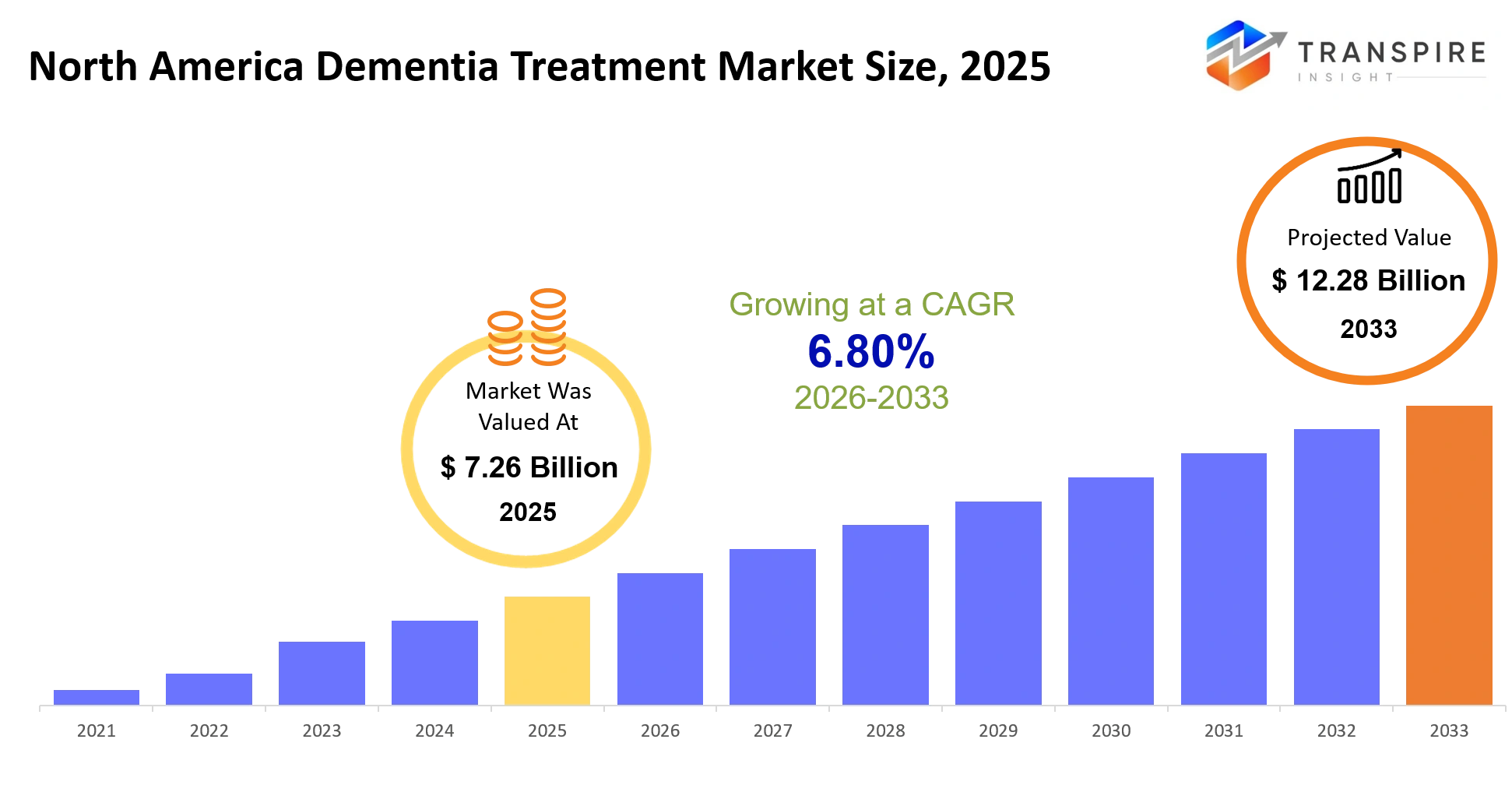
The North America Dementia Treatment Market was valued at USD 7.26 Billion in 2025. It is forecast to reach USD 12.28 Billion by 2033. That is a CAGR of 6.80% over the period.
The North America Dementia Treatment Market helps healthcare providers slow down thinking skills decline, handle behavioral as well as psychological symptoms, and stretch patients’ daily functional independence using pharmacological therapies, disease-modifying medicines, and supportive care solutions. In the last five years , things have gradually moved away from mostly treating symptoms and toward earlier intervention, backed by biomarker based diagnosis, newer neuroimaging methods, and therapies that try to hit the root disease pathology rather than only the surface effects. A big real-world trigger here was the COVID-19 pandemic, it disrupted neurological care routes, delayed diagnoses , and also stalled clinical trial activity across the region in a pretty noticeable way. To adjust, healthcare systems started scaling telehealth services, moving patient monitoring into more decentralized settings, and speeding up investments in focused memory care infrastructure, just to bring continuity of care back on track. As a knock on effect, pharmaceutical companies have also been pushing harder on clinical development plans, refining how patients are identified, and syncing commercialization activities with the changing reimbursement frameworks for these new or innovative dementia therapies.
Key Market Insights
- North America is still kind of the biggest regional market, with the United States taking around 88% market share in 2025, mostly because of advanced healthcare infrastructure ,and pharmaceutical innovation that keeps moving forward.
- Canada looks like the fastest growing regional market in the 2025–2032 window, helped by expanded dementia strategies, more research funding, and easier access to specialized neurological care, sort of overall.
- When it comes to product type, Drug therapies sit in the lead ,with about 72% market share in 2025. That growth is linked to wider adoption of both symptomatic treatments and disease-modifying treatment portfolios, in a practical way.
- For the second-largest piece, Diagnostic and monitoring solutions come next as biomarker testing and digital cognitive assessment are becoming a standard clinical routine.
- By 2032, disease-modifying therapies are projected to grow the quickest segment, supported by regulatory approvals and the continued shift toward precision medicine trends.
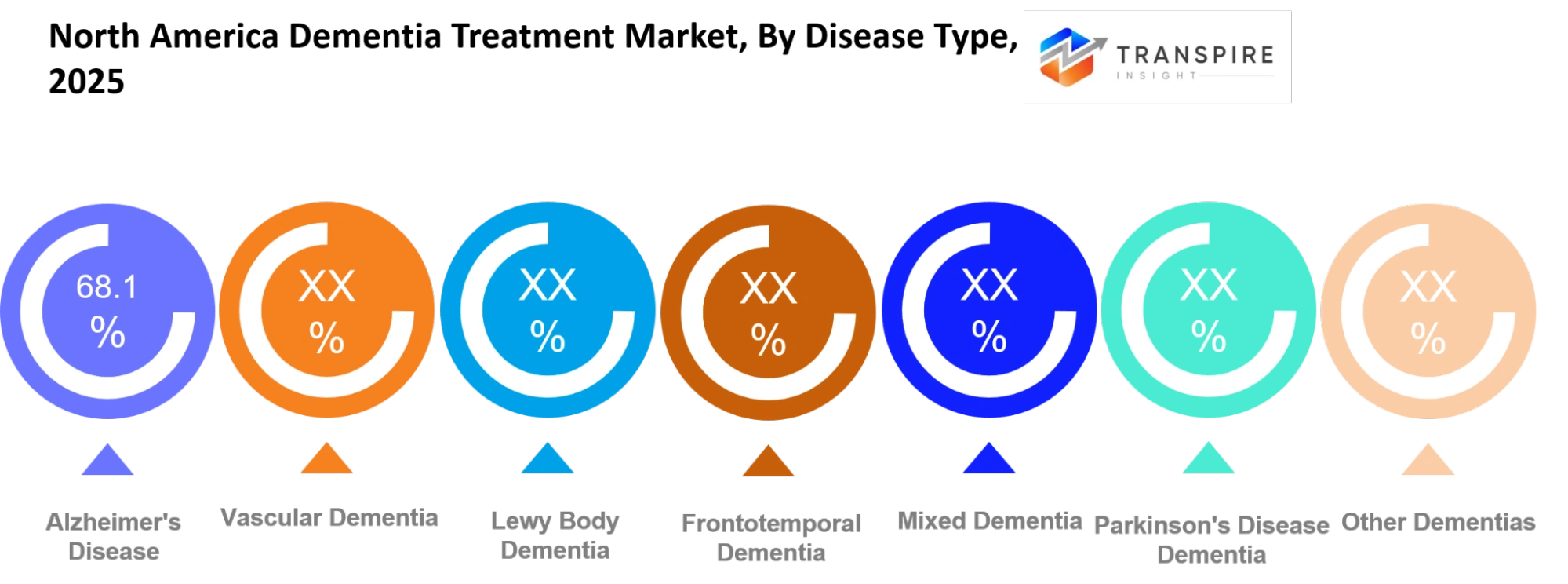
- In terms of applications, Alzheimer’s disease treatment remains dominant at roughly 68% market share in 2025, which also mirrors the biggest diagnosed patient population across the region.
- Early-stage dementia intervention is expected to expand the fastest during the forecast period, enabled by biomarker-guided diagnosis and earlier therapeutic involvement.
- Hospitals and specialty neurology clinics account for nearly 57% market share in 2025. This is largely due to integrated diagnostic imaging, infusion capabilities, and multidisciplinary care that actually comes together.
- Lastly, Ambulatory infusion centers are emerging as the fastest-growing end-user category through 2032, because they provide a more efficient administration approach for advanced biologic therapies.
What are the Key Drivers, Restraints, and Opportunities in the North America Dementia Treatment Market?
Regulatory support for disease-modifying Alzheimers therapies has become the main kinda push, shaping how fast the market can grow. Things like accelerated approvals, wider use of biomarker testing, and revised reimbursement pathways kinda made earlier diagnosis happen sooner, and also broadened who can qualify. Because of this, pharmaceutical firms kept putting more money into neurological research and also built out more commercial capacity. At the same time, healthcare providers invested in infusion capacity as well as upgraded imaging workflows, not just one thing, but both. In the end this whole chain expands treatment uptake directly, and it also creates fresh revenue lines across diagnostics, specialty care, and pharmaceutical services.
Still, the biggest structural drag is the difficulty of diagnosis and the hassle of delivering treatment. Advanced imaging, biomarker testing, infusion infrastructure, and specialist availability cannot actually be scaled up in a short window. A lot of eligible patients end up with delayed diagnosis, or they hit limited access to treatment. Those limits, postpone therapy starts and also hold back commercial adoption, even when the products are already available. Based on a Transpire Insight review of regional procurement announcements and launch timelines, supply chain concentration looks like the main execution risk. Add in manufacturing bottlenecks and specialized distribution requirements, and market penetration can get delayed even more.
The strongest long-term chance seems to be in weaving digital biomarkers, artificial intelligence, and blood-based diagnostic testing directly into day to day neurological care. Big investments in precision medicine platforms, and also more decentralized clinical trials are making scalable treatment pathways possible, which is kind of important. If we can spot patients earlier , therapy utilization can rise a lot , and diagnostic delays may drop. And when you pair that with expanding real world evidence programs, these tools basically set up the regional market for its next commercial growth phase.
What Has the Impact of Artificial Intelligence Been on the North America Dementia Treatment Market?
Artificial intelligence is, sort of, reshaping dementia care in a way that touches diagnostic accuracy, clinical workflow automation, and even how treatment planning is organized across neurological care networks. With AI powered imaging platforms , the magnetic resonance imaging and positron emission tomography scans get interpreted automatically, more or less. At the same time, digital cognitive assessment tools support patient screening in a streamlined manner, and they also tend to cut down on the physician workload, which is big. Hospitals are increasingly rolling out intelligent systems that track patient progression, speed up documentation tasks , and help with compliance for the shifting treatment protocols.
Machine learning is also boosting predictive capability across the wider dementia care ecosystem, regional level too. Predictive modeling can kind of flag which patients might slide from mild cognitive impairment into Alzheimer’s disease, helping clinicians step in sooner and steer resources with more sense, maybe more wisely. Then pharmaceutical companies lean on AI to guess patient enrollment, boost the way clinical trials run, and decide which biomarker-led drug projects are worth pushing forward. At the same time, healthcare providers frequently notice a faster diagnostic path, finer tuned treatment selection, and a more efficient use of those specialized neurological services too. Over time, this can contribute to lower operational costs , along with stronger clinical results.
Still, there’s the snag: broad adoption is limited by high integration expenses, fragmented electronic health record systems , and a shortage of standardized datasets. Real world clinical data can also vary a lot, which makes everything harder to generalize. These obstacles continue to slow down enterprise scale rollout especially in smaller hospitals and community based neurological practices, where the setup costs and data gaps can be more noticeable.
Key Market Trends
- Between 2023 and 2025, disease-modifying Alzheimer therapies kind of went from being limited to actually more commercial adoption, after regulatory approvals, which felt quite pivotal.
- Since after 2023, blood-based biomarker testing expanded fast, and that noticeably cut down on the heavy dependence on pricey imaging when screening and diagnosing patients, it became less of a default step.
- Pharma companies also turned up their investment in neurodegenerative drug pipelines, and several late-stage clinical programs kept moving, roughly through 2024–2026.
- Meanwhile AI-enabled tools for cognitive assessment got baked into day to day neurological practice, helping shrink diagnostic workflows, and also supporting earlier clinical involvement rather than waiting too long.
- Specialty infusion centers expanded capacity starting around 2024, which improved accessibility for patients who were receiving biologic dementia therapies, and not just in the most obvious locations.
- Strategic collaborations between pharmaceutical firms and diagnostic developers also sped up the commercialization of companion biomarkers, across North American healthcare systems, sort of more uniformly than before.
- Remote patient monitoring platforms got broader clinical buy-in after pandemic driven digital health spending, and it kind of helped long-term disease control happen in a steady, more continuous rhythm.
- Healthcare providers started to lean into multidisciplinary dementia care models that mix neurology, imaging, rehabilitation, and behavioral health services, rather than leaving everything in separate silos, so to speak.
- Eli Lilly, Biogen, Eisai, and Roche increased their spend on precision diagnostics, disease modifying therapies, as well as the commercialization backbone, all during 2023-2026, and you could really feel the momentum stacking up.
- Real world evidence programs are now more often guiding reimbursement choices, which in turn supports wider coverage for novel dementia treatments, while also reinforcing longer term market competitiveness.
North America Dementia Treatment Market Segmentation
By Treatment Type :
Cholinesterase inhibitors still, sort of hold a key place in dementia care, mainly because early and moderate stage patients usually get these medicines as part of the usual care plan. NMDA receptor antagonists, meanwhile, help with symptom management in moderate as well as later or advanced cases, and combination therapy makes it easier for clinicians to handle different parts of disease progression. Anti-amyloid therapies have gotten a lot of clinical and commercial attention lately , especially after new regulatory approvals, so there are now more treatment options for patients who actually qualify.
At the same time, behavioral therapy, cognitive stimulation therapy and supportive care remain kinda essential, because medication on its own can’t really iron out every single problem that shows up with dementia. Healthcare providers are increasingly blending medicines with structured therapy programs, with the idea to improve day to day functioning and overall quality of life.Beyond that, other treatment choices keep showing up to support people with particular clinical needs, which ends up creating a wider and more personalized care approach across the market.
By Disease Type :
Alzheimer's disease is arguably the biggest disease segment because the diagnosis rates stay much higher than most other dementia conditions, at least in recent reporting. Vascular dementia still takes up a meaningful portion , mostly because there are strong connections to cardiovascular disease, and because populations are aging. Mixed dementia shows up more often these days, as diagnostic tools get better , and when clinical evaluation turns out to be more detailed.
Then there is Lewy body dementia, frontotemporal dementia, and Parkinson's disease dementia, which really do need more specialized care pathways because the symptoms, and even the way things progress, look different compared to Alzheimer's disease. Healthcare providers keep broadening disease-specific management approaches, helping clinicians make decisions that are more precise, or at least more informed. The other dementia categories also feed into market activity via specialized diagnostic efforts and supportive treatment services, even if the share varies.
By Route of Administration :
Oral administration still kind of stays the preferred route because convenience helps sustain long term treatment adherence and it fits normal patient care routines. Intravenous administration has also grown a bit more important now, mainly due to the commercial availability of advanced biologic therapies that need controlled clinical settings. Meanwhile transdermal delivery is there as an alternative for people dealing with swallowing difficulties or who have medication tolerance concerns.
Injectable and nasal formulations keep expanding, since pharmaceutical companies develop fresh treatment options and they keep changing up the delivery path. Extended release formulations help maintain steady therapeutic effects, and also reduce dosing frequency which can feel easier overall. Combination approaches too , plus other administration routes, increase treatment flexibility and they let healthcare providers adjust therapy based on individual clinical requirements, not just a one size plan.
By End User :
Hospitals still stay the leading end user group, due to advanced imaging options, infusion services, and a mix of multidisciplinary neurological care being broadly on hand across most hospital systems. Neurology clinic teams keep on handling diagnosis, tuning the treatment plan and then watching patients for the long run, mainly because their specialized know-how is pretty built in. Academic medical centers help push innovation, they do this via clinical studies, higher level diagnostics, and by joining programs that develop new treatment approaches.
Meanwhile long term care centers and home healthcare providers are taking on a bigger part, especially as dementia moves forward and someone needs continuous daily support, like, more or less. Rehabilitation centers add value by running cognitive and functional therapy programs, aiming to help people keep their autonomy. Specialty clinics and other healthcare facilities also keep improving access to focused dementia care across regional healthcare networks, so it’s not just one place anymore.
By Distribution Channel :
Hospital pharmacy services make up a large slice of the market, mainly because advanced dementia therapies usually need tight clinical oversight, and also coordinated treatment management, in a way that is not really casual. On the other hand retail pharmacies keep helping people who are on long-term oral medications, using the same familiar community healthcare pathways. Specialty pharmacies have really grown too, especially as biologic therapies show up more, since those often need temperature controlled storage, plus patient guidance and continuous clinical follow through.
Online pharmacies keep pushing forward prescription access for maintenance therapies , and this matters a lot for patients with limited mobility. Government programs still play a key role by helping keep treatment within reach, through public reimbursement initiatives and general healthcare funding. Finally direct supply models and other distribution pathways keep improving medicine availability while also tightening how manufacturers, healthcare providers, and treatment centers align and coordinate with each other.
What are the Key Use Cases Driving the North America Dementia Treatment Market?
The main use case kind of sways toward Alzheimer’s disease treatment that gets delivered via hospitals and neurology clinics, you know, that kind of setting. Health systems , specialty physicians, and coordinated care networks tend to buy these advanced therapies because starting earlier helps with clinical management. It also seems to match the changing reimbursement rules for patients who qualify.
More use cases keep showing up too, especially across long-term care centers and home healthcare services. Things like cognitive stimulation programs, plus supportive care solutions, let providers deal with behavioral symptoms with less friction and fewer avoidable hospital visits. Meanwhile, academic medical centers use these advanced treatment options as well, both to support clinical research and to cover specialized patient care.
Then there are the newer use cases that are emerging, such as choosing therapy based on biomarker signals, and blood based diagnostic pathways that help guide earlier treatment decisions. Specialty clinics are basically getting ready for broader adoption of personalized treatment models as regulatory approvals keep expanding. Digital monitoring platforms that connect with cognitive assessment tools also look promising for wider clinical use throughout the forecast period.
|
Report Metrics |
Details |
|
Market size value in 2025 |
USD 7.26 Billion |
|
Market size value in 2026 |
USD 7.75 Billion |
|
Revenue forecast in 2033 |
USD 12.28 Billion |
|
Growth rate |
CAGR of 6.80% from 2026 to 2033 |
|
Base year |
2025 |
|
Historical data |
2021 - 2024 |
|
Forecast period |
2026 - 2033 |
|
Report coverage |
Revenue forecast, competitive landscape, growth factors, and trends |
|
Regional scope |
North America (Canada, The United States, and Mexico) |
|
Key company profiled |
Eisai, Biogen, Eli Lilly, Pfizer, Novartis, Johnson & Johnson, Roche, Otsuka Pharmaceutical, AbbVie, Teva Pharmaceuticals, Viatris, Lundbeck, Merz Therapeutics, Amneal Pharmaceuticals, Sun Pharmaceutical. |
|
Customization scope |
Free report customization (country, regional & segment scope). Avail customized purchase options to meet your exact research needs. |
|
Report Segmentation |
By Treatment Type (Cholinesterase Inhibitors, NMDA Receptor Antagonists, Anti-Amyloid Therapies, Combination Therapy, Behavioral Therapy, Cognitive Stimulation Therapy, Supportive Care, Others); By Disease Type (Alzheimer's Disease, Vascular Dementia, Lewy Body Dementia, Frontotemporal Dementia, Mixed Dementia, Parkinson's Disease Dementia, Other Dementias); By Route of Administration (Oral, Intravenous, Transdermal, Injectable, Nasal, Combination Therapy, Extended-Release Formulations, Others); By End User (Hospitals, Neurology Clinics, Long-Term Care Centers, Home Healthcare, Rehabilitation Centers, Academic Medical Centers, Specialty Clinics, Others); By Distribution Channel (Hospital Pharmacies, Retail Pharmacies, Online Pharmacies, Specialty Pharmacies, Government Programs, Direct Supply, Others). |
Which Regions are Driving the North America Dementia Treatment Market Growth?
The United States still shows up as the main regional market, with an estimated share around 88% of all regional revenue. There is strong regulatory backing, plus broad reimbursement routes and an extensive web of specialty hospitals , which together make it easier for advanced dementia treatments to get adopted. Big pharmaceutical groups, biotechnology companies, diagnostic developers, and clinical research organizations keep boosting the regional supply chain via ongoing investment , and by commercializing new products. As long as disease-modifying therapies keep moving forward, and biomarker testing plus neurological care infrastructure keeps improving, the market leadership should keep going pretty steadily across the forecast window.
Canada comes in as the second-largest regional market . This is largely because healthcare delivery tends to follow a publicly funded approach, with steady long term investment in neurological services . National dementia initiatives , stable reimbursement rules, and coordinated provincial healthcare programs help create a demand pattern that is easier to forecast for treatment providers and pharmaceutical companies. Universities and academic research hubs, along with hospital networks, back clinical trials and also nudge cooperation between public entities and private partners. Overall, this more balanced healthcare setup generates reliable revenue prospects while still supporting a slower but consistent uptake of newer treatment options.
Canada is also on track to see the fastest growth during the 2026–2033 period, after broadened investment in dementia research, diagnostic capability and specialized neurological services. More and more use of blood based biomarkers, digital health platforms, and earlier screening schemes has pushed treatment access forward across several provinces, pretty quickly. Public financing steps and also collaborations between healthcare institutions and life science companies still improve the commercial openings for advanced therapies. This present momentum then lays down favorable ground for new product introductions, strategic alliances, and longer term investment across the whole regional healthcare sector.
Who are the Key Players in the North America Dementia Treatment Market and How Do They Compete?
Competition still looks moderately consolidated, mostly because only a limited set of pharmaceutical companies controls a big share of commercial dementia therapies and those late stage development programs. In practice, competitive positioning seems to hinge more on technology innovation, the weight of clinical evidence, and regulatory approvals, rather than on price itself. Even so, the big players keep market share stable via expanded research efforts, while biotechnology innovators bring in new treatment avenues, which then pulls more investment into neurological care.
Eli Lilly, for example, leans hard into disease modifying therapies that are backed by large clinical studies and pretty wide commercialization plans, so the differentiation comes from an ever growing neuroscience portfolio. Biogen mixes neurological know how with strategic development partnerships, to make treatment availability stronger and improve access across hospital networks. Eisai builds its edge by collaborating on Alzheimer's therapies and by continuing to invest in global commercialization plus post approval research work.
Roche differentiates by using biomarker diagnostics and precision medicine capabilities, which help with earlier patient identification and also guide treatment selection. Pfizer pushes ahead with neuroscience research through targeted partnerships and pipeline building, opening possibilities beyond the usual symptomatic therapies. Taken together, these approaches help reinforce product portfolios, raise perceived clinical value, and support wider adoption across North American healthcare systems.
Company List
- Eisai
- Biogen
- Eli Lilly
- Pfizer
- Novartis
- Johnson & Johnson
- Roche
- Otsuka Pharmaceutical
- AbbVie
- Teva Pharmaceuticals
- Viatris
- Lundbeck
- Merz Therapeutics
- Amneal Pharmaceuticals
- Sun Pharmaceutical
Recent Development News
In April 2026, Eisai expanded the real-world clinical program for LEQEMBI through new data presentations at the American Academy of Neurology Annual Meeting. The initiative strengthened evidence supporting standardized treatment pathways and reinforced the company's commercialization strategy with development partner Biogen.
Source: https://media-us.eisai.com/
In March 2026, Biogen entered a strategic partnership with Alteogen to apply ALT-B4 hyaluronidase technology to convert two intravenous biologics into subcutaneous formulations. The agreement supports more convenient drug delivery and strengthens Biogen's long-term biologics development strategy for neurological therapies.
Source: https://en.wikipedia.org/
What Strategic Insights Define the Future of the North America Dementia Treatment Market?
Over the next five to seven years, the North America Dementia Treatment Market is expected to move, sort of like a slow shift, from a mostly symptom-management model toward precision led disease modifying care, driven by biomarker anchored diagnosis, earlier intervention, and wider reimbursement pathways for newer therapies. That said, there’s a quieter risk too: market value is getting clustered around a small set of high cost biologics, and that can leave healthcare systems exposed to reimbursement pressure, regulatory close attention, and uneven patient access, if real outcomes don’t really match the long term expectations.
One emerging, and frankly promising, opportunity is bringing blood based biomarkers together with digital cognitive monitoring platforms, so that early detection can scale, and treatment selection can feel more personalized across community healthcare settings, not just in specialty centers. Market participants should focus on partnerships across diagnostics, digital health, and therapeutics to form integrated care ecosystems, where patient stratification gets sharper, real world evidence is strengthened, and long term commercial resilience is built up, even when the market gets more unpredictable.
North America Dementia Treatment Market Report Segmentation
By Treatment Type
- Cholinesterase Inhibitors
- NMDA Receptor Antagonists
- Anti-Amyloid Therapies
- Combination Therapy
- Behavioral Therapy
- Cognitive Stimulation Therapy
- Supportive Care
By Disease Type
- Alzheimer's Disease
- Vascular Dementia
- Lewy Body Dementia
- Frontotemporal Dementia
- Mixed Dementia
- Parkinson's Disease Dementia
- Other Dementias
By Route of Administration
- Oral
- Intravenous
- Transdermal
- Injectable
- Nasal
- Combination Therapy
- Extended-Release Formulations
By End User
- Hospitals
- Neurology Clinics
- Long-Term Care Centers
- Home Healthcare
- Rehabilitation Centers
- Academic Medical Centers
- Specialty Clinics
By Distribution Channel
- Hospital Pharmacies
- Retail Pharmacies
- Online Pharmacies
- Specialty Pharmacies
- Government Programs
- Direct Supply
Frequently Asked Questions
Find quick answers to common questions.
The expected North America Dementia Treatment Market size for the market will be USD 12.28 Billion in 2033.
Key segments for the North America Dementia Treatment Market are Type By Treatment Type (Cholinesterase Inhibitors, NMDA Receptor Antagonists, Anti-Amyloid Therapies, Combination Therapy, Behavioral Therapy, Cognitive Stimulation Therapy, Supportive Care, Others); By Disease Type (Alzheimer's Disease, Vascular Dementia, Lewy Body Dementia, Frontotemporal Dementia, Mixed Dementia, Parkinson's Disease Dementia, Other Dementias); By Route of Administration (Oral, Intravenous, Transdermal, Injectable, Nasal, Combination Therapy, Extended-Release Formulations, Others); By End User (Hospitals, Neurology Clinics, Long-Term Care Centers, Home Healthcare, Rehabilitation Centers, Academic Medical Centers, Specialty Clinics, Others); By Distribution Channel (Hospital Pharmacies, Retail Pharmacies, Online Pharmacies, Specialty Pharmacies, Government Programs, Direct Supply, Others).
Major North America Dementia Treatment Market players are Eisai, Biogen, Eli Lilly, Pfizer, Novartis, Johnson & Johnson, Roche, Otsuka Pharmaceutical, AbbVie, Teva Pharmaceuticals, Viatris, Lundbeck, Merz Therapeutics, Amneal Pharmaceuticals, Sun Pharmaceutical.
The North America Dementia Treatment Market size is USD 7.26 Billion in 2025.
The North America Dementia Treatment Market CAGR is 6.80% from 2026 to 2033.
- Eisai
- Biogen
- Eli Lilly
- Pfizer
- Novartis
- Johnson & Johnson
- Roche
- Otsuka Pharmaceutical
- AbbVie
- Teva Pharmaceuticals
- Viatris
- Lundbeck
- Merz Therapeutics
- Amneal Pharmaceuticals
- Sun Pharmaceutical
About the Authors

Pankaj Ghogare Patil
I am Pankaj Ghogare Patil, a Senior Research Analyst at Transpire Insight, specializing in the Pharmaceutical, Chemicals & Materials, Healthcare IT, and Biotechnology industry. My expertise lies in conducting comprehensive market research, analyzing industry trends, evaluating competitive landscapes, and translating complex data into actionable insights. At Transpire Insight, I closely follow emerging technologies, regulatory developments, and market innovations to create accurate, well-researched, and informative content that helps businesses and professionals make informed decisions. I am committed to producing credible, evidence-based articles that reflect industry best practices while making technical topics accessible and valuable for a broad audience.

Chakradhar Khansole
Chakradhar serves as the Research Director at Transpire Insight, bringing over 8 years of experience in technology, innovation, and strategic market intelligence. He specializes in transforming complex market data into actionable business insights that enable organizations to make informed, growth-oriented decisions. Recognized for his strategic vision and analytical expertise, Chakradhar leads high-impact research initiatives, delivering comprehensive market assessments, competitive intelligence, and forward-looking industry analysis.
Recently Published Reports
-
Jul 2026
Alopecia Treatment Market
Alopecia Treatment Market Size, Share & Analysis Report By Disease Type (Alopecia Areata, Cicatricial Alopecia, Traction Alopecia, Alopecia Totalis, Androgenetic Alopecia, Alopecia Universalis, and Other Disease Types), By Treatment Type (Topical Treatments, Oral Medications, Injectable Therapies, and Hair Transplantation), By Gender (Male, and Female), By Distribution Channel (Hospitals and Clinics, Retail Pharmacies, and Online Retailers), and Geography (North America, Europe, Asia-Pacific, Middle East and Africa, South and Central America), 2021 - 2031
-
Jul 2026
Medical Ultrasound Probe Market
Medical Ultrasound Probe Market Size, Share & Analysis Report By Type (Linear Type, Convex Type, Endocavitary Probe, Phased Array/Cardiac Probe, Transesophageal (TEE) Probe, and Others), By Application (Ophthalmology, Cardiology, Musculoskeletal, Oncology, Obstetrics & Gynecology, General Imaging, and Others), By End User (Hospitals & Clinics, Diagnostic Centers, Ambulatory Surgical Centers, and Others), and Geography (North America, Europe, Asia-Pacific, Middle East and Africa, South and Central America), 2021 – 2031
-
May 2026
Biosimilars Market
Biosimilars Market By Product Type (Monoclonal Antibodies, Recombinant Hormones, Erythropoietin, G-CSF, Others), By Indication (Oncology, Autoimmune Diseases, Blood Disorders, Diabetes, Others), By Manufacturing Type (In-House Manufacturing, Contract Manufacturing), By Distribution Channel (Hospital Pharmacies, Retail Pharmacies, Online Pharmacies), By Industry Analysis, Size, Share, Growth, Trends, and Forecasts 2021-2033
-
Apr 2026
Gastrointestinal Endoscopy Market
Gastrointestinal Endoscopy Market By Type (Rigid Gastrointestinal Endoscope, Flexible Gastrointestinal Endoscopes, Disposable Gastrointestinal Endoscope), By Procedure Type (Colonoscopy, Gastroscopy, Duodenoscopy, Enteroscopy, Flexible Sigmoidoscopy, Others), By Application (Diagnosis, Treatment), By End-Users (Hospitals, Ambulatory Surgical Centers, Specialty Clinics, Laboratories, Others), By Industry Analysis, Size, Share, Growth, Trends, and Forecasts 2021-2033