
North America Corticosteroid Eyedrops Market Size & Forecast:
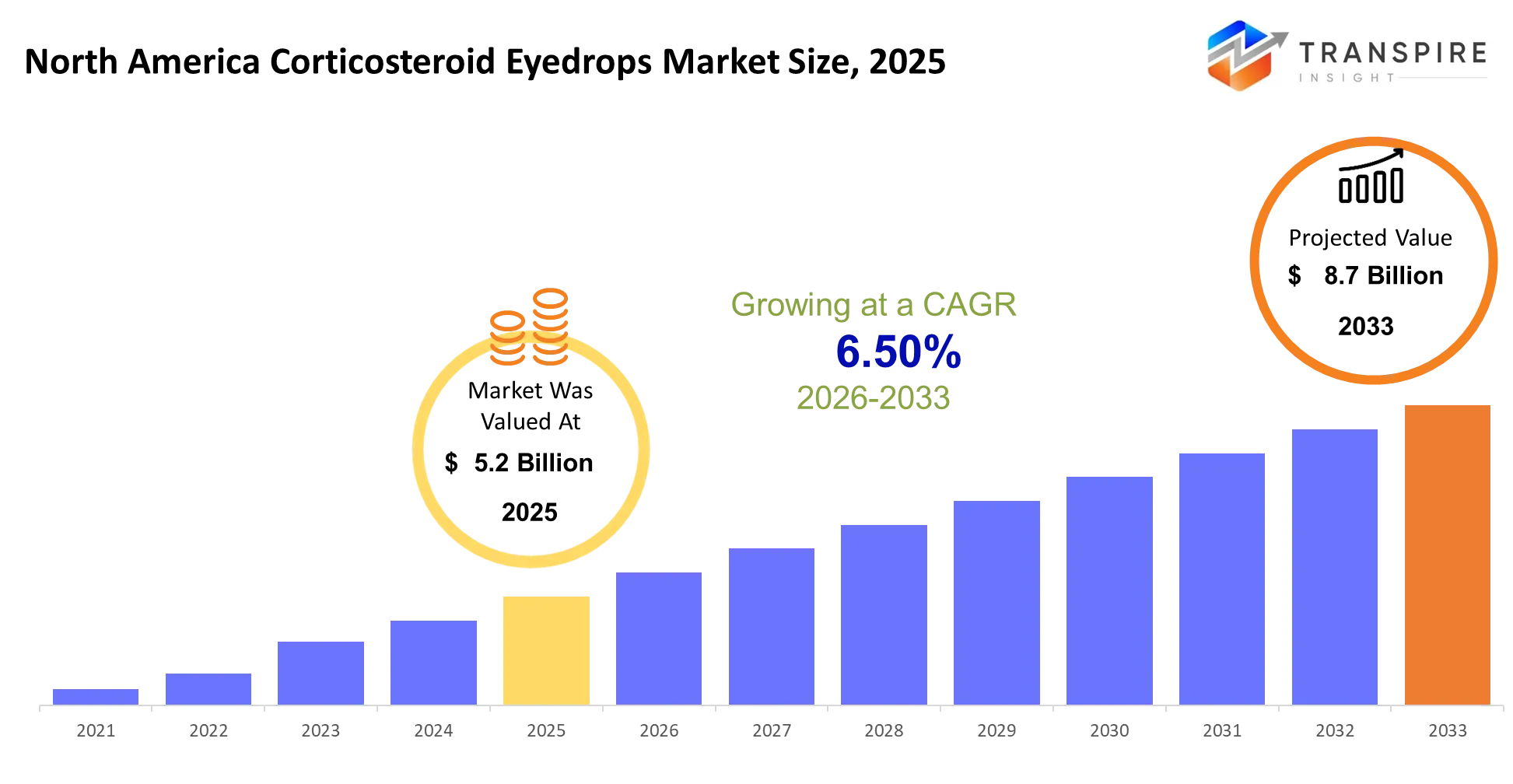
- North America Corticosteroid Eyedrops Market Size 2025: USD 5.2 Billion
- North America Corticosteroid Eyedrops Market Size 2033: USD 8.7 Billion
- North America Corticosteroid Eyedrops Market CAGR: 6.50%
- North America Corticosteroid Eyedrops Market Segments: By Product Type (Prednisolone Eyedrops, Dexamethasone Eyedrops, Fluorometholone Eyedrops, Loteprednol Eyedrops, Others); By Application (Post-operative Inflammation, Allergic Conjunctivitis, Uveitis, Dry Eye Syndrome, Others); By Distribution Channel (Hospital Pharmacies, Retail Pharmacies, Online Pharmacies, Others); By End User (Hospitals, Ophthalmology Clinics, Specialty Centers, Others)
To learn more about this report,  Download Free Sample Report
North America Corticosteroid Eyedrops Market Summary
The North America Corticosteroid Eyedrops Market was valued at USD 5.2 Billion in 2025. It is forecast to reach USD 8.7 Billion by 2033. That is a CAGR of 6.50% over the period.
The North America corticosteroid eyedrops market helps ophthalmologists, surgical centers, and hospitals in a kind of indirect way, by calming ocular inflammation after different eye operations and also addressing issues like allergic conjunctivitis , uveitis and severe dry eye disease. These therapies matter because they support visual recovery, cut down post-operative complications and in general can help patients feel better sooner after cataract and refractive procedures. Also, good inflammation control keeps getting more noticeable as outpatient ophthalmic surgeries keep moving into high-volume ambulatory environments.
In the last three to five years the market has been moving toward preservative-free formulations, and lower-risk steroid options, partly because more clinicians are worried about steroid-induced glaucoma , plus the possible long-term effects on the ocular surface. Then during 2021 and 2022, supply chain disruptions showed how much the industry relied on imported ophthalmic active pharmaceutical ingredients, so manufacturers had to diversify sourcing, and even push regional production plans more aggressively. Around the same time, cataract surgery demand increased , especially with aging populations, so people started asking for faster-recovery regimens. That encouraged pharmaceutical companies to work on advanced drug delivery systems , better corneal penetration and fewer doses, kinda like a reduced dosing frequency focus, became a more common theme.
Key Market Insights
The United States kinda dominated the North America Corticosteroid Eyedrops Market and in 2025 it held close to 78% market share, partly because ophthalmic procedure volumes stayed high. And well Mexico then, looked like the fastest-moving regional market from 2026 through 2033, with momentum coming from more private eye care infrastructure and additional surgical capacity investments. Canada, on the other hand kept a steady pattern in ophthalmic drug demand, driven by publicly funded healthcare procurement systems and a gradually expanding elderly population that really keeps needing long term anti-inflammatory eye treatments.
Prednisolone eyedrops took the biggest slice of the industry in 2025, since hospitals and ophthalmology clinics kept choosing cost-effective generic anti-inflammatory options, even when newer alternatives were around. Dexamethasone formulations actually ranked as the second-largest product segment, largely due to broad use in severe ocular inflammation and those post retinal surgery recovery protocols. Loteprednol eyedrops meanwhile was the fastest-growing segment, because ophthalmologists have been increasingly prescribing lower-risk steroids, with fewer worries about intraocular pressure complications.
Post-operative inflammation accounted for more than 42% of North America Corticosteroid Eyedrops Market revenue in 2025, mainly due to the steady rise in cataract surgery procedures. Dry eye syndrome treatment demand sped up pretty noticeably after 2022, as screen exposure and ocular surface inflammation cases increased, across many outpatient ophthalmology settings. Uveitis management also held stable prescription demand, since specialty eye centers tend to require more aggressive corticosteroid regimens for chronic inflammatory ocular disorders.
Hospitals captured the largest market share in 2025, because integrated surgical departments generated high corticosteroid prescription volumes after ophthalmic procedure.
What are the Key Drivers, Restraints, and Opportunities in the North America Corticosteroid Eyedrops Market?
North America corticosteroid eyedrops market is growing, kind of like clinics are moving more toward post surgical inflammation management plans that lean on faster acting topical steroids. Cataract procedures in the United States and Canada have been climbing in a steady way, partly because people are aging, but the stronger push has been the uptake of premium intraocular lens surgeries that really need a tighter handle on what happens after surgery. Because of that, more prescriptions are being written for branded corticosteroid options, and these tend to have better ocular penetration, plus they can be dosed less often. In response pharmaceutical companies are rolling out combination therapies, where a corticosteroid is paired with an antibiotic so practices can standardize recovery routines and nudge treatment compliance higher.
That said, the biggest restraint is the longer term safety story tied to corticosteroid exposure, especially elevated intraocular pressure and steroid induced glaucoma. It’s a structural problem because ophthalmologists can’t just do away with ongoing, careful monitoring for patients who are high risk. Think diabetes, or people who already have a glaucoma background. Regulators too also ask for a lot of safety evidence when it comes to chronic ophthalmic steroid use, which adds time to development schedules and makes faster product rollouts harder. These limits end up holding back revenue, since there are fewer repeat refills for therapies that are meant to last a long time.
Meanwhile, a pretty clear opportunity is showing up with preservative free corticosteroid eyedrops, delivered via advanced single dose packaging setups.Companies looking into preservative free eye formulations are angling at people dealing with dry eye disease, plus those with post LASIK sensitivity, it’s kind of two audiences that usually tried to dodge longer steroid routines because of worries about irritation, earlier on.
What Has the Impact of Artificial Intelligence Been on the North America Corticosteroid Eyedrops Market?
Artificial intelligence is kind of reshaping marine emission control systems across North America, by helping ship operators observe and maintain and then tune exhaust gas cleaning technology in a better way. Nowadays, shipping companies deploy AI-enabled scrubber performance systems that keep analyzing sulfur oxide emissions , washwater quality, pressure differentials, and fuel use in real time. These systems handle compliance documentation almost automatically, and they also nudge crews when emission thresholds get close to the regulatory limits set by International Maritime Organization rules. A few fleet operators have even rolled out cloud based monitoring dashboards that cut down on manual inspection time and make audit readiness easier across many vessels at once.
At the same time, machine learning models are strengthening predictive maintenance too. They look at vibration signatures, corrosion rates, pump efficiency, and exhaust temperature records so operators can spot likely component failures before a breakdown happens. That kind of forward-thinking maintenance reduces unexpected downtime and brings maintenance costs down, mainly by avoiding severe scrubber damage. Some operators mention real, measurable fuel savings, because AI systems help adjust scrubber load conditions alongside engine performance and voyage routing choices. It’s not just one knob, it feels more like coordinated control.
Still, AI adoption runs into a pretty big limitation in this industry. A lot of vessels have inconsistent satellite connectivity , and that messes with real time data transmission. As a result, predictive models don’t always reach the same accuracy when they are trained on operational datasets that are incomplete or fragmented.
Key Market Trends
- Since around 2021, ophthalmology clinics all across the United States have been, kind of steadily increasing their take up of combo steroid and antibiotic drops, especially after outpatient cataract surgeries volumes started to climb.
- Companies like Bausch + Lomb , and AbbVie also moved some money toward preservative-free ophthalmic drops, as dry eye issues started getting more clinical attention which honestly feels like it kept growing.
- From 2020 to 2024, ambulatory surgical centers began buying corticosteroid eyedrops with less frequent dosing. The idea was to help patient adherence after LASIK procedures, though it sounds simple it is never really straightforward in practice.
- Regulators then tightened post marketing surveillance for steroid induced glaucoma risks. That shift, in turn raised monitoring costs for manufacturers that want to launch long duration ophthalmic therapies.
- Meanwhile, generic drug makers pushed forward quite aggressively once a few branded ophthalmic patents finally ran out. This made price competition sharper across U.S. hospital lanes and also retail pharmacy counters.
- Since 2022, teleophthalmology groups have been partnering more with specialty pharmacies. As a result, the whole “how patients access” prescription corticosteroid eye treatments in remote areas changed, somewhat quietly at first.
- Pharmaceutical companies redirected research efforts toward nanoparticle based ocular delivery systems. These aim to boost corneal penetration while also reducing steroid exposure to nearby tissues, which seems like a key point.
- In Canada, healthcare systems increased orders for single dose sterile eyedrop packaging after contamination concerns reshaped infection control standards in ophthalmic clinics.
- And finally, supply chain disruptions during 2021 showed how much some manufacturers depended on imported ophthalmic grade active pharmaceutical ingredients. That exposure nudged producers to diversify North American sourcing networks, even if it took a while to get it right.
North America Corticosteroid Eyedrops Market Segmentation
By Product Type
Prednisolone eyedrops still kind of lead the market, not because it’s just “one thing”, but because ophthalmologists generally choose these for post-surgical inflammation and acute ocular issues. There’s solid clinical familiarity and broad insurance coverage, and honestly the low-cost generic options help keep prescriptions steady in hospitals, plus in outpatient clinics too. Dexamethasone eyedrops keep a strong secondary spot, largely because of higher anti-inflammatory potency, especially when the case is severe and people need a fast therapeutic response.
Loteprednol eye drops are starting to move faster, because steroid-sparing formulations reduce the risk of intraocular pressure issues that can appear with longer corticosteroid use, you know. Pharmaceutical teams are putting more funding into loteprednol based treatments, mostly for long term ocular surface complaints and dry eye management. Fluorometholone products are still in the mix for milder inflammatory use, but the not-so-strong efficacy in tougher ophthalmic cases keeps them from really going mainstream. Next, the product race will probably center on preservative free delivery systems, extended ocular retention technologies , and also combo formulas designed to make adherence easier while still easing safety worries
By Application
Post-operative inflammation remains the leading segment because cataract surgeries are climbing, and LASIK keeps going strong, plus retinal interventions across North America. Eye surgeons are leaning toward corticosteroid drops more frequently to handle discomfort, swelling ,and tissue inflammation during the recovery window , even when patients are bouncing between appointments on a quick schedule.There’s also strong procedure growth tied to aging populations, and that keeps prescription volumes high in ambulatory surgical centers, plus in specialty ophthalmology clinics too.
Dry eye syndrome applications are moving pretty fast these days, because ocular surface inflammation is now, like, a big clinical focus in modern ophthalmology. Long-term screen time, contact lens use, and environmental strain factors have pushed the market toward low-irritation corticosteroid therapies, ones meant for intermittent treatment cycles. Uveitis treatments are still bringing steady demand too, mostly because the condition is so inflammatory and clinicians need a more forceful steroid approach. Looking ahead, market growth is likely to lean toward targeted formulations with better safety profiles, especially for ongoing inflammatory eye disorders where patients may need repeated therapeutic intervention.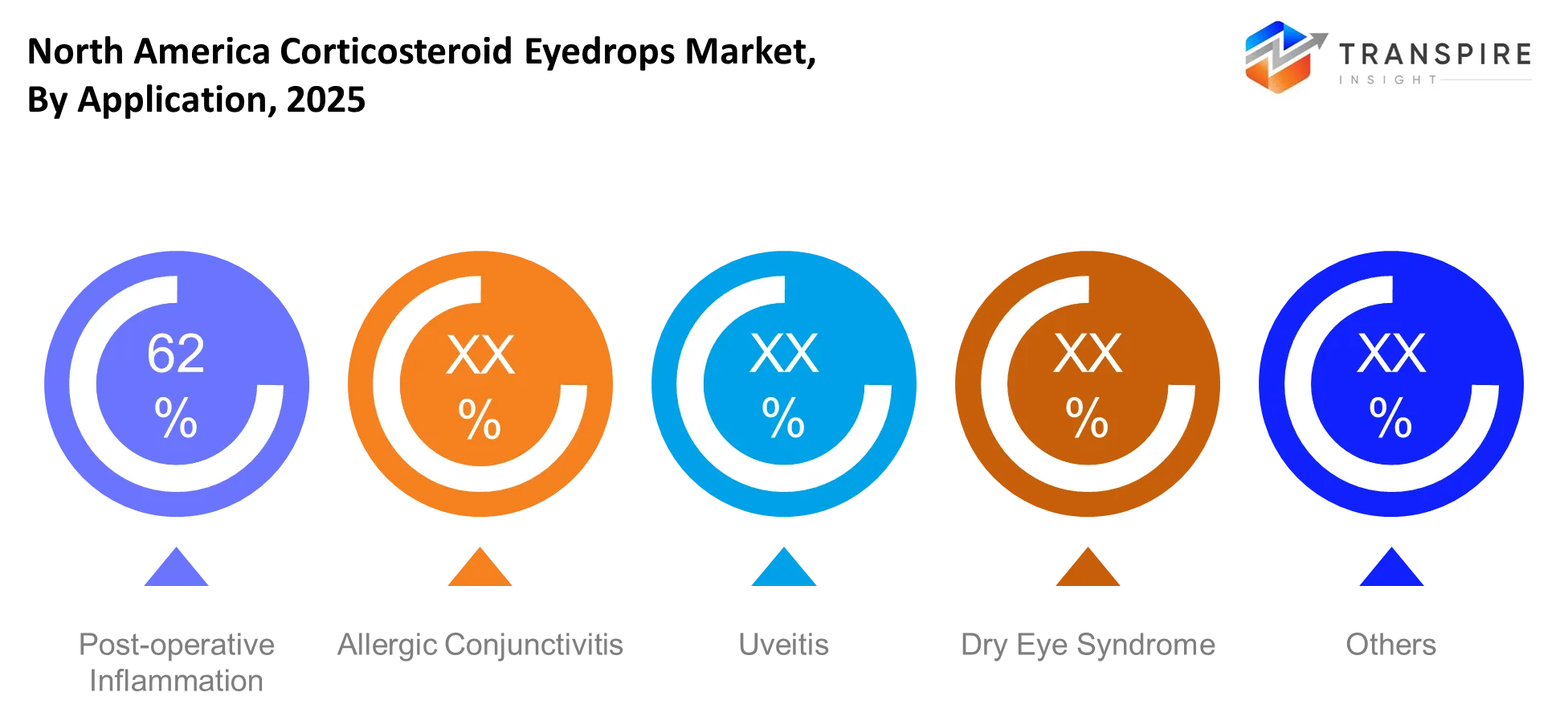
To learn more about this report, Download Free Sample Report
By Distribution Channel
Hospital pharmacies still grab the biggest distribution share, since surgical procedures and short term acute ophthalmic treatments often require corticosteroid dispensing right away inside clinical settings. Big hospital systems usually keep firm procurement agreements with pharmaceutical manufacturers, which helps maintain a steady flow across inpatient and outpatient departments. Retail pharmacies also handle a lot of prescriptions, largely because patients can access them easily and insurance reimbursement structures for generic ophthalmic steroids tend to be favorable.
Online pharmacies are showing up as the faster-growing option, mainly because digital prescription handling plus home delivery makes things easier for chronic eye patients. E-commerce pharmacy platforms have expanded a lot since 2020, especially among older consumers who manage repeat ophthalmology prescriptions. Even so, regulatory oversight plus prescription verification rules still restrict broad online expansion, in ways that can feel a little limiting.
Future channel competition is likely going to hinge on how well integrated tele-ophthalmology partnerships work together, plus automated refill systems, and then specialty pharmacy services that are basically built for post-surgical eye care management, day after day.
By End User
Hospitals keep the strongest market position, mainly because complex ophthalmic surgeries and emergency eye treatments push corticosteroid utilization up pretty fast. Big healthcare institutions also sign bulk procurement contracts, which improves purchasing efficiency and helps keep product availability steadier across surgical departments. Ophthalmology clinics are another key end-user group, since outpatient procedural volumes are rising and specialization keeps expanding, especially for cataract and refractive surgeries.
Specialty centers are expected to grow faster in the long run, as advanced retinal care keeps expanding, along with corneal disease management, and ocular immunology services that are spreading across North America. These dedicated eye care centers increasingly like premium corticosteroid formulations, mostly because the dosing frequency is lower and patient tolerability is enhanced. At the same time, investment in specialized eye care infrastructure is strengthening demand for more advanced anti-inflammatory treatment protocols. Product manufacturers will likely focus on partnerships with specialty centers to speed up adoption of next generation ophthalmic corticosteroid technologies.
What are the Key Use Cases Driving the North America Corticosteroid Eyedrops Market?
After-surgery inflammation management is basically the main reason people use corticosteroid eye drops all over North America. Cataract work, LASIK procedures, and retinal interventions done in hospitals or in ophthalmology clinics keep driving steady prescriptions, since surgeons want fast control of inflammation, for better visual recovery results.
For retail pharmacies and specialty clinic visits, allergic conjunctivitis and dry eye inflammation are starting to be more common. More screen time , city pollution, and contact lens wear have pushed more ophthalmologists to use short-acting corticosteroid courses that calm the ocular irritation without turning it into something invasive, every single time.
On the newer side, there are corticosteroid support therapies for biologic-treated ocular autoimmune diseases and also more advanced programs tied to corneal graft recovery. Some specialty eye centers are looking at low-dose preservative-free steroid options for long-term inflammatory issues that, before now, often depended on systemic anti-inflammatory medications.
|
Report Metrics |
Details |
|
Market size value in 2025 |
USD 5.2 Billion |
|
Market size value in 2026 |
USD 5.6 Billion |
|
Revenue forecast in 2033 |
USD 8.7 Billion |
|
Growth rate |
CAGR of 6.50% from 2026 to 2033 |
|
Base year |
2025 |
|
Historical data |
2021 - 2024 |
|
Forecast period |
2026 - 2033 |
|
Report coverage |
Revenue forecast, competitive landscape, growth factors, and trends |
|
Regional scope |
North America (Canada, The United States, and Mexico) |
|
Key company profiled |
AbbVie, Bausch + Lomb, Novartis, Santen Pharmaceutical, Alcon, Johnson & Johnson Vision, Sun Pharmaceutical, Ocular Therapeutix, Akorn Pharmaceuticals, Rohto Pharmaceutical, Regeneron Pharmaceuticals, Pfizer, EyePoint Pharmaceuticals, Sentiss Pharma, Cipla |
|
Customization scope |
Free report customization (country, regional & segment scope). Avail customized purchase options to meet your exact research needs. |
|
Report Segmentation |
By Product Type (Prednisolone Eyedrops, Dexamethasone Eyedrops, Fluorometholone Eyedrops, Loteprednol Eyedrops, Others); By Application (Post-operative Inflammation, Allergic Conjunctivitis, Uveitis, Dry Eye Syndrome, Others); By Distribution Channel (Hospital Pharmacies, Retail Pharmacies, Online Pharmacies, Others); By End User (Hospitals, Ophthalmology Clinics, Specialty Centers, Others) |
Which Regions are Driving the North America Corticosteroid Eyedrops Market Growth?
The United States leads the North America corticosteroid eyedrops market , mostly because advanced ophthalmology infrastructure and high surgical procedure volumes keep pushing prescription demand forward. Good reimbursement structures, broad access to ambulatory surgical centers and the quick take up of premium ophthalmic therapies help the market stay dominant for a while. Big pharmaceutical manufacturers keep deep distribution partnerships with hospital networks , retail pharmacies and specialty eye clinics across the major metropolitan regions. Also, smoother regulatory pathways for ophthalmic drug innovation make it easier to launch new products, which then target post-operative inflammation, and chronic ocular disorders.
Canada keeps generating steady market revenue thanks to publicly funded healthcare systems and reliable access to ophthalmic treatment across urban care networks. In comparison with the United States, Canadian demand growth seems to depend less on premium surgical volume and more on long-running clinical management of inflammatory eye diseases inside hospital settings. Provincial healthcare procurement programs set up pretty predictable purchasing habits for corticosteroid eyedrops, so the companies can sign steady supply agreements. Meanwhile, an expanding elderly population, plus rising dry eye prevalence, continues to support prescription stability across ophthalmology clinics and retail pharmacy channels.
Mexico is showing up as the fastest-growing regional market, since healthcare modernization initiatives and private ophthalmology investment have expanded access to specialized eye care services. Cataract surgery rates keep climbing, and middle-class healthcare spending has increased—so demand for more affordable corticosteroid therapies has accelerated since 2023. International pharmaceutical companies are strengthening regional manufacturing and distribution operations to improve product availability across urban treatment centers. Growth momentum across Mexico creates significant opportunities for generic drug manufacturers, ophthalmic distributors, and specialty clinic investors targeting underserved patient populations between 2026 and 2033.
Who are the Key Players in the North America Corticosteroid Eyedrops Market and How Do They Compete?
North America corticosteroid eye drops market kinda looks like it’s settling into moderate consolidation, with the biggest ophthalmic pharmaceutical firms really holding onto the premium prescription slice, while generic manufacturers push hard on pricing. These days, rivalry seems to be less about the plain anti-inflammatory effectiveness and more about formulation safety, dosing convenience, and preservative-free delivery approaches. The older players keep defending share via specialty ophthalmology partnerships and post-surgical treatment protocols, although smaller entrants aim at thinner areas like chronic dry eye inflammation and low-dose steroid regimens. At the same time, regulatory scrutiny tied to ocular safety has moved competition toward actual clinical evidence, and also long term tolerability records.
Bausch + Lomb stands out by being pretty deeply integrated with ophthalmology clinics and ambulatory surgical centers that regularly prescribe post operative anti inflammatory therapies. They’re still ramping up preservative free product development, and also beefing up their surgical care lineup using targeted ophthalmic acquisitions , plus physician training initiatives. AbbVie, through its ophthalmology unit, leans heavily on advanced ocular surface disease management and specialty prescription channels. Their solid research spending in inflammatory eye disorders seems to create an edge in premium therapeutic segments where extended clinical monitoring matters, and where specialist oversight is expected.
Novartis competes by leaning into high value ophthalmic innovation backed by wide distribution networks across the United States and Canada. The company has also increased investment in next generation ocular drug delivery technologies, meant to support better corneal penetration and cut down on dosing frequency. Santen Pharmaceutical maintains a niche strategy centered on specialty ophthalmology and physician-focused therapeutic support for chronic inflammatory eye diseases. Generic manufacturers such as Teva Pharmaceutical Industries continue pressuring branded competitors through lower-cost corticosteroid formulations distributed aggressively across retail pharmacy networks and hospital procurement channels.
Company List
- AbbVie
- Bausch + Lomb
- Novartis
- Santen Pharmaceutical
- Alcon, Johnson & Johnson Vision
- Sun Pharmaceutical
- Ocular Therapeutix
- Akorn Pharmaceuticals
- Rohto Pharmaceutical
- Regeneron Pharmaceuticals
- Pfizer
- EyePoint Pharmaceuticals
- Sentiss Pharma
- Cipla
Recent Development News
In May 2025, Alcon announced FDA approval of TRYPTYR (acoltremon ophthalmic solution) 0.003% for dry eye disease treatment. The approval introduced a first-in-class TRPM8 receptor agonist ophthalmic therapy that strengthened Alcon’s prescription eye care portfolio and expanded competition in anti-inflammatory ocular treatments. https://www.alcon.com
In July 2025, Alcon launched TRYPTYR commercially in the United States following FDA clearance. The launch expanded prescription treatment access for millions of dry eye patients and strengthened Alcon’s specialty ophthalmology distribution network across clinics and surgical centers. https://www.alcon.com
What Strategic Insights Define the Future of the North America Corticosteroid Eyedrops Market?
The North America corticosteroid eyedrops market is drifting toward precision ophthalmology, sort of supported by preservative free formulations, targeted ocular drug delivery, and post surgical treatment protocols that are more coordinated than before. For the next five to seven years, the growth path may rely less on procedural volume by itself and more on whether manufacturers can strike a careful balance between anti inflammatory performance and long term ocular safety. At the same time, the increasing clinical leaning toward low dose plus short duration regimens will likely shift the development focus, for both branded players and generic manufacturers, depending on the case.
An underrecognized risk is the mounting substitution pressure coming from biologic therapies, and also from non steroidal anti inflammatory ophthalmic options that are being used for long running ocular conditions. As specialty eye care keeps evolving, steroid dependence could, not always but often, loosen for patients who need prolonged inflammation management. Still, that same environment opens an emerging opportunity because sustained release ocular implants and nanoparticle based drug delivery systems are drawing more sustained investment, especially in specialty ophthalmology centers handling complex retinal issues and autoimmune related eye disorders.
So market participants might want to double down on partnerships with ambulatory surgical centers and specialty clinics, while also investing heavily in preservative free and sustained release corticosteroid technologies that fit with the safety minded prescribing trends.
North America Corticosteroid Eyedrops Market Report Segmentation
By Product Type
- Prednisolone Eyedrops
- Dexamethasone Eyedrops
- Fluorometholone Eyedrops
- Loteprednol Eyedrops
- Others
By Application
- Post-operative Inflammation
- Allergic Conjunctivitis
- Uveitis
- Dry Eye Syndrome
- Others
By Distribution Channel
- Hospital Pharmacies
- Retail Pharmacies
- Online Pharmacies
- Others
By End User
- Hospitals
- Ophthalmology Clinics
- Specialty Centers
- Others
Frequently Asked Questions
Find quick answers to common questions.
The North America Corticosteroid Eyedrops Market size is USD 8.7 Billion in 2033.
Key Segments for the North America Corticosteroid Eyedrops Market are By Product Type (Prednisolone Eyedrops, Dexamethasone Eyedrops, Fluorometholone Eyedrops, Loteprednol Eyedrops, Others); By Application (Post-operative Inflammation, Allergic Conjunctivitis, Uveitis, Dry Eye Syndrome, Others); By Distribution Channel (Hospital Pharmacies, Retail Pharmacies, Online Pharmacies, Others); By End User (Hospitals, Ophthalmology Clinics, Specialty Centers, Others).
Major North America Corticosteroid Eyedrops Market Players are AbbVie, Bausch + Lomb, Novartis, Santen Pharmaceutical, Alcon, Johnson & Johnson Vision, Sun Pharmaceutical, Ocular Therapeutix, Akorn Pharmaceuticals, Rohto Pharmaceutical, Regeneron Pharmaceuticals, Pfizer, EyePoint Pharmaceuticals, Sentiss Pharma, Cipla.
The North America Corticosteroid Eyedrops Market size is USD 5.2 Billion in 2025.
The North America Corticosteroid Eyedrops Market CAGR is 6.50% from 2026 to 2033.
- AbbVie
- Bausch + Lomb
- Novartis
- Santen Pharmaceutical
- Alcon, Johnson & Johnson Vision
- Sun Pharmaceutical
- Ocular Therapeutix
- Akorn Pharmaceuticals
- Rohto Pharmaceutical
- Regeneron Pharmaceuticals
- Pfizer
- EyePoint Pharmaceuticals
- Sentiss Pharma
- Cipla
Recently Published Reports
-
May 2026
Biosimilars Market
Biosimilars Market By Product Type (Monoclonal Antibodies, Recombinant Hormones, Erythropoietin, G-CSF, Others), By Indication (Oncology, Autoimmune Diseases, Blood Disorders, Diabetes, Others), By Manufacturing Type (In-House Manufacturing, Contract Manufacturing), By Distribution Channel (Hospital Pharmacies, Retail Pharmacies, Online Pharmacies), By Industry Analysis, Size, Share, Growth, Trends, and Forecasts 2021-2033
-
Apr 2026
Gastrointestinal Endoscopy Market
Gastrointestinal Endoscopy Market By Type (Rigid Gastrointestinal Endoscope, Flexible Gastrointestinal Endoscopes, Disposable Gastrointestinal Endoscope), By Procedure Type (Colonoscopy, Gastroscopy, Duodenoscopy, Enteroscopy, Flexible Sigmoidoscopy, Others), By Application (Diagnosis, Treatment), By End-Users (Hospitals, Ambulatory Surgical Centers, Specialty Clinics, Laboratories, Others), By Industry Analysis, Size, Share, Growth, Trends, and Forecasts 2021-2033
-
Apr 2026
Rare Inherited Metabolic Disorder Drug Market
Rare Inherited Metabolic Disorder Drug Market By Drug Class (Enzyme Replacement Drugs, Gene Therapy Drugs, Substrate Reduction Drugs, Small Module Drugs, Protein Drugs), By Route of Administration(Parenteral, Oral, Intrathecal), By Clinical Development (Marketed Drugs, Late Stage Clinical Phase III, Early Stage Clinical Phase I-II, Preclinical Candidates), By Indication (Lysosomal Storage Disorders, Urea Cycle Disorders, Amino Acid Metabolic Disorders, organic Acidemias, Peroximal Disorders), By Industry Analysis, Size, Share, Growth, Trends, and Forecasts 2021-2033
-
Jan 2026
Pharmaceutical Cleanroom Technology Market
Pharmaceutical Cleanroom Technology Market By Product (Equipment, Consumables, Services); By Cleanroom Type (Standard Cleanrooms, Modular Cleanrooms); By End Use (Pharmaceutical Companies, Biotechnology Companies), By Industry Analysis, Size, Share, Growth, Trends, and Forecasts 2021-2033