

North America Circulating Biomarkers Market Size & Forecast:
- North America Circulating Biomarkers Market Size 2025: USD 24.8 Billion
- North America Circulating Biomarkers Market Size 2033: USD 60.2 Billion
- North America Circulating Biomarkers Market CAGR: 11.79%
- North America Circulating Biomarkers Market Segments: By Biomarker Type (Circulating Tumor Cells, Cell-Free DNA, Circulating RNA, Exosomes, Proteins & Peptides, Metabolites, Extracellular Vesicles, Others); By Technology (PCR, Next-Generation Sequencing, Immunoassays, Flow Cytometry, Mass Spectrometry, Digital PCR, ELISA, Others); By Application (Cancer Diagnostics, Prenatal Testing, Cardiovascular Disease, Neurological Disorders, Infectious Diseases, Drug Development, Precision Medicine, Others); By End User (Hospitals, Diagnostic Laboratories, Pharmaceutical Companies, Biotechnology Companies, CROs, Academic Institutes, Research Organizations, Others); By Workflow (Biomarker Discovery, Disease Diagnosis, Therapy Monitoring, Prognostic Testing, Clinical Trials, Translational Research, Routine Testing, Others)
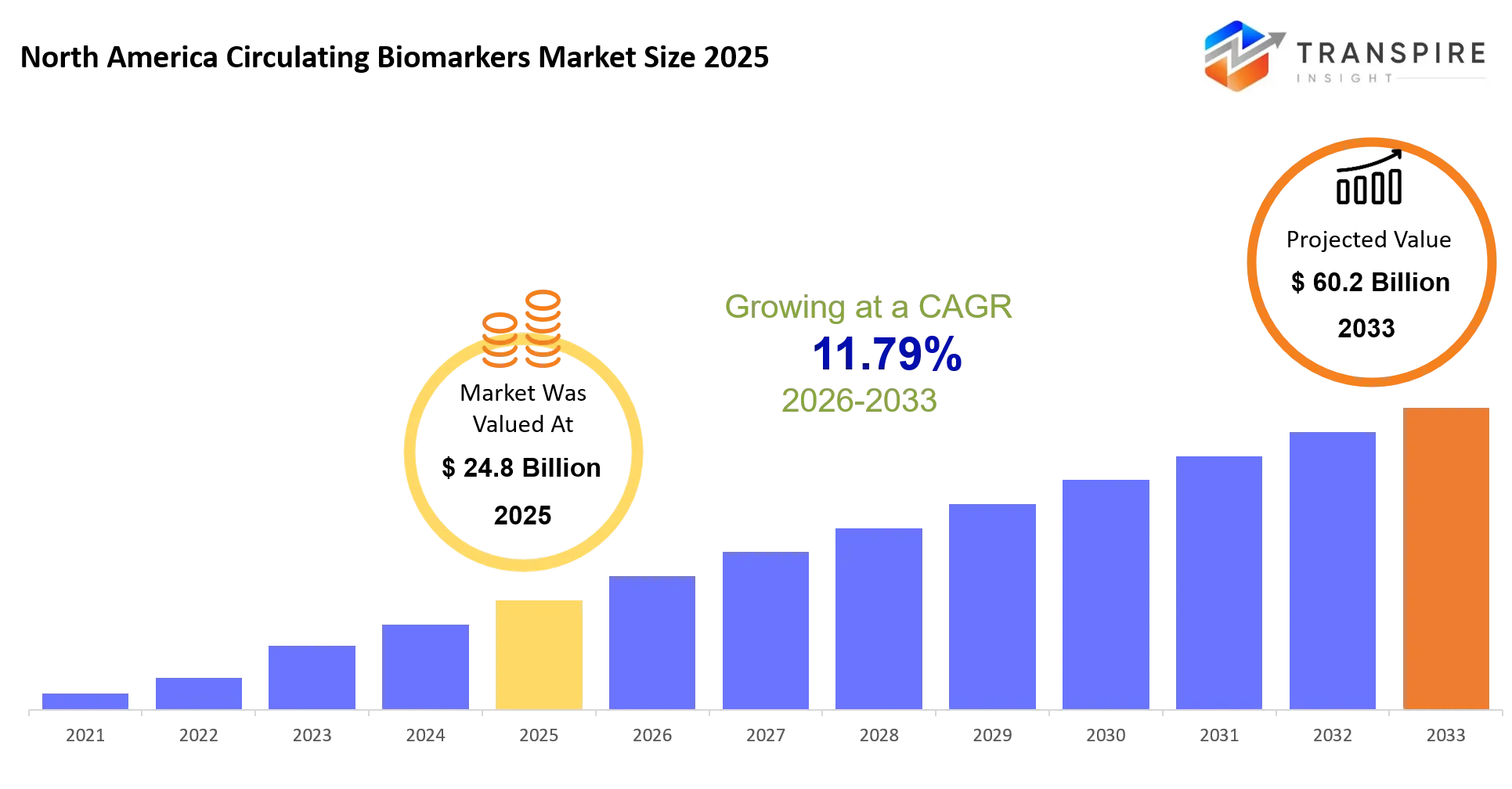
North America Circulating Biomarkers Market Summary
The North America Circulating Biomarkers Market was valued at USD 24.8 Billion in 2025. It is forecast to reach USD 60.2 Billion by 2033. That is a CAGR of 11.79% over the period.
Circulating biomarkers lets clinicians, and really healthcare organizations too, detect, watch, and even sort diseases using pretty minimally invasive blood based testing, so they can lower the need for repeat tissue biopsies, while also nudging earlier treatment calls, better therapy selection, and steady patient follow ups over time. In the last three to five years, the North America Circulating Biomarkers Market moved, in a noticeable way, from being mostly research driven adoption toward more normal everyday clinical use, this is pushed by progress in liquid biopsy platforms, the rise of multi analyte assay development, and a closer fit with precision medicine workflows. A big real world nudge was the COVID-19 pandemic, it basically disrupted elective procedures and made access to tissue based diagnostics more limited, which sped up investments in blood based testing options that can be used with fewer clinical touch points. That whole shift then rewired purchasing priorities for hospitals, diagnostic labs, and biopharmaceutical companies, and it put more weight on scalable molecular testing infrastructure, more decentralized sample collection, and companion diagnostic collaborations that support targeted therapeutic development.
Key Market Insights
- North America, led by the United States, was pretty much the heavy hitter with around 88% market share in 2025, aided by more advanced molecular diagnostics infrastructure , plus reimbursement expansion going on at the same time .
- Canada shows up as the fastest-growing regional market during 2025–2032, mostly pushed by precision medicine investments and also broadened genomic testing programs.
- Circulating tumor cells (CTCs) stayed the leading product segment, grabbing close to 38% market share in 2025 thanks to already established oncology applications .
- Circulating Cell-Free DNA (cfDNA) came in as the second-largest segment as clinical liquid biopsy adoption picked up steam across cancer diagnostics and treatment monitoring.
- Exosome-based biomarkers are expected to be the fastest-growing product segment through 2032, supported by multi-omics research and commercialization initiatives that are scaling up.
- When it comes to applications, cancer diagnostics dominated with roughly 61% market share in 2025, which is basically a reflection of the increasing use of precision oncology testing.
- For applications , therapy monitoring and treatment response assessment is forecast to be the fastest-growing during 2025–2032 since longitudinal biomarker testing is becoming routine.
- Hospitals and diagnostic laboratories together accounted for nearly 54% market share in 2025, and that was helped by integrated molecular testing capabilities.
- Lastly , biopharmaceutical companies represent the fastest-growing end-user group through 2032, driven by companion diagnostic development and biomarker-guided clinical trials.
What are the Key Drivers, Restraints, and Opportunities in the North America Circulating Biomarkers Market?
Honestly the main thing that’s pushing market expansion along is how fast precision medicine keeps getting stitched into everyday oncology treatment. There’s also regulatory backing for companion diagnostics, plus more generous reimbursement for some liquid biopsy exams, and frankly improvements in next-generation sequencing results, all of which lower those adoption hurdles. Because of all this, hospitals, reference laboratories, and pharmaceutical developers are moving toward earlier circulating biomarker testing, even sooner in the treatment pathway. So the net effect is broader use across cancer screening, patient stratification, and therapy monitoring , which then creates fresh money lanes for diagnostic platform providers and assay developers
That said the biggest structural sticking point is still clinical standardization, across biomarker platforms and those lab workflows. Requirements for validation aren’t the same, depending on biomarker type, disease area, and the regulatory route . That inconsistency makes harmonization pretty hard. On top of that, healthcare providers frequently ask for a lot of clinical proof before they approve wider routine utilization, and this stretches commercialization timelines, while also delaying procurement decisions. From a Transpire Insight review of regional procurement announcements and launch timing , supply chain concentration still looks like the main execution risk. When specialized reagents, sequencing consumables , and analytical instruments are in short supply, product launches can slip and near-term revenue may get muted
One big opportunity is basically about mashing up multi-omics biomarker work with artificial intelligence enabled clinical decision support. There’s a lot of push right now because investments in cloud based genomic analytics, plus decentralized testing networks and also integrated companion diagnostics , are setting up more favorable conditions for commercialization across North America. Pharmaceutical companies, are also putting circulating biomarker strategies right into clinical trials so they can do better patient selection and track endpoints more closely. Meanwhile, things like exosome profiling, methylation analysis , and multiplex biomarker panels are improving fast and should help open wider use cases beyond oncology, which then supports the market’s next phase of growth.
What Has the Impact of Artificial Intelligence Been on the North America Circulating Biomarkers Market?
Artificial intelligence and digital technology are really changing how circulating biomarker testing works, mostly by smoothing lab operations, making analytical results more consistent, and speeding up clinical interpretation a bit. With AI based image analysis , circulating tumor cells get spotted automatically, while machine learning algorithms sort through huge genomic and proteomic datasets to find biomarker patterns that matter clinically, and do it faster than the older manual style process. In the same way, digital pathology platforms, plus laboratory information management systems, handle quality control, keep sample tracking in order, and even support the regulatory paperwork, so there’s less admin work and everything feels more efficient, end to end.
Then there is predictive analytics, which kind of strengthens biomarker development by anticipating assay performance, tuning sequencing routines, and highlighting which patients are most likely to benefit from targeted therapies. Pharmaceutical companies are also using AI to sift through and prioritize biomarker candidates during clinical trials, which can shorten development schedules and improve trial enrollment tactics. Overall these tools push report turnaround earlier, boost lab productivity, and reduce the need for repeat testing, all while trying to keep diagnostic outcomes more stable.
Still , even with these advantages, broad adoption is not so easy because integration costs stay high and clinical data is kind of fragmented. A lot of healthcare institutions keep legacy lab infrastructure , and that means substantial investment is required before advanced AI platforms can be installed and run. On top of that, real world patient variation, and limited interoperability between different diagnostic systems, continue to tug at algorithm accuracy, which slows wider uptake across the local regional biomarker diagnostics ecosystem.
Key Market Trends
- Liquid biopsy adoption basically moved faster from 2021 to 2025, and it kind of shifted biomarker testing out of mostly specialized research labs and into routine oncology practice, like it was normal.
- Around and after 2023, multi analyte assays that mix cfDNA with CTCs and exosomes got extra momentum, which improved diagnostic sensitivity, and also gave more decision support in the clinic.
- Companion diagnostics then became more woven into targeted oncology drug development. so the relationships between pharma companies and molecular diagnostics firms got stronger and more consistent.
- Since 2022, digital PCR and next generation sequencing platforms replaced a few of the older molecular workflows, and that helped with analytical precision as well as higher lab throughput.
- Cloud enabled bioinformatics platforms also expanded pretty fast, letting teams interpret genomes quicker, and supporting more decentralized diagnostic laboratory networks across North America.
- Between 2022 and 2025, clinical trial sponsors increasingly used circulating biomarkers as surrogate endpoints, which helped with better patient stratification and made monitoring more efficient in practice.
- After 2023, investments in AI driven biomarker analytics went up a lot, enabling automated interpretation and trimming down the need for manual review, at least for many cases.
- Domestic manufacturing strategies for sequencing reagents and laboratory consumables became more important after the pandemic related supply chain disruptions, because people didn’t want to get stuck waiting.
- More and more companies also expanded partnerships with healthcare providers to plug biomarker testing into personalized treatment pathways, not just keep it as a standalone diagnostic service.
North America Circulating Biomarkers Market Segmentation
By Biomarker Type :
Circulating tumor cells kind of lead the way because most clinical oncology programs still lean on cell based analysis, for disease detection, and for treatment monitoring too. Cell free DNA has also gotten more solid clinical buy-in, mainly thanks to liquid biopsy uses that help with mutation detection and more informed targeted therapy decisions. Circulating RNA keeps drawing focus for gene expression readouts and for early disease identification—like it’s always being mentioned in the same breath. Exosomes have, in practice, stepped out of pure research settings since better isolation approaches now enable more routine clinical evaluation, not just experiments.
Proteins and peptides stay pretty central for established diagnostic assays across multiple disease areas, even when newer methods show up. Metabolites add useful context about disease progression and treatment response, especially through metabolic profiling. Extracellular vesicles continue to back biomarker research by carrying molecular signals from affected tissues, and that’s often the point. Other biomarker categories keep broadening testing options by way of fresh analytical routes and they also support ongoing product development, which sounds simple but it adds up over time.
By Technology :
PCR is still a widely used tool because labs really like dependable output, cost efficiency and the whole established clinical validation that is already in place. Next generation sequencing helps with a more detailed genomic read and it kind of strengthens precision medicine initiatives through broader molecular profiling. Immunoassays keep showing up for routine diagnostic testing, with solid accuracy, and because they are broadly available across most laboratories. Flow cytometry is a big deal for identifying circulating tumor cells and for cellular characterization, basically how the cells look and behave.
Mass spectrometry supports advanced biomarker discovery, it gives detailed molecular analysis across several disease areas. Digital PCR gives high sensitivity when you’re chasing rare mutations, and it is also used for minimal residual disease checks, which matters a lot in follow-up. ELISA keeps a strong position for routine protein biomarker measurement and because standardized lab workflows are already well known. Other technologies keep entering the market too, as innovation improves analytical performance and it also expands testing capacity, so more options show up over time.
By Application :
Cancer diagnostics are probably the biggest use case, because blood based biomarker tests help with early detection, also with choosing therapy and later monitoring how treatment is working. Prenatal testing keeps growing too , mainly via non invasive screening approaches which cut down on the need for procedures that are more invasive. For cardiovascular disease the blood based molecular indicators play a role in risk assessment plus ongoing disease tracking, you know the usual follow up. Neurological disorder research is still looking closely at circulating biomarkers, for earlier diagnosis and for keeping tabs on disease progression, all the way through.
Infectious disease testing also gains a lot from quick molecular detection tools, they make clinical decisions a bit faster and clearer. Drug development efforts rely on circulating biomarkers to narrow down which patients are most suitable and to judge how well therapy is responding, during clinical studies. Precision medicine keeps strengthening personalized treatment approaches using molecular profiling alongside companion diagnostics. And then there are other applications too, supporting research programs that try to broaden biomarker use across more therapeutic areas, beyond the obvious categories.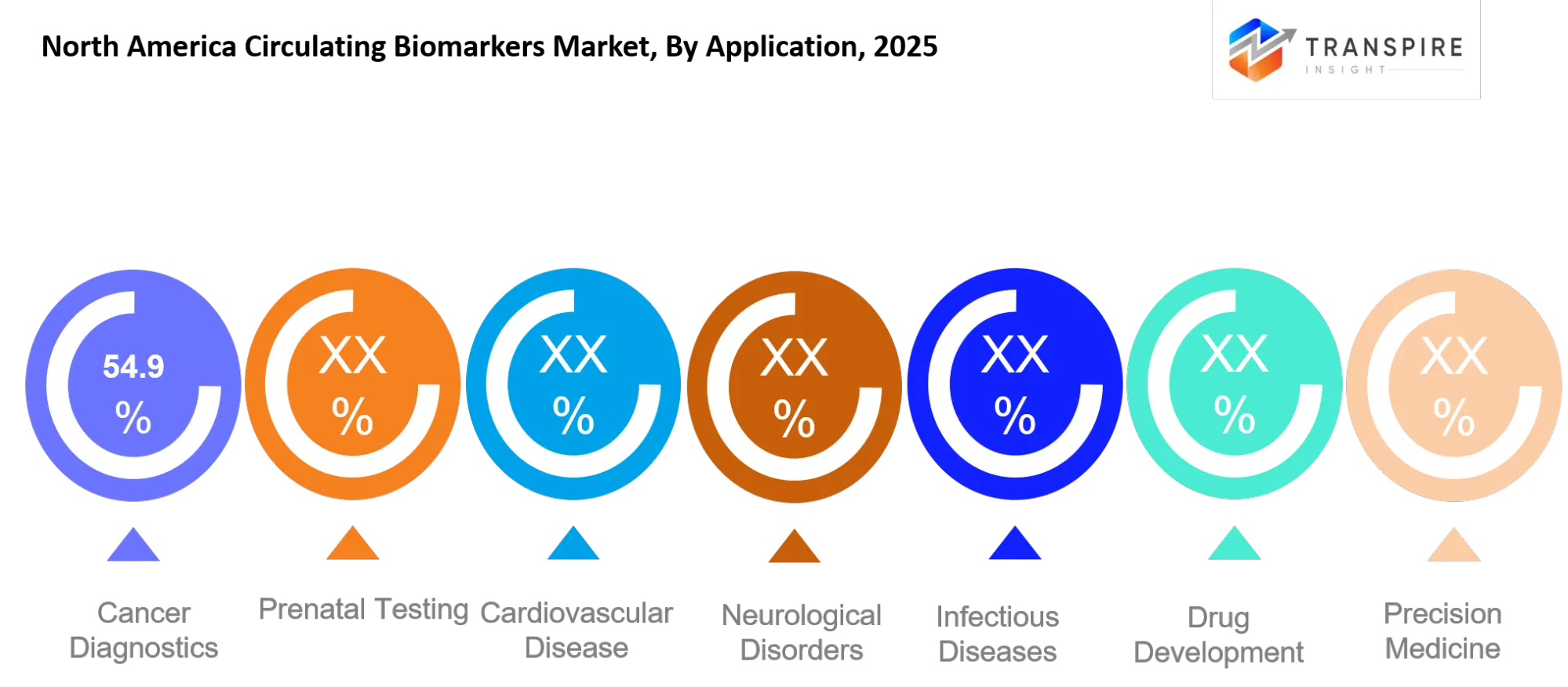
By End User :
Hospitals still stand as the main end-user, because integrated diagnostic services kind of support patient care and help with treatment planning all in one healthcare setting , which is pretty important. Diagnostic laboratories keep expanding specialized molecular testing capabilities to match clinical needs, more or less continuously. Pharmaceutical companies put money into biomarker development in order to make targeted therapy programs stronger, and also to improve companion diagnostic strategies. Biotechnology companies keep rolling out new testing platforms that enhance analytical performance and make day to day workflow run more efficiently.
Contract research organizations assist clinical studies by providing biomarker validation and laboratory testing services, without the usual hassle. Academic institutes carry on with research that pushes biomarker discovery forward and builds clinical evidence, step by step. Research organizations strengthen collaboration with healthcare providers and industry partners , trying to speed up product development. Other end users also contribute through specialized testing services and disease focused research initiatives.
By Workflow :
Biomarker discovery still ends up being the first step in identifying new molecular indicators that can later help with diagnostic and therapeutic uses. For disease diagnosis there’s still a lot of laboratory work going on, because detecting conditions early and accurately tends to improve clinical handling. Therapy monitoring keeps growing too via repeated blood based tests that try to judge how well treatment is working, across time. Prognostic testing, meanwhile, supports risk estimation and helps steer longer term clinical decisions even when nothing looks obvious at first.
Clinical trials lean on circulating biomarkers, both to better choose patients and also to capture therapeutic outcomes with more precision. Translational research ties what happens in the lab to what happens in the clinic through ongoing validation studies. Routine testing continues to widen as standardized assays move into regular healthcare routines, and they become a kind of normal workflow. There are also other workflow activities that keep innovation moving across biomarker development, regulatory review, and actual lab rollout.
What are the Key Use Cases Driving the North America Circulating Biomarkers Market?
Cancer diagnostics is still kind of the main use case across the North America circulating biomarkers market because hospitals, diagnostic labs, and oncology centers lean on blood based testing to help pick treatments and keep track of how disease is doing. Clinical adoption keeps growing, with liquid biopsy helping cut down the need for repeated tissue sampling and enabling quicker therapeutic calls, which people really like.
Drug development and precision medicine are also major secondary uses. Pharmaceutical companies use circulating biomarkers to figure out which trial subjects fit best and to see how well a therapy is responding. At the same time, biotechnology firms turn biomarker data into companion diagnostic development, often building a whole story around it. Prenatal testing, meanwhile, is gaining broader clinical acceptance too, since non invasive screening programs ride on established regulatory frameworks.
Newer areas are starting to show up, for instance neurological disease assessment and cardiovascular risk monitoring, where clinical validation is still in motion and could open up more commercial paths later on. Translational research programs and academic institutes are also exploring multi omics biomarker panels for earlier disease detection, and that is creating extra opportunities as regulatory evidence and reimbursement routes keep maturing.
|
Report Metrics |
Details |
|
Market size value in 2025 |
USD 24.8 Billion |
|
Market size value in 2026 |
USD 27.6 Billion |
|
Revenue forecast in 2033 |
USD 60.2 Billion |
|
Growth rate |
CAGR of 11.79% from 2026 to 2033 |
|
Base year |
2025 |
|
Historical data |
2021 - 2024 |
|
Forecast period |
2026 - 2033 |
|
Report coverage |
Revenue forecast, competitive landscape, growth factors, and trends |
|
Regional scope |
North America (Canada, The United States, and Mexico) |
|
Key company profiled |
Guardant Health, Bio-Techne, Thermo Fisher Scientific, Roche Diagnostics, QIAGEN, Illumina, Bio-Rad Laboratories, Danaher, Exact Sciences, Natera, Sysmex Inostics, Personalis, Freenome, Foundation Medicine, Menarini Silicon Biosystems |
|
Customization scope |
Free report customization (country, regional & segment scope). Avail customized purchase options to meet your exact research needs. |
|
Report Segmentation |
By Biomarker Type (Circulating Tumor Cells, Cell-Free DNA, Circulating RNA, Exosomes, Proteins & Peptides, Metabolites, Extracellular Vesicles, Others); By Technology (PCR, Next-Generation Sequencing, Immunoassays, Flow Cytometry, Mass Spectrometry, Digital PCR, ELISA, Others); By Application (Cancer Diagnostics, Prenatal Testing, Cardiovascular Disease, Neurological Disorders, Infectious Diseases, Drug Development, Precision Medicine, Others); By End User (Hospitals, Diagnostic Laboratories, Pharmaceutical Companies, Biotechnology Companies, CROs, Academic Institutes, Research Organizations, Others); By Workflow (Biomarker Discovery, Disease Diagnosis, Therapy Monitoring, Prognostic Testing, Clinical Trials, Translational Research, Routine Testing, Others) |
Which Regions are Driving the North America Circulating Biomarkers Market Growth?
The United States still looks like the big regional player, with an estimated 88% , give or take, of the whole revenue pie. There are strong regulatory routes for molecular diagnostics, plus wide reimbursement coverage, and a pretty advanced healthcare setup that helps real clinical uptake. On top of that, there is a mature “ecosystem” of biotechnology firms , diagnostic labs, sequencing technology providers , and pharmaceutical manufacturers, and together they back product building and market rollouts. Going forward, continued backing for precision medicine programs, clinical research, and laboratory automation should keep that leading position during the entire forecast window.
Canada sits next, as the second-largest region, and its healthcare system leans toward standardized clinical approaches, with long-term public investment. Provincial funding, along with fairly consistent regulatory supervision, makes it easier for molecular diagnostic technologies to spread steadily across hospitals and accredited laboratories. There are also research partnerships that link universities, biotechnology companies, and healthcare organizations, which ends up being a solid setting for biomarker validation, then commercialization. With healthcare spending staying fairly steady and genomic medicine initiatives steadily growing, Canada can be viewed as a dependable source of repeat revenue over time.
Mexico is expected to see the quickest growth over the 2026–2033 timeframe, with healthcare infrastructure modernization and broader access to advanced molecular diagnostics quietly pushing clinical capacity upward. In the meantime, recent capital going into specialized diagnostic labs and public health programs has been, in a way , widening the availability of precision testing across a lot of the major urban centers. Also, stronger involvement in international clinical research plus pharmaceutical development is helping to lift demand for circulating biomarker technologies, and that matters more than it sounds. All of this momentum forms appealing opportunities for technology providers, laboratory service firms, and investors who are looking to expand across healthcare markets that still remain underserved.
Who are the Key Players in the North America Circulating Biomarkers Market and How Do They Compete?
Competition is still somewhat consolidated , because just a handful of global diagnostics and life science players control a big share of the advanced technology stack , while smaller specialized biotech companies keep rolling out newer testing platforms—kind of like a quiet counterforce. In general, technology innovation is the main kind of “fuel” for competition , backed by things like assay accuracy, sequencing know-how, clinical validation, and the regulatory approvals themselves. At the same time, established firms keep pushing their market standing via portfolio expansion, yet newer developers tend to go after narrower biomarker use cases , and also next-generation liquid biopsy approaches.
Hoffmann-La Roche Ltd. builds competitive edge via integrated molecular diagnostics and oncology testing platforms , tying together instruments, reagents, and clinical decision support as one system. Guardant Health, leans heavily into liquid biopsy innovation, with differentiation coming from blood based cancer profiling and ongoing investment in advanced genomic testing. Thermo Fisher Scientific then reinforces its position by broadening sequencing technologies and laboratory workflow solutions , which in practice make testing efficiency better for both clinical work and research environments.
QIAGEN is basically building differentiation via companion diagnostic collaborations and sample preparation tech that help precision medicine initiatives actually work. Illumina keeps pushing investments into sequencing platform upgrades , so the analytical performance goes up and multi-omics uses get broader. Bio-Rad Laboratories highlights digital PCR innovation along with very sensitive molecular detection systems, which in turn support clinical labs and improve analytical precision while also letting them expand testing capacity across oncology and translational research , at the same time.
Company List
QIAGEN
Illumina
Bio-Rad Laboratories
Danaher
Exact Sciences
Natera
Sysmex Inostics
Personalis
Freenome
Foundation Medicine
Menarini Silicon Biosystems
Recent Development News
In May 2026, Guardant Health received U.S. Food and Drug Administration (FDA) approval for the new Guardant360 Liquid CDx, expanding the approved liquid biopsy panel with integrated genomic and epigenomic profiling. The approval strengthened comprehensive blood-based cancer testing and broadened clinical adoption opportunities across precision oncology. Sourcehttps://www.nasdaq.com/
In April 2025, Guardant Health entered a multi-year strategic collaboration with Pfizer to support development and commercialization of oncology therapies using the Guardant Infinity smart liquid biopsy platform. The partnership expanded the use of circulating tumor DNA and blood-based biomarker testing in global clinical trials, strengthening precision oncology development. Sourcehttps://investors.guardanthealth.com/
What Strategic Insights Define the Future of the North America Circulating Biomarkers Market?
The North America Circulating Biomarkers Market will tend to drift toward broader clinical integration over the next five to seven years, as precision medicine , multi omics analysis, and advanced liquid biopsy platforms become something like routine care, not just a niche specialized testing lane. The most solid structural driver is likely the tighter alignment between biomarker testing targeted therapies and clinical decision support, which builds more integrated diagnostic ecosystems spanning healthcare providers and pharmaceutical companies. There is also a less obvious risk that kinda sits in the background: the fact that critical sequencing technologies, specialized reagents, and analytical platforms are concentrated among only a few suppliers. That setup can leave laboratories exposed to procurement hiccups and pricing pressure, even when demand stays steady.
At the same time an emerging opportunity is showing up in the idea of pairing circulating biomarkers with artificial intelligence driven multi marker interpretation, especially for neurological and cardiovascular diseases, though commercial adoption is still pretty early. Overall, companies that begin investing now in diversified supply partnerships, clinical validation, and scalable data analytics platforms should end up better placed to catch the long term market expansion as it unfolds.
North America Circulating Biomarkers Market Report Segmentation
By Biomarker Type
- Circulating Tumor Cells
- Cell-Free DNA
- Circulating RNA
- Exosomes
- Proteins & Peptides
- Metabolites
- Extracellular Vesicles
By Technology
- PCR
- Next-Generation Sequencing
- Immunoassays
- Flow Cytometry
- Mass Spectrometry
- Digital PCR
- ELISA
By Application
- Cancer Diagnostics
- Prenatal Testing
- Cardiovascular Disease
- Neurological Disorders
- Infectious Diseases
- Drug Development
- Precision Medicine
By End User
- Hospitals
- Diagnostic Laboratories
- Pharmaceutical Companies
- Biotechnology Companies
- CROs
- Academic Institutes
- Research Organizations
By Workflow
- Biomarker Discovery
- Disease Diagnosis
- Therapy Monitoring
- Prognostic Testing
- Clinical Trials
- Translational Research
- Routine Testing
Frequently Asked Questions
Find quick answers to common questions.
The Expected North America Circulating Biomarkers Market size for the Market will be USD 60.2 Billion in 2033.
Key Segments for the North America Circulating Biomarkers Market are Type By Biomarker Type (Circulating Tumor Cells, Cell-Free DNA, Circulating RNA, Exosomes, Proteins & Peptides, Metabolites, Extracellular Vesicles, Others); By Technology (PCR, Next-Generation Sequencing, Immunoassays, Flow Cytometry, Mass Spectrometry, Digital PCR, ELISA, Others); By Application (Cancer Diagnostics, Prenatal Testing, Cardiovascular Disease, Neurological Disorders, Infectious Diseases, Drug Development, Precision Medicine, Others); By End User (Hospitals, Diagnostic Laboratories, Pharmaceutical Companies, Biotechnology Companies, CROs, Academic Institutes, Research Organizations, Others); By Workflow (Biomarker Discovery, Disease Diagnosis, Therapy Monitoring, Prognostic Testing, Clinical Trials, Translational Research, Routine Testing, Others).
Major North America Circulating Biomarkers Market Players are Guardant Health, Bio-Techne, Thermo Fisher Scientific, Roche Diagnostics, QIAGEN, Illumina, Bio-Rad Laboratories, Danaher, Exact Sciences, Natera, Sysmex Inostics, Personalis, Freenome, Foundation Medicine, Menarini Silicon Biosystems.
The Current North America Circulating Biomarkers Market size is USD 24.8 Billion in 2025.
The North America Circulating Biomarkers Market CAGR is 11.79% from 2026 to 2033.
Guardant Health
Bio-Techne
Thermo Fisher Scientific
Roche Diagnostics
QIAGEN
Illumina
Bio-Rad Laboratories
Danaher
Exact Sciences
Natera
Sysmex Inostics
Personalis
Freenome
Foundation Medicine
Menarini Silicon Biosystems
About the Authors

Pankaj Ghogare Patil
I am Pankaj Ghogare Patil, a Senior Research Analyst at Transpire Insight, specializing in the Pharmaceutical, Chemicals & Materials, Healthcare IT, and Biotechnology industry. My expertise lies in conducting comprehensive market research, analyzing industry trends, evaluating competitive landscapes, and translating complex data into actionable insights. At Transpire Insight, I closely follow emerging technologies, regulatory developments, and market innovations to create accurate, well-researched, and informative content that helps businesses and professionals make informed decisions. I am committed to producing credible, evidence-based articles that reflect industry best practices while making technical topics accessible and valuable for a broad audience.

Chakradhar Khansole
Chakradhar serves as the Research Director at Transpire Insight, bringing over 8 years of experience in technology, innovation, and strategic market intelligence. He specializes in transforming complex market data into actionable business insights that enable organizations to make informed, growth-oriented decisions. Recognized for his strategic vision and analytical expertise, Chakradhar leads high-impact research initiatives, delivering comprehensive market assessments, competitive intelligence, and forward-looking industry analysis.
Recently Published Reports
-
Jul 2026
Alopecia Treatment Market
Alopecia Treatment Market Size, Share & Analysis Report By Disease Type (Alopecia Areata, Cicatricial Alopecia, Traction Alopecia, Alopecia Totalis, Androgenetic Alopecia, Alopecia Universalis, and Other Disease Types), By Treatment Type (Topical Treatments, Oral Medications, Injectable Therapies, and Hair Transplantation), By Gender (Male, and Female), By Distribution Channel (Hospitals and Clinics, Retail Pharmacies, and Online Retailers), and Geography (North America, Europe, Asia-Pacific, Middle East and Africa, South and Central America), 2021 - 2031
-
Jul 2026
Medical Ultrasound Probe Market
Medical Ultrasound Probe Market Size, Share & Analysis Report By Type (Linear Type, Convex Type, Endocavitary Probe, Phased Array/Cardiac Probe, Transesophageal (TEE) Probe, and Others), By Application (Ophthalmology, Cardiology, Musculoskeletal, Oncology, Obstetrics & Gynecology, General Imaging, and Others), By End User (Hospitals & Clinics, Diagnostic Centers, Ambulatory Surgical Centers, and Others), and Geography (North America, Europe, Asia-Pacific, Middle East and Africa, South and Central America), 2021 – 2031
-
May 2026
Biosimilars Market
Biosimilars Market By Product Type (Monoclonal Antibodies, Recombinant Hormones, Erythropoietin, G-CSF, Others), By Indication (Oncology, Autoimmune Diseases, Blood Disorders, Diabetes, Others), By Manufacturing Type (In-House Manufacturing, Contract Manufacturing), By Distribution Channel (Hospital Pharmacies, Retail Pharmacies, Online Pharmacies), By Industry Analysis, Size, Share, Growth, Trends, and Forecasts 2021-2033
-
Apr 2026
Gastrointestinal Endoscopy Market
Gastrointestinal Endoscopy Market By Type (Rigid Gastrointestinal Endoscope, Flexible Gastrointestinal Endoscopes, Disposable Gastrointestinal Endoscope), By Procedure Type (Colonoscopy, Gastroscopy, Duodenoscopy, Enteroscopy, Flexible Sigmoidoscopy, Others), By Application (Diagnosis, Treatment), By End-Users (Hospitals, Ambulatory Surgical Centers, Specialty Clinics, Laboratories, Others), By Industry Analysis, Size, Share, Growth, Trends, and Forecasts 2021-2033