
North America Adhesive Capsulitis (Frozen Shoulder) Treatment Market Size & Forecast:
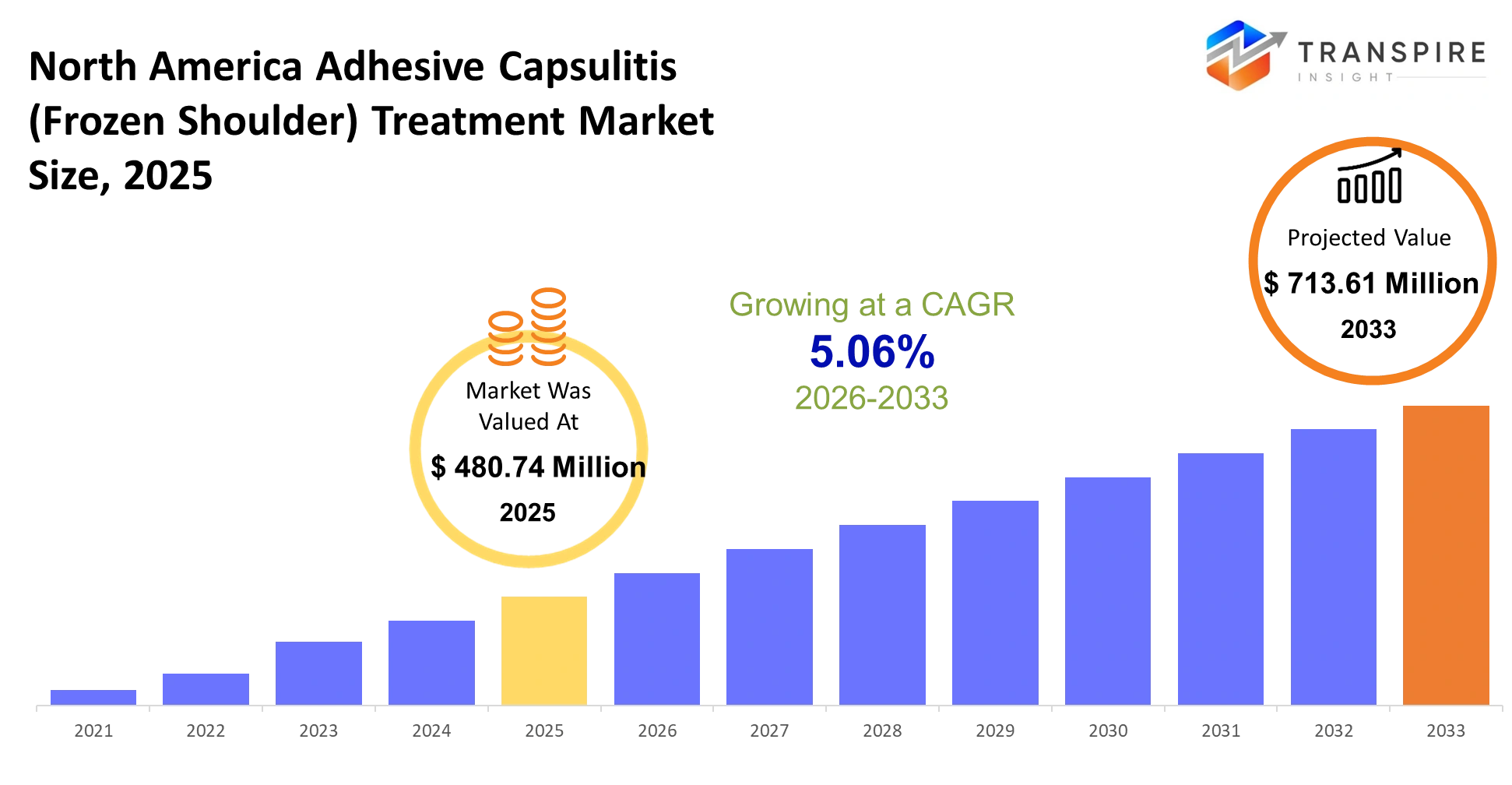
- North America Adhesive Capsulitis (Frozen Shoulder) Treatment Market Size 2025: USD 480.74 Million
- North America Adhesive Capsulitis (Frozen Shoulder) Treatment Market Size 2033: USD 713.61 Million
- North America Adhesive Capsulitis (Frozen Shoulder) Treatment Market CAGR: 5.06%
- North America Adhesive Capsulitis (Frozen Shoulder) Treatment Market Segments: By Type (Physical Therapy, Drugs, Surgery, Injections, Others), By Application (Pain Relief, Mobility Improvement, Rehabilitation, Others), By End-User (Hospitals, Clinics, Rehab Centers, Others), By Drug (NSAIDs, Steroids, Others).
To learn more about this report,  Download Free Sample Report
North America Adhesive Capsulitis (Frozen Shoulder) Treatment Market Summary:
The North America Adhesive Capsulitis (Frozen Shoulder) Treatment Market size is estimated at USD 480.74 Million in 2025 and is anticipated to reach USD 713.61 Million by 2033, growing at a CAGR of 5.06% from 2026 to 2033. The North America Adhesive Capsulitis (Frozen Shoulder) Treatment Market has a very strong say in helping restore shoulder mobility, ease lingering pain and even shorten rehab timelines, for patients where everyday motion and work capacity are basically constrained by joint stiffness. In practice, this market kind of stitches together a continuous care thread, moving through physical therapy, injectable biologics, pain management, minimally invasive procedures, and then post-treatment rehabilitation, across orthopedic clinics, hospitals, and ambulatory centers.
Over the last 3–5 years, basically the whole market has been shifting in a more structural way toward earlier intervention, plus image guided minimally invasive treatments, mostly because payers want to cut the long duration rehab expenses, and also they don’t really want to push patients toward surgical escalation. At the same time, the backlog of untreated musculoskeletal cases that piled up during the COVID-19 pandemic, kind of sped up the patient inflow once elective services restarted. So you can see a tangible rise in diagnosis volumes , and also a little uptick in treatment conversion rates. And since aging populations keep expanding, diabetes prevalence keeps increasing, and more sedentary work lifestyles overlap more often with risk factors, providers are directing budget toward connected rehabilitation pathways and outpatient care formats. These formats help improve recovery efficiency, while also creating repeat revenue openings across therapy sessions, follow up care, and those extra check ins that keep patients on track.
Key Market Insights
- In 2025, the United States was pretty much leading the North America Adhesive Capsulitis (Frozen Shoulder) Treatment Market with almost 78% market share. And yeah, that’s a big number.
- Canada is also looking like the quickest mover through 2032, largely because orthopedic care modernization is happening, plus more investment in rehabilitation infrastructure. Not to mention the overall push toward updated recovery pathways.
- Across North America, urban outpatient orthopedic networks keep picking up meaningful share, mainly tied to lower procedural , and lower rehab costs too. This pattern seems to keep repeating as healthcare providers adjust budgets and pathways.
- Market growth in the region is helped along by rising diabetes prevalence , more people aging into higher-risk brackets, and sedentary occupational lifestyles spreading across developed healthcare systems. It kind of all stacks together over time.
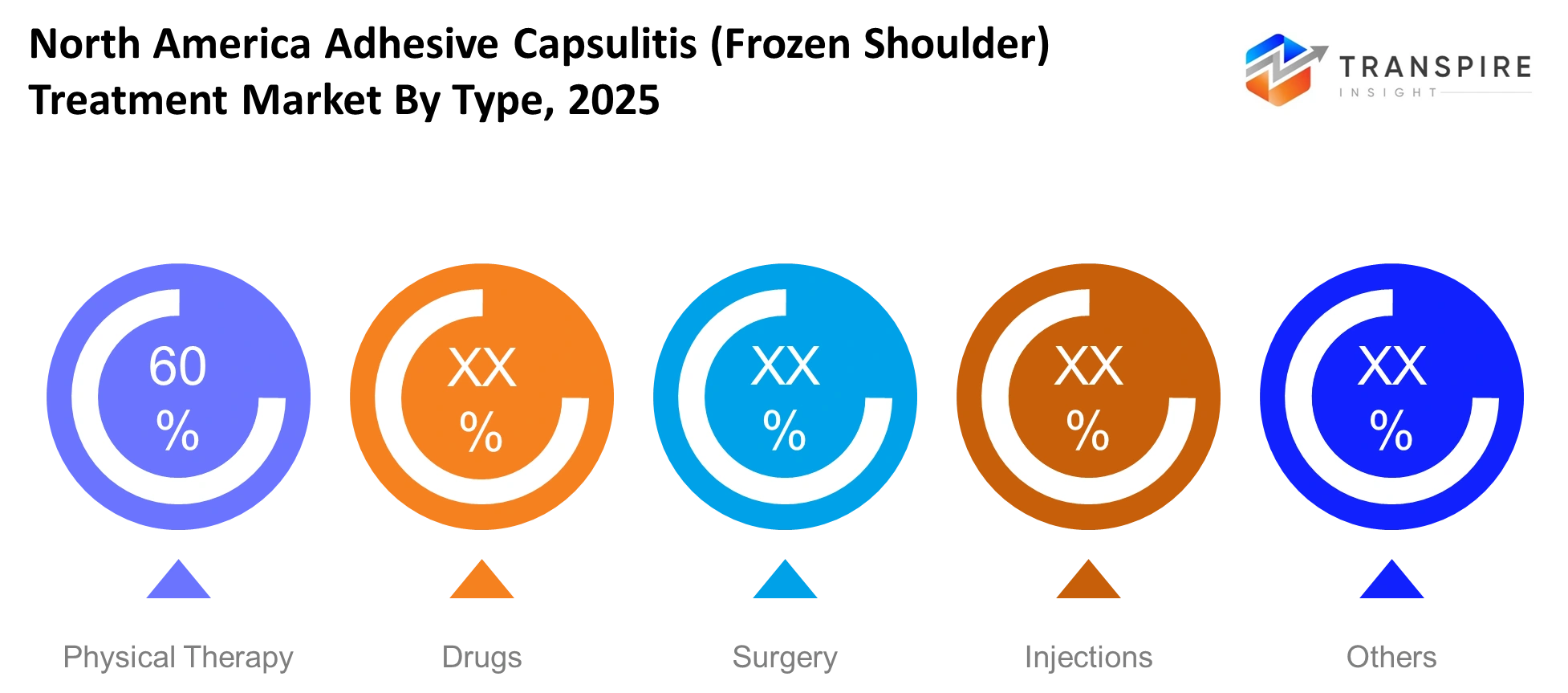
- In terms of treatment, physical therapy services led the North America Adhesive Capsulitis (Frozen Shoulder) Treatment Market, taking more than 42% of the industry share in 2025.
- Corticosteroid injection therapies stayed in the No. 2 spot because they deliver quick pain relief and are pretty convenient for outpatient settings. Simple, fast relief… at least initially.
- Looking ahead, image guided hydrodilatation procedures are projected to be the fastest-growing segment from 2026 to 2032. People are adopting these at a growing rate, it seems.
- Meanwhile, minimally invasive arthroscopic interventions gained momentum as hospitals started favoring shorter recovery timelines, plus less inpatient utilization overall. That shift matters more than before.
- On the tech side, rehabilitation technologies, like digital mobility tracking and AI supported physiotherapy platforms, are showing up as real demand drivers in orthopedic clinics. More monitoring, more tailored plans.
- For applications, pain management apps accounted for roughly 46% market share, mainly because early-stage patient volumes were high in 2025.
- And finally, mobility restoration therapies are expected to grow fastest among applications, since providers are emphasizing longer-term functional recovery outcomes, not just short-term improvement, period.
What are the Key Drivers, Restraints, and Opportunities in the North America Adhesive Capsulitis (Frozen Shoulder) Treatment Market?
The strongest force pushing the North America Adhesive Capsulitis (Frozen Shoulder) Treatment Market is basically the healthcare system pivot toward outpatient musculoskeletal care and earlier stage intervention, which is kinda speeding things up. This momentum really picked up once hospitals and insurers got hit with rising rehab expenses and surgical backlogs after the COVID-19 pandemic. Providers started leaning more into image guided injections, organized physiotherapy routines, and minimally invasive arthroscopic techniques to squeeze recovery periods and keep patients out of the hospital longer. Because of that, orthopedic clinics and ambulatory surgical centers expanded their treatment bandwidth, that then boosted patient throughput, therapy consumption, and the recurring rehabilitation income tied to follow up programs.
Even with all that, the market’s biggest structural drawback is still inconsistent diagnosis and the kind of delayed referral pattern you see coming out of primary care settings. Adhesive capsulitis is often treated like just “normal” shoulder pain in the early phases, especially for diabetic groups and older patients. Unfortunately this doesn’t get fixed fast, since it’s linked to scattered musculoskeletal care pathways, specialist shortages, and uneven access to advanced imaging across regional healthcare networks. When diagnosis comes late, treatment takes longer, procedural conversion rates can drop, and the revenue potential connected to prompt intervention therapies gets muted.
There’s a big chance for growth with AI enabled rehabilitation platforms and remote physiotherapy monitoring, honestly, it feels like we’re just at the start. Health care providers across the US and Canada are already putting money into digital musculoskeletal recovery programs, and they really watch mobility progression in real time. I mean, these systems help with patient adherence which is huge, they can also lower the number of return hospital visits, and they support more scalable outpatient rehabilitation models that, over time, have stronger reimbursement potential.
What Has the Impact of Artificial Intelligence Been on the North America Adhesive Capsulitis (Frozen Shoulder) Treatment Market?
Artificial intelligence and advanced digital tech are reshaping the North America Adhesive Capsulitis (Frozen Shoulder) Treatment Market in a way that feels kind of nonstop, because they boost diagnostic precision, make rehab more efficient, and also help teams watch patient progress in a more consistent manner. More and more orthopedic centers are leaning on AI-assisted imaging analysis to spot early capsular thickening, and motion limitation patterns that can be missed during routine shoulder checks. That means fewer people sit in delayed diagnosis limbo, and treatment can start sooner, especially for diabetic patients, and also for older or aging populations.
At the same time, machine learning is getting built into digital physiotherapy platforms, so it can forecast recovery timeframes and tune rehabilitation intensity using patient mobility information, pain ratings, and even adherence style or behavior over time. Remote monitoring setups with wearable motion sensors let clinicians observe shoulder range-of-motion changes in real time. This kind of reduces the number of unnecessary in-person appointments while still improving therapy compliance. Some outpatient rehabilitation providers have been saying they’re seeing faster recovery cycles, plus better completion rates after moving to AI-supported recovery workflows and tele-rehabilitation tools.
From an operations standpoint, healthcare organizations can also improve scheduling smoothness, cut down on rehab dropout, and increase the overall use of outpatient musculoskeletal services. Still, there’s one major drawback that keeps showing up, which is the steep integration cost for AI-powered rehabilitation ecosystems. Smaller orthopedic clinics, in particular, may not have the infrastructure or interoperable data systems they need, plus they often lack the long-term patient datasets required to train dependable recovery prediction models at any meaningful scale.
Key Market Trends
- Since 2021 , outpatient orthopedic centers kind of saw a near 30% uptick in image guided injection adoption, mostly so they could dial down inpatient rehabilitation dependency and avoid those procedural delays that feel super annoying.
- Across the United States , hospitals moved even more toward arthroscopic shoulder work after the post pandemic surgical backlogs stretched musculoskeletal treatment wait times, way too long.
- Between 2022 and 2025 , digital physiotherapy platforms started catching on because providers were really hunting for lower cost solutions not just another routine run of in person rehabilitation sessions.
- In North America, diabetes linked frozen shoulder cases kept climbing steadily, so orthopedic networks ended up expanding chronic musculoskeletal management offerings.
- Rehabilitation providers started slotting in wearable motion tracking sensors in 2024, to help support therapy adherence and monitor patient mobility progression remotely, too.
- Companies like Zimmer Biomet and Stryker Corporation also expanded their minimally invasive orthopedic portfolios, in a push for faster post treatment recovery timelines.
- After 2022, insurance providers tightened reimbursement scrutiny , so a lot of physicians leaned harder on structured physiotherapy before moving into surgical escalation pathways.
- AI assisted diagnostic imaging tools started showing up across specialty clinics as well, giving clinicians a hand with early stage capsular stiffness detection and improved procedural accuracy.
- Ambulatory surgical centers captured more orthopedic procedure volume once healthcare systems leaned toward cost efficient same day musculoskeletal treatment models.
North America Adhesive Capsulitis (Frozen Shoulder) Treatment Market Segmentation
By Type
In terms of type, physical therapy keeps leading the market, mostly because many clinicians like the non-invasive route first, before they even consider surgical intervention , or whatever comes after. Stuff like structured mobility exercises, supervised rehabilitation meetings, and home-based recovery programs still sit right at the center of how shoulder function gets restored over the long run. Injection therapies—especially corticosteroid injections—also stay widely adopted, since orthopedic specialists use them to dial down pain quickly and help with short-term mobility gains. Surgery is a smaller slice but it’s still creeping upward as minimally invasive arthroscopic techniques get used more often for tough cases, or situations that don’t respond to usual care.
Drug-based treatment choices can help early symptom control, but they hit walls, because long-term reliance on pharmaceutical measures doesn’t really tackle the root cause, such as persistent joint stiffness. Demand signals are shifting toward combined treatment pathways that tie injections together with rehabilitation therapy. Going forward, growth is expected to lean into image-guided procedures, AI-supported physiotherapy platforms, and outpatient rehabilitation setups that make recovery tracking smoother while lowering both hospital dependency and overall treatment costs.
To learn more about this report, Download Free Sample Report
By Application
In application terms, pain relief still looks like the dominant segment, mostly because a lot of patients go for medical intervention when things are at their earliest inflammatory stage, with severe discomfort and limited motion. Health providers tend to lean on corticosteroid injections, anti inflammatory drugs, and a more targeted rehabilitation program to get quicker functional gains and also lower that overall patient dissatisfaction, in a more direct way than we see elsewhere.Mobility improvement applications keep picking up noticeable momentum as orthopedic networks start moving toward long term musculoskeletal management, rather than short duration symptom control.
Rehabilitation services are also showing strong growth, mainly due to the rising need for post treatment recovery follow up and steady therapy continuity. Chronic shoulder stiffness tied to diabetes and sedentary office habits is still causing repeat rehabilitation visits, especially in outpatient settings.Other applications such as preventive shoulder conditioning and post surgical mobility support are comparatively smaller, but they do show gradual expansion over time. Looking ahead, the future market direction seems to point toward digital rehabilitation ecosystems that can track patient adherence, recovery progression, and therapy effectiveness, using connected mobility monitoring technologies plus predictive recovery analytics.
By End-User
By end-user, hospitals keep the largest industry share, because the advanced imaging infrastructure, the orthopedic specialists, and the surgical know-how stay mostly parked inside the big healthcare systems. Hospitals also end up handling the trickiest adhesive capsulitis cases, which means a kind of multidisciplinary rhythm, with diagnostics, injections, surgery,and then the rehabilitation support on top. Clinics are becoming a fast growing segment, since outpatient musculoskeletal treatment models lower procedural costs and also make scheduling feel more flexible for patients. Rehabilitation centers keep strengthening their market position too, as insurers lean more toward structured physiotherapy programs meant to curb surgical escalation and help avoid long-term disability.
Demand for same-day orthopedic services, plus faster rehabilitation turnarounds , has pushed more investment into ambulatory care facilities across the United States and Canada. Even smaller healthcare facilities and specialty musculoskeletal centers help market expansion , by improving regional treatment access. For the future, growth is likely to tilt toward integrated outpatient care networks, where diagnostics, therapy, and remote monitoring are tied together, inside cost-efficient musculoskeletal recovery pathways that help with patient retention and operational efficiency.
By Drug
By drug , nonsteroidal anti-inflammatory drugs keep the dominant position since physicians often end up prescribing these therapies right at the early stage , for pain management and inflammation control. Broad access, lower treatment costs and a kind of everyday familiarity among primary care providers back up the continued use in outpatient settings. Steroid-based therapies, especially corticosteroid injections , are still the second-largest segment because orthopedic specialists rely on them to push faster symptom relief and help restore shoulder mobility throughout rehabilitation programs . Demand for injectable steroids went up noticeably after outpatient orthopedic centers expanded their minimally invasive procedural abilities after pandemic related surgical backlogs , so it’s kind of like the timing helped.
Other choices, such as regenerative biologics and combination pain management therapies stay comparatively smaller, but they do pull more clinical attention lately because the long-term mobility upside sounds promising. Looking ahead, segment growth will most likely lean into precision-guided injectable therapies, formulations designed to cut down side effects, and biologic-based musculoskeletal recovery approaches. Pharmaceutical makers and orthopedic care providers are also increasingly leaning toward combination treatment strategies , mainly to improve recovery speed while limiting the need for repeat interventions.
What are the Key Use Cases Driving the North America Adhesive Capsulitis (Frozen Shoulder) Treatment Market?
Pain management and mobility restoration still seems to be the main thing pushing treatment adoption in orthopedic hospitals , and also in outpatient clinics . A lot of patients try to get help when shoulder stiffness is still early, usually they get corticosteroid injections and a more structured physiotherapy routine , that combo helps lower pain a bit, while also bringing back functional arm movement for things like everyday living , and work related productivity.
After surgery rehabilitation and longer term chronic musculoskeletal recovery programs are getting more attention across rehab centers and ambulatory surgical facilities. Doctors and clinicians are leaning more toward supervised therapy pathways especially for diabetic patients, and for older patient groups , who often need longer recovery monitoring and repeat mobility checks after minimally invasive shoulder procedures.
Newer use cases are showing up too, like AI-supported remote physiotherapy and wearable motion tracking rehabilitation systems . Some specialty orthopedic networks are even testing predictive recovery platforms, these track patient adherence and shoulder mobility progress in real time, so they can create scalable home based musculoskeletal care throughout the forecast period.
|
Report Metrics |
Details |
|
Market size value in 2025 |
USD 480.74 Million |
|
Market size value in 2026 |
USD 505.07 Million |
|
Revenue forecast in 2033 |
USD 713.61 Million |
|
Growth rate |
CAGR of 5.06% from 2026 to 2033 |
|
Base year |
2025 |
|
Historical data |
2021 - 2024 |
|
Forecast period |
2026 - 2033 |
|
Report coverage |
Revenue forecast, competitive landscape, growth factors, and trends |
|
Country scope |
North America (Canada, The United States, and Mexico) |
|
Key company profiled |
Pfizer, Novartis, Sanofi, Roche, Merck, AbbVie, Johnson & Johnson, AstraZeneca, Teva, Sun Pharma, Cipla, Endo, Hikma, Amneal, Bausch Health |
|
Customization scope |
Free report customization (country, regional & segment scope). Avail customized purchase options to meet your exact research needs. |
|
Report Segmentation |
By Type (Physical Therapy, Drugs, Surgery, Injections, Others), By Application (Pain Relief, Mobility Improvement, Rehabilitation, Others), By End-User (Hospitals, Clinics, Rehab Centers, Others), By Drug (NSAIDs, Steroids, Others) |
Which Regions are Driving the North America Adhesive Capsulitis (Frozen Shoulder) Treatment Market Growth?
The United States is leading the North America Adhesive Capsulitis (Frozen Shoulder) Treatment Market because big orthopedic care networks, advanced imaging infrastructure,and solid reimbursement systems really help with broad treatment availability. In many major metropolitan areas, hospitals and ambulatory surgical centers keep rolling out minimally invasive musculoskeletal care programs, aimed at easing the rehab burden and helping with faster patient throughput. There’s also a pretty solid ecosystem in place, with rehabilitation providers , orthopedic specialists, digital physiotherapy firms, and medical device manufacturers all working together in a way that supports market stability for the long haul. On top of that, higher diabetes prevalence along with an aging population helps keep a steady flow of patients into outpatient shoulder mobility, sort of routine pathways.
Canada sits as the second-largest regional market and it feels different from the United States, mainly due to a more centralized approach,and a prevention-first healthcare delivery model. Over time, provincial healthcare systems are leaning harder into organized physiotherapy and non-surgical intervention programs, to help manage long-term musculoskeletal expenses. With stable public healthcare funding and steady rehabilitation investment, demand stays predictable for physical therapy services and mobility restoration programs. Tele-rehabilitation is also being adopted quite a lot, plus remote recovery monitoring tech, which backs expansion across spread-out patient groups, where specialist access can be limited.
Mexico seems to have the quickest growth momentum, basically because private orthopedic care investment keeps expanding and outpatient rehabilitation infrastructure is getting better. At the same time workplace musculoskeletal injury rates are rising, plus more patients can access minimally invasive orthopedic procedures ,so demand really took off after 2023. Private hospital groups along with musculoskeletal specialty clinics are updating their diagnostic imaging capabilities, and also strengthening rehab services in a way that fits the growing middle income healthcare spending. That sort of rapid build out is creating interesting openings for rehabilitation technology vendors, injectable therapy manufacturers, and orthopedic device companies that are looking for steady regional growth from 2026 through 2033.
Who are the Key Players in the North America Adhesive Capsulitis (Frozen Shoulder) Treatment Market and How Do They Compete?
The competitive landscape of the North America Adhesive Capsulitis (Frozen Shoulder) Treatment Market stays fairly fragmented, mostly because the treatment delivery itself is shared around , among pharmaceutical companies, orthopedic device manufacturers, rehab providers, and outpatient musculoskeletal clinics. Lately , the fight seems to move away from just procedural pricing, and more toward tech integration, minimally invasive treatment capability, and long-term rehabilitation management, or whatever you want to call that continuous recovery oversight. Big healthcare groups keep protecting their market share via bundled orthopedic portfolios, while digital rehabilitation startups, and also specialty musculoskeletal networks, push in with AI-assisted recovery monitoring and remote physiotherapy platforms. At the same time outpatient care expansion, plus payer pressure to minimize surgical dependency, is also rewiring the way orthopedic treatment providers compete.
Zimmer Biomet puts a strong emphasis on minimally invasive orthopedic technologies, and on rehabilitation-leaning procedural systems that help shorten patient recovery timelines. They also have strong working relationships with ambulatory surgical centers, which turns into a real advantage in that growing outpatient orthopedic segment. Stryker Corporation differentiates with advanced arthroscopic instrumentation, digital surgical visualization systems, and physician training programs aimed at improving procedural consistency. Ongoing investment in outpatient orthopedic infrastructure and AI-enabled surgical technologies continues to support their competitive standing across North American specialty care networks.
Johnson & Johnson keeps expanding its competitive reach via these integrated musculoskeletal treatment pathways, mixing pharmaceuticals with orthopedic devices ,and rehabilitation support services that are kind of end-to-end. With broad hospital partnerships plus pretty extensive distribution capabilities, they’re able to push deeper into large healthcare systems. AbbVie, on the other hand, leans hard into anti-inflammatory and pain management therapies, aiming at early stage symptom control, before surgical escalation really has to happen. Meanwhile Pfizer is still tightening up outpatient musculoskeletal treatment access through work on injectable therapies, and also through collaborative research initiatives—especially those centered on chronic inflammatory shoulder conditions.
Company List
- Pfizer
- Novartis
- Sanofi
- Roche
- Merck
- AbbVie
- Johnson & Johnson
- AstraZeneca
- Teva
- Sun Pharma
- Cipla
- Endo
- Hikma
- Amneal
- Bausch Health
Recent Development News
In May 2026, Medtronic to Acquire SPR Therapeutics for $650 Million: Medtronic agreed to acquire SPR Therapeutics, a developer of peripheral nerve stimulation devices for chronic pain management. The SPRINT PNS system is increasingly relevant for musculoskeletal pain treatment and rehabilitation applications, including persistent shoulder pain associated with frozen shoulder conditions. The acquisition expands Medtronic’s neuromodulation and pain therapy business across North America
Source: https://www.medtechdive.com
In May 2026, Stryker Completes Amplitude Vascular Acquisition Amid Broader Musculoskeletal Expansion: Stryker completed its acquisition of Amplitude Vascular Systems in May 2026, continuing its aggressive expansion strategy in interventional and rehabilitation-focused treatment technologies. While the acquisition centers on vascular therapy, analysts noted Stryker’s ongoing investments in orthopedic and rehabilitation segments that support shoulder mobility and post-procedure recovery markets in North America.
Source: https://www.medtechdive.com
What Strategic Insights Define the Future of the North America Adhesive Capsulitis (Frozen Shoulder) Treatment Market?
The North America Adhesive Capsulitis (Frozen Shoulder) Treatment Market is sort of shifting toward integrated, outpatient-first care models where diagnosis , intervention and rehab kind of feel like they flow together in one digital physical route. There's a big push behind it, payer pressure to shorten the treatment windows, reduce repeat visits and still aim for stronger functional recovery results, mostly by moving earlier, and using minimally invasive procedures. Over the next 5–7 years the value looks like it will concentrate around providers who blend image guided injections with physiotherapy plus remote monitoring into one care pathway, rather than handling each part like it was completely separate services.
Another, a bit more quiet risk is that providers may lean too much on standardized rehabilitation rules that sit inside these digital platforms, and that can limit clinical flexibility in a subtle way. Then outcomes can become uneven, especially for complicated diabetic cases or patients that are post surgical. If you over rely on those systems, reimbursement scrutiny might show up too, especially if results don't match what the predictive models promised, or if the variance gets too obvious during reviews.
A real emerging opportunity is AI enabled predictive mobility scoring, paired with wearable shoulder sensors, and this is starting to draw pilot investment from outpatient orthopedic networks across the United States. Market participants should really focus on building interoperable treatment ecosystems—by partnering with rehabilitation technology firms and ambulatory care providers—so they can secure long term patient flow and differentiate care based on data, not just brand or pricing.
North America Adhesive Capsulitis (Frozen Shoulder) Treatment Market Report Segmentation
By Type
- Physical Therapy
- Drugs
- Surgery
- Injections
- Others
By Application
- Pain Relief
- Mobility Improvement
- Rehabilitation
- Others
By End-User
- Hospitals
- Clinics
- Rehab Centers
- Others
By Drug
- NSAIDs
- Steroids
- Others
Frequently Asked Questions
Find quick answers to common questions.
The approximate North America Adhesive Capsulitis (Frozen Shoulder) Treatment Market size for the market will be USD 713.61 Million in 2033.
The key segments of the North America Adhesive Capsulitis (Frozen Shoulder) Treatment Market are By Type (Physical Therapy, Drugs, Surgery, Injections, Others), By Application (Pain Relief, Mobility Improvement, Rehabilitation, Others), By End-User (Hospitals, Clinics, Rehab Centers, Others), By Drug (NSAIDs, Steroids, Others).
Major players in the North America Adhesive Capsulitis (Frozen Shoulder) Treatment Market are Pfizer, Novartis, Sanofi, Roche, Merck, AbbVie, Johnson & Johnson, AstraZeneca, Teva, Sun Pharma, Cipla, Endo, Hikma, Amneal, Bausch Health.
The current market size of the North America Adhesive Capsulitis (Frozen Shoulder) Treatment Market is USD 480.74 Million in 2025.
The North America Adhesive Capsulitis (Frozen Shoulder) Treatment Market CAGR is 5.06%.
- Pfizer
- Novartis
- Sanofi
- Roche
- Merck
- AbbVie
- Johnson & Johnson
- \AstraZeneca
- Teva
- Sun Pharma
- Cipla
- Endo
- Hikma
- Amneal
- Bausch Health
Recently Published Reports
-
May 2026
Biosimilars Market
Biosimilars Market By Product Type (Monoclonal Antibodies, Recombinant Hormones, Erythropoietin, G-CSF, Others), By Indication (Oncology, Autoimmune Diseases, Blood Disorders, Diabetes, Others), By Manufacturing Type (In-House Manufacturing, Contract Manufacturing), By Distribution Channel (Hospital Pharmacies, Retail Pharmacies, Online Pharmacies), By Industry Analysis, Size, Share, Growth, Trends, and Forecasts 2021-2033
-
Apr 2026
Gastrointestinal Endoscopy Market
Gastrointestinal Endoscopy Market By Type (Rigid Gastrointestinal Endoscope, Flexible Gastrointestinal Endoscopes, Disposable Gastrointestinal Endoscope), By Procedure Type (Colonoscopy, Gastroscopy, Duodenoscopy, Enteroscopy, Flexible Sigmoidoscopy, Others), By Application (Diagnosis, Treatment), By End-Users (Hospitals, Ambulatory Surgical Centers, Specialty Clinics, Laboratories, Others), By Industry Analysis, Size, Share, Growth, Trends, and Forecasts 2021-2033
-
Apr 2026
Rare Inherited Metabolic Disorder Drug Market
Rare Inherited Metabolic Disorder Drug Market By Drug Class (Enzyme Replacement Drugs, Gene Therapy Drugs, Substrate Reduction Drugs, Small Module Drugs, Protein Drugs), By Route of Administration(Parenteral, Oral, Intrathecal), By Clinical Development (Marketed Drugs, Late Stage Clinical Phase III, Early Stage Clinical Phase I-II, Preclinical Candidates), By Indication (Lysosomal Storage Disorders, Urea Cycle Disorders, Amino Acid Metabolic Disorders, organic Acidemias, Peroximal Disorders), By Industry Analysis, Size, Share, Growth, Trends, and Forecasts 2021-2033
-
Jan 2026
Pharmaceutical Cleanroom Technology Market
Pharmaceutical Cleanroom Technology Market By Product (Equipment, Consumables, Services); By Cleanroom Type (Standard Cleanrooms, Modular Cleanrooms); By End Use (Pharmaceutical Companies, Biotechnology Companies), By Industry Analysis, Size, Share, Growth, Trends, and Forecasts 2021-2033