

Middle East and Africa Video Laryngoscope Market Size & Forecast:
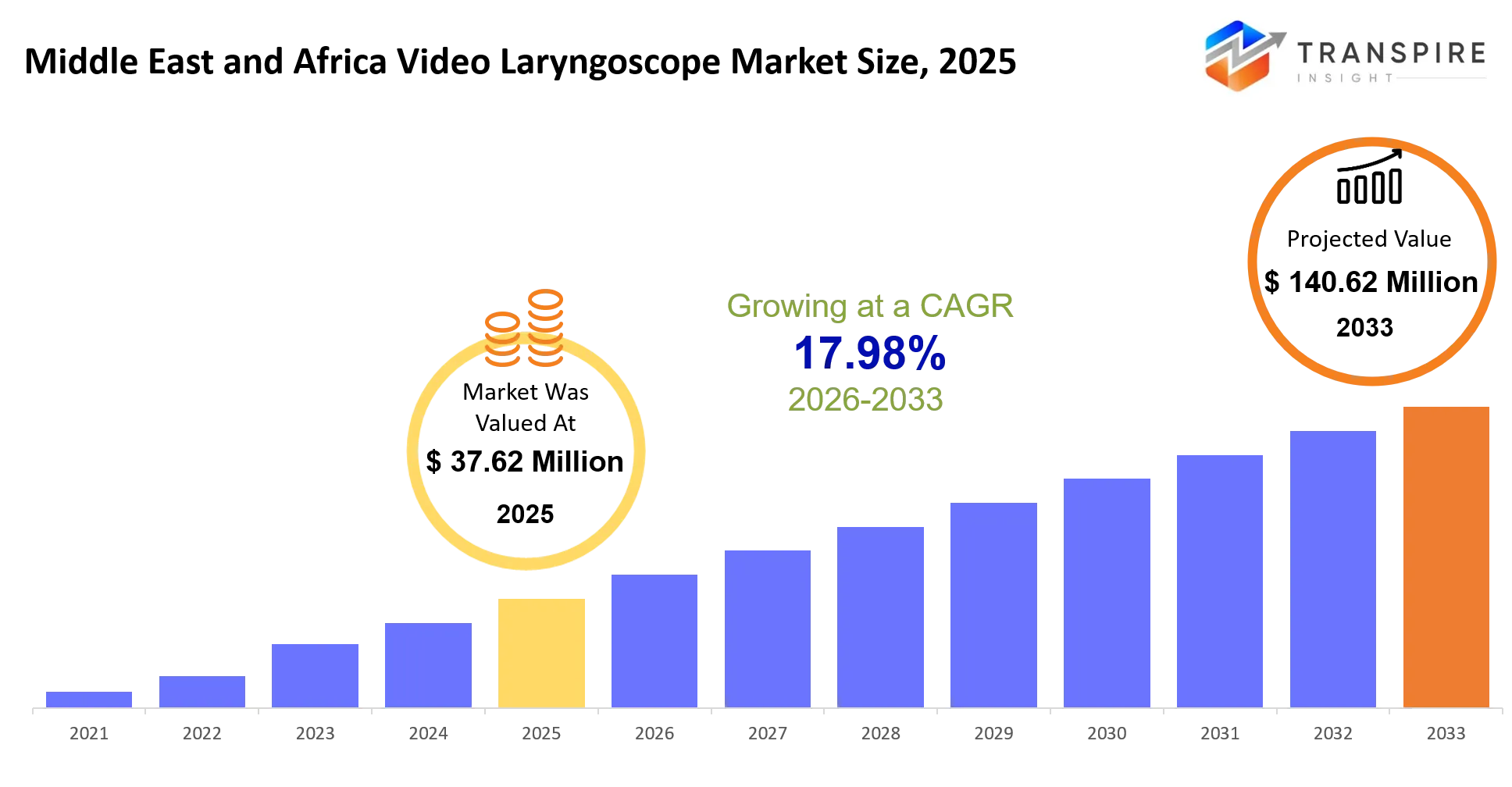
- Middle East and Africa Video Laryngoscope Market Size 2025: USD 37.62 Million
- Middle East and Africa Video Laryngoscope Market Size 2033: USD 140.62 Million
- Middle East and Africa Video Laryngoscope Market CAGR: 17.98%
- Middle East and Africa Video Laryngoscope Market Segments: By Product Type (Reusable Video Laryngoscopes, Disposable Video Laryngoscopes, Portable Systems, Others); By End User (Hospitals, Ambulatory Surgical Centers, Clinics, Others); By Application (Airway Management, Emergency Care, Surgery, Others); By Technology (Rigid, Flexible, Others)
To learn more about this report,  Download Free Sample Report
Middle East and Africa Video Laryngoscope Market Summary
The Middle East and Africa Video Laryngoscope Market was valued at USD 37.62 Million in 2025. It is forecast to reach USD 140.62 Million by 2033. That is a CAGR of 17.98% over the period.
Video laryngoscopes assist clinicians with securing a patient’s airway in the middle of intubation by showing a live video perspective of the vocal cords plus the surrounding airway anatomy. In operating rooms, emergency departments, intensive care units, and even pre-hospital environments, these instruments seem to lower visualization problems and they can boost first-pass intubation success rates especially when the airway is considered difficult. Over the last five years, the market has kind of moved away from conventional direct laryngoscopy, toward video-assisted airway care, as hospitals keep pushing for patient safety, faster clinical workflows, and more standardized airway protocols.
The COVID-19 pandemic basically became a big trigger for this change, because it sped up the uptake of visualization based airway devices that let clinicians keep more distance from patients during intubation. That trend is still going, since healthcare providers continue putting money into newer airway management infrastructure. Growth is being nudged along by expanding critical care capacity, more surgical volumes, plus broader use of portable units and disposable options. And as healthcare facilities aim to minimize complications while improving procedural results, video laryngoscopes are increasingly turning into a regular, almost default, part of airway management throughout the region.
Key Market Insights
- Saudi Arabia, UAE, and South Africa (together) bring in more than 45% of the regional revenue due to solid hospital infrastructure, plus extra critical care investment, kinda like that.
- For 2025, the reusable video laryngoscope segment is sitting at roughly 40% market share, mainly because the cost efficiency holds up well in high volume hospitals, it makes sense.
- Disposable video laryngoscopes are set to be the quickest growing product category all the way through 2033, driven by infection control protocols and the whole single patient use preference, yes.
- In 2025, hospitals will take up over 60% of total demand, which points to higher surgical throughput and more intensive care admissions coming in.
- Airway management applications generate close to half of regional revenue, supported by both routine and difficult intubation procedures that keep showing up.
- Also, portable video laryngoscope adoption jumped quite a bit after 2020, as emergency medicine plus ambulance services expanded advanced airway capabilities, and then kept going.
- Meanwhile, the Middle East and Africa Video Laryngoscope Market is seeing sharper procurement focus on integrated imaging systems, because these help with clinical documentation and training.
- Manufacturers are rolling out lighter devices with improved screen resolution, longer battery performance, and wireless connectivity that feels modern.
- Companies like Verathon, Medtronic, Ambu, Karl Storz, Olympus, and Teleflex are pushing strategic growth through product innovation and regional distribution partnership deals.
- And overall, the Middle East and Africa Video Laryngoscope Market is benefiting from healthcare modernization programs, they lean into patient safety, procedural efficiency, and digital workflow integration like it’s a priority.
What are the Key Drivers, Restraints, and Opportunities in the Middle East and Africa Video Laryngoscope Market?
The strongest growth driver feels like the shift toward video guided airway management because healthcare systems are trying to boost first pass intubation success, and lower airway related harms. Clinical guidance is starting to back visualization based methods more and more, especially when the airway is tricky, in operating rooms, emergency departments, and intensive care units. In practice, care teams are putting money into upgraded airway equipment because failed intubation attempts can stretch procedure time, drive up treatment costs and also raise patient risk. So when hospitals modernize their critical care setup, buying video laryngoscopes tends to feed equipment revenue growth, plus those recurring blade or accessory sales.
Still, high acquisition costs are probably the biggest structural roadblock. These advanced imaging systems, along with reusable platforms, maintenance needs, and clinician training, stack up serious capex pressure for hospitals dealing with tight healthcare budgets. A lot of public facilities keep putting the focus on core diagnostic and therapeutic devices rather than premium airway visualization systems. That reality slows down uptake in smaller sites and it also suppresses revenue upside across underserved healthcare markets, kind of all at once.
There is also an opportunity in portable and disposable video laryngoscope systems for emergency medicine, ambulance operations, and remote healthcare facilities. Governments in Gulf countries and parts of Africa are expanding emergency response coverage, and building more critical care capacity. With portable units that include built in displays, and a simpler workflow, adoption becomes possible where conventional airway visualization hardware is simply not there.
What Has the Impact of Artificial Intelligence Been on the Middle East and Africa Video Laryngoscope Market?
Artificial intelligence is kinda slowly enhancing airway management workflows by means of image processing, clinical decision support, and digital documentation features. Newer video laryngoscope platforms increasingly include software tools that boost visualization quality, help with anatomical identification, and can also support procedural recording. AI- enabled image enhancement algorithms can make airway views better in tough situations, mainly by tuning contrast, brightness, and overall image clarity in real time.
Machine learning stuff is also being tried for predictive airway assessment. When it looks at patient characteristics and past procedure data it can, in theory, help clinicians spot possible difficult intubations before the procedure even starts. Hospitals are additionally using digital analytics platforms to keep an eye on how devices are used, follow procedural outcomes, and even refine training programs. These kinds of capabilities can lead to more consistent procedures, fewer complications, and more efficient allocation of resources.
From an operational angle, healthcare providers may gain from quicker documentation routines, better training quality, and more uniformity in how airway management is performed. Still, uptake is held back because of integration costs, scattered hospital IT infrastructure, and not enough local datasets for advanced machine learning models. Many facilities in the region do not yet have the digital ecosystem needed to truly leverage these AI-enabled airway management technologies, so broader deployment remains slower, despite the obvious clinical advantages .
Key Market Trends
- After 2020, the adoption of disposable devices sorta ramped up, and several hospitals started to really lean on single-use airway tools, to help beef up their infection prevention protocols, a bit more seriously than before.
- Portable systems also picked up steam across emergency departments and ambulance networks, so advanced airway management moved beyond just operating rooms, like way faster than expected.
- Between 2021 and 2025, hospitals reportedly increased spend on digital airway visualization platforms, aimed at improving first-pass intubation outcomes.
- By 2025, integrated recording and documentation functions became pretty much the norm in a lot of newly launched systems, not just select models.
- Ambu then expanded its SureSight portfolio across 2025–2026, which supported wider use of portable video laryngoscopy solutions.
- Even with that, reusable systems kept a decent, meaningful market presence. Still, disposable blades showed stronger procurement growth across many healthcare facilities.
- Manufacturers rolled out higher-definition imaging features, and those newer capabilities tended to make airway visualization better compared with earlier-generation products.
- Training programs increasingly began folding in video-assisted airway management, helping clinicians sort of standardize intubation methods and keep techniques more consistent.
- Meanwhile, Gulf healthcare providers accelerated investments in critical care infrastructure, which in turn created stronger demand for advanced airway technologies.
- And over time, competition shifted away from hardware only, toward integrated platforms that combine visualization, documentation, and workflow optimization features, all in one package, so to speak.
Middle East and Africa Video Laryngoscope Market Segmentation
By Product Type
Reusable video laryngoscopes still have a pretty major standing across big healthcare facilities, mostly because ongoing, long haul usage helps with cost efficiency and keeps clinical results fairly stable over time. Beyond that, reliable visualization, support for different blade options, and the fact that they work well during both surgical and critical care routines make them easier to pick up and keep using. Of course the whole maintenance and sterilization cycle matters too, because without steady cleaning steps they just wont stay in rotation in hospitals that already have the infrastructure for it.
Disposable video laryngoscopes also keep getting more notice, largely tied to infection prevention needs and a workflow that feels more straightforward. These portable systems help during airway procedures in emergency departments, ambulances, and remote care locations, where moving fast and going light really is the point. Meanwhile, other product categories move toward more specialized clinical requirements, like advanced airway management circumstances, plus smaller niche procedures where the visualization setup has to be tuned a bit differently.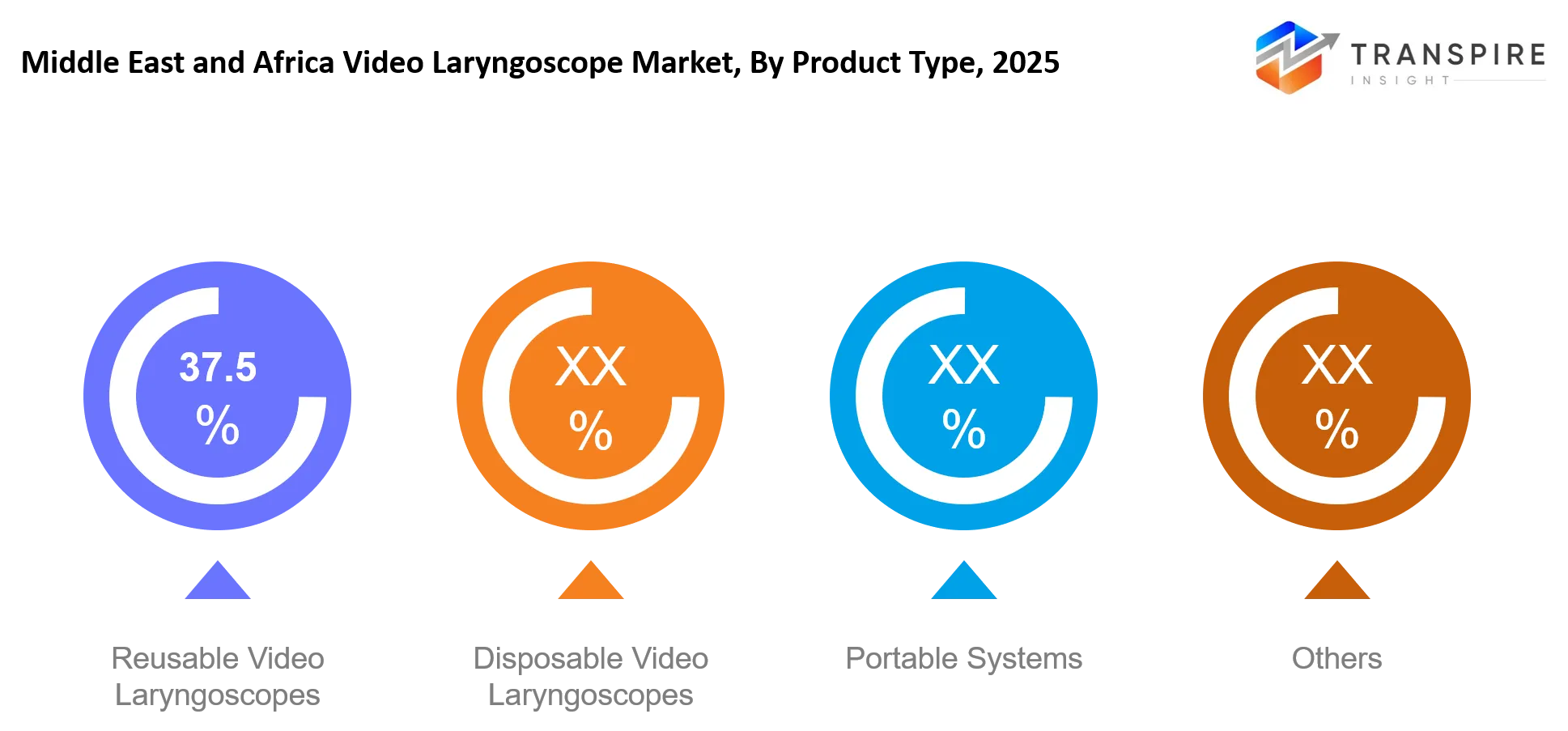
To learn more about this report, Download Free Sample Report
By End User
Hospitals are probably the biggest end user segment, because surgical procedures, emergency interventions, and intensive care actually need trustworthy airway visualization technologies. There are continuous investments in patient safety, clinical efficiency, and newer medical devices, and that helps keep procurement activity strong. Also, high procedure volumes keep the demand steady across most major healthcare institutions, you know.
Ambulatory Surgical Centers, or ASCs use video laryngoscopes to make airway management easier, especially during outpatient procedures and day surgeries. Clinics will also take up these systems for certain diagnostic and treatment tasks where better visualization matters. Other end users include emergency response organizations, teaching institutions, military healthcare facilities, and specialty care centers that want dependable airway management solutions across different operational environments .
By Application
Airway management kind of takes the lead in application share, mainly since intubation procedures stay vital across hospitals, intensive care units, and surgical departments. Better visualization seems to let clinicians perform with higher procedural precision and it also assists in trimming down airway related complications, at least in day to day practice. Clinical teams are also more and more using video assisted techniques in normal workflows, for patient safety and overall treatment quality, not just for special cases.
Emergency care keeps pulling in solid demand too, especially as trauma centers and acute care facilities roll out advanced airway capabilities. Surgical use cases still matter a lot, because there’s often a need for controlled airway access during operative procedures. There are also other applications like medical training, simulation programs, research work, and specialized procedures where recorded visualization supports teaching and clinical review.
By Technology
Rigid technology kind of keeps a strong grip on the market because stable visualization and easy operation help with routine airway management stuff. It just works in a consistent way, clinicians feel familiar with it, and it’s broadly available which leads to adoption across a lot of healthcare facilities. Plus ongoing upgrades in imaging quality and ergonomic design make it even more acceptable for use, generally.
Flexible technology meanwhile brings extra maneuvering options when airway situations get tricky, or when anatomy is challenging in a more distinct way. Better navigation abilities also help it fit specialized clinical settings where the usual methods might be less effective. There are also other approaches, like hybrid solutions and specialized visualization systems, built for particular procedural requirements and for shifting healthcare needs.
What are the Key Use Cases Driving the Middle East and Africa Video Laryngoscope Market?
Airway management during routine and tricky intubation stays the most important use case, like really the main one. Operating rooms, intensive care units, and tertiary hospitals rely on video-led visualization to push first pass success rates up and also to dial down airway mishaps or complications. This particular application tends to take the largest slice of device utilization because intubation is basically a core piece of surgical and critical care work.
Emergency medicine is showing fast growth as another application area. Ambulance services, trauma centers, and emergency departments are increasingly rolling out portable airway visualization systems, to help with time-urgent interventions. Even ambulatory surgical centers use these tools as a way to improve procedural throughput and patient well being during outpatient operations
New chances are also showing up, like pre-hospital airway handling, military medicine, and remote healthcare delivery. Healthcare modernization efforts are pushing advanced airway capabilities into areas that have historically been underserved. And as these portable technologies get easier to access, it’s expected that those same use cases will contribute more of the future revenue share
|
Report Metrics |
Details |
|
Market size value in 2025 |
USD 37.62 Million |
|
Market size value in 2026 |
USD 44.20 Million |
|
Revenue forecast in 2033 |
USD 140.62 Million |
|
Growth rate |
CAGR of 17.98% from 2026 to 2033 |
|
Base year |
2025 |
|
Historical data |
2021 - 2024 |
|
Forecast period |
2026 - 2033 |
|
Report coverage |
Revenue forecast, competitive landscape, growth factors, and trends |
|
Regional scope |
Middle East and Africa (Saudi Arabia, United Arab Emirates, South Africa, Rest of Middle East and Africa) |
|
Key company profiled |
Verathon, Medtronic, Ambu, Karl Storz, Olympus, Teleflex, Pentax Medical, Nihon Kohden, BPL Medical, Vyaire Medical, Shenzhen HugeMed, Henke Sass Wolf, Flexicare, Intersurgical, BD |
|
Customization scope |
Free report customization (country, regional & segment scope). Avail customized purchase options to meet your exact research needs. |
|
Report Segmentation |
By Product Type (Reusable Video Laryngoscopes, Disposable Video Laryngoscopes, Portable Systems, Others); By End User (Hospitals, Ambulatory Surgical Centers, Clinics, Others); By Application (Airway Management, Emergency Care, Surgery, Others); By Technology (Rigid, Flexible, Others) |
Which Regions are Driving the Middle East and Africa Video Laryngoscope Market Growth?
In the Gulf Cooperation Council area, market revenue generation kinda leads the way. Saudi Arabia, the UAE, and a few others still run advanced hospital networks, keep up strong healthcare spending,and they stay active with investments tied to critical care infrastructure. On top of that, national healthcare modernization programs back the procurement of advanced airway management technologies. There’s also this mature mix of tertiary hospitals and specialist healthcare providers, which basically keeps the regional edge intact.
South Africa sits in the second spot as a major contributor. But the story is a bit different there, because growth is driven by both private healthcare investment and established clinical training infrastructure . Private hospital groups are adopting widely, so demand for advanced airway equipment stays pretty consistent. With stable procedural volumes, plus ongoing technology upgrades, the market feels resilient even when conditions shift.
For the larger African region, the expectation is the fastest expansion through 2033. Newer investments in emergency medical services, hospital development projects, and healthcare access initiatives have been improving things on the ground. Governments together with international healthcare organizations keep supporting these modernization activities. That momentum ends up making new growth opportunities look especially attractive for manufacturers across the forecast period.
Who are the Key Players in the Middle East and Africa Video Laryngoscope Market and How Do They Compete?
Competition is still kinda moderately concentrated around a set of established airway management specialists plus various medical device manufacturers that are more diversified. What really drives who wins tends to be tech performance, image clarity, blade portfolio range, how familiar clinicians already are with the tools, and basically how strong the regional distribution muscle is. Most firms seem to fight it out by pushing better visualization, making the procedures feel less complicated, and widening product availability across different healthcare settings
Verathon kind of stands out because of the GlideScope product line. It has a solid reputation with clinicians, and it comes with a lot of airway management know-how. Their main emphasis is visualization performance and also wide blade compatibility, while at the same time building more cost-effective options for healthcare organizations, so in practice it’s aimed at both performance and access
Ambu meanwhile has strengthened its footprint with the SureSight lineup, tying video laryngoscopy into broader respiratory and visualization platforms. Their differentiation is supported by product innovation, portability, and some digital workflow integration features. They’ve also pushed growth faster via new portfolio launches and the usual regulatory approvals
Karl Storz and Olympus rely on their visualization knowledge to enable advanced airway management use cases. They’re especially strong on imaging quality, integration into procedures, and long standing hospital relationships Teleflex and Medtronic compete by offering wide-ranging clinical portfolios together with big distribution networks. Their size gives them an edge when healthcare systems want integrated procurement options, plus durable long term service support
Company List
- Verathon
- Medtronic
- Ambu
- Karl Storz
- Olympus
- Teleflex
- Pentax Medical
- Nihon Kohden
- BPL Medical
- Vyaire Medical
- Shenzhen HugeMed
- Henke Sass Wolf
- Flexicare
- Intersurgical
- BD
Recent Development News
"In April 2026, Ambu announced that its SureSight video laryngoscope solution won the Red Dot Design Award 2026. The recognition highlighted the product's ergonomic design and advanced imaging architecture, supporting brand differentiation in airway management.https://www.ambu.com
"In December 2025, Ambu introduced the SureSight Mobile video laryngoscope with an integrated display for emergency and unplanned intubations. The launch expanded portable airway management capabilities and supported adoption across hospital and pre-hospital environments.https://www.ambu.com
What Strategic Insights Define the Future of the Middle East and Africa Video Laryngoscope Market?
The market is kinda moving toward video guided airway management, becoming more and more like a standard of care not just some premium clinical option. This shift is mostly pushed by healthcare modernization, stronger patient safety requirements, and this broader comfort with visualization based intubation methods. And as hospitals keep upgrading their critical care plus surgical infrastructure, the demand seems like it’ll keep moving toward integrated platforms that sort of bundle imaging, documentation, and digital workflow stuff all together.
There’s also a less obvious risk, market concentration around a relatively small group of premium technology suppliers. When budget limits get tight, and procurement gets picky, lower income healthcare systems might get slower adoption, if device affordability doesn’t get better, at the same time. Still, portable plus disposable technologies are an emerging opportunity that could really matter, especially across growing emergency care networks and in underserved healthcare settings.
So, market players should really focus on product lines that are cost effective, plus clinician training partnerships, and localized distribution approaches. The firms that manage to keep affordability aligned with real clinical performance, will probably be in the best position for long term growth, both across established Gulf healthcare markets and the fast developing systems across Africa.
Middle East and Africa Video Laryngoscope Market Report Segmentation
By Product Type
- Reusable Video Laryngoscopes
- Disposable Video Laryngoscopes
- Portable Systems
- Others
By End User
- Hospitals
- Ambulatory Surgical Centers (ASCs)
- Clinics
- Others
By Application
- Airway Management
- Emergency Care
- Surgery
- Others
By Technology
- Rigid
- Flexible
- Others
Frequently Asked Questions
Find quick answers to common questions.
The Expected Middle East and Africa Video Laryngoscope Market size for the Market will be USD 140.62 Million in 2033.
Key Segments for the Middle East and Africa Video Laryngoscope Market are By Product Type (Reusable Video Laryngoscopes, Disposable Video Laryngoscopes, Portable Systems, Others); By End User (Hospitals, Ambulatory Surgical Centers, Clinics, Others); By Application (Airway Management, Emergency Care, Surgery, Others); By Technology (Rigid, Flexible, Others).
Major Middle East and Africa Video Laryngoscope Market Players are Verathon, Medtronic, Ambu, Karl Storz, Olympus, Teleflex, Pentax Medical, Nihon Kohden, BPL Medical, Vyaire Medical, Shenzhen HugeMed, Henke Sass Wolf, Flexicare, Intersurgical, BD.
The Current Middle East and Africa Video Laryngoscope Market size is USD 37.62 Million in 2025.
The Middle East and Africa Video Laryngoscope Market CAGR is 17.98% from 2026 to 2033.
- Verathon
- Medtronic
- Ambu
- Karl Storz
- Olympus
- Teleflex
- Pentax Medical
- Nihon Kohden
- BPL Medical
- Vyaire Medical
- Shenzhen HugeMed
- Henke Sass Wolf
- Flexicare
- Intersurgical
- BD
About the Authors

Pankaj Ghogare Patil
I am Pankaj Ghogare Patil, a Senior Research Analyst at Transpire Insight, specializing in the Pharmaceutical, Chemicals & Materials, Healthcare IT, and Biotechnology industry. My expertise lies in conducting comprehensive market research, analyzing industry trends, evaluating competitive landscapes, and translating complex data into actionable insights. At Transpire Insight, I closely follow emerging technologies, regulatory developments, and market innovations to create accurate, well-researched, and informative content that helps businesses and professionals make informed decisions. I am committed to producing credible, evidence-based articles that reflect industry best practices while making technical topics accessible and valuable for a broad audience.

Chakradhar Khansole
Chakradhar serves as the Research Director at Transpire Insight, bringing over 8 years of experience in technology, innovation, and strategic market intelligence. He specializes in transforming complex market data into actionable business insights that enable organizations to make informed, growth-oriented decisions. Recognized for his strategic vision and analytical expertise, Chakradhar leads high-impact research initiatives, delivering comprehensive market assessments, competitive intelligence, and forward-looking industry analysis.
Recently Published Reports
-
Jul 2026
Alopecia Treatment Market
Alopecia Treatment Market Size, Share & Analysis Report By Disease Type (Alopecia Areata, Cicatricial Alopecia, Traction Alopecia, Alopecia Totalis, Androgenetic Alopecia, Alopecia Universalis, and Other Disease Types), By Treatment Type (Topical Treatments, Oral Medications, Injectable Therapies, and Hair Transplantation), By Gender (Male, and Female), By Distribution Channel (Hospitals and Clinics, Retail Pharmacies, and Online Retailers), and Geography (North America, Europe, Asia-Pacific, Middle East and Africa, South and Central America), 2021 - 2031
-
Jul 2026
Medical Ultrasound Probe Market
Medical Ultrasound Probe Market Size, Share & Analysis Report By Type (Linear Type, Convex Type, Endocavitary Probe, Phased Array/Cardiac Probe, Transesophageal (TEE) Probe, and Others), By Application (Ophthalmology, Cardiology, Musculoskeletal, Oncology, Obstetrics & Gynecology, General Imaging, and Others), By End User (Hospitals & Clinics, Diagnostic Centers, Ambulatory Surgical Centers, and Others), and Geography (North America, Europe, Asia-Pacific, Middle East and Africa, South and Central America), 2021 – 2031
-
May 2026
Biosimilars Market
Biosimilars Market By Product Type (Monoclonal Antibodies, Recombinant Hormones, Erythropoietin, G-CSF, Others), By Indication (Oncology, Autoimmune Diseases, Blood Disorders, Diabetes, Others), By Manufacturing Type (In-House Manufacturing, Contract Manufacturing), By Distribution Channel (Hospital Pharmacies, Retail Pharmacies, Online Pharmacies), By Industry Analysis, Size, Share, Growth, Trends, and Forecasts 2021-2033
-
Apr 2026
Gastrointestinal Endoscopy Market
Gastrointestinal Endoscopy Market By Type (Rigid Gastrointestinal Endoscope, Flexible Gastrointestinal Endoscopes, Disposable Gastrointestinal Endoscope), By Procedure Type (Colonoscopy, Gastroscopy, Duodenoscopy, Enteroscopy, Flexible Sigmoidoscopy, Others), By Application (Diagnosis, Treatment), By End-Users (Hospitals, Ambulatory Surgical Centers, Specialty Clinics, Laboratories, Others), By Industry Analysis, Size, Share, Growth, Trends, and Forecasts 2021-2033