

Middle East and Africa Thermal Spray Powders Market Size & Forecast:
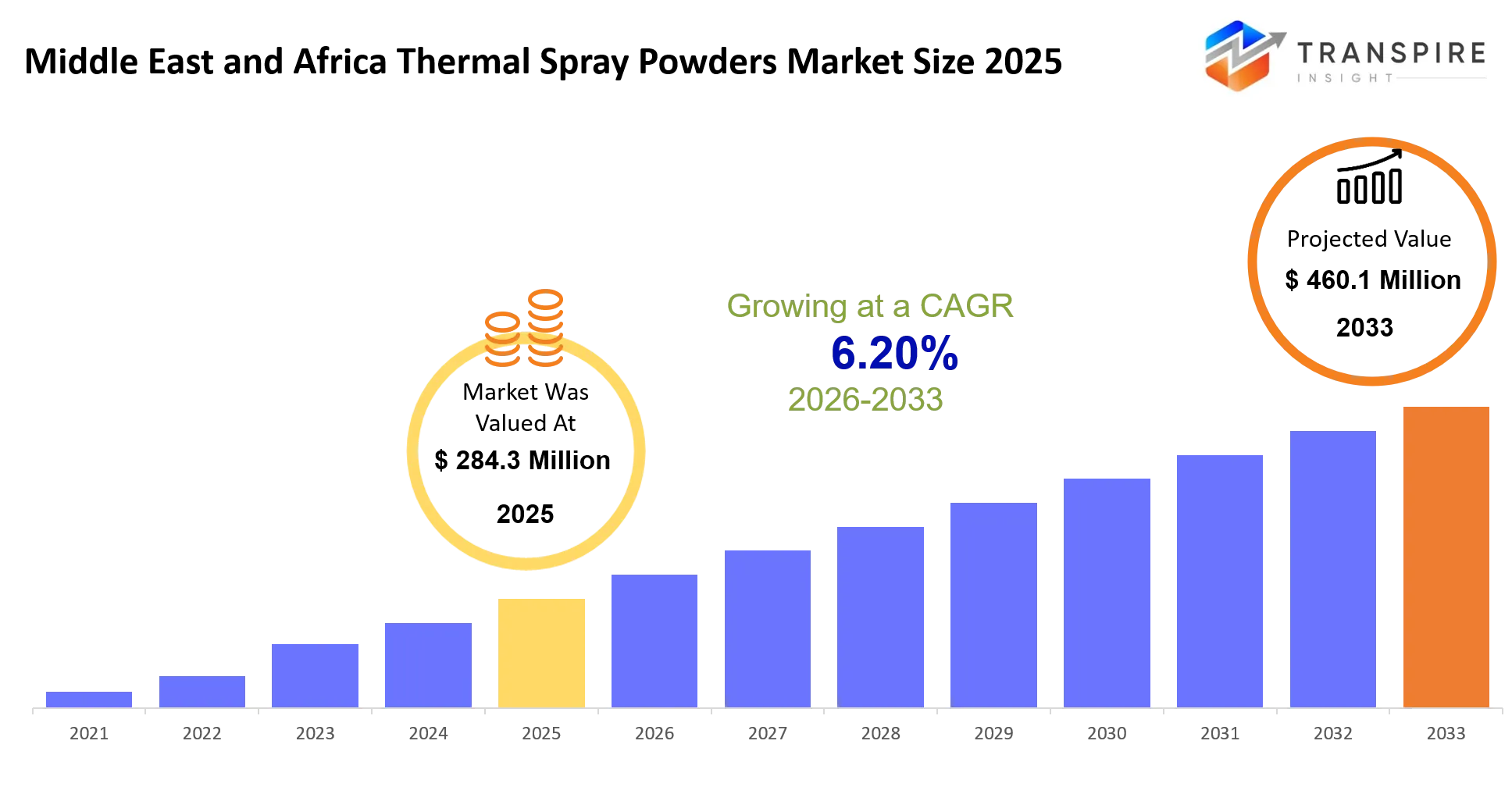
- Middle East and Africa Thermal Spray Powders Market Size 2025: USD 284.3 Million
- Middle East and Africa Thermal Spray Powders Market Size 2033: USD 460.1 Million
- Middle East and Africa Thermal Spray Powders Market CAGR: 6.20%
- Middle East and Africa Thermal Spray Powders Market Segments: By Material Type (Ceramic Powders, Metal Powders, Alloy Powders, Carbide Powders, Others); By Process (Plasma Spray, HVOF, Flame Spray, Arc Spray, Others); By Application (Aerospace, Automotive, Industrial Machinery, Energy, Others); By End User (OEMs, MRO Providers, Manufacturers, Others)
Middle East and Africa Thermal Spray Powders Market Summary
The Middle East and Africa Thermal Spray Powders Market was valued at USD 284.3 Million in 2025. It is forecast to reach USD 301.9 Million by 2033. That is a CAGR of 6.20% over the period.
Thermal spray powders, y’know, help industrial operators extend the life of important parts that see wear, corrosion , heat, and erosion for real. Usually these materials get used as protective coatings on turbine blades, aerospace parts, industrial machinery, automotive items, and broader energy equipment, which in turn cuts down on maintenance timetables and also lowers the replacement expenses. Over the last five years the market sort of shifted away from the more classic repair centered coating work, and moved toward performance engineering solutions that boost equipment efficiency , and also the actual operating life. A big structural change has been the uptake of advanced ceramic and carbide powders for high temperature , high wear contexts, where conditions are just tougher than before.
And honestly, supply chain disruptions after global logistics constraints, plus raw material volatility, pushed the conversation faster toward local refurbishment and asset life extension programs. So when operators across the Middle East and Africa try to maximize uptime while still keeping capital spending under control, thermal spray technologies are starting to look like the go to alternative instead of swapping out the entire component. This move is growing coating volumes, and it’s encouraging investment in more advanced spraying processes— which is then creating new revenue paths across aerospace, energy, and industrial manufacturing, all at once.
Key Market Insights
- Middle East and Africa Thermal Spray Powders Market growth seems pushed along by refurbishment programs that lower component replacement costs by 30–60�ross various industrial plants, honestly it helps a lot, even with short shutdown windows.
- Ceramic powders still lead , with around 34% market share in 2025, mainly because they bring strong thermal resistance plus wear protection, they’re pretty reliable for tougher duty cycles.
- Metal powders are holding the second-largest slice of demand, and they’re widely used in energy, manufacturing, and heavy equipment restoration uses, like surface rebuilds where durability matters.
- Carbide powders are the fastest movers, expected to see notable adoption all the way to 2033 , especially for high-wear applications where abrasion is basically the norm.
- Plasma spray technology accounts for close to 35% of process demand, largely due to coating accuracy and high-performance industrial needs, it’s the precision angle.
- Meanwhile HVOF adoption climbed by more than 20% over the last five years, operators wanted denser coatings, and also longer service life, so they leaned into it.
- For end-use, aerospace is estimated to represent 28% of market revenue, backed by aircraft maintenance routines and turbine coating requirements.
- The energy sector demand is also accelerating quickly across Saudi Arabia, UAE, and South Africa, fueled by continued investments in power generation infrastructure and upgrades.
- Saudi Arabia in particular is leading regional demand with an estimated 30%+ share, supported by industrial diversification , plus heavier energy-sector investments.
- Key players such as Oerlikon Metco, Höganäs, Kennametal, Saint-Gobain, and Sandvik are expanding through automation, new powder formulations, and stronger regional service coverage.
What are the Key Drivers, Restraints, and Opportunities in the Middle East and Africa Thermal Spray Powders Market?
The strongest growth catalyst it seems comes from the need to extend the operating life of those expensive industrial assets, like turbines and critical tooling. Energy producers, aerospace maintenance providers, and manufacturers are all running into rising costs tied to equipment replacement and also that unplanned downtime. Thermal spray coatings end up being a practical answer because they restore worn parts and also boost resistance against corrosion, abrasion, and even extreme temperatures. The expansion of gas turbine installations, refinery modernization pushes, and aviation maintenance work happening across the Middle East has really lifted demand for more advanced coating materials. And since operators are pushing for higher asset utilization, spending ont hermal spray powders keeps drifting from “optional maintenance” money into more strategic operational investment programs.
Still, there’s a major structural stumbling block, and it stays pretty persistent. The high cost of specialized spraying equipment, skilled labor, and process certification requirements is hard to get around. Advanced coating systems require a lot of capital outlay and technical know-how that cannot be built overnight. A good number of industrial facilities keep relying on imported powders and application technologies, which makes them exposed to currency swings and supply disruptions. Because of that, smaller manufacturers tend to adopt slower, and penetration across developing industrial markets is limited, which in turn reduces the possible revenue that could have been there.
On the opportunity side, something noticeable is opening up through renewable energy, hydrogen production, and advanced power generation projects. High-performance coatings are getting asked for more often, especially for turbines, compressors, and heat-management equipment working under tough conditions. Meanwhile investments in industrial diversification initiatives across Saudi Arabia, the UAE, and Egypt are creating demand for advanced surface engineering solutions.
What Has the Impact of Artificial Intelligence Been on the Middle East and Africa Thermal Spray Powders Market?
Artificial intelligence is changing thermal spray work , in a big way, mostly by making process control more stable production more repeatable, and equipment reliability less “mystery”. In modern coating systems you’ll often find sensors stitched in along with machine vision and AI analytics, so the line can keep an eye on spray conditions like temperature , particle speed, coating thickness and even deposition efficiency, kinda in real time. With this, the whole process gets less up and down , and manufacturers can hit tighter quality expectations.
Also, machine learning is starting to show up for predictive maintenance on thermal spray gear. Instead of waiting for something to fail , the AI looks at operating traces from spray guns, powder feeders, and robotic units. From that it can flag performance drift, before a real breakdown happens. The outcome is better uptime, lower maintenance spending, and fewer production stops . On top of that , digital monitoring platforms help tune powder use and coating results, which makes day-to-day operations run more smoothly.
Then there are advanced analytics, giving operators better forecasts for coating performance when the operating conditions change. Aerospace and energy sites are using digital models more often, to estimate wear behavior and plan maintenance timing, so they can manage the full component life-cycle more effectively.
Even with all that, adoption is still held back by the integration expense, and by not having enough good operational data. A lot of facilities in the region run mixed equipment fleets, each with different levels of digital connectivity so rolling out AI at scale turns into a harder job . Fixing data consistency, and training the workforce, still matters a lot if broader implementation is the goal.
Key Market Trends
- Ceramic powder uptake jumped in a very noticeable way after 2021, like operators where looking for more thermal safeguarding for turbines and various industrial stuff too.
- HVOF setups kept growing , by more than 20% over five years, mainly because the coating density stayed stronger, and wear resistance looked better overall.
- Automated thermal spray cells started being chosen more often, and that kind of cut down on coating variability, while also lifting production throughput , a bit more than before.
- Saudi Arabia boosted its industrial investment programs from 2023 through 2026, and this basically reinforced demand for protective coating solutions.
- Aerospace maintenance providers moved toward advanced carbide coatings, extending component service life by as much as 40% , which many teams considered huge.
- Manufacturers also leaned harder into digital process monitoring to make coating consistency less random, and to reduce material waste without all the extra guesswork.
- Oerlikon Metco rolled out Surface Two™ in 2025, and it came with IIoT-enabled features, giving automation support and more scalable thermal spray operations.
- Energy sector operators went with refurbishment strategies more frequently instead of swapping out those expensive turbines, or other rotating equipment.
- In the region, buyers increasingly favored local coating service partnerships, mainly to lower supply chain risk and speed up turnaround times.
- Powder suppliers then stepped up their technical assistance and application engineering services, trying to stand out beyond just material performance, or rather beyond the “powder-only” story.
Middle East and Africa Thermal Spray Powders Market Segmentation
By Material Type
Ceramic powders take up quite a big slice of coating applications because they show strong heat resistance , good insulation and overall durability especially when things get rough in real use. In the aerospace, energy and industrial equipment sectors, ceramic coatings are picked to shield parts that face higher temperatures , and also bad working conditions day after day. Metal powders then come into play for uses that need corrosion shielding, solid electrical conductivity, and also component restoration after wear. Alloy powders kind of bridge the gap, they bring a mix of material traits that fits specialized industrial wants and performance oriented coating approaches.
Carbide powders are often the go to choice when the goal is exceptional wear resistance , and a longer service life even when friction forces are high. Other powder types deal with more niche coating needs where a certain surface profile matters a lot. Improvements in particle engineering and powder manufacturing keep moving ahead, so coating quality and process consistency keep getting better. Stable adoption of metal and alloy powders across maintenance, repair, and refurbishment work , plus the growing preference for ceramic and carbide materials, is expected to keep demand strong across all powder material categories through the forecast period.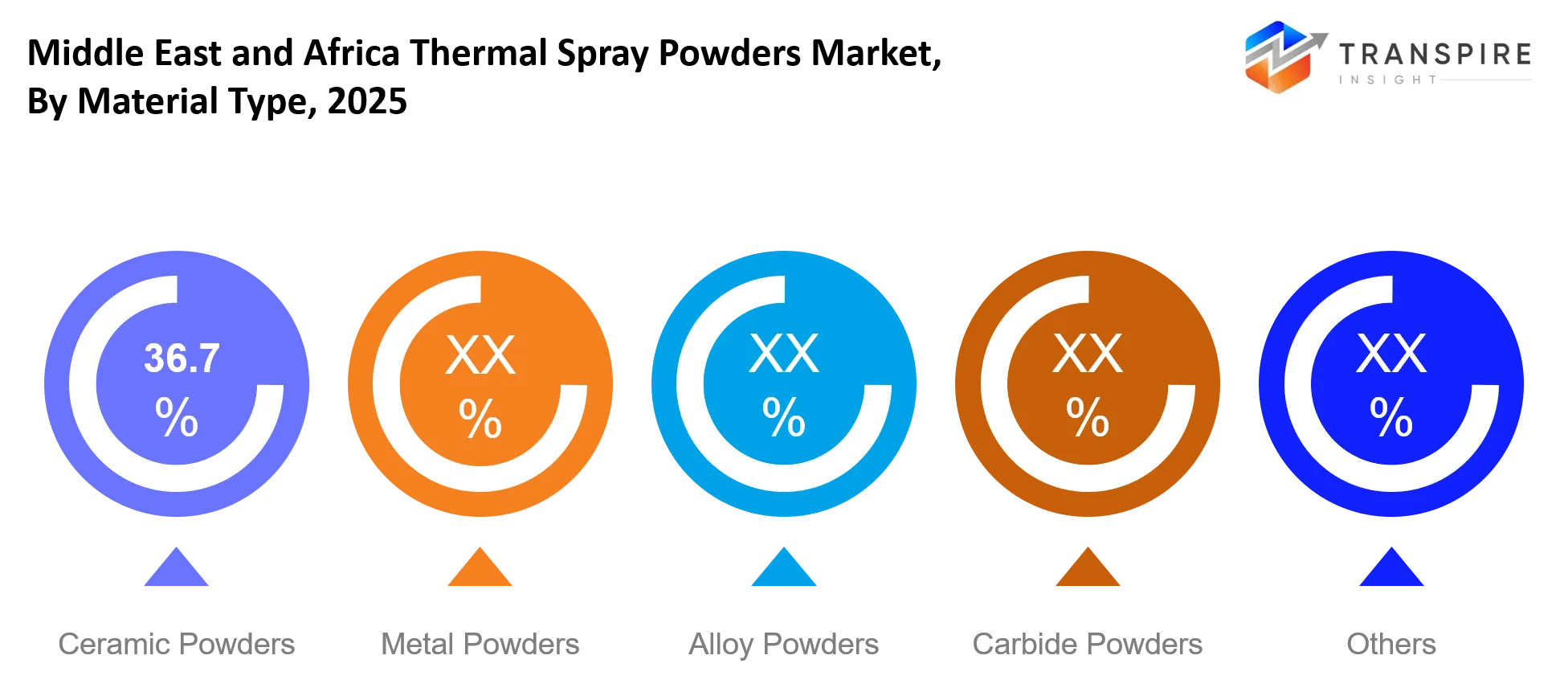
By Process
Plasma spray still stays kind of a preferred process, mostly because coating adhesion is strong, you get pretty precise application control, and it also works well with advanced ceramics and other specialty materials. In aerospace, power generation, and industrial machinery, they often use plasma spraying for critical components, the kind that need high performance surface protection.
Meanwhile HVOF technology keeps getting more accepted, since it delivers dense and tough coatings, with great wear resistance. Flame spray also hangs around for cost-sensitive projects where simple operation and affordability are basically the main things.
Arc spray is used for big scale industrial maintenance jobs, where you need efficient coating coverage and dependable performance. Some other process technologies handle specialized coating requirements, and those need unique application traits. At the same time automation, robotics, and digital monitoring systems are improving productivity, and also coating consistency across thermal spray operations. More and more people are focusing on lifecycle value, not only the starting coating cost, so advanced spraying processes are being adopted across industrial sectors wider than before.
By Application
Aerospace still stays a big application area, mainly because engines, turbines, and structural parts need protection from wear, corrosion, and those extreme temperatures. Thermal spray coatings kinda help extend how long components last , while still meeting the tough performance and safety needs that are always there. In automotive, manufacturers often use coatings to boost part longevity, raise efficiency, and lower maintenance, especially in rough operating surroundings. Industrial machinery programs, on the other hand, tend to focus on extending equipment life, and cutting down the production pauses that come from part deterioration.
In the energy sector, projects use coated turbines and compressors, plus power generation equipment, to make things more reliable even when conditions are hard. There are also specialized manufacturing efforts, where better surface performance turns into real, measurable gains. And then, ongoing refurbishment work in industrial machinery keeps demand pretty steady, across the region. When multiple industries keep adopting the approach, it helps market stability, and it also opens up long-term chances for both coating material suppliers and the service providers that support them.
By End User
OEMs use thermal spray technologies while they’re producing parts to boost overall component quality, reliability, and alignment with required performance specs across aerospace, energy, and industrial markets. With advanced coating solutions, the goal is basically longer operating life , plus stronger resistance against wear, corrosion , and damage tied to heat. At the same time , manufacturers lean on coating methods to get better equipment output and to keep production running in a smoother efficient way. These long term needs still push companies to invest in newer surface engineering solutions, even when budgets get tight.
MRO providers are kind of a central end user group too, because refurbishment and maintenance programs depend a lot on protective coating being applied correctly. Manufacturers depend on thermal spray powders to put worn components back into service, lower overall replacement expenses , and improve how well assets can be utilized over time. Beyond that, other end users are specialized industrial operators who need rugged surface protection on critical equipment. Since everyone’s focused more on maintenance efficiency , extending service life, and keeping day to day operations reliable, this should keep encouraging further growth across basically all of the end user categories.
What are the Key Use Cases Driving the Middle East and Africa Thermal Spray Powders Market?
The market seems to be going toward more high-value coating solutions, that focus on things like performance tuning, predictive upkeep, and overall lifecycle cost trimming, not just basic component fixes. Industrial diversification plans, more aerospace maintenance activity, and spending on advanced energy infrastructure will keep nudging this shift along. From here, future expansion looks like it’ll depend a lot on technical know-how, digital workflow integration, and specialized material R&D.
There’s also a risk that’s a bit less obvious, it’s tied to how much the industry leans on critical raw materials for advanced ceramic and carbide powder production. If supply gets disrupted, or if prices do that volatile swing, margins can get squeezed and some cost-sensitive customers may postpone adoption. And then theres that other issue, where market power sort of bunches up around only a handful of advanced technology providers.
On the opportunity side, hydrogen infrastructure and advanced gas turbines, plus next-generation energy systems, are pushing a need for protective coatings that are specialized in a very particular way. Companies in this space should lean into regional coating service centers, stronger application engineering, and digital process capabilities. If they make early moves on localized technical support and advanced materials, they can build a steadier competitive edge as industrial modernization keeps accelerating across the region
|
Report Metrics |
Details |
|
Market size value in 2025 |
USD 284.3 Million |
|
Market size value in 2026 |
USD 301.9 Mn |
|
Revenue forecast in 2033 |
USD 460.1 Mn |
|
Growth rate |
CAGR of 6.20% from 2026 to 2033 |
|
Base year |
2025 |
|
Historical data |
2021 - 2024 |
|
Forecast period |
2026 - 2033 |
|
Report coverage |
Revenue forecast, competitive landscape, growth factors, and trends |
|
Regional scope |
United States; Canada; Mexico; United Kingdom; Germany; France; Italy; Spain; Denmark; Sweden; Norway; China; Japan; India; Australia; South Korea; Thailand; Brazil; Argentina; South Africa; Saudi Arabia; United Arab Emirates |
|
Key company profiled |
Oerlikon Metco, Praxair Surface Technologies, Höganäs, Kennametal, Saint-Gobain, Sandvik, Linde, Fujimi, HC Starck, Bodycote, Carpenter Technology, GTV, Flame Spray, Plasma Powders, Tekna |
|
Customization scope |
Free report customization (country, regional & segment scope). Avail customized purchase options to meet your exact research needs. |
|
Report Segmentation |
By Material Type (Ceramic Powders, Metal Powders, Alloy Powders, Carbide Powders, Others); By Process (Plasma Spray, HVOF, Flame Spray, Arc Spray, Others); By Application (Aerospace, Automotive, Industrial Machinery, Energy, Others); By End User (OEMs, MRO Providers, Manufacturers, Others) |
Which Regions are Driving the Middle East and Africa Thermal Spray Powders Market Growth?
In the Gulf Cooperation Council region, market activity is basically in the lead, especially with Saudi Arabia and the United Arab Emirates in the mix. Big scale investments keep pouring into refining and petrochemicals, plus power generation, and those industrial diversification programs also matter a lot. Because of that, there is a steady appetite for advanced coating solutions, not just small trials. There’s also extensive industrial infrastructure and a high value equipment fleet that means coating and refurbishment don’t really stop. On top of that, strong maintenance ecosystems kind of lock in the momentum and keep the leadership position.
South Africa is showing up as the second largest contributor, with growth fueled by mining, manufacturing, and power generation. But it’s not like the Gulf, here the demand sits more on equipment upkeep and operational continuity rather than huge industrial expansion. Even so, established engineering know-how and consistent refurbishment work help keep the market conditions steady. And since many industrial operations have been running for a long time, the need for wear resistant coating materials stays in place.
Egypt is starting to look like one of the fastest growing markets, mainly because infrastructure development is moving forward, manufacturing is expanding, and there are energy sector investments. The industrial modernization push has increased curiosity in advanced asset protection technologies. New investment programs are opening doors for coating service providers, as well as powder manufacturers. If industrial growth keeps going through 2033, it’s expected to pull in even more market participants, and additional capital investment along the way.
Who are the Key Players in the Middle East and Africa Thermal Spray Powders Market and How Do They Compete?
Competition is still pretty moderately consolidated, but the global materials specialists kinda go after each other using technology knowhow, powder quality, practical application knowhow, and those regional service routes. In a lot of cases, product performance and process reliability matter more than a cheaper price, since coating failures can turn into real operational headaches. As a result, suppliers are now differentiating more and more via technical assistance, automation features, and even customized coating approaches, not just the baseline material.
Oerlikon Metco, for example, leans into integrated materials, equipment, and coating services. Their newer Surface Two™ platform adds IIoT connectivity, automation readiness, and scalable manufacturing capacity, which then helps tighten coating consistency and overall operational efficiency.
Höganäs differentiates by way of powder metallurgy know-how , plus material engineering strengths. Kennametal leans on carbide technology and wear-resistant material solutions when the industrial requirements are toughest. Sandvik has the edge from advanced materials science plus strong relationships with industrial customers.
Saint-Gobain concentrates on high-performance ceramic materials, while Linde supports coating work through process technology and industrial gas expertise. Strategic investments, in automation, application development, and regional support capabilities keep shaping the competitive stance, basically all of it.
Company List
- Oerlikon Metco
- Praxair Surface Technologies
- Höganäs
- Kennametal
- Saint-Gobain
- Sandvik
- Linde
- Fujimi
- HC Starck
- Bodycote
- Carpenter Technology
- GTV
- Flame Spray
- Plasma Powders
- Tekna
Recent Development News
In March 2026, Oerlikon Metco expanded access to MetcoMed™ materials through the MyMetco webshop. The move improved availability of advanced powder materials for specialized manufacturing applications and strengthened digital customer engagement.https://www.oerlikon.com
What Strategic Insights Define the Future of the Middle East and Africa Thermal Spray Powders Market?
The market is going, kind of quietly, toward higher value coating solutions that focus on boosting performance, predictive maintenance, and cutting lifecycle costs instead of just basic component repair. Industrial diversification programs, aerospace maintenance expansion, and money into advanced energy infrastructure will keep pushing this change forward. Going ahead , growth will be more and more about technical know how, digital process integration, and those specialized material development efforts.
There’s also a risk that’s a little less obvious, namely the reliance on certain critical raw materials that are used for advanced ceramic and carbide powder production. If supply gets disrupted or pricing jumps around, margins can get squeezed and adoption may stall with customers who are very cost sensitive. On top of that, there’s a concentration issue, because the market can cluster around only a few advanced technology providers, so switching options can feel limited.
Still, there’s an opening that’s starting to show up more clearly in hydrogen infrastructure, advanced gas turbines, and next generation energy systems, all of which need specialized protective coatings. Market players should seriously emphasize regional coating service centers, application engineering capabilities , and digital process technologies. If they invest early in localized technical support and refined materials development, they’ll usually end up with a sturdier competitive position, especially as industrial modernization ramps up across the region.
Middle East and Africa Thermal Spray Powders Market Report Segmentation
-
By Material Type
Ceramic Powders
Metal Powders
Alloy Powders
Carbide Powders
Others -
By Process
Plasma Spray
HVOF
Flame Spray
Arc Spray
Others -
By Application
Aerospace
Automotive
Industrial Machinery
Energy
Others -
By End User
OEMs
MRO Providers
Manufacturers
Others
Frequently Asked Questions
Find quick answers to common questions.
The expected Middle East and Africa Thermal Spray Powders Market size for the market will be USD 460.1 Million in 2033.
Key segments for the Middle East and Africa Thermal Spray Powders Market are By Material Type (Ceramic Powders, Metal Powders, Alloy Powders, Carbide Powders, Others); By Process (Plasma Spray, HVOF, Flame Spray, Arc Spray, Others); By Application (Aerospace, Automotive, Industrial Machinery, Energy, Others); By End User (OEMs, MRO Providers, Manufacturers, Others)
Major Middle East and Africa Thermal Spray Powders Market players are Oerlikon Metco, Praxair Surface Technologies, Höganäs, Kennametal, Saint-Gobain, Sandvik, Linde, Fujimi, HC Starck, Bodycote, Carpenter Technology, GTV, Flame Spray, Plasma Powders, Tekna.
The current Middle East and Africa Thermal Spray Powders Market size is 284.3 Million in 2025.
The Middle East and Africa Thermal Spray Powders Market CAGR is 6.20% from 2026 to 2033.
- Oerlikon Metco
- Praxair Surface Technologies
- Höganäs
- Kennametal
- Saint-Gobain
- Sandvik
- Linde
- Fujimi
- HC Starck
- Bodycote
- Carpenter Technology
- GTV
- Flame Spray
- Plasma Powders
- Tekna
About the Authors

Pankaj Ghogare Patil
I am Pankaj Ghogare Patil, a Senior Research Analyst at Transpire Insight, specializing in the Pharmaceutical, Chemicals & Materials, Healthcare IT, and Biotechnology industry. My expertise lies in conducting comprehensive market research, analyzing industry trends, evaluating competitive landscapes, and translating complex data into actionable insights. At Transpire Insight, I closely follow emerging technologies, regulatory developments, and market innovations to create accurate, well-researched, and informative content that helps businesses and professionals make informed decisions. I am committed to producing credible, evidence-based articles that reflect industry best practices while making technical topics accessible and valuable for a broad audience.

Chakradhar Khansole
Chakradhar serves as the Research Director at Transpire Insight, bringing over 8 years of experience in technology, innovation, and strategic market intelligence. He specializes in transforming complex market data into actionable business insights that enable organizations to make informed, growth-oriented decisions. Recognized for his strategic vision and analytical expertise, Chakradhar leads high-impact research initiatives, delivering comprehensive market assessments, competitive intelligence, and forward-looking industry analysis.
Recently Published Reports
-
May 2026
Healthcare Polymer Packaging Market
Healthcare Polymer Packaging Market Size, Share & Analysis Report By Packaging Type (Syringes, IV Bottles and Pouches, Clamshells, Blisters, Bottles & Jars, Containers, Tubes, IV Parental Packaging, Others), By Type (Regulated, Non-regulated), By Polymer Type (LDPE (Low-Density Polyethylene), HDPE (High-Density Polyethylene), Homo-polymer (Homo), Random Copolymer (Random), Block Copolymer (Block), PET, Polystyrene, Polyvinyl Chloride, Polyamide/EVOH, Others), and Geography (North America, Europe, Asia-Pacific, Middle East and Africa, South and Central America), 2021 - 2031
-
Apr 2026
Hydrophilic Tape (Waterstop) Market
Hydrophilic Tape (Waterstop) Market Size, Share & Analysis Report By Type (Bentonite-Based Hydrophilic Tape, Rubber-Based Hydrophilic Tape), By Application (Residential Buildings, Commercial Buildings, Infrastructure Projects), and Geography (North America, Europe, Asia-Pacific, Middle East and Africa, South and Central America), 2021 - 2031
-
Apr 2026
Metalens Market
Metalens Market Size, Share & Analysis Report By Type (Visible Light Metalens, and Infrared Metalens), By Application (Consumer Electronics, Automotive Electronics, Industrial, Medical, and Others), and Geography (North America, Europe, Asia-Pacific, Middle East and Africa, South and Central America), 2021 - 2031
-
Apr 2026
PBT Resin Market
PBT Resin Market Size, Share & Analysis Report By Type (Reinforced PBT Resin, Unreinforced PBT Resin), By Processing Method (Injection Molding, Extrusion, Blow Molding, Others), By End-User (Automotive, Electrical & Electronics, Consumer Appliances, Industrial Machinery, Medical Devices, Packaging, Others), and Geography (North America, Europe, Asia-Pacific, Middle East and Africa, South and Central America), 2021 - 2031