
Middle East and Africa Iron Ore Pellets Market Size & Forecast:
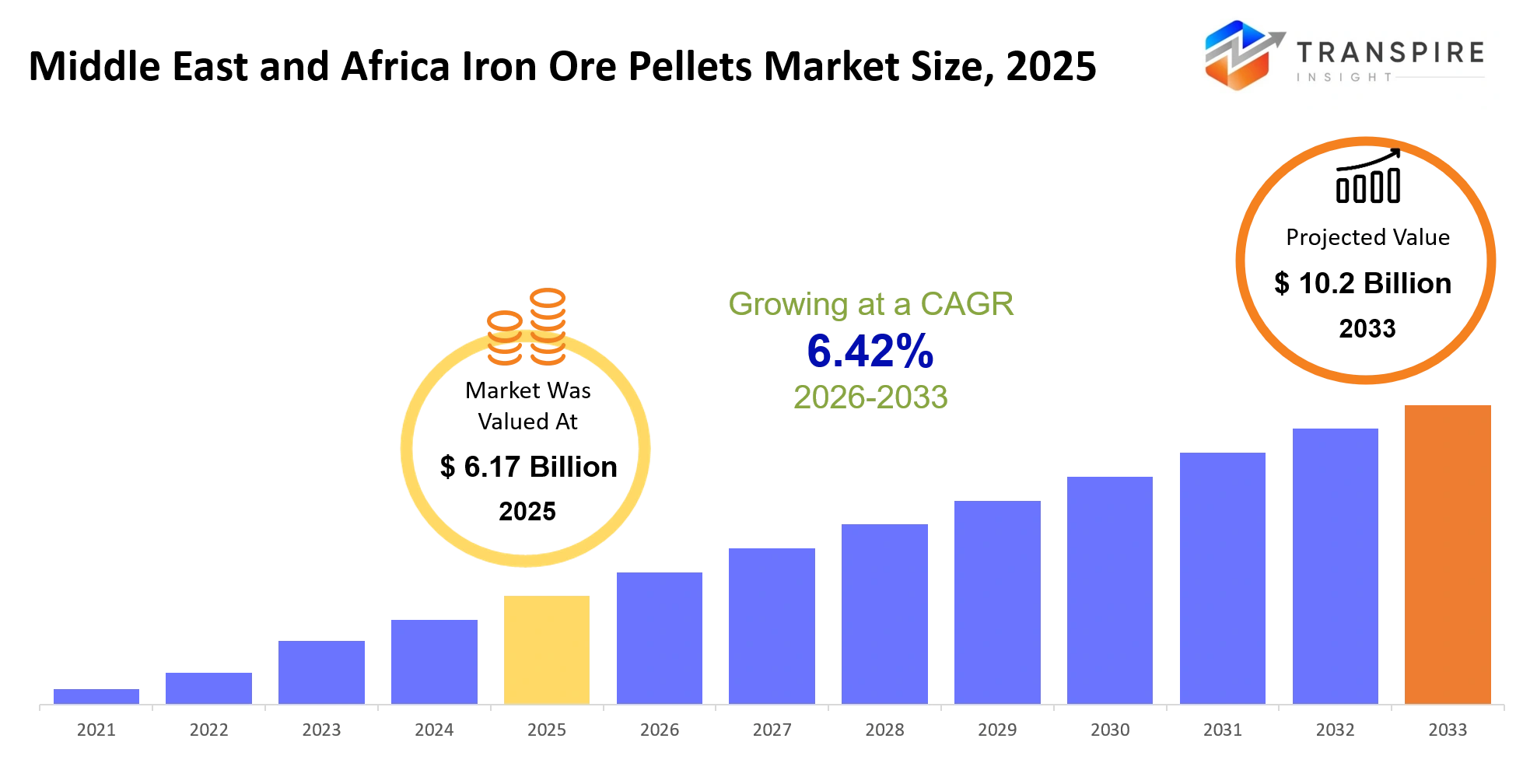
- Middle East and Africa Iron Ore Pellets Market Size 2025: USD 6.17 Billion
- Middle East and Africa Iron Ore Pellets Market Size 2033: USD 10.2 Billion
- Middle East and Africa Iron Ore Pellets Market CAGR: 6.42%
- Middle East and Africa Iron Ore Pellets Market Segments: By Pellet Type (Blast Furnace Pellets, Direct Reduction Pellets, Fluxed Pellets, Acid Pellets, Others); By Application (Steel Production, Direct Reduction Iron, Foundries, Others); By Grade (High Grade, Medium Grade, Low Grade, Others); By End User (Steel Manufacturers, Mining Companies, Others).
To learn more about this report,  Download Free Sample Report
Middle East and Africa Iron Ore Pellets Market Summary
The Middle East and Africa Iron Ore Pellets Market was valued at USD 6.17 Billion in 2025. It is forecast to reach USD 10.2 Billion by 2033. That is a CAGR of 6.42% over the period.
Pellets of iron ore, in a way they are pretty critical for today's steelmaking, because they give a high-grade and very consistent raw input that helps the blast furnace run more smoothly. In practical terms, you see better efficiency, less energy use, and also lower emissions, compared with that lower-grade iron ore that some operations still feed. Across the Middle East and Africa, it feels like pellets have been gaining weight fast, as steel makers start putting money into higher-output facilities plus direct reduction technologies. Those approaches, generally, want premium iron-bearing feed, so the pellets kind of fit.
In the past five years, the whole market has leaned more toward direct reduced iron, or DRI, and also toward low-carbon steel output. This is especially noticeable in Gulf countries, where industrial diversification and decarbonization goals are being treated as real priorities. The shift picked up after stricter global emissions rules came in, and with more pressure on steelmakers to cut carbon intensity not just inside the plant, but across the supply chain. So, what ends up happening is that producers are locking in larger volumes of high-grade pellets, mainly to support furnace performance and hit environmental commitments. At the same time, investments in pellet making capacity, mining expansions, and bigger integrated steel complexes are tightening up the regional supply web. The net result is that pellet use is climbing, premium pricing power improves, and revenues along the whole value chain look more solid overall.
Key Market Insights
- The Middle East and Africa Iron Ore Pellets Market kinda benefits a lot from rising DRI steelmaking investments, especially across Gulf countries that are pushing industrial diversification, quietly.
- In 2025, GCC nations will take up around 55% of the regional pellet consumption, so yeah the Middle East looks like the biggest regional market.
- Meanwhile, Africa seems to be the fastest grower through 2033, that’s mainly tied to new mining development projects and additional steel infrastructure investments coming online.
- For pellet type, blast furnace-grade pellets hold close to 48% market share, and that’s because established steelmaking operations are already running across the region.
- Direct reduction-grade pellets are also a big deal, sitting as the second-largest segment with roughly 35% share in 2025, mainly because DRI facilities keep expanding.
- DR-grade pellets are also expected to post the quickest growth through 2033, as low-carbon steel production gains momentum.
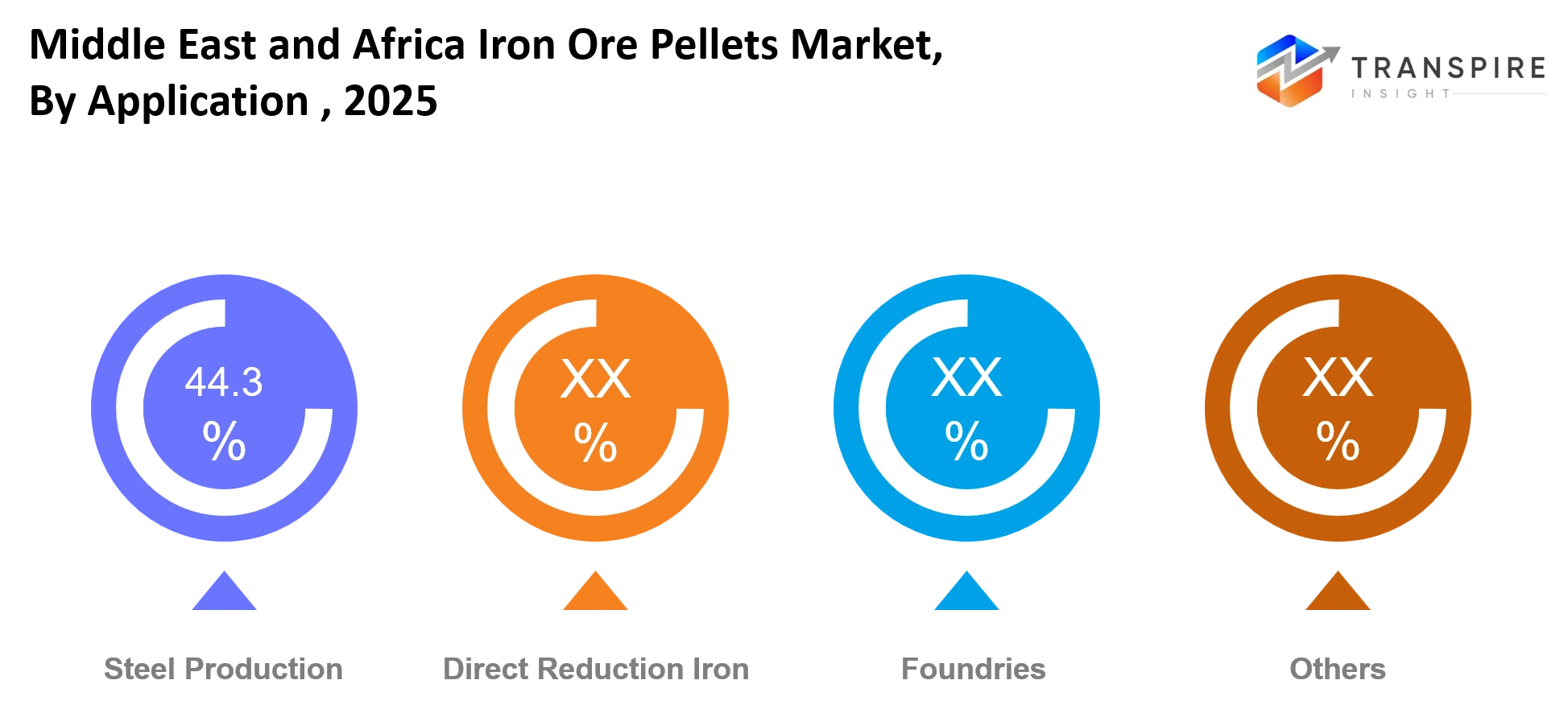
- When you look at applications, steel manufacturing dominates with more than 70% of total pellet demand, which points to how critical pellets are for ironmaking operations.
- At the same time, green steel plus hydrogen-based DRI projects are emerging uses, and they’re expected to expand noticeably between 2026 and 2033.
- On the end-user side, integrated steel producers account for nearly 60% of demand, largely driven by long-term strategies for securing raw material supply.
- Mining and metallurgical companies are upping pellet capacity investments too, trying to grab premium pricing opportunities in the Middle East and Africa Iron Ore Pellets Market.
- Companies are investing in DR-grade pellet technologies, to meet decarbonization needs in the steel industry. Strategic partnerships between miners and steelmakers are also helping—more long-term supply security, better arrangements, you know.
What are the Key Drivers, Restraints, and Opportunities in the Middle East and Africa Iron Ore Pellets Market?
The strongest growth driver seems to be the rapid expansion of direct reduced iron production across the Middle East, like it’s moving pretty fast. Governments in Saudi Arabia, the UAE, Bahrain, and Oman are investing heavily in steel value chains, as part of wider industrial diversification programs too. A lot of these projects need high-grade DR pellets, because using lower-grade material ends up cutting productivity and also pushes up energy consumption. And once new DRI facilities start running, pellet suppliers get access to long-term supply contracts, plus premium pricing structures, which in turn backs up market revenue growth pretty directly.
The most noticeable restraint is simply limited availability of consistent high-grade iron ore that actually works for pellet production. To make pellets at scale you often have to build beneficiation plants, pelletizing facilities, rail networks, and export infrastructure. That takes substantial capital spend, and the timelines are multi-year, not weeks. This kind of structural issue can’t be fixed quickly either, since mining projects are hit by permitting requirements, financing constraints, and infrastructure bottlenecks all at once. So, pellet supply growth frequently trails steelmaking expansion, and that then slows down market penetration and delays the revenue opportunities.
One major opportunity is the rise of green steel output using hydrogen-based direct reduction technology. Across the Gulf, countries are developing renewable energy and hydrogen ecosystems that can support low-carbon steel manufacturing. In that setup, high-quality DR-grade pellets are basically becoming essential feedstock. Suppliers that can provide premium pellets, with low impurity content, are likely to capture higher margins and set up long-term partnerships with next-generation steel producers during the coming decade.
What Has the Impact of Artificial Intelligence Been on the Middle East and Africa Iron Ore Pellets Market?
Artificial intelligence, plus some advanced digital technologies, are quietly but steadily shifting iron ore pellet production. They make mining more efficient, boost beneficiation results, and basically smooth out what happens inside the pellet plant, with better control. More and more companies are rolling out AI based process control, sort of like an always-on nervous system, to tune grinding, concentration and pelletizing parameters in real time. It keeps watching ore traits, checking equipment behavior and tracking production conditions, so operators can push higher throughput without letting product quality slip
At the same time, machine learning is being used for predictive maintenance on crushers, conveyors, furnaces, and the pelletizing line. It looks for failure patterns early, before a breakdown even really shows up, and that means less unplanned downtime and better use of assets. In big, industrial pellet facilities, these predictive maintenance efforts have helped extend equipment life and improve operational availability, even when demand gets intense.
There are also advanced analytics platforms, they assist with production forecasting and energy optimization. In practice, operators can tune fuel consumption, adjust furnace temperatures, and modify feed compositions, aiming to improve pellet quality while reducing operating costs. All of this tends to support higher plant uptime, steadier production calendars, and better overall profitability
Still, there are friction points. AI adoption is not fully smooth, especially in remote mining areas where digital infrastructure is patchy or thin. Integration costs can be high, older equipment compatibility can get messy, and there are not enough specialized data science skills, so implementation moves slower across parts of the Middle East and Africa.
Key Market Trends
- Since 2021, Gulf steelmakers have been stepping up their purchase of DR-grade pellets, kind of as more new direct reduction facilities finally hit commercial operation.
- Over 60% of the regional steel investments that were announced since 2022 include DRI-based production routes, and they usually need that premium pellet feedstock.
- Pellet producers have also pushed out their beneficiation capabilities, to better iron content and to dial down impurities that these newer advanced steel facilities are asking for.
- In the same period, several big mining companies increased their digitalization spend by something like 20–30% from 2022 to 2025, to squeeze more production efficiency out of pellet output.
- Steel manufacturers, for their part, are leaning more and more toward long-term supply agreements rather than spot purchasing, mostly to avoid raw material price rollercoasters.
- Hydrogen-ready steel projects that were announced after 2023, basically quickened demand planning for high quality DR pellets across much of the Gulf.
- At the supplier level, logistics integration between mines, ports,and steel plants has become a kind of standout competitive factor .
- Producers are also prioritizing pellet grades with low silica and low alumina, because it tends to help furnace productivity and energy efficiency.
- Companies like Vale and Samarco expanded pellet-focused investment programs during 2025 and 2026, aiming to strengthen export competitiveness.
- And finally, sustainability metrics have turned into procurement criteria, as steelmakers are evaluating carbon intensity across the raw material supply chains.
Middle East and Africa Iron Ore Pellets Market Segmentation
By Pellet Type
The pellet type segment sort of underlines the different pellet formats that are used to help steelmaking run more efficiently, lower the processing variability a bit, and keep operational performance steady across industrial sites. Blast Furnace Pellets kind of hold a big place here, since uniform size, high iron content, and fairly stable metallurgical characteristics help keep the furnace operations working well. There is also consistent demand from integrated steel plants, and that continues to back the adoption across the more established steel production centers.
Direct Reduction Pellets get strong attention because they fit direct reduction processes, which usually call for better feedstock and fewer impurity issues . Fluxed Pellets support steelmaking operations by putting flux materials into the mix, so furnace productivity improves and extra downstream processing isn’t as heavy. Acid Pellets stay relevant in facilities where certain production approaches favor low-flux feed materials. Then there are Others, like specialized pellet grades, developed to match specific operational needs, product specifications, and even regional production requirements.
By Application
The application segment kind of shows the wide industrial uses of iron ore pellets, from metal production to processing activities. Steel Production still stays the biggest category because steel makers need iron-bearing inputs that actually help with efficiency, better output, and steadier product quality. Ongoing infrastructure development, plus general manufacturing activity and construction projects, keep on supporting pellet consumption specifically in steelmaking operations.
Direct Reduction Iron feels notable too, mainly because more money is going into direct reduction facilities, and these rely on higher-grade pellet feedstock. Foundries use pellets in a more selected set of ironmaking and metal casting processes where consistency of the material supports production results,and helps keep operations stable. Other uses cover specialized metallurgical processes and industrial applications, where people need processed iron inputs for manufacturing, material production, and related activities.
To learn more about this report, Download Free Sample Report
By Grade
The grade segment kinda shows how pellet quality affects real industrial performance, production efficiency, and even material choices across end use sectors. High Grade pellets take up a major share, mainly because higher iron content helps push higher output, reduces waste, and also boosts energy efficiency while steel is being produced. There’s still a strong preference for premium raw material, so demand keeps growing at facilities that are trying to fine tune operations
Medium Grade pellets stay in a notable position too, they give a kind of middle option between performance attributes and procurement costs for many industrial users. Low Grade pellets still get used where cost considerations are the big thing, and where production needs allow more flexibility in feedstock selection. Others can mean customized grades that are designed for specific customer requirements, processing conditions, or metallurgical goals.
By End User
The end user segment kind of mirrors the main industries that are tied to buying, working, and using iron ore pellets, across the whole value chain. Steel Manufacturers sit at the top as the leading category, because steel production sites depend on reliable raw material quality, for keeping things running smoothly and still hitting the right product standards. They also keep leaning on long term procurement moves and they keep expanding production capacity, and that basically supports heavy pellet consumption in this group.
Mining Companies take up an important share too, since they handle pellet production, related processing work, and value added mineral development strategies meant to stretch resource utilization. The “others” set includes industrial processing facilities, metallurgical operators, and specialized manufacturing organizations that need iron bearing materials for different production uses. If industrial development keeps moving forward, and if the processing infrastructure keeps getting invested in, that should help sustain demand across all these end user categories.
What are the Key Use Cases Driving the Middle East and Africa Iron Ore Pellets Market?
The biggest use case is still the integrated steel production thing. Steelmakers are using pellets in blast furnaces and direct reduction plants because their steady quality—like, really consistent— boosts productivity, cuts down waste generation and helps keep furnace operations steady. In fact, this application kind of makes up most of the regional pellet consumption.
Outside of typical steelmaking, pellets are also being pushed into DRI facilities that serve construction, automotive and industrial manufacturing sectors. And the rising investment into electric arc furnace based steel production also tends to support demand for these premium iron units, derived from direct reduction processes, too.
Then there are the newer angles, hydrogen based green steel projects and low-carbon industrial clusters that are currently in the works across Gulf countries. These initiatives need very high-grade DR pellets and they could turn into a meaningful incremental demand stream over the forecast period, as commercial production ramps up and scales out.
|
Report Metrics |
Details |
|
Market size value in 2025 |
USD 6.17 Billion |
|
Market size value in 2026 |
USD 6.6 Billion |
|
Revenue forecast in 2033 |
USD 10.2 Billion |
|
Growth rate |
CAGR of 6.42% from 2026 to 2033 |
|
Base year |
2025 |
|
Historical data |
2021 - 2024 |
|
Forecast period |
2026 - 2033 |
|
Report coverage |
Revenue forecast, competitive landscape, growth factors, and trends |
|
Regional scope |
Middle East and Africa (Saudi Arabia, United Arab Emirates, South Africa, Rest of Middle East and Africa) |
|
Key company profiled |
Vale, Rio Tinto, BHP, Fortescue, LKAB, Cleveland-Cliffs, ArcelorMittal, Metso, Anglo American, Tata Steel, JSW Steel, NMDC, Samarco, Bahrain Steel, KIOCL. |
|
Customization scope |
Free report customization (country, regional & segment scope). Avail customized purchase options to meet your exact research needs. |
|
Report Segmentation |
By Pellet Type (Blast Furnace Pellets, Direct Reduction Pellets, Fluxed Pellets, Acid Pellets, Others); By Application (Steel Production, Direct Reduction Iron, Foundries, Others); By Grade (High Grade, Medium Grade, Low Grade, Others); By End User (Steel Manufacturers, Mining Companies, Others). |
Which Regions are Driving the Middle East and Africa Iron Ore Pellets Market Growth?
The Middle East stays the leading regional market, mostly because it has that expanding steel manufacturing base and also a lot of investment going into direct reduction technology. You see countries like Saudi Arabia, the UAE, Bahrain, and Oman still building these more integrated industrial ecosystems that basically back up steel production. And, since natural gas access has historically been kind of a nudge towards DRI steelmaking routes, there’s been strong demand for higher-grade pellets. Plus, the region already has established ports, industrial zones, and export infrastructure in place, so it all kinda reinforces their leadership position without much debate.
Then there’s Southern Africa, which ends up as the second-largest contributor to market revenue. But here, it’s different,its growth tends to track mining resources and export-focused supply chains more than steelmaking capacity by itself. Long-standing mining operations bring a kind of continuity, so pellet production keeps running at a steady pace. On top of that, modernization efforts and infrastructure upgrades are ongoing, and they help keep the region strategically relevant in the broader global iron ore trade networks.
East Africa meanwhile is showing up as the fastest-growing regional market. A bunch of recent infrastructure investments, mining development initiatives, and industrialization programs have helped improve the overall business environment for iron ore processing and steel production. Governments are also increasingly pushing domestic value addition, not just raw material exports. For investors and new entrants, this mix creates early entry opportunities, like, before the region scales up even more between 2026 and 2033.
Who are the Key Players in the Middle East and Africa Iron Ore Pellets Market and How Do They Compete?
Competition is still pretty moderately consolidated, like there’s a small cluster of large mining and pellet producers that end up controlling a lot of the global pellet supply. In practice, the competitive edge is mostly decided by ore quality, pellet specs, logistics ability, production scale, and also access to those premium steelmaking customers. The existing suppliers are still defending their market share, but mostly via capacity investments and tech upgrades, not by going too hard on aggressive price competition or anything like that.
Vale is focusing on high-grade iron ore products, aimed at low-carbon steelmaking needs. Their approach leans hard on premium pellet quality and an integrated logistics web that links mines with railways and export terminals. Samarco, on the other hand, stands out through pellet specialization plus some recent capacity expansion moves, which really reinforced its role in the seaborne pellet trade. They’ve already doubled installed capacity and in 2025 produced more than 15 million tonnes, while also pushing modernization investments forward.
Bahrain Steel benefits from its strategic footing in the Gulf area, plus it’s close to major DRI steel producers. Rio Tinto and BHP lean on scale, operational efficiency and the quality of their resources, to keep strong positions across global iron ore markets. Fortescue keeps working on product diversification too, trying to serve customers that want higher-grade feedstocks for more efficient steel production. Overall, these firms compete through quality differentiation, supply reliability, and clear alignment with the steel industry’s decarbonization goals.
Company List
- Vale
- Rio Tinto
- BHP
- Fortescue
- LKAB
- Cleveland-Cliffs
- ArcelorMittal
- Metso
- Anglo American
- Tata Steel
- JSW Steel
- NMDC
- Samarco
- Bahrain Steel
- KIOCL
Recent Development News
In July 2025, Vale revised its iron ore agglomerates production strategy and accelerated maintenance activities at its São Luís pelletizing plant. The move reflected changing pellet market conditions and highlighted the importance of supply management in premium pellet markets.
Source: https://www.reuters.com
What Strategic Insights Define the Future of the Middle East and Africa Iron Ore Pellets Market?
The market seems like it is going, in a way, toward premium-grade and direct reduction-grade pellets as steel producers chase lower-carbon manufacturing routes. Under it all, it isn’t just “more steel” driving things, it is the shift to cleaner steelmaking technologies that basically need better iron-bearing feedstocks, not the rough stuff. Because of that, procurement tactics, where money gets invested, and even product specs across the whole value chain are likely to get reshaped, almost quietly at first then all at once.
There is also a less obvious risk that kind of lurks in the background, which is the premium pellet supply being concentrated among a smaller set of producers. If something happens in the major exporting regions, it could trigger shortages and nasty price swings for steelmakers that rely on the specialized pellet grades. Meanwhile, hydrogen-based steel production is turning into a real, emerging opening. As hydrogen infrastructure matures across Gulf economies, demand for DR-grade pellets might climb faster than many people have in their current expectations.
So market players should really push focus onto beneficiation work, pellet quality improvement, and building strategic supply relationships. Firms that align their product development with the future “green steel” needs will, more likely than not, end up capturing premium margins and keeping long-term relevance, even when the market mood changes.
Middle East and Africa Iron Ore Pellets Market Report Segmentation
By Pellet Type
- Blast Furnace Pellets
- Direct Reduction Pellets
- Fluxed Pellets
- Acid Pellets
- Others
By Application
- Steel Production
- Direct Reduction Iron
- Foundries
- Others
By Grade
- High Grade
- Medium Grade
- Low Grade
- Others
By End User
- Steel Manufacturers
- Mining Companies
- Others
Frequently Asked Questions
Find quick answers to common questions.
The expected Middle East and Africa Iron Ore Pellets Market size for the market will be USD 10.2 Billion in 2033.
Key segments for the Middle East and Africa Iron Ore Pellets Market are By Pellet Type (Blast Furnace Pellets, Direct Reduction Pellets, Fluxed Pellets, Acid Pellets, Others); By Application (Steel Production, Direct Reduction Iron, Foundries, Others); By Grade (High Grade, Medium Grade, Low Grade, Others); By End User (Steel Manufacturers, Mining Companies, Others).
Major Middle East and Africa Iron Ore Pellets Market players are Vale, Rio Tinto, BHP, Fortescue, LKAB, Cleveland-Cliffs, ArcelorMittal, Metso, Anglo American, Tata Steel, JSW Steel, NMDC, Samarco, Bahrain Steel, KIOCL
The Middle East and Africa Iron Ore Pellets Market size is USD 6.17 Billion in 2025.
The Middle East and Africa Iron Ore Pellets Market CAGR is 6.42% from 2026 to 2033.
- Vale
- Rio Tinto
- BHP
- Fortescue
- LKAB
- Cleveland-Cliffs
- ArcelorMittal
- Metso
- Anglo American
- Tata Steel
- JSW Steel
- NMDC
- Samarco
- Bahrain Steel
- KIOCL
About the Authors

Pankaj Ghogare Patil
I am Pankaj Ghogare Patil, a Senior Research Analyst at Transpire Insight, specializing in the Pharmaceutical, Chemicals & Materials, Healthcare IT, and Biotechnology industry. My expertise lies in conducting comprehensive market research, analyzing industry trends, evaluating competitive landscapes, and translating complex data into actionable insights. At Transpire Insight, I closely follow emerging technologies, regulatory developments, and market innovations to create accurate, well-researched, and informative content that helps businesses and professionals make informed decisions. I am committed to producing credible, evidence-based articles that reflect industry best practices while making technical topics accessible and valuable for a broad audience.

Chakradhar Khansole
Chakradhar serves as the Research Director at Transpire Insight, bringing over 8 years of experience in technology, innovation, and strategic market intelligence. He specializes in transforming complex market data into actionable business insights that enable organizations to make informed, growth-oriented decisions. Recognized for his strategic vision and analytical expertise, Chakradhar leads high-impact research initiatives, delivering comprehensive market assessments, competitive intelligence, and forward-looking industry analysis.
Recently Published Reports
-
May 2026
Healthcare Polymer Packaging Market
Healthcare Polymer Packaging Market Size, Share & Analysis Report By Packaging Type (Syringes, IV Bottles and Pouches, Clamshells, Blisters, Bottles & Jars, Containers, Tubes, IV Parental Packaging, Others), By Type (Regulated, Non-regulated), By Polymer Type (LDPE (Low-Density Polyethylene), HDPE (High-Density Polyethylene), Homo-polymer (Homo), Random Copolymer (Random), Block Copolymer (Block), PET, Polystyrene, Polyvinyl Chloride, Polyamide/EVOH, Others), and Geography (North America, Europe, Asia-Pacific, Middle East and Africa, South and Central America), 2021 - 2031
-
Apr 2026
Hydrophilic Tape (Waterstop) Market
Hydrophilic Tape (Waterstop) Market Size, Share & Analysis Report By Type (Bentonite-Based Hydrophilic Tape, Rubber-Based Hydrophilic Tape), By Application (Residential Buildings, Commercial Buildings, Infrastructure Projects), and Geography (North America, Europe, Asia-Pacific, Middle East and Africa, South and Central America), 2021 - 2031
-
Apr 2026
Metalens Market
Metalens Market Size, Share & Analysis Report By Type (Visible Light Metalens, and Infrared Metalens), By Application (Consumer Electronics, Automotive Electronics, Industrial, Medical, and Others), and Geography (North America, Europe, Asia-Pacific, Middle East and Africa, South and Central America), 2021 - 2031
-
Apr 2026
PBT Resin Market
PBT Resin Market Size, Share & Analysis Report By Type (Reinforced PBT Resin, Unreinforced PBT Resin), By Processing Method (Injection Molding, Extrusion, Blow Molding, Others), By End-User (Automotive, Electrical & Electronics, Consumer Appliances, Industrial Machinery, Medical Devices, Packaging, Others), and Geography (North America, Europe, Asia-Pacific, Middle East and Africa, South and Central America), 2021 - 2031