
Middle East and Africa High Performance Composites Market Size & Forecast:
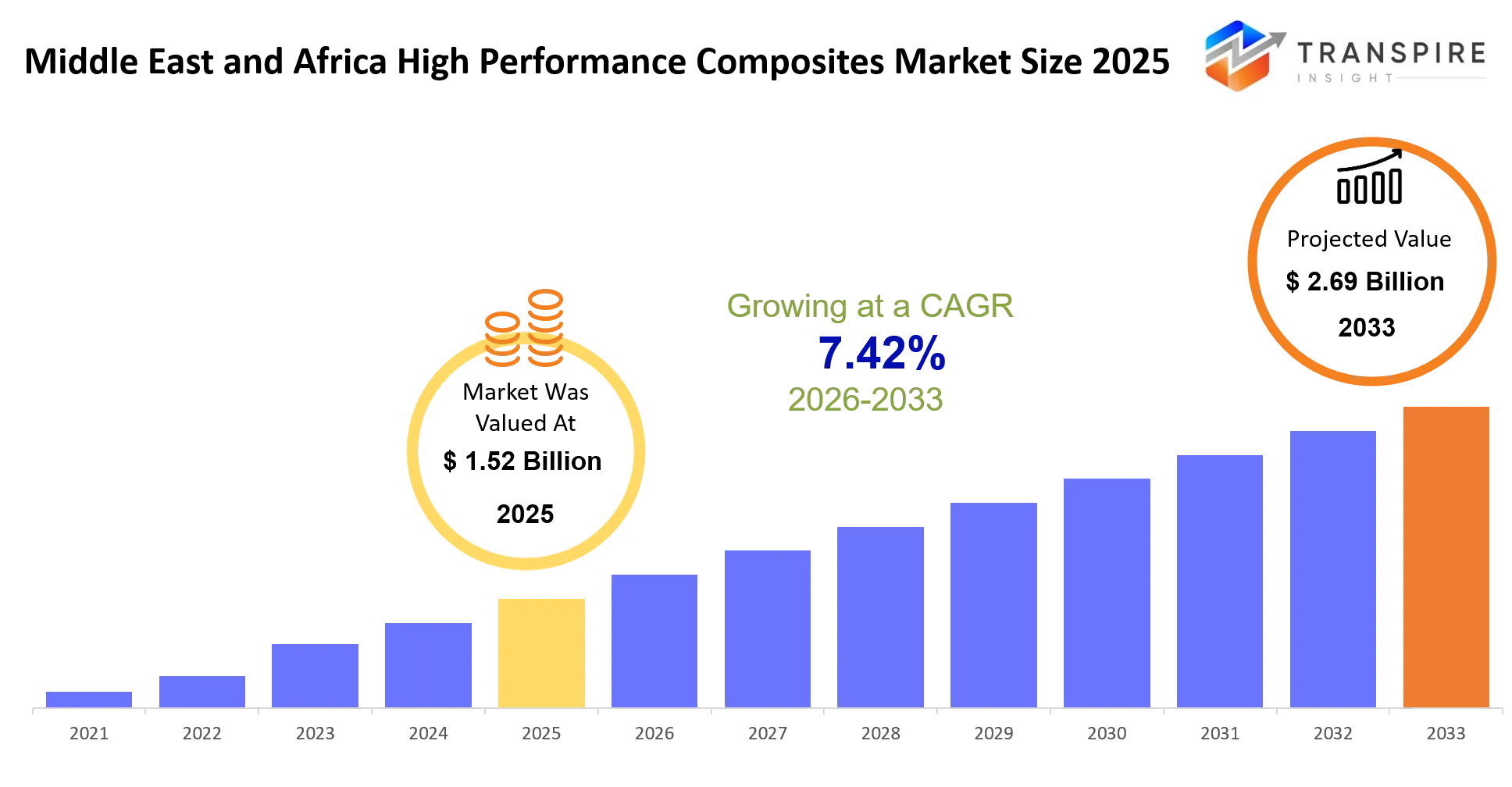
- Middle East and Africa High Performance Composites Market Size 2025: USD 1.52 Billion
- Middle East and Africa High Performance Composites Market Size 2033: USD 2.69 Billion
- Middle East and Africa High Performance Composites Market CAGR: 7.42%
- Middle East and Africa High Performance Composites Market Segments: By Fiber Type (Carbon, Glass, Aramid, Basalt, Ceramic, Natural, Hybrid, Others); By Resin Type (Epoxy, Polyester, Vinyl Ester, Phenolic, Thermoplastic, Polyimide, Others); By Application (Aerospace, Automotive, Wind Energy, Marine, Construction, Sports, Defense, Others); By End User (Aerospace & Defense, Transportation, Energy, Industrial, Marine, Construction, Others, Others)
Middle East and Africa High Performance Composites Market Summary
The Middle East and Africa High Performance Composites Market was valued at USD 1.52 Billion in 2025. It is forecast to reach USD 2.69 Billion by 2033. That is a CAGR of 7.42% over the period.
High performance composite materials tackle a kind of practical obstacle across aerospace, energy, transport, and industrial business areas, mainly because they offer very high strength with a much lower weight compared to standard metals . In day to day use, these materials help aircraft cut fuel use, wind turbine blades keep working with better efficiency, and industrial frameworks can endure severe environmental stress while also needing less upkeep . Over the last five years , the market moved away from only specialized aerospace jobs and has gone toward wider take up in renewable power, mobility, and even infrastructure efforts . One big structural change is how much carbon fiber is being used, along with advanced thermoplastic composites, within lightweight engineering programs.
Meanwhile, supply chain disruptions and raw material price volatility, especially after global manufacturing bottlenecks, pushed companies to speed up local production and adjust sourcing approaches, sometimes in a more adventurous way. Now, as Gulf countries grow their aviation plans, expand renewable energy activity, and pursue industrial diversification, composite materials are turning into a requirement instead of just an optional choice. This shift backs higher value manufacturing work, encourages investment in newer material technologies, and opens fresh income channels for suppliers supporting big scale infrastructure and mobility projects.
Key Market Insights
- In 2025 GCC countries are expected to hold around 45%+ of the regional market share , with aerospace investments and industrial diversification programs quietly keeping it supported.
- The Middle East still shows up as the main regional contributor, but Africa is forecast to post the quickest growth up to 2033, kind of driven by energy, and also infrastructure projects.
- Carbon fiber composites keep leading, with roughly 35% market share, mainly because aerospace and defense uses need that superior strength-to-weight type performance.
- Glass fiber composites come in second, largely due to cost efficiency across construction, transportation, and industrial applications.
- Hybrid composite materials are the fastest-growing fiber category through 2033 , since manufacturers look for more balanced performance as well as cost advantages (or better “value ,” depending on how you phrase it).
- When it comes to where revenue comes from, aerospace applications contribute close to 30% of total market income, backed by fleet modernization and aircraft component manufacturing.
- Wind energy applications are among the fastest growing segments too, as large-scale renewable energy investments keep expanding across the Gulf region.
- For end users, Aerospace & Defense remains out front with more than 28% share , pushed by lightweight structural requirements.
- Meanwhile energy-sector adoption is accelerating too , because composite materials improve durability in wind turbines, oil and gas infrastructure, and utility projects.
- Some key players—Toray, Hexcel, Teijin, SGL Carbon, and Owens Corning—are strengthening their positions through product innovation, recycling initiatives, and strategic partnerships, which is honestly where a lot of the momentum is coming from.
What are the Key Drivers, Restraints, and Opportunities in the Middle East and Africa High Performance Composites Market?
The most powerful growth spark, really comes from big scale spending in aerospace, renewable energy, and next gen transportation systems. At the same time Government “diversification” programs across Gulf economies have been pushing, procurement of lightweight materials, which cuts day to day operating costs and also makes the overall asset do better. Aircraft makers, turbine developers, and industrial operators more and more choose composite structures because the weight reduction, it straight up helps fuel efficiency, and then it feeds into lifecycle economics. That whole turn, keeps demand steady for carbon fiber as well as newer resin systems, while also backing higher value manufacturing work.
Still the biggest stumbling block is the expensive nature of advanced fibers and the specialized way they have to be manufactured. Producing carbon fiber takes serious capital budgets, plus sophisticated processing equipment and people with the right skills. Because of those structural limits, local production capacity cannot scale up quickly, even if demand exists. Also, relying on imported raw materials, leaves manufacturers exposed to currency swings and supply chain disruptions, and those delays can slow adoption in cost sensitive industries, which then hits revenue upside too.
Looking ahead, the strongest opportunity feels tied to thermoplastic composites and recyclable composite technologies. Aerospace suppliers are increasingly asking for materials that keep the lightweight advantages but also allow faster production cycles and better sustainability traits. Lately, investments in recyclable carbon fiber options and in advanced thermoplastic platforms, show that the industry is moving toward circular manufacturing, not just “linear” production. And as regional aviation, renewable power, and mobility programs keep maturing, vendors that can provide recyclable materials plus high rate manufacturing solutions, should start winning new growth avenues.
What Has the Impact of Artificial Intelligence Been on the Middle East and Africa High Performance Composites Market?
Artificial intelligence is kinda transforming composite manufacturing, improving process control, better quality assurance, and predictive maintenance. Lately, advanced manufacturers increasingly use machine learning models to keep an eye on curing temperatures, resin flow behavior, fiber placement accuracy and honestly production line performance too. These kinds of setups automatically flag defects before final assembly, which cuts down material waste and, at the same time, helps lower production costs.
Predictive analytics has become especially useful in aerospace as well as wind energy applications. AI driven maintenance platforms look through structural performance data and spot early warnings tied to fatigue, delamination, or broader material degradation. As a result, asset availability goes up and unexpected downtime tends to drop. Also, digital twin technology lets engineers basically simulate how a component behaves under different operating conditions before physical production ever starts. That shortens development cycles, and it pushes design accuracy in a better direction.
On the operational side, there are noticeable gains like higher production yields, quicker inspection cycles, and improved usage of those costly carbon fiber materials. Automated quality control systems can reduce the amount of manual inspection work, while still sticking to certification standards.
Even with all that, adoption is still not super easy, mainly because integration costs are high and localized operational datasets are limited. A lot of manufacturers still run legacy equipment which needs substantial upgrades, before AI driven monitoring systems can be fully put in place. And, on top of that, the shortage of specialized digital engineering talent, slows deployment across parts of the region.
Key Market Trends
- Since 2021, aerospace manufacturers have started adopting thermoplastic composites more , to cut production cycles faster and generally make manufacturing feel more adjustable.
- Carbon fiber demand has kind of moved away from strictly premium aerospace uses, toward wider transportation uses plus renewable energy projects.
- In 2025–2026, composite recycling programs got more momentum , because manufacturers chased circular economy targets and that whole loop idea.
- Also, strategic partnerships between material suppliers and OEMs picked up during 2025–2026, mainly to improve supply security, and to speed up innovation without too many delays.
- On the technology side, advanced prepreg technologies have already trimmed production times by as much as 40% , which in turn helps industrial scalability.
- For wind power, developers are more and more leaning toward longer composite blades, since that can improve electricity generation efficiency.
- Meanwhile, regional manufacturers are investing in localized supply chains , to reduce the risk of imported material disruptions that happen outside their control.
- Hybrid fiber solutions have become more popular too, since buyers want a sort of balanced cost‑performance blend.
- Digital quality monitoring systems are also gradually replacing manual inspection workflows across advanced manufacturing facilities.
- And finally, sustainability requirements are pushing development of recyclable thermoplastic composite structures , for future transportation platforms, not just experiments but actual platform thinking.
Middle East and Africa High Performance Composites Market Segmentation
By Fiber Type
Carbon fiber keeps a strong position, mostly because it’s exceptionally stiff, stays light, and resists fatigue well, which is needed in aerospace and defense structures. Glass fiber still gets broad adoption in transportation, industrial equipment, and construction because it is affordable and the mechanical properties are consistently reliable. Aramid fiber is often used for protective work, where impact resistance and long term durability still matter a lot. Basalt fiber keeps getting more notice thanks to corrosion resistance and thermal stability, especially in infrastructure projects.
Ceramic fiber tackles high-temperature operating environments across industrial settings and energy use. Natural fiber materials back sustainability objectives in certain transportation use and in consumer goods. Hybrid fiber solutions mix several reinforcement materials, trying to balance performance with cost, more or less, without making everything too expensive. There are also other specialty fibers for niche requirements, where unusual thermal, electrical, or structural behaviors bring extra value.
By Resin Type
Epoxy resin pretty much is the go to for advanced composite manufacturing, due to adhesion that is quite strong, mechanical strength that holds up, and chemical resistance that keeps working even in harsher conditions. Polyester resin kinda keeps supporting large scale applications, where cost efficiency is still a priority and nobody wants to overspend. Vinyl ester resin gives a better level of corrosion resistance for those demanding industrial environments. Phenolic resin still shows up in use cases that need fire resistance and low smoke generation characteristics, so it does have its niche.
Meanwhile, thermoplastic resins keep expanding, mostly because processing speeds are faster, the recyclability potential feels more realistic, and impact performance is strong. Polyimide resin tends to fit high temperature aerospace and industrial systems, where conventional materials run out of options. There are also other specialized resin systems that handle very specific performance requirements in advanced engineering projects, kinda like a tailored solution. And yeah, the ongoing research keeps pushing durability, processing efficiency and environmental performance across basically all resin categories.
By Application
Aerospace applications generate substantial revenue from aircraft structures, cabins interiors and engine related components, all needing lightweight performance. Automotive manufacturers are now increasingly bringing in advanced composites so they can trim vehicle mass , and boost efficiency. Wind energy setups lean on composite materials for very long turbine blades plus structural durability that has to last. Marine applications tend to prefer composites because corrosion resistance is better, and there is usually less upkeep overall.
In construction projects, advanced composites are used for reinforcement, infrastructure upgrades and more architectural uses that look clean and stay strong. Sports equipment producers use light weight materials in order to improve how the product performs, it’s kind of the whole point. Defense programs rely on high strength fibers and resins for protective systems and specialized platforms. Other examples cover industrial machinery, pressure vessels, and emerging mobility technologies, they all call for high performance structural solutions, basically.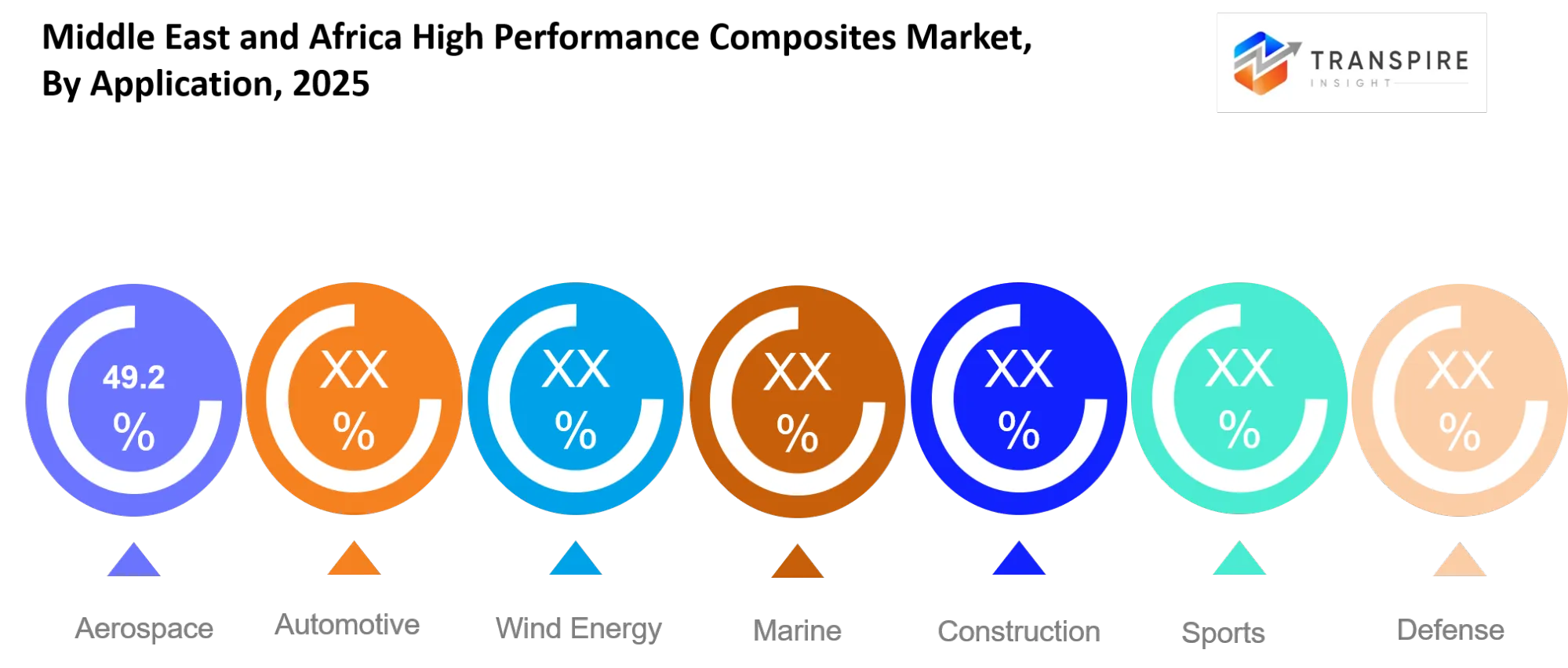
By End User
Aerospace & Defense keeps being a major consumer of these materials, because lighter frameworks directly help with operational outcomes, and also fuel efficiency. Transportation industries keep widening their use of composite materials, spread across rail, automotive, and different mobility platforms. Energy companies are also leaning into advanced materials for wind turbines , oil and gas systems, plus utility infrastructure. In industrial manufacturing, corrosion resistance ends up mattering a lot, and it also tends to extend service life.
Marine operators are using composite solutions so they can get better durability, while also cutting down on maintenance needs in harsh environments. Construction firms are now more often deploying these advanced materials for reinforcement and modernization jobs. Other end users show up too, like sports equipment makers, medical technology providers, and certain specialized engineering groups that are looking for edge in performance versus traditional materials.
What are the Key Use Cases Driving the Middle East and Africa High Performance Composites Market?
Aerospace applications are the biggest use case, because lightweight structural components make things easier with fuel efficiency, payload capacity ,and basically operational performance in a direct way. Carbon fiber reinforced structures show up a lot in aircraft fuselages, wings, interior components, and even defense platforms, where shaving weight brings real, measurable economic benefits ,not just theory.
Wind energy projects and advanced transportation systems are also getting more attention, like an expanding set of areas. Longer turbine blades, made from advanced composites, can improve electricity generation efficiency, while rail and automotive manufacturers use lightweight materials to push performance up and also reduce lifetime operating costs .
Newer applications are starting to appear too, including advanced air mobility platforms, hydrogen storage systems, and recyclable thermoplastic structures. These are still early in the timeline but they look promising, since regional sustainability programs, energy transition initiatives, and next generation transportation technologies keep advancing during the forecast period.
|
Report Metrics |
Details |
|
Market size value in 2025 |
USD 1.52 Billion |
|
Market size value in 2026 |
USD 1.63 Billion |
|
Revenue forecast in 2033 |
USD 2.69 Billion |
|
Growth rate |
CAGR of 7.42% from 2026 to 2033 |
|
Base year |
2025 |
|
Historical data |
2021 - 2024 |
|
Forecast period |
2026 - 2033 |
|
Report coverage |
Revenue forecast, competitive landscape, growth factors, and trends |
|
Regional scope |
Middle East and Africa (Saudi Arabia, United Arab Emirates, South Africa, Rest of Middle East and Africa) |
|
Key company profiled |
Toray, Hexcel, SGL Carbon, Teijin, Solvay, Mitsubishi Chemical, Owens Corning, Huntsman, Gurit, Cytec, BASF, Covestro, Jushi, Johns Manville, TPI |
|
Customization scope |
Free report customization (country, regional & segment scope). Avail customized purchase options to meet your exact research needs. |
|
Report Segmentation |
By Fiber Type (Carbon, Glass, Aramid, Basalt, Ceramic, Natural, Hybrid, Others); By Resin Type (Epoxy, Polyester, Vinyl Ester, Phenolic, Thermoplastic, Polyimide, Others); By Application (Aerospace, Automotive, Wind Energy, Marine, Construction, Sports, Defense, Others); By End User (Aerospace & Defense, Transportation, Energy, Industrial, Marine, Construction, Others, Others) |
Which Regions are Driving the Middle East and Africa High Performance Composites Market Growth?
The Gulf region, kind a leads the market activity because of strong aerospace investments, industrial diversification programs, and big scale infrastructure development. Saudi Arabia and the UAE keep investing in more advanced manufacturing capabilities, which really backs up the adoption of composite materials. There are strong aviation ecosystems, plus industrial clusters, and government backed development initiatives too, and all of this helps lock in the regional leadership. Over the long run, economic diversification strategies stay active, so they still make room for advanced materials suppliers to step in.
South Africa looks like the second most significant contributor, mainly because of established industrial capabilities and a manufacturing base that is already relatively mature. The growth pattern feels different than the Gulf, because here the demand comes from industrial production, transportation infrastructure, and mining related activities , more than from aviation led expansion. With stable industrial investment and solid engineering know how, the market support stays consistent. That kind of steady demand profile helps deliver dependable revenue, and not just short spikes.
Meanwhile, the fastest growth momentum is starting to show up across parts of North Africa and East Africa. Renewable energy investments, infrastructure modernization programs, and industrial development initiatives have boosted the need for materials that are lightweight and durable. As wind energy capacity keeps expanding, and transportation modernization keeps moving forward, new opportunities open up for advanced composites. Market participants that enter these regions during 2026–2033 should gain, from early positioning in application sectors that are developing quickly.
Who are the Key Players in the Middle East and Africa High Performance Composites Market and How Do They Compete?
Competition still stays fairly concentrated among global material specialists that have solid technological know how and reliable supply networks, even if everyone claims “smart” strategies. In practice, winning matters less from pure price rivalry and more from how well the material performs, what certifications they can actually handle, their manufacturing skill set, and how closely they work with customers. Lately you see companies pushing ahead mainly via innovation—lighter structures, thermoplastic related technologies, and more sustainable composite approaches.
Toray seems to set itself apart with carbon fiber leadership, plus a big stack of aerospace qualifications. Some of the newest collaborations are tied to future mobility materials and thermoplastic composite progress, which kinda supports longer term growth chances.
Hexcel leans into high performance aerospace materials, rapid-cure prepreg methods, and industrial partnerships that help improve manufacturing efficiency. Their recent product introductions support quicker production cycles. That also helps with scalability, which is kind of the whole point.
SGL Carbon concentrates on advanced carbon know-how and industrial use cases where high strength and thermal performance create real differentiation. Teijin keeps investing in advanced reinforcement materials and lightweight mobility solutions. Owens Corning, meanwhile, uses its broad glass fiber capability and cost-effective composite solutions for infrastructure and industrial programs.
Overall, strategic partnerships, recyclable material research, thermoplastic innovation, and localized supply chains are getting more weight as competitive instruments. The firms that blend material novelty with manufacturing scalability, they’re the ones that are most likely to grab the highest value opportunities.
Company List
- Toray
- Hexcel
- SGL Carbon
- Teijin
- Solvay
- Mitsubishi Chemical
- Owens Corning
- Huntsman
- Gurit
- Cytec
- BASF
- Covestro
- Jushi
- Johns Manville
- TPI Composites
Recent Development News
In April 2026, Syensqo entered a strategic supply agreement with Toray Composite Materials America. The five-year partnership strengthens aerospace carbon fiber supply security and improves resilience across advanced composite manufacturing programs.https://www.airframer.com
In March 2026, Hexcel launched new composite solutions including HexPly M51 rapid-cure prepreg and HexTow IM11-R carbon fiber. The launch supports faster manufacturing cycles and improved performance across aerospace, defense, and industrial applications.https://www.hexcel.com
In October 2025, Toray Group entered a strategic joint development partnership with Hyundai Motor Group. The collaboration advances carbon fiber composite technologies for future mobility platforms and strengthens commercialization opportunities across the value chain.https://www.toraytac.com
What Strategic Insights Define the Future of the Middle East and Africa High Performance Composites Market?
The market seems to be moving toward broader industrial use, beyond the usual aerospace stuff, you know. The main thing behind this shift is basically the higher economic pull of lightweight structures across transportation, renewable energy, industrial fabrication, and infrastructure. Material performance is becoming more of a real strategic lever, not just a technical detail, for improving operating efficiency and pushing down lifecycle expenses.
There’s also a risk that sits a little more in the background, kind of easy to miss. It comes from how concentrated the global carbon fiber supply chain is. If something disrupts a few major fiber producers it could cause pricing swings and also slow down manufacturing schedules in a bunch of industries at once. And for many regional markets, reliance on imported advanced materials is still a stubborn, structural constraint.
At the same time, one interesting opportunity is showing up with recyclable thermoplastic composites, plus some kind of circular manufacturing systems. Improvements in composite recycling methods and in thermoplastic processing are opening up more sustainable production routes. So market players should probably get in early on local manufacturing strength, build recycling capacity, and set up strategic technology alliances, to make supply networks more resistant and to actually catch the coming growth.
Middle East and Africa High Performance Composites Market Report Segmentation
-
By Fiber Type
Carbon
Glass
Aramid
Basalt
Ceramic
Natural
Hybrid
Others -
By Resin Type
Epoxy
Polyester
Vinyl Ester
Phenolic
Thermoplastic
Polyimide
Others -
By Application
Aerospace
Automotive
Wind Energy
Marine
Construction
Sports
Defense
Others -
By End User
Aerospace & Defense
Transportation
Energy
Industrial
Marine
Construction
Others
Frequently Asked Questions
Find quick answers to common questions.
The expected Middle East and Africa High Performance Composites Market size for the market will be USD 2.69 Billion in 2033.
Key Segments for the Middle East and Africa High Performance Composites Market are By Fiber Type (Carbon, Glass, Aramid, Basalt, Ceramic, Natural, Hybrid, Others); By Resin Type (Epoxy, Polyester, Vinyl Ester, Phenolic, Thermoplastic, Polyimide, Others); By Application (Aerospace, Automotive, Wind Energy, Marine, Construction, Sports, Defense, Others); By End User (Aerospace & Defense, Transportation, Energy, Industrial, Marine, Construction, Others, Others).
Major Middle East and Africa High Performance Composites Market players are Toray, Hexcel, SGL Carbon, Teijin, Solvay, Mitsubishi Chemical, Owens Corning, Huntsman, Gurit, Cytec, BASF, Covestro, Jushi, Johns Manville, TPI.
The Current Middle East and Africa High Performance Composites Market size is USD 1.52 Billion in 2025.
The Middle East and Africa High Performance Composites Market CAGR is 7.42% from 2026 to 2033.
- Toray
- Hexcel
- SGL Carbon
- Teijin
- Solvay
- Mitsubishi Chemical
- Owens Corning
- Huntsman
- Gurit
- Cytec
- BASF
- Covestro
- Jushi
- Johns Manville
- TPI Composites
About the Authors

Pankaj Ghogare Patil
I am Pankaj Ghogare Patil, a Senior Research Analyst at Transpire Insight, specializing in the Pharmaceutical, Chemicals & Materials, Healthcare IT, and Biotechnology industry. My expertise lies in conducting comprehensive market research, analyzing industry trends, evaluating competitive landscapes, and translating complex data into actionable insights. At Transpire Insight, I closely follow emerging technologies, regulatory developments, and market innovations to create accurate, well-researched, and informative content that helps businesses and professionals make informed decisions. I am committed to producing credible, evidence-based articles that reflect industry best practices while making technical topics accessible and valuable for a broad audience.

Chakradhar Khansole
Chakradhar serves as the Research Director at Transpire Insight, bringing over 8 years of experience in technology, innovation, and strategic market intelligence. He specializes in transforming complex market data into actionable business insights that enable organizations to make informed, growth-oriented decisions. Recognized for his strategic vision and analytical expertise, Chakradhar leads high-impact research initiatives, delivering comprehensive market assessments, competitive intelligence, and forward-looking industry analysis.
Recently Published Reports
-
May 2026
Healthcare Polymer Packaging Market
Healthcare Polymer Packaging Market Size, Share & Analysis Report By Packaging Type (Syringes, IV Bottles and Pouches, Clamshells, Blisters, Bottles & Jars, Containers, Tubes, IV Parental Packaging, Others), By Type (Regulated, Non-regulated), By Polymer Type (LDPE (Low-Density Polyethylene), HDPE (High-Density Polyethylene), Homo-polymer (Homo), Random Copolymer (Random), Block Copolymer (Block), PET, Polystyrene, Polyvinyl Chloride, Polyamide/EVOH, Others), and Geography (North America, Europe, Asia-Pacific, Middle East and Africa, South and Central America), 2021 - 2031
-
Apr 2026
Hydrophilic Tape (Waterstop) Market
Hydrophilic Tape (Waterstop) Market Size, Share & Analysis Report By Type (Bentonite-Based Hydrophilic Tape, Rubber-Based Hydrophilic Tape), By Application (Residential Buildings, Commercial Buildings, Infrastructure Projects), and Geography (North America, Europe, Asia-Pacific, Middle East and Africa, South and Central America), 2021 - 2031
-
Apr 2026
Metalens Market
Metalens Market Size, Share & Analysis Report By Type (Visible Light Metalens, and Infrared Metalens), By Application (Consumer Electronics, Automotive Electronics, Industrial, Medical, and Others), and Geography (North America, Europe, Asia-Pacific, Middle East and Africa, South and Central America), 2021 - 2031
-
Apr 2026
PBT Resin Market
PBT Resin Market Size, Share & Analysis Report By Type (Reinforced PBT Resin, Unreinforced PBT Resin), By Processing Method (Injection Molding, Extrusion, Blow Molding, Others), By End-User (Automotive, Electrical & Electronics, Consumer Appliances, Industrial Machinery, Medical Devices, Packaging, Others), and Geography (North America, Europe, Asia-Pacific, Middle East and Africa, South and Central America), 2021 - 2031