

Middle East and Africa Emission Monitoring Systems Market Size & Forecast:
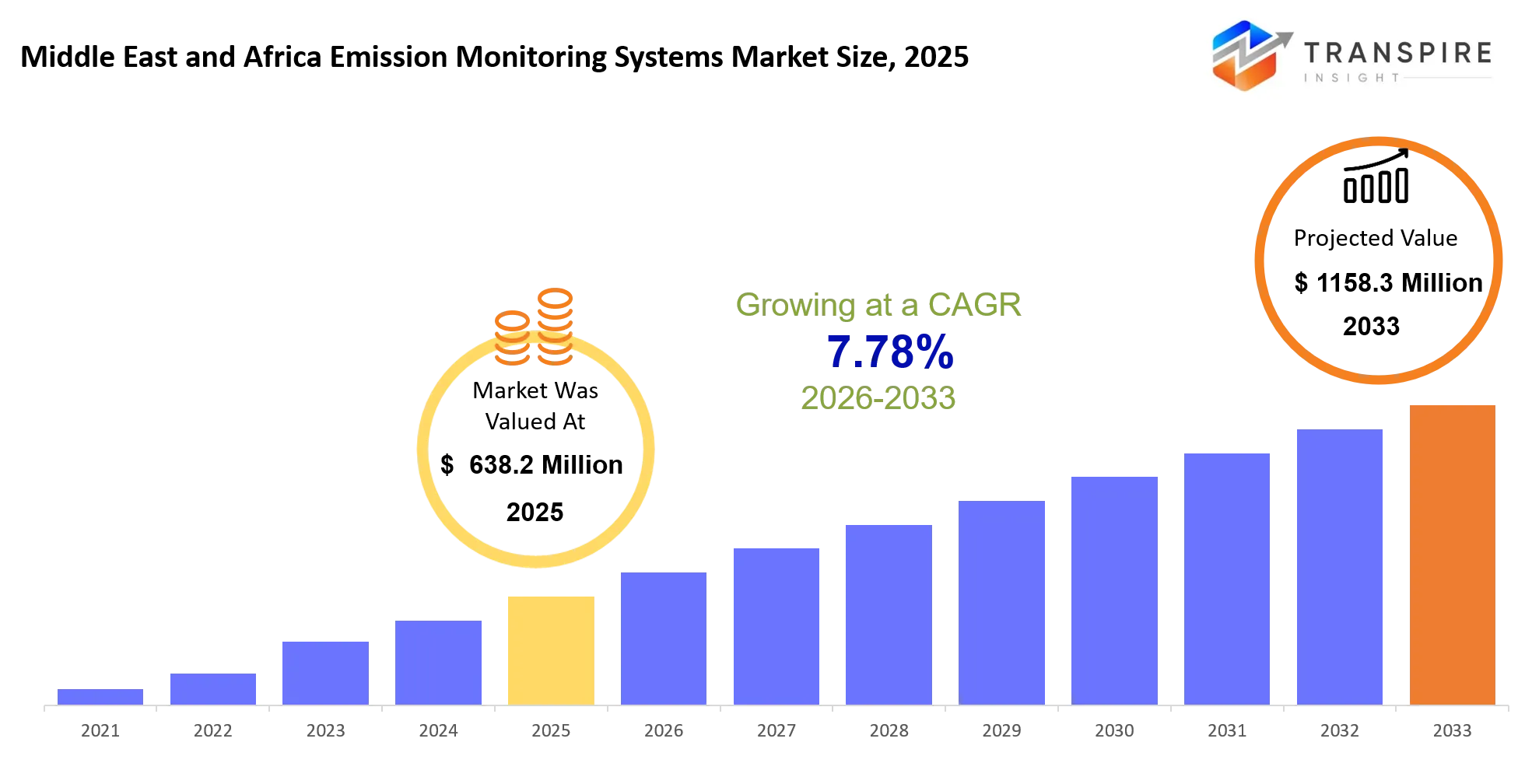
- Middle East and Africa Emission Monitoring Systems Market Size 2025: USD 638.2 Million
- Middle East and Africa Emission Monitoring Systems Market Size 2033: USD 1158.3 Million
- Middle East and Africa Emission Monitoring Systems Market CAGR: 7.78%
- Middle East and Africa Emission Monitoring Systems Market Segments: By System Type (Continuous Emission Monitoring Systems, Predictive Emission Monitoring Systems, Portable Monitoring Systems, Opacity Monitoring Systems, Others); By Component (Hardware, Software, Services, Sensors, Others); By End User (Power Generation, Oil & Gas, Chemicals, Cement, Metals & Mining, Others); By Application (Air Quality Monitoring, Process Monitoring, Regulatory Compliance, Others)
To learn more about this report,  Download Free Sample Report
Middle East and Africa Emission Monitoring Systems Market Summary
The Middle East and Africa Emission Monitoring Systems Market was valued at USD 638.2 Million in 2025. It is forecast to reach USD 1158.3 Million by 2033. That is a CAGR of 7.78%over the period.
The Middle East and Africa Emission Monitoring Systems market sort of plays a critical role in helping power plants, refineries, cement facilities, mining operations and petrochemical complexes measure and report pollutant emissions in real time, you know. In practice these systems help operators verify compliance, tweak combustion processes, avoid environmental penalties, and keep operational transparency across industrial sectors that are heavily regulated all the time.
Over the last five years, the overall market vibe sort of moved away from periodic emissions testing and toward continuous emissions monitoring systems CEMS linked with cloud analytics, plus remote diagnostics too. A main reason for this change is the rising strictness of environmental regulations across Gulf Cooperation Council countries, and also the wider uptake of carbon reporting frameworks by industrial operators. Since regulators are pushing for more precise emissions data, companies are investing in automated monitoring infrastructure more and more, instead of just leaning on manual reporting approaches. And yeah, this shift tends to create recurring revenue flows too, like software subscriptions, calibration services , and longer-term maintenance contracts. So essentially you end up seeing deeper system penetration at industrial sites, and a more compelling business argument for advanced monitoring technologies.
Key Market Insights
- The Middle East and Africa Emission Monitoring Systems market is expected to climb from USD 638.2 million in 2025 to around USD 1,158.3 million by 2033 , so basically a steady upward run.
- Gulf nations make up close to 45% of regional revenue, backed by big refining , petrochemical, and power-generation setups that are already in place.
- The Middle East leads overall market share because industrial compliance rules are stricter and the heavy-industry network is highly concentrated there.
- Africa on the other hand shows the quickest momentum all the way through 2033, as mining, cement, and energy projects keep scaling up monitoring spend, sort of like a ripple effect.
- Continuous Emission Monitoring Systems (CEMS) hold more than 55% of the market, mainly since regulators are moving toward real time emissions evidence and that push keeps tightening.
- Portable ,and predictive monitoring solutions are anticipated to post the fastest growth too, because operators want flexible compliance tools without being boxed in.
- In terms of use case, power generation stays the biggest slice, with nearly 30% market share, driven by extensive stack monitoring needs across many sites.
- Oil and gas facilities come in as the second-largest application segment, because methane ,and combustion related emissions are getting tougher review.
- Industrial manufacturing is emerging as the fastest-growing end-user group, especially as cement and metal processing plants modernize operations and upgrade their measurement routines.
- Key players like ABB, Siemens, Honeywell, Emerson, Thermo Fisher Scientific, and Yokogawa are also reinforcing their positions, using AI-enabled analytics, remote diagnostics, and expanded regional service coverage to stay ahead.
What are the Key Drivers, Restraints, and Opportunities in the Middle East and Africa Emission Monitoring Systems Market?
The main driver behind market growth is the expansion of mandatory emissions reporting across power generation, refining, petrochemicals, and mining operations . In practice, Governments and environmental agencies keep leaning toward continuous measurement, rather than doing periodic inspections every so often. This regulatory shift kind of “pushes” industrial operators into installing certified monitoring systems that can generate auditable emissions records. And as the rules become more strict, spending doesn’t stop at hardware, it spreads into software platforms, calibration services, and longer upkeep agreements. So revenue growth gets supported more directly, especially once facilities scale compliance.
The biggest restraint seems to be the high total cost of ownership tied to advanced monitoring infrastructure. Continuous monitoring systems usually need specialized analyzers calibration equipment, communications networks and trained staff. In many facilities across developing African economies, there are budget constraints , plus older industrial infrastructure that can not really carry modern monitoring platforms without major work . Since these issues involve capital outlay, technical knowhow, and operational redesign, they are not solved quickly. That kind of lag delays adoption, and it leaves some segments of the industrial base underserved.
A notable opportunity is in tying emissions monitoring into broader industrial digitalization programs. Facilities more and more ask for platforms where emissions data sits alongside production, energy, and maintenance details . AI enabled predictive monitoring , cloud based compliance administration , and remote asset diagnostics are now commercially workable . Also, countries investing strongly in industrial modernization , particularly Saudi Arabia, the UAE, and South Africa , create favorable conditions for these next generation monitoring solutions.
What Has the Impact of Artificial Intelligence Been on the Middle East and Africa Emission Monitoring Systems Market?
Artificial intelligence is kinda reshaping the way industrial operators handle emissions monitoring infrastructure across the Middle East and Africa. Newer platforms are getting better at automating data gathering, emissions reporting, alarm handling, and compliance paperwork. Rather than having people go through mountains of environmental information one by one, operators can lean on AI-driven dashboards that surface unusual patterns and then nudge teams toward the most urgent corrective steps.
Machine learning is also making predictive maintenance feel a lot more practical. It does this by looking at sensor drift, equipment vibration patterns, temperature fluctuations, plus historical performance logs. In other words AI systems can often forecast analyzer issues well before they start messing with compliance routines. That helps reduce surprise downtime and cuts maintenance spending. Also, more advanced forecasting models let facilities estimate upcoming emissions levels under different production situations, so operators can tune combustion efficiency, and curb excess fuel consumption.
The operational gains don’t stop at staying compliant either. Sites that use intelligent monitoring platforms frequently see better uptime, quicker incident response, more dependable emissions reporting, and less repetitive manual work. Digital twins, and cloud-connected monitoring setups, are also boosting situational awareness across industrial assets that are spread out geographically.
Still, AI adoption isn’t a clean straight line. A lot of facilities don’t yet have enough historical emissions datasets, which are needed to train reliable algorithms. Integration costs are often steep, especially in older sites running legacy control systems. And in remote areas, limited connectivity can quietly weaken real time analytics and reduce the usefulness of cloud-based monitoring applications.
Key Market Trends
- Since 2021, continuous monitoring deployments have started to grow quite a bit, like regulators leaning more and more toward real time emissions reporting, instead of the once in a while kind of testing.
- From 2023 through 2026, AI enabled analytics rollouts increased across major refineries and power plants, to help raise compliance accuracy and keep things less messy.
- Cloud connected monitoring platforms also got more traction, and they reportedly cut down manual reporting workloads by around 20–30% at big facilities, which is honestly not small.
- In the Gulf, industrial operators pushed further on emissions monitoring investments, right alongside decarbonization actions and carbon management programs.
- Methane monitoring adoption picked up fast after stricter leak detection requirements came up across oil and gas operations, so teams had to adjust quickly.
- In 2026, ABB brought out new low range emissions monitoring technology, which really matched the industry ask for higher measurement precision.
- ENVEA rolled out its OPM250 analyzer in 2025, and it was positioned as support for real time particulate monitoring, with improved measurement accuracy.
- Meanwhile, digital workflow platforms are gradually replacing manual compliance processes, which reduces reporting errors, and also makes audit readiness feel more solid.
- Industrial buyers increasingly look for an integrated monitoring environment, rather than only standalone analyzers or reporting tools.
- And regionally, competition has shifted too, toward software capabilities, predictive diagnostics, and lifecycle service contracts, not just hardware.
Middle East and Africa Emission Monitoring Systems Market Segmentation
By System Type
The system type segment kind of reflects the different technologies that are used to measure, analyze and report industrial emissions across multiple sectors. Continuous Emission Monitoring Systems hold a big place because real time data collection helps with ongoing compliance to environmental standards, and also with operational targets. Many industrial facilities lean on these systems to track pollutant levels continuously and to keep reporting records that are accurate. Reliable performance and automated data capture, make it easier for wider adoption across large industrial operations, you know.
Predictive Emission Monitoring Systems keep gaining importance because advanced analytics help with estimation of emission levels, while also lowering the need for so called physical measurement points. Portable Monitoring Systems bring flexibility for inspections, temporary assessments, and those field based environmental evaluations. Opacity Monitoring Systems remain useful for measuring visible emissions, and for supporting regulatory verification activities in power generation and manufacturing facilities. Others include specialized monitoring technologies that are developed to address particular industrial processes, site requirements, and environmental monitoring goals, more or less.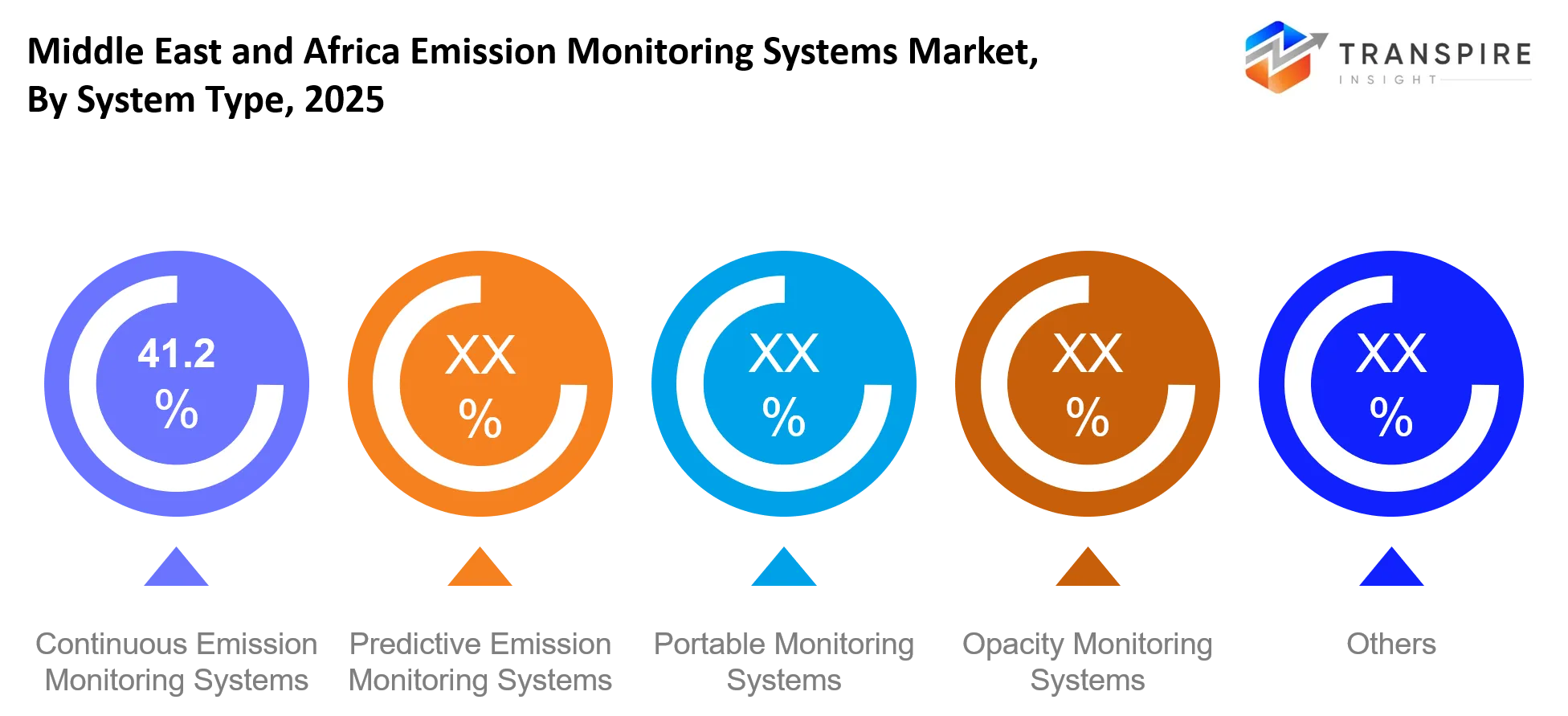
To learn more about this report, Download Free Sample Report
By Component
The component segment is basically the part that brings out the core elements needed for emission monitoring and reporting operations. Hardware, for sure, takes up a big share of it, since analyzers, control units, data acquisition systems, and communication equipment make up the actual base of the monitoring infrastructure. Ongoing investment in industrial modernization is still pushing hardware deployment not only across new facilities but also in existing ones. And honestly, stable equipment performance keeps being key for staying in compliance and for avoiding operational interruptions.
Software also grows more significant over time, because it helps with data analysis, reporting automation , trend recognition, and even remote system oversight. Services fit in as well by covering installation, calibration, maintenance, plus technical assistance tasks that keep the whole setup accurate, over time. Sensors remain the basic thing, because accurate measurement starts from dependable detection and solid data collection. Other pieces are supporting technologies and specialized components built for distinctive monitoring environments and industrial applications.
By End User
The end user segment kinda shows how various industries use emission monitoring solutions , to help with environmental management , but also for everyday operational performance. Power Generation takes a big slice here, mainly because power plants are held to strict emission limits and they really need continuous monitoring just to stay compliant. Large-scale energy production operations depend on emissions data that is precise, otherwise efficiency slips , and regulators don’t like surprises. When monitoring needs stay steady like that, investment tends to be stable across this whole segment.
Oil & Gas still matters a lot as well, because monitoring is needed all the way through exploration , processing, refining , and then distribution activities. Chemicals and Cement industries lean on monitoring technologies to handle process-related emissions, while keeping their environmental performance standards in check. Metals & Mining facilities use similar setups to track particulate matter and other industrial pollutants that show up during extraction and processing. Others cover specialized industrial sectors too, with operational requirements that basically call for tailored emission monitoring approaches, not a one-size-fits-all situation.
By Application
The application segment kind of points to the key functions that actually drive adoption of emission monitoring technologies across industrial environments. Air Quality Monitoring kind of has a major role , since environmental agencies and industrial operators really need accurate data to judge pollutant concentrations and the overall environmental impact. Ongoing assessment , even when it is a bit time consuming, supports better decision making and keeps things aligned with compliance , the kind that is based on established standards. The increasing attention to environmental performance keeps helping justify new investment in monitoring activities.
Process Monitoring still feels essential because operational efficiency often depends on how well emission behavior is understood during production runs. Regulatory Compliance is also a big one, since industrial facilities have to show they meet environmental requirements using reliable measurement and reporting practices. There are also other uses, for example specialized applications built for research, environmental assessments, and customized industrial monitoring requirements. As industrial operations keep expanding, it continues creating fresh chances for wider deployment of advanced monitoring technologies.
What are the Key Use Cases Driving the Middle East and Africa Emission Monitoring Systems Market?
The largest use case keeps being continuous stack emissions monitoring in power plants, refineries, and petrochemical setups. Operators depend on these systems to gauge sulfur oxides, nitrogen oxides, particulate matter, carbon monoxide, plus greenhouse gas releases. In practice the regulatory compliance requirements along with operational transparency, together make this scenario the main wellspring of market demand.
More adoption is showing up in mining, cement manufacturing, and metal processing plants too. Folks in these sectors use emissions monitoring platforms to follow dust levels, combustion residues, and process related pollutants while also backing environmental permitting and, in a quieter way, operational optimization aims. It’s kind of a loop.
Then there are the newer, still developing uses like methane leak detection, carbon capture monitoring, and integrated ESG reporting frameworks. Hydrogen production facilities and low carbon industrial projects are starting to weave in advanced emissions monitoring technologies as well. Right now these use cases are comparatively small but they should get more weight as industrial decarbonization efforts speed up across the region.
|
Report Metrics |
Details |
|
Market size value in 2025 |
USD 638.2 Million |
|
Market size value in 2026 |
USD 685.6 Million |
|
Revenue forecast in 2033 |
USD 1158.3 Million |
|
Growth rate |
CAGR of 7.78% from 2026 to 2033 |
|
Base year |
2025 |
|
Historical data |
2021 - 2024 |
|
Forecast period |
2026 - 2033 |
|
Report coverage |
Revenue forecast, competitive landscape, growth factors, and trends |
|
Regional scope |
Middle East and Africa (Saudi Arabia, United Arab Emirates, South Africa, Rest of Middle East and Africa) |
|
Key company profiled |
ABB, Siemens, Emerson, Honeywell, Thermo Fisher Scientific, Yokogawa, Teledyne, AMETEK, Horiba, Fuji Electric, Sick AG, Envea, Rockwell Automation, Schneider Electric, General Electric |
|
Customization scope |
Free report customization (country, regional & segment scope). Avail customized purchase options to meet your exact research needs. |
|
Report Segmentation |
By System Type (Continuous Emission Monitoring Systems, Predictive Emission Monitoring Systems, Portable Monitoring Systems, Opacity Monitoring Systems, Others); By Component (Hardware, Software, Services, Sensors, Others); By End User (Power Generation, Oil & Gas, Chemicals, Cement, Metals & Mining, Others); By Application (Air Quality Monitoring, Process Monitoring, Regulatory Compliance, Others) |
Which Regions are Driving the Middle East and Africa Emission Monitoring Systems Market Growth?
The Middle East kind of represents the largest regional market, at least on paper. Countries like Saudi Arabia , United Arab Emirates and Qatar lead adoption because they run big refining, petrochemical, and power generation infrastructure, and it just needs continuous environmental monitoring all the time. Also, regulatory modernization programs plus industrial diversification strategies have pushed more capital into advanced compliance technologies. On top of that, there is a solid ecosystem of engineering firms, automation providers, and industrial service companies, which supports that leadership in a very practical way.
South Africa stays the second most important contributor to regional revenue, even though the drivers are different. Instead of the Gulf economies where things are more concentrated, its market is driven by mining, power generation, and heavy manufacturing work. Regulatory implementation has moved forward in a steady way, so emissions monitoring suppliers can expect more predictable investment cycles. Meanwhile, established industrial operators keep upgrading monitoring systems as part of wider modernization efforts, not just standalone projects.
The remainder of Africa is probably the fastest-growing opportunity through 2033. Large scale investments in mining , cement production, energy generation, and industrial infrastructure have stretched the addressable market quite a bit. Environmental oversight has gotten stronger in several countries, so new compliance requirements are appearing that simply did not exist before. For investors, and technology providers in particular, this momentum creates a chance to lock in positions before monitoring standards become more mature, and honestly more competitive too.
Who are the Key Players in the Middle East and Africa Emission Monitoring Systems Market and How Do They Compete?
Competition is sort of moderately consolidated, with global automation instrumentation, and environmental tech providers taking up a meaningful chunk of market revenue. Technology performance, regulatory certification, analytics know-how, and service reach tend to be the main things people fight over. Lately vendors also try to win by offering integrated monitoring ecosystems rather than just standalone hardware, if that makes sense.
ABB stands out because it brings advanced emissions analytics, certified monitoring platforms, and digital workflow solutions all together. Its EmissionVision platform strengthens the automated emissions management angle by linking detection, investigation, and reporting steps into one unified workflow, kinda like end-to-end continuity.
Honeywell is centered on integrated emissions management for energy as well as offshore uses. The plan blends emissions measurement, reporting, and operational optimization with wider industrial automation offerings. Honeywell’s certified options for marine and offshore environments gives it a clear edge in energy-heavy segments where conditions are pretty demanding.
Siemens and Emerson lean on their large automation portfolios plus long-standing customer relationships, and they cross-sell emissions monitoring solutions from there. Meanwhile, ENVEA and Horiba go the more specialized route: monitoring expertise, high-precision analyzers, and regulatory certification capabilities. Those features are exactly what environmental compliance teams usually look for.
Company List
- ABB
- Siemens
- Emerson
- Honeywell
- Thermo Fisher Scientific
- Yokogawa
- Teledyne
- AMETEK
- Horiba
- Fuji Electric
- Sick AG
- Envea
- Rockwell Automation
- Schneider Electric
- General Electric (GE)
Recent Development News
In March 2026, ABB launched EmissionVision, a cloud-based workflow management platform for automated gas leak detection and emissions management. The platform helps industrial operators digitize emissions tracking and improve regulatory compliance workflows.https://www.gasprocessingnews.com
In April 2025, ENVEA launched the OPM250 Optical Aerosol Spectrometer. The product delivers real-time particulate matter monitoring with enhanced accuracy and supports industrial emissions monitoring applications.https://envea.global/news/
In May 2026, ABB launched the ACF5000 LCS low-range Continuous Emission Monitoring System. The new platform enables industrial operators to comply with increasingly stringent emissions limits through highly sensitive certified monitoring technology.https://engtechnica.com
What Strategic Insights Define the Future of the Middle East and Africa Emission Monitoring Systems Market?
The market is moving toward continuous, data driven emissions management instead of plain regulatory reporting. The basic driver behind this shift is, sort of a mix, the coming together of tighter environmental regulations , industrial digitization programs, and corporate carbon-accountability mandates. In the next seven years value creation will more and more swing away from hardware sales and over to analytics platforms, predictive diagnostics, and compliance software ecosystems
One risk that is not talked about enough is regulatory fragmentation across the region. Different reporting standards, certification requirements and even enforcement habits can make deployment harder than expected , plus it can shrink the economies of scale for suppliers. At the same time, there is also a real chance forming around methane monitoring and AI enabled emissions forecasting, especially in oil and gas operations where measurement accuracy is getting strategically crucial.
So market participants should lean into integrated digital platforms that blend emissions monitoring, predictive maintenance, and automated reporting. Firms that can deliver compliance results together with operational efficiency benefits will likely be in a stronger spot for longer term revenue growth, and to hold onto market share as competition keeps heating up
Middle East and Africa Emission Monitoring Systems Market Report Segmentation
By System Type
- Continuous Emission Monitoring Systems
- Predictive Emission Monitoring Systems
- Portable Monitoring Systems
- Opacity Monitoring Systems
- Others
By Component
- Hardware
- Software
- Services
- Sensors
- Others
By End User
- Power Generation
- Oil & Gas
- Chemicals
- Cement
- Metals & Mining
- Others
By Application
- Air Quality Monitoring
- Process Monitoring
- Regulatory Compliance
- Others
Frequently Asked Questions
Find quick answers to common questions.
The Expected Middle East and Africa Emission Monitoring Systems Market size for the Market will be USD 1158.3 Million in 2033.
Key Segments for the Middle East and Africa Emission Monitoring Systems Market are By System Type (Continuous Emission Monitoring Systems, Predictive Emission Monitoring Systems, Portable Monitoring Systems, Opacity Monitoring Systems, Others); By Component (Hardware, Software, Services, Sensors, Others); By End User (Power Generation, Oil & Gas, Chemicals, Cement, Metals & Mining, Others); By Application (Air Quality Monitoring, Process Monitoring, Regulatory Compliance, Others).
Major Middle East and Africa Emission Monitoring Systems Market Players are ABB, Siemens, Emerson, Honeywell, Thermo Fisher Scientific, Yokogawa, Teledyne, AMETEK, Horiba, Fuji Electric, Sick AG, Envea, Rockwell Automation, Schneider Electric, General Electric.
The Current Middle East and Africa Emission Monitoring Systems Market size is USD 638.2 Million in 2025.
The Middle East and Africa Emission Monitoring Systems Market CAGR is 7.78% from 2026 to 2033.
- ABB
- Siemens
- Emerson
- Honeywell
- Thermo Fisher Scientific
- Yokogawa
- Teledyne
- AMETEK
- Horiba
- Fuji Electric
- Sick AG
- Envea
- Rockwell Automation
- Schneider Electric
- General Electric (GE)
About the Authors

Avinash Kumar
I’m Avinash Kumar, a Senior Research Analyst at Transpire Insight, with expertise in the Electronics and Semiconductor and Energy & Power industry. My work focuses on analyzing emerging technologies, market trends, industry developments, and innovation across these sectors. I specialize in transforming complex technical and market insights into clear, research-backed content that helps professionals, businesses, and decision-makers stay informed. Through continuous industry research and data-driven analysis, I strive to deliver accurate, reliable, and practical perspectives on the latest advancements shaping the semiconductor and energy landscape.

Chakradhar Khansole
Chakradhar serves as the Research Director at Transpire Insight, bringing over 8 years of experience in technology, innovation, and strategic market intelligence. He specializes in transforming complex market data into actionable business insights that enable organizations to make informed, growth-oriented decisions. Recognized for his strategic vision and analytical expertise, Chakradhar leads high-impact research initiatives, delivering comprehensive market assessments, competitive intelligence, and forward-looking industry analysis.
Recently Published Reports
-
Apr 2026
Fiber Optic Faceplates Market
Fiber Optic Faceplates Market Size, Share & Analysis Report By Type (< 300 mm2, 300-350 mm2, and > 350 mm2, By Application (Night Vision, Holographic Imaging, Medical, and Others), and Geography (North America, Europe, Asia-Pacific, Middle East and Africa, South and Central America), 2021 - 2031
-
Apr 2026
High Temperature Superconductors Market
High Temperature Superconductors Market Size, Share & Analysis Report By Type (1G HTS, and 2G HTS), By Application (Power Cable, Fault Current Limiter, and Transformer), and Geography (North America, Europe, Asia-Pacific, Middle East and Africa, South and Central America), 2021 - 2031
-
Apr 2026
Industrial Plugs and Socket Market
Industrial Plugs and Socket Market Size, Share & Analysis Report By Type (Industrial Plugs, Industrial Sockets), By Current (Up to 32 A, 32 to 125 A, Above 125 A), By Protection (Dustproof and Splash Proof, Waterproof, Explosion Proof), By End User (Heavy Industries, Oil and Gas, Chemicals and Pharmaceuticals, Power Generation, Others), and Geography (North America, Europe, Asia-Pacific, Middle East and Africa, South and Central America), 2021 - 2031
-
Apr 2026
InGaAs Avalanche Photodiodes Market
InGaAs Avalanche Photodiodes Market Size, Share & Analysis Report By Type (1100 - 1700 nm, and 1000 - 1600 nm), By Application (Missile Warning System, Muzzle Flash Detection, Wafer Defect Inspection, Laser Rangefinders, and Others), and Geography (North America, Europe, Asia-Pacific, Middle East and Africa, South and Central America), 2021 - 2031