
Middle East and Africa Blood Filtration & Purification Market Size & Forecast:
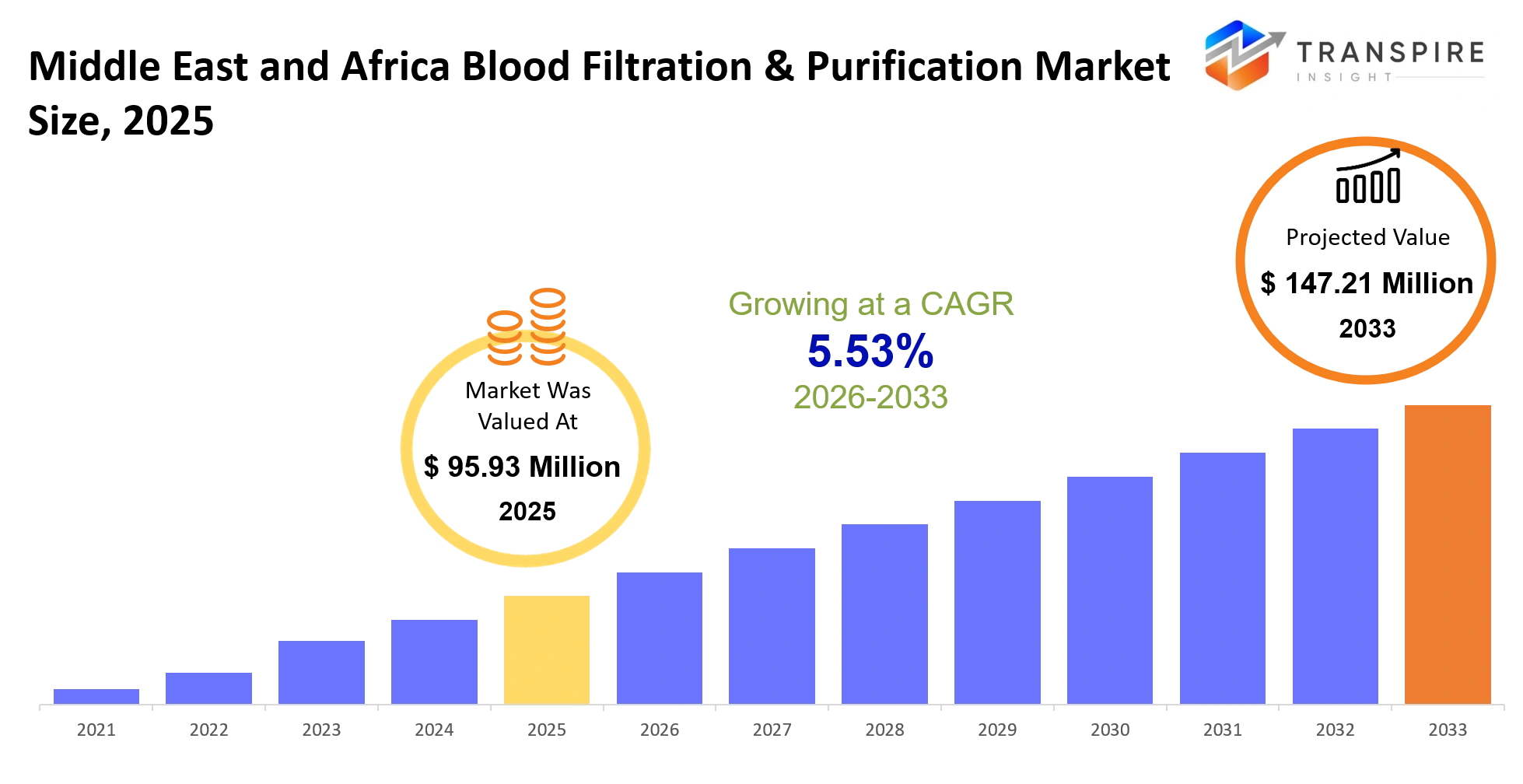
- Middle East and Africa Blood Filtration & Purification Market Size 2025: USD 95.93 Million
- Middle East and Africa Blood Filtration & Purification Market Size 2033: USD 147.21 Million
- Middle East and Africa Blood Filtration & Purification Market CAGR: 5.53%
- Middle East and Africa Blood Filtration & Purification Market Segments: By Product Type (Blood Filters, Hemoperfusion Cartridges, Plasma Separation Devices, Dialysis Filters, Leukocyte Reduction Filters, Adsorption Columns, Others); By Technology (Hemodialysis, Hemofiltration, Hemoperfusion, Plasmapheresis, Adsorption Technology, Others); By Application (Kidney Disorders, Sepsis Treatment, Autoimmune Diseases, Liver Failure, Drug Toxicity Management, Others); By End User (Hospitals, Dialysis Centers, Specialty Clinics, Research Institutes, Others).
To learn more about this report,  Download Free Sample Report
Middle East and Africa Blood Filtration & Purification Market Summary
The Middle East and Africa Blood Filtration & Purification Market was valued at USD 95.93 Million in 2025. It is forecast to reach USD 147.21 Million by 2033. That is a CAGR of 5.53% over the period.
The Middle East and Africa Blood Filtration & Purification Market kinda has a critical role in sort of pulling out toxins, inflammatory mediators, surplus fluids, and other harmful substances from blood, you know. That really matters when doctors are handling kidney failure, sepsis, autoimmune disorders and a bunch of other severe, life threatening conditions. In day to day practice hospitals, dialysis centers and critical care units lean on these technologies to stabilize patients, improve the whole treatment outcome, and reduce complications linked with serious blood related issues.
Over the last five years, the whole market has moved away from the more conventional dialysis filtration approach, and it’s leaned more toward advanced hemoperfusion and cytokine adsorption technologies. Those solutions are aimed at inflammatory situations and also at critical care use cases. Then the COVID-19 pandemic happened, and the increased attention on intensive care preparedness basically sped up investment in extracorporeal blood purification systems, plus it strengthened hospital based treatment infrastructure. At the same time, health care modernization programs across Gulf countries and parts of Africa expanded access to specialized renal care and critical care services, so more patients can actually get treatment.
As clinicians start adopting more advanced filtration platforms and as governments put money into chronic disease management, treatment volumes keep growing, and that’s generating new revenue channels for device manufacturers and also service providers.
Key Market Insights
- The Middle East dominates the Middle East and Africa Blood Filtration & Purification Market, with an estimated 62% market share in 2025, give or take.
- The Gulf nations keep pouring money into dialysis infrastructure, specialty hospitals, and even advanced intensive care abilities.
- Africa is the one moving the quickest through 2033, basically because access to healthcare is widening and hospital modernization programs are getting real traction.
- In 2025, hemodialysis filtration systems bring in around 48% of industry revenue, so yes they’re still the top segment, no debate there.
- Hemoperfusion cartridges meanwhile sit in the second place, largely because they’re used more often in critical care settings and for inflammatory disease handling.
- Cytokine adsorption technologies are expected to grow the fastest from 2026 up to 2033, kind of like a rising tide. And chronic kidney disease treatment is leading too, representing nearly 55% of total market demand in 2025.
- On the clinical side, sepsis and critical care blood purification applications are emerging as the fastest-growing use case area.
- Hospitals account for roughly 58% of market revenue, mainly due to intensive care plus acute treatment requirements, which is a big deal in most regions. Specialized dialysis centers are also expanding faster than most end user categories across the Gulf Cooperation Council countries.
- Key players include Fresenius Medical Care, Baxter International, Asahi Kasei Medical, Nipro Corporation, B. Braun, and CytoSorbents. These companies try to lock in market share with advanced adsorption technologies and next-generation filtration membranes.
- Strategic partnerships with hospitals help clinical adoption, and they also support physician training programs. Meanwhile, regional manufacturing and distribution expansion is helping cut procurement delays, and improves market penetration overall.
- Digital monitoring plus connected treatment platforms are becoming important competitive differentiators, for better or for worse.
What are the Key Drivers, Restraints, and Opportunities in the Middle East and Africa Blood Filtration & Purification Market?
The most powerful growth push seems tied to how the chronic kidney disease load and critical care conditions are rising across the region, kind of continuously. At the same time more people are now living longer with diabetes, and hypertension related renal complications are also becoming common, so the count of patients who need ongoing blood purification, goes up. In Saudi Arabia, the UAE, and South Africa, government healthcare funding programs have helped widen access to dialysis and extracorporeal treatment setup. And when hospitals keep bringing in extra capacity, plus specialist centers, then the procedure volumes climb, which then turns into steady equipment, consumables, and service income.
The biggest drag factor is honestly the price tag of advanced blood purification technologies, and also the lack of dedicated treatment facilities in several parts of Africa. To build dialysis and hemoperfusion infrastructure you need costly machinery, trained clinicians, and reliable ongoing supply lines for disposable items. These limits are structural, so they cant be fixed fast, because they rely on healthcare budgets, workforce development, and long term infrastructure spending. So even patients who should qualify, often still do not get treated, which limits market penetration and reduces the overall revenue potential.
A strong chance is found in advanced hemoperfusion and cytokine adsorption approaches for sepsis and inflammatory disorders. Critical care departments are more and more assessing blood purification platforms that pull out inflammatory mediators and toxins, beyond only the classic kidney context. With hospitals upgrading intensive care, and with greater acceptance of extracorporeal therapies, the overall environment becomes pretty supportive for next generation filtration product lines.
What Has the Impact of Artificial Intelligence Been on the Middle East and Africa Blood Filtration & Purification Market?
Artificial intelligence is gradually, kinda quietly transforming blood filtration and purification operations by making treatment planning easier, improving how equipment is managed, and enhancing patient monitoring. In practice, healthcare providers are starting to use AI enabled analytics platforms to watch dialysis machines, filtration units, and extracorporeal treatment hardware in real time. These setups automatically spot performance deviations, tune treatment parameters, and then basically help clinicians decide what to do next.
Meanwhile, machine learning models are also used to anticipate equipment maintenance needs before failures even happen. Hospitals can cut down on those annoying surprises and increase equipment availability by looking at operating conditions, pressure fluctuations, filtration efficiency, and device usage habits. Predictive analytics also supports smarter inventory handling for cartridges, filters, and other consumables, which in turn reduces operational expenses.
On top of that, advanced digital technologies are supporting better patient outcomes with more personalized treatment recommendations, based on lab results, treatment history, and even disease progression patterns. Some providers say they’ve seen improved treatment consistency, less equipment downtime and better overall use of resources after rolling out these digital monitoring platforms.
Still, adoption is held back, at least for now, by costly integration efforts, fragmented hospital IT infrastructures, and the limited access to large clinical datasets that are required to train strong AI models. In many African healthcare systems, inconsistent digital connectivity keeps slowing the wider rollout of these advanced analytics tools.
Key Market Trends
- Since 2021, hospitals have been expanding their hemoperfusion adoption for sepsis management, and inflammatory disorders too, beyond the usual dialysis approach, you know.
- From 2021 to 2025, Gulf healthcare providers ramped up investment in specialized renal care centers by more than 20%, which is kind of a big move.
- After the pandemic, clinical acceptance for advanced cytokine adsorption technologies seemed to rise faster in intensive care settings, mainly because infrastructure got upgraded and it actually worked in practice.
- Digital monitoring platforms also started getting stitched more directly into dialysis systems, so oversight improved and equipment utilization rates went up a bit more.
- Manufacturers, meanwhile, leaned toward localized distribution networks, to cut down on procurement delays, and avoid some supply chain hiccups.
- Private hospital groups went further too, rolling out dialysis and blood purification services across Saudi Arabia, UAE, and South Africa.
- Between 2022 and 2025, clinical research on extracorporeal blood purification therapies increased notably, not just slowly.
- Companies are putting more focus on physician education programs as well, to speed up uptake of advanced filtration technologies, in a very practical way.
- Since 2023, partnerships between hospitals and device manufacturers have become more common, almost like a standard play.
- And the treatment protocols are now blending blood purification with wider critical care management strategies, instead of treating it like a standalone thing.
Middle East and Africa Blood Filtration & Purification Market Segmentation
By Product Type
The product type segment kind of brings out the spectrum of filtration and purification solutions that are used across renal care, critical care, and therapeutic blood treatment workflows. Blood Filters hold an important position too, since removing unwanted particles in an effective way helps enable safer blood processing, and it can influence the treatment outcomes in a pretty direct sense. Hemoperfusion Cartridges are still getting more attention in critical care settings, where toxin removal and clearing of inflammatory mediators stays essential. Plasma Separation Devices also show up for specialized therapeutic procedures, because they support selective separation of plasma components for more targeted treatment approaches.
Dialysis Filters account for a noticeable share, largely because they are widely used in long-term kidney disease management and in routine dialysis procedures. Leukocyte Reduction Filters help improve blood quality by reducing white blood cell content, particularly during transfusion-related applications. Adsorption Columns support more advanced purification procedures, using selective removal of harmful substances from circulation instead of a general rinse, you know. Others include emerging filtration products that are developed for specific medical conditions and shifting treatment requirements across healthcare facilities.
By Technology
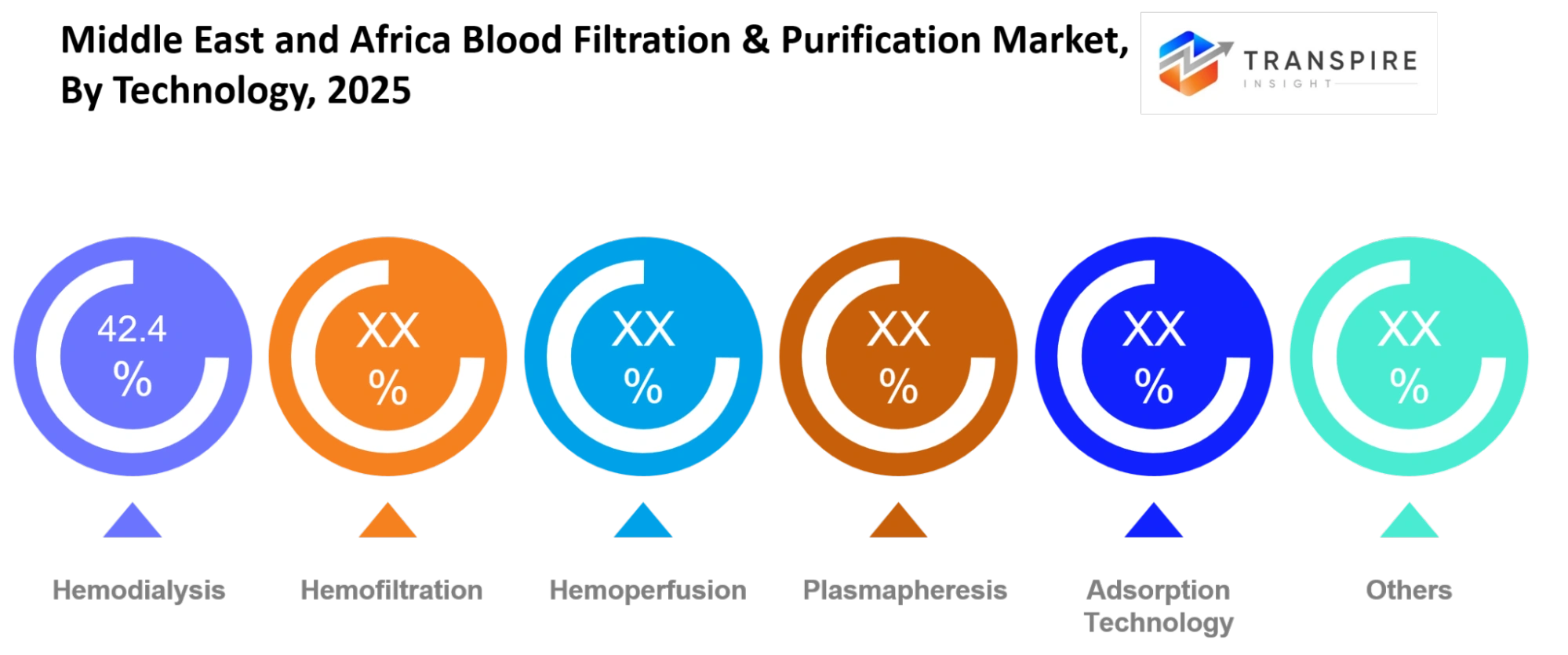
The tech segment sort of reflects the various clinical methods that get used to remove toxins, waste products, and other harmful substances from blood. Hemodialysis seems to keep strong utilization because established treatment protocols and wide clinical acceptance back routine kidney care services. Hemofiltration also matters a lot in intensive care settings where controlled fluid removal and waste elimination stay, you know, necessary. Hemoperfusion keeps expanding across critical care applications, largely because there is growing interest in managing toxins plus inflammatory mediator levels.
Plasmapheresis fits into the treatment pathways for illnesses that need plasma exchange and a more targeted removal of disease related components. Adsorption Technology keeps drawing attention through newer improvements in selective purification capabilities and better overall treatment efficiency. Other approaches include developing technologies aimed at specific clinical requirements and, well, sustaining ongoing innovation in extracorporeal treatment systems. Picking the right technology often comes down to the disease condition, the treatment objectives, and what the healthcare facility can realistically support.
To learn more about this report, Download Free Sample Report
By Application
Application segmentation kind of shows how filtration and purification systems,help with all sorts of therapeutic needs across different healthcare setups. Kidney Disorders are likely the biggest application area because chronic renal problems need repeated treatment sessions and ongoing clinical management . Sepsis Treatment is still growing, since many healthcare providers keep adopting more advanced purification methods to help critically ill patients survive and stabilize. Autoimmune Diseases meanwhile make steady demand for therapeutic blood processing procedures, built to remove harmful immune related substances.
Liver Failure applications also use purification equipment to assist toxin removal when natural organ function starts to fail. Drug Toxicity Management shows up especially in emergency and intensive care pathways that rely on fast removal of dangerous compounds from the bloodstream. Other areas include specialized medical conditions where blood purification technologies support patient stabilization and improve treatment effectiveness in practical terms. Overall clinical adoption keeps moving forward as healthcare providers want broader therapeutic benefits, not only the traditional renal focus.
By End User
End user segmentation points at the health organizations that actually use blood purification technologies to keep patient treatment on track and to help clinical care delivery run smoothly. Hospitals take the biggest portion, mainly because full service facilities handle many types of acute, chronic, and critical cases, so they need advanced filtration procedures fairly often. Dialysis Centers keep utilization strong via steady, day to day treatment programs for patients living with long term kidney disorders. Specialty Clinics add additional demand, through targeted treatment services that focus on particular therapeutic requirements, and disease categories too.
Research Institutes back the whole ecosystem by supporting technology development, clinical assessment and scientific studies that move purification methods forward, along with updated treatment protocols. Ongoing research helps nudge product improvements, and it also expands the broader clinical understanding of filtration uses. The “others” bucket includes healthcare organizations working in unusual treatment environments, and specialized care settings where routine care models are not enough. Overall end user demand stays tied to how much healthcare infrastructure gets invested in, how reachable treatment is for patients, and how quickly extracorporeal therapy techniques evolve over time.
What are the Key Use Cases Driving the Middle East and Africa Blood Filtration & Purification Market?
The largest use case keeps being chronic kidney disease management, where blood filtration systems help patients who need ongoing dialysis, kind of regularly. This sort of application tends to generate the highest treatment volumes, because many patients need several sessions each week, so demand comes back again and again for equipment, filters, and other consumables.
Outside renal care, hospitals are using blood purification technology more often in intensive care units for sepsis management, acute kidney injury, and even toxin removal. Big tertiary hospitals, as well as more specialized critical care centers, are starting to adopt advanced hemoperfusion systems in an effort to enhance outcomes for people who are severely ill.
Newer directions also show up, like cytokine removal approaches for systemic inflammatory conditions and extracorporeal treatments running alongside organ support systems. These kinds of applications are still fairly niche today, but they should become more widely accepted, since the clinical evidence backing their value continues to grow and get stronger.
|
Report Metrics |
Details |
|
Market size value in 2025 |
USD 95.93 Million |
|
Market size value in 2026 |
USD 101.01 Million |
|
Revenue forecast in 2033 |
USD 147.21 Million |
|
Growth rate |
CAGR of 5.53% from 2026 to 2033 |
|
Base year |
2025 |
|
Historical data |
2021 - 2024 |
|
Forecast period |
2026 - 2033 |
|
Report coverage |
Revenue forecast, competitive landscape, growth factors, and trends |
|
Regional scope |
Middle East and Africa (Saudi Arabia, United Arab Emirates, South Africa, Rest of Middle East and Africa) |
|
Key company profiled |
Fresenius Medical Care, Baxter International, Asahi Kasei Medical, Toray Medical, Nipro Corporation, B. Braun, CytoSorbents, Jafron Biomedical, Kaneka, Nikkiso, Medtronic, JMS Co., Weigao Group, Kawasumi Laboratories, Biosun Medical. |
|
Customization scope |
Free report customization (country, regional & segment scope). Avail customized purchase options to meet your exact research needs. |
|
Report Segmentation |
By Product Type (Blood Filters, Hemoperfusion Cartridges, Plasma Separation Devices, Dialysis Filters, Leukocyte Reduction Filters, Adsorption Columns, Others); By Technology (Hemodialysis, Hemofiltration, Hemoperfusion, Plasmapheresis, Adsorption Technology, Others); By Application (Kidney Disorders, Sepsis Treatment, Autoimmune Diseases, Liver Failure, Drug Toxicity Management, Others); By End User (Hospitals, Dialysis Centers, Specialty Clinics, Research Institutes, Others). |
Which Regions are Driving the Middle East and Africa Blood Filtration & Purification Market Growth?
The Middle East is still sort of the dominant regional market, because of the really big healthcare spend, more advanced hospital infrastructure, and also firm government support behind renal care programs. Like Saudi Arabia, the UAE, and Qatar have already put in a lot of money into dialysis networks and these specialized treatment centers. The regulatory setup kinda backs the take up of advanced medical technologies and it also makes it easier to reach newer, innovative therapies. With both strong public and private healthcare ecosystems still in place, the region keeps reinforcing its leadership position.
South Africa comes in as the second-largest contributor and it feels a bit different from the Middle East. It has established clinical know how, plus a healthcare infrastructure that’s comparatively more mature. The market is helped by a blend of public healthcare services and private hospital investments. Healthcare providers keep upgrading their dialysis abilities, and they expand specialty care options too. All of that then supports a stable and consistent need for blood purification technologies.
Meanwhile, the rest of Africa is showing up as the fastest-growing region. More healthcare funding, international development efforts, and investments in hospital modernization have raised treatment capacity across a range of countries. New dialysis centers plus dedicated healthcare facilities are improving patient reach to advanced therapies. For investors and newcomers, this rising trajectory actually makes room to build an early footprint in healthcare markets that are still underserved, roughly from 2026 to 2033.
Who are the Key Players in the Middle East and Africa Blood Filtration & Purification Market and How Do They Compete?
Competition is still kind of moderately consolidated, and a lot of the regional revenue is driven by big global medical technology companies. Most players end up going head to head mainly on technology performance, clinical results, product dependability, physician support programs, and how strong their distribution really is. The established manufacturers usually lean on deep regulatory experience, plus those long standing hospital relationships, while the specialized blood purification companies tend to fight with newer, adsorption based technologies. Fresenius Medical Care uses its whole dialysis ecosystem, so equipment, consumables, and clinical services basically stay under the same umbrella. The approach is about connected care platforms and pushing operational efficiency forward. In June 2026, the company rolled out the Kinexus digital platform, to support home dialysis programs, and also more connected patient management.
Baxter International sets itself apart with a wide renal care and hospital product lineup. They put a spotlight on connected healthcare technologies, and on workflow optimization style solutions that help treatment providers.CytoSorbents zeroes in on hemoadsorption and critical care blood purification. Their edge comes from specialized adsorption technologies aimed at inflammatory mediators, and toxins .The company keeps expanding via technology innovation and clinical partnerships. Other notable participants include Asahi Kasei Medical, Nipro Corporation, Toray Medical, and B. Braun, and they mostly compete through membrane technology innovation, product reliability, and regional distribution reach.
Company List
- Fresenius Medical Care
- Baxter International
- Asahi Kasei Medical
- Toray Medical
- Nipro Corporation
- B. Braun
- CytoSorbents
- Jafron Biomedical
- Kaneka
- Nikkiso
- Medtronic
- JMS Co.
- Weigao Group
- Kawasumi Laboratories
- Biosun Medical
Recent Development News
In June 2026, Fresenius Medical Care launched kinexus worldwide, a unified digital platform supporting home dialysis programs. The platform integrates remote therapy monitoring and operational workflows, helping providers improve treatment management and expand digital kidney care services, which strengthens the blood filtration and purification ecosystem.
Source: https://freseniusmedicalcare.com
In September 2025, Baxter International launched the Welch Allyn Connex 360 Vital Signs Monitor following FDA 510(k) clearance. The connected monitoring platform enhances patient data integration and workflow efficiency in hospitals, supporting more advanced monitoring capabilities for patients undergoing renal replacement and blood purification therapies.
Source: https://investor.baxter.com
What Strategic Insights Define the Future of the Middle East and Africa Blood Filtration & Purification Market?
The market is sliding, sort of, toward a more specialized clinical model where blood purification is not just kidney disease care anymore— it kind of seeps into critical care, sepsis treatment, and inflammatory condition management as well. The main thing driving this shift is the growing tie-in between advanced adsorption technologies and extracorporeal therapies, basically inside intensive care protocols. And as healthcare systems put money into higher acuity treatment capabilities, the manufacturers that bring clinically differentiated technologies will likely be the ones to take more of the value, not by chance but by design.
There’s also a quieter risk, it’s less obvious. The uptake of these advanced therapies could become clustered in a small set of well-funded healthcare systems. If the build out of infrastructure happens unevenly across the region, then market growth could end up concentrated in only a few countries, which would naturally squeeze the broader revenue picture.
Meanwhile, there’s an emerging opening that feels pretty important: AI-enabled treatment optimization and digital blood purification platforms that help with predictive maintenance, remote monitoring, and personalized therapy management. Companies should probably focus on partnerships with regional healthcare providers, and also invest in clinical evidence generation. Because, showing measurable patient outcomes will increasingly decide who wins competitively over the next decade, more and more.
Middle East and Africa Blood Filtration & Purification Market Report Segmentation
By Product Type
- Blood Filters
- Hemoperfusion Cartridges
- Plasma Separation Devices
- Dialysis Filters
- Leukocyte Reduction Filters
- Adsorption Columns
- Others
By Technology
- Hemodialysis
- Hemofiltration
- Hemoperfusion
- Plasmapheresis
- Adsorption Technology
- Others
By Application
- Kidney Disorders
- Sepsis Treatment
- Autoimmune Diseases
- Liver Failure
- Drug Toxicity Management
- Others
By End User
- Hospitals
- Dialysis Centers
- Specialty Clinics
- Research Institutes
- Others
Frequently Asked Questions
Find quick answers to common questions.
The expected Middle East and Africa Blood Filtration & Purification Market size for the market will be USD 147.21 Million in 2033.
Key segments for the Middle East and Africa Blood Filtration & Purification Market are By Product Type (Blood Filters, Hemoperfusion Cartridges, Plasma Separation Devices, Dialysis Filters, Leukocyte Reduction Filters, Adsorption Columns, Others); By Technology (Hemodialysis, Hemofiltration, Hemoperfusion, Plasmapheresis, Adsorption Technology, Others); By Application (Kidney Disorders, Sepsis Treatment, Autoimmune Diseases, Liver Failure, Drug Toxicity Management, Others); By End User (Hospitals, Dialysis Centers, Specialty Clinics, Research Institutes, Others).
Major Middle East and Africa Blood Filtration & Purification Market players are Fresenius Medical Care, Baxter International, Asahi Kasei Medical, Toray Medical, Nipro Corporation, B. Braun, CytoSorbents, Jafron Biomedical, Kaneka, Nikkiso, Medtronic, JMS Co., Weigao Group, Kawasumi Laboratories, Biosun Medical.
The Middle East and Africa Blood Filtration & Purification Market size is USD 95.93 Million in 2025.
The Middle East and Africa Blood Filtration & Purification Market CAGR is 5.53% from 2026 to 2033.
- Fresenius Medical Care
- Baxter International
- Asahi Kasei Medical
- Toray Medical
- Nipro Corporation
- B. Braun
- CytoSorbents
- Jafron Biomedical
- Kaneka
- Nikkiso
- Medtronic
- JMS Co.
- Weigao Group
- Kawasumi Laboratories
- Biosun Medical
About the Authors

Pankaj Ghogare Patil
I am Pankaj Ghogare Patil, a Senior Research Analyst at Transpire Insight, specializing in the Pharmaceutical, Chemicals & Materials, Healthcare IT, and Biotechnology industry. My expertise lies in conducting comprehensive market research, analyzing industry trends, evaluating competitive landscapes, and translating complex data into actionable insights. At Transpire Insight, I closely follow emerging technologies, regulatory developments, and market innovations to create accurate, well-researched, and informative content that helps businesses and professionals make informed decisions. I am committed to producing credible, evidence-based articles that reflect industry best practices while making technical topics accessible and valuable for a broad audience.

Chakradhar Khansole
Chakradhar serves as the Research Director at Transpire Insight, bringing over 8 years of experience in technology, innovation, and strategic market intelligence. He specializes in transforming complex market data into actionable business insights that enable organizations to make informed, growth-oriented decisions. Recognized for his strategic vision and analytical expertise, Chakradhar leads high-impact research initiatives, delivering comprehensive market assessments, competitive intelligence, and forward-looking industry analysis.
Recently Published Reports
-
Apr 2026
AI in Diabetic Retinopathy Market
AI in Diabetic Retinopathy Market Size, Share & Analysis Report By Type (Screening AI Systems, Diagnostic AI Systems, and Predictive AI Models), By Application Segment (Hospitals, Ophthalmology Clinics, Diagnostic Centers, and Research and Development), and Geography (North America, Europe, Asia-Pacific, Middle East and Africa, South and Central America), 2021 - 2031
-
Apr 2026
Psychometric Tests Market
Psychometric Tests Market Size, Share & Analysis Report By Type (Personality Tests, Ability/Aptitude Tests, Skill/Knowledge Tests, and Others), By Application (Talent Acquisition and Talent Management), and Geography (North America, Europe, Asia-Pacific, Middle East and Africa, South and Central America), 2021 – 2031
-
Apr 2026
Rare Biological Sample Collection Market
Rare Biological Sample Collection Market Size, Share & Analysis Report By Type (Isolation Kits & Reagent, Blood Collection Tubes, and Others), By Application (Oncology, Transcriptomics, Pharmacogenomics, and Others), and Geography (North America, Europe, Asia-Pacific, Middle East and Africa, South and Central America), 2021 – 2031
-
Jul 2026
Diabetic Retinopathy Market
Diabetic Retinopathy Market Size, Share & Analysis Report By Type (Proliferative Diabetic Retinopathy, and Diabetic Macular Edema (DME)), By Treatment Type (Anti VEGF Drug, Steroid Implants, Laser Surgeries, and Vitrectomy), and Geography (North America, Europe, Asia-Pacific, Middle East and Africa, South and Central America), 2021 – 2031
Our Clients







