
Middle East and Africa Automotive Tires Market Summary
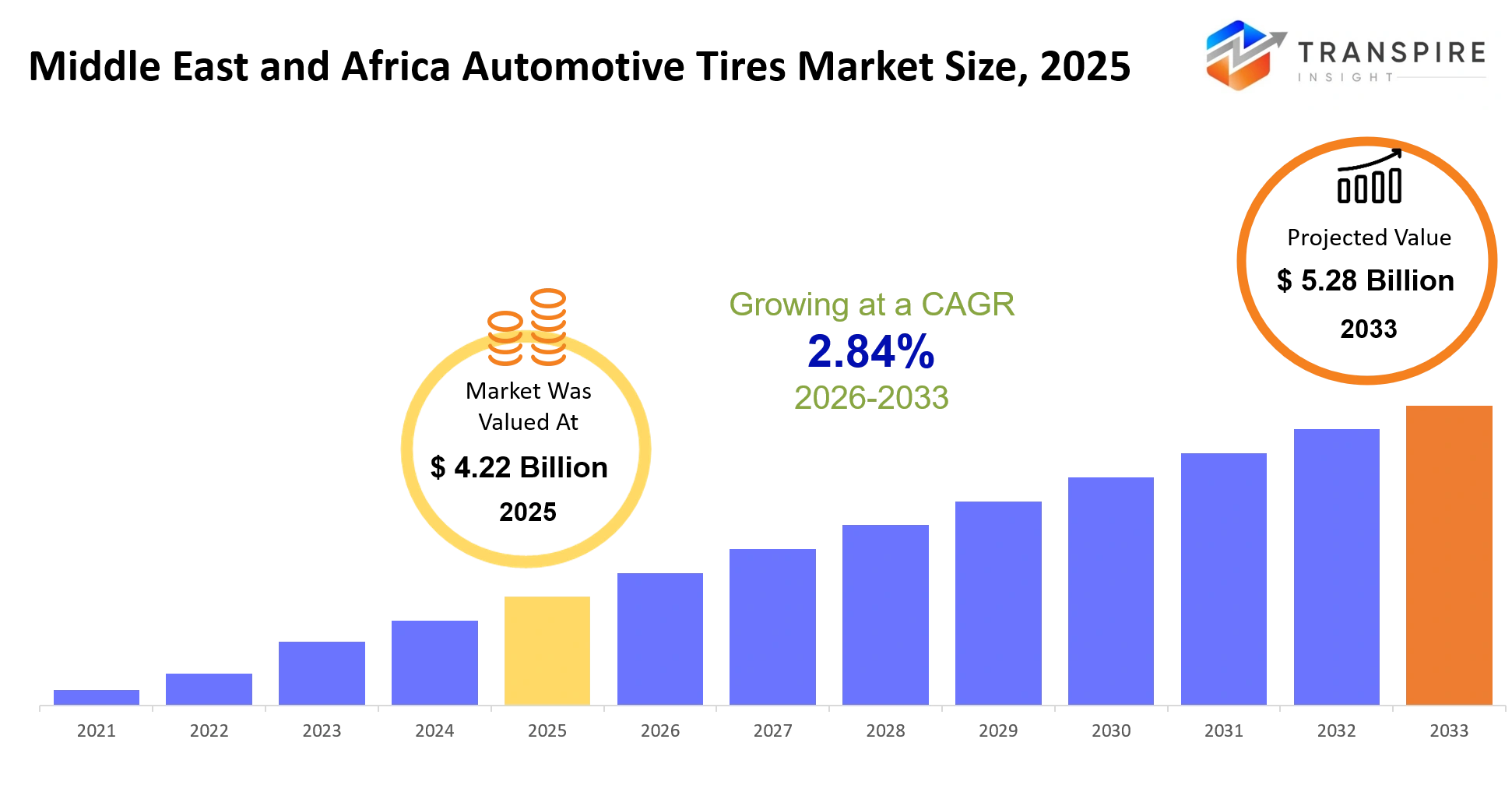
As per Transpire Insight Analysis the Middle East and Africa Automotive Tires Market size is estimated at USD 4.22 Billion in 2025 and is anticipated to reach USD 5.28 Billion by 2033, growing at a CAGR of 2.84% from 2026 to 2033.
The Middle East and Africa Automotive Tires Market plays a critical role in keeping passenger cars, commercial fleets, agricultural machines, and off road vehicles running safely, even when roads are all over the place and the climates get pretty demanding. Tire makers, plus the distributors behind them, help mobility, freight movement, mining, construction, and public transport, by putting out products built for durability, better fuel economy, and a longer useful life, you know. Over the last five years, things have been tilting toward premium radial options and low rolling resistance tires because fleet operators are more focused on spending less day to day, and not having to replace as often, either.
Also, after COVID-19, global supply chain problems didn’t just fade away. They mixed with raw material price swings and shipping limits, so many brands started leaning into localization, and they diversified sourcing across the region, somewhat aggressively. Governments keep investing in transport infrastructure, and vehicle ownership keeps rising in several African economies, which makes replacement tire demand stay steady. Meanwhile, digital tire monitoring is spreading, aftermarket networks are growing, and more customers are choosing premium products, so manufacturers can boost revenue using value added features rather than depending only on selling more units.
Middle East and Africa Automotive Tires Market Size & Forecast:
- Middle East and Africa Automotive Tires Market Size 2025: USD 4.22 Billion
- Expected Market Value 2033: USD 5.28 Billion
- Forecast CAGR: 2.84%
- Leading region in 2025:
- Fastest Growing region:
- Key Profile: Michelin, Bridgestone, Goodyear, Continental, Pirelli, Yokohama, Hankook, Kumho Tire, Toyo Tires, Apollo Tyres, Sumitomo Rubber, Nokian Tyres, Sailun, CEAT, Giti Tire.
Key Market Insights
- The Middle East and Africa Automotive Tires Market is set to climb up to around USD 5.28 billion by 2033, mostly pushed by replacement needs and vehicle fleets that keep getting larger, sort of always growing.
- In the regional picture, the Middle East seems like itll stay in the lead, with an estimated 58–60% share in 2025 and that is usually tied to heavier vehicle ownership together with higher usage of premium tire types, kind of the bigger picture really.
- Africa, meanwhile, is projected to become the fastest growing regional market through 2033, fueled by improved road infrastructure and more common deployment of commercial vehicles in everyday operations.
- As for tire form, radial tires are expected to account for close to 65% of the overall market share in 2025, mostly because they typically last longer, support better fuel efficiency, and often give a smoother ride compared to older constructions.
- Tubeless tires hold the second-largest slice at roughly 20% market share, and performance tires are likely to be the segment expanding the quickest across the forecast horizon.
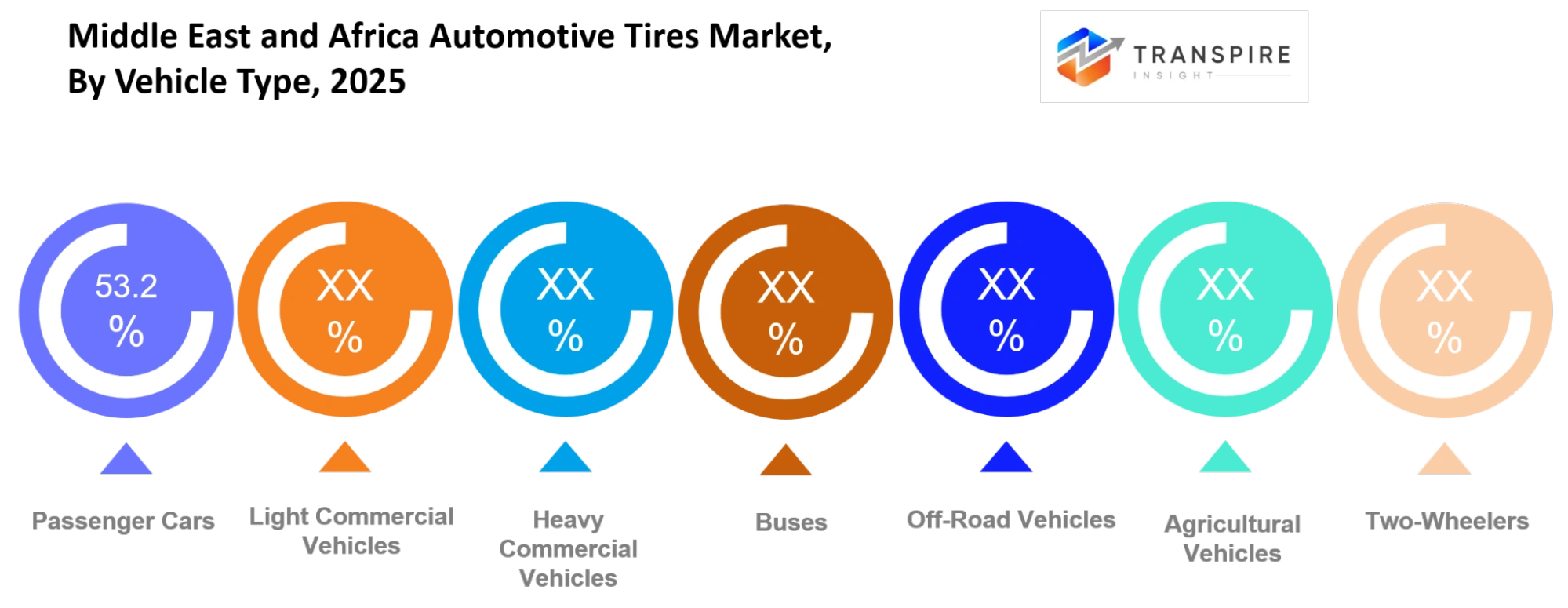
- On the application side, passenger cars still lead the demand, contributing nearly 52% of total tire needs, while light commercial vehicles show the most noticeable growth in replacement-cycle activity.
- From a revenue point of view, the aftermarket is more than 70% of industry earnings, which sort of tracks since tire replacement happens more frequently than original equipment installs.
- Major names like Michelin, Bridgestone, Goodyear, Continental and Pirelli keep widening their regional distribution routes, and they keep launching longer-lasting, fuel-saving tire ranges as well.
- At the same time, manufacturers are pouring in more investment into “smart tire” options, including RFID-based tracking plus predictive maintenance features, all to push fleet performance up and make it easier to bring customers back.
- Lastly, strategic partnerships with regional distributors and localized warehousing have helped shorten delivery times, and they also let firms sharpen how they compete across the main markets in both the Middle East and Africa
What are the Key Drivers, Restraints, and Opportunities in the Middle East and Africa Automotive Tires Market?
The main reason market expansion happens is basically the steady growth of vehicle fleets, backed by infrastructure spending, logistics modernization, and day to day commercial transportation activity across the Middle East and Africa. Governments keep investing in highways, industrial corridors, ports ,and mining projects which in turn boosts the use of both passenger and commercial vehicles. That lifts replacement tire consumption right away, since commercial fleets run in harsher situations that speed up tire abrasion. At the same time, fleet managers are going for premium radial tires and digital tire monitoring systems. This is to cut down fuel expenses and maintenance costs, so manufacturers can earn more from value added products, kinda quietly but still clearly.
The biggest structural hurdle still looks like price volatility across natural rubber, synthetic rubber, carbon black, and steel. Tire manufacturing relies a lot on globally traded raw materials, meaning producers face fluctuating input costs plus transportation expenses. A lot of African markets lean on imported items too, so when currencies weaken or logistics get disrupted, the whole situation gets shaky. Those conditions squeeze profit margins, slow down buying decisions, and basically reduce how fast premium tires get adopted in markets that are very price sensitive.
There’s also a real opening in pushing localized manufacturing along with regional distribution across Africa. Large international players are investing more in production capacity and supply networks, so they can avoid import dependence, and deliver faster. In other words, more local wheels, less waiting, and better access overall.
What Has the Impact of Artificial Intelligence Been on the Middle East and Africa Automotive Tires Market?
Artificial intelligence together with advanced digital technologies are, you know, changing the regional tire industry in a pretty noticeable way. They’re helping with manufacturing efficiency, fleet monitoring, and even predictive maintenance. More and more tire manufacturers are rolling out AI driven inspection systems, basically using computer vision to spot production defects— and it tends to work better than the old manual checks. Fleet operators then start using machine learning to look at things like tire pressure, temperature, tread wear, and all that vehicle telemetry data. That means maintenance teams can swap out tires before failures even happen, so the whole operation gets calmer. In the end, these predictive maintenance setups lower the chance of sudden downtime, boost vehicle readiness and, for logistics companies and commercial transport fleets, it can also mean reduced operating costs.
On top of that, advanced analytics are making inventory control smarter. They can forecast replacement demand across dealerships and the aftermarket distribution lanes. AI enabled route planning and tire performance analysis also support fleet managers in reducing fuel spending, while at the same time extending the useful life of tires. This is often done through more careful rotation routines and maintenance scheduling. Manufacturers are also using digital twins and predictive production models to keep manufacturing output consistent, and to cut down on material waste as well.
Still, AI adoption is not moving as fast as many people hoped. The main barriers are high implementation costs, fragmented digital infrastructure, and limited telematics coverage in several African markets. Smaller fleet operators often don’t have connected vehicles or dependable data streams. Without that, it’s hard to build predictive models that actually hold up in real life, so the wider deployment of intelligent tire management solutions gets delayed.
Key Market Trends
- Radial tire adoption went up pretty big after 2020, landing around 65% market share, because fleets really started caring more about fuel efficiency and also that longer operating life thing.
- Premium tire makers did a lot more investing into regional warehousing from 2021 to 2025, and it apparently cut delivery lead times by making the supply chain more resilient, so less surprise delays.
- Meanwhile aftermarket channels swelled to more than 70% of industry revenue, which sorta shows that replacements are happening more often across commercial vehicle fleets, like not just once in a while.
- Fleet operators also leaned into TPMS and connected tire monitoring after 2022, and that helped them plan maintenance better, while lowering those unexpected roadside failures.
- Michelin , Bridgestone, Continental, and Goodyear went further with digital fleet solutions, trying to stand out beyond plain traditional tire performance.
- Tire manufacturers started to localize sourcing strategies more often after the pandemic hit, since logistics disruptions made long distance imports less dependable, and inventories became easier to keep available.
- Commercial fleet buyers shifted their decisions away from only the lowest cost products, toward longer life premium tires, since those can reduce total operating expenses.
- Tire companies also grew partnerships with regional distributors and service centers, kind of to reinforce aftermarket support across emerging African markets.
- Digital analytics and predictive maintenance platforms became major purchasing criteria for logistics operators that manage large vehicle fleets.
- And sustainability programs pushed manufacturers to use more recycled material, plus develop lower rolling resistance tire designs, which improves fuel efficiency and cuts lifecycle emissions too.
Middle East and Africa Automotive Tires Market Segmentation
By Tire Type
Radial Tires take the biggest share, mainly because they tend to give longer tread life, lower rolling resistance, and that improved fuel efficiency helps both passenger vehicles and commercial fleets across the region. Bias Tires are still out there working , especially with heavy-duty equipment in mining, agriculture, and construction, where sidewall strength really keeps matters steady. Tubeless Tires keep on replacing tube-type products too, puncture resistance helps , heat dissipation is better, and maintenance is simpler so the vehicles see less downtime. Run-Flat Tires are also getting more accepted in premium passenger vehicles, since they let you keep going a limited distance after pressure loss, which in turn improves safety during those remote trip conditions where help may not be close.
Performance Tires are pulling in sports utility vehicles and premium car owners , they want sharper handling and stronger braking on paved roads. All-Season Tires stay the go-to in moderate climate zones, because year-round usability reduces how often you have to replace them. Winter Tires get used in a smaller set of high-altitude or cooler spots, where seasonal weather really needs extra traction. The “Others” category includes specialty products for industrial equipment, military vehicles, and customized transport, which are built around specific operational requirements across several industries.
By Vehicle Type
Passenger Cars tend to drive the biggest tire consumption rate because private mobility keeps on spreading through urban areas, and the replacement cycles do not really slow down. Light Commercial Vehicles back retail delivery, courier operations, and everyday local transport, so there is kind of steady aftermarket demand. Heavy Commercial Vehicles must use tougher tires for carrying heavy loads over long-haul routes, that is why premium options look really appealing to fleet managers. Buses lean on tire systems that last a long time, those solutions support passenger safety and also cut down maintenance stoppages during scheduled routes.
Off-Road Vehicles run in mining, energy, and infrastructure initiatives where a durable tire build helps them handle rough ground and tough working conditions. Agricultural Vehicles depend on specialized tires that help safeguard soil while still boosting traction across typical farming work. Two-Wheelers create ongoing replacement demand in both city and countryside markets, since motorcycles stay a more affordable way to move around. Others cover emergency response cars, defense related gear, and specialized transport platforms, which all need tire solutions designed for their exact use case.
By Distribution Channel
OEM sales support vehicle manufacturers by providing tires for new passenger cars, commercial vehicles,and industrial equipment prior to handover to customers. Aftermarket sales take the biggest slice of revenue since tire replacement tends to happen a few times during a vehicle’s lifetime. Tire Dealers stay a key sales route, mainly because they give shoppers a wide product choice plus installation, balancing, and ongoing maintenance services. Online Retail is just keep growing, and with digital platforms people can compare stuff easier, see clearer pricing,and even book a home delivery routine for both solo buyers as well as fleet operators.
Meanwhile Automotive Service Centers can lift the local market by bundling an inspection, wheel alignment, repair, and yes tire replacement into one single stop , so drivers feel like it’s more straightforward. Wholesalers also play a role by keeping inventory across regional distribution networks and feeding retailers, workshops,and commercial buyers in a steady flow, not bursts. There are other routes too, like direct fleet contracts, government procurement programs, and specialized industrial suppliers that support mining, agriculture, and construction businesses.. With broader distribution coverage, product availability should improve across developing markets and in far off operating locations.
By Application
On-Road applications really kinda make up the biggest segment since passenger travel, freight moving, and overall city mobility depend on tire replacement that stays continuous, so safety and vehicle performance don’t slip. Off-Road applications then back up industrial machinery that works on rough ground and uneven surfaces, and the reinforced tire build basically helps extend the useful life of the tire. Construction work needs tires that can take on heavy equipment, day after day, even when the environment is harsh and the conditions are demanding. Mining operations meanwhile need extremely durable products meant to survive sharp contact points, high weights, and long operating stretches.
Agriculture also drives demand for tires that boost traction while keeping soil compaction lower during plowing, cultivation and harvesting. For logistics operations, buyers want dependable tires that can support delivery timing and reduce fleet downtime across wider regional routes. Motorsports stays a special slice of the market, mostly centered on high performance tire technology for racing events and performance trials. Then there are other use cases too, like airport ground support equipment, military transport, and municipal service vehicles, all of which need purpose built tire solutions.
By Rim Size
Below 15 Inch tires usually end up on compact passenger cars , and also on two-wheelers where affordability, fuel economy, and day to day city riding are the main reasons folks buy. The 15–18 Inch band is what grabs the biggest market share, mainly because most passenger cars and sport utility vehicles seem to sit right in that size range. Also, people still seem to lean toward crossovers , and utility type vehicles which keeps the replacement needs of this group moving. The mix of decent handling, ride comfort, and overall cost makes it work for both private owners and commercial fleets , without much trouble.
The 19–21 Inch category is more common on premium passenger vehicles, luxury sport utility cars, and performance focused models that really want larger wheel setups. After 21 Inch, you typically see tires for specialized commercial vehicles, heavy industrial equipment, and custom premium automobiles, where extra load capacity and better road steadiness matter. Other options cover non-standard rim sizes, often created for specialized machinery and unusual transit demands. As for what’s next , product innovation across all rim sizes should keep raising durability, improving fuel efficiency , and making driving feel more composed.
What are the Key Use Cases Driving the Middle East and Africa Automotive Tires Market?
Passenger transport keeps being the leading use case, mostly because private vehicles still take up the highest replacement demand all across the region. The daily grind of commuting plus intercity trips and even commercial ride services mean tires get swapped, sort of, pretty often—especially in the passenger car slice. There’s also the whole regular maintenance thing , and road conditions that are far from easy, which kind of reinforces the aftermarket sales push.
On the other side, commercial logistics and construction work keep pushing tire usage higher for light commercial vehicles, heavy commercial vehicles , and off-road machinery. Mining work and agricultural equipment meanwhile need sturdy products that can handle heavy loads and really rough terrain. Fleet operators are also increasingly going for premium tire solutions to stretch maintenance intervals and get better operational efficiency out of the whole system.
Connected fleet management together with electric mobility looks like it could be the next big wave, at least going forward. Smart tires with pressure and temperature monitoring sensors will help enable predictive maintenance for commercial fleets. Then there are dedicated products meant for electric passenger vehicles, plus transport platforms that are leaning toward autonomy, and those could open extra opportunities as regional infrastructure slowly modernizes.
|
Report Metrics |
Details |
|
Market size value in 2025 |
USD 4.22 Billion |
|
Market size value in 2026 |
USD 4.34 Billion |
|
Revenue forecast in 2033 |
USD 5.28 Billion |
|
Growth rate |
CAGR of 2.84% from 2026 to 2033 |
|
Base year |
2025 |
|
Historical data |
2021 - 2024 |
|
Forecast period |
2026 - 2033 |
|
Report coverage |
Revenue forecast, competitive landscape, growth factors, and trends |
|
Regional scope |
United States; Canada; Mexico; United Kingdom; Germany; France; Italy; Spain; Denmark; Sweden; Norway; China; Japan; India; Australia; South Korea; Thailand; Brazil; Argentina; South Africa; Saudi Arabia; United Arab Emirates |
|
Key company profiled |
Michelin, Bridgestone, Goodyear, Continental, Pirelli, Yokohama, Hankook, Kumho Tire, Toyo Tires, Apollo Tyres, Sumitomo Rubber, Nokian Tyres, Sailun, CEAT, Giti Tire. |
|
Customization scope |
Free report customization (country, regional & segment scope). Avail customized purchase options to meet your exact research needs. |
|
Report Segmentation |
By Tire Type (Radial Tires, Bias Tires, Tubeless Tires, Run-Flat Tires, Performance Tires, All-Season Tires, Winter Tires, Others); By Vehicle Type (Passenger Cars, Light Commercial Vehicles, Heavy Commercial Vehicles, Buses, Off-Road Vehicles, Agricultural Vehicles, Two-Wheelers, Others); By Distribution Channel (OEM, Aftermarket, Tire Dealers, Online Retail, Automotive Service Centers, Wholesalers, Others); By Application (On-Road, Off-Road, Construction, Mining, Agriculture, Logistics, Motorsports, Others); By Rim Size (Below 15 Inch, 15–18 Inch, 19–21 Inch, Above 21 Inch, Others). |
Which Regions are Driving the Middle East and Africa Automotive Tires Market Growth?
The Middle East ends up leading the market, largely because strong automotive ownership, a lot of commercial transport activity, and ongoing infrastructure investment together make tire demand pretty steady. Places like Saudi Arabia and the United Arab Emirates usually do well thanks to decent highway networks, modern logistics hubs, and major seaports too, which helps vehicle movement and pushes replacement sales. At the fleet level, operators tend to prefer premium radial tires since they help with fuel efficiency and also lower maintenance cost, so demand for these add on, value-added items stays strong. Add in a mature dealership network, organized after market channels, and well-known global tire brands, and you get a pretty stable ecosystem that keeps regional market leadership in place long term.
Southern Africa is showing up as the second largest regional contributor, but it grows under a slightly different logic rather than relying on lots of premium vehicles. South Africa keeps one of the region’s stronger automotive manufacturing footprints, backed by established OEM operations, and a replacement market that’s already organized. Mining, freight transport, and agricultural work keep generating dependable demand for heavy-duty and specialty tires, even when the wider economy goes through slower phases. Plus, steady spending on transport infrastructure and commercial fleet upkeep supports revenue that doesn’t swing too wildly, even if consumer vehicle sales slow down for a bit.
For the Rest of Africa, growth is expected to be the quickest during the forecast period, mainly because transport infrastructure projects are expanding and vehicle imports are increasing across East and West Africa economies. Government programs focused on highways, cross border trade routes, and logistics modernization have increased commercial vehicle usage, and that is what accelerates replacement tire demand.
Who are the Key Players in the Middle East and Africa Automotive Tires Market and How Do They Compete?
The competition is still sorta moderately consolidated because global manufacturers keep a solid grip via technology, product quality and long reach distribution networks, yet regional brands and value oriented players tend to go after customers more aggressively, mainly on pricing. Real competitive advantage seems to hinge on product durability, fuel efficiency, aftermarket service, plus geographic reach, not only on price. Premium firms keep defending their market share with ongoing innovation and digital fleet offerings, while Asian producers keep pushing forward by delivering comparable performance at price points that feel more accessible.
Michelin stands out by leaning into premium radial tire know how, low rolling resistance design choices, and connected fleet services that can lift operating efficiency for commercial buyers. Bridgestone stays sharper through digital tire management solutions, strong support for fleet operators, and continued investment in more sustainable material technologies, aiming for better product lifecycle results. Continental is more centered on intelligent tire systems, predictive monitoring tooling, and safety features that tend to resonate with logistics operators who want to reduce operating expenses.
Goodyear keeps expanding through connected fleet management platforms and predictive maintenance offerings, which help cut vehicle downtime for commercial users. Hankook competes with higher value performance products, backed by widening distribution relationships in fast growing markets, and Apollo Tyres leans on competitive pricing, localized manufacturing abilities, and a wide set of commercial vehicle coverage. Together these move it forward across many Middle Eastern and African replacement channels.
Company List
- Michelin
- Bridgestone
- Goodyear
- Continental
- Pirelli
- Yokohama
- Hankook
- Kumho Tire
- Toyo Tires
- Apollo Tyres
- Sumitomo Rubber
- Nokian Tyres
- Sailun
- CEAT
- Giti Tire
Recent Development News
In September 2025, Michelin announced the rollout of its first Made-in-India premium passenger car tires from its Chennai facility following a major manufacturing investment. The expansion strengthens regional production capacity and supports faster supply to high-growth markets across Asia, the Middle East, and Africa.
Source: https://www.michelin.in
What Strategic Insights Define the Future of the Middle East and Africa Automotive Tires Market?
The market is kind of steadily shifting toward higher value products where durability, digital monitoring, and the whole total operating cost piece start mattering more than the up front purchase price. Over the next five to seven years, commercial fleet modernization, the connected vehicle technologies, and even infrastructure expansion will gradually, reshape what buyers decide and when, so in turn premium and intelligent tire solutions should end up taking a bigger slice of the industry revenue. There’s also a less visible risk too, like continued volatility in natural rubber, synthetic rubber, and freight costs, and that can squeeze manufacturer margins even if replacement demand stays pretty stable, more or less.
An emerging opportunity is sensor enabled smart tires that work alongside fleet telematics across logistics, mining, and construction sites, especially in countries with fast changing African economies. The companies that move early with localized production, digital fleet services, and regional distribution networks that actually hold up under pressure will likely be in a stronger spot for long term growth, while also cutting their exposure to supply chain disruptions.
Middle East and Africa Automotive Tires Market Report Segmentation
By Tire Type
- Radial Tires
- Bias Tires
- Tubeless Tires
- Run-Flat Tires
- Performance Tires
- All-Season Tires
- Winter Tires
- Others
By Vehicle Type
- Passenger Cars
- Light Commercial Vehicles
- Heavy Commercial Vehicles
- Buses
- Off-Road Vehicles
- Agricultural Vehicles
- Two-Wheelers
- Others
By Distribution Channel
- OEM
- Aftermarket
- Tire Dealers
- Online Retail
- Automotive Service Centers
- Wholesalers
- Others
By Application
- On-Road
- Off-Road
- Construction
- Mining
- Agriculture
- Logistics
- Motorsports
- Others
By Rim Size
- Below 15 Inch
- 15–18 Inch
- 19–21 Inch
- Above 21 Inch
- Others
Frequently Asked Questions
Find quick answers to common questions.
The expected Middle East and Africa Automotive Tires Market size for the market will be USD 5.28 Billion in 2033.
Key segments for the Middle East and Africa Automotive Tires Market are By Tire Type (Radial Tires, Bias Tires, Tubeless Tires, Run-Flat Tires, Performance Tires, All-Season Tires, Winter Tires, Others); By Vehicle Type (Passenger Cars, Light Commercial Vehicles, Heavy Commercial Vehicles, Buses, Off-Road Vehicles, Agricultural Vehicles, Two-Wheelers, Others); By Distribution Channel (OEM, Aftermarket, Tire Dealers, Online Retail, Automotive Service Centers, Wholesalers, Others); By Application (On-Road, Off-Road, Construction, Mining, Agriculture, Logistics, Motorsports, Others); By Rim Size (Below 15 Inch, 15–18 Inch, 19–21 Inch, Above 21 Inch, Others).
Major Middle East and Africa Automotive Tires Market players are Michelin, Bridgestone, Goodyear, Continental, Pirelli, Yokohama, Hankook, Kumho Tire, Toyo Tires, Apollo Tyres, Sumitomo Rubber, Nokian Tyres, Sailun, CEAT, Giti Tire.
The Middle East and Africa Automotive Tires Market size is USD 4.22 Billion in 2025.
The Middle East and Africa Automotive Tires Market CAGR is 2.84% from 2026 to 2033.
- Michelin
- Bridgestone
- Goodyear
- Continental
- Pirelli
- Yokohama
- Hankook
- Kumho Tire
- Toyo Tires
- Apollo Tyres
- Sumitomo Rubber
- Nokian Tyres
- Sailun
- CEAT
- Giti Tire
About the Authors

Mayur Shinde
I am Mayur Shinde, a Senior Research Analyst at Transpire Insight, specializing in the Automotive & Transportation and Information & Communication Technology (ICT) Industry. My work focuses on analyzing emerging market trends, technological advancements, competitive landscapes, and industry developments to deliver accurate, data-driven insights. I am passionate about transforming complex market information into clear, actionable content that helps businesses, professionals, and decision-makers stay informed and make confident strategic decisions.

Chakradhar Khansole
Chakradhar serves as the Research Director at Transpire Insight, bringing over 8 years of experience in technology, innovation, and strategic market intelligence. He specializes in transforming complex market data into actionable business insights that enable organizations to make informed, growth-oriented decisions. Recognized for his strategic vision and analytical expertise, Chakradhar leads high-impact research initiatives, delivering comprehensive market assessments, competitive intelligence, and forward-looking industry analysis.
Recently Published Reports
-
Apr 2026
ATV & UTV Market
ATV & UTV Market Size, Share & Analysis Report By Type (ATV, and UTV), By Variants (Less Than 400 CC, 400 CC To 800 CC, and More Than 800 CC), and Geography (North America, Europe, Asia-Pacific, Middle East and Africa, South and Central America), 2021 - 2031
-
Apr 2026
Automotive Central Gateway Module Market
Automotive Central Gateway Module Market Size, Share & Analysis Report By Type (Ethernet Central Gateway Module, CAN Central Gateway Module, LIN Central Gateway Module, and FlexRay), By Application (Powertrain Control, Body Control, Infotainment System, Advanced Driver Assistance Systems (ADAS), and Others), By End User (Passenger Vehicles, and Commercial Vehicles), and Geography (North America, Europe, Asia-Pacific, Middle East and Africa, South and Central America), 2021 - 2031
-
Apr 2026
Automotive Engine Oil Filter Market
Automotive Engine Oil Filter Market Size, Share & Analysis Report By Filter Type (Fuel Filter, Engine Oil Filter, Hydraulic Oil Filter, and Others), By Filter Media (Cellulose, Synthetic, and Micro), By Sales Channel (OEMs, and Aftermarket), By Vehicle Type (Passenger Cars, Light Commercial Vehicles, Heavy Duty Trucks, Buses and Coaches, and Off-road Vehicles), and Geography (North America, Europe, Asia-Pacific, Middle East and Africa, South and Central America), 2021 - 2031
-
Apr 2026
Automotive Parts Aluminium Die Casting Market
Automotive Parts Aluminium Die Casting Market Size, Share & Analysis Report By Production Process (Pressure Die Casting, Vacuum Die Casting, Squeeze Die Casting, Gravity Die Casting), By Application (Body Parts, Engine Parts, Transmission Parts, Battery And Related Components, Other Application Types), and Geography (North America, Europe, Asia-Pacific, Middle East and Africa, South and Central America), 2021 - 2031
Our Clients



