

Middle East and Africa Automotive Market Size & Forecast:
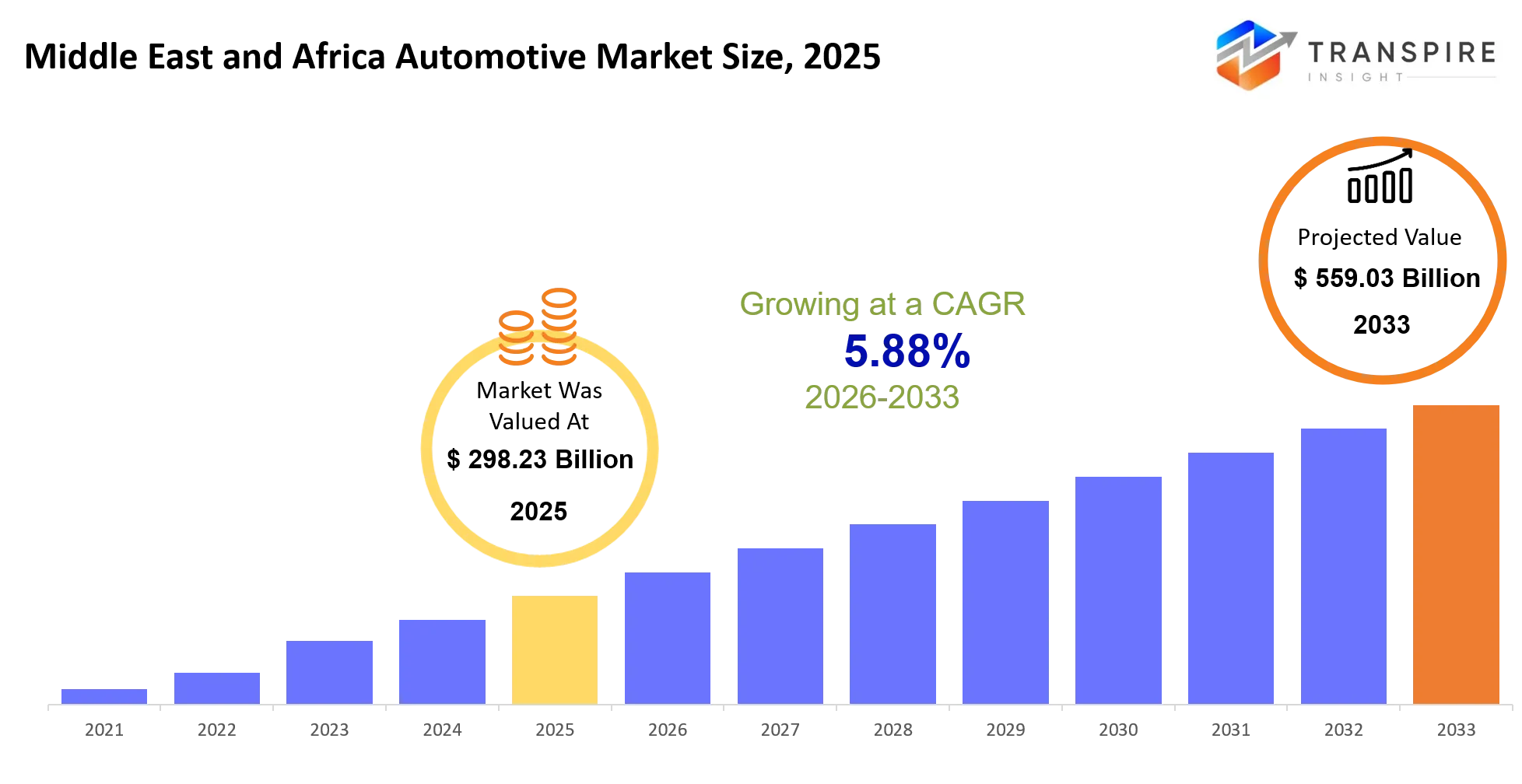
- Middle East and Africa Automotive Market Size 2025: USD 298.23 Billion
- Middle East and Africa Automotive Market Size 2033: USD 559.03 Billion
- Middle East and Africa Automotive Market CAGR: 5.88%
- Middle East and Africa Automotive Market Segments: By Vehicle Type (Passenger Cars, Commercial Vehicles, Electric Vehicles, Luxury Vehicles, Others); By Fuel Type (Petrol, Diesel, Electric, Hybrid, Others); By End User (Individual Buyers, Fleet Operators, Government, Others)
To learn more about this report,  Download Free Sample Report
Middle East and Africa Automotive Market Summary
The Middle East and Africa Automotive Market was valued at USD 298.23 billion in 2025. It is forecast to reach USD 559.03 billion by 2033. That is a CAGR of 5.88% over the period.
The Middle East and Africa automotive market kinda matters a lot for how people move, and also for getting goods and services from one place to another across these huge geographic stretches where road transport still feels like the main backbone of economic life. It helps commercial logistics along, daily public mobility, construction work, mining operations, and cross border trade, so basically the whole thing about vehicle availability, and how good vehicles perform, gets tangled up with broader economic development not just one narrow track.
Over the last few years, the market has been changing in a more structural way toward electrified vehicles, plus connected mobility services, and also stricter emissions requirements, especially across Gulf countries and South Africa. At the same time, supply chains took a hit after the COVID-19 pandemic, then geopolitical tensions started throwing sand in the gears for global trade routes, which then reshaped how vehicles were sourced and how inventory was managed across the region. Because of that, manufacturers and distributors started to diversify their sourcing networks, and they also pushed more local assembly as part of the plan sometimes quietly, sometimes very openly.
Right now growth is being pulled by infrastructure investment, faster city sprawl, fleet upgrades, and mobility initiatives that governments are actually backing. That combination is driving stronger vehicle sales, more aftermarket activity, and longer-term investment across the automotive value chain as a whole.
Key Market Insights
- The Middle East kind of dominates the Middle East and Africa Automotive Market, taking around a 58% share in 2025, because of strong purchasing strength and the continuous vehicle import flow.
- The United Arab Emirates and Saudi Arabia still feel like major automotive hubs, mostly because they keep pushing big mobility investments, and also there's strong appetite for premium vehicles.
- Africa is kind of the fastest-growing regional market throughout 2025–2032, mostly because urbanisation is accelerating, the middle-class population keeps expanding, and local vehicle assembly programs are popping up more often.
- Across Africa, governments are pushing automotive manufacturing forward using incentives, which is boosting the long-term market size and the broader industry growth, sort of, in a steady way.
- In 2025, passenger vehicles are, like really, dominating the market with almost a 62% share, mostly pushed by personal mobility needs and growing financing options.
- Commercial Vehicles show up as kinda the second-largest segment, and they benefit from logistics, construction, mining and e-commerce delivery requirements, which is kinda connected all together, like.
- Electric vehicles (EVs) are, going to be the fastest growing segment through 2032, as governments keep rolling out charging infrastructure, and they start leaning into sustainability-centered transportation policies in different places it feels like.
- Hybrid vehicle adoption is kinda speeding up in the Gulf countries , more or less because of fuel efficiency upsides, and too because the environmental rules are slowly shifting over time.
- Personal Transportation is taking the lead with something like 65% of the application share in 2025; it kinda shows the strong appetite for owning private vehicles instead of going with other options.
- Commercial Transportation keeps gaining momentum through fleet upgrades and also cross-border trade movement, you know.It’s like everything starts to pick up speed , more and more steadily, and then suddenly it feels kind of inevitable.
What are the Key Drivers, Restraints, and Opportunities in the Middle East and Africa Automotive Market?
Infrastructure expansion, plus economic diversification programs across Gulf Cooperation Council (GCC) nations, are still basically the main engines pushing growth in the Middle East and Africa automotive market. Large allocations for logistics corridors, smart towns, industrial estates and even public transport routes have lifted demand for passenger vehicles as well as commercial vehicles. Government initiatives like Saudi Arabia’s Vision 2030 and parallel development plans in the UAE, have more or less encouraged residents and companies to purchase additional vehicles, modernize fleets, and place more bets on local automotive activities. When operators expand transport capacity, and when clients can finally access better financing options , vehicle sales rise, which in turn supports market revenue growth pretty directly.
However, limited local manufacturing capability and ongoing supply chain dependence remain the clearest, structural barriers. Many African economies still lean a lot on imported cars and automotive components, so the whole market becomes highly exposed to currency changes , shipping disruptions, and import duties. Building a homegrown manufacturing setting calls for serious capital, long-term talent building, skilled labour development, plus supplier ecosystems that can genuinely supply the production system. None of that arrives quickly; it usually takes years to line up properly. So, vehicle affordability stays constrained in multiple countries. Adoption therefore cools down, and the market’s full revenue ceiling stays partly beyond reach.
At the same time, the electric vehicle ecosystem expansion is turning into a genuine growth window. The UAE and South Africa, in particular, are funding charging infrastructure, battery-centered initiatives, and mobility policies designed to back adoption. As charging networks become more accessible, and as vehicle p
What Has the Impact of Artificial Intelligence Been on the Middle East and Africa Automotive Market?
Artificial intelligence, plus newer digital technologies, is shifting the Middle East and Africa automotive sector in a big way, mostly by making vehicle operations calmer and smoother, fleet management more dependable, and manufacturing efficiency higher. Fleet operators are now leaning harder on AI-powered telematics platforms; these platforms help automate vehicle monitoring, driver behaviour review, route optimization, and regulatory compliance tracking , all of that while a steady stream of information keeps coming in. In a sense, the systems are just constantly collecting data from connected vehicles so operators can lean less on manual checks and, at the same time, improve asset utilisation across commercial transportation networks, you know.
On the other hand, machine learning models are also building stronger predictive capability across the whole automotive value chain. Manufacturers and fleet managers , they use predictive maintenance solutions to watch engine performance, battery health, tire wear, and component degradation before something actually fails. When maintenance needs are spotted early, businesses can reduce the odds of sudden downtime and often extend the vehicle service life too. Also, AI-driven analytics are getting used for fuel consumption forecasting and traffic pattern analysis; this supports fleet operators when they recalibrate routes and try to squeeze more operational efficiency out of everyday driving.
Because of all this, the technologies are bringing real advantages like lower maintenance expenses, better vehicle availability, improved fuel economy, and stricter adherence to safety and emissions requirements. Automotive firms are even weaving AI into production sites, to upgrade quality inspections and to streamline manufacturing steps, so the line d
Key Market Trends
- Since 2021, Gulf countries have sped up the rollout of electric vehicle infrastructure a bit more, and it looks like the policy attention has moved away from fuel subsidies, toward sustainable mobility investments. Not exactly perfect, but generally speaking it’s like the idea of clean transport got more weight.
- Automakers, like Toyota, Hyundai, and Nissan, kinda expanded regional assembly operations between 2022 and 2025 in order to cut down the import dependency, sort of. In the meantime it really feels like a change in production approach. More local, less reliance on imports, overall.
- Fleet operators started adopting AI telematics systems more and more, helping with route optimisation, managing fuel better, and improving vehicle usage across the commercial transport network. It feels like it all just works in a smoother way; sometimes they even call it “smart monitoring” or something similar, and yeah, it tends to boost those results.
- After supply chain disruptions showed the weak points in importing vehicle parts and components, multiple African governments started to strengthen their local content policies, a bit faster than before. Basically, they looked at how vulnerable the whole process was, and then they pushed for stronger local sourcing rules, even if it wasn’t perfectly planned at first.
- Consumer preference slowly, kind of drifted toward SUVs and crossover models, especially in Saudi Arabia and the UAE, which somehow mirrors shifting lifestyle needs, in a more or less gradual fashion.
- Since 2023, charging network investments have gone up a lot in the major urban centres, which kind of helped wider electric vehicle adoption beyond the premium buyers, like after that point it’s more feasible for everyday drivers too.
- Manufacturers expanded their connected vehicle offerings a bit, mixing in remote diagnostics and predictive maintenance, features that were kind of previously stuck to luxury segments or something.
- Logistics companies sort of kicked into gear on fleet modernisation programs, as e-commerce activity ramped up demand for dependable last-mile and regional delivery vehicles.
- Regulatory authorities rolled out stricter emissions standards in several markets, and it sort of nudged people toward fuel-efficient plus hybrid vehicle technologies, almost like a ripple effect, you know.
- After 2022, the whole thing of strategic partnerships between global carmakers and regional distributors started showing up much more often, and that kind of helped with market access. It also did the aftersales side of things, you know, the service side and everything.
Middle East and Africa Automotive Market Segmentation
By Vehicle Type:
Passenger vehicles keep a pretty strong place in regional transport networks, mostly due to daily commuting needs and that whole, constant routine. Plus, when city populations keep expanding, people are looking for more choices, and with better vehicle financing terms around, buying a car becomes way less of a headache. So the steady interest in personal mobility has pushed automakers to roll out more sedans, hatchbacks, SUVs, and even crossover variations, not only the old familiar shapes. In certain countries, SUV preference is rising pretty clearly, road conditions being one of the main reasons. Comfort features really count too, and the wider practicality gives you an easier time in town errands and those longer intercity journeys, so in real life it tends to work out.
Even so, commercial vehicles still matter a lot, even if passenger cars get most of the attention. They help keep logistics moving, support construction and mining, power retail distribution, and back public transport operations, day after day. With e-commerce activity growing, and infrastructure projects ramping up, there has been a stronger push for light commercial vehicles and heavy-duty trucks. Meanwhile, fleet modernisation programs have nudged businesses to choose newer models, the ones that bring better fuel economy, reduced maintenance burden, and stronger operational results.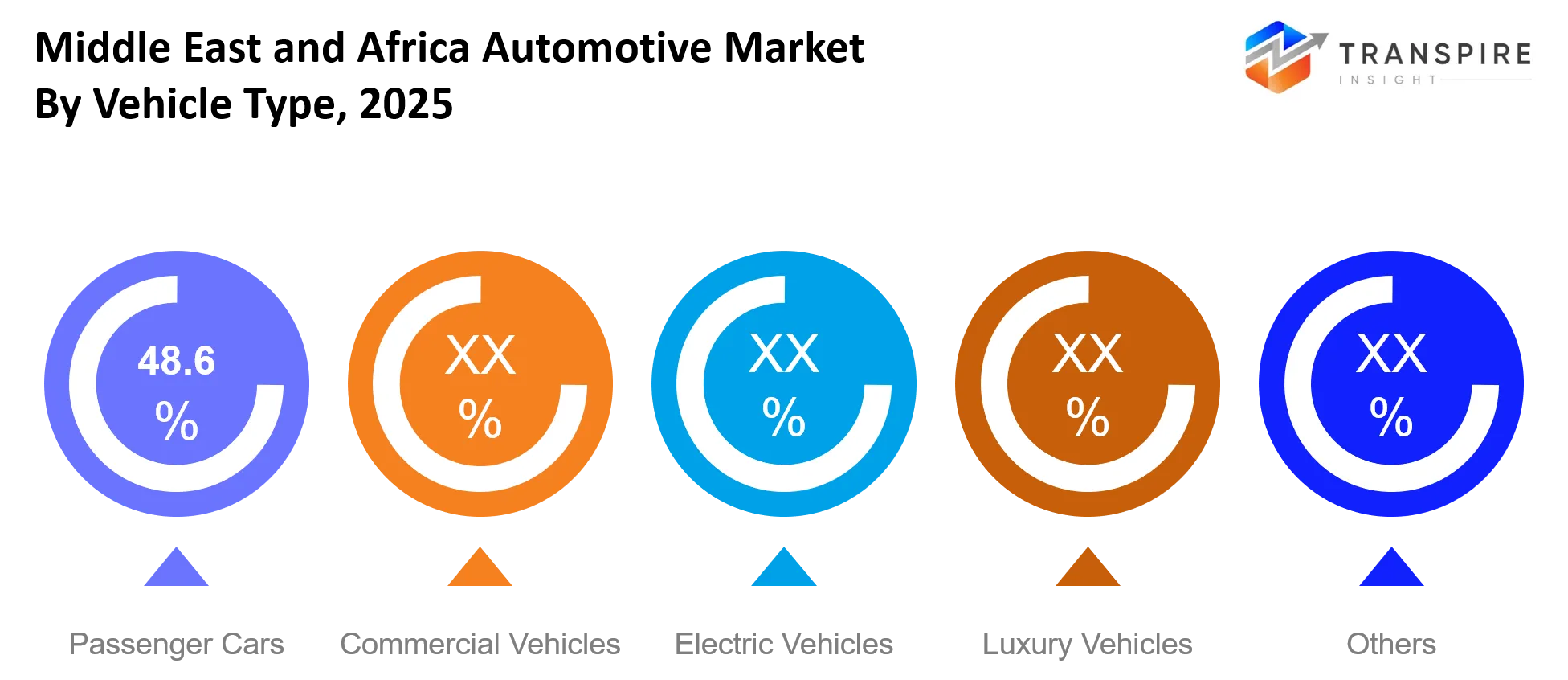
To learn more about this report, Download Free Sample Report
By Fuel Type:
Internal combustion engine vehicles are still used pretty widely, mostly because there is already a working fuel set up, a lot of different models around, and the purchase prices tend to stay competitive. Petrol powered cars keep catching attention from individual buyers, especially in cities ,and diesel vehicles are still kinda key for freight, commercial transportation, and industrial work. When people have steady access to conventional fuels it basically helps adoption keep going in many places, no huge shock.
More alternative fuel options have been getting attention lately too, since governments and manufacturers want to lower emissions and at the same time improve energy efficiency. Hybrid vehicles have shown up in higher numbers across major automotive hubs, largely thanks to their fuel saving benefits and also because regulations are changing over time. Electric vehicle adoption has begun to pick up pace, helped along by funding for charging infrastructure, policy incentives, and fresh vehicle launches from major global automakers.
By End User:
Individual consumers still seem to be the largest end-user group, and it’s mostly being driven by population growth, stronger urban growth, and also easier access to financing for vehicles. Even today, personal transportation remains a major need in a bunch of regions where public transit coverage is still kind of developing, or not reaching everyone. People continue caring about comfort, safety features, connectivity options, and fuel efficiency, so those elements really end up shaping what they purchase pretty much every time.
Meanwhile, business and institutional buyers matter a lot in vehicle procurement, especially in logistics, construction, government services, mining and mobility operations. Fleet operators are putting more money into connected tech, telematics platforms, and predictive maintenance systems, not only for convenience but to lift efficiency and keep operating expenses a bit more controlled. Mobility service providers and commercial transport companies are also expanding their fleets, because transportation expectations keep moving, as more urban centres expand and require more motion, all the time.
What are the Key Use Cases Driving the Middle East and Africa Automotive Market?
Personal transportation is still, honestly, the main reason people adopt vehicles across the region. Daily commuting, intercity trips and general household mobility needs keep pushing steady vehicle purchases, especially in the big cities where dependable personal transportation really matters, for work, school, and even day-to-day business activities.
Then there is commercial logistics and fleet transportation, which are also getting more attention across retail, construction, mining, and e-commerce. Delivery operators, freight companies, and industrial organisations continue to put money into vehicles that help cargo move faster, boost fleet productivity, and keep service reliability up. At the same time, public transportation operators are modernising their fleets too, to handle the growing number of people living in urban areas.
More new use cases are showing up as well, like electric mobility services and connected fleet ecosystems. Smart vehicle technologies, remote diagnostics and AI-based fleet management solutions are starting to interest mobility providers as well as larger corporate fleets. And as charging infrastructure keeps expanding and the digital platforms mature, these applications are likely to open up new opportunities throughout the forecast period.
|
Report Metrics |
Details |
|
Market size value in 2025 |
USD 298.23 Billion |
|
Market size value in 2026 |
USD 315.77 Billion |
|
Revenue forecast in 2033 |
USD 559.03 Billion |
|
Growth rate |
CAGR of 5.88% from 2026 to 2033 |
|
Base year |
2025 |
|
Historical data |
2021 - 2024 |
|
Forecast period |
2026 - 2033 |
|
Report coverage |
Revenue forecast, competitive landscape, growth factors, and trends |
|
Regional scope |
Middle East and Africa |
|
Key companies profiled |
Toyota, Hyundai, Kia, Nissan, Ford, General Motors, Volkswagen, BMW, Mercedes-Benz, Renault, Stellantis, Tata Motors, Geely, Chery, Isuzu |
|
Customization scope |
Free report customisation (country, regional & segment scope). Avail customised purchase options to meet your exact research needs. |
|
Report Segmentation |
By Vehicle Type (Passenger Cars, Commercial Vehicles, Electric Vehicles, Luxury Vehicles, Others); By Fuel Type (Petrol, Diesel, Electric, Hybrid, Others); By End User (Individual Buyers, Fleet Operators, Government, Others) |
Which Regions are Driving the Middle East and Africa Automotive Market Growth?
The Middle East is still leading the regional automotive arena, mostly because of heavy government spending , strong levels of vehicle ownership, and transport systems that are already fairly mature. Nations like Saudi Arabia and the United Arab Emirates keep backing wider automotive growth through economic diversification plans, industrial build-out strategies and, also, investments tied to smarter mobility programs. On top of that, good purchasing power combined with a big appetite for premium models and practical utility types helps the region stay on top. You can also see it in the supportive setup: a dealership landscape that has matured, more charging points showing up, and a growing share of cars being assembled locally. All of this works together, so the long-term market dominance doesn’t just happen once.
South Africa, meanwhile, sits as the second-largest regional contributor, and it’s a bit different from the Middle East because it has a more established manufacturing foundation and an export-led automotive focus. The country has long-running connections with major global vehicle makers, plus a supplier network that’s already in place. With steady industrial policies and ongoing money going into automotive output, market activity tends to stay calmer even when economic conditions wobble. That mix of internal buying plus export capability makes South Africa a dependable revenue stream within the wider regional scene.
As for the rest of Africa, it’s moving up fast, and many analysts point to rapid urbanization , a rising middle class, and added government encouragement for building vehicles locally. Several countries have rolled out automotive development policies meant to pull in manufacturing investment, while also reducing reliance on imported units. Improvements in infrastructure and a steadily increasing need for commercial transport vehicles are also speeding up adoption in major markets. Between 2026 and 2033, these
Who are the Key Players in the Middle East and Africa Automotive Market and How Do They Compete?
Competition across the Middle East and Africa automotive space is still fairly moderately consolidated, meanwhile global makers keep a solid grip on market share while regional distributors and a handful of up and coming local assemblers keep expanding their footprint. In practice, companies usually go at it using product quality, technology integration, better fuel efficiency, pricing approaches that feel flexible, and aftersales support that actually works network wise. The well known automotive names tend to guard their share with big vehicle catalogues, plus solid dealer coverage. Newer players on the other hand lean hard into electric mobility, digital services, and some localized production setups, even if they are smaller at the moment. Where they can reach and how quickly they can adjust vehicles to local driving habits and road conditions, that adaptability aspect, stays a major driver of who wins Toyota Motor Corporation is maintaining a strong standing thanks to reliability, fuel efficiency, and a lineup that fits both city commuting and tougher commercial use. Their widespread dealer and service networks throughout the region help keep customers, which supports long term brand value. Hyundai Motor Company differentiates itself by pushing connected car technologies, putting forward advanced safety features, and keeping pricing competitive. Hyundai’s continued investment in electric , and also hybrid vehicle options gives it an edge in places that are moving toward the mobility transition
Nissan Motor Co., Ltd. tends to emphasize durability and fleet first models, targeting logistics operators, government entities, and other business buyers. The demand for utility vehicles and pickup trucks creates a clear advantage where transportation infrastructure is uneven, sometimes a lot more than expected. Volkswagen AG sets itself apart with engineering quality and digital vehicle technologies, and it is also expanding into electric mobility. Through strategic tie ups with regional distributors
Company List
- Toyota
- Hyundai
- Kia
- Nissan
- Ford
- General Motors
- Volkswagen
- BMW
- Mercedes-Benz
- Renault
- Stellantis
- Tata Motors
- Geely
- Chery
- Isuzu
Recent Development News
- "In March 2026, Chery announced the acquisition of Nissan’s Rosslyn manufacturing plant in South Africa. The acquisition supports Chery’s plan to begin local production of internal combustion, hybrid, and electric vehicles by 2027, strengthening its long-term presence in the African automotive industry.https://www.reuters.com
- "In May 2026, Stellantis launched its first vehicle dismantling centre in Morocco for the Middle East and Africa region. The facility expands the company’s circular economy strategy by increasing the reuse and recycling of automotive components while supporting sustainability initiatives across regional markets.https://www.reuters.com
- "In June 2026, Spiro secured funding of $215 Billion in equity financing to expand electric mobility and battery-swapping infrastructure across Africa. The investment will accelerate market expansion, strengthen local manufacturing capabilities, and support the deployment of electric vehicles in multiple African countries.https://apnews.com
What Strategic Insights Define the Future of the Middle East and Africa Automotive Market?
In the next five to seven years, the Middle East and Africa automotive sector is expected to drift toward a more localized, tech-enabled, and electrified way of operating. And yes, it is not just some vague trend. This move will be shaped by industrial policies that are backed by government, the continued growth of digital mobility ecosystems, plus the push to lessen dependence on imported vehicles and components. Once local assembly capacity and the surrounding supply chain networks actually start to mature, the edge competitors have may hinge much more on manufacturing flexibility, software integration, and service capabilities, instead of vehicle sales only.
There is also a risk that is a bit less obvious. Advanced automotive technology, along with battery supply chains, is becoming concentrated across a small set of global suppliers. So if something interrupts access to key components, production could get slowed down, and electrification plans might get delayed in multiple markets at the same time. Meanwhile, battery swapping for commercial fleets is starting to look like a real opportunity, especially in African cities where charging options are still limited. Market participants might want to put more focus on partnerships with regional tech providers, infrastructure developers, and local manufacturers, so they can secure longer-term entry, and also build resilience if future supply chain disruptions show up again.
Middle East and Africa Automotive Market Report Segmentation
By Vehicle Type
- Passenger Cars
- Commercial Vehicles
- Electric Vehicles
- Luxury Vehicles
- Others
By Fuel Type
- Petrol
- Diesel
- Electric
- Hybrid
- Others
By End User
- Individual Buyers
- Fleet Operators
- Government
- Others
Frequently Asked Questions
Find quick answers to common questions.
The Expected Middle East and Africa Automotive Market size for the Market will be USD 559.03 Billion in 2033.
Key Segments for the Middle East and Africa Automotive Market are By Vehicle Type (Passenger Cars, Commercial Vehicles, Electric Vehicles, Luxury Vehicles, Others); By Fuel Type (Petrol, Diesel, Electric, Hybrid, Others); By End User (Individual Buyers, Fleet Operators, Government, Others).
Major Middle East and Africa Automotive Market Players are Toyota, Hyundai, Kia, Nissan, Ford, General Motors, Volkswagen, BMW, Mercedes-Benz, Renault, Stellantis, Tata Motors, Geely, Chery, Isuz.
The Current Middle East and Africa Automotive Market size is USD 298.23 Billion in 2025.
The Middle East and Africa Automotive Market CAGR is 5.88% from 2026 to 2033.
- Toyota
- Hyundai
- Kia
- Nissan
- Ford
- General Motors
- Volkswagen
- BMW
- Mercedes-Benz
- Renault
- Stellantis
- Tata Motors
- Geely
- Chery
- Isuzu
About the Authors

Mayur Shinde
I am Mayur Shinde, a Senior Research Analyst at Transpire Insight, specializing in the Automotive & Transportation and Information & Communication Technology (ICT) Industry. My work focuses on analyzing emerging market trends, technological advancements, competitive landscapes, and industry developments to deliver accurate, data-driven insights. I am passionate about transforming complex market information into clear, actionable content that helps businesses, professionals, and decision-makers stay informed and make confident strategic decisions.

Chakradhar Khansole
Chakradhar serves as the Research Director at Transpire Insight, bringing over 8 years of experience in technology, innovation, and strategic market intelligence. He specializes in transforming complex market data into actionable business insights that enable organizations to make informed, growth-oriented decisions. Recognized for his strategic vision and analytical expertise, Chakradhar leads high-impact research initiatives, delivering comprehensive market assessments, competitive intelligence, and forward-looking industry analysis.
Recently Published Reports
-
Apr 2026
ATV & UTV Market
ATV & UTV Market Size, Share & Analysis Report By Type (ATV, and UTV), By Variants (Less Than 400 CC, 400 CC To 800 CC, and More Than 800 CC), and Geography (North America, Europe, Asia-Pacific, Middle East and Africa, South and Central America), 2021 - 2031
-
Apr 2026
Automotive Central Gateway Module Market
Automotive Central Gateway Module Market Size, Share & Analysis Report By Type (Ethernet Central Gateway Module, CAN Central Gateway Module, LIN Central Gateway Module, and FlexRay), By Application (Powertrain Control, Body Control, Infotainment System, Advanced Driver Assistance Systems (ADAS), and Others), By End User (Passenger Vehicles, and Commercial Vehicles), and Geography (North America, Europe, Asia-Pacific, Middle East and Africa, South and Central America), 2021 - 2031
-
Apr 2026
Automotive Engine Oil Filter Market
Automotive Engine Oil Filter Market Size, Share & Analysis Report By Filter Type (Fuel Filter, Engine Oil Filter, Hydraulic Oil Filter, and Others), By Filter Media (Cellulose, Synthetic, and Micro), By Sales Channel (OEMs, and Aftermarket), By Vehicle Type (Passenger Cars, Light Commercial Vehicles, Heavy Duty Trucks, Buses and Coaches, and Off-road Vehicles), and Geography (North America, Europe, Asia-Pacific, Middle East and Africa, South and Central America), 2021 - 2031
-
Apr 2026
Automotive Parts Aluminium Die Casting Market
Automotive Parts Aluminium Die Casting Market Size, Share & Analysis Report By Production Process (Pressure Die Casting, Vacuum Die Casting, Squeeze Die Casting, Gravity Die Casting), By Application (Body Parts, Engine Parts, Transmission Parts, Battery And Related Components, Other Application Types), and Geography (North America, Europe, Asia-Pacific, Middle East and Africa, South and Central America), 2021 - 2031
Our Clients



