

Liquid Biopsy Market Summary:
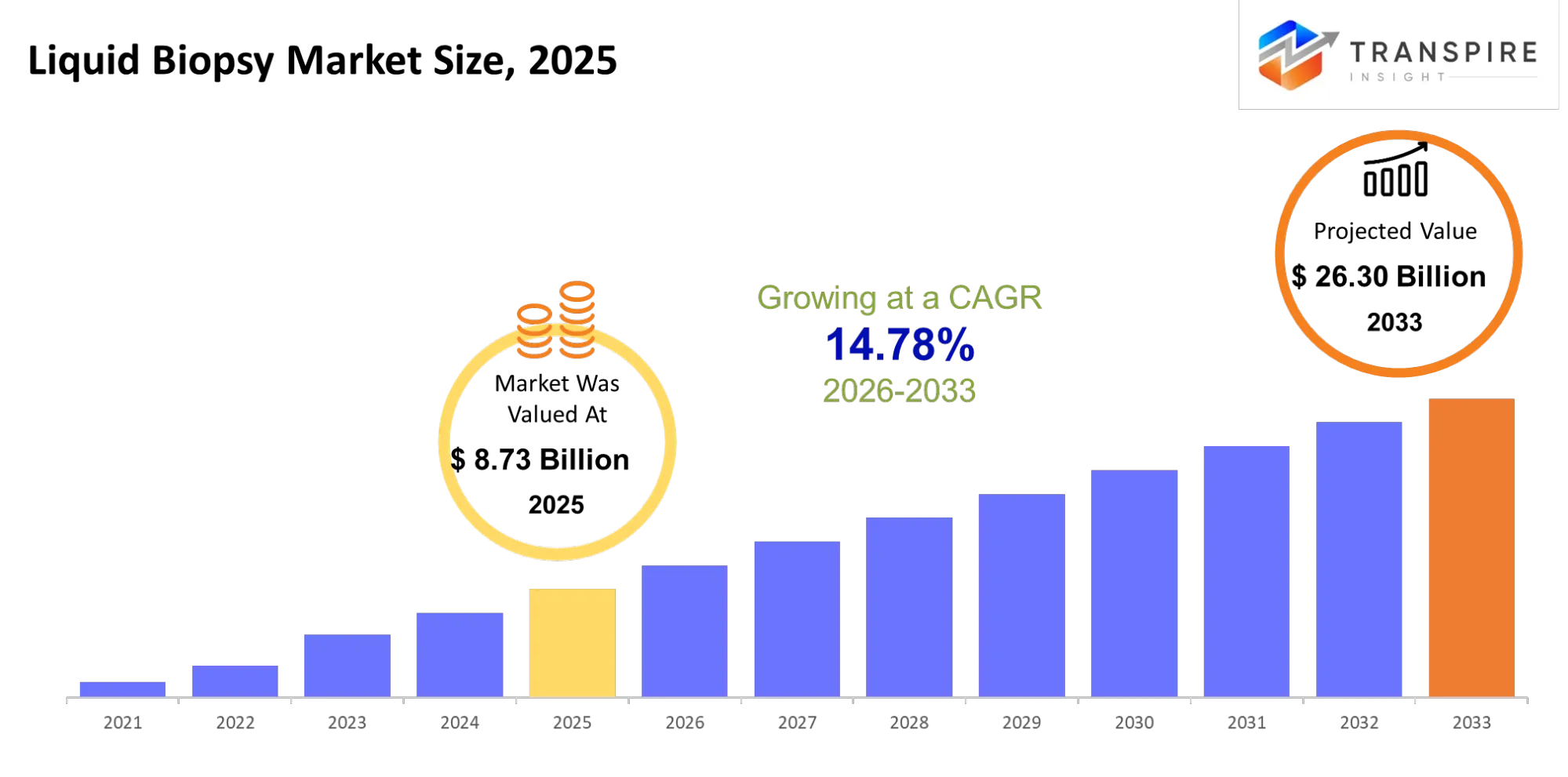
As per the Transpire Insight Analysis, The Liquid Biopsy Market size is estimated at USD 8.73 billion in 2025 and is anticipated to reach USD 26.30 billion by 2033, growing at a CAGR of 14.78% from 2026 to 2033.
The liquid biopsy market is prompting a fundamental change in cancer-testing-from one-off tissue biopsies to serial blood-based decision-making on: what actionable mutation(s) to target, treatment monitoring, minimal residual disease detection, and recurrence detection. During the last three to five years, the market has evolved from primarily therapy selection to longitudinal monitoring and multi-cancer early-detection research. The structural change has been the merging of next-generation sequencing, digital PCR, methylation profiling, and bioinformatics into multiple markers. An important real-world trigger has been the broadening of companion diagnostic usage to include FoundationOne Liquid CDx approval to identify MET exon 14 mutations in metastatic non-small-cell lung cancer. Growth is driven on a clear cause-and-effect chain in which serial blood draws shorten procedure-related risk and accelerate therapy adjustments; increased molecular sensitivity raises clinical confidence; and precision-oncology drugs create a practical need for biomarker tests before and during treatment.
Liquid Biopsy Market Size & Forecast:
- Market Size 2025: USD 8.73 Billion
- Expected Market Value (2033): USD 26.30 Billion
- Forecast CAGR (2026–2033): 14.78%
- Leading Region in 2025: North America
- Fastest Growing Region: Asia Pacific
- Key Company Profiles: Guardant Health, Roche, Illumina, Thermo Fisher Scientific, QIAGEN, Bio-Rad Laboratories, Exact Sciences, Natera, NeoGenomics, Myriad Genetics, Personalis, Freenome, Biocept, Menarini Silicon Biosystems, Foundation Medicine
Key Liquid Biopsy Market Insights:
The market is transforming from a mutation detection-only approach to a multi-omic, longitudinal cancer management approach. It is not just assay sensitivity anymore that's the key to commercial advantage; it's also regulatory clearance and recurring monitoring revenue.
- ctDNA accounts for 44.8%, is used to guide the choice of therapy, and is being developed by companies in the field of recurrence and minimal-residual-disease monitoring.
- Blood-based assays produce 89.5%, reflecting the shift from invasive tissue sampling to repeatable plasma workflows.
- As companies look for more biological signals than DNA mutations, exosome solutions are expected to expand by 16.5%.
- Early diagnosis accounts for 67.3%, and developers are now pairing methylation, fragmentomics and machine learning.
- Breast-cancer applications represent 28.8% with support from resistance monitoring and treatment-personalisation needs.
- Hospitals and laboratories have 75.4%, and advanced genomics is being decentralised into the community.
- Guardant Health built on the FDA-approved indications for Guardant360 CDx with the addition of HER2 and ESR1 companion-diagnostic indications.
- New liquid-CDx utility for prostate-cancer therapy selection, bolstering drug–diagnostic co-development, was won by Foundation Medicine.
- Illumina and Labcorp upped their commercial partnership for plasma testing, speeding up community-health-system access.
What are the Key Drivers, Restraints, and Opportunities in the Liquid Biopsy Market?
Driver:
Precision oncology is transforming liquid biopsy from a laboratory service into a treatment-enabling platform. The catalyst is the increasing application of targeted therapies and companion diagnostics requiring rapid molecular analysis and their implementation in cases where tissue is not obtainable or inadequate. This enhances uptake as laboratories have the ability to couple each test with subsequent therapy selection, resistance monitoring, and repeat sampling rather than just a diagnostic test.
Restraint:
Low biomarker abundance, variable sample processing, and ambiguous reimbursement remain barriers to everyday implementation. There is a fundamental structural issue as early tumours may shed very little ctDNA, and variable collection tubes, extraction procedures, sequencing cut-offs, and interpretative guidelines make results not comparable, requiring tissue validation, lowering clinician trust and economic benefit.
Opportunity:
Multi-cancer early detection and minimal residual disease testing can grow the market to cover more stages of cancer, not just metastatic disease. A strategic investment in methylation, fragmentomics, multi-omic panels and AI-enabled interpretation would detect signals more effectively and potentially reveal recurrence earlier than imaging. Asia-Pacific offers particular opportunities as growing oncology capacity and the deployment of centralized diagnostic networks should facilitate large-scale testing, though prospective validation and reimbursement will be critical.
What Has the Impact of Artificial Intelligence Been on the Liquid Biopsy Market?
AI has enabled liquid biopsy workflows to become more scalable by transforming massive sequencing, methylation, fragment-size, RNA, and clinical datasets into clinically useful risk scores. In the diagnostic setting, machine-learning algorithms within laboratories automate quality control, eliminate sequencing artefacts, sort variants according to their most probable origin, find tumour-of-origin signatures, and rank lesion alterations by their possible impact on therapy. This minimizes manual validation and might even accelerate reporting cycles when next-generation sequencing generates thousands of signals per sample.
AI further enhances prediction. Models may incorporate serial ctDNA measurements to predict treatment response, identify molecular relapse before radiological evidence of progression, and integrate biomarker trends with images or clinical features to facilitate earlier treatment changes. In drug development and clinical trial settings, AI can enable patient stratification and investigate pathways of resistance. AI cannot eliminate biological complexity; it can also be confounded by low signals in early cancers and overfit to local institutional data. Further high costs of implementation, disconnected lab infrastructure, limited interpretability, and lack of prospective external validation are current challenges.
In January 2026, Freenome announced expanded artificial intelligence and deep learning initiatives accelerated by NVIDIA to advance personalized multi-cancer detection workflows.
Key Liquid Biopsy Market Trends:
The market is moving from a mutation test once a year to an ever more data-rich cancer management. The value of commercial products is becoming more related to clinical decisions such as choice of therapy, recurrence risk, and surveillance – not just laboratory throughput.
- The use of ctDNA is shifting from late-stage profiling to minimal-residual-disease and recurrence monitoring.
- Plasma-based testing has become more popular because of tissue shortages in cases where there is no or insufficient tumour tissue.
- NGS will still be the central technology, and digital PCR will become increasingly significant when there is a need for rapid, highly sensitive, targeted quantification.
- Multi-omic assays with DNA, RNA, methylation and fragmentomic signals are gradually replacing single-analyte assays.
- Companion-diagnostic collaborations are becoming more tightly coupled with specific drug prescriptions and regulatory processes.
- AI is moving beyond research and classification and into automated quality control, variant interpretation, and longitudinal risk prediction.
- Multi-cancer early-detection programmes are moving from case-control studies to large prospective validation, but none of them has gained widespread clinical acceptance.
- The shift toward decentralization is gaining momentum as community hospitals and regional labs adopt high-throughput genomic workflows.
- Pharma is leveraging serial liquid-biopsy data to track resistance, optimize trial populations, and minimize reliance on repeated tissue sampling.
Liquid Biopsy Market Segmentation
By Product Type:
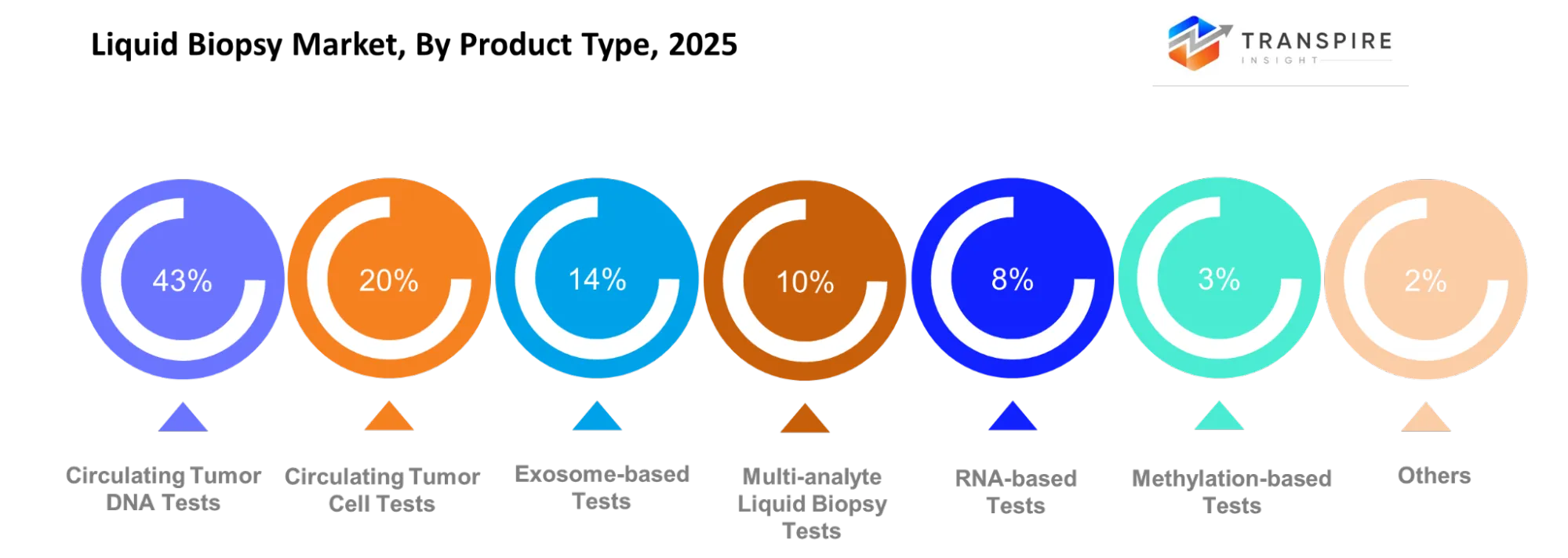
Circulating tumor DNA tests continue to lead at 43%, a traditional position due to their utility in mutation profiling, therapy selection, and minimal-residual-disease monitoring. Circulating tumor cell tests account for 20%, as cellular phenotype analysis still matters even though infrequent and variable enrichment makes scale less practical. Exosome-based tests account for 14%, as multi-analyte tests still maintain 10%, with the strongest momentum showing an 18.7% CAGR, as multiple biomarkers can help improve sensitivity. RNA-based tests account for 8%, methylation-based tests 3%, and others 2%, which might become more relevant as the biological coverage broadens.
By Application:
The initial diagnosis of cancer is still fundamental, but the selection of therapy and the subsequent monitoring of treatment results lead to an increased number of repeated tests as treatment decisions change. The greatest strategic advantage still resides in early cancer screening and disease monitoring after remission, with the potential to contribute to research in assay validation, drug development and biomarker discovery.
By End User:
Clinics and diagnostic laboratories predominantly drive adoption by clinical testing and centralized processing. Cancer research institutes and academic centres influence validation standards, while drug companies are adopting liquid biopsy at an increasing rate to support companion-diagnostic development, stratify trials and monitor resistance. The decentralization trend is represented by speciality clinics.
By Technology:
Testing performed using NGS enables genomics analysis by providing information on mutation, fusion, copy-number variation, or methylation status for treatment planning. PCR and digital PCR enable rapid, sensitive quantification of known targets, which makes it ideal for monitoring response to therapy. Microarrays continue to have value, and AI-powered bioinformatics combines large datasets, enhancing interpretation and supporting clinical decision-making.
By Distribution Channel:
Distribution is more focused on institutional trust and integrated workflow. Direct sales and hospital purchasing continue to be key for assays, negotiated pricing, and clinical support. Diagnostic distributors are adding coverage in fragmented regional markets, and online B2B platforms could provide small labs with the ability to buy kits, compare vendors and run tests without establishing purchasing teams.
What are the Key Use Cases Driving the Liquid Biopsy Market?
The main use case is ctDNA-led therapy selection, which accounts for 43% of product type. It enables oncologists to find actionable mutations when tissue can't be obtained and to match patients with targeted therapies, ensuring testing has a direct impact on prescribing.
Monitoring treatment and surveillance of recurrence are becoming more common because a series of blood samples will show decreasing or increasing molecular disease burden prior to detecting change by traditional imaging techniques. These applications will generate repeated testing demand in hospitals, diagnostic laboratories and oncology practices.
Emerging applications are for minimal residual disease detection after surgery, resistance mechanism identification, and multi-cancer early detection through methylation, fragmentomics, and AI-powered multi-analyte approaches. Big Pharma is also using longitudinal data for trial selection and biomarker-directed therapy development. Meanwhile, the research community maintains validation of exosome and RNA signatures.
|
Report Metrics |
Details |
|
Market size value in 2025 |
USD 8.73 Billion |
|
Market size value in 2026 |
USD 10.02 Billion |
|
Revenue forecast in 2033 |
USD 26.30 Billion |
|
Growth rate |
CAGR of 14.78% from 2026 to 2033 |
|
Base year |
2025 |
|
Historical data |
2021 - 2024 |
|
Forecast period |
2026 - 2033 |
|
Report coverage |
Revenue forecast, competitive landscape, growth factors, and trends |
|
Regional scope |
United States; Canada; Mexico; United Kingdom; Germany; France; Italy; Spain; Denmark; Sweden; Norway; China; Japan; India; Australia; South Korea; Thailand; Brazil; Argentina; South Africa; Saudi Arabia; United Arab Emirates |
|
Key companies profiled |
Guardant Health, Roche, Illumina, Thermo Fisher Scientific, QIAGEN, Bio-Rad Laboratories, Exact Sciences, Natera, NeoGenomics, Myriad Genetics, Personalis, Freenome, Biocept, Menarini Silicon Biosystems, Foundation Medicine. |
|
Customization scope |
Free report customisation (country, regional & segment scope). Avail customised purchase options to meet your exact research needs. |
|
Report Segmentation |
By Product Type (Circulating Tumor Cell Tests, Circulating Tumor DNA Tests, Exosome-based Tests, Multi-analyte Liquid Biopsy Tests, RNA-based Tests, Methylation-based Tests, Others); By Application (Cancer Diagnosis, Therapy Selection, Treatment Monitoring, Early Cancer Screening, Recurrence Monitoring, Research Applications, Others); By End User (Hospitals, Diagnostic Laboratories, Cancer Research Institutes, Academic Centers, Pharmaceutical Companies, Specialty Clinics, Others); By Technology (NGS-based Testing, PCR-based Testing, Microarray Technology, Digital PCR, AI-assisted Bioinformatics, Others); By Distribution Channel (Direct Sales, Hospital Procurement, Diagnostic Distributors, Online B2B Platforms, Others). |
Which Regions are Driving the Liquid Biopsy Market Growth?
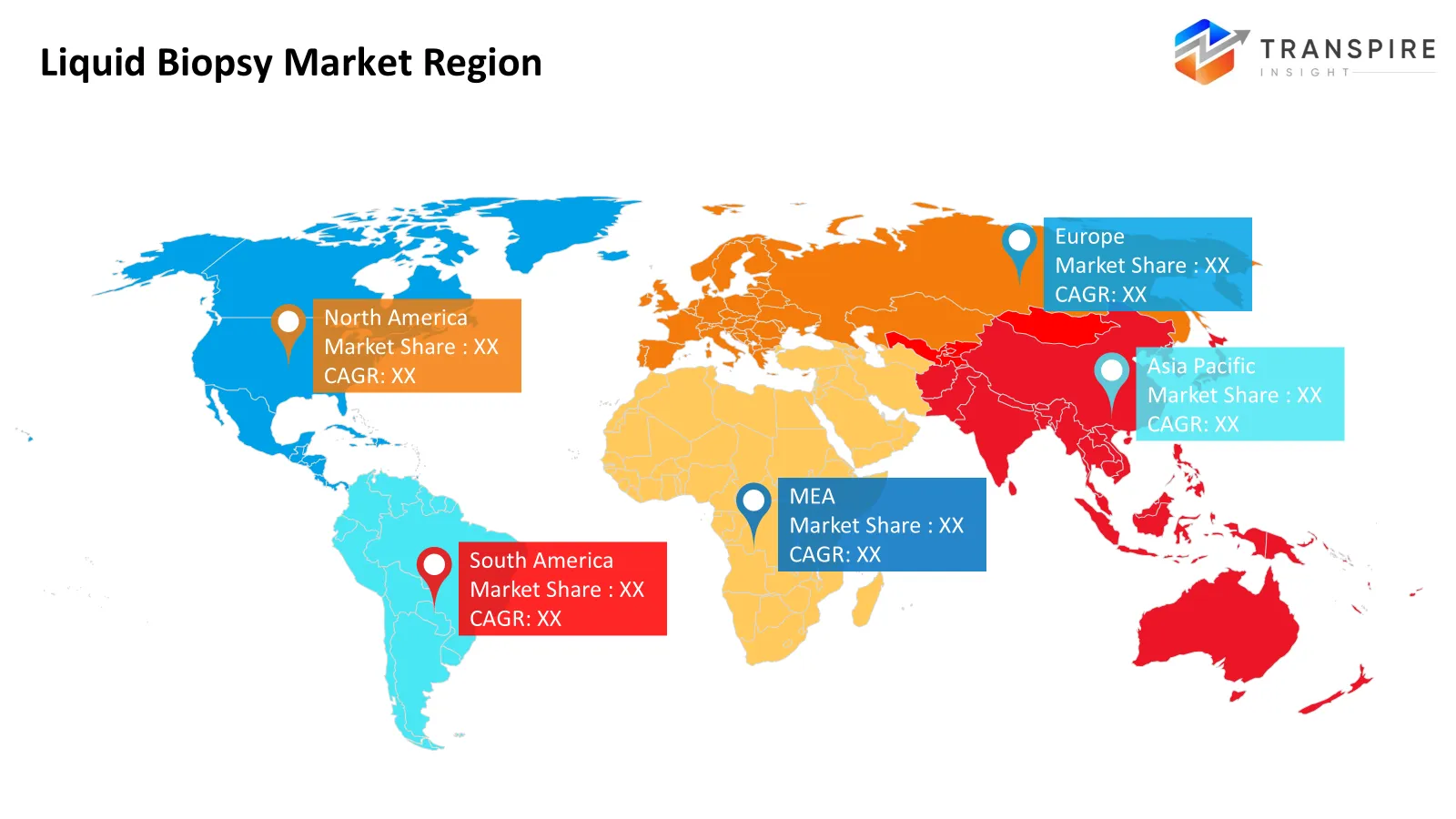
North America at 44% has a distinct head start owing to the fusion of high oncology expenditure, specialist cancer centres and mature genomic-testing infrastructure. FDA-approved companion diagnostics link liquid biopsy directly with targeted-drug utilisation. Reimbursement expertise and robust venture funding reduce adoption risk for hospital and lab adopters. Guardant, Foundation Medicine, Illumina and others offer a dense commercial and clinical network. In March 2026, Illumina expanded its collaboration with Labcorp to co-commercialize distributed in vitro diagnostic test kits for solid tumor and liquid biopsy profiling. This partnership broadens patient and hospital access to advanced biomarker testing and targeted therapy selection.
Europe accounts for 28%, below North America but still has a strong foothold due to its resilient public-health systems and cross-border cancer research initiatives. Its development is driven not by private oncology investment but by evidence-based purchasing, laboratory harmonisation and EU In Vitro Diagnostic Regulation adoption. Roche, QIAGEN, academic institutions and national screening programs promote consistency, but reimbursement variations at country level hamper rapid homogeneous roll-out. In February 2026, the European Commission launched fresh funding calls under the EU Mission on Cancer to accelerate cutting-edge research and clinical capacity.
Asia Pacific makes up 22% and is the fastest-growing region with a future CAGR of 19.5%. Recent developments are due to increased oncology infrastructure, expanding AI and diagnostic capacity, and increased adoption of companion diagnostics in China, Japan, South Korea, Singapore and India. The large number of patients can give extremely valuable data sets for validation and AI training. Opportunity is seen in lower-cost sequencing, regional laboratories and partnerships to make the advances cost-effective and routine.
Who are the Key Players in the Liquid Biopsy Market, and how do they Compete?
The competition is fragmenting into platform size, clinical differentiation, and data-driven screening. Guardant Health operates with generally FDA-approved associations and serial monitoring; Roche integrates diagnostics, medicine, and hospital channels; Illumina positions with a sequencing platform; Thermo Fisher with breadth of workflow; QIAGEN with easy sample-to-answer solutions, and Bio-Rad with high-sensitivity digital-PCR systems.
Exact Sciences specialises in screening innovation and Natera in personalised recurrence monitoring. The other players include NeoGenomics with an oncology-laboratory reach, Myriad with hereditary-risk and precision-oncology, Personalis with high-content immune and tumour profiling, and Freenome, with AI-enabled multi-cancer screening. They all depend on clinical validation, payer evidence, and partnerships with the health systems to broaden. Biocept remains focused on niche circulating tumour cell assays. Menarini Silicon Biosystems has a differentiating cell analysis technology. And Foundation Medicine is integrating genomics interpretation with pharmaceutical collaborations. Competition is shifting from assay launch to reimbursement, companion-diagnostic approvals, decentralised processing and long-term data ownership. Guardant's 2026 approvals and Foundation's new indications exemplify how regulatory milestones convert technical potential into treatment-linked demand.
Key Players are:
- Guardant Health
- Roche
- Illumina
- Thermo Fisher Scientific
- QIAGEN
- Bio-Rad Laboratories
- Exact Sciences
- Natera
- NeoGenomics
- Myriad Genetics
- Personalis
- Freenome
- Biocept
- Menarini Silicon Biosystems
- Foundation Medicine
Recent Development News
- In May 2026, CareDx entered a definitive agreement to acquire NavDx for up to $260 million. This transaction adds NavDx, a Medicare-reimbursed tumor-naive assay that detects HPV tumor tissue-modified viral DNA, to the buyer’s portfolio to significantly strengthen post-treatment surveillance capabilities for head, neck, and anal cancers.
- In May 2026, Guardant Health secured U.S. Food and Drug Administration approval for its newly upgraded Guardant360 Liquid CDx panel, which expands its targeted genetic evaluation footprint by 100 times compared to its previous iteration. This regulatory milestone introduces the integration of both genomic and epigenomic data into a single blood-based test, offering clinical oncology teams significantly broader tumour profiling capabilities.
https://investors.guardanthealth.com
What Strategic Insights Define the Future of the Liquid Biopsy Market?
The liquid biopsy market is heading toward a future of continuous molecular monitoring where one baseline sample leads to treatment, recurrence, and resistance decisions. The most successful platforms will integrate ctDNA with methylation, RNA, exosomes, imaging and AI, not rely on a single biomarker. The less obvious risk is not technology failure but evidence fragmentation, which is incompatible pre-analytics, thresholds, and reimbursement policy stymying clinically equivalent results across labs. This erodes procurement confidence despite better analytical performance. The promising future is regionally distributed testing, particularly in APAC, utilizing sequencing hubs and lower-cost digital PCR for community oncology. Companies should therefore focus on prospective outcome trials, standardised procedures and co- development with drugs instead of premature population screening markets. Partnerships with hospitals and payers should be designed around tangible outcomes, earlier relapse discovery, avoiding tissue biopsies and rapid therapy initiation, as clinical economics will be the key to sustainable adoption.
Key Segmentations are:
By Product Type
- Circulating Tumor Cell Tests
- Circulating Tumor DNA Tests
- Exosome-based Tests
- Multi-analyte Liquid Biopsy Tests
- RNA-based Tests
- Methylation-based Tests
- Others
By Application
- Cancer Diagnosis
- Therapy Selection
- Treatment Monitoring
- Early Cancer Screening
- Recurrence Monitoring
- Research Applications
- Others
By End User
- Hospitals
- Diagnostic Laboratories
- Cancer Research Institutes
- Academic Centers
- Pharmaceutical Companies
- Specialty Clinics
- Others
By Technology
- NGS-based Testing
- PCR-based Testing
- Microarray Technology
- Digital PCR
- AI-assisted Bioinformatics
- Others
By Distribution Channel
- Direct Sales
- Hospital Procurement
- Diagnostic Distributors
- Online B2B Platforms
- Others
Regional Analysis
North America
- United States
- Canada
- Mexico
Europe
- Germany
- United Kingdom
- France
- Spain
- Italy
- Rest of Europe
Asia Pacific
- Japan
- China
- Australia & New Zealand
- South Korea
- India
- Rest of Asia Pacific
South America
- Brazil
- Argentina
- Rest of South America
Middle East & Africa
- Saudi Arabia
- United Arab Emirates
- South Africa
- Rest of the Middle East & Africa
Frequently Asked Questions
Find quick answers to common questions.
The liquid biopsy market size was valued at USD 8.73 billion in 2025 and is poised to reach USD 26.30 billion by 2033, expanding at a 14.78% CAGR.
Key segments for the liquid biopsy market are By Product Type (Circulating Tumor Cell Tests, Circulating Tumor DNA Tests, Exosome-based Tests, Multi-analyte Liquid Biopsy Tests, RNA-based Tests, Methylation-based Tests, Others); By Application (Cancer Diagnosis, Therapy Selection, Treatment Monitoring, Early Cancer Screening, Recurrence Monitoring, Research Applications, Others); By End User (Hospitals, Diagnostic Laboratories, Cancer Research Institutes, Academic Centers, Pharmaceutical Companies, Specialty Clinics, Others); By Technology (NGS-based Testing, PCR-based Testing, Microarray Technology, Digital PCR, AI-assisted Bioinformatics, Others); By Distribution Channel (Direct Sales, Hospital Procurement, Diagnostic Distributors, Online B2B Platforms, Others).
Growth is primarily driven by rising cancer incidence, precision-oncology adoption, demand for minimally invasive testing, advances in NGS and digital PCR, companion-diagnostic expansion, AI-enabled interpretation, and increasing use of serial monitoring for treatment response and recurrence.
The liquid biopsy market is led by major manufacturers including Guardant Health, Roche, Illumina, Thermo Fisher Scientific, QIAGEN, Bio-Rad Laboratories, Exact Sciences, Natera, NeoGenomics, Myriad Genetics, Personalis, Freenome, Biocept, Menarini Silicon Biosystems, and Foundation Medicine.
North America holds 44% of the market and leads through advanced genomic infrastructure, FDA-linked companion diagnostics, high oncology spending, specialist cancer centres, strong reimbursement pathways, and concentrated investment in precision-medicine companies.
- Guardant Health
- Roche
- Illumina
- Thermo Fisher Scientific
- QIAGEN
- Bio-Rad Laboratories
- Exact Sciences
- Natera
- NeoGenomics
- Myriad Genetics
- Personalis
- Freenome
- Biocept
- Menarini Silicon Biosystems
- Foundation Medicine
About the Authors

Pankaj Ghogare Patil
I am Pankaj Ghogare Patil, a Senior Research Analyst at Transpire Insight, specializing in the Pharmaceutical, Chemicals & Materials, Healthcare IT, and Biotechnology industry. My expertise lies in conducting comprehensive market research, analyzing industry trends, evaluating competitive landscapes, and translating complex data into actionable insights. At Transpire Insight, I closely follow emerging technologies, regulatory developments, and market innovations to create accurate, well-researched, and informative content that helps businesses and professionals make informed decisions. I am committed to producing credible, evidence-based articles that reflect industry best practices while making technical topics accessible and valuable for a broad audience.

Chakradhar Khansole
Chakradhar serves as the Research Director at Transpire Insight, bringing over 8 years of experience in technology, innovation, and strategic market intelligence. He specializes in transforming complex market data into actionable business insights that enable organizations to make informed, growth-oriented decisions. Recognized for his strategic vision and analytical expertise, Chakradhar leads high-impact research initiatives, delivering comprehensive market assessments, competitive intelligence, and forward-looking industry analysis.
Recently Published Reports
-
Apr 2026
AI in Diabetic Retinopathy Market
AI in Diabetic Retinopathy Market Size, Share & Analysis Report By Type (Screening AI Systems, Diagnostic AI Systems, and Predictive AI Models), By Application Segment (Hospitals, Ophthalmology Clinics, Diagnostic Centers, and Research and Development), and Geography (North America, Europe, Asia-Pacific, Middle East and Africa, South and Central America), 2021 - 2031
-
Apr 2026
Psychometric Tests Market
Psychometric Tests Market Size, Share & Analysis Report By Type (Personality Tests, Ability/Aptitude Tests, Skill/Knowledge Tests, and Others), By Application (Talent Acquisition and Talent Management), and Geography (North America, Europe, Asia-Pacific, Middle East and Africa, South and Central America), 2021 – 2031
-
Apr 2026
Rare Biological Sample Collection Market
Rare Biological Sample Collection Market Size, Share & Analysis Report By Type (Isolation Kits & Reagent, Blood Collection Tubes, and Others), By Application (Oncology, Transcriptomics, Pharmacogenomics, and Others), and Geography (North America, Europe, Asia-Pacific, Middle East and Africa, South and Central America), 2021 – 2031
-
Jul 2026
Diabetic Retinopathy Market
Diabetic Retinopathy Market Size, Share & Analysis Report By Type (Proliferative Diabetic Retinopathy, and Diabetic Macular Edema (DME)), By Treatment Type (Anti VEGF Drug, Steroid Implants, Laser Surgeries, and Vitrectomy), and Geography (North America, Europe, Asia-Pacific, Middle East and Africa, South and Central America), 2021 – 2031
Our Clients







