

Japan Tonsillitis Drugs Market Summary:
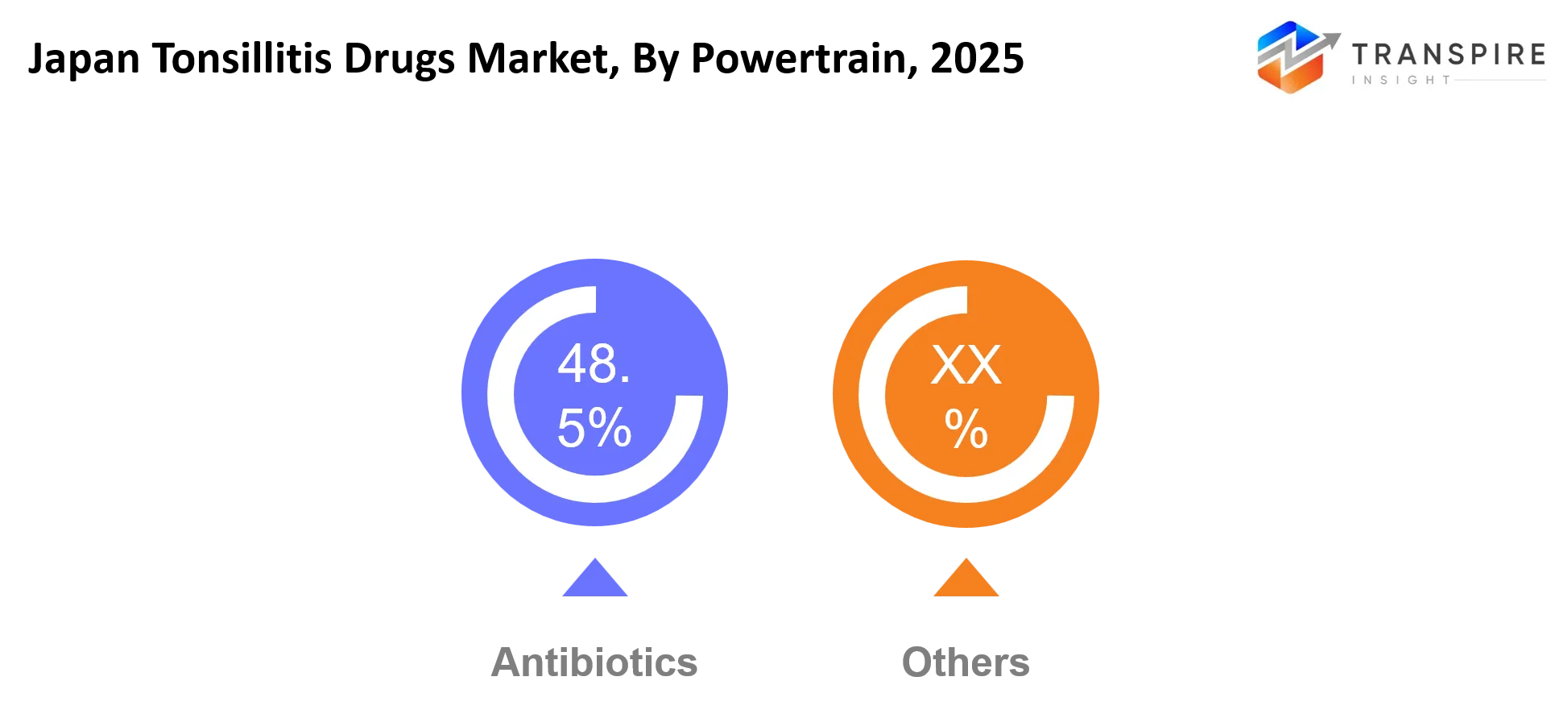
According to Transpire Insights, a detailed research report on the market reflects that the antibiotics application segment dominates the Japan Tonsillitis Drugs Market, accounting for approximately 45% of the total market share in 2025. Astellas Pharma Inc. leads the market with approximately USD 10.3 billion in annual revenue and an estimated 15–20% Japan market share, making it a leading contributor to Japan market development, pharmaceutical innovation, advanced tonsillitis drug production, expanding manufacturing capabilities, and growth dynamics.
Market Snapshot
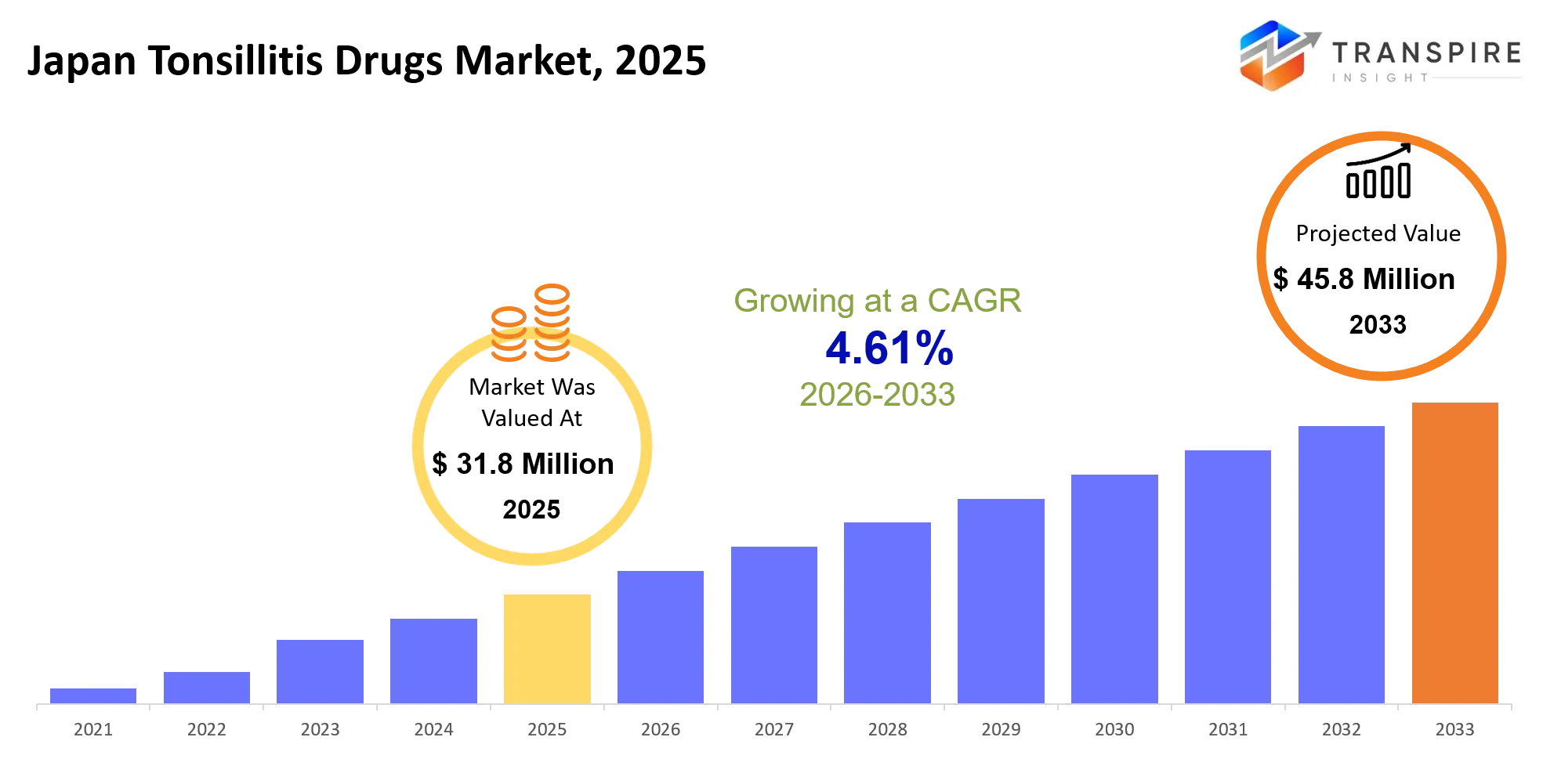
- Market Value (2025): USD 31.8 Million.
- Expected Market Value (2026): USD 33.4 Million.
- Estimated Market Value (2033): USD 45.8 Million.
- Forecast CAGR (2026–2033): 4.61%
Introduction
The tonsillitis medication market involves medicinal treatments that can be antibiotics (like penicillins and cephalosporins), analgesics, antipyretics, and anti-inflammatory medications, including herbal medicine products and throat lozenges that are available in clinics, hospitals, and pharmacies. The therapies in the tonsillitis market include those that are meant for treating both bacterial diseases (such as group A strep) and the viral infections (like influenza).Acetaminophen as far as the tonsillitis is concerned, it is the kind of throat infection that is viral (such as the common cold or flu) and bacterial (e.g. strep throat), making swallowing difficult and causing fever. The tonsillitis market includes drugs that refer to medical treatments that can help a patient relieve symptoms of tonsillitis. The Japan Tonsillitis Drugs Market has numerous business opportunities for development as a result of new diagnostic tools, new means of drug delivery, antibiotic management, and easy access to health care. For instance, rapid antigen testing and molecular assays have enabled correct distinction of bacterial and viral infections so that the right treatment might be supplied. The introduction of localized formulations such as fine-powder treatments for throat infections will facilitate focused mucosal delivery and easy symptomatic relief. The government’s and healthcare professionals’ strong policies regarding wise antibiotic management have enabled responsible use of antibiotics while conforming to necessary pharmaceutical standards. Also, the availability of healthcare networks connecting hospitals, ENT clinics, and pharmacies has positively affected the accessibility of healthcare services for patients.
Key Market Highlights: -
- By treatment type, the Analgesics segment dominated the market and holds nearly 35% share in 2025 and is projected to grow at a substantial CAGR during the forecast period.
- By patient type, the Chronic Cases segment dominated the market and holds nearly 57% share in 2025 and is projected to grow at a substantial CAGR during the forecast period.
- By end user, the Hospitals segment dominated the market and holds nearly 44% share in 2025 and is projected to grow at a substantial CAGR during the forecast period.
- Antimicrobial Stewardship Incentives: The MHLW in Japan established reimbursement incentives to promote suitable prescribing practices of antibiotics among children. The initiative boosts responsible use of antimicrobials, helps minimize overuse of antibiotics, enhances diagnostic decision-making, and alters prescription behavior related to this class of medications thus ensuring sustainable development of the Japan Tonsillitis Drugs Market.
How is Technology Driving Growth in the Japan Tonsillitis Drugs Market?
The fields of robotics, industrial automation, artificial intelligence, and digital health are revolutionizing the industry of drug manufacturing and delivery of health services. The utilization of smart factories based on Industry 4.0 technologies optimizes processes related to drug synthesis and packaging, regulating the quality of drugs and logistics, thus resulting in better productivity and resilience of supply chains. Implementation of improved robotics contributes to high-precision production since it helps minimize human mistakes, increase output and enable uniform quality of goods. In addition, AI and machine learning facilitate drug discovery by processing complicated data sets, selecting the most promising options, conducting optimization of formulations, and allowing predictive maintenance, which leads to decreased costs and reduced waste. Digital health technologies enable personalized medicine through means like genomics and AI-technology-based treatment. All these technologies facilitate innovations in the pharmaceutical industry.
Market Drivers
The Japan Tonsillitis Drugs Market is bolstered by the increasing elderly population, enhancing diagnostic technologies, governmental initiatives, rising self-medication, and strong healthcare system. The rapidly increasing population of elderly people in Japan creates demand for better management of throat and respiratory disorders. Rapid antigen testing and molecular diagnostics lead to correct diagnosis of bacterial infections, and efficient fluoroquinolones treatment decisions. Numerous government initiatives lead to improvement of public awareness regarding antimicrobial stewardship, infection prevention, and accessibility of affordable generic medicine. Increasing awareness of health contributes to the necessity for over-the-counter throat medications, lozenges, and cold medicines. Alongside that, collaboration between hospitals, pharmacies, primary care physicians, and digital health platforms helps diagnose and provide treatment for patients throughout the country. The Japan Tonsillitis Drugs Market is progressing with the advent of the automating pharmaceutical manufacturing, innovations in targeted therapies, excellence in regulation and growing OTC self-medication. Sophisticated robotics, IoT and automation ensure efficiency of production, consistency in quality and compliance with safety regulations as well as robustness of the supply chain. Direct-acting formulations, including topical throat therapies, can effectively target the area of discomfort and thus reduce unnecessary systemic exposure. A good regulatory and research and development system in Japan guarantees product safety and encourages innovations in pharmaceuticals as well as building confidence in medicines through collaboration between clinicians, pharmacies and digital health players. In the meantime, growing health literacy and preference for convenience among consumers foster the need for affordable throat treatment products primarily among older people and busy individuals.
Restrain
Antimicrobial resistance, structural shortages of medicines, unprofitable nature of the industry, and few novel drugs in the pipeline are some of the main limiting factors for the Japan Tonsillitis Medication Market. The improper utilization of antibiotics necessitates better diagnostic procedures and prescription practices. Difficulties in production in combination with severe price control can make the current supply of medicines less profitable. The scarcity of oral antibiotics in terms of introduction into the market also means more dependence on existing drugs. All these factors can hinder the innovation process in the region.
Analysis of Prices and Consumer Behaviour
Antimicrobial therapy is a major factor that supports Japan Tonsillitis Medicines market, as tonsillitis accounts for around 18% of total antimicrobial prescriptions made for respiratory and related infections in Japan. Antimicrobials were given in nearly 54% of patients suffering with tonsillitis, which shows that use of medicinal treatment in the treatment modality is emphasized in Japan. In a large study conducted in Japan it was proved that antimicrobial writing reached around 59.3% of tonsillitis consultations. Penicillins represented 10.8% of antimicrobials used during treatment. The demand for treatment is stipulated by clinical diagnosis, severity of infection and effectiveness and safety of treatment. The increase in antimicrobial prescribing among patients with rapid antigen detection testing used for Group A Streptococcus reached 75.0% with comparison to 58.4% in patients without testing.
Top Companies in the Japan Tonsillitis Drugs Market
- Pfizer
- GlaxoSmithKline
- Sanofi
- AstraZeneca
- Novartis
- Bayer
- AbbVie
- Merck
- Takeda
- Daiichi Sankyo
- Astellas Pharma
- Shionogi
- Eisai
- Otsuka Pharmaceutical
- Sumitomo Pharma
Japan Tonsillitis Drugs Market Segmentation
The Japan Tonsillitis Drugs Market share is divided into six categories: By treatment type, drug, cause, route, patient and end user.
The Analgesics dominated the market, accounting for nearly 35% in 2025 and is expected to rise at a significant CAGR during the forecast period.
The Japan Tonsillitis Drugs Market is segmented by treatment type into Antibiotics, Analgesics, Antipyretics, Anti-inflammatory Drugs, Corticosteroids, Antiseptic Preparations, Combination Therapy, Supportive Therapy. Among these, the Analgesics segment dominated the market, accounting for nearly 35% in 2025 and expected to increase at a significant CAGR during the forecast period. The analgesics market was the largest segment, holding around 35% market share in 2025, and is projected to witness a significant CAGR throughout the forecast period. The dominance of this segment is due to the high preference of patients for analgesics for the quick relief from throat pain, fever, and inflammation related to tonsillitis. The increasing demand for convenient treatment of symptoms, rising adoption of OTC medicines by patients, and patient inclination towards ease of pain relief are also anticipated to help propel the analgesics segment in Japan.
The Chronic Cases dominated the market, accounting for nearly 57% in 2025, and is expected to rise at a significant CAGR during the forecast period.
The Japan Tonsillitis Drugs Market is segmented by patient type into Children, Adolescents, Adults, Elderly, Immunocompromised Patients, Recurrent Cases, Acute Cases, Chronic Cases. Among these, the Chronic Cases segment dominated the market, accounting for nearly 57% in 2025 and expected to increase at a significant CAGR during the forecast period. The segment of Chronic Cases held the most significant market shares of nearly 57% in 2025 and is forecasted to grow at a significant CAGR during the anticipated period. The domination of this segment can be attributed to frequent throat-related symptoms and ailments, and repeated consultations for medical advice. Increasing popularity of effective treatments sought after by the clients, awareness of healthcare solutions, and the advanced medical infrastructure of Japan contribute to the growth of that segment, too.
The Hospitals dominated the market, accounting for nearly 44% in 2025 and is expected to rise at a significant CAGR during the forecast period.
The Japan Tonsillitis Drugs Market is segmented by end user into Hospitals, ENT Clinics, General Clinics, Pediatric Clinics, Pharmacies, Specialty Hospitals, Diagnostic Centers, Home Healthcare. Among these, the Hospitals segment dominated the market, accounting for nearly 44% in 2025 and expected to increase at a significant CAGR during the forecast period. The hospitals’ portion of the market was biggest in 2025 at almost 44% and will likely have a great CAGR during the projected period. It is attributed to the hospitals’ developed service as a result of being able to diagnose patients thoroughly, presence of ENT specialists, its ability to provide treatment based on prescriptions, and its management of those suffering from severe or frequent tonsillitis. Strong health infrastructure, clinical skills, and increase of patients’ access contribute to increase in this segment.
Future Market Trends for the Japan Tonsillitis Drugs Market: -
- Aging Population and Geriatric Care: With Japan’s aging population, the requirements for breathing and infectious disease treatments are growing which impact home health care and adult children purchasing the goods for older individuals.
- Emergence of OTC Solutions: The practice of self-medication aiming at alleviating distressing symptoms by means of analgesics, antipyretics, throat sprays, and so on is spreading through appropriate Rx-to-OTC switches that develop trust in retail and e-pharmacies.
- Digital Health and Telehealth Integration: The introduction of teleconsultations and AI-based diagnostics allows for the enhancement of proper medication, prescription adherence, and guidance on OTC misuse.
- Antimicrobial Stewardship and Precision Medicine: Healthcare specialists advocate for the use of precise molecular testing and rapid tests that provide the difference between bacterial and viral infections so that antibiotics and antivirals can be utilized more responsibly.
- Emergence of Traditional Kampo Medicines: The use of traditional herbal medicine has been gradually adopted together with Western medicine in treating throat swelling and upper respiratory disorders.
Recent Development
- In January 2026: Ryukakusan has broadened its portfolio of over-the-counter (OTC) throat care products from this company by releasing its new flavored formulations of Ryukakusan Direct including variants of Peach, Mint, and Mango R. These items help relieve symptoms of discomfort in the throat, coughs, and phlegm and have direct action on the throat at the same time. The advancement benefits the landscape of OTC throat treatments in Japan and will contribute to boosting development of the Tonsillitis Drugs Market in Japan.
- In June 2026: Japan granted a supplementary approval for Shionogi’s oral antiviral Xocova (ensitrelvir) as a means of preventive treatment of COVID-19 infection in individuals who have been exposed to persons with COVID-19 infection and live in the same household or stay together with infected individuals. The new approval strengthens the landscape of Japan’s prevention from respiratory infections and is relevant to the Japan Tonsillitis Drugs Market by allowing for wider scope management of infectious upper respiratory diseases and related throat conditions.
Market Segment
This study forecasts revenue at Japan, regional and country levels from 2020 to 2033. Transpire Insights has segmented the Japan Tonsillitis Drugs Market based on the below-mentioned segments:
Japan Tonsillitis Drugs Market, By Treatment Type
- Antibiotics
- Analgesics
- Antipyretics
- Anti-inflammatory Drugs
- Corticosteroids
- Antiseptic Preparations
- Combination Therapy
- Supportive Therapy
Japan Tonsillitis Drugs Market, By Drug Type
- Penicillin
- Macrolides
- Cephalosporins
- Fluoroquinolones
- NSAIDs
- Acetaminophen
- Corticosteroids
- Other Drugs
Japan Tonsillitis Drugs Market, By Cause
- Bacterial Tonsillitis
- Viral Tonsillitis
- Streptococcal Tonsillitis
- Acute Tonsillitis
- Chronic Tonsillitis
- Recurrent Tonsillitis
- Fungal Tonsillitis
- Other Infections
Japan Tonsillitis Drugs Market, By Route
- Oral
- Intravenous
- Intramuscular
- Topical
- Sublingual
- Liquid/Syrup
- Tablets
- Capsules
Japan Tonsillitis Drugs Market, By Patient Type
- Children
- Adolescents
- Adults
- Elderly
- Immunocompromised Patients
- Recurrent Cases
- Acute Cases
- Chronic Cases
Japan Tonsillitis Drugs Market, By End User
- Hospitals
- ENT Clinics
- General Clinics
- Pediatric Clinics
- Pharmacies
- Specialty Hospitals
- Diagnostic Centers
- Home Healthcare
Frequently Asked Questions
Find quick answers to common questions.
The Japan Tonsillitis Drugs Market is projected to reach USD 45.8 million by 2033, growing at a 4.61% CAGR
Analgesics dominate with nearly 35% share in 2025, driven by demand for rapid relief from tonsillitis-related pain and inflammation.
Chronic Cases dominate with nearly 57% share in 2025, supported by recurring symptoms and repeated treatment requirements
Hospitals lead with nearly 44% share in 2025, supported by advanced diagnostics, specialist care, and comprehensive treatment capabilities.
Key trends include OTC adoption, antimicrobial stewardship, precision diagnostics, digital health, aging demographics, and growing Kampo medicine adoption.
- Pfizer
- GlaxoSmithKline
- Sanofi
- AstraZeneca
- Novartis
- Bayer
- AbbVie
- Merck
- Takeda
- Daiichi Sankyo
- Astellas Pharma
- Shionogi
- Eisai
- Otsuka Pharmaceutical
- Sumitomo Pharma
About the Authors

Pankaj Ghogare Patil
I am Pankaj Ghogare Patil, a Senior Research Analyst at Transpire Insight, specializing in the Pharmaceutical, Chemicals & Materials, Healthcare IT, and Biotechnology industry. My expertise lies in conducting comprehensive market research, analyzing industry trends, evaluating competitive landscapes, and translating complex data into actionable insights. At Transpire Insight, I closely follow emerging technologies, regulatory developments, and market innovations to create accurate, well-researched, and informative content that helps businesses and professionals make informed decisions. I am committed to producing credible, evidence-based articles that reflect industry best practices while making technical topics accessible and valuable for a broad audience.

Chakradhar Khansole
Chakradhar serves as the Research Director at Transpire Insight, bringing over 8 years of experience in technology, innovation, and strategic market intelligence. He specializes in transforming complex market data into actionable business insights that enable organizations to make informed, growth-oriented decisions. Recognized for his strategic vision and analytical expertise, Chakradhar leads high-impact research initiatives, delivering comprehensive market assessments, competitive intelligence, and forward-looking industry analysis.
Recently Published Reports
-
Jul 2026
Alopecia Treatment Market
Alopecia Treatment Market Size, Share & Analysis Report By Disease Type (Alopecia Areata, Cicatricial Alopecia, Traction Alopecia, Alopecia Totalis, Androgenetic Alopecia, Alopecia Universalis, and Other Disease Types), By Treatment Type (Topical Treatments, Oral Medications, Injectable Therapies, and Hair Transplantation), By Gender (Male, and Female), By Distribution Channel (Hospitals and Clinics, Retail Pharmacies, and Online Retailers), and Geography (North America, Europe, Asia-Pacific, Middle East and Africa, South and Central America), 2021 - 2031
-
Jul 2026
Medical Ultrasound Probe Market
Medical Ultrasound Probe Market Size, Share & Analysis Report By Type (Linear Type, Convex Type, Endocavitary Probe, Phased Array/Cardiac Probe, Transesophageal (TEE) Probe, and Others), By Application (Ophthalmology, Cardiology, Musculoskeletal, Oncology, Obstetrics & Gynecology, General Imaging, and Others), By End User (Hospitals & Clinics, Diagnostic Centers, Ambulatory Surgical Centers, and Others), and Geography (North America, Europe, Asia-Pacific, Middle East and Africa, South and Central America), 2021 – 2031
-
May 2026
Biosimilars Market
Biosimilars Market By Product Type (Monoclonal Antibodies, Recombinant Hormones, Erythropoietin, G-CSF, Others), By Indication (Oncology, Autoimmune Diseases, Blood Disorders, Diabetes, Others), By Manufacturing Type (In-House Manufacturing, Contract Manufacturing), By Distribution Channel (Hospital Pharmacies, Retail Pharmacies, Online Pharmacies), By Industry Analysis, Size, Share, Growth, Trends, and Forecasts 2021-2033
-
Apr 2026
Gastrointestinal Endoscopy Market
Gastrointestinal Endoscopy Market By Type (Rigid Gastrointestinal Endoscope, Flexible Gastrointestinal Endoscopes, Disposable Gastrointestinal Endoscope), By Procedure Type (Colonoscopy, Gastroscopy, Duodenoscopy, Enteroscopy, Flexible Sigmoidoscopy, Others), By Application (Diagnosis, Treatment), By End-Users (Hospitals, Ambulatory Surgical Centers, Specialty Clinics, Laboratories, Others), By Industry Analysis, Size, Share, Growth, Trends, and Forecasts 2021-2033