
Japan Temperature-Controlled Pharma Packaging Market Summary
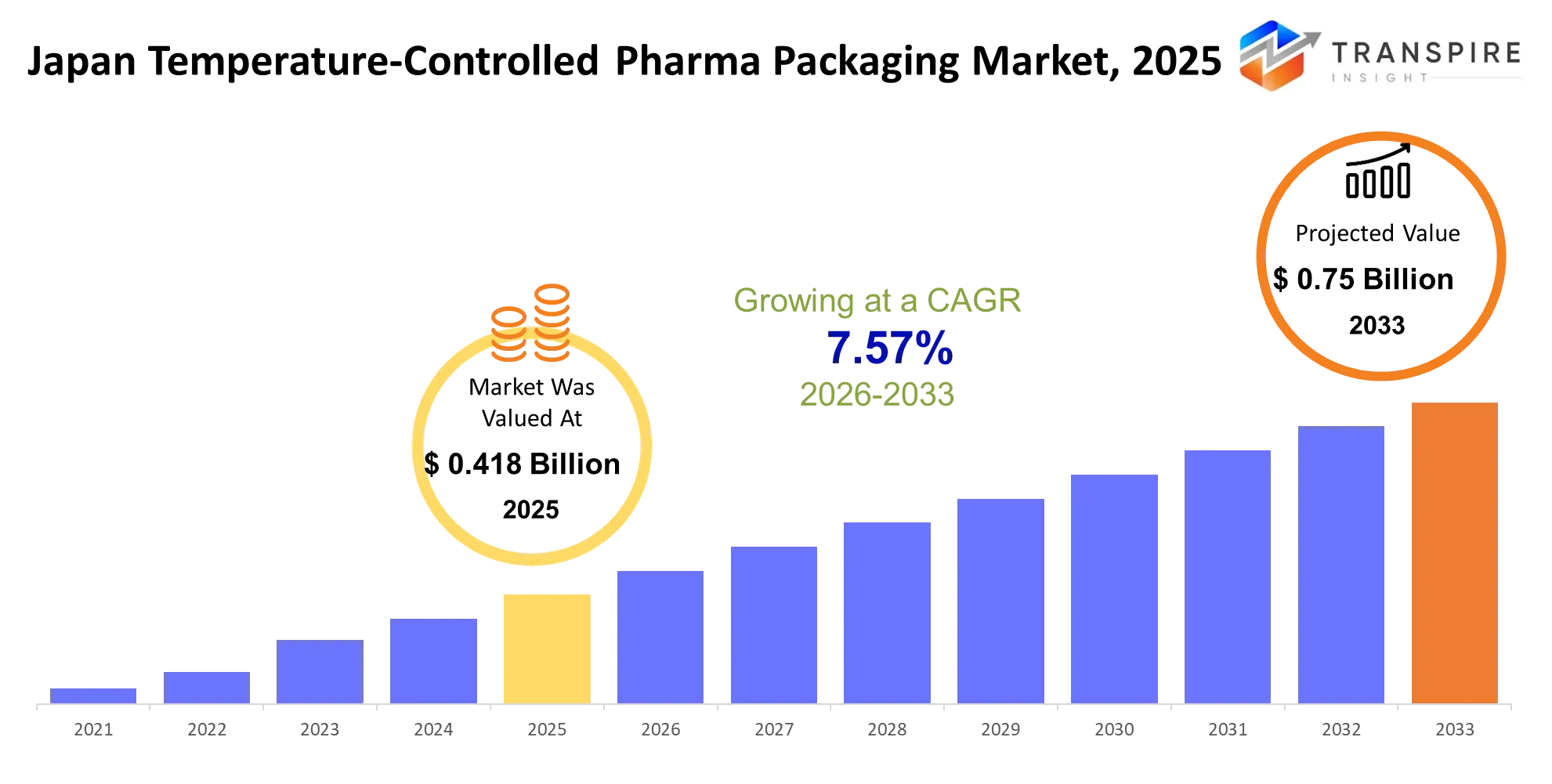
As per Transpire Insight, the Japan Temperature-Controlled Pharma Packaging Market size is estimated at USD 0.418 Billion in 2025 and is anticipated to reach USD 0.75 Billion by 2033, growing at a CAGR of 7.57% from 2026 to 2033.
Japan’s Temperature-Controlled Pharma Packaging Market has a big part in safeguarding heat sensitive medicines, vaccines, biologics, and those cell and gene therapies while they move around for storage and transportation. basically it helps keep pharmaceutical products inside the validated temperature band from the manufacturing site to hospitals, distributors, and even patients. This way quality doesn’t drift, product doesn’t go missing, and regulators don’t flag non-compliance. And as Japan’s pharma supply chain gets more specialized, dependable cold chain packaging has turned into a day to day operational must, not just a nice optional logistics idea.
In the last five years, things have gradually moved away from basic insulated solutions toward more smart reusable containers, phase-change based materials, and cold chain systems that are digitally monitored. When the COVID-19 vaccine rollouts expanded globally, Japan like many places had to push harder on qualified cold chain infrastructure and that also showed some weak spots in pharma logistics networks. So, manufacturers and logistics providers started modernizing their packaging, not only swapping materials but also rethinking how temperature is tracked. Meanwhile Japan’s biologics pipeline keeps expanding, GDP compliance expectations are getting stricter, and specialty medicines keep growing, all of which still supports the move toward higher performance temperature-controlled packaging. In the end these changes boost shipment reliability, cut down on product wastage, and make it easier to justify long term investment in premium packaging technologies, which then sustains revenue chances across pharma manufacturing and healthcare logistics.
Japan Temperature-Controlled Pharma Packaging Market Size & Forecast:
- Japan Temperature-Controlled Pharma Packaging Market Size 2025: USD 0.418 Billion
- Expected Market Value 2033: USD 0.75 Billion
- Forecast CAGR: 7.57%
- Leading region in 2025: Kanto
- Fastest Growing region: Kansai
- Key Profile: Sonoco ThermoSafe, CSafe Global, Softbox Systems, Pelican BioThermal, Cryopak, va-Q-tec, Tempack, Cold Chain Technologies, DHL Life Sciences, FedEx Healthcare, UPS Healthcare, Sealed Air, Envirotainer, Panasonic Cold Chain, AmerisourceBergen
Key Market Insights
- Regional Analysis: Kanto is basically running the Japan Temperature-Controlled Pharma Packaging Market, it’s estimated at about 42% market share in 2025. This shows up thanks to the pharmaceutical manufacturing hotspots around Tokyo and Kanagawa, kind of like a cluster effect.
- Fastest-growing Region: Kansai should grow the quickest through 2033, and the reason is pretty straightforward—biologics production is expanding, plus advanced healthcare logistics investments keep coming in, even more and more.
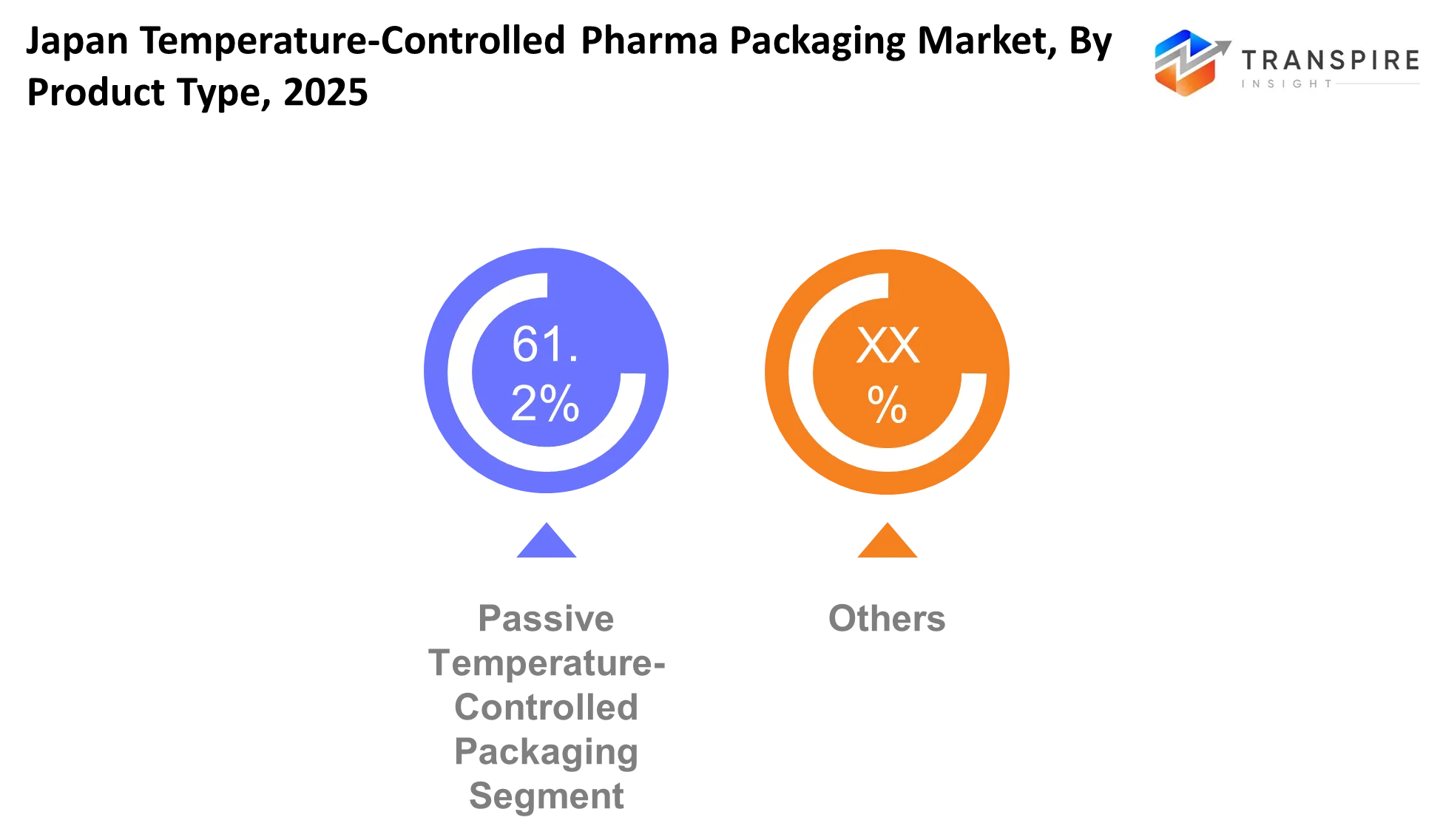
- Segment Analysis: Passive packaging is leading, with roughly 58% market share in 2025. That’s mainly because it’s cost efficient, and also because it’s been validated for transporting pharmaceuticals, with less fuss.
- Second-largest Segment: Active packaging keeps gaining ground too, especially for international biologics shipments where temperature control has to stay accurate during longer routes, without drifting.
- Fastest-growing Segment: Hybrid packaging solutions are forecast to perform the best in growth through 2033. Pharmaceutical companies seem to want extra thermal protection but at reduced operating costs, so hybrid becomes the compromise.
- Application Insights: Vaccine and biologics transportation makes up nearly 48% of packaging demand, reflecting how specialty pharmaceutical distribution is expanding.
- Emerging Application: Cell and gene therapy logistics are the fastest-moving application. This is happening as cryogenic transport requirements become more common after 2025, and everyone is adjusting accordingly.
- End-user Insights: Pharmaceutical manufacturers remain the biggest end-user segment, with around 55% market share. At the same time, biotechnology companies are expanding faster, which is noticeable in recent deployments.
- Competitive Landscape: Sonoco ThermoSafe, CSafe Global, Pelican BioThermal, Cold Chain Technologies, va-Q-tec, and DHL Life Sciences are continuing to strengthen their positions. They’re doing this through reusable packaging innovation, IoT-enabled monitoring, and logistics partnerships, all tied together in practical ways.
What are the Key Drivers, Restraints, and Opportunities in the Japan Temperature-Controlled Pharma Packaging Market?
The strongest growth driver seems to be Japan’s expanding production and roll-out of biologics, vaccines, biosimilars, and advanced therapies, the kinds that basically demand strict temperature validation all the way through the supply chain. Regulatory compliance, under Good Distribution Practice standards has sort of pushed pharma manufacturers to swap conventional insulated boxes with qualified passive, active, and hybrid packaging solutions, and honestly it’s not a small change. Then you get investments in specialty pharmaceutical logistics , which directly lifts demand for premium packaging systems, data loggers, and reusable thermal containers while also cutting down product spoilage and compliance concerns.
The biggest structural headache is still the high price tag for validated temperature-controlled packaging plus the cold-chain infrastructure that has to support it. Advanced insulated containers, phase change materials, qualification testing, and continuous monitoring systems all come with heavy upfront capital. Smaller pharmaceutical companies and regional distributors often find it hard to justify those expenses , so market penetration can end up slower. Also the validation requirements and regulatory paperwork tend to stretch deployment timelines. So even when the operational benefits look obvious, adoption doesn’t always move fast.
A key opportunity is to pair reusable packaging platforms with IoT sensors and real-time shipment analytics. Pharmaceutical companies are increasingly asking for end-to-end visibility, the sort that confirms temperature compliance during transit, while at the same time lowering packaging waste and logistics costs. Japan’s ongoing investments in digital healthcare infrastructure, together with rising exports of specialty medicines across Asia-Pacific, are creating pretty favorable conditions for intelligent packaging providers.
What Has the Impact of Artificial Intelligence Been on the Japan Temperature-Controlled Pharma Packaging Market?
Artificial intelligence and newer digital technologies are shifting how temperature controlled pharmaceutical packaging works, mainly by boosting shipment visibility, better use of packaging space, and making the cold chain more dependable. With AI driven logistics platforms, teams can keep scanning sensor signals—temperature, humidity, location, plus shock tracking—so abnormal shipment conditions get noticed before the pharmaceutical goods actually turn compromised. The automated monitoring layer then pings operators in real time, so they can take corrective steps quickly, and that usually cuts down product losses and also strengthens regulatory compliance outcomes.
Machine learning methods also steer what packaging gets chosen in the first place, by looking at how long the shipment takes, what the season is like, which routes are being used, and how sensitive the product really is. These predictive approaches let pharmaceutical organizations pick an insulated container that’s efficient, without paying for “extra” insulation when it’s not needed. On top of that, AI supports predictive maintenance for refrigerated storage equipment and thermal shipping assets, because it can spot equipment wear and subtle degradation ahead of actual failures. Overall, this improves fleet utilization, reduces downtime, trims operational expenses, and supports cold chain performance across larger distribution networks.
Even with all of that, putting AI to work is still not always easy, since integration can be complicated and the upfront implementation costs can be high. A lot of pharmaceutical supply chains depend on more than one logistics provider, and each provider may run a different monitoring platform, so data standardization becomes kind of messy. When interoperability is limited and shipment data stays scattered, prediction results suffer, and adoption slows down for intelligent cold chain management, even if the day to day operational advantages are pretty clear.
Key Market Trends
- Pharmaceutical companies started replacing single-use insulated shippers with reusable thermal containers here and there, between 2021 and 2026, aiming to cut logistics costs but also to make things a bit more sustainable.
- During 2021-2022, then again afterward, IoT-enabled temperature monitoring became sort of a norm for premium pharmaceutical deliveries once COVID-19 vaccine distribution pushed the digital cold chain investments forward.
- Biologics manufacturers also moved toward passive packaging systems that last longer, the ones that can keep validated temperatures steady for more than 120 hours, which matters a lot.
- Then the phase change material technology kind of took off more widely, since many groups wanted better thermal stability than what conventional gel-based cooling can give.
- At the same time third-party healthcare logistics providers grew their specialized cold chain services, because exports of specialty medicines were increasing across Asia-Pacific markets.
- Packaging suppliers increasingly teamed up with pharmaceutical manufacturers to validate customized shipping solutions, especially for cell and gene therapy products where requirements are tighter than usual.
- Cloud-based shipment monitoring platforms evolved too, from being “nice to have” tracking tools into more of a regulatory compliance solution that supports audit-ready pharmaceutical transportation.
- And companies didn’t slow down on this, they accelerated investments in recyclable insulation materials and reusable packaging fleets, trying to cut lifecycle cost while still meeting corporate sustainability goals.
- International logistics providers even integrated predictive analytics into shipment planning. This improved delivery reliability, and also helped lower the number of temperature excursion incidents that used to pop up.
- Some of the leading suppliers including Sonoco ThermoSafe, CSafe Global, Pelican BioThermal, Cold Chain Technologies, and va-Q-tec expanded their digital packaging portfolios with smart sensors, reusable systems, and more advanced thermal engineering, essentially combining tech with packaging design.
Japan Temperature-Controlled Pharma Packaging Market Segmentation
By Packaging Type:
Insulated Shippers are made for pharmaceutical distribution where stable internal temps stay essential, especially across domestic as well as international transportation. Their light construction, approved insulation materials, and consistent long-term thermal capability help keep biologics, vaccines, and specialty medicines in range. Meanwhile Cold Boxes give dependable protection for short to medium-distance runs, notably between manufacturing facilities, warehouses, and healthcare institutions. Refrigerated Containers are for bigger volume loads that need continuous cooling while they’re in transit and also during storage operations
Phase Change Material Packaging has been getting broader acceptance, since newer materials keep narrow temperature bands for longer stretches than typical cooling media. That kind of thermal steadiness also tends to lower product losses when deliveries are delayed, or when seasonal weather throws off conditions. In addition to this, you’ll see other packaging solutions like customized insulated systems reusable containers, and designs made for particular uses for specialized pharmaceutical products. Overall product innovation keeps moving forward, improving durability, shipment validation, and operational efficiency throughout pharmaceutical logistics.
By Product Type:
Passive Packaging grabs the largest slice of the market, since insulated materials along with cooling elements keep the needed temperatures steady without having to rely on outside power. In practice, reliable operation, lower day to day costs, and simple handling, make passive systems a good fit for routine pharmaceutical deliveries. Active Packaging, on the other hand, fits products that really must have continuous temperature regulation, achieved via powered refrigeration or heating methods, during long hauls and extended routes. These types stay especially relevant for high value biologics and other delicate medicines, that need very strict environmental consistency.
Hybrid Packaging sort of mixes both worlds—passive insulation plus active monitoring, or maybe supplemental cooling technology, just to raise the overall dependability of shipments moving through messy supply chain paths. The better temperature stability, together with operational flexibility means hybrid solutions work well for premium pharmaceutical uses. There are also other packaging formats that target niche transport needs, where more conventional protective approaches simply can’t deliver enough safeguarding. Ongoing product development keeps pushing broader adoption across different pharmaceutical categories, and that’s pretty much the idea.
By Temperature Range:
The 2–8°C segment seems to be the biggest temperature bucket, since vaccines insulin biologics and a lot of injectable medicines need that carefully managed band during storage, and transport. With validated packaging systems in place, temperature drift events get reduced and you still stay within regulatory expectations across the whole pharma supply chain. For products that should stay well below zero, frozen packaging solutions help guard them during manufacturing, distribution, and even parts of clinical research. Then there are cryogenic solutions, they keep things at extremely low temperatures for advanced therapies, cell based medicines, and specialized biological samples too.
On the other side, controlled ambient packaging is for pharmaceutical products that need consistent room temperature conditions, without too much heat, or cold shocks. Thoughtful thermal management keeps product quality intact while it moves through seasonal delivery routes and warehouse storage cycles. The other temperature categories exist because each one has its own pharmaceutical needs, so customized packaging solutions get used, based on the specific stability profile of the product. And, as pharmaceutical innovation keeps moving forward, the specialized temperature controlled logistics requirements keep expanding as well.
By End User:
Pharmaceutical Companies sit at the top of the chart , because commercial medicine manufacturing hinges on validated packaging systems that keep product quality intact across distribution routes. Big manufacturing volumes along with strict regulatory expectations help drive nonstop investment into temperature-controlled packaging that’s been properly qualified. In a similar way, Biotechnology Companies are moving more often toward advanced thermal packaging for biologics, biosimilars, cell therapies, and even research materials where the environment must stay very exact. Hospitals meanwhile rely on dependable packaging so temperature-sensitive medicines arrive safely , and so treatment quality is preserved during delivery.
Contract Research Organizations (CROs) tend to need specialized thermal solutions for clinical trial supplies, lab specimens, and investigational medicines that travel between different research sites. Stable temperature management backs up study integrity and also regulatory compliance, which is not optional in practice. Other end users also show up here: government healthcare agencies, specialty pharmacies , diagnostic laboratories , and vaccine distribution programs. As activity grows across all these organizations , the demand keeps rising for validated pharmaceutical logistics solutions.
By Distribution Channel:
Direct Sales stays the main distribution path , because pharmaceutical manufacturers usually deliver healthcare institutions and big distributors via dedicated commercial arrangements. In practice this kind of direct approach helps with better shipment control, clearer product traceability , and regulatory compliance , so temperature-sensitive medicines get moved more reliably. Logistics Providers handle a large share of pharmaceutical transport, mainly by running validated cold chain services, doing temperature monitoring, and using specialized handling know-how. On top of that, national as well as international logistics networks make deliveries steadier across those messy supply chains.
Packaging Distributors provide insulated containers, thermal materials, and certified packaging options for pharmaceutical manufacturers, healthcare providers, and logistics organizations. Having a wider set of products on hand gives teams more operational flexibility for varying shipment needs. Then there are the other routes too: specialized healthcare distributors and regional supply partners that focus on niche pharmaceutical use cases. Digital supply chain platforms also help, since they improve order management and make shipment visibility easier across temperature-controlled logistics.
What are the Key Use Cases Driving the Japan Temperature-Controlled Pharma Packaging Market?
The distribution of vaccines, biologics, and specialty medicines sort of stays the main use case because the strict temperature control kinda helps protect product stability from manufacturing sites all the way to hospitals , and pharmacies. Regulatory compliance plus product quality standards means validated thermal packaging is not optional for normal pharmaceutical logistics.
Clinical trials plus biotechnology research keep expanding what packaging needs to do , especially for investigational medicines, laboratory samples, and advanced biological materials. Contract research organizations and biotech companies increasingly lean on qualified cold chain systems so the sample integrity holds up across domestic routes and international transit.
Also, cell and gene therapy logistics is an emerging thing with real long-term potential. The rise in personalized medicine, cryogenic transportation, and advanced biologics manufacturing should open up additional opportunities for high performance thermal packaging, and even digitally monitored cold chain solutions during the forecast window.
|
Report Metrics |
Details |
|
Market size value in 2025 |
USD 0.418 Billion |
|
Market size value in 2026 |
USD 0.45 Billion |
|
Revenue forecast in 2033 |
USD 0.75 Billion |
|
Growth rate |
CAGR of 7.57% from 2026 to 2033 |
|
Base year |
2025 |
|
Historical data |
2021 - 2024 |
|
Forecast period |
2026 - 2033 |
|
Report coverage |
Revenue forecast, competitive landscape, growth factors, and trends |
|
Regional scope |
Japan |
|
Key company profiled |
Sonoco ThermoSafe, CSafe Global, Softbox Systems, Pelican BioThermal, Cryopak, va-Q-tec, Tempack, Cold Chain Technologies, DHL Life Sciences, FedEx Healthcare, UPS Healthcare, Sealed Air, Envirotainer, Panasonic Cold Chain, AmerisourceBergen |
|
Customization scope |
Free report customization (country, regional & segment scope). Avail customized purchase options to meet your exact research needs. |
|
Report Segmentation |
By Packaging Type (Insulated Shippers, Cold Boxes, Refrigerated Containers, Phase Change Material Packaging, Others); By Product Type (Passive Packaging, Active Packaging, Hybrid Packaging, Others); By Temperature Range (2–8°C, Frozen, Cryogenic, Controlled Ambient, Others); By End User (Pharmaceutical Companies, Biotechnology Companies, Hospitals, CROs, Others); By Distribution Channel (Direct Sales, Logistics Providers, Packaging Distributors, Others) |
Which Regions are Driving the Japan Temperature-Controlled Pharma Packaging Market Growth?
Kanto still feels like the dominant regional market, because the whole area kind of funnels Japan’s biggest pharmaceutical manufacturing plants, biotechnology companies, plus international airports and, yes, that newer healthcare logistics setup. Narita International Airport together with Tokyo’s connected freight network helps high value pharmaceutical exports move out faster while also trimming the transit time for temperature sensitive goods. With strict Good Distribution Practice enforcement and a lot of money going into verified cold chain facilities, companies can more easily say yes to premium thermal packaging solutions.
Kansai comes next, as the second largest regional contributor, but its momentum plays out differently than Kanto. Instead of leaning mainly on logistics concentration, Kansai leans on a more dependable pharmaceutical manufacturing foundation around Osaka, Kyoto and Kobe. That foundation is strengthened by long standing research organizations and biotechnology clusters, so it’s not only about shipping, it’s also about production. Ongoing capital spending for modernization of manufacturing and quality assurance keeps the demand steady for validated temperature controlled packaging, across commercial manufacturing and even clinical development. This kind of balanced industrial mix tends to keep revenue relatively stable, even when supply chain disruptions happen.
Chubu is projected to show the quickest growth from 2026 through 2033, since pharmaceutical production keeps spreading beyond the usual metropolitan hubs and the regional logistics capabilities continue to improve. In recent years there were investments in automated distribution centers, increased refrigerated warehouse capacity, and digital cold chain monitoring, and those upgrades have made pharmaceutical transportation across central Japan stronger overall.
Who are the Key Players in the Japan Temperature-Controlled Pharma Packaging Market and How Do They Compete?
Competition still feels moderately consolidated, more like a bunch of global cold chain specialists throwing their weight behind technology performance and packaging systems that are already validated, plus digital shipment visibility , and then those specialized pharmaceutical logistics services that are not really about price alone. Most players keep putting money into reusable thermal packaging, vacuum insulation tech, real time monitoring, and qualification support, mainly because pharmaceutical manufacturers now tend to judge suppliers on shipment reliability, regulatory compliance, and sustainability results. On top of that, new entrants run into high barriers because qualification requirements are heavy, the service networks are global , and the customer validation cycles can drag on.
Sonoco ThermoSafe, kind of stands out with insulated shippers, reusable thermal systems, and FAA approved Pegasus ULD containers that are built for pharmaceutical air cargo. They keep rolling out new reusable packaging platforms and add manufacturing capacity, while also tightening airline partnerships to boost global pharmaceutical transport capabilities.
CSafe Global is centered on integrated active and passive shipping solutions , supported by digital shipment visibility via the CSafe Connect platform. The company has broadened its offering with reusable thermal covers and more advanced parcel technologies, but still leans hard into connected cold chain intelligence and sustainability.
Pelican BioThermal specializes in reusable packaging for biologics, vaccines, and those cell and gene therapies, using durable thermal systems that help support high value pharmaceutical distribution. va-Q-tec differentiates itself through vacuum insulation technology and phase change materials, giving longer passive temperature performance, while lowering the reliance on dry ice and powered refrigeration.
Company List
- Sonoco ThermoSafe
- CSafe Global
- Softbox Systems
- Pelican BioThermal
- Cryopak
- va-Q-tec
- Tempack
- Cold Chain Technologies
- DHL Life Sciences
- FedEx Healthcare
- UPS Healthcare
- Sealed Air
- Envirotainer
- Panasonic Cold Chain
- AmerisourceBergen
Recent Development News
- In May 2026, ThermoSafe expanded U.S.-based vacuum insulated panel manufacturing to strengthen cold chain supply assurance for life sciences customers. The investment increases production capacity and supports reliable supply of temperature-controlled pharmaceutical packaging solutions.https://www.thermosafe.com/resources/news-events/ (ThermoSafe)
- In February 2026, ThermoSafe launched the Orion™ Express reusable packaging platform for time-critical pharmaceutical shipments. The launch broadened reusable cold chain solutions while improving flexibility for temperature-sensitive logistics.https://www.thermosafe.com/resources/news-events/ (ThermoSafe)
- In February 2026, va-Q-tec and Wanzl introduced a vacuum-insulated Thermo Trolley for temperature-controlled logistics. The solution maintains stable temperatures without refrigerated vehicles or dry ice, supporting more efficient pharmaceutical and healthcare distribution.https://www.va-q-tec.com/en/euroshop-2026-food-logistics/ (va-Q-tec)
What Strategic Insights Define the Future of the Japan Temperature-Controlled Pharma Packaging Market?
The market seems to be shifting toward digitally connected, reusable, and pretty well validated packaging systems , especially as biologics , cell therapies, and precision medicines make up a bigger part of pharmaceutical production. You know, digital monitoring, predictive shipment analytics, and reusable thermal containers will start replacing the older single-use formats more often, because manufacturers want better compliance, reduced total lifecycle costs, and improved supply chain toughness. There’s also a quieter risk though, sort of the dependence on specialized insulation materials and phase change components, where a supply disruption or raw material shortage could nudge production costs up and mess with delivery timing.
At the same time there’s an emerging chance in integrated smart packaging, where reusable insulation is paired with real-time IoT monitoring, particularly for advanced therapies that need continuous shipment verification. Firms that move early into digital cold chain ecosystems, regional service networks, and sustainable reusable packaging platforms will likely be in a stronger place, to land long-term agreements with pharmaceutical manufacturers and healthcare logistics providers.
Japan Temperature-Controlled Pharma Packaging Market Report Segmentation
By Packaging Type
- Insulated Shippers
- Cold Boxes
- Refrigerated Containers
- Phase Change Material Packaging
- Others
By Product Type
- Passive Packaging
- Active Packaging
- Hybrid Packaging
- Others
By Temperature Range
- 2–8°C
- Frozen
- Cryogenic
- Controlled Ambient
- Others
By End User
- Pharmaceutical Companies
- Biotechnology Companies
- Hospitals
- CROs
- Others
By Distribution Channel
- Direct Sales
- Logistics Providers
- Packaging Distributors
- Others
Frequently Asked Questions
Find quick answers to common questions.
The expected Japan Temperature-Controlled Pharma Packaging Market size for the market will be USD 0.75 Billion in 2033.
Key segments for theJapan Temperature-Controlled Pharma Packaging Market are By Packaging Type (Insulated Shippers, Cold Boxes, Refrigerated Containers, Phase Change Material Packaging, Others); By Product Type (Passive Packaging, Active Packaging, Hybrid Packaging, Others); By Temperature Range (2–8°C, Frozen, Cryogenic, Controlled Ambient, Others); By End User (Pharmaceutical Companies, Biotechnology Companies, Hospitals, CROs, Others); By Distribution Channel (Direct Sales, Logistics Providers, Packaging Distributors, Others).
Major Japan Temperature-Controlled Pharma Packaging Market players are Sonoco ThermoSafe, CSafe Global, Softbox Systems, Pelican BioThermal, Cryopak, va-Q-tec, Tempack, Cold Chain Technologies, DHL Life Sciences, FedEx Healthcare, UPS Healthcare, Sealed Air, Envirotainer, Panasonic Cold Chain, AmerisourceBergen.
The Japan Temperature-Controlled Pharma Packaging Market size is USD 0.418 Billion in 2025.
The Japan Temperature-Controlled Pharma Packaging Market CAGR is 7.57% from 2026 to 2033.
- Sonoco ThermoSafe
- CSafe Global
- Softbox Systems
- Pelican BioThermal
- Cryopak
- va-Q-tec
- Tempack
- Cold Chain Technologies
- DHL Life Sciences
- FedEx Healthcare
- UPS Healthcare
- Sealed Air
- Envirotainer
- Panasonic Cold Chain
- AmerisourceBergen
About the Authors

Kartik bhong
I am Kartik Bhong, a Senior Research Analyst at Transpire Insight, specializing in the Packaging, Manufacturing, and Construction industry. My work focuses on analyzing market trends, emerging technologies, industry regulations, and competitive landscapes to deliver accurate, data-driven insights. I am passionate about transforming complex industry information into clear, practical content that helps businesses, professionals, and decision-makers stay informed and make confident strategic decisions. Through continuous research and a strong commitment to accuracy, I strive to create reliable, well-researched content that reflects the latest developments across these dynamic industries and supports the vision of Transpire Insight in delivering valuable market intelligence.

Chakradhar Khansole
Chakradhar serves as the Research Director at Transpire Insight, bringing over 8 years of experience in technology, innovation, and strategic market intelligence. He specializes in transforming complex market data into actionable business insights that enable organizations to make informed, growth-oriented decisions. Recognized for his strategic vision and analytical expertise, Chakradhar leads high-impact research initiatives, delivering comprehensive market assessments, competitive intelligence, and forward-looking industry analysis.
Recently Published Reports
-
Apr 2026
Pharmaceutical Cold Chain Packaging Market
Pharmaceutical Cold Chain Packaging Market By Material (Plastic,(Polyethylene (PE), Polypropylene (PP), Polyethylene Terephthalate (PET), Expanded Polystyrene (EPS), Polyurethane (PU),Others), Paper, Metal, Others), By Product (Small Boxes, Pallets, Large Sized Pallet Containers, Others), By End Use (Biopharmaceutical Companies, Clinical Research Organizations, Hospitals, Research Institutes, Logistics and Distribution Companies, Others)”, By Industry Analysis, Size, Share, Growth, Trends, and Forecasts 2026-2033
-
Apr 2026
Active & Intelligent Packaging Market
Active & Intelligent Packaging Market By Type (Active Packaging, Smart Packaging), By Material (Polymer-Based, Paper & Board-Based, Metal-Based, Glass-Based), By Technology (Time-Temperature Indicators, Freshness Indicators, RFID, Antimicrobial Packaging, Modified Atmosphere Packaging), By Application (Food & Beverages, Pharmaceutical, Cosmetics & Personal Care, Electronics & Consumer Goods, Others), By Industry Analysis, Size, Share, Growth, Trends, and Forecasts 2026-2033
-
Apr 2026
Biodegradable Cut Flower Packaging Market
Biodegradable Cut Flower Packaging Market By Material Type (Paper & Paperboard, Biodegradable Plastics, Natural Fibers, Molded Pulp, Others), By Product Type (Sleeves, Wraps, Boxes & Cartons, Bags & Pouches, Inserts & Holders), By Application (Roses, Carnations, Tulips, Chrysanthemums, Mixed Flowers, Others) and By Distribution Channel (Direct Sales, Distributors & Wholesalers, Online Channels), By Industry Analysis, Size, Share, Growth, Trends, and Forecasts 2026-2033
-
May 2026
Pharmaceutical Packaging Market
Pharmaceutical Packaging Market By Material Type (Plastic, Glass, Metal, Paper & Paperboard, Others), By Packaging Type (Bottles, Blister Packs, Vials, Ampoules, Pouches & Sachets, Others) and By End User (Hospitals & Clinics, Retail Pharmacies, Online Pharmacies, Pharmaceutical Manufacturers), By Industry Analysis, Size, Share, Growth, Trends, and Forecasts 2026-2033