

Japan Anorexiants Market Size & Forecast:
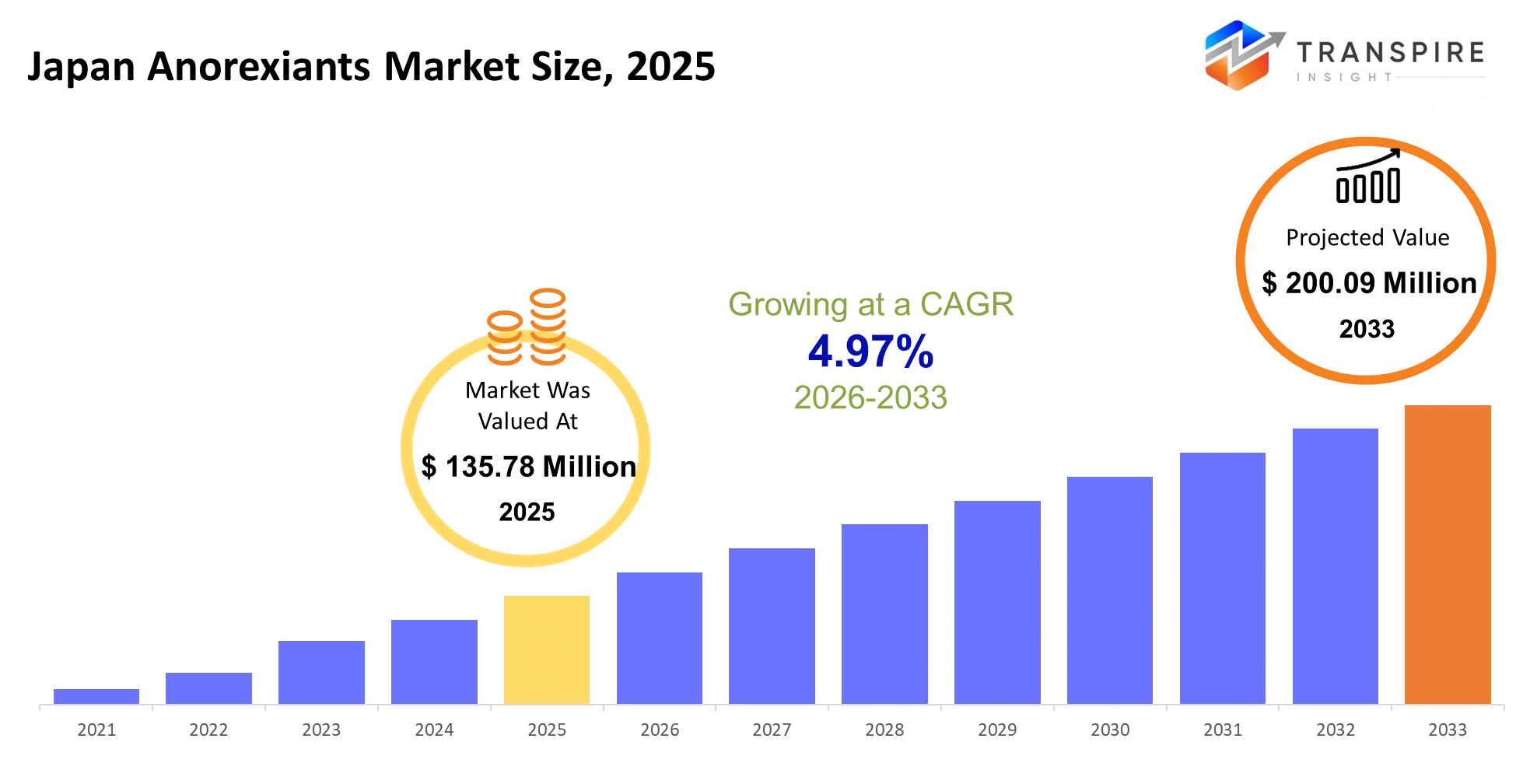
- Japan Anorexiants Market Size 2025: USD 135.78 Million
- Japan Anorexiants Market Size 2033: USD 200.09 Million
- Japan Anorexiants Market CAGR: 4.97%
- Japan Anorexiants Market Segments: By Type (Prescription Drugs, OTC Drugs, Herbal Supplements, Combination Therapy, Others); By Application (Weight Loss, Obesity Treatment, Appetite Suppression, Metabolic Disorders, Lifestyle Management, Others); By End-User (Hospitals, Clinics, Fitness Centers, Consumers, Wellness Centers, Pharmacies, Others); By Distribution (Hospital Pharmacies, Retail Pharmacies, Online Pharmacies, Drug Stores, Others).
To learn more about this report,  Download Free Sample Report
Japan Anorexiants Market Summary
The Japan Anorexiants Market was valued at USD 135.78 Million in 2025. It is forecast to reach USD 200.09 Million by 2033. That is a CAGR of 4.97% over the period.
The Japan anorexiants market exists to help people who struggle with obesity and weight-related metabolic disorders because it enables doctors who manage their weight through medical supervision to control their patients' food intake. The therapies enable doctors to treat patients who have obesity-related health problems which include diabetes and cardiovascular issues and other long-lasting health conditions that now demand more resources from Japan's healthcare system. Excess weight management has now increased in importance because medical professionals treat it as a clinical problem which requires treatment instead of viewing it as an everyday problem.
The market experienced a fundamental change during the last three to five years when it moved away from traditional short-term appetite suppressants toward new prescription treatments which offer better safety and wider metabolic advantages. The shift gained momentum when new obesity treatment guidelines and reimbursement negotiations established better medical pathways for drug-based treatments. Healthcare providers started to treat metabolic health problems which emerged after the pandemic because people began to live more sedentary lives. Pharmaceutical companies are now developing new products while doctors create more organized methods to convert clinical needs into actual business results.
Key Market Insights
- The Japan Anorexiants Market sees its largest market share in 2025 when Kanto region holds 38% of the market because of its advanced obesity care facilities and greater number of specialized doctors.
- Kansai will experience its strongest growth period between 2025 and 2030 because urban healthcare systems now treat more metabolic disorders.
- The market for regional products is growing because hospitals in the prefectures now use established methods to manage obesity as part of their treatment for chronic diseases.
- Prescription appetite suppressants dominate the market because they represent 46% of the 2025 Japan Anorexiants Market share which doctors use in their treatment programs.
- Combination metabolic therapies represent the second-largest segment which has gained popularity because of its increased effectiveness and ability to treat more medical conditions.
- The market for GLP-1 receptor agonist-based anorexants will experience its fastest growth until 2030 because these products deliver better clinical results and their reimbursement status continues to be negotiated.
- The treatment of obesity through medical applications leads the market with 52% of total share in 2025 because doctors now recognize obesity as a medical condition that requires ongoing treatment.
- The hospital sector leads end-user consumption because it requires specialist-approved prescriptions which generate 48% of market revenue during 2025.
- Specialty obesity clinics represent the second-largest industry segment because they hold substantial market presence throughout major urban areas.
- The outpatient wellness centers which operate privately will become the fastest expanding end-user market throughout the entire forecast period because they implement strategic growth initiatives and adopt high-quality treatment methods.
What are the Key Drivers, Restraints, and Opportunities in the Japan Anorexiants Market?
The main factor driving the Japan anorexiants market growth comes from medical professionals now viewing obesity as an ongoing metabolic disorder instead of a temporary weight issue. The implementation of new obesity treatment guidelines together with routine metabolic health assessments became standard preventive healthcare practices, which established the foundation for this development. The Japanese healthcare system faces increased treatment demands because obesity-related diseases like type 2 diabetes and hypertension and cardiovascular disease have caused practitioners to start using medicine sooner. The introduction of advanced anorexants which combine appetite control with metabolic enhancement has resulted in higher prescription rates which create continuous revenue growth opportunities for pharmaceutical companies.
The main challenge for weight loss therapies in Japan exists because the country maintains a strict system for drug approval and reimbursement which operates under traditional methods. Obesity medications need extended review periods because their evaluation process requires assessment of their long-term effectiveness and safety and reimbursement status, which differs from acute care treatment. The system requires extensive time to develop because it relies on both regulatory organizations and payers who implement budget management strategies. The result leads to postponed product introductions which limit patient options and make it harder for doctors to use new treatments, thereby decreasing immediate market sales even when clinical applications are ready.
The next growth phase lies in digital obesity management systems which use anorexiant medications for their treatment. Japan's commitment to connected healthcare systems enables development of prescription medications that will work with remote patient monitoring systems and AI-powered medication tracking solutions. The Tokyo and Osaka metropolitan care networks are using pilot programs to show how data-driven treatment optimization leads to better patient results and increased long-term treatment success rates.
What Has the Impact of Artificial Intelligence Been on the Japan Anorexiants Market?
The combination of artificial intelligence and digital health technologies which have reached advanced development, is changing how Japan deals with anorexiants because it enables healthcare providers to assess and customize obesity treatments. The hospitals now use AI-based clinical decision support systems to operate their obesity treatment programs because these systems help them conduct patient assessments and create medication plans and track patient compliance with treatment. The platforms use body mass index information and blood glucose level changes and psychological health records to assist doctors in selecting patients for medication-based weight loss treatments because this method reduces evaluation time and boosts treatment start rates.
The therapeutic response prediction process now uses machine learning models to detect patients who will stop their treatment early. The predictive analytics system uses patient medical history and metabolic data and previous treatment results to improve prescription matching, which leads to more effective anorexiant selection. The first digital care network implementations across Japan demonstrate that AI-powered adherence monitoring systems can boost treatment retention rates by 15 to 20 percent, which directly supports ongoing prescription fulfillment and repeating medication sales.
The operational use of connected monitoring systems by clinics helps them decrease their need for patient follow-up while they achieve better outcome assessment which supports reimbursement processes. The clinical systems in Japan face a major problem because their health data integration system remains incomplete. The outdated legacy systems which many institutions still use, create obstacles for AI-enabled obesity treatment optimization tools because these systems limit model precision and impede their widespread implementation.
Key Market Trends
- The Japanese medical community has increased its use of GLP-1 metabolic therapies by 20% since 2022 because these treatments demonstrate better long-term results compared to traditional appetite control medications.
- Major urban hospitals saw more people seeking obesity treatment between 2021 and 2025 because post-pandemic metabolic health problems created a need for structured pharmacological treatment methods.
- After 2023, both Takeda Pharmaceutical and Novo Nordisk together with other global companies expanded their investments in obesity treatments for Japan, which improved their ability to compete within regulated prescription markets.
- The period required for reimbursement reviews has extended by 12 to 18 months since 2021, which forces manufacturers to develop better local clinical studies before they start their market entry plans.
- Tokyo-based specialty clinics have adopted digital adherence monitoring platforms since 2024, which help prescription anorexiant users maintain their treatment over extended periods.
- The hospital-based prescribing system delivered more treatment options in 2025 than the independent clinic system because hospitals maintained stricter control over obesity drug prescription procedures.
- The development of AI-based patient response prediction systems after 2023 allowed doctors to improve their treatment methods which decreased the risk of patients with high-risk metabolic disorders stopping their medication process.
- The secondary urban healthcare centers located in Osaka Nagoya and Fukuoka have developed their obesity treatment facilities since 2022 to provide people with access to medications that extend beyond standard urban areas.
- The alliance between pharmaceutical companies and digital health providers has become more extensive since 2024 because both parties now work together to create permanent metabolic health management systems.
Japan Anorexiants Market Segmentation
By Type :
The prescription drugs segment holds a key place in the Japan Anorexiants Market because strict medical supervision remains important for appetite-control treatments. Medical professionals often recommend these products for patients dealing with serious weight-related concerns, as controlled use helps improve treatment outcomes. The category will continue to receive support from growing medical awareness about obesity management that requires professional guidance.
OTC drugs serve consumers seeking easier access to weight management solutions without clinical consultation. The market for herbal supplements has expanded because consumers now prefer natural products which they consider safer than traditional options. Healthcare providers are increasing their use of combination therapy because it enables them to create treatment plans that use multiple methods to control appetite. The company offers specialized products which include unique formulas that target specific metabolic requirements.
By Application :
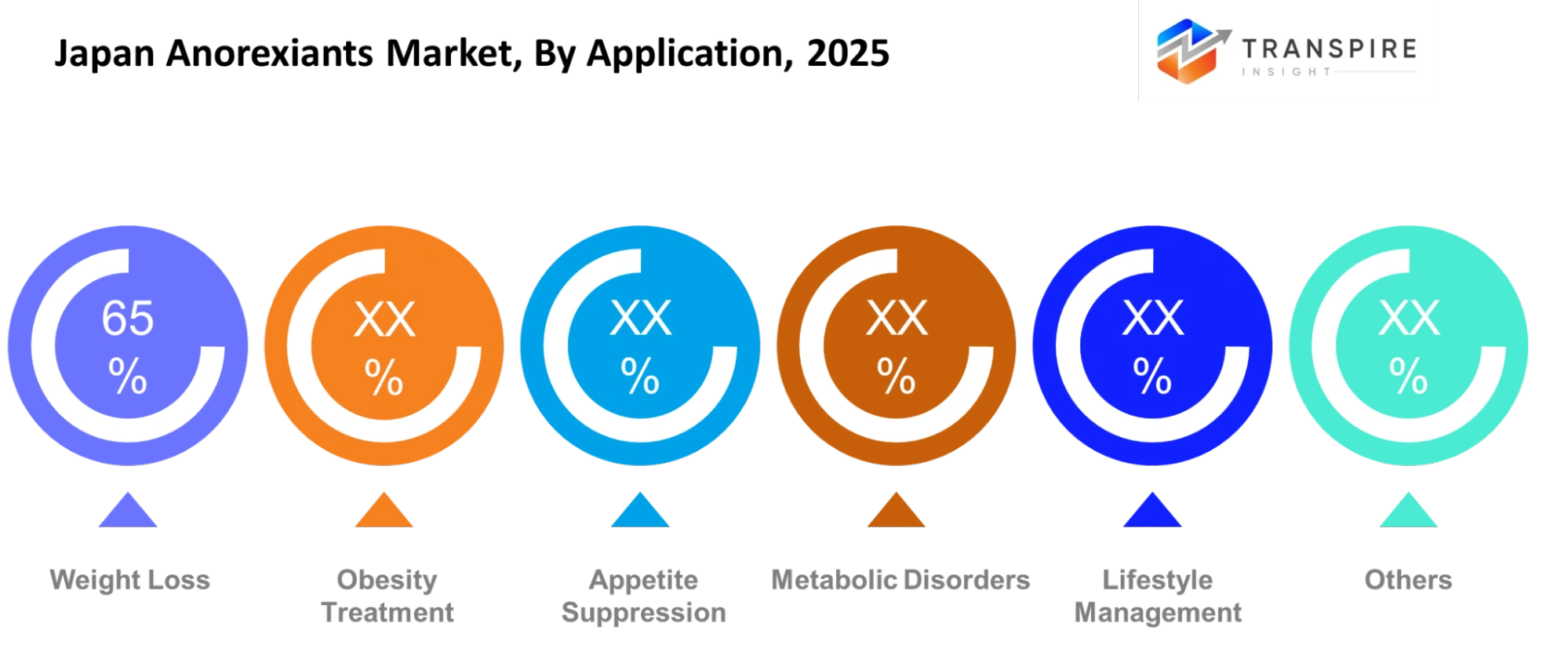
The Japan Anorexiants Market supports weight loss as its primary market because consumers increasingly prioritize their physical health and body weight control. The products in this segment serve people who want to achieve weight loss through controlled appetite management methods. The clinical application of obesity treatment uses anorexants as part of combined treatment strategies which doctors prescribe to their patients.
These products serve their primary function to suppress appetite yet they also assist with metabolic disorder treatment because excess weight connects to various health problems. Consumers now prefer preventive wellness habits which help them achieve long-term balance instead of using short-term solutions. The other applications of the system include maintenance support for specific health programs.
To learn more about this report, Download Free Sample Report
By End-User :
The essential users of hospitals and clinics need professional assessments together with supervised medical procedures to achieve successful results from anorexiant treatments. The clinical environment enables healthcare institutions to monitor patient progress while adjusting medication doses and creating comprehensive health management systems. Fitness centers together with wellness centers function as emerging support systems which promote product knowledge through their organized weight-management programs.
The direct purchasing trend is increasing among consumers who buy health products because they want to maintain a healthy lifestyle. People trust pharmacies as their main access point because pharmacists provide product information and handle medication distribution. The specialized health institutions together with consultation centers create additional user groups which provide personalized nutritional and weight-control solutions.
By Distribution :
The hospital pharmacies play an essential role in drug distribution because they must dispense prescription-based anorexants under strict regulations and medical supervision. The pharmacies provide safe access to products while maintaining healthcare regulatory compliance, which makes this business sector essential for clinical-grade medical treatment delivery. Retail pharmacies maintain their broad market share because they offer easy access to products, which creates consumer confidence in their services.
The expansion of online pharmacies in Japan results from increasing digital shopping habits, which enable customers to compare products while enjoying convenient access to online pharmacies. Drug stores function as vital retail outlets for health products because they supply customers with everyday health essentials, including OTC anorexants and wellness-support products. The growth of distribution will require companies to establish a system that enables them to manage product accessibility while meeting all regulatory requirements.
What are the Key Use Cases Driving the Japan Anorexiants Market?
The main use case which drives adoption in Japan involves hospitals and specialized metabolic care centers which provide physician-controlled obesity treatment programs. The application produces its maximum prescription output because doctors now prefer anorexants to help treat obesity-related health problems which include type 2 diabetes and hypertension and cardiovascular issues that affect high-risk adult patients.
Private endocrinology clinics and structured wellness networks now implement pharmacological appetite suppression as part of their broader metabolic syndrome management programs. Surgeons now prescribe bariatric pre-treatment support therapies to enhance patient readiness for surgical intervention.
The emerging use case includes digital therapeutics prescription systems which use appetite suppressants and remote monitoring technology to enhance treatment compliance. Japanese employers are developing corporate wellness programs which identify younger adults through workplace health screening and implement preventive health measures to reduce future healthcare expenses and work-related productivity loss.
|
Report Metrics |
Details |
|
Market size value in 2025 |
USD 135.78 Million |
|
Market size value in 2026 |
USD 142.53 Million |
|
Revenue forecast in 2033 |
USD 200.09 Million |
|
Growth rate |
CAGR of 4.97% from 2026 to 2033 |
|
Base year |
2025 |
|
Historical data |
2021 - 2024 |
|
Forecast period |
2026 - 2033 |
|
Report coverage |
Revenue forecast, competitive landscape, growth factors, and trends |
|
Country scope |
Japan |
|
Key company profiled |
Pfizer, Roche, Novo Nordisk, Eli Lilly, GlaxoSmithKline, Sanofi, AstraZeneca, Takeda, AbbVie, Bayer, Teva, Amgen, Merck, Herbalife, GNC. |
|
Customization scope |
Free report customization (country, regional & segment scope). Avail customized purchase options to meet your exact research needs. |
|
Report Segmentation |
By Type (Prescription Drugs, OTC Drugs, Herbal Supplements, Combination Therapy, Others); By Application (Weight Loss, Obesity Treatment, Appetite Suppression, Metabolic Disorders, Lifestyle Management, Others); By End-User (Hospitals, Clinics, Fitness Centers, Consumers, Wellness Centers, Pharmacies, Others); By Distribution (Hospital Pharmacies, Retail Pharmacies, Online Pharmacies, Drug Stores, Others). |
Which Regions are Driving the Japan Anorexiants Market Growth?
The Kanto region leads Japan's anorexiants market because it has many advanced healthcare institutions and specialist obesity treatment centers and large medical networks. The country has multiple leading endocrinology departments located in Tokyo and Yokohama which provide quick access to newly approved prescription weight management therapies. The region achieves two benefits through its effective policy alignment with preventive healthcare programs and its increased use of digital patient monitoring technologies. The combination of pharmaceutical partnerships and clinical research facilities together with hospitals that can receive reimbursements maintains Kanto's dominant market position.
The Kansai region serves as the second-largest market because it maintains consistent performance but does not operate at a larger scale than other markets. The Kansai region depends on its established hospital networks which have operated for many years to drive its healthcare system while Kanto uses its innovation-based ecosystem for development. Through its regional healthcare planning approach Osaka and Kyoto have developed their metabolic disorder treatment services which treat patients with metabolic disorders. Manufacturers achieve stable prescription volumes through regulated methods which create revenue streams that lead to predictable financial returns.
The Chubu region has become the fastest growing area because healthcare facilities modernize their operations and companies start implementing employee wellness programs. The implementation of expanded metabolic screening programs for industrial workers in Nagoya and adjacent prefectures began in 2023, which resulted in higher rates of early obesity diagnosis. Outpatient treatment programs at private healthcare facilities now include medication-based weight management as a standard component. The growth of the market shows strong commercial value which will continue until 2033 because demand from underserved areas develops into structured and medically treatable forms.
Who are the Key Players in the Japan Anorexiants Market and How Do They Compete?
The market for anorexants in Japan shows moderate consolidation through which businesses compete based on their ability to develop new drugs and navigate regulatory processes and demonstrate long-term weight loss effectiveness instead of using lower prices as their competitive advantage. Established pharmaceutical companies maintain their market position through extensive clinical research and doctor outreach while new companies attempt to change existing prescription norms by introducing advanced obesity treatment options. The main source of competition arises from companies that use technology for product development to create medical solutions which combine appetite control with complete metabolic disease management. Companies that achieve better safety standards will experience faster access to Japan's reimbursement system which provides them with a significant business advantage.
Novo Nordisk has advanced its market position through its development of GLP-1 therapies and its creation of clinical proof that supports long-term weight reduction. The company possesses a competitive edge in Japan because its obesity solution operates as part of its comprehensive diabetes treatment system. Eli Lilly and Company competes through dual-action metabolic therapies that deliver stronger weight reduction outcomes, differentiating itself through aggressive late-stage pipeline expansion and strategic physician education initiatives.
The domestic regulatory knowledge and healthcare provider connections of Takeda Pharmaceutical Company enable the company to achieve better local market access and expanded business operations in Japan. The selective metabolic research partnerships of Pfizer enable the company to enhance its obesity treatment development program. The digital health partnerships of AstraZeneca create new treatment management solutions which connect medical research with remote metabolic health observation.
Company List
- Pfizer
- Roche
- Novo Nordisk
- Eli Lilly
- GlaxoSmithKline
- Sanofi
- AstraZeneca
- Takeda
- AbbVie
- Bayer
- Teva
- Amgen
- Merck
- Herbalife
- GNC
Recent Development News
In March 2026, Novo Nordisk announced plans to broaden access to its obesity drug Wegovy in Japan through expanded self-pay market initiatives. The move reflects a major commercial investment to capture Japan’s growing out-of-pocket obesity treatment segment and is expected to intensify competition in the country’s prescription anorexiants market.
Source: https://www.bloomberg.com/
In November 2025, Nxera Pharma announced a corporate restructuring to prioritize investment in obesity and metabolic disease pipeline development. This strategic capital reallocation signaled increased domestic R&D commitment toward next-generation anorexiant therapies, supporting long-term innovation capacity within Japan’s anti-obesity pharmaceutical market.
Source: https://www.biospectrumasia.com/
What Strategic Insights Define the Future of the Japan Anorexiants Market?
The Japan anorexiants market will develop from its current state until 2028 through integrated metabolic disease management systems that combine multiple treatment methods instead of using a direct appetite control approach. Japan healthcare providers and regulators now prefer treatments that demonstrate specific weight loss results because Japan faces continuous healthcare expenses which need to be controlled. The market transition needs companies to establish anorexants as elements of complete chronic care programs that use digital tracking and treatment methods based on actual patient outcomes.
The industry faces two dangers through its focus on developing a small group of advanced metabolic treatment options. The primary drug classes which have market dominance will experience prescribing declines if medical payment assessments become stricter while new safety issues surface. Artificial intelligence medical systems which help doctors treat obesity create a major opportunity that exists in secondary urban healthcare networks throughout Chubu and Kyushu regions where digital systems are being developed.
Organizations should establish their market presence through investing in early-stage clinical partnerships that link drug development with digital patient monitoring solutions. Healthcare organizations that create evidence-based system integration methods will gain better results through physician acceptance and medical reimbursement processes than those who depend only on their product effectiveness.
Japan Anorexiants Market Report Segmentation
By Type
- Prescription Drugs
- OTC Drugs
- Herbal Supplements
- Combination Therapy
By Application
- Weight Loss
- Obesity Treatment
- Appetite Suppression
- Metabolic Disorders
- Lifestyle Management
By End-User
- Hospitals
- Clinics
- Fitness Centers
- Consumers
- Wellness Centers
- Pharmacies
By Distribution
- Hospital Pharmacies
- Retail Pharmacies
- Online Pharmacies
- Drug Stores
Frequently Asked Questions
Find quick answers to common questions.
The Japan Anorexiants Market size is USD 200.09 Million in 2033.
Key segments for the Japan Anorexiants Market are By Type (Prescription Drugs, OTC Drugs, Herbal Supplements, Combination Therapy, Others); By Application (Weight Loss, Obesity Treatment, Appetite Suppression, Metabolic Disorders, Lifestyle Management, Others); By End-User (Hospitals, Clinics, Fitness Centers, Consumers, Wellness Centers, Pharmacies, Others); By Distribution (Hospital Pharmacies, Retail Pharmacies, Online Pharmacies, Drug Stores, Others).
Major Japan Anorexiants Market players are Pfizer, Roche, Novo Nordisk, Eli Lilly, GlaxoSmithKline, Sanofi, AstraZeneca, Takeda, AbbVie, Bayer, Teva, Amgen, Merck, Herbalife, GNC.
The Japan Anorexiants Market size is USD 135.78 Million in 2025.
The Japan Anorexiants Market CAGR is 4.97% from 2026 to 2033.
- Pfizer
- Roche
- Novo Nordisk
- Eli Lilly
- GlaxoSmithKline
- Sanofi
- AstraZeneca
- Takeda
- AbbVie
- Bayer
- Teva
- Amgen
- Merck
- Herbalife
- GNC
Recently Published Reports
-
Apr 2026
Biosimilars Market
Biosimilars Market By Product Type (Monoclonal Antibodies, Recombinant Hormones, Erythropoietin, G-CSF, Others), By Indication (Oncology, Autoimmune Diseases, Blood Disorders, Diabetes, Others), By Manufacturing Type (In-House Manufacturing, Contract Manufacturing), By Distribution Channel (Hospital Pharmacies, Retail Pharmacies, Online Pharmacies), By Industry Analysis, Size, Share, Growth, Trends, and Forecasts 2021-2033
-
Apr 2026
Gastrointestinal Endoscopy Market
Gastrointestinal Endoscopy Market By Type (Rigid Gastrointestinal Endoscope, Flexible Gastrointestinal Endoscopes, Disposable Gastrointestinal Endoscope), By Procedure Type (Colonoscopy, Gastroscopy, Duodenoscopy, Enteroscopy, Flexible Sigmoidoscopy, Others), By Application (Diagnosis, Treatment), By End-Users (Hospitals, Ambulatory Surgical Centers, Specialty Clinics, Laboratories, Others), By Industry Analysis, Size, Share, Growth, Trends, and Forecasts 2021-2033
-
Apr 2026
Rare Inherited Metabolic Disorder Drug Market
Rare Inherited Metabolic Disorder Drug Market By Drug Class (Enzyme Replacement Drugs, Gene Therapy Drugs, Substrate Reduction Drugs, Small Module Drugs, Protein Drugs), By Route of Administration(Parenteral, Oral, Intrathecal), By Clinical Development (Marketed Drugs, Late Stage Clinical Phase III, Early Stage Clinical Phase I-II, Preclinical Candidates), By Indication (Lysosomal Storage Disorders, Urea Cycle Disorders, Amino Acid Metabolic Disorders, organic Acidemias, Peroximal Disorders), By Industry Analysis, Size, Share, Growth, Trends, and Forecasts 2021-2033
-
Jan 2026
Pharmaceutical Cleanroom Technology Market
Pharmaceutical Cleanroom Technology Market By Product (Equipment, Consumables, Services); By Cleanroom Type (Standard Cleanrooms, Modular Cleanrooms); By End Use (Pharmaceutical Companies, Biotechnology Companies), By Industry Analysis, Size, Share, Growth, Trends, and Forecasts 2021-2033