

Japan Alpha-gal Syndrome Allergy Market Size & Forecast:
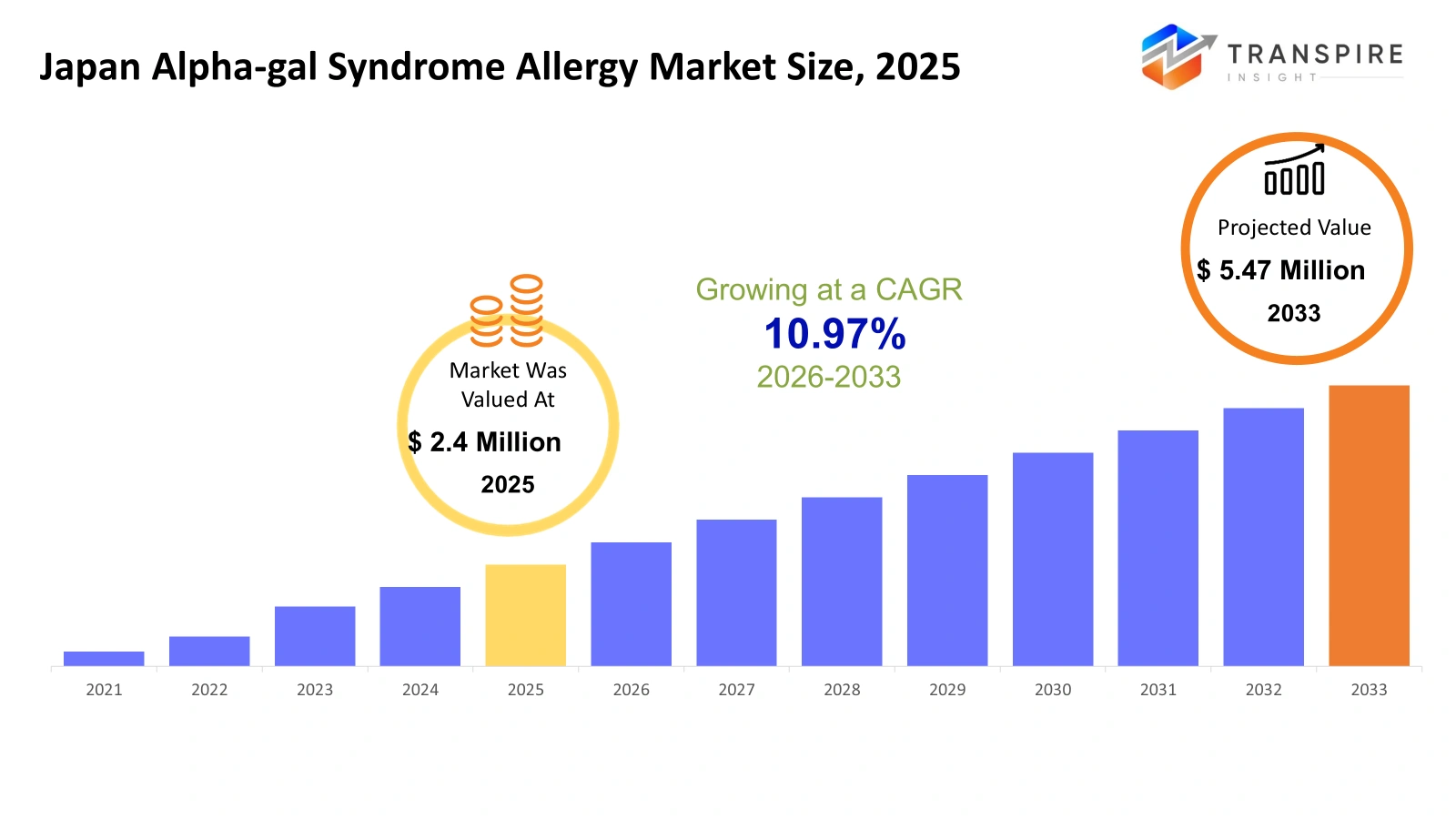
- Japan Alpha-gal Syndrome Allergy Market Size 2025: USD 2.4 Million
- Japan Alpha-gal Syndrome Allergy Market Size 2033: USD 5.47 Million
- Japan Alpha-gal Syndrome Allergy Market CAGR: 10.97%
- Japan Alpha-gal Syndrome Allergy Market Segments:By Treatment Type (Antihistamines, Epinephrine Auto-Injectors, Corticosteroids), By End User (Hospitals, Clinics, Research Institutes), By Diagnosis Type (Blood Test, Allergy Skin Test)
To learn more about this report,  Download Free Sample Report
Japan Alpha-gal Syndrome Allergy Market Summary:
The Japan Alpha-gal Syndrome Allergy Market size is estimated at USD 2.4 Million in 2025 and is anticipated to reach USD 5.47 Million by 2033, growing at a CAGR of 10.97% from 2026 to 2033. The Alpha-gal Syndrome allergy market in Japan is gradually gaining attention as awareness of rare food allergies increases. The condition exists because people react to a sugar molecule which they find in red meat. Healthcare providers and researchers need to develop better diagnostic and management solutions for this condition. The market is expanding because people are becoming more aware of allergies, allergy testing methods are improving, and healthcare facilities are becoming more efficient. Research progress is being achieved through collaborations between medical institutions and pharmaceutical companies which focus on developing better patient care and treatment methods for the future.
Key Market Trends & Insights:
- The general public has become more aware of uncommon food allergies, which are growing in recognition. The number of people who have developed Alpha-gal Syndrome in Japan has started to increase because medical professionals and patients are starting to understand the rare red meat allergy which causes this condition. The combination of educational programmes with better diagnosis systems enables more cases to be recognised.
- Medical institutions are investing in advanced allergy testing methods to identify alpha-gal-related reactions more accurately. The development of laboratory technology together with early detection capabilities enables hospitals to deliver better patient care by creating treatment plans already at initial assessment.
- The research community and medical institutions are increasingly devoting time to investigating the origins and development patterns of this uncommon allergy. The current research projects focus on discovering tick-borne allergens while developing new treatment methods to combat these allergens.
- Allergy clinics, which operate as specific treatment centres, and hospitals provide essential support for diagnosing patients and offering counselling services together with their continuing medical care. The centers deliver customized treatment solutions together with nutritional support to patients who need assistance managing their health condition.
- Pharmaceutical companies and medical research institutions are beginning to collaborate on innovative treatment options. The partnerships between these organisations will create new treatment methods which will enhance patient treatment results throughout the next several years.
Japan Alpha-gal Syndrome Allergy Market Segmentation
By Treatment Type
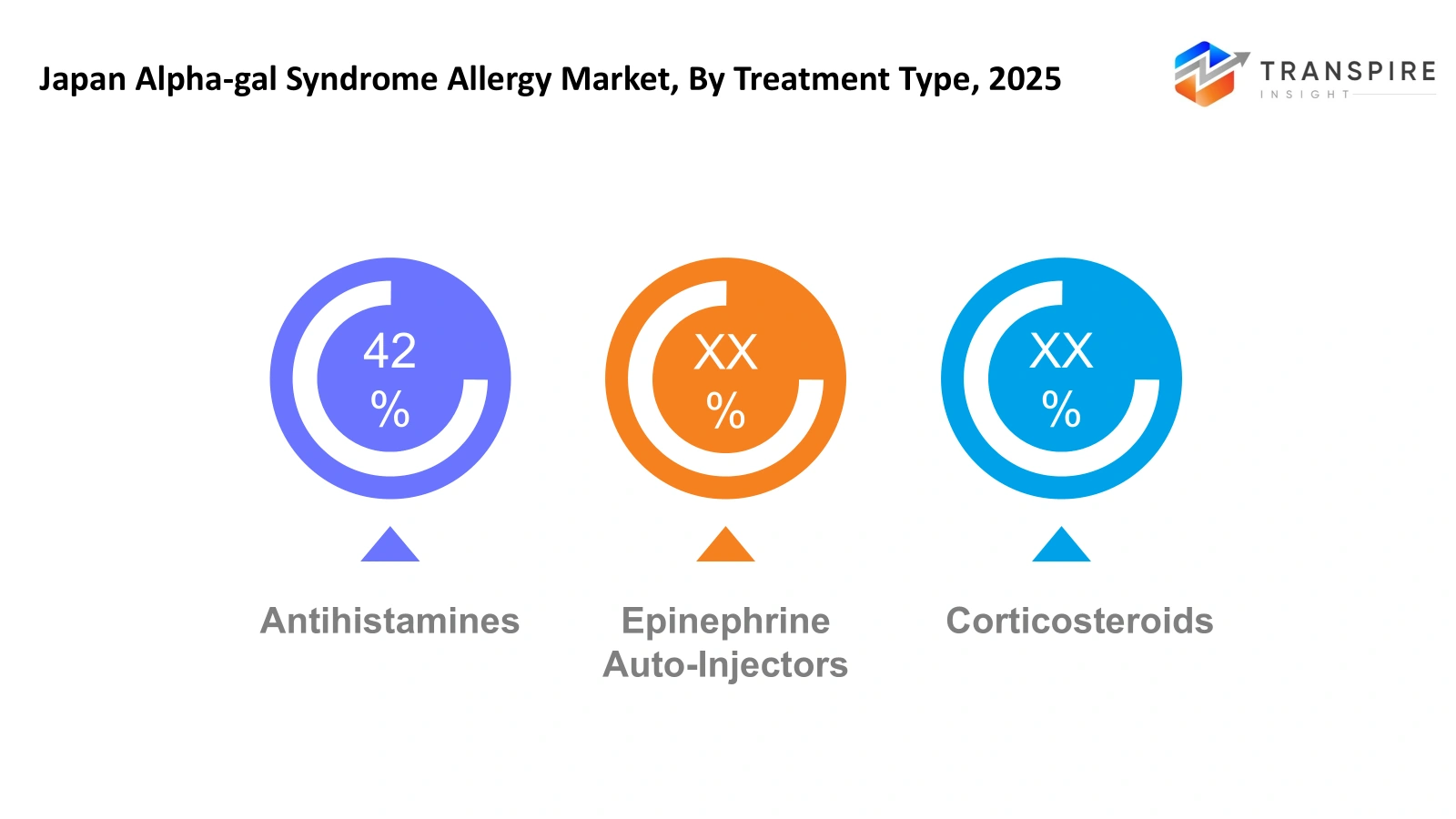
- Antihistamines: Japanese medical practice uses antihistamines to treat patients who experience mild to moderate Alpha-gal Syndrome symptoms. The medications provide relief from itching and hives and other allergic symptoms which occur after people accidentally consume red meat. The medications offer fast relief from symptoms, which makes them essential for people who manage their allergies through regular treatment.
- Epinephrine Auto-Injectors: Epinephrine auto-injectors serve as essential tools for managing the dangerous allergic reactions which people with Alpha-gal Syndrome experience. The devices provide emergency medical personnel with a method to deliver instant treatment for anaphylaxis cases. Japanese healthcare professionals now advise patients to keep these devices with them so they can quickly treat allergic reactions which happen without warning.
- Corticosteroids: Doctors frequently use corticosteroids to treat Alpha-gal Syndrome patients who experience both inflammation and severe allergic reactions. Japanese doctors prescribe these medications to decrease both swelling and immune responses when patients experience severe symptoms which need extended treatment for recovery and symptom management.
To learn more about this report, Download Free Sample Report
By End User
- Hospitals: Japan operates hospitals which function as primary facilities for Alpha-gal Syndrome diagnosis and treatment. The hospital operates as an emergency medical centre which delivers advanced diagnostic tools and specialised medical staff to provide emergency treatment and testing and medical solutions for patients who suffer from severe allergic responses.
- Clinics: Allergy clinics and general medical clinics play an essential role in early detection and ongoing care for Alpha-gal Syndrome. Japanese clinics support patients by providing dietary guidance together with symptom tracking and medication delivery, which enables them to manage their condition throughout daily activities.
- Research Institutes: Research institutes contribute significantly to expanding scientific knowledge about Alpha-gal Syndrome. Japanese research institutions study allergy triggers together with improved diagnostic techniques and new treatment research to gain deeper insights into this newly recognised allergic disorder.
By Diagnosis Type
- Blood Test: Blood testing serves as a common method to detect antibodies which are associated with Alpha-gal Syndrome. The diagnostic method in Japan enables doctors to determine both allergy identification and immune response intensity, which results in customised patient care and monitoring solutions.
- Allergy Skin Test: Doctors use allergy skin tests to test patients who need to respond to particular allergens which are linked to Alpha-gal Syndrome. The tests in Japan enable doctors to see immediate allergic reactions, which help them confirm patient sensitivities and direct patients toward safer dietary and lifestyle choices.
Country Insights
The Japan Alpha-gal Syndrome allergy market is gradually emerging because healthcare professionals are starting to understand uncommon food allergies. Researchers and clinicians are studying Alpha-gal Syndrome because it causes people to develop delayed allergic reactions when they consume red meat, which contains a specific sugar molecule. Japan's advanced healthcare system and its dedication to medical research enable doctors to detect diseases early while they deliver better treatment to their patients.
Healthcare providers are developing new diagnostic methods which use advanced blood tests and dedicated allergy testing systems. The medical community has become more aware of the situation, enabling doctors and patients to identify cases that had previously been ignored. Japanese research organisations are conducting studies examining how environmental factors, including tick exposure, relate to the disease.
Hospitals, research centres, and pharmaceutical companies collaborate to develop new treatment methods and patient handling systems. The market will experience slow growth over the coming years as medical knowledge advances and people become more aware of the situation.
Recent Development News
Japan Medical Experts Raise Awareness About Rare Alpha-gal Meat Allergy.
Japanese Hospitals Strengthen Diagnosis of Rare Meat Allergy Linked to Ticks
|
Report Metrics |
Details |
|
Market size value in 2025 |
USD 2.4 Million |
|
Market size value in 2026 |
USD 2.65 Million |
|
Revenue forecast in 2033 |
USD 5.47 Million |
|
Growth rate |
CAGR of 10.97% from 2026 to 2033 |
|
Base year |
2025 |
|
Historical data |
2021 – 2024 |
|
Forecast period |
2026 – 2033 |
|
Report coverage |
Revenue forecast, competitive landscape, growth factors, and trends |
|
Country scope |
Japan |
|
Key company profiled |
Sanofi SA, Pfizer Inc., Bayer AG, AstraZeneca PLC, Novartis AG, GlaxoSmithKline PLC, Takeda Pharmaceutical Company, Eli Lilly and Company, Johnson & Johnson, Merck & Co. Inc., Thermo Fisher Scientific Inc., Stallergenes Greer, ALK-Abelló A/S, Viatris Inc., Teva Pharmaceutical Industries Ltd. |
|
Customization scope |
Free report customization (country, regional & segment scope). Avail customized purchase options to meet your exact research needs. |
|
Report Segmentation |
By Treatment Type (Antihistamines, Epinephrine Auto-Injectors, Corticosteroids), By End User (Hospitals, Clinics, Research Institutes), By Diagnosis Type (Blood Test, Allergy Skin Test) |
Key Japan Alpha-gal Syndrome Allergy Company Insights
The Japan Alpha-gal Syndrome allergy market operates through the combined efforts of pharmaceutical companies, diagnostic laboratories and healthcare innovators who develop better allergy detection methods and enhance patient treatment capabilities. As Alpha-gal Syndrome awareness increases, companies develop diagnostic tests for accurate results, and they create allergy treatment medications and emergency medical response products. Many firms are also collaborating with hospitals and research institutions to expand clinical understanding of this rare condition. The Japanese healthcare system receives support from industry stakeholders through their dedication to research and technology development and the creation of patient-centred medical solutions which combat new allergy-related health issues.
Company List
- Sanofi SA
- Pfizer Inc.
- Bayer AG
- AstraZeneca PLC
- Novartis AG
- GlaxoSmithKline PLC
- Takeda Pharmaceutical Company
- Eli Lilly and Company
- Johnson & Johnson
- Merck & Co. Inc.
- Thermo Fisher Scientific Inc.
- Stallergenes Greer
- ALK-Abelló A/S
- Viatris Inc.
- Teva Pharmaceutical Industries Ltd.
Japan Alpha-gal Syndrome Allergy Market Report Segmentation
By Treatment Type
- Antihistamines
- Epinephrine Auto-Injectors
- Corticosteroids
By End User
- Hospitals
- Clinics
- Research Institutes
By Diagnosis Type
- Blood Test
- Allergy Skin Test
Frequently Asked Questions
Find quick answers to common questions.
The Approximate Japan Alpha-gal Syndrome Allergy Market size for the Market will be USD 5.47 Million in 2033.
The key Segments of the Japan Alpha-gal Syndrome Allergy Market are By Treatment Type (Antihistamines, Epinephrine Auto-Injectors, Corticosteroids), By End User (Hospitals, Clinics, Research Institutes), By Diagnosis Type (Blood Test, Allergy Skin Test).
Major Players in the Japan Alpha-gal Syndrome Allergy Market are Sanofi SA, Pfizer Inc., Bayer AG, AstraZeneca PLC, Novartis AG, GlaxoSmithKline PLC, Takeda Pharmaceutical Company, Eli Lilly and Company, Johnson & Johnson, Merck & Co. Inc., Thermo Fisher Scientific Inc., Stallergenes Greer, ALK-Abelló A/S, Viatris Inc., Teva Pharmaceutical Industries Ltd.
The Current Japan Alpha-gal Syndrome Allergy Market is Expected to reach USD 2.4 million in 2025.
The Japan Alpha-gal Syndrome Allergy Market CAGR is 10.97%.
- Sanofi SA
- Pfizer Inc.
- Bayer AG
- AstraZeneca PLC
- Novartis AG
- GlaxoSmithKline PLC
- Takeda Pharmaceutical Company
- Eli Lilly and Company
- Johnson & Johnson
- Merck & Co. Inc.
- Thermo Fisher Scientific Inc.
- Stallergenes Greer
- ALK-Abelló A/S
- Viatris Inc.
- Teva Pharmaceutical Industries Ltd.
Recently Published Reports
-
Apr 2026
Biosimilars Market
Biosimilars Market By Product Type (Monoclonal Antibodies, Recombinant Hormones, Erythropoietin, G-CSF, Others), By Indication (Oncology, Autoimmune Diseases, Blood Disorders, Diabetes, Others), By Manufacturing Type (In-House Manufacturing, Contract Manufacturing), By Distribution Channel (Hospital Pharmacies, Retail Pharmacies, Online Pharmacies), By Industry Analysis, Size, Share, Growth, Trends, and Forecasts 2021-2033
-
Apr 2026
Gastrointestinal Endoscopy Market
Gastrointestinal Endoscopy Market By Type (Rigid Gastrointestinal Endoscope, Flexible Gastrointestinal Endoscopes, Disposable Gastrointestinal Endoscope), By Procedure Type (Colonoscopy, Gastroscopy, Duodenoscopy, Enteroscopy, Flexible Sigmoidoscopy, Others), By Application (Diagnosis, Treatment), By End-Users (Hospitals, Ambulatory Surgical Centers, Specialty Clinics, Laboratories, Others), By Industry Analysis, Size, Share, Growth, Trends, and Forecasts 2021-2033
-
Apr 2026
Rare Inherited Metabolic Disorder Drug Market
Rare Inherited Metabolic Disorder Drug Market By Drug Class (Enzyme Replacement Drugs, Gene Therapy Drugs, Substrate Reduction Drugs, Small Module Drugs, Protein Drugs), By Route of Administration(Parenteral, Oral, Intrathecal), By Clinical Development (Marketed Drugs, Late Stage Clinical Phase III, Early Stage Clinical Phase I-II, Preclinical Candidates), By Indication (Lysosomal Storage Disorders, Urea Cycle Disorders, Amino Acid Metabolic Disorders, organic Acidemias, Peroximal Disorders), By Industry Analysis, Size, Share, Growth, Trends, and Forecasts 2021-2033
-
Jan 2026
Pharmaceutical Cleanroom Technology Market
Pharmaceutical Cleanroom Technology Market By Product (Equipment, Consumables, Services); By Cleanroom Type (Standard Cleanrooms, Modular Cleanrooms); By End Use (Pharmaceutical Companies, Biotechnology Companies), By Industry Analysis, Size, Share, Growth, Trends, and Forecasts 2021-2033