
Global Tissue Regeneration Technology Market Size & Forecast:
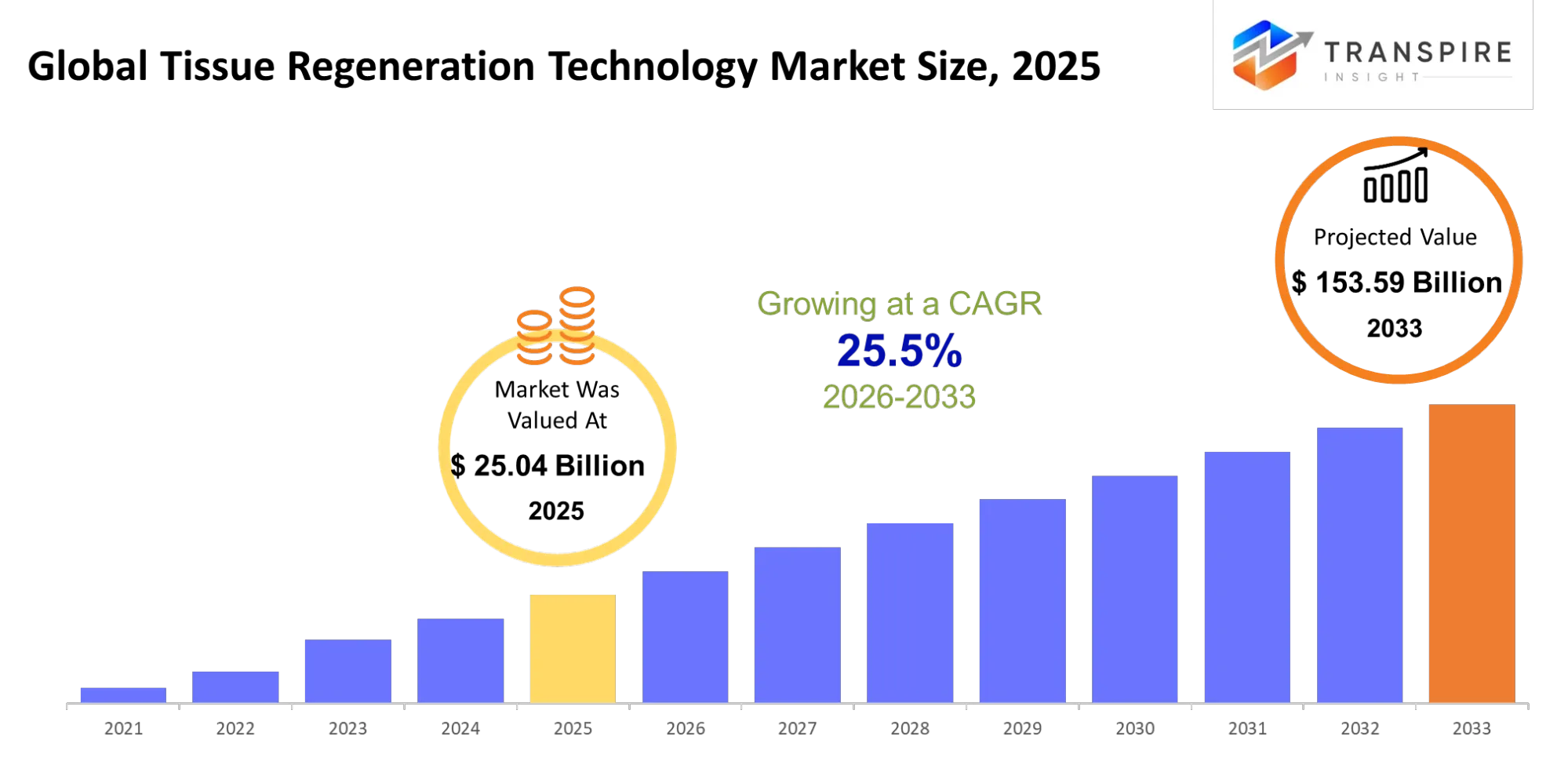
- Global Tissue Regeneration Technology Market Size 2025: USD 25.04 billion
- Global Tissue Regeneration Technology Market Size 2033: USD 153.59 billion
- Global Tissue Regeneration Technology Market CAGR: 25.5%
- Global Tissue Regeneration Technology Market Segments: By Type (Stem Cell Therapy, Biomaterial Scaffolds, Tissue-engineered Skin, Bone Regeneration Technology, Cartilage Regeneration Technology, Organ Regeneration Platforms, Others); By Application (Orthopedic Regeneration, Wound Healing, Dental Regeneration, Cardiovascular Regeneration, Neurological Regeneration, Others); By End-User (Hospitals, Research Institutes, Specialty Clinics, Biotechnology Companies, Others); By Technology (3D Bioprinting, Cell-based Regeneration, Scaffold-based Regeneration, Hybrid Regenerative Platforms, Others)
To learn more about this report,  Download Free Sample Report
Global Tissue Regeneration Technology Market Summary:
The Global Tissue Regeneration Technology Market size is estimated at USD 25.04 billion in 2025 and is anticipated to reach USD 153.59 billion by 2033, growing at a CAGR of 25.5% from 2026 to 2033.
The Global Tissue Regeneration Technology Market has changed a lot over time. It used to be a part of regenerative medicine, but now it is a very important part of modern healthcare. The Global Tissue Regeneration Technology Market helps fix damaged tissues that get hurt because of accidents, long-term diseases and getting older.
Over the past five years, the Global Tissue Regeneration Technology Market has changed in big ways. It now uses biomaterials, stem cell-based therapies, and 3D bioprinting technologies. These new technologies help make treatment more personal and effective for the Global Tissue Regeneration Technology Market. One big reason the Global Tissue Regeneration Technology Market is getting bigger is that more people are getting hurt and need to get faster. Lots of people have injuries, chronic wounds, and need to have surgery. The Global Tissue Regeneration Technology Market helps these people get faster and feel better too.
At the same time, hospitals and doctors are using the Global Tissue Regeneration Technology Market to help people get better and not have to spend too much money on treatment. As we learn more about the Global Tissue Regeneration Technology Market and how well it works, more people are putting money into research. Making it easier for people to get this kind of treatment. The Global Tissue Regeneration Technology Market is getting bigger and better because people need it and the technology is getting better. This is happening everywhere, not in rich countries but also in countries that are still growing and getting better healthcare.
Key Market Insights:
The market for tissue regeneration technology is growing as health care facilities are beginning to incorporate regenerative treatments that help repair damaged tissues. The development of biomaterials, stem cells, and 3D bioprinting technology is aiding the growth of the market.
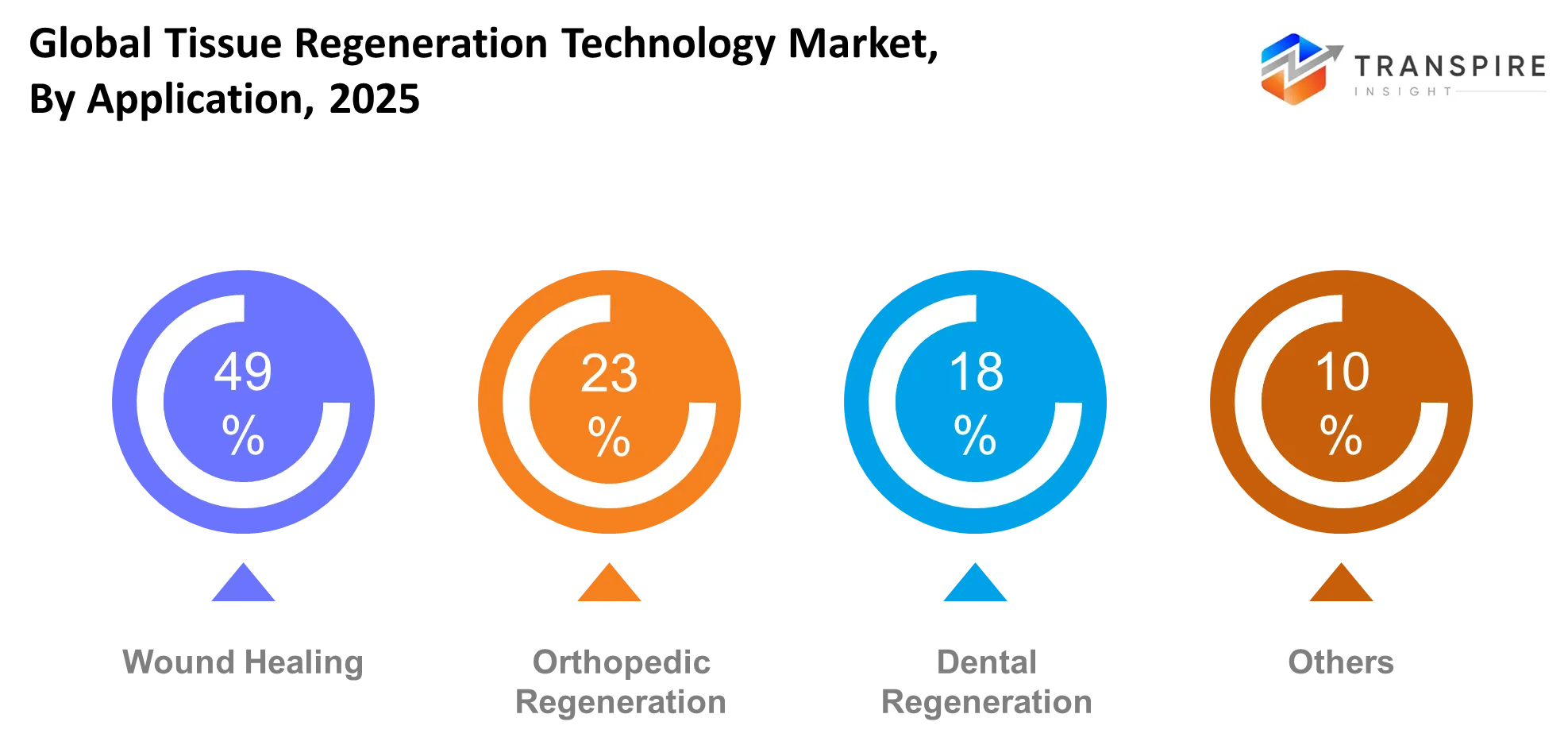
- Wound Healing has captured 49% of market share and emerges as the most significant application segment. Companies are developing innovative wound matrices and bioengineered skin constructs for efficient healing.
- In the leading Wound Healing segment (49%), there will be an increase in the number of chronic wounds that will favour this segment. Major companies are focusing on regenerative dressings and growth factor-based treatments.
- Orthopaedic Regeneration captures 23% of market revenue. The need for regenerative solutions in joints and cartilages is increasing, which will spur the demand for stem cells and bone grafting.
- Dental Regeneration captures 18% of the market size. Companies are developing dental regeneration biomaterials and regenerative tissues for periodontal repair.
- Other applications constitute 10% of total market demand. The need for innovations in cardiovascular, neurodegenerative, and soft tissue regeneration solutions will drive the market.
- 3D Bioprinting leads as the fastest-growing segment at a CAGR of 18.4%. Companies are boosting their investments in the development of customised biological tissues.
- Dental and Other application segments together capture 28% of market share. Major companies are expanding their clinical research activities in this area.
- 3D Bioprinting has achieved significant growth of 18.4% CAGR, outperforming traditional segments. Leading companies are developing patient-specific solutions.
What are the Key Drivers, Restraints, and Opportunities in the Global Tissue Regeneration Technology Market?
Drivers
The rapid development in the field of regenerative medicine and biomaterial science is driving the Global Tissue Regeneration Technology Market. The innovations of using bioactive scaffolds, stem cell therapy, and tissue engineering have significantly enhanced the efficacy of treatment procedures for wound healing, reconstructive surgeries, and soft tissue regeneration. This has led to increased acceptance of these innovations within the medical community, and therefore, there has been a significant increase in usage and applications by manufacturers.
Restraints
The high cost involved in research and development is another factor that has been acting as a hindrance to market growth. Tissue regeneration products need rigorous clinical testing and specialised production plants for their development and launch into the market, which leads to high operating costs and longer product development cycles. This issue continues to be prevalent since the regenerative therapy regulatory system is difficult and varies from place to place.
Opportunities
There is significant scope for growth in the market through the convergence of 3D bioprinting and personalised regenerative medicine therapies. Innovations within technologies have allowed for the manufacture of individualised tissues and implants that offer higher degrees of compatibility and clinical success. Rising investments in the research associated with bioprinting as well as regenerative medicine will facilitate their commercialisation. The development of new research efforts within the Asia Pacific region, as well as developments with tissue constructs using 3D printing, can offer potential opportunities.
What Has the Impact of Artificial Intelligence Been on the Global Tissue Regeneration Technology Market?
Artificial intelligence impacts the Global Tissue Regeneration Technology Market positively since it automates numerous research and manufacturing tasks that are performed by people. The application of artificial intelligence in the Global Tissue Regeneration Technology Market ensures that the optimisation of such activities as cell cultivation and biomaterial selection becomes easy. It means that product creation will become faster due to the automation of research work.
Predictive analysis can be performed with the help of artificial intelligence since it analyzes large amounts of information on biology and clinics. AI will help scientists make predictions on treatment results, tissue growths, and patient reactions before carrying out any procedure. Artificial intelligence makes workflows in laboratories and production centres more productive since it helps to analyse data faster and allocate resources effectively.
It is necessary to note that artificial intelligence cannot be used without spending money. Investments in software, infrastructure, and experts' services are required. It may become a problem for small and mid-sized companies working in this market.
Instance
March 2025, Various tissue regeneration technology companies have made use of AI-based systems in order to enhance the optimisation process for biomaterials, predict growth results of tissues, and expedite research for regenerative therapies.
Key Market Trends:
- The Global Tissue Regeneration Technology Market is evolving from conventional tissue repair approaches toward advanced biological regeneration techniques. Innovations in stem cell therapy, biomaterials, and personalized medicine are improving treatment effectiveness and expanding clinical applications.
- The market has progressed from basic healing materials to sophisticated regenerative technologies that support natural tissue growth and restoration.
- Cell-based therapies are gaining widespread acceptance as confidence in regenerative medicine continues to grow among healthcare providers and patients.
- Biomaterial scaffolds are increasingly being adopted as effective alternatives to traditional tissue grafting techniques, supporting enhanced tissue regeneration.
- 3D bioprinting technology is becoming more prevalent for the development of patient-specific tissues and regenerative solutions tailored to individual medical needs.
- Combination therapies that integrate cells, biomaterials, and growth factors are becoming common practice to improve treatment outcomes and accelerate tissue healing.
- Personalized regenerative treatment approaches are gaining popularity as patients and healthcare providers seek customized therapies based on individual biological requirements.
- Digital technologies are increasingly being integrated into tissue engineering processes, enhancing research capabilities, treatment planning, and regenerative outcomes.
- Tissue regeneration technologies are expanding across multiple medical specialties, including orthopedic medicine, cardiology, dentistry, wound care, and reconstructive medicine.
- Biotechnology companies, research institutions, and healthcare organizations are forming strategic collaborations to accelerate innovation and commercialization in regenerative medicine.
Global Tissue Regeneration Technology Market Segmentation
By Types
Stem Cell Therapy plays a dominant role in the Global Tissue Regeneration Technology Market owing to its wide range of regenerative abilities. The growth of the market can be attributed to higher investment in regenerative medicine along with expanding applications of treatments. Further advances in cell therapy technology will increase the share of this therapy. Biomaterial Scaffolds constitute another important type of tissue regeneration technology, which finds application in growing tissues and repairing them. Advances in biomaterials can contribute to further applications of biomaterial scaffolds. Tissue Engineered Skin retains its importance in wound management and burn treatment, whereas bone regeneration technology can capitalise on the increasing number of orthopaedic surgeries. There is rising importance of Cartilage Regeneration Technology due to increasing occurrence of joint problems. Organ Regeneration Platforms are developing as an important segment for the future, based on research related to tissue and organ regeneration.
By Application
The Wound Healing segment constitutes the largest portion of the Global Tissue Regeneration Technology Market, accounting for about 49% of market share. This segment is primarily boosted by the rising number of chronic wounds, burns, and diabetic ulcers. The growing popularity of tissue regeneration technology used in wound healing is predicted to drive this segment’s dominance over the forecast period.
Orthopedic Regeneration is the second-largest application segment, with 23% of total market share. The growth of this segment is attributed to an increase in fractures, joint diseases, and sports injuries. An uptick in the adoption of regenerative solutions is anticipated to fuel further development. The Dental Regeneration segment contributes around 18% to the total revenue. This is due to the growing preference for dental implants, treatment for periodontitis, and restoration of tissues. Advanced technology is predicted to propel future growth. Cardiovascular Regeneration, Neurological Regeneration, and Other Specialised Applications contribute to almost 10% of total revenue. Although a smaller portion of the market, this segment attracts considerable interest due to growing research efforts.
To learn more about this report, Download Free Sample Report
By End-user
Hospitals are the foremost end-users in the market, owing to advanced infrastructure, higher patient base, and widespread use of tissue regeneration technology. Their dominance will be maintained through increased investments in advanced treatment solutions. Research Institutes occupy a noteworthy market share as these institutes conduct research in regenerative medicine. The future growth potential of Research Institutes will be driven by increased investments in research.
Speciality Clinics are growing their presence in the market on account of rising popularity of regenerative therapy and increasing number of outpatient procedures. Patient demand will play a key role in the growth of Speciality Clinics. Biotech Companies continue to have an essential contribution in the Global Tissue Regeneration Technology Market on account of technological developments and innovations. Future growth of Biotech Companies will be propelled by continued investments in regenerative medicine.
Academic Medical Centres and other Healthcare providers comprise the Others segment. These players will grow their market share on the back of advancing technology and increasing awareness.
By Technology
As a technology, Cell-based Regeneration is holding on well to its dominance in the market due to its efficacy in tissue regeneration. Scaffold-based Regeneration technology is growing due to innovations in the field of biomaterials and tissue engineering. Hybrid Regenerative Technologies have been receiving a lot of interest due to their use of different forms of regeneration to improve the results. As a technology, 3D Bioprinting is the fastest-growing sub-segment with a forecasted CAGR of 18.4%. This growth will be attributed to innovations in tissue engineering.
What are the Key Use Cases Driving the Global Tissue Regeneration Technology Market?
The prime use of tissue regeneration technology involves dealing with problems related to orthopaedics and musculoskeletal disorders. There is significant application of regenerative technologies in the field of bone recovery, cartilage repair, and ligament formation to enable faster recovery along with improved results. With an increasing number of people suffering from sports injuries, fractures, and degenerative joints, the demand for tissue regeneration will grow.
The application of tissue regeneration is on the rise in treating chronic wounds, skin regeneration, and dentistry. Potential applications lie in the fields of nerve repair, cardiac tissue engineering, and organ regeneration research. Innovation in these areas will lead to the development of tissue regeneration technologies in the coming years.
|
Report Metrics |
Details |
|
Market size value in 2025 |
USD 25.04 Billion |
|
Market size value in 2026 |
USD 31.33 Billion |
|
Revenue forecast in 2033 |
USD 153.59 Billion |
|
Growth rate |
CAGR of 25.5% from 2026 to 2033 |
|
Base year |
2025 |
|
Historical data |
2021 - 2024 |
|
Forecast period |
2026 - 2033 |
|
Report coverage |
Revenue forecast, competitive landscape, growth factors, and trends |
|
Regional scope |
United States; Canada; Mexico; United Kingdom; Germany; France; Italy; Spain; Denmark; Sweden; Norway; China; Japan; India; Australia; South Korea; Thailand; Brazil; Argentina; South Africa; Saudi Arabia; United Arab Emirates |
|
Key company profiled |
Smith & Nephew, Organogenesis, Integra LifeSciences, Zimmer Biomet, Stryker, Medtronic, Vericel, MiMedx, Baxter International, Osiris Therapeutics, RTI Surgical, BioTissue, Athersys, CollPlant, Cook Biotech |
|
Customization scope |
Free report customization (country, regional & segment scope). Avail customized purchase options to meet your exact research needs. |
|
Report Segmentation |
By Type (Stem Cell Therapy, Biomaterial Scaffolds, Tissue-engineered Skin, Bone Regeneration Technology, Cartilage Regeneration Technology, Organ Regeneration Platforms, Others); By Application (Orthopedic Regeneration, Wound Healing, Dental Regeneration, Cardiovascular Regeneration, Neurological Regeneration, Others); By End-User (Hospitals, Research Institutes, Specialty Clinics, Biotechnology Companies, Others); By Technology (3D Bioprinting, Cell-based Regeneration, Scaffold-based Regeneration, Hybrid Regenerative Platforms, Others) |
Which Regions are Driving the Global Tissue Regeneration Technology Market Growth?
North America
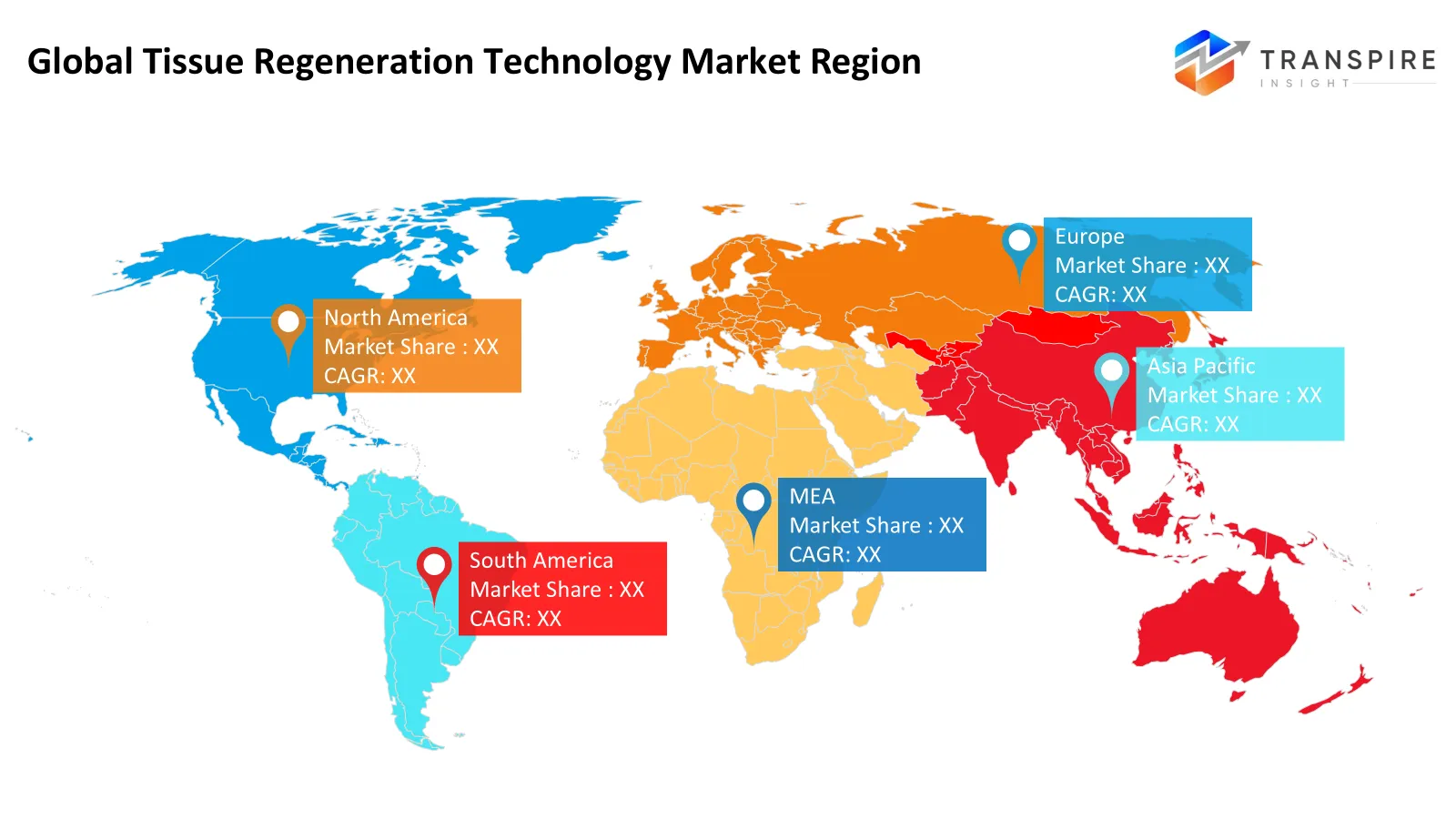
North America possesses the highest regional market share of 39% within the Global Tissue Regeneration Technology Market. This dominance results from an advanced health care system, effective use of new regenerative therapies, and continuous investment in innovation. Moreover, the market receives support from favourable regulatory systems and easy availability of specialised clinics for treatments. Growing demand for tissue repairs and regenerative therapies drives the dominance of North America within the market.
Europe
Europe comes second with a share of 28%, but still lags far behind North America. Though operating in a smaller-scale setting than North America, the market enjoys favourable conditions from the advanced health care sector, ongoing research, and the availability of advanced medical technologies. In comparison to North America, the main driving factor behind the market growth within Europe results from an established health care network and emphasis on innovation.
Asia Pacific
Asia Pacific makes up 25% of the worldwide market and holds the potential for recording the fastest growth at a compound annual growth rate (CAGR) of 17.1%. The faster growth is attributed to greater investments in the healthcare sector, development of medical facilities, and increased use of tissue regeneration technologies. The increase in access to healthcare services and awareness about regenerative treatments has opened doors to various growth opportunities for the market players. In the future, the large patient population in the region, coupled with advances in the healthcare sector, would drive growth in Asia Pacific, with the rest of the world contributing 8% of market share. In January 2025, healthcare providers and medical researchers in Japan intensified their efforts to promote stem cell therapy and regenerative medicine, making Asia Pacific the fastest-growing Global Tissue Regeneration Technology Market.
To learn more about this report, Download Free Sample Report
Who are the Key Players in the Global Tissue Regeneration Technology Market and how do they Compete?
The Global Tissue Regeneration Technology Market is very competitive, as organisations rely on regenerative biomaterials, cell therapy products, innovative wound care solutions, and orthopaedic repair techniques to differentiate themselves from each other. Competition in this sector depends on product development and enhancement, clinical trials, strategic collaborations, and the development of new markets in healthcare.
Smith & Nephew, Organogenesis, Integra LifeSciences, and Vericel adopt innovation as the key market strategy. Smith & Nephew uses innovative products and expands globally to create a more powerful competitive stance. Organogenesis emphasises the development of innovative regenerative products in line with clinical research and commercialisation processes. Integra LifeSciences creates innovations based on biomaterials in reconstructive surgeries and increases its market power via acquisitions. Vericel develops cell therapies for the treatment of cartilage injuries and burns. Competitors such as Zimmer Biomet, Stryker, Medtronic, MiMedx, Baxter International, RTI Surgical, BioTissue, Athersys, CollPlant, Cook Biotech, and Osiris Therapeutics compete based on unique regenerative products and solutions for orthopaedic, surgical, wound care, and tissue engineering operations.
Global Tissue Regeneration Technology Market Companies
- Smith & Nephew
- Organogenesis
- Integra LifeSciences
- Zimmer Biomet
- Stryker
- Medtronic
- Vericel
- MiMedx
- Baxter International
- Osiris Therapeutics
- RTI Surgical
- BioTissue
- Athersys
- CollPlant
- Cook Biotech
Recent Development News
In March 2025, Cellino and Matricelf launched a collaboration on an international level. The objective behind their collaboration is to scale up personalised spinal cord injury treatments using Cellino’s automated biomanufacturing platform and Matricelf’s autologous tissue engineering solutions.
What Strategic Insights Define the Future of the Global Tissue Regeneration Technology Market?
The tissue regeneration technology industry is progressing towards the use of advanced biologics, stem cell therapy, and engineered biomaterials for personalised treatments. Future opportunities within this sector would include an increase in demand for regeneration solutions within orthopaedics, wounds and skin care, and organ repair markets, as well as investments in translational science and innovations.
The difficulty is associated with the complicated regulatory framework for the development of regenerative technologies. Discrepancies in the approval process may prolong the time to market and lead to additional expenses and challenges for new businesses. One potential market opportunity is associated with the use of 3D printing in combination with regenerative medicine. This approach may lead to more rapid creation of personalised tissues and expansion of their applications in terms of therapeutic solutions outside of the conventional market segments.
From the strategic standpoint, market players must focus on partnering with universities and health care providers. Moreover, development of the manufacturing process capacity will be important.
Global Tissue Regeneration Technology Market Segmentation
By Type
- Stem Cell Therapy
- Biomaterial Scaffolds
- Tissue-engineered Skin
- Bone Regeneration Technology
- Cartilage Regeneration Technology
- Organ Regeneration Platforms
By Application
- Orthopedic Regeneration
- Wound Healing
- Dental Regeneration
- Cardiovascular Regeneration
- Neurological Regeneration
By End-User
- Hospitals
- Research Institutes
- Specialty Clinics
- Biotechnology Companies
By Technology
- 3D Bioprinting
- Cell-based Regeneration
- Scaffold-based Regeneration
- Hybrid Regenerative Platforms
Regional Outlook
North America
- United States
- Canada
- Mexico
Europe
- Germany
- United Kingdom
- France
- Spain
- Italy
- Rest of Europe
Asia Pacific
- Japan
- China
- Australia & New Zealand
- South Korea
- India
- Rest of Asia Pacific
South America
- Brazil
- Argentina
- Rest of South America
Middle East & Africa
- Saudi Arabia
- United Arab Emirates
- South Africa
- Rest of the Middle East & Africa
Frequently Asked Questions
Find quick answers to common questions.
The global tissue regeneration technology market size was valued at USD 25.04 Billion in 2025 and is poised to reach USD 153.59 Billion by 2033, expanding at a 25.5% CAGR.
Key segments for the global tissue regeneration technology market are By Type (Stem Cell Therapy, Biomaterial Scaffolds, Tissue-engineered Skin, Bone Regeneration Technology, Cartilage Regeneration Technology, Organ Regeneration Platforms, Others); By Application (Orthopedic Regeneration, Wound Healing, Dental Regeneration, Cardiovascular Regeneration, Neurological Regeneration, Others); By End-User (Hospitals, Research Institutes, Specialty Clinics, Biotechnology Companies, Others); By Technology (3D Bioprinting, Cell-based Regeneration, Scaffold-based Regeneration, Hybrid Regenerative Platforms, Others).
Growth is primarily driven by the market for Tissue Regeneration Technology is stimulated due to fast-paced innovations in the field of regenerative medicines, stem cell treatments, biomaterials, bioactive scaffolds, and tissue engineering. Such technologies have greatly improved the effectiveness of treating wound healing, reconstruction, and tissue regeneration, thus boosting the popularity and market demand of such technologies.
The global market is led by major manufacturers including Smith & Nephew, Organogenesis, Integra LifeSciences, Zimmer Biomet, Stryker, Medtronic, Vericel, MiMedx, Baxter International, Osiris Therapeutics, RTI Surgical, BioTissue, Athersys, CollPlant, Cook Biotech.
The North American region impacts the worldwide global tissue regeneration technology market through its largest market share of 39%, attributed to its superior healthcare setup, wide use of tissue regeneration, supportive policies, and presence of key industry players.
Market opportunities in the global tissue regeneration technology market exist owing to increased demand for regenerative medicines and stem cell therapies. Development in 3D bioprinting technology is helping fuel innovations. Investments in healthcare and uses in wound management and orthopedics markets have helped fuel the growth in the market.
- Smith & Nephew
- Organogenesis
- Integra LifeSciences
- Zimmer Biomet
- Stryker
- Medtronic
- Vericel
- MiMedx
- Baxter International
- Osiris Therapeutics
- RTI Surgical
- BioTissue
- Athersys
- CollPlant
- Cook Biotech
About the Authors

Pankaj Ghogare Patil
I am Pankaj Ghogare Patil, a Senior Research Analyst at Transpire Insight, specializing in the Pharmaceutical, Chemicals & Materials, Healthcare IT, and Biotechnology industry. My expertise lies in conducting comprehensive market research, analyzing industry trends, evaluating competitive landscapes, and translating complex data into actionable insights. At Transpire Insight, I closely follow emerging technologies, regulatory developments, and market innovations to create accurate, well-researched, and informative content that helps businesses and professionals make informed decisions. I am committed to producing credible, evidence-based articles that reflect industry best practices while making technical topics accessible and valuable for a broad audience.

Chakradhar Khansole
Chakradhar serves as the Research Director at Transpire Insight, bringing over 8 years of experience in technology, innovation, and strategic market intelligence. He specializes in transforming complex market data into actionable business insights that enable organizations to make informed, growth-oriented decisions. Recognized for his strategic vision and analytical expertise, Chakradhar leads high-impact research initiatives, delivering comprehensive market assessments, competitive intelligence, and forward-looking industry analysis.
Recently Published Reports
-
Apr 2026
Cord Blood Banking Services Market
Cord Blood Banking Services Market Size, Share & Analysis Report By Type of Service (Collection, Processing, Storage), By Bank Type (Private Banks, Public Banks, and Hybrid Banks), By Component (Cord Blood, and Cord Tissue), By End User (Hospitals, Research Institutions, Biotechnology Companies, and Others) and Geography (North America, Europe, Asia-Pacific, Middle East and Africa, South and Central America), 2021 - 2031
-
Apr 2026
ELISA Processors Market
ELISA Processors Market Size, Share & Analysis Report By Type (Optical Filter ELISA Analyzer, and Optical Grating ELISA Analyzers), By Mode (Automated ELISA Analyzers, and Semi-Automated ELISA Analyzers), By Applications (Immunology, Vaccine development, Drug Monitoring, and Others), By End Users (Biotechnology Companies, Pharmaceutical Companies, Contract Research Organization, and Diagnostic Laboratories) and Geography (North America, Europe, Asia-Pacific, Middle East and Africa, South and Central America), 2021 - 2031
-
May 2026
Microscope Slide Scanner Market
Microscope Slide Scanner Market Size, Share & Analysis Report By Type (Portable Microscope Slide Scanner, and Desktop Microscope Slide Scanner), By Application (Biological Research, Medicine, Veterinary, and Other) and Geography (North America, Europe, Asia-Pacific, Middle East and Africa, South and Central America), 2021 - 2031
-
Apr 2026
Microwave Cookware Market
Microwave Cookware Market Size, Share & Analysis Report By Material Type (Plastic, Glass, Ceramic, Silicone, and Metal), By Application (Cooking, Reheating, and Defrosting), By End User (Household, Commercial (Restaurants, Hotels, and Cafes), and Food Service Industry), By Sales Channel (Online Retail, Offline Retail (Supermarkets, Hypermarkets, Specialty Stores), and Direct Sales (Company Outlets)) and Geography (North America, Europe, Asia-Pacific, Middle East and Africa, South and Central America), 2021 - 2031